Jesus’ Three Requirements

Jesus’ Three Requirements

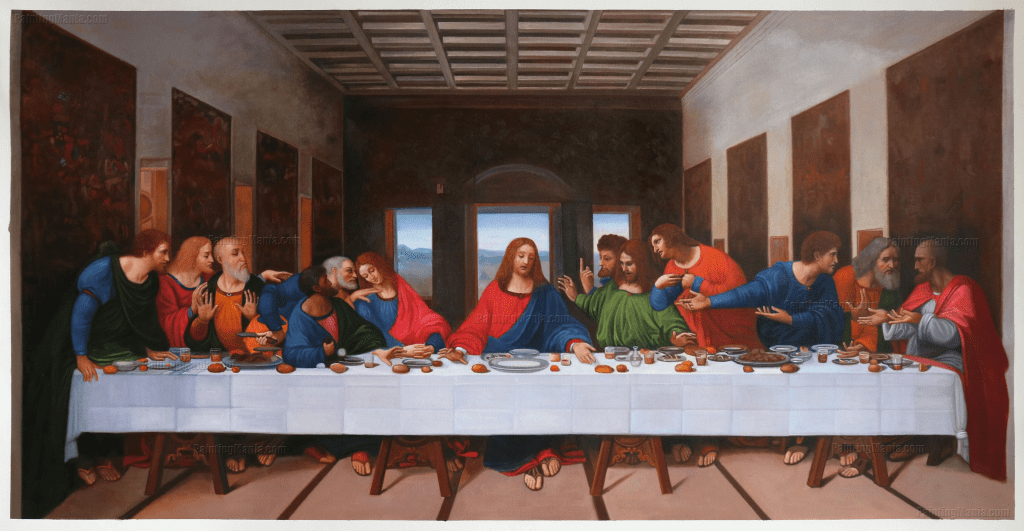
Our reading is Matthew 26:17-30. It is Thursday of Holy Week. Most call it Maundy Thursday. Jesus has already entered Jerusalem riding a donkey to celebrate his final Passover. Jesus has already cursed the fig tree and cleansed the Temple. Jesus has already been confronted by his enemies and Judas Iscariot has already agreed to betray Jesus for thirty pieces of silver. According to the text, Jesus has already washed the disciples’ feet and was observing the annual Seder with his disciples.

The Passover Seder is a structured, 15-step ritual meal held on the first two nights of Passover. It was a scripted meal. Everything they ate and drank reminded them of their ancestors’ exodus from Egypt. To be more exact, they remembered how God had acted on behalf of their ancestors. However, on that Passover Jesus changed the script and created something new – Jesus told the disciples the bread represented his body and the wine represented is blood. To the disciples the symbolism was clear. Bread represented blessings. Blood represented death. From the very beginning Christians valued communion. It has generated much debate in the life of the church.

Swiss theologian Karl Barth (1886-1968) once said, “The Word became flesh, and then through theologians it became words again.”  For years, theologians have debated communion. I remember sitting in classrooms and studying the words transubstantiation and consubstantiation. The Roman Catholic tradition believes in transubstantiation – the bread and the wine mystically turn into the actual body and blood of Christ. That happens when the bell is rung during a Catholic Mass. The Protestant tradition believes in consubstantiation. The bread and the wine, or juice, represent the body and the blood of Christ. For years, theologians have debated communion.

For years, well-meaning laity have complicated communion by telling us how they prefer to receive it. Some like it weekly. Some like it monthly. Some like it quarterly. One woman told me communion should only be offered once a year, on Christmas Eve at the 11:00 PM service. The founder of the great Methodist movement John Wesley (1703-1791) took communion up to five times a week. Some like communion sitting in the pews. Some like it at the rail. Some don’t like it at the rail, because it discriminates against those with arthritic knees. Some like communion served in little plastic cups and cubed bread. Some like communion served by intinction, when you tear off your own piece of bread from a common loaf and dip it into a common cup. Germaphobes are repulsed by intinction. Some think long, complex liturgy should accompany communion, and others don’t want any liturgy at all. Well-meaning laity have complicated communion by telling us how they prefer it. The United Methodist Book of Disciple says, the appointed clergy will decide how often and in what form communion will be served. I wish I had such power. In my time in the ministry, the whole topic exhausted me. I grew tired of trying to keep everyone happy.That is impossible.

It is interesting to note the Bible does not use the words transubstantiation or consubstantiation, it does not tell us how to serve the elements. However, the Bible tells us what we must do when we partake communion. To be more exact, Jesus gives us three requirements we must observe when we partake the communion elements. This is the first requirement.

Communion requires us to remember Jesus! Verses 25 and 26 tell us Jesus took the bread and associated it with his body, and he took the wine and associated it with his blood. Like the rest of us, Jesus didn’t want to be forgotten once he was gone; Jesus wanted to be remembered.

What do you remember about Jesus as you partake of his body and blood? Do you remember his humble birth in Bethlehem? Do you remember his baptism in the Jordan River? Do you remember his lessons from the Sermon on the Mount? Do you remember his miracles? The lame could walk and the blind could see. Do you remember how Jesus walked on the water and controlled the weather? Do you remember how Jesus resurrected Lazarus? Do you remember Jesus hanging on the cross, twisted in pain for your salvation? It is a fair question. What do you remember about Jesus, as you partake of the bread and cup? I remember Jesus in the Upper Room with the disciples observing his last Seder. This is the second requirement.

Communion requires us to examine our present condition! Jesus was a man who lived the perfect life and sacrificed so much. He had the perfect relationship with God. In comparison to Jesus, our sins are obvious and we have sacrificed very little. There is no comparison between us and Jesus. Yet, Jesus invites us to partake. If you are not humbled at the communion table, then you have a serious spiritual problem. That is what Paul is saying in I Corinthians 11:27, “Therefore, whoever eats the bread or drinks the cup of the Lord in an unworthy manner will be guilty of sinning against the body and blood of the Lord.”  Communion humbles us, because we must examine our present condition. This is the third requirement.

Communion requires us to examine our eternity! In the scripture lesson, Jesus isn’t just embracing the moment, Jesus is forcing the disciples to examine their eternity. Verse 25 says, “I will tell you the truth, I will not drink again of the fruit of the vine until I drink it anew in the Kingdom of God.”  Jesus is not just speaking of his own eternity, he is speaking of the disciple’s eternity too. By his invitation to us to sit at the table with him, Jesus is speaking of your eternity. Where do you want to spend eternity? I have never met a person who didn’t want to go to heaven. Jesus is your only hope of salvation. Communion requires us to examine our eternity!

Each time you take communion remember Jesus’s three requirements. First, communion requires us to remember Jesus. Second, communion requires us to examine ourselves. Third, communion requires us to examine our eternity. There is very little nutritional value in a small amount of bread and juice, but there is a spiritual value that cannot be dismissed. Pope Pius X (1835-1914) served as Pope of the Roman Catholic Church from 1903-1914. He said, “Holy Communion is the shortest and safest way to heaven.”
When Notre Dame Burned

Holy Week is complete, so much has already happened. Jesus was executed Roman style on Friday between two common criminals. The scene was unpleasant, because sin is ugly. Jesus was fortunate in several ways. First, for crucifixion, Jesus died quickly, only six hours. He spoke seven times from the cross. Those must have been agonizing words to utter. They are called “the seven last words.” Second, arrangements were made by Nicodemus (c. 1st century) to treat his body with expensive spices and lay in a new tomb purchased by Joseph of Arimathea (c. 1st century). It was not uncommon for the crucified to be thrown into a pile of corpses to be eaten by buzzards or wild dogs. Once inside his new tomb, a large stone was rolled in front of the entrance to trap the decaying odor and to protect the body from thieves. The Roman government was persuaded by Jesus’ enemies to place guards in front of the tomb to eliminate any future problems. This was all done by dark on Friday. Once this was completed, Jesus’ loved ones grieved because Jesus was dead! On Saturday, they continued to grieve. That takes us to our reading.

According to our reading, Matthew 28:1-10, it is early Sunday morning, when two visitors arrive at the tomb. There was Mary Magdalene (c. 1st century) and another woman named Mary. They had no clue that several miraculous things had happened. The first was a great earthquake. Only mentioned in Matthew, it signaled God had done something special. Second, the stone had been rolled away. That was something they could not have done by themselves. Third, the resurrection was announced. According to verse three, it is made by an angel, whose clothes were white as snow, symbolizing purity. The angel tells the women about the resurrection, but the women experience the resurrected Jesus for themselves in verse nine. According to Acts 1:3, Jesus appeared to other believers for a period of forty days. It is a story that changed the world. Never underestimate the power of the resurrection of Jesus. It is the cornerstone of the Christian faith.

The Apostle Paul understood the significance of the resurrection. Romans 10:9 says, “If you confess with your mouth that Jesus is Lord, and believe in your heart God raised him from the dead, you will be saved.”  Many believe that is the first creed in the life of the church. In other words, the resurrection is the only thing in the life of the church that really matters. Every branch of the Christian church has their own customs and traditions, but they are secondary to believing in the resurrection of Jesus. If you are reading this blog, I am assuming you believe in the resurrection of Jesus too. Your belief in the resurrection of Jesus entitles you to several things.

First, your belief in the resurrection of Jesus means your past sins are forgiven. Ephesians 1:7 says, “In him we have redemption through his blood, the forgiveness of sins, in accordance with the richness of God’s grace.”  You are forgiven by God. Isn’t it time you forgive yourself? How many people do you know who are constantly re-living their past mistakes and punishing themselves? They need to embrace the resurrection and forget their mistakes, God has. Billy Graham (1918-2018) once said, “Forgiveness obliterates the past and permits us to enter the land of new beginnings.” The resurrection offers us forgiveness.

Second, your belief in the resurrection of Jesus means you have a purpose. Philippians 3:13-14 says, “But one thing I do: Forgetting what is behind me and straining toward what is ahead, I press on toward the goal to win the prize for which God has called me heavenward in Christ Jesus.”  Your good deeds cannot earn your salvation, but your good deeds are a way of thanking God for saving your soul.What are you doing to bring glory to God? Life is not all about you – life is about God. The resurrection offers us a purpose. 

Third, your belief in the resurrection of Jesus offers you a future. John 3:16 says, “For God so loved the world that he gave his one and only son, that whoever believes in him may not perish but have eternal life.”  On the day I die don’t cry for me. I am going to heaven, not because I am a good person. I am going to heaven because I worship and serve a perfect and resurrected Jesus. How many good people do you know who are afraid to die? There is no need to fear death if you believe in the resurrection of Jesus. The resurrection offers us a future.

On April 15, 2019, Notre Dame Cathedral in Paris caught on fire. The fire was caused by an accidental electrical fault. The massive ancient structure fascinates me. I am not the only one. They say on an average week, 12,000 tourists visit Notre Dame daily. During Holy Week, that number swells to 30,000 tourists. Construction of Notre Dame began in the year 1163 and took 200 years to complete. It is more than an old building. Notre Dame has been the backdrop of French history for generations.

If you can grieve for a building, I did. I am fortunate because I have visited Notre Dame three times. The first time was with my parents as a teenager. The second time was when I was traveling home from a volunteer-in-mission trip in Russia. Our layover in western Europe was in Paris, so Kathryn and I stayed for a few days to celebrate our anniversary. The third time was after the fire, during reconstruction. Retired, we spent over a week in “The City of Light.” On each trip, visiting Notre Dame was a priority. When Notre Dame burned, I was moved by the emotions of the crowds who gathered to watch the blaze, some praying, some singing, some crying. When Notre Dame burned, I mourned for the building and the history, but not the faith.

The Christian faith can’t be contained to a building. The Christian faith lives in the hearts of men and women who believe in the resurrection of Jesus Christ. That belief in the resurrection is not optional, it is indispensable. The resurrection of Jesus Christ changed world history and your individual life. Because you believe Jesus was resurrected you are forgiven, have a purpose and have a future beyond death. The pastor of Menlo Church in Menlo, California, John Ortberg (born 1957) once said, “At the very heart of the Christian faith is the story of Jesus’ death and resurrection.” The Lord has risen! The Lord has risen, indeed!

Holy Week

Holy Week represents the final, sacred week of Lent in Christianity, beginning on Palm Sunday and ending before Easter morning. This year, it runs from March 29 (Palm Sunday) to April 4 (Holy Saturday), marking the passion, death, and burial of Jesus before the resurrection. It is my experience most regular worshippers remember Palm Sunday and celebrate Easter but overlook the other days of Holy Week. In this blog I want to challenge you to remember what Jesus did each day. According to the Gospel of Matthew, this is what happened during Jesus’ last week prior to his crucifixion.

On Palm Sunday, Jesus entered Jerusalem to celebrate his final Passover. He was not alone. Biblical scholars tell us more than 2.5 million people were in Jerusalem on that day and on the lips of everyone was Jesus. He rode a donkey to tell everyone he was the king of peace. Most missed the point. Most wanted something from Jesus. Some wanted to see Jesus because he was trending. He was a celebrity and some were preoccupied with celebrities. Famous for being a healer, some wanted a healing from Jesus. Either they or a loved one was sick, and Jesus was their only hope to be healthy. Some longed-for Jesus for political reasons. They had grown tired of Roman rule and believed Jesus was the perfect person to lead a political revolution. The palm branches spread on the ground and waved in the air were political acts. They yelled political slogans. That is what their ancestors had done in previous generations. A small minority must have understood Jesus’ entrance was part of God’s plan of salvation. (Matthew 21:1-11)

On Holy Monday, Jesus did two significant things. First, he cleansed the Temple. The orthodox leadership of the day had turned the Temple into a place of profit, selling various animals for sacrifice. As the contemporary church is a place for prayer, the Temple was a place of prayer too, not profit. Second, he cursed the fig tree. It was the only thing Jesus ever cursed. Like the bald eagle symbolizes America, the fig tree symbolized Israel. The cursing of the fig tree was an act of judgement upon Israel. God was doing something new. At the end of the day, Jesus traveled to Bethany. (Matthew 21:12-22)

On Holy Tuesday, Jesus returned to the Temple and was confronted by the Chief Priests and the Elders, who questioned his authority. Jesus responded by telling the Parable of the Two Sons, the Parable of the Wicked Servant, and the Parable of the Wedding Banquet. The orthodox leaders responded by trying to trap Jesus by asking him questions about paying taxes to Ceasar, the resurrection, and the greatest commandment. Near the end of the day, Jesus left the Temple and taught the disciples about the destruction of the Temple, the signs of the end times, and his future return. We call that collection of teachings The Olivet Discourse. (Matthew 21-25)

On Holy Wednesday, Jesus was anointed in Bethany to prepare him for death, and he was betrayed by one of his own, Judas Iscariot, for thirty pieces of silver. For this reason, some call this day Spy Wednesday. There are several theories about why Judas Iscariot did it. Some say he did it because he had grown tired of being an outsider. He was the only non-Galilean of the twelve. Some say he did it to force Jesus’s hand. He never dreamed Jesus wouldn’t fight back. Some say he did because he was greedy. We don’t really know why he did it, but he did it. In the end, Judas Iscariot regretted his betrayal and committed suicide. Once Judas Iscariot agreed to betray Jesus, his enemies created a scheme to arrest and kill Jesus. (Matthew 26:13-16)

On Holy Thursday, Maundy Thursday, Jesus washed the disciples’ feet, showing true servant leadership. Then, they observed the Seder. It was a meal with a message. Everything they ate and drank symbolized how God liberated their people, the Jews, years earlier. After all, they were God’s chosen people. During the meal, Jesus changed the scripted words and created a new memorial we call holy communion. The bread was his body, and the wine was his blood. After the meal was completed, Jesus comforted the disciples and went to the Garden of Gethsemane to pray. It is while he is in the garden that he was arrested. (Matthew 26:17-50)

On Holy Friday, Good Friday, Jesus had two trials. The first trial was in front of his own people, the Sanhedrin, the supreme Jewish legislative and judicial council in ancient Israel. It was a “kangaroo” court. Jesus never had a chance. He was found guilty of blasphemy. They wanted to execute Jesus, but they lacked the legal authority. For this reason, they sent him to the Roman Governor, Pontius Pilate (15 BC-35 AD). He knew Jesus was an innocent man, but he feared the mob. Trying to find a way out of his awkward situation, he used an old tradition of releasing a prisoner during Passover. He hoped the people would choose Jesus, but they choose the notorious criminal Barabas (10 BC-62 AD) instead. Jesus’ fate was sealed. He ordered Jesus to be executed. First, Jesus was whipped. Then, Jesus was mocked and forced to wear a crown of thorns. Finally, Jesus was nailed to a cross. Crucifixion was a Roman form of execution. It was made public to detour future criminals. He hung between two common criminals. For a crucifixion, his death came quickly – six hours. His lifeless body was treated with lavish expensive spices purchased by Nicodemus, before being placed in a new tomb, provided by a wealthy man named Joseph of Arimathea. Both Nicodemus and Joseph of Arimathea were secret disciples of Jesus who were members of the Sanhedrin. Both disagreed with their verdict. It was a hard day for those who loved Jesus. They grieved, because Jesus was dead and their dreams were gone. Many still struggle today with the death of Jesus. (Matthew 27)

Some call Holy Saturday Silent Saturday, Black Saturday or Easter Eve. There is nothing to remember about that day, because Jesus was dead. His heart was still and his lungs were flat. There were no brain waves. His loved ones must have been numb because it all ended so quickly. Each one must have asked the question “why?”

There are fifty-two weeks each year. Each week is important and not one should be wasted. However, Holy Week is different. It is the week that changed our world forever. No one has ever influenced the world like Jesus. Annually, I take a few minutes each day of Holy Week and remember what Jesus did on that day. I consider it my spiritual pilgrimage. I encourage you to do the same thing this year. It will enhance your Easter and quicken your spirit. The 266th Pope of the Roman Catholic Church, Pope Francis (1936-2025) said, “Holy Week is a privileged time when we are called to draw near to Jesus.”  May God bless you during this sacred week.

John’s Greatest Priority

Our reading is Matthew 14:1-12. The scene is Herod Antipas’s (72 BC- 4 BCE) birthday party. He was a powerful man, the Herodian ruler of Galilee and Perea. The entertainment for the evening was Herodias’s (15 BC-39 AD) daughter. The first century Jewish historian Josephus (AD 37-100) gives us her name, Salome (AD 14-71). Herod’s life was complicated. It sounds like a country song; Salome was Herod’s stepdaughter and niece. Salome’s dance pleases Herod. It was not the dance of an innocent child, it was an erotic dance. Herod was pleased with her performance, he says she can have anything she desires. She, with encouragement from her mother, requests “The head of John the Baptist on a platter.” There is no easy way to say it. By the end of the evening John’s head was delivered, never to speak again.

I have always found this story to be shocking. It is so shocking that it blinds us from the divine truth. The divine truth is found in John’s priorities. Look at the story with me one more time. The life of John the Baptist and the life of Herod Antipas stand in complete contrast. John was preoccupied with the eternal, trying to please God. Herod Antipas was preoccupied with the temporary, trying to please himself. John the Baptist’s priorities and Herod Antipas’s priorities are opposites. This story challenges us to examine our own priorities. How much time do you spend worrying about the temporary? How much time do you spend worrying about the eternal?

Years ago, I called my good friend Bill Johnson. (No, not the former Congressman, now President of Youngstown State University, the preacher.) This was not unusual, I called Bill regularly. Normally, he spoke in a clear voice, but on that day, he was whispering. I asked him why he was whispering and he responded, “I am at the Genesee of the Abbey near Rochester, New York.I am only to use electronic devices in case of an emergency. I am supposed to be focused on God.” I said, “Bill, I am not an emergency.” He said, “No. However, you are a priority.” I asked, “Do you answer when the wife calls.” He said, “Yes! I talked to her this morning.” He added, “I think I am in trouble. They caught me using my iPad to see if the Guardians won last night.”

Bill illustrates for us the simple point that good things can take our attention away from the best thing, God. He is supposed to be our greatest priority, because only God is eternal. That is what Deuteronomy 6:5 tells us, You shall love the Lord your God with all your heart and with all your soul and with all your might.  God expects total and unconditional commitment from us. There is nothing wrong with friends and family. There is nothing wrong with our favorite professional sports team. However, none of those things should be our greatest priority because they are temporary. God is supposed to be our greatest priority because only God is eternal. How many good things in your life are distracting you from God? Consider these three good things that can distract us from God.

It would be easy to make patriotism your greatest priority. Alexis de Tocqueville (1805-1859) was a French political thinker and writer. In 1831 he came to America and found what makes America great. According to him, our greatness is not found in our natural resources, our educational system, our form of government, or our economic success. He said, “America is great because America is good, and if America ever ceases to be good, America will cease to be great!”  I cannot disagree with him.

I have been to some amazing places in this world but there is no place like America. I always feel a sense of relief when I am flying home and enter U.S. air space. I am both proud and thankful to be an America. It would be easy to make America your greatest priority, but don’t do it. America is not God. America is a country. God must be your greatest priority!

It would be easy to make your local church your greatest priority. Your local church is more than a building. Some of life’s most significant experiences happen in your local church. For example, your grandmother sold pies to buy the pews. Your grandfather helped roof the church on the hottest day one summer. In the sanctuary you buried your brother who left too soon. You married the love of your life in church. You baptized your children at church. Years later, you can still point to the place at the kneeing rail where you accepted Jesus at church. You still remember how the whole church prayed just for you before your big medical test. The fellowship hall is filled with memories of past church gatherings and heated church debates. It would be easy to make your local church your top priority, but don’t do it. The church is not God. The church is an organization to teach you about God. God must be your greatest priority! 

It would be easy to make family your greatest priority. There is so much to love about being in a family. They are the ones we call during life’s greatest, and saddest, experiences. They are the ones that give us the greatest since of satisfaction. They are the ones we sacrifice for and the ones who will sacrifice for us. Everything we have would mean nothing without family. It would be easy to make family your greatest priority, but don’t do it. Your family is not God. God must be your greatest priority. There is nothing wrong with making patriotism, your local church, or your family a priority in your life, but they can’t be your greatest priority, because they are not God. John teaches us, we must make God our greatest priority because only God is eternal. What is your greatest priority?

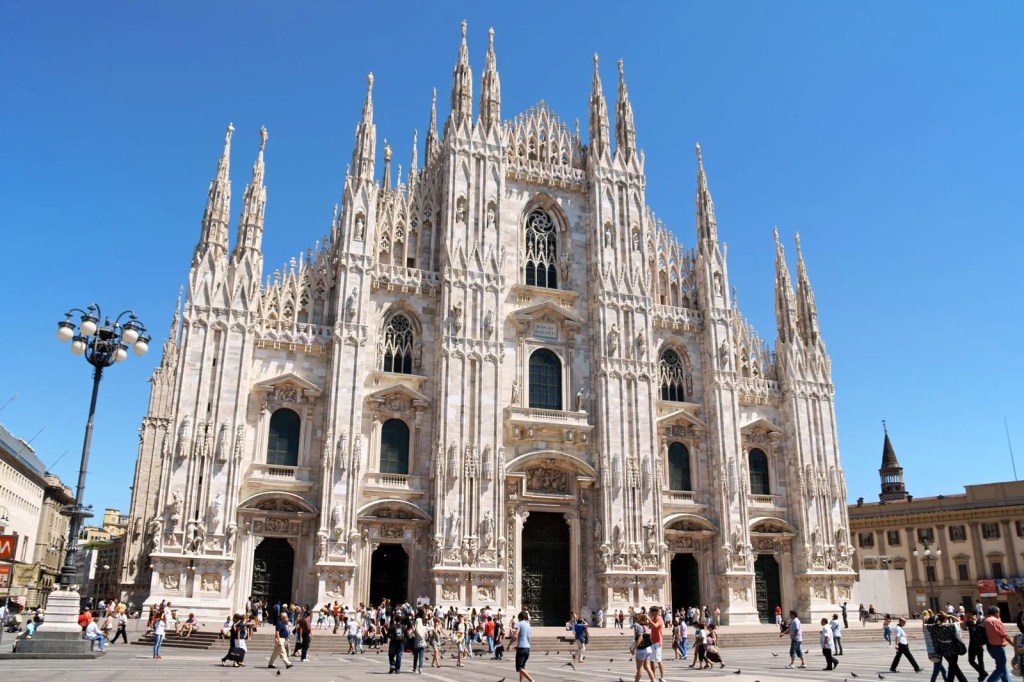
As I write this blog, we are hours away from the XXV Olympic Winter Games. They are being held in Milan and Cortina, Italy. NBC will have 7,000 hours of total coverage over their various networks, featuring all 329 events. We will learn about the various events and the story of some of the athletes. We will not hear much about the Duomo di Milan, the symbol of the city of Milan. I had the great privilege of visiting there years ago. It is a wonderful place.

The cathedral took nearly six centuries to complete. Construction began in 1386 and was not completed until 1965. The cathedral has five huge doors to welcome visitors. The center three doors grab our attention. Over the first side door is a sculptured wreath of roses, and underneath it are the words, “All which pleases is just for a moment.”  Over the second side door is sculptured a cross, and the words, “All that troubles is just for a moment.”  But underneath the giant central entrance leading to the main aisle is the inscription, “Only the eternal is important.”  That is what John is telling us in our reading. That is why God must be your greatest priority. Only God is eternal. What is your greatest priority?

John’s Question

Born in Eastern Europe, Isidor I. Rabi (1898-1988) moved to America as an infant. In time, he would study physics at MIT, Columbia and Cornell. In 1942, he won the Nobel Prize in Physics “for his resonance method for recording the magnetic properties of atomic nuclei.” (Whatever that is.) He credited his mother for his success. He said that every day after school his mother would talk to him about his school day. She wasn’t interested in his daily schedule. She was more interested in the questions he asked. Daily, she asked him, “Did you ask any good questions today?” “Asking good questions,” Rabi said, “made me become a better scientist.” In our reading, Matthew 11:1-6, John the Baptist had his disciples ask Jesus an excellent question, “Are you the one who was to come, or should we expect someone else?”

There is nothing innocent about this story. John the Baptist had been imprisoned because he had made an enemy of a powerful man, Herod Antipas (72 BC- 4 BCE). He was the son of Herod the Great (BC 72-BC 4) and the grandson of Antipater the Idumaean (BCE 114-BCE 43). He was appointed by the Romans as Herodian ruler of Galilee and Perea in 4 BCE. His political connections do not impress John. He called all to repent, including Herod Antipas. His story was well known and filled with immorality – it sounds like the storyline from a contemporary soap opera. Herod went to Rome to visit his brother, and became infatuated with his sister-in-law, Herodias (15 BC- 39 AD). He seduced her, took her home for himself and divorced his wife. While many stayed silent, John proclaimed it as morally wrong. John’s protests came to the attention of Herod Antipas, who imprisoned John near the Dead Sea.

Like Jesus, all teachers had students or disciples who believed in them, including John. John sent his disciples to Jesus with our question, are you the one who was to come, or should we expect someone else? This question is not unique to Matthew, it is also found in Luke 7:19-23. It is a great question. The issue that haunts the entire text is why John had his disciples ask the question. John knew Jesus’s identity. He knew it from within his mother’s womb (Luke 1:44) and he heard Jesus’s identity proclaimed by God at Jesus’ baptism (Matthew 3:15). There is no sign that John doubted or became frustrated with Jesus. So why did John have his disciples ask the question, “Are you the one who has come, or should we expect another?” 

The key to understanding John’s question is evangelism. We understand evangelism to be sharing the good news of Jesus Christ, calling individuals to repentance and faith in Him as their Lord and Savior. John knew Jesus was the Messiah and he wanted to make sure his disciples understood Jesus to be the Messiah. He knew the benefits of discipleship, and he wanted his disciples to experience those benefits too. Consider it the pastoral side of John. He sends them to Jesus to ask the question, are you the one who has come, or should we expect another,” because he wanted them to have the right answer too. He wanted the best for his disciples. The best we have to offer someone is Jesus. No one can accept Jesus for you, you must do it for yourself.  There is a world of difference between learning about Jesus and experiencing Jesus! That reminds me of a parishioner I met years ago.

Her name was Nancy and she lived in a Cleveland, Ohio suburb. She visited my church one Sunday, and I arranged to meet her several days later. We connected in the first few minutes and she told me her story. She had just been honorably discharged from the United States Navy and moved back home to attend college. She was studying nursing and confessed it was hard for her to be living at home with her mother.  She went as far as to tell me her mother was mad at her for visiting my church, because she had been raised Roman Catholic. She felt disconnected from the Roman Catholic Church during her military service. During those years, she tried various Christian traditions and had read the Bible cover to cover. Near the end of our discussion, she looked at me and said, “I know everything there is to know about Jesus, but I’m still not sure I am going to heaven when I die.” I looked at Nancy and said, “There is a world of difference between knowing about Jesus and knowing Jesus.” I asked her if she knew Jesus as her Lord and Savior. She did not, so I led her to salvation. She thanked me and walked out of my church a different person.

Can you relate to Nancy’s story? You know everything there is to know about Jesus. You go to church and read the Bible. You pray for the sick and read your devotional. However, you still aren’t sure about your own salvation. John the Baptist knew it from the very beginning. You can know everything about Jesus and still not know Jesus. He sent his disciples to Jesus with the question, “are you the one who has come, or should we expect another,” so they could experience Jesus for themselves. Do you know Jesus, or do you just know about Jesus? Until you know Jesus, you know nothing at all!

Moments of Self-Doubt

Our reading is Matthew 27:20-26. Normally, we hear these words during Holy Week. However, that does not mean it doesn’t have something for us today. The scene is powerful. Jesus is on his way to the cross and is standing next to Roman Governor Pontius Pilate. The crowd must choose who they will release, the notorious rebel and murderer Barabbas, or Jesus. The crowd chooses Barabbas. Think about that scene for a moment. Jesus and Pilate made a strange pair. Pilate has everything this world has to offer – fame, power, and influence. Jesus has nothing this world has to offer. However, the man with nothing is filled with self-confidence. The man with everything is rattled with self-doubt. What does Jesus have that Pilate lacked?

In this blog I want to help restore your self-confidence. It is Satan who puts self-doubt into your life because he doesn’t want you to maximize your full potential. He wants you to live in a shell, afraid to come out. God, on the other hand, wants you to live up to your full potential because he wants you to have the greatest impact on your little corner of the world. As a disciple of Jesus, you are His ambassador and that changes everything. So let me ask you three questions. These questions are not original. They came from United Methodist clergyman James W. Moore (1938-20019).

First, how secure are you? Jesus was secure because Jesus knew who he was. The scriptures tell us very little about Jesus’s childhood. We are told that Jesus was born in Bethlehem and lived in Egypt for a short time as an infant. Jesus called Nazareth home, and at twelve years old, he went to the temple and amazed the elders. He stayed near his mother until he was thirty. We know very little about Jesus’ life, but I am comfortable saying Jesus knew who he was from the very beginning. Jesus knew he was the son of God. Jesus knew being the son of God brought unique opportunities, but it also brought unique challenges. Jesus was not arrogant; Jesus was secure. Jesus knew who he was. How many secure people do you know? Do you consider yourself a secure person? Do you know yourself?

In a few months I will turn sixty-nine years old. My age does not bother me, because I have had all this time to learn about myself. When I was young, I tried to act like I knew everything. The truth is, I am ignorant about many things. I know nothing about plumbing, auto repair, foreign policy, sewing, crafts, and the finer details of physics. I can’t speak a word of Portuguese. It is extremely difficult to know everything. Then, somewhere along the way I learned three little words that liberated me, “I don’t know!” It doesn’t mean I don’t know anything. It only means I don’t know about certain things. I don’t know anything about cardiology, but I know something about God, preaching, the Bible, church growth, and group dynamics. I like being my age because I have had all these years to learn about myself. I consider myself a secure person. Do you consider yourself a secure person? Jesus knew who he was. Self-confident people know themselves. How secure are you?

Second, do you know whose you are? Our reading happened over two thousand years ago, so you know how the story ends.Pilate permits Jesus to be crucified, and Jesus was buried in a cave-like tomb. Jesus spent his earthly ministry surrounded by people, but when the end came, he was alone. The crowds of Palm Sunday disappeared and, except for God, he was alone. Jesus had self-confidence because he knew he was loved by God. You can have self-confidence because you are loved by God.

One of the great preachers of yesteryear was Philip Brooks (1835-1893). He was extremely confident and optimistic. A close friend asked him what the source of his attitude about life was. He replied, “It is quite simple. I am a Christian.”  Once you discover God’s love for you, everything changes. Being a disciple of Jesus means you know you are loved by God. In the end, God will be victorious and He wants to share the spoils of that victory with you! It really doesn’t matter what the world says about you, the only thing that really matters is that God loves you! Jesus was self-confident because he knew whose he was. You can be self-confident because God loves you. You belong to God. Do you know whose you are?

Third, do you know where you are going? Jesus’s final destination is not a secret. It is found in the Apostle’s Creed: He suffered under Pontius Pilate, was crucified, dead and buried; he ascended into heaven, and sitteth at the right hand of God the Father Almighty. Jesus knew he was going to heaven when it was all over. All he had to do was hang on. The same is true for us – the trials and challenges of this world are temporary, all we must do is endure them. Heaven is going to last for eternity. Do you know where you are going?  

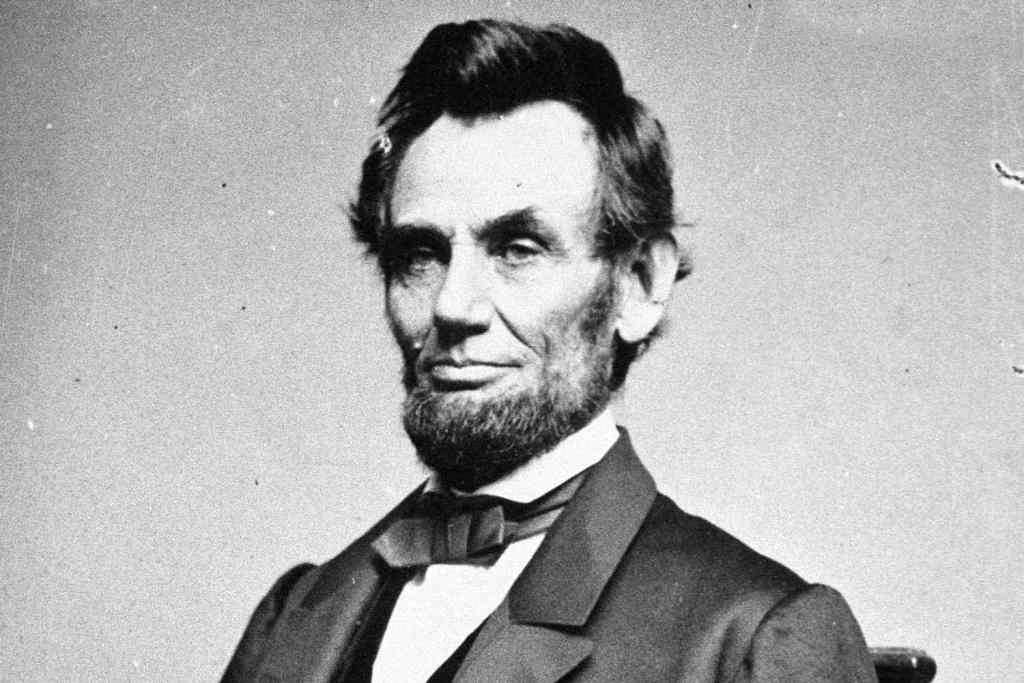
History tells us Abraham Lincoln (1809-1865) was fatally shot at Washington DC’s Ford Theater on April 14, 1865. Much has been written about the shooting and the political climate of America on that day. Very little has been written about the contents found inside of the pockets of our sixteenth president. It was reported in President Lincoln’s pockets were found: 

1. A handkerchief, embroidered “A. Lincoln”  
            2. A country boy’s pen knife  
            3. A spectacles case repaired with string  
            4. A purse containing a $5 Confederate bill  
            5. Some old and worn newspaper clippings  

One of the clippings was an article written by John Bright (1811-1877). He called Lincoln, “one of the greatest minds of all times.” Today, that is common knowledge but that wasn’t the case in Lincoln’s time. In 1865, millions shared quite a contrary opinion. The President’s critics were fierce. The country was in turmoil and was ripped to shreds by hatred and a cruel, costly war. Lincoln kept Bright’s words because he couldn’t believe anyone would say he had a great mind. All these years later, we can confess Lincoln suffered from depression. He was crippled with self-doubt and haunted by a poor self-image. Do you know of anyone who is crippled with self-doubt and haunted by a poor self-image? Maybe that person is you?

I do not have an article saying you are brilliant, but if you are reading this then you have something better. You are a disciple of Jesus Christ, and that fact changes everything. Because you are a disciple of Jesus Christ, you know who you are. Discover your own strengths and weaknesses. Never be afraid to say those three liberating words, “I don’t know.” Because you are a disciple of Jesus Christ, you know whose you are. Never forget, God loves you! Because you are a disciple of Jesus Christ, you know where you are going. The challenges of this world are only temporary. Someday we are going to be in heaven together! 

Why was Jesus Baptized?

The story of the baptism of Jesus is found in all four Gospels – Matthew, Mark, Luke and John. Our reading, Matthew 3:13-17, is Matthew’s version. According to the text, Jesus went to the Jordan River to be baptized by John. The Baptizer was a charismatic character who came with one message. Everything he ate, wore, and said communicated one message, repent! It was the perfect message for his audience. Herod the Great had been cruel and the Roman miliary had been harsh to the people of Israel. Most of the people longed for a religious solution to their intolerable political situation. The people flocked to the desert region to hear John’s message of repentance. He offered them a sinner’s baptism as a sign of their repentance. One of the faces in the crowd was Jesus.

One of our core understandings about Jesus is that he was sinless. That is what made him the perfect sacrifice on the cross. 2 Corinthians 5:21 says,“For He made Him who knew no sin to be sin for us, that we might become the righteousness of God in Him.”

1 Peter 2:22 says, “He committed no sin, nor was deceit found in his mouth.”  1 John 3:5 says, “You know he appeared to take away sins, and in Him there is no sin.”  I could go on, but I won’t. You get the point. Jesus was sinless. So, why would the sinless Jesus require a sinner’s baptism? Consider these four things with me.

First, Jesus’s baptism exposed his identity. The people had been waiting for the Messiah a long time. Some hoped John was the Messiah (Luke 3:15). Matthew 3:17 tells us Jesus was the long-awaited Messiah,“And a voice from heaven said, ‘This is my Son, whom I love, with him I am well pleased.”  In other words, God is identifying Jesus as the Messiah. Several years later, he would be the suffering servant mentioned in Isaiah 53. On that horrible day, “Jesus was rejected by mankind. He was pierced for our transgressions; he was crushed for our iniquities; the punishment that brought us peace was on him.”  Matthew 3:17 eliminated all questions. From that point on, no one questioned Jesus’s identity. He was the Messiah. Never underestimate the importance of correct identification. Jesus’s baptism exposed his identity.

Second, Jesus’s baptism fulfilled all righteousness. In other words, Jesus’s baptism was all part of the divine plan. To underscore that point, Jesus was consecrated by God when the Holy Spirit descended on him like a dove. This was not the first time John had seen Jesus. They were related on their mother’s side, however their family relations are not clear. Some say they were cousins. Some say Elizabeth was Mary’s aunt. Some say they were related in other ways. Regardless of their connection, John believed in Jesus from the very beginning. John understood his role and was uncomfortable baptizing Jesus. Verses 14 and 15 says, “But John tried to deter him, saying I need to be baptized by you, and do you come to me?” Jesus replied, “Let it be so now; it is proper for us to do this to fulfill all righteous.”  John and Jesus were obedient to God’s will. Jesus’s baptism fulfilled all righteousness.

Third, Jesus’s baptism ignited his earthy ministry and marked the beginning of the end of John’s ministry. Students of America’s Civil War will tell you July 4, 1863, is a key date. It was the beginning of the end of the Confederacy – Vicksburg fell along the Mississippi River, the day after the Union claimed victory at Gettysburg. Sadly, the war dragged on for another two years. Jesus’s baptism was the being of the end of John’s ministry. John 3:30 quotes John, who said, “He (Jesus) must increase, but I must decrease.”  John was an excellent forerunner, but Jesus was the Messiah. In the next three years Jesus would transform the world and set into motion something new. Christianity is the world’s largest region, approximate 2.3 billion followers. Jesus is the most influential life that ever lived. No followers of John exist today. Jesus’s baptism ignited his earthy ministry and ended John’s contribution.

Fourth, Jesus’s baptism shows us that he completely identified with the sins of mankind. If you use your sanctified imagination, you can picture the crowds coming to John to receive a sinner’s baptism. They needed that baptism because they needed to repent. Jesus was in the crowd not to repent but to relate to the commoners. John 1:14 says,”The Word (Jesus) became flesh and made his dwelling among us.”  The incarnation is beyond human understanding, but Jesus’s humility and solidarity cannot be questioned. Jesus’s baptism shows us that he completely identified with the sins of mankind. Let me end with this old preaching story.

A church received a new minister, and the sanctuary was full for his first Sunday where he preached a wonderful sermon about Jesus. The second Sunday came and he preached another wonderful sermon about Jesus. His third sermon was about Jesus. Each week the congregation heard a wonderful sermon about Jesus. This went on for months. Everyone should have been happy, but this was a church. Someone had to complain about all those wonderful sermons about Jesus. One man did and pulled the minister to the side after worship one Sunday. In the corner of the narthex, he confronted the minister. He began by saying, “Your sermons about Jesus are very good. However, you have been here for months and all we have heard about is Jesus. Our world is a complex place and there are many social ills. There are people starving to death. There are diseases that have no cure. There are people who can’t read. There are children lost in slavery and lives being lost in wars. We don’t hear about any of those things. All we hear about is Jesus! Don’t any of those things matter?” The pastor listened patiently and responded, “No! Once the world knows Jesus all those other issues will go away.” I couldn’t agree more. After all, Jesus is the son of God. Our only hope of salvation. In the life of the church, what really matters to you? I hope your answer is Jesus. Augustine of Hippo (354-430) said, “Jesus Christ is not valued at all until He is valued above all.” 

Modeling Discipleship

According to the liturgical calendar, Christmastide lasts twelve days – between December 25 and January 5. The liturgical season of Epiphany begins on January 6 and ends on Ash Wednesday. Epiphany means “manifestation.” It is the season we celebrate the fact that Christ came to save all people from their sins, both Jews and Gentiles. Our reading, Matthew 2:1-12, is the traditional reading on Epiphany Sunday. The story of the Magi is one of the most known and loved stories in the Bible; they complete the Christmas narrative. Yet, hiding in the tradition of their story is a fact we cannot ignore – the Magi give us the perfect model for discipleship. Consider these three things with me.

First, the Magi bowed down. The Magi were Babylonian astrologers or priests, who had seen a star that announced the birth of a newborn king. The Magi assumed the newborn king was born in the insecure palace of Herod the Great in Jerusalem. The chief priests and the teachers of the law corrected the Magi’s mistake. The newborn king would be born a few miles south of Jerusalem in Bethlehem. A short time later, the Magi found the infant Jesus in a house. When they arrived, they bowed down and worshipped Jesus. (Verse 11) What does it mean to bow down? It means the Magi, with all their worldly influence, knowledge and power, humbled themselves before Jesus. If you want to be a disciple of Jesus Christ, then you must humble yourself before him too. How humble are you? 

I love this story: Shortly after Booker T. Washington (1856-1915) took over the presidency of Tuskegee Institute in Alabama, he was walking in an exclusive section of town when he was stopped by a wealthy white woman. Not knowing the famous Mr. Washington by sight, she asked if he would like to earn a few dollars by chopping wood for her. Because he had no pressing business at that moment, Professor Washington smiled, rolled up his sleeves, and proceeded to do the humble chore she had requested. When he was finished, he carried the logs into the house and stacked them by the fireplace. A little girl recognized him, and she later revealed his identity to the lady. The next morning, the embarrassed woman went to see Mr. Washington in his office at the Institute and apologized profusely. “It’s perfectly all right, Madam,” he replied. “Occasionally I enjoy a little manual labor. Besides, it’s always a delight to do something for a friend.” She shook his hand warmly and assured him that his meek and gracious attitude had endeared him and his work to her heart. Not long afterward she showed her admiration by persuading some wealthy acquaintances to join her in donating large sums of money to the Tuskegee Institute. Isn’t it amazing how God can use a humble person? Do the people in your life consider you humble? The Magi bowed down.

Second, the Magi opened up. The Magi didn’t just bow down. They also offered him gifts. You know the gifts, they gave gold, frankincense and myrrh. Each one of the gifts reveals something about the life that Jesus is going to live. The gold was a gift for a king. The frankincense was a gift for a priest. The myrrh was a gift for one who was going to die. The Magi’s gifts reveal the generosity of the Magi. The Magi gave their best. If you want to be a disciple of Jesus Christ, then you must give him your best as well. One of the characteristics of the Christian faith is generosity. Hebrews 13:16 says, “And do not forget to do good and to share with others, for with such sacrifices God is pleased.” I have seen that verse played out within the life of the church many times.

Annually, my wife Kathryn and I travel to Estonia to help with Christian Camp Gideon. Normally, we travel alone, but last year we met a couple from Iowa at camp, who had heard about the camp but had never traveled to Estonia. Like us, they were moved by the people and the mission of the camp. Giving of their time was not enough, so they inquired about what the camp needed. It turned out the camp needed a riding lawn mower costing approximately $12,000. In the end, they bought that lawn mower and demonstrated their faith. One of the characteristics of the Christian faith is generosity. Do the people in your life consider you generous? The Magi opened up.

Third, the Magi changed. Once the Magi had worshipped Jesus and gave their gifts, they long to return home. They planned returning by the same route from which they came. There is no reason to believe they would have changed their itinerary, however they had a dream that warned them to go home a different way. Verse 12 says, “They returned home by another route.”  Jesus had changed their normal way, and they tried a new way. How much is Jesus changing your life? Are you willing to try something new for Jesus or do you like yourself as you are? That leads us to an interesting question.

How has the Christian Faith changed your life? The Christian Faith should completely transform you, because the Christian Faith offers us hope and a purpose. The Christian Faith should change your behavior, because you are to be more like Jesus, making you more empathetic and resilient. The Christian Faith should be changing your identity, because Jesus offers us spiritual renewal. The Magi changed. Have you?

According to recent polls, approximately 45% of Americans make New Year’s resolutions. Some resolutions revolve around personal health: exercise more, eat healthier, lose weight. Some resolutions revolve around finances: save money, pay off debt, follow a budget. Some resolutions revolve around personal well-being: being happier or learning something new. I hope you make a resolution to be more like the Magi, who took their discipleship seriously. They bowed down and humbled themselves. They opened up and gave generously. They changed and followed God’s direction. German Lutheran theologian Dietrich Bonhoffer (1906-1945) once said, “Christianity without discipleship is always Christianity without Christ.”

Christianity’s Cornerstone

Christianity’s Cornerstone

Billy Graham (1918-2018) was born in Charlotte, North Carolina. He became famous for his evangelistic crusades. I heard him preach in Cleveland, Ohio in the 1990’s. Southern Baptist to the core, his message resonated with many Americans. He said it countless times: we are saved by grace and by grace alone. You must accept Jesus as your Lord and Savior and live a life that is completely committed to him. When he died on February 22, 2018, those who were closest to him reported, he was prepared for his own death. He told his son, Franklin Graham (born 1952), “Someday you are going to hear I am dead. Don’t believe it. I will be more alive than ever before.”  Billy Graham understood the importance of the resurrection of Jesus, and he knew why it was important. I hope you do too. Your belief in the resurrection is not just important, it is indispensable! That leads us to the Bible.

For the last ten years in my ministry, I went to a local cemetery to observe Good Friday. It was not a well-attended service, but it was the right thing to do. I wanted to drive home the point that Jesus died. How can you have a resurrection without a death? You know the story. Matthew 27:45-50 tells us Jesus died on a Friday at 3:00 in the afternoon. He died Roman style, crucified between two common criminals. In a certain way Jesus was lucky. It was not uncommon for the crucified to die slowly with their corpses thrown into a pile with other victims. Those lifeless bodies would be eaten by buzzards or wild dogs. That was not Jesus’s story. He died relatively quickly, his body was placed into a new tomb, purchased by Joseph of Arimathea. A large stone was rolled in front of the entrance to protect it from thieves and to trap the odor of his decaying body. The Roman government was persuaded by Jesus’s enemies to place guards in front of the tomb to eliminate any future problems. This was all done by dark on Friday, because the law prohibited any burials on the Sabbath. Saturday must have been a long day for those who loved Jesus. Disappointed, they were full of questions. After all, Jesus was dead.

That takes us to our primary reading, Matthew 28:1-10. According to the text, it is early on Sunday morning. Two women both named Mary visit Jesus’s tomb. According to Mark 16:1, they went to anoint Jesus’s body. According to Matthew, four unusual things happen during their visit. First, there was an earthquake. Only Matthew mentions the earthquake, it tells us God had done something special. Second, the giant stone had been rolled away. Third, an angel dressed in white, symbolizing purity, told the women Jesus had been resurrected. Forth, the women experienced the resurrected Jesus themselves. There is a world of difference between hearing about the resurrection of Jesus and experiencing the resurrected Jesus.

They tell me in the Greek Orthodox tradition, many people tell jokes on Easter because God played the greatest practical joke on Satan. It looked like Satan had won. Jesus was dead, and Satan must have celebrated all day on that Silent Saturday, but Sunday was coming. On Sunday, God resurrects his one and only son, Jesus. The resurrection of Jesus is Christianity’s cornerstone. I Corinthians 15:14 says, “If Christ has not been raised, our preaching is useless and so is your faith.”  But Christ has been raised from the dead, so our preaching is useful and so is our faith. According to Campus Crusade for Christ, now Cru, the resurrection did four things.

 1. The resurrection proved that Jesus was divine. His death did not prove anything. In time, everyone dies. Jesus died. However, Jesus’s bodily resurrection proved he was divine. Roman 1:4 says, “and who through the Spirit of holiness was appointed the Son of God in power by his resurrection from the dead: Jesus Christ our Lord.”

 2. The resurrection proved Christ’s power to forgive sins. The resurrection broke the bond sin holds on us. Without the resurrection, we are bound to sin. With the resurrection, we are liberated from sin. 1 Corinthians 15:17 says, “And if Christ has not been raised, your faith is futile; you are still in your sins.”

 3. The resurrection reveals Christ’s power over death. Jesus did not just live, die, and live again, just to die again. Jesus is alive still today. Romans 6:9 says, For we know that since Christ was raised from the dead, he cannot die again; death no longer has mastery over him.”  Equally important, death has no hold on us. Through our faith in Jesus, we are going to live for eternity. Ephesians 2:6 says, “And God raised us up with Christ and seated us with him in the heavenly realms in Christ Jesus.”

 4. The resurrection defeated God’s enemy. Until the day Jesus walked out of the tomb, Satan fought against God. However, when Jesus came back to life, Satan knew he had lost. Because of the resurrection, Christians should never fear Satan again.

For several years, my wife Kathryn and I went to Washington DC annually. For eighteen years, she was the Director of Protestant Campus Ministry at Youngstown State University. Part of her responsibility was to chaperone international students to our nation’s capital. We took them Arlington National Cemetery, the Lincoln Memorial, the Washington Memorial, the Vietnam War Memorial, the Korean War Memorial, the World War II Memorial, The Holocaust Museum, the White House and the Capital Building. I have fond memories of those trips.

Each trip ended the same way. We visited the National Cathedral. I believe it is the city’s best kept secret. Built by private funds, it is an impressive structure. It took 83 years to complete. The construction began in 1907; the cornerstone was set with President Theodore Roosevelt (1858-1919) in attendance. The construction was completed in 1990, when President George H. W. Bush (1924-2018) was in office. It is a functioning Episcopal Church, full of Christian symbolism.

Our trips occurred during the month of March, so the cathedral was decorated for Lent. Many of the international students were not Christian, so they were curious about the symbolism. One year, I walked through the cathedral with a young woman from Taiwan. Did you know there are over twenty-three million people on that island nation? Approximately one-third are Buddhism. Less than 4% are Christian. Approximately 19% are irreligious, she was one of them. She asked me about the Christian symbolism. I did my best to explain Lent, and I told her about Holy Week, including Jesus’s death on Good Friday and his resurrection on Easter. I said everyone who knows Jesus as their Lord and Savior is going to heaven. She responded by saying, “He must love you very much. He must offer you great comfort.” She could not have been more right. Jesus does love us, and he offers us great comfort. We are resurrection people! American businessman Joseph Wirthlin (1917-2008) said, “The resurrection is at the core of our beliefs as Christians. Without it, our faith is meaningless.”  The resurrection is Christianity’s cornerstone.

Christ is King

Our reading is Matthew 21:1-11, the traditional scripture for Palm Sunday. To the regular worshipper, the story and background are familiar. According to the text, a great crowd had gathered in the city of Jerusalem. It was time for Passover, a time for people to do three things. First, they made their annual animal sacrifice at the temple. Second, they paid their annual taxes to the government. Third, it was time to reconnect with family and friends, like Thanksgiving or Christmas in America. It is for that reason everyone wanted to be in Jerusalem for the Passover. The law required people to attend, but no legislation was necessary. Everyone wanted to be in Jerusalem for the Passover. It has been estimated that the population of Jerusalem swelled to 2,500,000 and on the lips of everyone was the name Jesus.

Each one of the Gospel writers emphasizes the size of the crowd. Matthew calls it a very large crowd (Matthew 21:8). Mark says many people spread their cloaks on the road, while others cut palm branches from nearby fields. Some people followed Jesus; some people ran ahead of Jesus (Mark 11:8-9). Luke says the crowd was so great the religious leaders encouraged Jesus to rebuke them (Luke 19:39). John tells us a great crowd gathered for the festival (John 12:12). All the Gospel writers tell us the crowd cheered for Jesus when he entered Jerusalem. You can’t question the fact that the crowd was large. However, you can question the commitment of the crowd. The massive cheering crowd on Palm Sunday was replaced with the tears of the few on Good Friday.

The massive Palm Sunday crowd disappeared. They simply didn’t understand Jesus’s mission. Some in the crowd cheered for Jesus because he was popular. Everyone was talking about Jesus, and they didn’t want to be left out. Still today, many like being near a celebrity. Some cheered for Jesus for political reasons. They had grown tired of foreign domination and longed for Jesus to lead a revolution against the Romans. If Jesus would use his power and charisma for their cause, then independence was possible. Some cheered for Jesus for personal reasons. They were sick, or a loved one was sick, and they hope Jesus had a healing saved up for them. They cheered for Jesus to get his attention, so he would have pity on them. In the end, each group was disappointed, because they simply didn’t understand Jesus’s mission. They were more interested in their personal agenda than Jesus’s divine mission.

Palm Sunday reminds us “Christ is King.” Jesus came to usher in a new kingdom. Unlike political kingdoms that would come and go, unlike kings and presidents who will be replaced, Jesus’s kingdom will last forever, and he will sit on that throne forever. In the end, Jesus will hold everyone accountable. His kingdom exists beyond this world, because he defeated death itself. Like looking out an airplane window, you must look at the panoramic view of Palm Sunday to see the whole picture. Five times in the Palm Sunday story God tells us that Christ is king. Let me look at each one individually.

  1. John 12:12-13 tells us the crowd cut palm branches, waved them in the air, laid them on the ground, and cheered for Jesus, “Hosanna!” as he rode into the city. The palm branch represented goodness and victory. It was symbolic of final victory. Jesus would soon defeat death. 1 Corinthians 15:55 says, “O Death, where is your victory? Where is your sting?”
  • According to Bible, Jesus rode into Jerusalem on a donkey. The donkey symbolized peace, so the one riding the donkey came with peaceful intentions. Jesus called himself the Prince of Peace. When Jesus rode the donkey, he fulfilled the Old Testament prophecy in Zechariah 9:9, Rejoice greatly, Daughter Zion! Shout, Daughter Jerusalem! See, your king comes to you, righteous and victorious, lowly and riding on a donkey, on a colt, the foal of a donkey.

  • When the people cheered “Hosanna” they were hailing Christ as King. The word means “save now,” and though they wanted an earthly king, God offered them an eternal king. Psalm 118:26 says, “Blessed is he who comes in the name of the Lord.”
  • Luke 19:41-42 says, “As he approached Jerusalem and saw the city, he wept over it, and said, ‘If you, even you, had only known on this day what would bring you peace – but now it is hidden from your eyes.’” Jesus knew what would happen on Palm Sunday. The people who cheered for him on that day would soon reject him. That reality was more than Jesus could handle, so he wept.
  • Palm Sunday reminds us that the reign of Christ is greater than any man’s mind could conceive or plan. The crowd was preoccupied with the things of this world, but God was concerned with eternity. We are free of death because Christ was the ultimate sacrifice. In John 11:25, Jesus said of himself, “I am the resurrection and the life; he who believes in me will live even if he dies.”

The Palm Sunday story reminds us five times that Christ is King. It is repetitive because God wants us to learn that divine truth.

One of the things my wife Kathryn is doing in retirement is studying Russian. This is nothing new. She has been studying Russian on and off for decades. She finds mastering the Russian language vital in her work with her non-prophet, Project Orphan Outreach. She has a heart for orphans in the former Soviet Union. Russian is spoken in many countries in Eastern Europe. When we travel to Christian Camp Gideon in Estonia in Estonia this summer many will speak Russian.

There is nothing easy about the Russian language. She is working hard to master it. Nightly, as we watch television she studies her homemade Russian flash cards to improve her vocabulary. She can tell you the Russian word for “desk.” She can tell you the Russian word for “dark blue.” She can tell you the Russian word for “mirror, thirty-three and cat.” Under her breath, yet loud enough for me to hear, she repeats her Russian vocabulary words, time and time again. Some would find this practice annoying, but I don’t, because I can only say three Russian words, toast, roast beef and soup. I am proud of her. She tells me daily in perfect Russian, repetition is the mother of learning. When I was in school, I repeated the same information over and over to learn it.

God must believe repetition is the mother of learning too. Five times on Palm Sunday, he reminded us Christ is King. He did so when the crowd waved palm branches. He did so when Jesus rode into Jerusalem on a donkey. He did so when the crowd cheered “Hosanna!” He did so when Jesus cried for the city of Jerusalem. He did so when Jesus told us, “he was the way, the truth and the life.” Pope Benedict XVI (1927-2022) once said, “But Palm Sunday tells us that… it is the cross that is the tree of life.” Don’t forget it. Christ is king!