Twelve Years Old

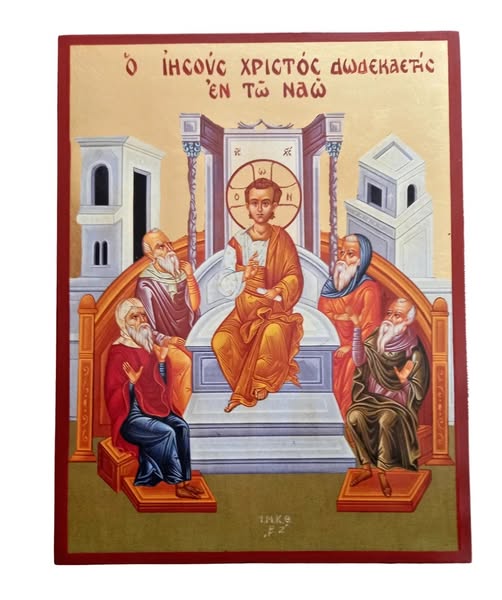
Our reading is Luke 2:41-52. According to the scriptures, it was time for the Passover, a holy festival when the Jews remembered how God had liberated their ancestors from Egypt. The law required all Jewish men to go to Jerusalem to observe the Passover, but legislation was not necessary. People wanted to go to Jerusalem; Passover served as a great reunion. Entire communities would travel together because there is safety in numbers. The women and younger children would travel in the front of the caravan. The men and older boys would travel in the rear of the caravan. That is how Mary and Joseph traveled to Jerusalem.

According to the scriptures, Jesus was twelve-years-old at the time of the Passover. Do you remember being twelve years old? It is an awkward age. You are no longer a child, yet you are not an adult. Being twelve years old is hard. Does Jesus travel in front of the caravan with his mother and the other women, or does Jesus travel in the rear of the caravan with his father and the other men? It is not surprising that Mary and Joseph lost track of Jesus. Mary thinks Jesus is with Joseph and Joseph thinks Jesus is with Mary. It is at the end of a long day they discover Jesus is missing.  Mary and Joseph must have panicked. Yet, it is in this family crisis we learn three divine truths about being twelve years old. Let me explore each one.

This is divine truth number one: Every twelve-year-old needs a foundation.

According to the scriptures, it took Mary and Joseph three days to find the twelve-year-old Jesus. According to verse 46, they found him in the temple courts with the teachers of the law. He was listening and asking questions. Jesus was not lecturing, Jesus was learning. Jesus had a few questions, because Jesus had a few spiritual hunger pains. Augustine of Hippo (354-430) said, “Our hearts are restless until we find our rest in God.”  When you are twelve years old you discover your own mortality. Death is uncomfortable for mortals. I have never met a person who didn’t want to go to heaven.

In the nineteenth century Scottish preacher Horatius Bonar (1808-1889) asked 253 Christian friends, “at what age were you converted?” Here’s what he

discovered:

Under 20 years of age – 138

Between 20 and 30 – 85

Between 30 and 40 – 22

Between 40 and 50 – 4

Between 50 and 60 – 3

Between 60 and 70 – 1

Over 70 – 0

Those numbers are revealing. Most converts accept Christ when they are young. The older a person grows, the less likely they will be converted. In the results he found that fifty-five percent of his study group were converted at twenty years of age or under. Ninety-seven per cent of his study group accepted Christ under forty years of age. This study was done in the nineteenth century, but those figures hold true today.

Today, twelve-year-olds have many options. I love to see children participating in wholesome activities. I love to see them playing pee-wee football. I love to see them in the band. I love to see them at the YMCA. I love to see them playing baseball and basketball. Those are great things, but where I really want to see them is in heaven! Twelve-year-olds have spiritual hunger pains. Wholesome activities are not enough, they need a spiritual foundation. Twelve-year-olds need Jesus!

Divine Truth Number Two: Twelve-year-olds need family and friends. According to verse 44, when Mary and Joseph discover that the boy Jesus was missing, they start to look for him among family and friends. This is not surprising because they understood what we often forget – it takes an entire community to raise a child.

When I served a church, I always viewed baptizing a baby as a great privilege. There are many things to love about infant baptism. The baby is always precious. The parents are always proud. Numerous family members and friends come to witness the event. It is easy to overlook the part the church plays in infant baptism. In traditional Methodist baptism, the church promises to create an atmosphere where the child can learn about Jesus, so that some day those babies can accept Jesus for themselves. Through the eyes of God, we are not just church members. We support and encourage one another in the Christian faith. Twelve-year-olds need family and friends.

Divine Truth Number Three: Every twelve-year-old needs a father. According to the scriptures, when Mary and Joseph discovered Jesus sitting in the temple courts being instructed by the teacher, they were upset. Mary reprimands the boy and Jesus responds by saying his first recorded words. In verse 49 Jesus says, “Why were you searching for me? Didn’t you know I had to be in my Father’s house?” The Greek word Luke uses for “Father” is not the one used to describe a relative. The Greek word Luke uses can also be translated “Daddy.” The twelve-year-old Jesus took God out of the cold formal structure of the temple and placed him at our point of need. I have never met a person who wasn’t interested in God when life was hard.

When I was twelve years old my Uncle Carlisle had a fatal heart attack. He was forty-four years old. He was my father’s younger brother and my father’s only brother. I remember going to the funeral. I sat between my parents. It was at the funeral that I saw something I had never seen before. My father cried uncontrollably. I never saw my father cry again, but I will never forget his grief. Life is hard! From time to time, we all need help. It was my mother who held my hand until the service was over. However, there are times when we need God, our daddy, to hold our hands when life is hard. Twelve-year-olds need a father.

I was twelve years old in 1969. Richard Nixon (1913-1974) was president of the United States. Joe Namath (born 1943) was quarterback of the World Champion New York Jets, and America was at war in Vietnam. It is hard being twelve years old! I wasn’t a child, but I wasn’t a man! I will admit it. Like all twelve-year-olds, I needed a few things. First, I needed a foundation. I wouldn’t accept Jesus as my Lord and Savior for another five years! Second, I needed family and friends. I needed a group of people to support and guide me. I needed a group of people to love me. Third, I needed a heavenly Father to help me when life was hard. Do you remember being twelve years old? Perhaps you needed those things too? Maybe you still do?
Modeling Discipleship

According to the liturgical calendar, Christmastide lasts twelve days – between December 25 and January 5. The liturgical season of Epiphany begins on January 6 and ends on Ash Wednesday. Epiphany means “manifestation.” It is the season we celebrate the fact that Christ came to save all people from their sins, both Jews and Gentiles. Our reading, Matthew 2:1-12, is the traditional reading on Epiphany Sunday. The story of the Magi is one of the most known and loved stories in the Bible; they complete the Christmas narrative. Yet, hiding in the tradition of their story is a fact we cannot ignore – the Magi give us the perfect model for discipleship. Consider these three things with me.

First, the Magi bowed down. The Magi were Babylonian astrologers or priests, who had seen a star that announced the birth of a newborn king. The Magi assumed the newborn king was born in the insecure palace of Herod the Great in Jerusalem. The chief priests and the teachers of the law corrected the Magi’s mistake. The newborn king would be born a few miles south of Jerusalem in Bethlehem. A short time later, the Magi found the infant Jesus in a house. When they arrived, they bowed down and worshipped Jesus. (Verse 11) What does it mean to bow down? It means the Magi, with all their worldly influence, knowledge and power, humbled themselves before Jesus. If you want to be a disciple of Jesus Christ, then you must humble yourself before him too. How humble are you? 

I love this story: Shortly after Booker T. Washington (1856-1915) took over the presidency of Tuskegee Institute in Alabama, he was walking in an exclusive section of town when he was stopped by a wealthy white woman. Not knowing the famous Mr. Washington by sight, she asked if he would like to earn a few dollars by chopping wood for her. Because he had no pressing business at that moment, Professor Washington smiled, rolled up his sleeves, and proceeded to do the humble chore she had requested. When he was finished, he carried the logs into the house and stacked them by the fireplace. A little girl recognized him, and she later revealed his identity to the lady. The next morning, the embarrassed woman went to see Mr. Washington in his office at the Institute and apologized profusely. “It’s perfectly all right, Madam,” he replied. “Occasionally I enjoy a little manual labor. Besides, it’s always a delight to do something for a friend.” She shook his hand warmly and assured him that his meek and gracious attitude had endeared him and his work to her heart. Not long afterward she showed her admiration by persuading some wealthy acquaintances to join her in donating large sums of money to the Tuskegee Institute. Isn’t it amazing how God can use a humble person? Do the people in your life consider you humble? The Magi bowed down.

Second, the Magi opened up. The Magi didn’t just bow down. They also offered him gifts. You know the gifts, they gave gold, frankincense and myrrh. Each one of the gifts reveals something about the life that Jesus is going to live. The gold was a gift for a king. The frankincense was a gift for a priest. The myrrh was a gift for one who was going to die. The Magi’s gifts reveal the generosity of the Magi. The Magi gave their best. If you want to be a disciple of Jesus Christ, then you must give him your best as well. One of the characteristics of the Christian faith is generosity. Hebrews 13:16 says, “And do not forget to do good and to share with others, for with such sacrifices God is pleased.” I have seen that verse played out within the life of the church many times.

Annually, my wife Kathryn and I travel to Estonia to help with Christian Camp Gideon. Normally, we travel alone, but last year we met a couple from Iowa at camp, who had heard about the camp but had never traveled to Estonia. Like us, they were moved by the people and the mission of the camp. Giving of their time was not enough, so they inquired about what the camp needed. It turned out the camp needed a riding lawn mower costing approximately $12,000. In the end, they bought that lawn mower and demonstrated their faith. One of the characteristics of the Christian faith is generosity. Do the people in your life consider you generous? The Magi opened up.

Third, the Magi changed. Once the Magi had worshipped Jesus and gave their gifts, they long to return home. They planned returning by the same route from which they came. There is no reason to believe they would have changed their itinerary, however they had a dream that warned them to go home a different way. Verse 12 says, “They returned home by another route.”  Jesus had changed their normal way, and they tried a new way. How much is Jesus changing your life? Are you willing to try something new for Jesus or do you like yourself as you are? That leads us to an interesting question.

How has the Christian Faith changed your life? The Christian Faith should completely transform you, because the Christian Faith offers us hope and a purpose. The Christian Faith should change your behavior, because you are to be more like Jesus, making you more empathetic and resilient. The Christian Faith should be changing your identity, because Jesus offers us spiritual renewal. The Magi changed. Have you?

According to recent polls, approximately 45% of Americans make New Year’s resolutions. Some resolutions revolve around personal health: exercise more, eat healthier, lose weight. Some resolutions revolve around finances: save money, pay off debt, follow a budget. Some resolutions revolve around personal well-being: being happier or learning something new. I hope you make a resolution to be more like the Magi, who took their discipleship seriously. They bowed down and humbled themselves. They opened up and gave generously. They changed and followed God’s direction. German Lutheran theologian Dietrich Bonhoffer (1906-1945) once said, “Christianity without discipleship is always Christianity without Christ.”

The Rest of the Story

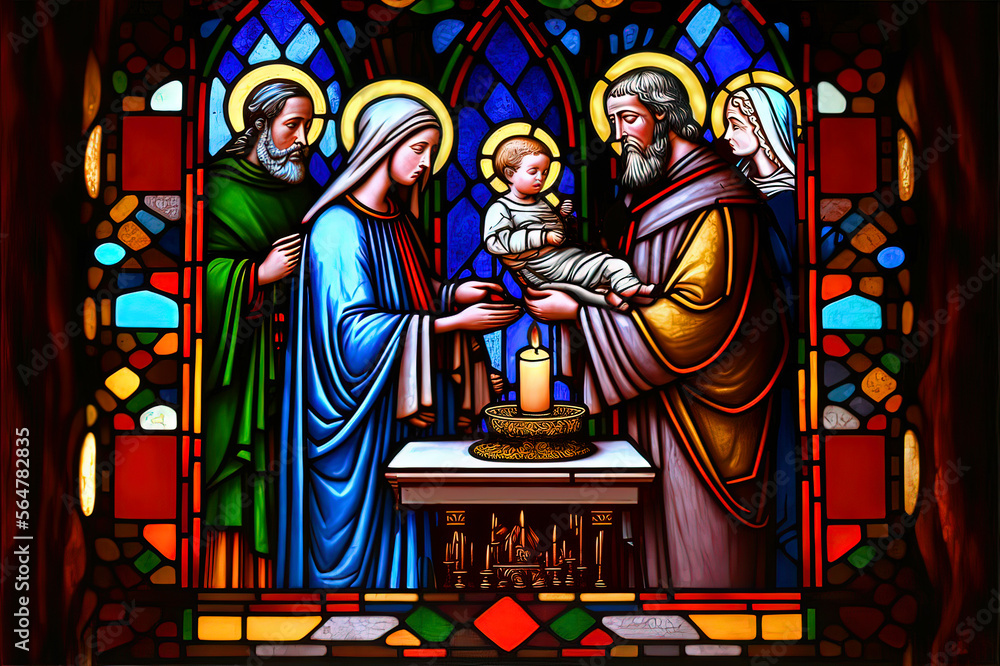
Our reading is Luke 2:21-40. It gives us the rest of the Christmas narrative. Never forget, Joseph and Mary were a Jewish couple who practiced the customs of their faith. Our reading records two such practices. The first came when Jesus was eight days old. For it was on that day that Jesus was formally named and circumcised. The second came when Jesus was forty days old. The Old Testament law, Leviticus 12:2-8, required all women who gave birth to a boy to go to the temple to offer a sacrifice of purification. Mary went and sacrificed something as small as two doves or pigeons. Both practices were scripted. The only thing that makes these stories noteworthy are the characters they meet at the temple. In the end, they both praised God for two different reasons. Let me look at each one.

The first person Mary and Joseph encountered was Simeon. He is described as righteous and devout. He had been waiting for years for the consolation of Israel. What does that mean? It means that he had been waiting for years for comfort. Annually, he sat at the Seder and remembered the great things that God had done for His people. It was God who sent the plagues. It was God who parted the sea. It was God who provided for his people in the wilderness. God did some mighty things for them, but that seemed like ancient history. God hadn’t done anything for his generation. Those great days with God had been replaced by foreign domination. There must have been days when the Jews felt forgotten. Have you ever felt forgotten by God? When Simeon looked at the infant Jesus he was comforted because he knew God was still with them. When we think of the infant Jesus, we feel comforted too. Jesus reminds us that God is still with us!

The second person Mary and Joseph encountered was Anna. She is described as an eighty-four-year-old old prophetess. It was never difficult to find her because she was always in the temple. She had been there since the death of her husband. She knew there was something special about Jesus and spoke about the redemption of Israel. What does that mean? A large part of redemption is forgiveness. When Anna looked at the face of the infant Jesus, she knew that forgiveness was possible. After all, thirty-three years later Jesus was the perfect sacrifice for the sins of our world, so we can experience forgiveness. Simeon and Anna remind us we are not forgotten and forgiveness is possible. The infant Jesus changed everything. Let me end with this old preaching story.

Years ago, there was a very wealthy man who shared a passion for art collecting along with his son. They owned priceless works by Vincent Van Gogh (1853-1890) and Pablo Picasso (1881-1973) which adorned the walls of their family estate. As winter approached, war engulfed their nation, and the man’s son left to serve his country. After only a few short weeks, the father received a telegram, his son had died. Distraught and lonely, the old man faced the upcoming Christmas with anguish and sadness. The joy of the season had vanished with the death of his son. On Christmas morning, a knock on the door awakened the depressed old man. As he walked to the door, the masterpieces of art on the walls only reminded him that his son was not coming home. As he opened the door, he was greeted by a soldier with a large package in his hands. The visitor said, “I was a friend of your son. He died rescuing me. May I come in for a few moments? I have something to show you.” The soldier mentioned that he was an artist and then gave the old man the package. The paper gave way to reveal a portrait of the man’s son. Though the world would never consider it the work of a genius, the painting featured the young man’s face in striking detail. Overcome with emotion, the man hung the portrait over the fireplace, pushing aside millions of dollars’ worth of art. His task completed, the old man sat in his chair and spent Christmas gazing at the gift he had been given. The painting of his son soon became his most prized possession, far eclipsing the masterpieces he owned.

The following spring, the old man died. The art world waited with anticipation for the upcoming auction. According to the will of the old man, all the art works would be auctioned on Christmas Day. The day soon arrived and art collectors from around the world gathered to bid on some of the world’s most spectacular paintings. The auction began with a painting that was not on anyone’s museum wish list. It was the painting of the man’s son. The auctioneer asked for an opening bid, but the room was silent. “Who will open the bidding with $100?” No one spoke. Finally, someone said, “Who cares about that painting? It’s just a picture of his son. Let’s move on to the good stuff.” The auctioneer responded, “No, we must sell this one first. Now, who will take the son?” Finally, a neighbor of the old man offered $10 dollars. “That’s all I have. I knew the boy, so I’d like to have it.” The auctioneer said, “Going once, going twice…gone.” Cheers filled the room and someone exclaimed, “Now we can bid on the real treasures!” The auctioneer looked at the room filled with people and announced that the auction was over. Everyone was stunned. Someone spoke up and said, “What do you mean, it’s over? We didn’t come here for a painting of someone’s son. There is priceless art here! What’s going on?” The auctioneer replied, “It’s very simple. According to the father’s will, whoever takes the son…gets it all.”

It is the story of Christmas. Whoever gets the son gets it all. Simeon reminds us – God has not forgotten us – He came into the world to be with us. Anna reminds us, Jesus came into the world to offer us forgiveness and salvation. Augustine of Hippo (354-430) once said, “God loves each of us as if there was one of us.”  Merry Christmas!

The Newborn Jesus

Our reading is Luke 2:1-20, the traditional Gospel reading for Christmas. You know the story. There was a young woman by the name of Mary. In her world life began young because life ended early. Biblical scholars tell us she could have been as young as fourteen or fifteen years old. Her world saw her as a nice and respectable young girl. However, God saw more. I have no clue how many women have ever lived in the history of the world, but God chose Mary to be the mother of His son. Sexually innocent, the Holy Spirit came upon her and she conceived. Her pregnancy changed and complicated her life. She would need some help raising her baby and that help came in the name of Joseph. When he married Mary, he didn’t just sign up to help raise another man’s son – he signed up to help raise the son of God. The baby was born in Joseph’s hometown of Bethlehem. As directed, they named the baby Jesus, which means “Savior.”

According to the Centers of Disease Control, approximately 9,800 babies are born each day in America, 3,577,000 annually. According to the United Nations, approximately 385,000 babies are born each day in the world, 140,525,000 annually. That is a lot of babies, but Mary’s baby was different. Jesus was the only baby of divine origin. Jesus was the incarnation of God. In other words, Jesus was God! Just ponder that fact for a moment. God left the perfection of heaven to enter this imperfect world. It is more than the human mind can grasp. Augustine of Hippo (354-430) said, “The incarnation of God is beyond all human understanding.”  The newborn Jesus changed everything. Consider three things with me.

First, the newborn Jesus demonstrated the depth of God’s love for us. In other words, Jesus exposed the heart of God. He wasn’t satisfied studying us from heaven. God chose to enter this world and become one of us. John 3:16-17 says, “For God so loved the world that he gave his one and only Son, that whoever believes in him shall not perish but have eternal life. For God did not send his Son into the world to condemn the world, but to save the world through him.”  God came into the world to tell us that He loves us! 

Danish theologian and philosopher Soren Kierkegaard (1813-1855) told the story of a prince who was running an errand for his father one day in the local village. As he did so, he passed through a very poor section of the village. Looking through the window of his carriage, he saw a beautiful young peasant girl walking along the street. It was love at first sight. He could not forget her. He returned to the village, day after day, just to see her. His heart yearned for her, but there was a problem – how could he develop a relationship with her? He was the prince and she was a peasant. He could order her to marry him. It was within his power to do so, but he wanted this girl to love him from her heart, willingly. He could put on his royal garments and impress her with his regal entourage, drive up to her front door with soldiers and a carriage drawn by six horses. But if he did this, he would never be certain that the girl loved him or was simply overwhelmed with his power, position and wealth. The prince came up with another solution – he moved into the village dressed only as a peasant. He lived among the people, shared their interests and concerns, and talked their language. In time, the young peasant grew to know him, and then to love him. In time, they married. That is the story of Christmas! The newborn Jesus demonstrated the depth of God’s love for us.

Second, the newborn Jesus revealed our greatest human need. Many believe our greatest human need is money. Some believe our greatest human need is to be loved and accepted. God knows our greatest human need is to be forgiven. Romans 5:8 says, “God demonstrates his own love for us in this: While we were still sinners, Christ died for us.”  

Someone once wrote these memorable words: 

If our greatest need had been information, God would have sent us an educator; If our greatest need had been technology, God would have sent us a scientist;  

If our greatest need had been money, God would have sent us an economist; 

If our greatest need had been pleasure, God would have sent us an entertainer; But our greatest need was forgiveness, so God sent us a Savior. 

You cannot earn your salvation by your good deeds. Our only hope of salvation is with Jesus. Do you know Jesus as your Lord and Savior? The newborn Jesus exposed our greatest human need.

The purpose of your life is a fundamental human question. Some of the greatest minds in human history have tried to answer it, Socrates (470-300 BC), Aristotle (384-322 BC), Soren Kierkegaard, Friedrich Nietzsche (1844-1900) and Albert Cumus (1913-1960). American essayist Ralph Waldo Emerson (1803-1882) said, “The purpose of life is not to be happy. It is to be useful, to be honorable, to be compassionate, to have it make some difference that you have lived and lived well.”  The Westminster Confession of faith says that the purpose of life is to glorify God.

Third, the newborn Jesus is the origin of our divine purpose. 1 Timothy 3:16 says, “Beyond all question, the mystery of godliness is great: He appeared in a body, was vindicated by the Spirit, was seen by angels, was preached among the nations, was believed on in the world, was taken up in glory.”  That verse tells us the difference Jesus has made in our world. The question is how much of a difference has Jesus made in your life?

As a disciple of Jesus Christ, the newborn Jesus is the origin of your purpose. If you know Jesus as your Lord and Savior, then you know two things. First, you know you are going to heaven. Thirty-three years after his birth, Jesus died on the cross for your sins. He was the perfect sacrifice. Jesus did all the work. Your salvation is the greatest gift you will ever receive. Second, as a person of integrity, you are going to find a new way every day to thank God for saving your soul. Your purpose is not your vocation. Your purpose is not your testimony. Your purpose is to glorify God. What have you done lately to thank God for saving your soul? We are to be practicing today what we are going to do in heaven for eternity. The newborn Jesus is the origin of your purpose.

The newborn Jesus changed everything! First, the baby Jesus exposed the heart of God. His love is so deep he became one of us. Second, the birth and mission of Jesus revealed our greatest human need, forgiveness; He is our only hope of salvation. Third and finally, the newborn Jesus is the origin of our divine purpose which is to glorify God! English writer Charles Dickens (1812-1870) once wrote, “It is good to be children sometimes, and never better than at Christmas, when its mighty founder was a child himself.”

Peace…

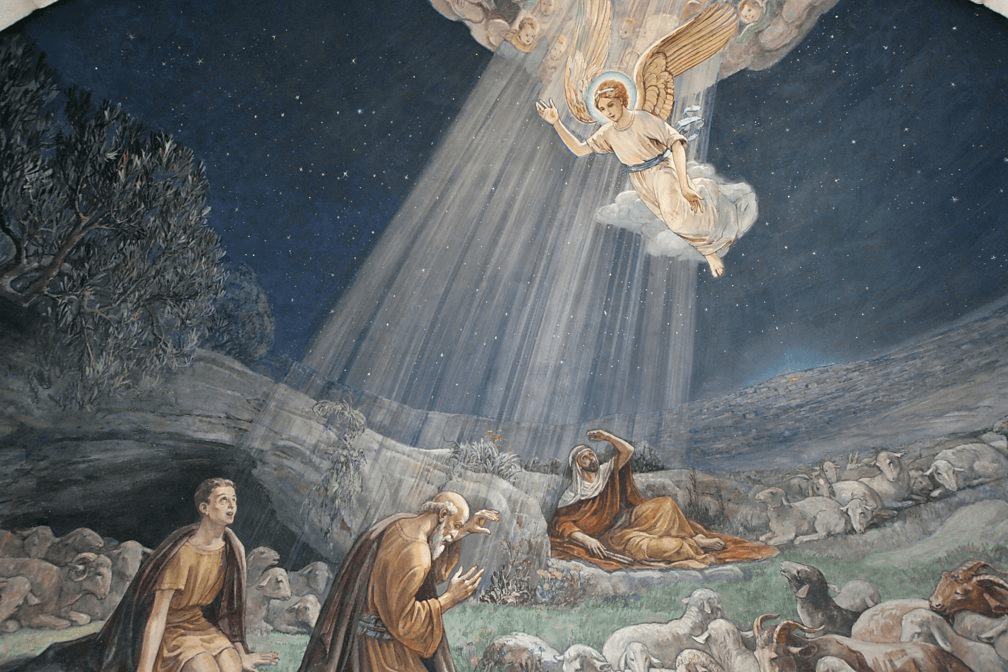
Our reading is from Luke 2:8-20. The role the shepherds played in the Christmas narrative is vital. They were common laborers who were responsible for the sheep who were to be sacrificed in the temple. The animals were valuable, and their job was dangerous. They guarded the sheep against thieves and predatory animals. To the religious leadership of the day, the lives of the sheep were more valuable than the lives of the shepherds.

There was nothing special about that night. It was like any other night, until an angel appeared to them to make the great announcement, the long-awaited Messiah had been born! That announcement is underscored by a great company of angels singing “Glory to God in the Highest, and on earth peace to men on whom his favor rests.”  Their words remind us of the greatness of God and His desire to reconcile with mankind. We find the same message of reconciliation in Second Corinthians 5:19, “God was reconciling the world to himself in Christ, not counting men’s sins against them. And he has committed to us the message of reconciliation.”  That is the Good News of Christmas. God came into the world to end the conflict with us. That divine truth changes everything. In this blog, I want to explore Jesus’ ministry of reconciliation. Consider three things with me.

First, because of Jesus we have peace with God. When you have peace with God, you have spiritual peace. Romans 5:1 says, “Therefore, since we have been justified through faith, we have peace with God through our Lord Jesus Christ.”  On the day that I accepted Christ as my Lord and Savior, I experienced just one emotion – it wasn’t joy, it was relief. The battle was over. I was at peace with God. Augustine of Hippo (354-430) once said, “Because God has made us for Himself, our hearts are restless, until they rest in Him.”

The founder of the great Methodist movement was John Wesley (1703-1791). His brother Charles Wesley (1707-1788) was a great hymn writer for the movement. He wrote more than 1600 hymns. The words of those hymns taught those early Methodists about God. Did you know he wrote the first hymn in every Methodist hymnal ever published, O For Thousand Tongues to Sing? This is what he wrote: 

I rest beneath the Almighty’s shade, 

My grieves expire, my troubles cease; 

Thou, Lord, on whom my soul is stayed, 

Wilt keep me still in perfect peace. 

Charles Wesley experienced the line he wrote, “keep me still in perfect peace.”  Have you unwrapped the greatest gift you will ever receive? Do you know Jesus as your Lord and Savior? If your answer is anything but “yes”, don’t wait. You have been at war with God long enough. The gift of Jesus offers us spiritual peace. Jesus came to offer us peace with God.

Second, because of Jesus we have the peace of God. The peace of God is more than the absence of conflict. It is a deep-seated tranquility that comes from trusting in God’s sovereignty and grace. You can entrust this world to God. Philippians 4:6-7 says, “Do not be anxious about anything, but in everything, by prayer and petition, with thanksgiving, present your requests to God. And the peace of God, which transcends all understanding, will guard your hearts and your minds in Christ Jesus.”  This is important because some things are out of our control. Never forget, God is omnipotent.

I have a five-month-old granddaughter, Violet. She has a two-and-a-half-year-old brother, Romeo. My wife, Kathryn and I watch them once a week. God was very wise when he entrusted babies to young people. Our day of babysitting is exhausting, but it is also rewarding. I want to know them, and I want to be part of their lives. At the end of the day, we limp out of their home, but we are always excited about returning the next week. I love my grandchildren with my entire heart, and I cannot help worrying about the world they are inheriting. Our world is facing some massive problems, and it does not appear to be improving. I am thankful for the peace of God, because I can entrust my grandchildren to God. I will love my grandchildren for the rest of my life, but God will love them for eternity. Canadian theologian J. I. Packer (1926-2020) said, “The peace of God is first and foremost peace with God.”  Jesus came to offer us peace with God, so we can experience the peace of God. Yet, there is one more.

Third, Jesus expects us to have peace with others. When the Civil War ended in 1865 there was a great amount of hatred in the country. Some feared it would never end. However, time has a way of healing old wounds. In 1885, former General-in-Chief of the Union Army and former President of the United States Ulysses Grant (1822-1885) died. Four years later, former President of the Confederacy Jefferson Davis (1808-1889) died. However, their widows, Varina Davis (1826-1906) and Julia Grant (1826-1902), lived on and settled near each other. As fate would have it, they became close friends. They did something their husbands with all their armies failed to do. They modeled peace for a new generation. Are you a model of peace for your world?

Do you have any broken relationships in your life? How would those relationships improve if you applied Christian principles to them? Christmas is a great opportunity to fix your broken relationships. It may not be an easy thing to do but it is an important thing to do. It takes two people to reconcile. God only expects you to do your part.

Matthew 5:9 says, “Blessed are the peacemakers for they shall inherit the Kingdom of God.”  Have you done everything in your power to fix all your relationships? Jesus offered the world reconciliation. There is peace with God. There is the peace of God. There is peace with others. 

It really is quite a story. The shepherds were just common laborers working the night shift. Without warning their entire world changed in an instant. An angel appeared and told them the big news – the long-awaited Messiah had been born! That is the Good News of Christmas. God came into the world to end the conflict with us. The angel choir sang it then, but it is still true today, “Glory to God in the Highest, and on earth peace to men on whom his favor rests.” 

What Does God Look Like?

In Crystal McVea’s book, Waking Up in Heaven, she describes an experience she had in December of 2009. She was hospitalized with pancreatitis and accidentally overdosed on pain killers. She died for nine minutes. She said, “At the exact moment I closed my eyes on Earth, was the exact moment that I opened my eyes in heaven.”  She described heaven as a tunnel filled with bright light and felt the problems of this world fall away. Communication with God was uninterrupted. McVea said, “Time began to slow down and suddenly I was in the presence of God. I fell on my knees to worship him, and I was saddened by the fact that I hadn’t done more in His name while I had been here.”  She chose to return to this world when she heard her mother’s voice. However, she knows heaven is still waiting for her in her future. 

Do you believe Crytal McVea’s story? Doubters would say her story is the result of excess pain killers. Believers would say she saw God. If she saw God, then she was one of a handful who have ever seen God. People have longed to see God from the very beginning. That leads us to our question: what does God look like? There is no simple answer.

Don’t look to the Bible for an answer because the Bible doesn’t give us a description of God. In the Old Testament only four people saw God. There was Abraham, Isaac, Jacob and Moses. You can find those accounts in Genesis 17, 35 and 48. However, in none of those accounts is there a description of God. In Exodus 33:18-23, we are told that Moses requested to see God, but his request was denied. God said no one can see Him. Do you remember the story? God places Moses on the side of a mountain and covers his eyes. God passes in front of Moses, but Moses only sees his back. The Old Testament is no help. The New Testament is no help. God is always hidden by a cloud, as at Jesus’ baptism and the transfiguration.   

The art world has tried to answer the question, what does God look like? The image of God has inspired some of the greatest pieces of art in history. No one tried to portray God in art until the 10th century because of fear. In the 10th century some part of a human body appeared in art to represent God, a hand or a small part of a face. By the 12th century private art was created and showed more of God. During the Renaissance both the Roman Catholic and Protestant churches protested the art world because they showed too much of God’s form. In 1511, Michelangelo (1475-1564) painted the Sistine Chapel. God’s fingers touch to create Adam. I find this information interesting, but it doesn’t answer our question, what does God look like?

Our reading, Isaiah 9:2-7, gives us hope at seeing God. Isaiah lived seven hundred years before the birth of Christ. They were politically stormy times for God’s Chosen People. Israel was in a state of decline, and the Assyria Empire was expanding. The people were hopeless, but Isaiah saw the big picture and offered them hope. He told them God had not forgotten them. With God, there is always hope. In verse six we are told their hope would come in the form of a child. We understand that child to be Jesus, the incarnation of God. You know the story.

It all began with an unwanted pregnancy. A young woman named Mary. She was a virgin, yet she finds herself pregnant. She is the hot topic in her little town of Nazareth. With very few options she travels to her aunt’s home, Elizabeth, to escape the judgment of her community. Elizabeth accepts her unconditionally and offers her hope.  Elizabeth tells Mary God has a plan for her life. A man named Joseph would take Mary as his wife, and they will travel to Bethlehem to be counted in the census. Mary gives birth to this unwanted child in a stable built for animals. But God cares, He sent angels to some shepherds, who risk everything to see this baby. When they arrived, they saw the baby. However, they were not just looking at a newborn. They were looking at God. At Christmas, we celebrate the incarnation of God, Jesus! However, the story does not end there.

Jesus grew into adulthood. His earthly ministry began at 30-years-old and ended tragically at 33-years-old. On what we call Good Friday, he was executed Roman style like a common criminal and buried by his loved ones. The good news is the grave couldn’t hold Jesus. On the following Sunday, a few women make the great discovery that Jesus had been resurrected. The resurrected Jesus witnessed to his believers for 40 days before ascending into heaven. Ten days after Jesus ascended into heaven the Holy Spirit was unleashed on all believers to help them minister in the name of Jesus. Our good deeds are a way of thanking God for saving our souls and a way of reminding people about Jesus. In a perfect church, when people look at us, they should see God. When was the last time someone saw God in you?

During the Thirty Year’s War in Europe (1618-1648), the King of Sweden, Gustavus Adolphus (1594-1632), was killed in the Battle of Lutzen, in present day Germany. Sweden was thrown into mourning, and government officials met to determine how to replace the king. Some suggested a republic; others thought the crown should go to Adolphus’ cousin, the king of Poland. The chancellor of Sweden arose and said, “Let there be no talk of a republic or of Polish kings, for we have in our midst the heir of the great Gustavus, his little daughter, who is 6 years of age.”  Some protested because they had never seen her. The chancellor said, “Wait a minute, and I will show you.”  He brought in Christina, daughter of the king, and placed her on the throne. One of the representatives, who was especially suspicious of the move, pressed forward and gazed intently into her face. Then turning to the assembly, he exclaimed, “Look at her nose, her eyes, her chin! I see in the countenance of this child the features of the great Gustavus. She is the child of our king!”  From all quarters of the room rang the proclamation, “Christina, Queen of Sweden!” Let me ask you this question. 

Has anyone ever seen God in you? I am not talking about the way you look. I am not talking about your chin or your smile. I am not talking about your eyes or your cheek bones. I am talking about the things you do. I am talking about your very presence. You are a disciple of Jesus Christ! What do people learn about God by looking at you? Do you remember Crystal McVea? She said the words I hope you never say. Of her nine minutes in heaven, she said, “I fell on my knees to worship him, and I was saddened with the fact that I hadn’t done more in His name while I had been here.”  How much have you done in His name? How much do you look like God?

For Believers Only

In 2013 I preached a season series called: Christmas Is Not Your Birthday. My thoughts were not original. I based the whole series on a study of the same name written by Mike Slaughter (born 1951), who pastored The Ginghamsburg Church in Tipp City, Ohio for nearly four decades. Living in a post Christendom world, he is afraid many have forgotten the true meaning of Christmas. According to the National Retail Association, the average American home will spend more than $1,100 on Christmas this year. The United States will spend more than one trillion dollars on Christmas. I have nothing against Christmas, but I agree with Slaughter. Christmas is about the incarnation of God, Jesus. There is a spiritual side of Christmas which should not be forgotten.  That takes us to our scripture reading, 1 Corinthians 1:3-9.

1 Corinthians was written by the Apostle Paul in the year 55 AD while he was staying in Ephesus. At the time, Corinth was a commercial giant, boasting 650,000 people, both free and slave. She was known for three things. First, there was her culture. Her Greek population valued philosophy and wisdom. Second, there was her religious diversity, boasting at least twelve temples to various gods. Third, she was known for her immorality. It is not surprising that the Christian congregation in Corinth began to fracture under the weight of its secular world. The theme of the entire book revolves around the topic of proper Christian conduct. That is why this epistle still speaks to our world.

We are more like the Corinthians than we care to admit. Like them, we are surrounded by an arrogant world which claims to have all the answers. Like them, our faith in Jesus Christ makes us different. Like them, our world is motivated by personal profit and personal pleasure. Like them, we are surrounded by people who ignore the truth. Jesus is the greatest life that ever lived. Our reading exposes three divine truths for those for those who believe in Jesus. They are foreign to nonbelievers. In this blog, I want to explore each one.

First, on the day you accepted Jesus as your Lord and Savior you were given grace. 1 Corinthians 1:4-6 says, “I always thank God for you because of his grace given you in Christ Jesus. For in him you have been enriched in every way–in all your speaking and in all your knowledge– because our testimony about Christ was confirmed in you.”  In other words, we are saved by grace and by grace alone. It is impossible to earn your salvation. At Christmas we celebrate that grace came in the name of Jesus, who died for our sins. 

In 1830, a man named George Wilson was convicted of robbing the U.S. mail and was sentenced to death. Due to a friend’s influence, President Andrew Jackson (1767-1845) issued a pardon for Wilson, but he refused to accept it. The matter went to the Supreme Court. Chief Justice John Marshall (1755-1835) said, “A pardon is a slip of paper. The value of which is determined by the acceptance of the person to be pardoned. If it is refused, it is no pardon.” History tells us Wilson was executed. That is the story of many people. They refuse their pardon and believe they can earn their salvation. I hope that is not your story. We are saved by grace and by grace alone.

Second, on the day you accepted Jesus as your Lord and Savior you were given gifts. 1 Corinthians 1:7 says, Therefore you do not lack any spiritual gift as you eagerly wait for our Lord Jesus Christ to be revealed.”  What is Paul saying? He is not talking about earthly gifts, like Christmas presents. Paul is talking about the kind of gifts that are needed in the life of the church. Paul expounds on these gifts in 1 Corinthians 12 through 14. The gifts include wisdom, knowledge, council, fortitude, understanding, piety and fear of the Lord. This list is far from complete. You may have received another gift. What gift has God given you? We are to use these gifts generously.

On April 6, 1999, a Louisiana church had its Easter services interrupted by a gunman wearing a ski mask. The robber held a gun to the head of one of the parishioners. He told them he would shoot the man if he didn’t collect enough money. The money was collected but the gunman wasn’t happy. As the gunman left, he was disappointed with the small take. You can look at the story in two ways. Either most of the people just came with a few dollars to give, or they thought that the life of their fellow parishioner wasn’t worth much. Either way, they had mixed up priorities. This is the question you must answer. How much are you willing to sacrifice for a fellow church member? God expects us to be generous with our gift.

Third, on the day you accepted Jesus as your Lord and Savior you were given gall. People with gall have a brazen boldness coupled with stubborn assurance. It means remaining fast in the faith while the rest of the world is telling you to compromise your faith. 1 Corinthians 1:8-9 says, He will also keep you firm to the end, so that you will be blameless on the day of our Lord Jesus Christ. God is faithful, who has called you into fellowship with his Son, Jesus Christ our Lord.” How much of your faith have you compromised? 

Years ago, I was up late channel surfing. I came across one of those Hallmark Christmas movies. I can’t remember which one. It was either A Christmas Bride, A Bride for Christmas or Grandma’s Christmas Wedding. It was the one where the cute girl meets the cute guy. They are interested in each other, but life keeps them apart. In the end, after drinking gallons of hot chocolate, they end up together. As they are kissing, the snow begins to fall, and all their friends show up for Christmas dinner.

The scene that caught my attention was the community Christmas pageant. What caught my attention was the music. The children’s choir sang Silent Night. There is history and depth to that song. It was completed in 1818 in Austria. The words were written by Joseph Mohr (1792-1848). The tune was written by Franz Gruber (1787-1863). When I heard the song, I wanted to see how Hallmark would handle the birth of Jesus. In their version, Jesus was eliminated. In their version, as the children’s choir sang Silent Night, Santa was on the roof delivering presents.I was numb by the scene at first. Then, I began to question, how can you have Christmas without Jesus? Christmas is about Jesus. You will receive gifts, but Christmas is not your birthday! 

Never forget, you are a disciple of Jesus Christ! Our belief in Jesus makes us different from the rest of the world. The great Methodist hymn writer Charles Wesley (1707-1788) once penned these words, “Hark the herald angels sing, “Glory to the new-born king.” Peace on earth, and mercy mild, God and sinners reconciled!”  And all of God’s people said, “Amen!”

An American Tradition

An American Tradition

Historians tell us the first recorded thanksgiving took place in Jamestown, Virginia. The winter of 1610 had been harsh at Jamestown. Many settlers died. The group that once totaled 409 had been reduced to 60. Tradition tells us the survivors prayed for help, without knowing when or how it might come. When help arrived, in the form of a ship filled with food and supplies from England, a prayer meeting was held to give thanks to God, and the tradition continued.

The Thanksgiving Day we recall annually occurred in Plymouth, Massachusetts in 1621. The Pilgrims wanted to go to Virginia, but they arrived in New England in November 1620. There was no time to build permanent shelters, so they survived that first winter in crude temporary housing. In time, disease and death came, only 51 of the original 102 saw the arrival of spring. When the warmer weather came, the Pilgrims were forced to make a painful choice. Their ship, the Mayflower, was a rented ship. They could stay in the New World or return to England. Obviously, they stayed and their fortunes began to change.  Friendly Native Americans helped them plant 30 acres of wheat and build permanent shelters. By the fall of 1621, their homes were built, and their crops were harvested. They decided to observe a day of thanksgiving to thank God for His blessings. The tradition of gratitude continued.

In 1783, George Washington (1732-1799) declared a “Thanksgiving Day” because the Revolution was over. In 1863, President Abraham Lincoln (1809-1865) proclaimed the last Thursday in November 1863 as “a day of thanksgiving and praise to our beneficent Father.” Each year afterward, for 75 years, the President formally proclaimed that Thanksgiving Day should be celebrated on the last Thursday of November. In 1939, President Franklin D. Roosevelt (1882-1945) set it one week earlier to help the struggling economy. Expressing gratitude is an American tradition. That takes us to our scripture reading. 

Our reading is Luke 17:11-19, the traditional Gospel lesson for Thanksgiving. Jesus was traveling near the border of Samaria and Galilee. As he travels, he encounters various people, including ten lepers. The disease still exists in the world today. In the United States approximately 100 cases of leprosy are reported annually. Leprosy is a highly contagious skin disease caused by a certain bacterium. Today, it is treatable. In Jesus’s day, it was not.

In Jesus’s day victims of leprosy were forced to live in isolation, away from family and friends, in leper colonies. That is the story of the ten men in our reading. They are living with leprosy without any hope of a cure. Their only hope is Jesus, because he was known for his healing power. The law prevented them from having contact with Jesus, so they yell at Jesus as he passes. Their plan worked and Jesus heals each one. They are inspected by a priest and reenter society. However, the story does not end there. Only one of the ten returns to Jesus to say, “thank-you.” The other nine resume their lives. That fact does not escape Jesus. Never underestimate the power of gratitude. How many truly grateful people do you know?  

History tells us the multimillionaire, Andrew Carnegie (1835-1919) gave a distant relative a one-million-dollar gift. At the same time, Carnegie gave $365 million to various public charities. The relative cursed Carnegie because he only received one-million-dollars. That is like receiving $17 million in our world today. He wanted more. Maybe that is the story of our time? God has given us so much, but we complain because we want more.

In this blog, I want to help you cultivate a grateful spirit. I am going to ask you three questions. These questions are not original; they come from the Japanese self-reflective practice called Naikan. There is a balance between these three questions. If you answer these three questions honestly, you will find yourself more grateful. In the end, you will be like the one leper who returned to Jesus to say, “thank-you.”

Thanksgiving is rooted in hardship. One of the perks of being a pastor was sharing sacred moments with my parishioners. Sometimes, a joyful experience like a wedding, birth or baptism. Sometimes, it is rooted in some of life’s most challenging moments. I talked regularly about others’ health and diseases. I visited nursing homes and visited people who didn’t remember me. I heard about their broken relationships and their disappointments. Those things never wore me down. They had the opposite effect. Daily, I would return home and think, “I have no problems.” Other people’s challenges made my little problems disappear. Years ago, I learned hard times make you appreciate the good times. That is what makes this Gospel story so perplexing. 

This is question number one: what have you received? In the story, all ten received healing, but only one came back to express gratitude. How much have you received in your life? The list is endless, so think of the basics. God has given you life, free will, providence, relationships, and the opportunity of salvation. When was the last time you said, “Thank you!” for the basics of life.

Henrietta “Hetty” Green (1834-1916) was a stockbroker. Some called her called “The Witch of Wall Street,” because she was a stockbroking legend. When she died in 1916, her net worth was $200,000,000. Today, she would be worth $4 billion, but she hated spending money. There is no other way to say it, she was cheap. Her only piece of clothing was a long flowing black dress. She lived in her office and abandoned her apartment to save money. People hated going to her office because she turned off the heat to save money. For a long period of time, she only ate cold oatmeal because heating it cost too much. 

W. Clement Stone (1902-2002) was an American businessman and philanthropist. He once said, “If you are really thankful, what do you do? You share.”  That is exactly what he did. Over his lifetime he gave away over $275 million. He gave to civic groups, mental health groups, Christian organizations, the Boys Club of America and the National Music Camp. He once said, “All I want to do is change the world.”  Can I ask you a question? Are you more like “Hetty” Green, the cheap-skate? Or are you more like W. Clement Stone, the philanthropist? 

This is question number two: what have you given? You don’t have to give a million dollars away, but you must give something away. It is all part of being in a community. It is all part of being a Christian. You can give financially. There are many non-profits who need help, including your local church. You can give your time and talents. In other words, volunteer and use your skills. You can give tangible goods, like some homemade items or care packages. You can give away kindness by helping a neighbor or listening to a friend. What are you going to give away to help someone else this Thanksgiving?

Several months ago, the FBI released the hate crime statistics for 2024. The numbers aren’t pretty. There were 11,679 incidents reported that year, creating 12,443 victims.  The crimes were rooted in racism, religious intolerance, sexual orientation, and gender identity. Things are not getting better. The number may be worse at the conclusion of this year. If you are reading this blog, there is a good chance you are not guilty of a hate crime. However, that does not mean you are completely innocent. 

This is question number three: what harm have you caused? Romans 3:23 says, All have sinned and have fallen short of the glory of God.” That means you and I are sinners. What sins have you committed? The Seven Deadly Sins are a grouping of major vices within the teaching of Christianity. Do you remember them? 

1. Pride

2. Greed  

3. Lust

4. Envy  

5. Gluttony  

6. Wrath

7. Sloth

Which one of those seven do you relate to the most? What harm have you caused? How grateful are you? How did you answer the questions? I hope you are cultivating a grateful spirit because expressing gratitude is part of the American tradition.

Expressing gratitude is an American tradition. The question is, are you going to continue the tradition? Thanksgiving is more than a meal. It has been said many times, Thanksgiving is not a holiday, it is an attitude. How grateful are you?

Great Expectations

According to the Bible, Abram was selected by God to be the father of a great nation. (Genesis 12:2) His descendants were to be as numerous as the stars of the sky. To emphasize the point, God changed Abram’s name to Abraham. Abram means “exalted father.” Abraham means “father of many nations.” Yet, Abraham only had one child with his wife Sarah – Isaac. They were advanced in age when he was born. Abraham was one hundred years old and Sarah was ninety.

According to our reading, Genesis 25:19-26, Isaac was sixty years old when he became a father. Isaac’s wife, Rebekah, gave birth to fraternal twin boys. The boys’ relationship was stormy from the very beginning. Genesis 25:22 says they even wrestled with one another in the womb. At birth, their differences were exposed to the world. The first baby was red and hairy. He must have been a handsome lad. They named him Esau, which means “hairy.” The second baby, named Jacob, had a fighting spirit. He came into the world grabbing his brother’s heel. Jacob means “seizing his brother’s heel.” The differences between the two did not vanish as they grew. They became more pronounced. Esau, the hairy one, became a great outdoorsman. Jacob, the heel grabber, stayed near the tents.

In many ways, before Esau and Jacob took their first breath, the die was cast for their lives. There were expectations placed on them. Those expectations came from different sources. There were societal expectations. There were family expectations. There were divine expectations. Those same expectations are influencing us. No, we are not masters of our own destiny; we are not the captain of our own lives. To a certain degree, we are products of our surroundings. They are one of the reasons this ancient story speaks to us. Like us, Esau and Jacob were products of their surroundings too. In this blog I want to look at those three expectations.

There are societal expectations. Sociologists call them societal norms. They are unwritten rules of behavior, thought, and conduct that are accepted as appropriate within a specific group or culture. Let me give you a few examples. They are in no particular order:

          1. Giving Christmas presents

          2. Leaving a tip for a server

          3. Saying please and thank you

          4. Avoid burping in public

          5. Chewing gum with no sound

          6. Chewing food with your mouth closed

          7. Cleanliness

          8. Brushing your teeth

          9. Opening the door for a lady

          10. Surrendering your seat to an elderly person

Do I have to go on? You get the point. There are certain things our society expects. Obviously, society expects different things from men and women. It is true of our generation, and it was true of Esau’s and Jacob’s generation as well. From the moment they entered this world their culture was telling them how to act. From the moment you enter this world our culture has been telling you the proper way to act. We are influenced by societal expectations. If you don’t believe me, then don’t give any Christmas presents this year.

There are family expectations. My youngest daughter, Anna, and I graduated from the same college, the University of Mount Union in Alliance, Ohio.  As a matter of fact, her major was the same as my major, Business Administration. In several classes we had the same professors thirty-four years apart. My father never told me two things. He never said to me, “I love you.” He never said to me, “I am proud of you.” Now, it is too late. I didn’t want to make that same mistake, so I have told Anna countless times those two things. I told her on the day she graduated from college. Anna responded by saying, “Dad, I don’t know why you are so impressed. I thought we were expected to go to college!“

What does your family expect from you? Studies tell us most follow the same political party as their parents. Most are the same religion as their parents. The food we eat is influenced by our parents. Our behavior and values are influenced by our parents. Our goals and skills are influenced by our parents. The way we communicate is influenced by our parents. Our priorities are influenced by our parents. When I ask couples getting married, “Whose relationship do you admire the most?” They don’t say David (born 1975) and Victoria Beckham (born 1974). They say their parents. Esau and Jacob were influenced by their family too. Have you ever considered how your parents influenced you? Have you ever considered how influential you are on your children?

There are divine expectations. The World Population Review studied various factors in 184 countries to discover the happiest country in the world.  According to them, Finland is the happiest country in the world. Then comes Denmark, Iceland, Sweden and Israel. The most unhappy country in the world is Afghanistan. I am not surprised. I was surprised the United States is the twentieth happiest country in the world. I find that interesting. Obviously, money can’t buy happiness. The United States holds 32% of the world’s wealth. The question is: why are we number twenty? Many have been trying to figure out our low ranking. You can point to the rising cost of healthcare, political division or inflation. Those factors don’t help, but there is a spiritual answer that cannot be ignored.

Someone asked Jesus the question, “What is the greatest commandment in the law?” (Matthew 22:36) Jesus answers the question, “You are to love the Lord your God with all your heart and with all your soul and with all your mind.” (Matthew 22:37) That means you are to love God completely. In other words, God is to be the top priority in your life. That is what God expects. I believe we are number twenty because God is no longer a priority in our society. We are no longer preoccupied with our divine purpose. Today, we are preoccupied with our incomes. Many entered their vocation because of the high earning potential, ignoring personal satisfaction. That would explain why the Harris Research Group reported recently 40% of Americans are unhappy at their jobs. Money isn’t everything and money can’t buy happiness. Have you ever considered what God wants you to do? America is spiritually out of balance. How great of a priority is God in your life? Let me end with this story.

A young psychology student serving in the Army decided to test a theory. Drawing kitchen duty, he was given the job of passing out apricots at the end of the chow line. He asked the first few soldiers that came by, “You don’t want any apricots, do you?” Ninety percent said “No.” Then he tried the positive approach: “You do want apricots, don’t you?” About half answered, “Uh, yeah. I’ll take some.” Then he tried a third test, based on the fundamental either/or selling technique. This time he asked, “One dish of apricots or two?” Although soldiers don’t like Army apricots, 40 percent took two dishes, and 50 percent took one!

Expectations are influential. It has always been true. The society in which you live influences our lives. The families in which you were born influence your life. God should be influencing your life. How much is God influencing your life? American inventor and engineer Charles F. Kettering (1876-1958) once said, “High achievements always take place in the framework of high expectations.”

Childish Is Not Childlike

It was the custom for mothers to bring their children to rabbis for a blessing. They wanted their children to receive a divine touch for a good life. That is what is happening in our reading, Mark 10:13-16. This is not an isolated case. It must have happened many times. The Gospel of Mark emphasizes the great crowds that followed Jesus, so it is safe to say that many mothers brought their children on that day. The only problem was their timing.

Jesus was on his way to Jerusalem and his showdown with the orthodox leaders of the faith. At this point in his ministry, Jesus has become a controversial figure. Some loved him. Others hated him. Jesus was in the eye of a great storm. The adults recognize the seriousness of the situation, but the children missed it. Trying to protect Jesus, the disciples tried to dismiss the children. He had enough on his mind. When Jesus saw what the disciples were doing, he does something truly amazing. During that stressful time in his life, he takes time for the children. To Jesus, children were important.

Look at the text with me. Verse 14 quotes Jesus. He said, Let the little children come to me do not hinder them for to such belongs the kingdom of God. In verse 15 Jesus says, I tell you the truth, anyone who will not receive the kingdom of God like a child will not enter it. So, what can children teach us? In this blog, I want to examine three great childlike qualities. They exist naturally in the young, but we need to reclaim them. The first one is gratitude.

Years ago, a baby boy was born blind. Naturally, his parents were devastated. During those dark days, the boy formed a special relationship with a little stuffed teddy bear, which he had never seen. The bear was worn and only had one eye. The boy didn’t care. When the boy was five years old, his parents took him for his annual physical examination. It was at that appointment; their doctor gave them some hope. A new kind of surgery had been developed at the Massachusetts General Hospital, that may give their son sight. Several months later, the five-year-old boy, his worn one-eyed teddy bear and his parents flew to Boston. They met the doctor. The doctor met the boy holding his one-eyed teddy bear. After the boy’s examination, the doctor believed the eye surgery would work. The doctor wasn’t wrong. When the patches were removed from his eyes, the boy saw for the first time. The first thing the boy looked at was his one-eyed teddy bear. The boy’s parents began to cry, and the doctor smiled. Everyone looked at the boy. He held out his best friend in the world, the one-eyed teddy bear, toward the doctor and said, “I have no money to give you. Please take my teddy bear. He has a hard time seeing too! Thank-you!” Today, on the tenth floor of the White Building of the Massachusetts General Hospital there is a display case. Inside that display case is a one-eyed teddy bear. In front of that one-eyed bear is a card that reads: This is the highest fee I have ever received for my professional services rendered.”

The first childlike quality you need to reclaim is gratitude. Adults tend to feel self-important. We tend to feel like we deserve everything we have, because we work hard and take great pride in our accomplishments. That is not the story of children. Untouched, children are naturally humble and thankful for what they have. How grateful are you? The second childlike quality you need to reclaim is love.

Will Willimon (born 1946) served as a United Methodist Bishop for eight years. At one point, he served as Dean of the Chapel at Duke University. He is considered one America’s most known and most influential preachers. He tells the story of one Christmas Eve while he was at Duke. His wife was away helping her sick father, so he was left alone with their children. He rushed his children into the car for the annual Christmas Eve communion service, because he was running behind. Somewhere between their home and the church his youngest daughter, five-year-old Harriet, got sick, the kind that required a bucket! There was no time to go home, so he took his daughter and his other children to the service. He paced Harriet in the last row of the balcony, far away from anyone. He placed his other children near the front. It was the best he could do. He confessed, once the service began, he forgot about them. When communion was served, he looked down and there was his youngest son, seven-year-old William. He took the little wafer and a cup of juice. William then took a second wafer and little cup pf juice. Willimon was going to correct him, but his hands were tied. He was in front of a large crowd. William disappeared for a second but then he reappeared. However, he wasn’t near the front of the chapel. He was in the back row of the balcony sitting next to his little sister, giving her the wafer and the little cup of juice. He sat next to her, and she placed her head on his shoulder. Seven-year-old William taught his father a very important lesson. No one should be forgotten. Everyone deserves some love.

The second childlike quality you need to reclaim is unconditional is love. Adults tend to love selectively. Children love unconditionally. Mother Teresa (1910-1997) once said, “The greatest problem facing the world today is that we draw our family circles too small.” Children love everyone, even those individuals that we have forgotten. How loving are you? The first childlike quality we need to reclaim is gratitude. The second childlike quality we need to reclaim is love. The third childlike quality we need to reclaim is trust.

American author Tim Hansel (1941-2009) told a story about his son, Zac. They were rock climbing, when Tim heard Zac yell, “Hey Dad! Catch me! Zac then jumped and Tim miraculously caught him. For a few minutes no one talked. Then, Tim asked Zac, “why did you do that?” He responded with remarkable calmness: “Because you’re my Dad.” Zac could live life to the hilt because he trusted his father.

The third childlike quality in your life you need is trust. Adults are more independent. We do our best to handle all situations and that is not all bad. However, sometimes our problems are larger than our resources. Untouched, children trust the adults in their lives. How far do you trust God? Abraham Lincon (1809-1865) said, “Let us renew our trust in God, and go forward without fear.”

In the 1930s a prayer was released named “Two Prayers.” It is the perfect ending to this blog.

Last night my boy confessed to me:

Some childish wrong;

And kneeling at my knee

He prayed with tears –

“Dear God, Make me a man

like Daddy – wise and strong,

I know you can.”

Then while he slept

I knelt beside his bed,

Confessed my sins

And prayed with low bowed head,

‘Make me a child

Like my child here-

Pure, guileless,

Trusting thee with faith sincere. And all of God’s people said, “Amen!”