Do You Like Apricots?

According to the scriptures, God selected Abram to be the father of a great nation. (Genesis 12:2) His descendants were to be as numerous as the stars in the sky. To underscore this calling, God changed his name from Abram to Abraham. In Hebrew, Abram means “exalted father.” Abraham means “Father of the multitude.” Yet, Abraham only had one child with his wife Sarah – Isaac. Abraham’s blessing was passed on to Isaac.

Isaac and his wife, Rebekah, had twin boys. (Genesis 25:19-26) The boys were not identical twins; the boys were fraternal and they were nothing alike. They even battled in the womb. (Genesis 25:22) The first boy born must have been a handsome lad. He was red and hairy. For that reason, they named him Esau, which means “hairy.” (Genesis 25:25) The second boy had a fighting spirit.  He was still wrestling with his brother during his birth, grabbing his brother’s heel. They named him Jacob, which means “seizing the heel.” (Genesis 25:26) In certain ways the boys were like us. We like to think we are independent and choose our own path but, like Esau and Jacob, we are influenced by three great expectations. In this blog, I want to look at those expectations.

The first societal expectations. Our society expects a great deal from us. On May 24, 2012, Major League Baseball’s St. Louis Cardinals were hosting the Philadelphia Phillies. The game was competitive and the crowd enjoyed themselves. In the crowd was twenty-two-year-old Collin Grundstrom (born 1990). Just as the seventh inning was about to begin, a beer fueled Grundstrom decided to take his fun to a new level. He slipped into his birthday suit and streaked onto the field. The crowd cheered, but the police were not amused. In time, they caught and body slammed Grundstrom. He was charged with public nudity. One of the things our society expects from us is to keep our clothes on in public.

Every society is filled with countless expectations. Sociologists call them societal norms. Consider these societal norms or expectations. They are in no order.

          1. Giving Christmas presents

          2. Leaving a tip for a waiter (At least 15%)

          3. Saying please and thank you

          4. Avoid burping in public

          5. Chewing gum with no sound

          6. Chewing food with your mouth closed

          7. Showering

          8. Brushing your teeth

          9. Opening the door for a lady

          10. Surrendering your seat to an elderly person

You get the point. There are certain things our society expects. It is true of our generation, and it was true of Esau and Jacob’s generation too. From the moment Esau and Jacob were born their society was telling them how to act. From the moment you enter this world our society tells us the proper way to act. We are influenced by societal expectations.

The second is family expectations. Our families expect certain things from us. In 2012, my daughter, Anna, graduated from the University of Mount Union. I graduated from Mount Union in 1979. As a matter of fact, her Major was the same as my major, Business Administration with a minor in Marketing. In several classes we had the same professors over thirty years apart. I was so pleased, I told her several times I loved her and how proud I was of her on her graduation day. The last time I told her, she responded, “Dad, I don’t know why you are so impressed. I thought we were expected to go to college!”

Our families influence us in many ways. They serve as our first blueprint for future relationships, form our identities, and refine our behavior. Families shape our self-identity, provide a support system, encourage healthy behavior, promote or reduce our stigmas, and influence our priorities and opinions. When I ask couples getting married, “Whose relationship do you admire the most?” They never say Travis and Taylor. They tell me – their parents. Like it or not, you are influenced by your family.

Esau and Jacob were influenced by their family too. What did the text say? Their father, Isaac, prayed for his children before they were even conceived. It is not surprising Jacob went on to become one of the greatest spiritual leaders in the history of the world. How are you influencing the spiritual life of the youngest in your family? We are influenced by family expectations.

The third is divine expectations. God expects certain things from us. Someone once asked Jesus the question, “What is the greatest commandment in the law?” (Matthew 22:36) Jesus answered the question, “You are to love the Lord your God with all your heart and with all your soul and with all your mind.” (Matthew 22:37) That means you are to love God completely. In other words, God is to be the top priority in your life. That is what God expects.

There is something called the World Population Review, which wanted to determine the happiest country in the world. They looked at 184 different counties and examined a wide variety of facts. They discovered the happiest country in the world is Finland, followed by Denmark, Iceland, Sweden and the Netherlands. The most unhappy country in the world is Afghanistan, followed by Sierra Leone and Lebanon. According to this study, the United States is the twenty-second happiest country in the world. Many were surprised by this low ranking, because many believe money can buy happiness. That simply isn’t true. If that is true, then the United States should be the happiest country in the world, because the United States holds nearly 35% of the world’s wealth. I think we are number twenty-two because we are no longer preoccupied with God. Today, we are preoccupied with money. As a nation we are spiritually out of balance. God is to be our top priority. That is what God expects. Let me end with this question.

Do you like apricots? You did not misread the question. I am asking you about the small yellowish-orange fruit with a single pit. Some love apricots; others hate apricots. What is your answer? Do you like apricots? I read this story years ago.

A young psychology student, serving in the Army, decided to test a theory. Drawing kitchen duty, he was given the job of passing out apricots at the end of the chow line. He asked the first few soldiers that came by, “You don’t want any apricots, do you?” Ninety percent said “No.” Then he tried the positive approach: “You do want apricots, don’t you?” About half answered, “Uh, yeah. I’ll take some.” Then he tried a third test. This time he asked, “One dish of apricots or two?” This time, 40 percent took two dishes and 50 percent took one!

That young psychology student learned quickly about the power of expectations. In America, we celebrate the fact that we are free, but we are not completely independent. We are influenced by three great expectations: society, family and spiritual. I would encourage you to view those expectations as a blessing, not a curse. Perhaps, this is a better question: what do you expect from yourself?

Christianity in America

God loves everyone! God does not care about our political or racial differences. God does not care about our educational or economic differences. God loves everyone and has no trouble crossing manmade boarders. God loves Americans as much as South Africans. God loves Americans as much as the Japanese. God loves Americans as much as the French. God loves Americans as much as the Brazilians. God loves everyone! I hope that doesn’t upset you, because, according to the recent surveys, up to 64% of Americans believe the United States holds a favored nation status in the eyes of God. Our generation is not the first generation to feel this way.

Americans have always appreciated the Christian faith. It has been that way from the very beginning. Consider these quotes from some of the Founding Fathers. General of the Continental Army and First President George Washington (1732-1799) said in his farewell address, “Do not let anyone claim the tribute of American patriotism if they ever attempt to remove religion from politics.”  Chief writer of the Declaration of Independence and third president, Thomas Jefferson (1743-1826) once said, “The First Amendment has erected a wall of separation between church and state, but that wall is a one directional wall; it keeps the government from running the church, but it makes sure that Christian principles will always stay in government.”  Considered to be the architect of the Constitution and fourth president, James Madison (1751-1836) once said, ‘We have staked the whole future of American civilization not on the power of government, far from it. We have staked the future of all our political institutions upon the capacity of each and all of us to govern ourselves according to the Ten Commandments of God.”  While each one of these men had a different understanding of God, each one appreciated the Christian faith. On this 250th anniversary of the birth of the United States we can see that American patriotism and Christianity share common themes.

First, both American patriotism and Christianity require a bold declaration. In declaring our independence, the patriots made that bold declaration. In 1776, Great Britain was the greatest political force in the Western Hemisphere. The thirteen colonies paled in comparison. History tells us the cry for independence was much clearer in the northern colonies than it was in the southern colonies. Only one-third of colonialists supported the idea of independence. Yet, on July 2, 1776, the Second Continental Congress voted to declare independence from Great Britain. It took two days to refine the wording of the Declaration of Independence, but two hundred and fifty years later we can still see that the Declaration of Independence was a bold declaration.

As a disciple of Jesus Christ, you made a bold declaration too – that Jesus was your Lord and Savior! Maybe you made that declaration on a youth mission trip or during a church camp. Maybe you made your declaration during a church revival or during a small group study? Maybe you made that declaration when you were young or not so young. Maybe your conversion story includes some questionable behavior or a loving patient Sunday school teacher. The details don’t matter. That only things that matters is that you at some point in your life declared to your world that Jesus is your Lord and Savior. Both American patriotism and Christianity require a bold declaration.

Second, both American patriotism and Christianity require a high price. Did you know fifty-six men signed the Declaration of Independence? When they signed their names, their lives completely changed. Their conviction resulted in untold sufferings for themselves and their families. Of the 56 men, five were captured by the British and tortured before they died. Twelve had their homes ransacked and burned. Two lost their sons in the Revolutionary Army. Another had two sons captured. Nine of the fifty-six fought and died from wounds or hardships of the war. Carter Braxton (1736-1797) of Virginia, a wealthy planter and trader, saw his ships sunk by the British navy. He sold his home and properties to pay his debts and died in poverty. At the battle of Yorktown, the British General Charles Cornwallis (1738-1805) had taken over the home of Thomas Nelson (1738-1789). He ordered General George Washington (1732-1799) to open fire on his own home. Nelson died bankrupt. The signers of the Declaration of Independence paid a high price, but so did the colonists who supported the revolution. There is a cruel side to war that cannot be ignored.

True Christian discipleship requires a high price too. On May 23 of this year, Christian missionaries Davy (2003-2026) and Natalie Loyd (2001-2026) were killed in Lizon, Haiti. They were killed by gang members. It was reported, as Davy’s life came to an end, he refused to stop preaching the gospel; he paid the ultimate price. How much are you willing to sacrifice in service to God? Many want the benefits of Christianity without discipleship. How much of your time, natural talent and money are you willing to give up in the name of Jesus? Both American patriotism and Christianity require a high price.

Third, American patriotism and Christianity believe in a great reward. The American Revolution ended nearly two years after the battle at Yorktown. The treaty was signed in Paris in 1783. David Hartley (1732-1813) signed on behalf of Great Britain and King George III (1738-1820). John Adams (1735-1826), Benjamin Franklin (1706-1790) and John Jay (1745-1829) signed on behalf of the United States. In the treaty the United States obtained their freedom and land. Great Britain surrendered all the land they held east of the Mississippi River, approximately 1.1 million square miles.

The Christian faith includes a great reward too. On the day you declared Jesus as your Lord and Savior you suddenly had a special relationship with God. You can live at peace in this world because you know that someday you are going to heaven. The Apostle Paul wasn’t wrong. Romans 10:9 says, “If you declare with your mouth, ‘Jesus is Lord,’ and believe in your heart that God raised him from the dead, you will be saved.” Someday we are all going to heaven! Both American patriotism and Christianity include a great reward.

Only a fool would say the Christian faith has had no impact on America over the past 250 years. It provided the foundational moral language for civil equality, drove both monumental reform movements and devastating social oppressions, and inspired the constitutional architecture of religious freedom. The United States we know today would not be recognizable without the influence of the Christian faith. Let us pray Christianity will influence America for another 250 years.

A holy wooden Christian cross laying on a wood background with an American flag.

Talking about Sin

Our reading is John 8:2-11. According to the text, Jesus is in Jerusalem. Early in the morning, Jesus was in the temple courts teaching those who had assembled. Jesus is suddenly interrupted by his enemies, the teachers of the law. In a show of force, they appear with a woman who had sinned. No one debates her guilt – she is guilty of adultery. Only the woman appeared, her lover is not present. Unlike our generation, morality was important to their generation. They bring the woman to Jesus and remind him of the law. Verse five says they asked Jesus his opinion, “What do you say? “ Truth be told, the teachers of the law are not really interested in Jesus’ opinion. They are only interested in eliminating him. Verse six says it clearly, “They were using this question as a trap, in order to have a basis for accusing him.”  It is hard to see generations later, but it was one of those questions that had no right answer. If Jesus says, “No,” then it looks like he is ignoring the laws of Moses. Deuteronomy 22:22-24 says the woman must be stoned. If Jesus says, “Yes,” then he is breaking Roman law which refused to permit the Jews to take a life. It appears to be the perfect trap, but Jesus seizes that opportunity to teach the crowd about sin. The story brings up three points about sin. This is the first.

It is easy to identify the sins of others. No one in the story is questioning the woman’s guilt. We do not know the details of the story. We do not know if this was her first offense, or if she was a repeat offender. The details really don’t matter. The only thing that really matters is her guilt. Do you know of anyone who is guilty? Do you know of anyone who has done something that will never be forgotten? How easy it is to identify other people’s sins.

When I served the local church, I had a woman who came to the church regularly looking for financial help. Her name was Sarah. She looked like a victim. Unfit and unclean, she smelled like a cigarette which explained her labored beathing. Every time she came, she had a different sad story. Each story ended with her asking for money. I helped her twice. The first time was when I paid for a motel room because she had nowhere to sleep. The second time I gave her a gift certificate for food when she had no food. Let me say this clearly – I never helped her again. This is why. On the day I gave her the gift certificate gift she told me she hadn’t eaten in days. No one should be hungry, even Sarah. I prayed with her, gave her the certificate and walked her to the door. As we stood at the door she thanked me one more time with a tear in her eyes. From the door I watched her walk toward her ancient SUV. I felt good because I had helped someone. Then I looked inside of her vehicle. I was surprised to see other people. One of them threw a fast-food bag out of the window as they drove off with the gift certificate. I picked up the trash and discovered they had been to Taco Bell. They were not hungry. Sarah was not hungry. There were half eaten tacos spread throughout the parking lot. There is no other way to say it, Sarah had lied to me, and I felt like a fool. I never helped her again. Sarah’s story reminds me it is easy to identify the sins of others. How many sinners are there in your life? This is the second point about sin.

It is hard to identify yourself as a sinner. Everyone is standing around the adulterous woman. They are holding a stone and hungry for justice. Verse seven changes everything. It says, “Let any one of you who is without sin be the first to throw a stone at her.”  Suddenly everyone drops their rock, because everyone is guilty of some kind of sin. You are a sinner too. Romans 3:23 says, “All have sinned and have fallen short of the glory of God.“  It is easy to identify other people’s sins. It is hard to identify yourself as a sinner.

On December 8, 1980, British musician John Lennon (1940-1980) was shot by Mark David Chapman (born 1955) in New York City. When the news was announced a crowd assembled on that spot to remember him. Lennon was dead and Chapman was sent to Attica prison, where he is today. Through the years journalists have interviewed him. One of them asked Chapman what he regrets most about the whole event. He responded, “I am saddened that people seem to misunderstand me. I am not a bad person. I only killed one person.”  How difficult it is to identify yourself as a sinner. This is the third point about sin.

God treats sinners with mercy and compassion. God does not condone or accept our sinning; God expects us to do better. When the scene ends, only two people remain, Jesus and the woman. Jesus could have stoned her as the law required, but he looked at the woman and had compassion. When he looked at her, he did not see a sinner. He saw a broken, unhappy life, wasting her potential. Jesus cared more about the person then he did the law. God cares more about us then the law. What is more important to you, people or the law?

Years ago, I received an email from a person named Justin. I cannot tell you about him because I never met him. Our relationship was nothing more than a series of emails. He emailed me first because he had a question that was grounded in fear. He was afraid he had committed the unforgiveable sin. Mark 3:29 says, “Whoever blasphemes against The Holy Spirit will never have forgiveness, but is guilty of everlasting sin.”  I examined the passage to him. It was directed at a certain group at a certain time in history. I told him he wasn’t guilty because I was certain he was going around giving Satan credit for God’s great works. I told him God is more interested in the sinner then he is the law. I told him Jesus was the perfect sacrifice for our sins. I told him Jesus died so me could live. I told him to trust Jesus. I asked him if he knew Jesus as his Lord and Savior. His last email was one word, YES! I responded, “I look forward to meeting you in heaven.” Are you like Justin? Are you afraid your sins can’t be forgiven? Or maybe your sin is not accepting the fact that you are a sinner. I hope not. Jesus died as the perfect sacrifice and gives you the opportunity for eternal life. How easy it is to see the sins in others and how hard it is to see our own sins. Thank goodness, Jesus treats sinners like us with mercy and compassion. May we do our best to sin no more!

Some Much to Remember

Our reading is Genesis 8:15-20. The main character is Noah. Everyone knows his story. In his days, the world had grown so wicked that God decided to start over. God sends a great flood to destroy everything. However, God decides to save mankind and selects one righteous man, Noah, to repopulate the world. God has Noah build a great ark. On the day the rain began to fall, Noah entered the ark, along with his family and the animals. According to Genesis 7:12, it rained forty days and forty nights. (Remember, in the Bible the number forty is reserved for a sacred period.) When the rain stopped, the water began to dry up and in time dry ground appeared. The first verse of our reading tells us God directs Noah to exit the ark. Verse twenty says the first thing Noah did was build an altar to the Lord.

Why did Noah build an altar? In the Bible, man-made altars were created for several reasons. Sometimes man-made altars existed to offer a sacrifice to God. That is why Noah built his altar. However, that is not the only reason. Sometimes man-made altars were constructed to remember divine encounters or to remember divine acts. Some altars were built to seal a covenant or as a place of refuge. I do not want to simplify the topic, but altars were built to remember something significant. That is the same reason we place headstones at graves. On Memorial Day, it is the custom in the United States to decorate graves of fallen soldiers who have died in service to our country. On Memorial Day, it is the custom to decorate the graves of deceased loved ones. Did you know approximately 20% of Americans visit the grave of a loved one regularly? During those visits people do three things. Let me look at each one.

First, when we stand at a grave we remember the past. When Noah stood by his altar he remembered his past. Just think about it for a moment, Noah walked out of the ark with his family. There were eight of them. That was it. Everyone else was gone. Everything he knew in the past was gone. They were not going to be part of his future. Everything and everyone, except his family, was gone!

Have you ever stopped to consider how the world has changed? In 2014, Kathryn and I traveled to Quincy, Massachusetts. It is the home of Peacefield, the home of Founding Father and President John Adams (1735-1826) and his wife Abigail Adams (1744-1818) and home of President John Qunincy Adams (1767-1848) and his wife Louisa Catherine Adams (1775-1852). The oldest selection of the house was built in 1731. The entire property is now part of the Adams National Historic Park. Everything was well preserved, and we enjoyed our visit. It was easy to imagine what life was like during the early days of our country, except for one exception. Across the street from the Adams home was a Dunkin Donuts. I found the contrast between Peacefield and the Dunkin Donuts comical. It reminds us the world has changed a great deal in the past 250 years.

Have you ever stopped to consider how much the world has changed in your lifetime? I was born in 1957. In 1957, the world population was approximately 2.8 billion. Today, it is over 8 billion. Since 1957, there has been an information revolution. In 1957, a new home cost approximately $15,000. A new car cost approximately $2,000. Gas was 24 cents a gallon. A first-class stamp was 3 cents. College tuition for an Ivy League school was $1,000 annually. You get the point; the world has changed a great deal in my lifetime. How much has the world changed in your lifetime? Noah spent time remembering the past. How much time do you spend remembering the past? One of the things we do on Memorial Day is remember the past.

Second, when we stand at a grave, we remember what is important. Verse 20 says Noah built his altar to the Lord. It doesn’t say he built the altar to his wife, his sons or their wives. It says he built the altar to the Lord. He built the altar to the most important thing in his life, God! This is the question you must answer: what is important to you?

Sitting on a table next to my bed is an old, grainy family photograph. I look at it regularly. My Aunt Phyllis tells me it is a photograph of an Adams family reunion about the year 1900. Everyone is sitting in front of a farmhouse. All the men have long beards; all the women are wearing long dresses. The oldest are sitting on chairs in the middle. The youngest are sitting on the ground. There is a young boy sitting in front of the oldest man. That young boy is my grandfather, Roger Adams. He was the only one in that picture I ever met. Everyone in that picture is gone. Yet, that photograph is important to me because they are my ancestors.

I like to think the core values of my ancestors are the same as mine. Not a single person in that photograph is extremely handsome or rich. Not a single Adams ever invented anything or wrote a book. Those things really don’t matter to me. However, Adams means certain things. First, it means you are a good person. Second, it means you are honest. Third, it means you are loyal; loyal to your spouse, children, friends and country. Fourth, it means you are a Christian. Jesus is the most important thing to me. What is important to you? One of the things we do on Memorial Day is remember what is important.

Third, when we stand at a grave we ponder the future. What do you think Noah thought about his future? To answer that question, you must combine Noah’s past experiences and his priorities. His past included a sinful world. His greatest priority was God. When he looked to the future he must have been determined to do better. Through Noah everything started anew. God had given the world another chance and Noah knew they could do better. Have you ever thought about your future? What do you still want to do? What mistakes do you want to correct? What would you like to do better? One of the things we do on Memorial Day is ponder the future.

John Logan (1826-1886) was the National Commander of the Grand Army of the Republic during the 1860’s. It was Logan who declared May 30, 1868 a “Memorial Day.” That date was selected because the flowers would be in full bloom in both the north and the south. The observance was held at Arlington National Cemetery. Ulysses (1822-1885) and Julia Grant (1826-1902) presided over the day. Soldiers from the Grand Army of the Republic and orphans from the Soldiers and Sailors orphanage placed flowers on both Union and Confederate graves. The idea was not original. By 1868, communities who had lost men in the Civil War had been decorating the graves of their lost loved ones for several years. There is nothing new about Memorial Day. People have been remembering for a long time. Perhaps, it all began with Noah, who built an altar and remembered. This Memorial Day what will you remember?

Facing the Challenge

The Sermon on the Mount is found in the fifth, sixth, and seventh chapters of Matthew. It is a collection of Jesus’ moral teachings. That means our reading, Matthew 5:38-48, stands within that body of teachings. There is nothing easy about what Jesus said to the crowd on that day; they were challenging words. They are challenging words to us today, and they must be taken seriously. They are challenging because they run contrary to normal human behavior. If you use your sanctified imagination, you can imagine Jesus using his well-warn sandal and drawing a line in the sand. He is challenging them, and us, to step over that line and stand with him. This is the truth – few have stepped over that line. Most of us are more concerned about being accepted by the world than standing with Jesus. The heart of those teachings is the topic of Christian discipleship. Are you taking your discipleship seriously? In this blog I want to look at Jesus’ challenge; we find that we are challenged in three ways.

First, are you willing to love unconditionally? Most of us love conditionally. Verses thirty-eight and thirty-nine says, “You have heard that it was said, ‘Eye for eye, and tooth for tooth.’ But I tell you, do not resist an evil person. If someone strikes you on the right cheek, turn to him the other also.”  It is easy to love likeable people, who are just like you. It is not as easy to love unlikeable people, who are nothing like you. However, Jesus expects his disciples to love unconditionally.

Every American knows the name George Washington (1732-1799), the first President of the United States. Not many know the name Peter Miller (1709-1796), who was a friend of Washington and the German Baptist pastor in Ephrata, Pennsylvania. Within Miller’s congregation was a man named Michael Wittman. He hated his pastor and did everything possible to discredit him. One day Wittman was arrested for treason and sentenced to die. History tells us, Pastor Miller traveled seventy miles on foot to Philadelphia to plead for the life of the evil-minded Wittman. The plea was heard by his friend George Washington. At first, Washington was deaf to Miller’s plea because he thought Miller and Wittman were friends. Then, Miller responded, “No, he is not my friend but my bitterest enemy.” Washington responded, “You have walked seventy miles to save the life of your greatest enemy? That puts the matter in a different light. I’ll grant your pardon.” Peter Miller took Michael Wittman back home to Ephrata – no longer an enemy, but a friend. Would you beg for the benefit of an enemy? Miller didn’t just beg for Wittman’s life; he accepted Jesus’ challenge and crossed the line in the sand. I hope you would do the same because that is what Jesus expects. If you are going to cross the line in the sand and stand with Jesus, then you must love unconditionally. Are you up to the challenge?

Second, you must forgive unreservedly. Most forgive reservedly. On April 25, 1958, a 26-year-old exchange student from Korea was killed going to the post office near the campus at the University of Pennsylvania. The news of the attack spread quickly. The entire city of Philadelphia was outraged. A teenage gang was accused. The District Attorney wanted them tried as adults, so they could be given the death penalty. Then suddenly, something shocking happened. A letter came from Korea that confused everyone. This is what the letter said: 

To Whom It May Concern:

Our family has met and has decided to petition your government so those guilty of this crime may be treated generously within your law. To give evidence of our sincere spirit, we have decided to save money for a fund to be used for the religious, educational, vocational and social guidance of the boys once they are released. We have learned about such forgiveness from our Savior, Jesus, who forgave us. 

A large part of Jesus’ mission was to offer forgiveness. Those Koreans were not just setting up a fund, they were accepting Jesus’ challenge and crossing Jesus’ line in the sand. Jesus Christ forgave unreservedly, and so did those Korean disciples. Would you be able to forgive those teenagers? If you are going to cross the line in the sand and stand with Jesus, then you must forgive unreservedly. Are you up to the challenge?

Third, you must serve unselfishly. Are you open to sacrificing for a stranger? Verses forty through forty-two say, “And if someone wants to sue you and take your tunic, let him have your cloak as well. If someone forces you to go one mile, go with him two miles. Give to the one who asks you, and do not turn away from the one who wants to borrow from you.”  It is not easy to serve unselfishly, but that is what Jesus expects from you and me. Jesus says we must serve unselfishly.

On a dreary winter day in 1943, nine hundred and three soldiers and four chaplains boarded the SS Dorchester. World War II was in full swing, and the ship was headed across the icy north Atlantic. At midnight on February third, the ship was hit by a German torpedo. The word went out that the ship was going down. One of the chaplains was a man named George Fox (1900-1943). A young GI crept up to Fox and said, “I’ve lost my life jacket. Fox said, “Take this,” and handed the GI his life jacket. Before the ship sank, each chaplain gave his life jacket to another man. The heroic chaplains then linked arms and lifted their voices in prayer as the Dorchester went down. Those chaplains were awarded posthumously the Distinguished Service Cross.

Those chaplains accepted the challenge and crossed the line in the sand. They were true disciples of Jesus Christ! Would you have given your life jacket away to save someone else? If you are going to cross the line in the sand and stand with Jesus, then you must serve unselfishly. Are you up to the challenge? Let me end with this story.

In 1992, the movie A League of their Own was releasedI have watched the movie several times. It is about a women’s baseball league during the Second World War. Geena Davis (born 1956) is the main character in the movie and plays the catcher of the Rockford Peaches, Dottie Hinson. She is not only the best player on the team, but also the best player in the league. As the season drags on, Davis’s character gets tired and decides to quit the team. She tells her manager, Jimmy Dugan, played by Tom Hanks (born 1956), that she is going to quit because baseball is “too hard”.  I love his response. Hank’s character responds, “Baseball is supposed to be hard. If it wasn’t hard, everyone would do it.”  Then he said, “Hard is what makes baseball great!” 

It is not just true of baseball; it is true of the Christian faith. If it was easy, then everyone would do it. The challenge is what makes the Christian faith so great! Are you going to accept Jesus’ challenge and cross Jesus’ line in the sand? If you are, then you’d better be prepared to do the most unnatural things. The choice is yours. I hope you are up to the challenge! American philosopher Dallas Willard (1935-2013) once said, “Discipleship is the process of becoming who Jesus would be if he were you.”

To Lynbrook with Love

My cousin Alice recently died. She lived in Lynbrook, New York. She had been sick for several years, but her death still came as a shock. We lived hundreds of miles apart, but I have fond memories of her. I will always remember her wonderful sense of humor and her giving spirit. To be honest, her death generated anger, guilt and depression inside of me. The whole family traveled to Lynbrook with love. I was humbled to be asked to officiate at her funeral. When my mother died several years after my father, I was uncomfortable being part of the older generation. When members of your own generation begin to die, it is disturbing. Death is uncomfortable for us mortals. However, death is a part of life. Our reading is John 11:1-44.

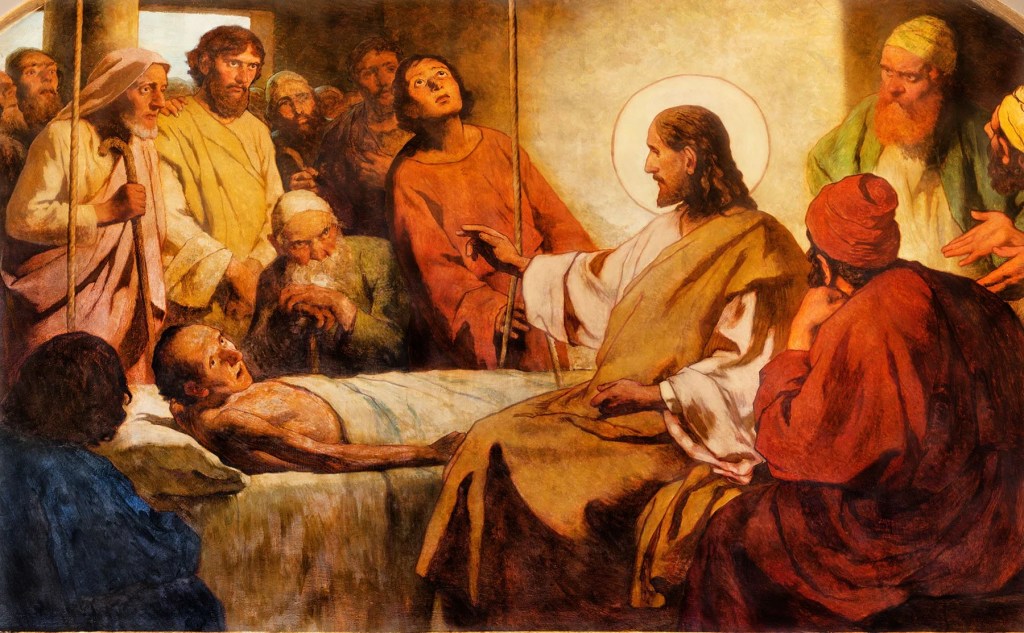
The story in our scripture verses revolves around a man named Lazarus. His name means “whom God helps.” He and his sisters, Mary and Martha, lived two miles from Jerusalem in the town of Bethany. They were personal friends of Jesus. In our story, Mary and Martha sent word to Jesus that Lazarus was gravely ill. Through worldly eyes, Jesus arrived too late. Lazarus had died and everyone was grieving. When Jesus saw their emotions, he was moved and began to cry. John 11:35 is the shortest verse in the Bible, but it exposes a great deal about Jesus. He wept because he was filled with empathy. Have you ever wept at a funeral? The story reveals to us three things we must do the next time death invades our personal space.

First, we must remember our departed loved one. In 2013, Lt. John Harold Pritchard (1892-1917) of the British military was laid to rest, 96 years after his death. He died on May 15, 1917, during World War I. His remains were found by a farmer in 2009 near Bullecourt, France. He was just one of the millions who were killed during the Great War. Today, his remains are resting in a cemetery that is filled with World War I veterans. His 86-year-old great nephew said it best, “We all feel better now because we know we can come and visit him. We now have a place to come and remember.”  There is an old pagan belief that holds some truth. They believe if the departed are remembered, part of the person remains. It is important to remember our departed loved ones.

Second, we must review our lives up to this point. In 1846, former President John Quincy Adams (1767-1848) suffered a stroke. Although he returned to Congress the following year, his health was clearly failing. Daniel Webster (1782-1852) described his last meeting with Adams: “Someone, a friend of his, came in and made particular inquiry about his health. Adams answered, ‘I inhabit a weak, frail, decayed tenement; battered by the winds and broken in upon by the storms, and from all I can learn, the landlord does not intend to repair.'” It was too late for John Quincy Adams. It is not too late for you. I recommend you start living now! Mary and Martha must have reviewed their own lives at Lazarus’ death.

The story of Lazarus teaches us that life is unpredictable. No one expected him to die. It also teaches us that life is short. I once had a woman in her nineties tell me she was ready to sign up for ninety more years. That simply isn’t possible. The question at every funeral is, who is next? Death does not always happen in chronological order. What do you still want to do with your life? Where do you still want to travel in this world? What do you still want to learn? I would suggest you don’t wait; life is unpredictable. Are you living? Or are you just waiting to die? American author and humorist Mark Twain (1835-1910) once said, “Let us endeavor so to live that when we come to die, even the undertaker will be sorry.” It is important to review your life.

Third, we must refocus our eyes on eternity. One of the great scenes in the New Testament is Mark 8:27-31, Peter’s confession. You know the story. For some time, the disciples had been following Jesus. They had seen the miracles. They had heard the teachings. They had felt his presence and experienced the reaction of the people who constantly followed Jesus. Our generation knows Jesus was the Messiah. Jesus’ own generation was not so sure, so Jesus asked the twelve the question, who do you say that I am?  Anyone of the disciples could have answered the question, but only one voice was heard. Peter answered, “You are the Christ.”  That correct identification changed everything. That correct identification changed the way we look at death. You must answer the question for yourself, who is Jesus? This is the bottom line.

Death doesn’t just challenge us to live fuller lives now. Death challenges us to be prepared for eternity. Your good deeds cannot earn your salvation. Your church membership has no guarantee of salvation. Your patriotic spirit will not influence your salvation. Your only hope of salvation is Jesus. Look at the story with me. Mary and Martha were reunited with their once deceased brother because of Jesus. Is it possible you are so busy with your life you need to refocus on eternity?

Several years ago, someone asked me what I look forward to in my death. I gave her an honest answer. I am no different from you. When I get to heaven, I look forwarded to being reunited with loved ones who have died. Does that sound selfish? Maybe I should have said standing near the throne or singing in the choir. Those things really don’t appeal to me. I look forward to being reunited with departed loved ones. Read the next line slowly. There is no hope of a great reunion without Jesus. Jesus asked the disciples, but Jesus is also asking you: Who do you say I am? I hope you identify him correctly. He must be your Lord and Savior!

Death brings out three things in us. First, death challenges us to remember the past. Those memories are important. Second, death challenges us to review your life to this moment. What do you still want to do? Third, death challenges us to refocus on eternity. Who is Jesus to you? Leonardo da Vinci (1452-1519) once said, “As a well-spent day brings happy sleep, so a life well used brings happy death.”

Jesus’ Three Requirements

Jesus’ Three Requirements

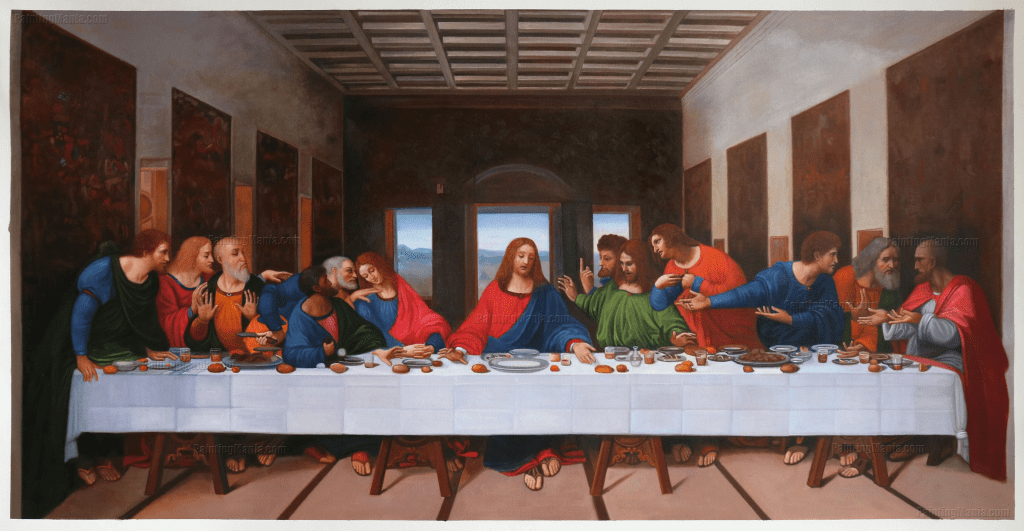
Our reading is Matthew 26:17-30. It is Thursday of Holy Week. Most call it Maundy Thursday. Jesus has already entered Jerusalem riding a donkey to celebrate his final Passover. Jesus has already cursed the fig tree and cleansed the Temple. Jesus has already been confronted by his enemies and Judas Iscariot has already agreed to betray Jesus for thirty pieces of silver. According to the text, Jesus has already washed the disciples’ feet and was observing the annual Seder with his disciples.

The Passover Seder is a structured, 15-step ritual meal held on the first two nights of Passover. It was a scripted meal. Everything they ate and drank reminded them of their ancestors’ exodus from Egypt. To be more exact, they remembered how God had acted on behalf of their ancestors. However, on that Passover Jesus changed the script and created something new – Jesus told the disciples the bread represented his body and the wine represented is blood. To the disciples the symbolism was clear. Bread represented blessings. Blood represented death. From the very beginning Christians valued communion. It has generated much debate in the life of the church.

Swiss theologian Karl Barth (1886-1968) once said, “The Word became flesh, and then through theologians it became words again.”  For years, theologians have debated communion. I remember sitting in classrooms and studying the words transubstantiation and consubstantiation. The Roman Catholic tradition believes in transubstantiation – the bread and the wine mystically turn into the actual body and blood of Christ. That happens when the bell is rung during a Catholic Mass. The Protestant tradition believes in consubstantiation. The bread and the wine, or juice, represent the body and the blood of Christ. For years, theologians have debated communion.

For years, well-meaning laity have complicated communion by telling us how they prefer to receive it. Some like it weekly. Some like it monthly. Some like it quarterly. One woman told me communion should only be offered once a year, on Christmas Eve at the 11:00 PM service. The founder of the great Methodist movement John Wesley (1703-1791) took communion up to five times a week. Some like communion sitting in the pews. Some like it at the rail. Some don’t like it at the rail, because it discriminates against those with arthritic knees. Some like communion served in little plastic cups and cubed bread. Some like communion served by intinction, when you tear off your own piece of bread from a common loaf and dip it into a common cup. Germaphobes are repulsed by intinction. Some think long, complex liturgy should accompany communion, and others don’t want any liturgy at all. Well-meaning laity have complicated communion by telling us how they prefer it. The United Methodist Book of Disciple says, the appointed clergy will decide how often and in what form communion will be served. I wish I had such power. In my time in the ministry, the whole topic exhausted me. I grew tired of trying to keep everyone happy.That is impossible.

It is interesting to note the Bible does not use the words transubstantiation or consubstantiation, it does not tell us how to serve the elements. However, the Bible tells us what we must do when we partake communion. To be more exact, Jesus gives us three requirements we must observe when we partake the communion elements. This is the first requirement.

Communion requires us to remember Jesus! Verses 25 and 26 tell us Jesus took the bread and associated it with his body, and he took the wine and associated it with his blood. Like the rest of us, Jesus didn’t want to be forgotten once he was gone; Jesus wanted to be remembered.

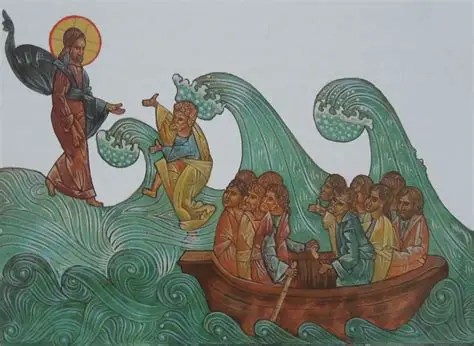
What do you remember about Jesus as you partake of his body and blood? Do you remember his humble birth in Bethlehem? Do you remember his baptism in the Jordan River? Do you remember his lessons from the Sermon on the Mount? Do you remember his miracles? The lame could walk and the blind could see. Do you remember how Jesus walked on the water and controlled the weather? Do you remember how Jesus resurrected Lazarus? Do you remember Jesus hanging on the cross, twisted in pain for your salvation? It is a fair question. What do you remember about Jesus, as you partake of the bread and cup? I remember Jesus in the Upper Room with the disciples observing his last Seder. This is the second requirement.

Communion requires us to examine our present condition! Jesus was a man who lived the perfect life and sacrificed so much. He had the perfect relationship with God. In comparison to Jesus, our sins are obvious and we have sacrificed very little. There is no comparison between us and Jesus. Yet, Jesus invites us to partake. If you are not humbled at the communion table, then you have a serious spiritual problem. That is what Paul is saying in I Corinthians 11:27, “Therefore, whoever eats the bread or drinks the cup of the Lord in an unworthy manner will be guilty of sinning against the body and blood of the Lord.”  Communion humbles us, because we must examine our present condition. This is the third requirement.

Communion requires us to examine our eternity! In the scripture lesson, Jesus isn’t just embracing the moment, Jesus is forcing the disciples to examine their eternity. Verse 25 says, “I will tell you the truth, I will not drink again of the fruit of the vine until I drink it anew in the Kingdom of God.”  Jesus is not just speaking of his own eternity, he is speaking of the disciple’s eternity too. By his invitation to us to sit at the table with him, Jesus is speaking of your eternity. Where do you want to spend eternity? I have never met a person who didn’t want to go to heaven. Jesus is your only hope of salvation. Communion requires us to examine our eternity!

Each time you take communion remember Jesus’s three requirements. First, communion requires us to remember Jesus. Second, communion requires us to examine ourselves. Third, communion requires us to examine our eternity. There is very little nutritional value in a small amount of bread and juice, but there is a spiritual value that cannot be dismissed. Pope Pius X (1835-1914) served as Pope of the Roman Catholic Church from 1903-1914. He said, “Holy Communion is the shortest and safest way to heaven.”

When Life is Hard

Our reading is Luke 7:11-17. Jesus is in Galilee, and his popularity is high. He has just left Capernaum and traveled to Nain. On his arrival, he encounters a large grieving crowd. A man has died and they are carrying away his corpse. They are grieving about the man’s death, but they are concerned about his mother. These were challenging days in her life. In her past, she had buried her husband and now she is burying her son. She is the picture of brokenness. Her future did not just include loneliness. It includes poverty too. She lived in a patriarchal society, so her financial security is uncertain. Without her son, there will be no happy ending. Everyone’s heart went out to her, but no one wanted to trade places with her.

There is an unwritten law that says children will outlive their parents. That is not always true. Various studies tell us, between 9% and 18% of parents will experience the death of a child by the time the parent reaches 60 years old. In the nineteenth century, 25% of children died before the age of five. Personally, I fear the death of my children more than I fear my own death. That may be your greatest fear too. Perhaps, that is why this story of a grieving mother grabs our attention. It contains three valuable lessons we should never forget. This is the first.

Life is hard. If you do not believe me, thenask the widow in the story and she will tell you, life is hard.She had nothing. Her husband had died, and now her son had died. The only thing that the future holds for her is loneliness and poverty. She had nothing. She will tell you – life is hard. Sadly, her story is not unique.

The news is filled with people going through hardship. You know the story, everybody knows the story. On February 1, 2026, Nancy Guthrie (born 1942), mother of NBC’s Savannah Guthrie (born 1971) was reported missing from her home near Tucson, Arizona. She was abducted against her will. Because of her daughter’s celebrity status, every detail has been reported by the various news services. Her children have begged for her return, and a million-dollar reward has been offered. The family has struggled during this incredible hardship. Ask them and they will tell you, life is hard. Nancy Guthrie is not the only one to have gone missing in our country. According to the FBI and the DOJ, 500,000 to 600,000 Americans go missing each year. While 98% of those cases are solved, usually quickly, thousands of people remain missing long-term. Ask any of those families and they will tell you, life is hard. However, some stories of hardship never make the news.

During my time in the ministry I heard about hardship regularly. Good people experience hard times. Sometimes, the hardship is caused by poor decision-making. You drank too much or you bought too much. You cheated on your spouse, and everyone got hurt. There is no need to go on, you get the point. Poor decision-making leads to hardship. Sometimes, hardship enters our lives like an uninvited guest. Everyone knows someone with cancer or some other serious disease. You were rear-ended in a traffic accident on your way to work and now your back will never be the same. Depression and anxiety have stripped away any personal joy. How many people do you know who are struggling at this moment? What is your greatest challenge at this moment? I have spent countless hours sitting by the bed of one who is dying. No one has ever looked at me in those last sacred hours and said to me, “Russ, life was much easier than I thought.” They all said to me in countless ways, “life is hard.” Here is point number two.

Sometimes we need others. Look at her story one more time. The woman had lost two significant people in her life, her husband and son. She is staring into an uncertain future. She has nothing, except friends. Verse 12 says, “As he approached the town gate, a dead person was being carried out—the only son of his mother, and she was a widow. And a large crowd from the town was with her.”  They were not there to carry the body. They were not there because funerals were fun. They were there to support this poor woman. Sometimes, we need others. The unnamed widow is not the only one. It is true of some of the greats in the Bible.

Mary, the mother of Jesus, was from the town of Nazareth. In her time, Nazareth had a population of between 100 and 400 people. Have you ever lived in a small town? Everyone knows everyone else. Everyone knows everyone else’s business. This is the bottom line – in a time of high morals, Mary was a single, pregnant woman from a small town. Everyone from that town, everyone in her life, was talking about her unwanted pregnancy. She is the hot topic at the well. So, she escapes Nazareth and visits her cousin, Elizabeth. She went for two reasons. First, she goes to Elizabeth to escape the people in her life. Second, she goes to Elizabeth to receive some unconditional love. Has there ever been a time in your life when you needed the counsel of someone else? Has there ever been a time in your life when you needed some unconditional love?

Sometimes we need others. Where do you go for assurance and unconditional love? Maybe you are like Mary and go to a family member? Maybe you go to a friend? Maybe you go to a trusted member of the clergy? Maybe you go to a support group or counselor? Those people are important because they help you carry your burdens. Sometimes we need others. This is the point number three.

We always need God. In our story, the crowd that surrounded her during that day would have left her by sunset. There is only so much people can do. God can do more. As the crowd was walking out of Nain, Jesus was entering. It is a great visual. Everyone wants Jesus to arrive when life is hard. We turn to God during hardship.

In my last church, there was a sewing group. They were nice ladies who never demanded my attention. They would create various items and donate them to various people and causes. One of the things they created were prayer shawls. Each one went to a person who was encountering some kind of hardship. However, before the prayer shawl was delivered, they would pray over it and ask for God to help that individual. I do not know of one time when something miraculous occurred, but I know every time that prayer shawls became a valued item to the person in need. It didn’t become a valued item because of the skill it took to create it. It became a valued item because the prayer shawl reminded them of God. Countless times, I would visit a person in need and find one of the prayer shawls in the bed of the suffering person. When life is hard, we always need God.

I end this blog by challenging you to admit three things. First, I want you to admit life is hard. Second, I want you to admit sometimes you need other people to help you carry the load of hardships. Third and finally, I want you to admit you always need God; He is the only constant in an ever-changing world. American Baptist minister and author Walter Martin (1928-1989) once said, “The key to strengthening spiritual muscle and enduring hardship is finding strength in God.”  

Christian Camp Gideon

Christian Camp Gideon is located in Aa, Estonia. The village is in northern Estonia, on the southern coast of the Gulf of Finland. The location is beautiful. The camp itself was built prior to World War II by the Soviet Union. At that time, it was a Pioneer Camp, where communism and atheism were taught to the young. The fall of communism in 1991 changed everything. In time, Estonia became an independent country, and the camp found a new purpose.

During the summers of 1993 and 1994, Christian Camp Gideon was used by the Estonian United Methodist Church. On March 15, 1995, Christian Camp Gideon was purchased by the Asbury United Methodist Church of Tulsa, Oklahoma, and given to the Methodist churches of Estonia. On that day Pastor Artur Põld was named the Director of Christian Camp Gideon. He still holds that position today. Currently, there are fifteen buildings on 75 acres at the camp, where there is space for to up to 400 people.

From the very beginning, American friends have supported Christian Camp Gideon – both spiri­tually and financially. Every summer, several groups of volunteers from the United States arrive at Camp Gideon to organize children’s pro­grams and help repair the time-worn buildings. Over the years, Christian Camp Gideon has become internationally known in Latvia, Russia, Finland, Sweden, Belarus, Germany and beyond. Thanks to the ministries of Camp Gideon, hundreds of children hear about Jesus each camp season. Together with the guests of Christian Camp Gideon, several mission events have been organized, including family camps, Walk to Emmaus, and the Annual Conference of the Estonian Methodist Church. In the past several years, Christian Camp Gideon has become a refuge for Ukrainians who are escaping the war.

In 2019, my wife Kathryn and I visited Christian Camp Gideon for the first time. We were moved by the ministry of the camp and the work of the people. Since that visit Kathryn has been raising money to help with the reconstruction of the buildings. She is returning to Christian Camp Gideon between July 16 and August 1, and I am returning between July 23 and August 1. We will be helping with English Camp and are looking forward to seeing the progress that has been made at Christian Camp Gideon. It is truly a resurrection story. A camp that once taught communism and atheism is now teaching the Good News of Jesus Christ.

You can help Christian Camp Gideon in two ways. First, pray for Christian Camp Gideon; Your prayers are more valuable than you will ever know. Second, prayerfully consider making a financial contribution to Camp Gideon. No amount is too small. It is amazing what God can do with a single dollar. Please make your check out to: PROJECT ORPHAN OUTREACH and mail it to 275 Bradford Drive, Canfield, Ohio, 44406. Some who read my weekly blog have already contributed. You will receive a thank-you note for your contribution as well as a follow-up report on what was accomplished after we return.

In advance, I would like to thank you for your generosity.

When Notre Dame Burned

Holy Week is complete, so much has already happened. Jesus was executed Roman style on Friday between two common criminals. The scene was unpleasant, because sin is ugly. Jesus was fortunate in several ways. First, for crucifixion, Jesus died quickly, only six hours. He spoke seven times from the cross. Those must have been agonizing words to utter. They are called “the seven last words.” Second, arrangements were made by Nicodemus (c. 1st century) to treat his body with expensive spices and lay in a new tomb purchased by Joseph of Arimathea (c. 1st century). It was not uncommon for the crucified to be thrown into a pile of corpses to be eaten by buzzards or wild dogs. Once inside his new tomb, a large stone was rolled in front of the entrance to trap the decaying odor and to protect the body from thieves. The Roman government was persuaded by Jesus’ enemies to place guards in front of the tomb to eliminate any future problems. This was all done by dark on Friday. Once this was completed, Jesus’ loved ones grieved because Jesus was dead! On Saturday, they continued to grieve. That takes us to our reading.

According to our reading, Matthew 28:1-10, it is early Sunday morning, when two visitors arrive at the tomb. There was Mary Magdalene (c. 1st century) and another woman named Mary. They had no clue that several miraculous things had happened. The first was a great earthquake. Only mentioned in Matthew, it signaled God had done something special. Second, the stone had been rolled away. That was something they could not have done by themselves. Third, the resurrection was announced. According to verse three, it is made by an angel, whose clothes were white as snow, symbolizing purity. The angel tells the women about the resurrection, but the women experience the resurrected Jesus for themselves in verse nine. According to Acts 1:3, Jesus appeared to other believers for a period of forty days. It is a story that changed the world. Never underestimate the power of the resurrection of Jesus. It is the cornerstone of the Christian faith.

The Apostle Paul understood the significance of the resurrection. Romans 10:9 says, “If you confess with your mouth that Jesus is Lord, and believe in your heart God raised him from the dead, you will be saved.”  Many believe that is the first creed in the life of the church. In other words, the resurrection is the only thing in the life of the church that really matters. Every branch of the Christian church has their own customs and traditions, but they are secondary to believing in the resurrection of Jesus. If you are reading this blog, I am assuming you believe in the resurrection of Jesus too. Your belief in the resurrection of Jesus entitles you to several things.

First, your belief in the resurrection of Jesus means your past sins are forgiven. Ephesians 1:7 says, “In him we have redemption through his blood, the forgiveness of sins, in accordance with the richness of God’s grace.”  You are forgiven by God. Isn’t it time you forgive yourself? How many people do you know who are constantly re-living their past mistakes and punishing themselves? They need to embrace the resurrection and forget their mistakes, God has. Billy Graham (1918-2018) once said, “Forgiveness obliterates the past and permits us to enter the land of new beginnings.” The resurrection offers us forgiveness.

Second, your belief in the resurrection of Jesus means you have a purpose. Philippians 3:13-14 says, “But one thing I do: Forgetting what is behind me and straining toward what is ahead, I press on toward the goal to win the prize for which God has called me heavenward in Christ Jesus.”  Your good deeds cannot earn your salvation, but your good deeds are a way of thanking God for saving your soul.What are you doing to bring glory to God? Life is not all about you – life is about God. The resurrection offers us a purpose. 

Third, your belief in the resurrection of Jesus offers you a future. John 3:16 says, “For God so loved the world that he gave his one and only son, that whoever believes in him may not perish but have eternal life.”  On the day I die don’t cry for me. I am going to heaven, not because I am a good person. I am going to heaven because I worship and serve a perfect and resurrected Jesus. How many good people do you know who are afraid to die? There is no need to fear death if you believe in the resurrection of Jesus. The resurrection offers us a future.

On April 15, 2019, Notre Dame Cathedral in Paris caught on fire. The fire was caused by an accidental electrical fault. The massive ancient structure fascinates me. I am not the only one. They say on an average week, 12,000 tourists visit Notre Dame daily. During Holy Week, that number swells to 30,000 tourists. Construction of Notre Dame began in the year 1163 and took 200 years to complete. It is more than an old building. Notre Dame has been the backdrop of French history for generations.

If you can grieve for a building, I did. I am fortunate because I have visited Notre Dame three times. The first time was with my parents as a teenager. The second time was when I was traveling home from a volunteer-in-mission trip in Russia. Our layover in western Europe was in Paris, so Kathryn and I stayed for a few days to celebrate our anniversary. The third time was after the fire, during reconstruction. Retired, we spent over a week in “The City of Light.” On each trip, visiting Notre Dame was a priority. When Notre Dame burned, I was moved by the emotions of the crowds who gathered to watch the blaze, some praying, some singing, some crying. When Notre Dame burned, I mourned for the building and the history, but not the faith.

The Christian faith can’t be contained to a building. The Christian faith lives in the hearts of men and women who believe in the resurrection of Jesus Christ. That belief in the resurrection is not optional, it is indispensable. The resurrection of Jesus Christ changed world history and your individual life. Because you believe Jesus was resurrected you are forgiven, have a purpose and have a future beyond death. The pastor of Menlo Church in Menlo, California, John Ortberg (born 1957) once said, “At the very heart of the Christian faith is the story of Jesus’ death and resurrection.” The Lord has risen! The Lord has risen, indeed!