John’s Question

Born in Eastern Europe, Isidor I. Rabi (1898-1988) moved to America as an infant. In time, he would study physics at MIT, Columbia and Cornell. In 1942, he won the Nobel Prize in Physics “for his resonance method for recording the magnetic properties of atomic nuclei.” (Whatever that is.) He credited his mother for his success. He said that every day after school his mother would talk to him about his school day. She wasn’t interested in his daily schedule. She was more interested in the questions he asked. Daily, she asked him, “Did you ask any good questions today?” “Asking good questions,” Rabi said, “made me become a better scientist.” In our reading, Matthew 11:1-6, John the Baptist had his disciples ask Jesus an excellent question, “Are you the one who was to come, or should we expect someone else?”

There is nothing innocent about this story. John the Baptist had been imprisoned because he had made an enemy of a powerful man, Herod Antipas (72 BC- 4 BCE). He was the son of Herod the Great (BC 72-BC 4) and the grandson of Antipater the Idumaean (BCE 114-BCE 43). He was appointed by the Romans as Herodian ruler of Galilee and Perea in 4 BCE. His political connections do not impress John. He called all to repent, including Herod Antipas. His story was well known and filled with immorality – it sounds like the storyline from a contemporary soap opera. Herod went to Rome to visit his brother, and became infatuated with his sister-in-law, Herodias (15 BC- 39 AD). He seduced her, took her home for himself and divorced his wife. While many stayed silent, John proclaimed it as morally wrong. John’s protests came to the attention of Herod Antipas, who imprisoned John near the Dead Sea.

Like Jesus, all teachers had students or disciples who believed in them, including John. John sent his disciples to Jesus with our question, are you the one who was to come, or should we expect someone else? This question is not unique to Matthew, it is also found in Luke 7:19-23. It is a great question. The issue that haunts the entire text is why John had his disciples ask the question. John knew Jesus’s identity. He knew it from within his mother’s womb (Luke 1:44) and he heard Jesus’s identity proclaimed by God at Jesus’ baptism (Matthew 3:15). There is no sign that John doubted or became frustrated with Jesus. So why did John have his disciples ask the question, “Are you the one who has come, or should we expect another?” 

The key to understanding John’s question is evangelism. We understand evangelism to be sharing the good news of Jesus Christ, calling individuals to repentance and faith in Him as their Lord and Savior. John knew Jesus was the Messiah and he wanted to make sure his disciples understood Jesus to be the Messiah. He knew the benefits of discipleship, and he wanted his disciples to experience those benefits too. Consider it the pastoral side of John. He sends them to Jesus to ask the question, are you the one who has come, or should we expect another,” because he wanted them to have the right answer too. He wanted the best for his disciples. The best we have to offer someone is Jesus. No one can accept Jesus for you, you must do it for yourself.  There is a world of difference between learning about Jesus and experiencing Jesus! That reminds me of a parishioner I met years ago.

Her name was Nancy and she lived in a Cleveland, Ohio suburb. She visited my church one Sunday, and I arranged to meet her several days later. We connected in the first few minutes and she told me her story. She had just been honorably discharged from the United States Navy and moved back home to attend college. She was studying nursing and confessed it was hard for her to be living at home with her mother.  She went as far as to tell me her mother was mad at her for visiting my church, because she had been raised Roman Catholic. She felt disconnected from the Roman Catholic Church during her military service. During those years, she tried various Christian traditions and had read the Bible cover to cover. Near the end of our discussion, she looked at me and said, “I know everything there is to know about Jesus, but I’m still not sure I am going to heaven when I die.” I looked at Nancy and said, “There is a world of difference between knowing about Jesus and knowing Jesus.” I asked her if she knew Jesus as her Lord and Savior. She did not, so I led her to salvation. She thanked me and walked out of my church a different person.

Can you relate to Nancy’s story? You know everything there is to know about Jesus. You go to church and read the Bible. You pray for the sick and read your devotional. However, you still aren’t sure about your own salvation. John the Baptist knew it from the very beginning. You can know everything about Jesus and still not know Jesus. He sent his disciples to Jesus with the question, “are you the one who has come, or should we expect another,” so they could experience Jesus for themselves. Do you know Jesus, or do you just know about Jesus? Until you know Jesus, you know nothing at all!

Moments of Self-Doubt

Our reading is Matthew 27:20-26. Normally, we hear these words during Holy Week. However, that does not mean it doesn’t have something for us today. The scene is powerful. Jesus is on his way to the cross and is standing next to Roman Governor Pontius Pilate. The crowd must choose who they will release, the notorious rebel and murderer Barabbas, or Jesus. The crowd chooses Barabbas. Think about that scene for a moment. Jesus and Pilate made a strange pair. Pilate has everything this world has to offer – fame, power, and influence. Jesus has nothing this world has to offer. However, the man with nothing is filled with self-confidence. The man with everything is rattled with self-doubt. What does Jesus have that Pilate lacked?

In this blog I want to help restore your self-confidence. It is Satan who puts self-doubt into your life because he doesn’t want you to maximize your full potential. He wants you to live in a shell, afraid to come out. God, on the other hand, wants you to live up to your full potential because he wants you to have the greatest impact on your little corner of the world. As a disciple of Jesus, you are His ambassador and that changes everything. So let me ask you three questions. These questions are not original. They came from United Methodist clergyman James W. Moore (1938-20019).

First, how secure are you? Jesus was secure because Jesus knew who he was. The scriptures tell us very little about Jesus’s childhood. We are told that Jesus was born in Bethlehem and lived in Egypt for a short time as an infant. Jesus called Nazareth home, and at twelve years old, he went to the temple and amazed the elders. He stayed near his mother until he was thirty. We know very little about Jesus’ life, but I am comfortable saying Jesus knew who he was from the very beginning. Jesus knew he was the son of God. Jesus knew being the son of God brought unique opportunities, but it also brought unique challenges. Jesus was not arrogant; Jesus was secure. Jesus knew who he was. How many secure people do you know? Do you consider yourself a secure person? Do you know yourself?

In a few months I will turn sixty-nine years old. My age does not bother me, because I have had all this time to learn about myself. When I was young, I tried to act like I knew everything. The truth is, I am ignorant about many things. I know nothing about plumbing, auto repair, foreign policy, sewing, crafts, and the finer details of physics. I can’t speak a word of Portuguese. It is extremely difficult to know everything. Then, somewhere along the way I learned three little words that liberated me, “I don’t know!” It doesn’t mean I don’t know anything. It only means I don’t know about certain things. I don’t know anything about cardiology, but I know something about God, preaching, the Bible, church growth, and group dynamics. I like being my age because I have had all these years to learn about myself. I consider myself a secure person. Do you consider yourself a secure person? Jesus knew who he was. Self-confident people know themselves. How secure are you?

Second, do you know whose you are? Our reading happened over two thousand years ago, so you know how the story ends.Pilate permits Jesus to be crucified, and Jesus was buried in a cave-like tomb. Jesus spent his earthly ministry surrounded by people, but when the end came, he was alone. The crowds of Palm Sunday disappeared and, except for God, he was alone. Jesus had self-confidence because he knew he was loved by God. You can have self-confidence because you are loved by God.

One of the great preachers of yesteryear was Philip Brooks (1835-1893). He was extremely confident and optimistic. A close friend asked him what the source of his attitude about life was. He replied, “It is quite simple. I am a Christian.”  Once you discover God’s love for you, everything changes. Being a disciple of Jesus means you know you are loved by God. In the end, God will be victorious and He wants to share the spoils of that victory with you! It really doesn’t matter what the world says about you, the only thing that really matters is that God loves you! Jesus was self-confident because he knew whose he was. You can be self-confident because God loves you. You belong to God. Do you know whose you are?

Third, do you know where you are going? Jesus’s final destination is not a secret. It is found in the Apostle’s Creed: He suffered under Pontius Pilate, was crucified, dead and buried; he ascended into heaven, and sitteth at the right hand of God the Father Almighty. Jesus knew he was going to heaven when it was all over. All he had to do was hang on. The same is true for us – the trials and challenges of this world are temporary, all we must do is endure them. Heaven is going to last for eternity. Do you know where you are going?  

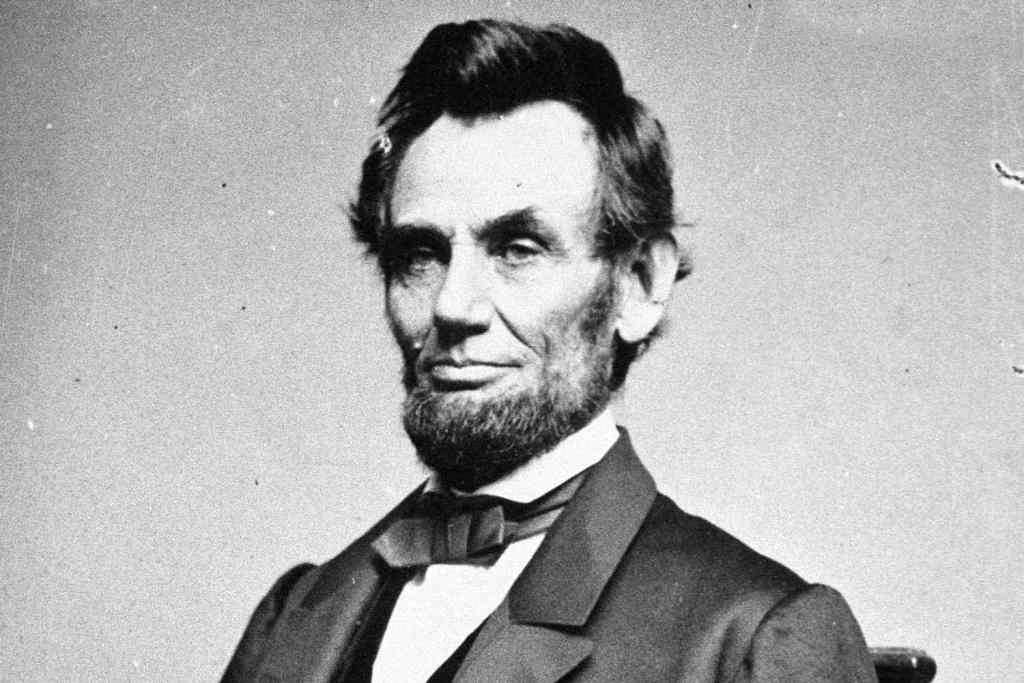
History tells us Abraham Lincoln (1809-1865) was fatally shot at Washington DC’s Ford Theater on April 14, 1865. Much has been written about the shooting and the political climate of America on that day. Very little has been written about the contents found inside of the pockets of our sixteenth president. It was reported in President Lincoln’s pockets were found: 

1. A handkerchief, embroidered “A. Lincoln”  
            2. A country boy’s pen knife  
            3. A spectacles case repaired with string  
            4. A purse containing a $5 Confederate bill  
            5. Some old and worn newspaper clippings  

One of the clippings was an article written by John Bright (1811-1877). He called Lincoln, “one of the greatest minds of all times.” Today, that is common knowledge but that wasn’t the case in Lincoln’s time. In 1865, millions shared quite a contrary opinion. The President’s critics were fierce. The country was in turmoil and was ripped to shreds by hatred and a cruel, costly war. Lincoln kept Bright’s words because he couldn’t believe anyone would say he had a great mind. All these years later, we can confess Lincoln suffered from depression. He was crippled with self-doubt and haunted by a poor self-image. Do you know of anyone who is crippled with self-doubt and haunted by a poor self-image? Maybe that person is you?

I do not have an article saying you are brilliant, but if you are reading this then you have something better. You are a disciple of Jesus Christ, and that fact changes everything. Because you are a disciple of Jesus Christ, you know who you are. Discover your own strengths and weaknesses. Never be afraid to say those three liberating words, “I don’t know.” Because you are a disciple of Jesus Christ, you know whose you are. Never forget, God loves you! Because you are a disciple of Jesus Christ, you know where you are going. The challenges of this world are only temporary. Someday we are going to be in heaven together! 

Why was Jesus Baptized?

The story of the baptism of Jesus is found in all four Gospels – Matthew, Mark, Luke and John. Our reading, Matthew 3:13-17, is Matthew’s version. According to the text, Jesus went to the Jordan River to be baptized by John. The Baptizer was a charismatic character who came with one message. Everything he ate, wore, and said communicated one message, repent! It was the perfect message for his audience. Herod the Great had been cruel and the Roman miliary had been harsh to the people of Israel. Most of the people longed for a religious solution to their intolerable political situation. The people flocked to the desert region to hear John’s message of repentance. He offered them a sinner’s baptism as a sign of their repentance. One of the faces in the crowd was Jesus.

One of our core understandings about Jesus is that he was sinless. That is what made him the perfect sacrifice on the cross. 2 Corinthians 5:21 says,“For He made Him who knew no sin to be sin for us, that we might become the righteousness of God in Him.”

1 Peter 2:22 says, “He committed no sin, nor was deceit found in his mouth.”  1 John 3:5 says, “You know he appeared to take away sins, and in Him there is no sin.”  I could go on, but I won’t. You get the point. Jesus was sinless. So, why would the sinless Jesus require a sinner’s baptism? Consider these four things with me.

First, Jesus’s baptism exposed his identity. The people had been waiting for the Messiah a long time. Some hoped John was the Messiah (Luke 3:15). Matthew 3:17 tells us Jesus was the long-awaited Messiah,“And a voice from heaven said, ‘This is my Son, whom I love, with him I am well pleased.”  In other words, God is identifying Jesus as the Messiah. Several years later, he would be the suffering servant mentioned in Isaiah 53. On that horrible day, “Jesus was rejected by mankind. He was pierced for our transgressions; he was crushed for our iniquities; the punishment that brought us peace was on him.”  Matthew 3:17 eliminated all questions. From that point on, no one questioned Jesus’s identity. He was the Messiah. Never underestimate the importance of correct identification. Jesus’s baptism exposed his identity.

Second, Jesus’s baptism fulfilled all righteousness. In other words, Jesus’s baptism was all part of the divine plan. To underscore that point, Jesus was consecrated by God when the Holy Spirit descended on him like a dove. This was not the first time John had seen Jesus. They were related on their mother’s side, however their family relations are not clear. Some say they were cousins. Some say Elizabeth was Mary’s aunt. Some say they were related in other ways. Regardless of their connection, John believed in Jesus from the very beginning. John understood his role and was uncomfortable baptizing Jesus. Verses 14 and 15 says, “But John tried to deter him, saying I need to be baptized by you, and do you come to me?” Jesus replied, “Let it be so now; it is proper for us to do this to fulfill all righteous.”  John and Jesus were obedient to God’s will. Jesus’s baptism fulfilled all righteousness.

Third, Jesus’s baptism ignited his earthy ministry and marked the beginning of the end of John’s ministry. Students of America’s Civil War will tell you July 4, 1863, is a key date. It was the beginning of the end of the Confederacy – Vicksburg fell along the Mississippi River, the day after the Union claimed victory at Gettysburg. Sadly, the war dragged on for another two years. Jesus’s baptism was the being of the end of John’s ministry. John 3:30 quotes John, who said, “He (Jesus) must increase, but I must decrease.”  John was an excellent forerunner, but Jesus was the Messiah. In the next three years Jesus would transform the world and set into motion something new. Christianity is the world’s largest region, approximate 2.3 billion followers. Jesus is the most influential life that ever lived. No followers of John exist today. Jesus’s baptism ignited his earthy ministry and ended John’s contribution.

Fourth, Jesus’s baptism shows us that he completely identified with the sins of mankind. If you use your sanctified imagination, you can picture the crowds coming to John to receive a sinner’s baptism. They needed that baptism because they needed to repent. Jesus was in the crowd not to repent but to relate to the commoners. John 1:14 says,”The Word (Jesus) became flesh and made his dwelling among us.”  The incarnation is beyond human understanding, but Jesus’s humility and solidarity cannot be questioned. Jesus’s baptism shows us that he completely identified with the sins of mankind. Let me end with this old preaching story.

A church received a new minister, and the sanctuary was full for his first Sunday where he preached a wonderful sermon about Jesus. The second Sunday came and he preached another wonderful sermon about Jesus. His third sermon was about Jesus. Each week the congregation heard a wonderful sermon about Jesus. This went on for months. Everyone should have been happy, but this was a church. Someone had to complain about all those wonderful sermons about Jesus. One man did and pulled the minister to the side after worship one Sunday. In the corner of the narthex, he confronted the minister. He began by saying, “Your sermons about Jesus are very good. However, you have been here for months and all we have heard about is Jesus. Our world is a complex place and there are many social ills. There are people starving to death. There are diseases that have no cure. There are people who can’t read. There are children lost in slavery and lives being lost in wars. We don’t hear about any of those things. All we hear about is Jesus! Don’t any of those things matter?” The pastor listened patiently and responded, “No! Once the world knows Jesus all those other issues will go away.” I couldn’t agree more. After all, Jesus is the son of God. Our only hope of salvation. In the life of the church, what really matters to you? I hope your answer is Jesus. Augustine of Hippo (354-430) said, “Jesus Christ is not valued at all until He is valued above all.” 

Modeling Discipleship

According to the liturgical calendar, Christmastide lasts twelve days – between December 25 and January 5. The liturgical season of Epiphany begins on January 6 and ends on Ash Wednesday. Epiphany means “manifestation.” It is the season we celebrate the fact that Christ came to save all people from their sins, both Jews and Gentiles. Our reading, Matthew 2:1-12, is the traditional reading on Epiphany Sunday. The story of the Magi is one of the most known and loved stories in the Bible; they complete the Christmas narrative. Yet, hiding in the tradition of their story is a fact we cannot ignore – the Magi give us the perfect model for discipleship. Consider these three things with me.

First, the Magi bowed down. The Magi were Babylonian astrologers or priests, who had seen a star that announced the birth of a newborn king. The Magi assumed the newborn king was born in the insecure palace of Herod the Great in Jerusalem. The chief priests and the teachers of the law corrected the Magi’s mistake. The newborn king would be born a few miles south of Jerusalem in Bethlehem. A short time later, the Magi found the infant Jesus in a house. When they arrived, they bowed down and worshipped Jesus. (Verse 11) What does it mean to bow down? It means the Magi, with all their worldly influence, knowledge and power, humbled themselves before Jesus. If you want to be a disciple of Jesus Christ, then you must humble yourself before him too. How humble are you? 

I love this story: Shortly after Booker T. Washington (1856-1915) took over the presidency of Tuskegee Institute in Alabama, he was walking in an exclusive section of town when he was stopped by a wealthy white woman. Not knowing the famous Mr. Washington by sight, she asked if he would like to earn a few dollars by chopping wood for her. Because he had no pressing business at that moment, Professor Washington smiled, rolled up his sleeves, and proceeded to do the humble chore she had requested. When he was finished, he carried the logs into the house and stacked them by the fireplace. A little girl recognized him, and she later revealed his identity to the lady. The next morning, the embarrassed woman went to see Mr. Washington in his office at the Institute and apologized profusely. “It’s perfectly all right, Madam,” he replied. “Occasionally I enjoy a little manual labor. Besides, it’s always a delight to do something for a friend.” She shook his hand warmly and assured him that his meek and gracious attitude had endeared him and his work to her heart. Not long afterward she showed her admiration by persuading some wealthy acquaintances to join her in donating large sums of money to the Tuskegee Institute. Isn’t it amazing how God can use a humble person? Do the people in your life consider you humble? The Magi bowed down.

Second, the Magi opened up. The Magi didn’t just bow down. They also offered him gifts. You know the gifts, they gave gold, frankincense and myrrh. Each one of the gifts reveals something about the life that Jesus is going to live. The gold was a gift for a king. The frankincense was a gift for a priest. The myrrh was a gift for one who was going to die. The Magi’s gifts reveal the generosity of the Magi. The Magi gave their best. If you want to be a disciple of Jesus Christ, then you must give him your best as well. One of the characteristics of the Christian faith is generosity. Hebrews 13:16 says, “And do not forget to do good and to share with others, for with such sacrifices God is pleased.” I have seen that verse played out within the life of the church many times.

Annually, my wife Kathryn and I travel to Estonia to help with Christian Camp Gideon. Normally, we travel alone, but last year we met a couple from Iowa at camp, who had heard about the camp but had never traveled to Estonia. Like us, they were moved by the people and the mission of the camp. Giving of their time was not enough, so they inquired about what the camp needed. It turned out the camp needed a riding lawn mower costing approximately $12,000. In the end, they bought that lawn mower and demonstrated their faith. One of the characteristics of the Christian faith is generosity. Do the people in your life consider you generous? The Magi opened up.

Third, the Magi changed. Once the Magi had worshipped Jesus and gave their gifts, they long to return home. They planned returning by the same route from which they came. There is no reason to believe they would have changed their itinerary, however they had a dream that warned them to go home a different way. Verse 12 says, “They returned home by another route.”  Jesus had changed their normal way, and they tried a new way. How much is Jesus changing your life? Are you willing to try something new for Jesus or do you like yourself as you are? That leads us to an interesting question.

How has the Christian Faith changed your life? The Christian Faith should completely transform you, because the Christian Faith offers us hope and a purpose. The Christian Faith should change your behavior, because you are to be more like Jesus, making you more empathetic and resilient. The Christian Faith should be changing your identity, because Jesus offers us spiritual renewal. The Magi changed. Have you?

According to recent polls, approximately 45% of Americans make New Year’s resolutions. Some resolutions revolve around personal health: exercise more, eat healthier, lose weight. Some resolutions revolve around finances: save money, pay off debt, follow a budget. Some resolutions revolve around personal well-being: being happier or learning something new. I hope you make a resolution to be more like the Magi, who took their discipleship seriously. They bowed down and humbled themselves. They opened up and gave generously. They changed and followed God’s direction. German Lutheran theologian Dietrich Bonhoffer (1906-1945) once said, “Christianity without discipleship is always Christianity without Christ.”

Christianity’s Cornerstone

Christianity’s Cornerstone

Billy Graham (1918-2018) was born in Charlotte, North Carolina. He became famous for his evangelistic crusades. I heard him preach in Cleveland, Ohio in the 1990’s. Southern Baptist to the core, his message resonated with many Americans. He said it countless times: we are saved by grace and by grace alone. You must accept Jesus as your Lord and Savior and live a life that is completely committed to him. When he died on February 22, 2018, those who were closest to him reported, he was prepared for his own death. He told his son, Franklin Graham (born 1952), “Someday you are going to hear I am dead. Don’t believe it. I will be more alive than ever before.”  Billy Graham understood the importance of the resurrection of Jesus, and he knew why it was important. I hope you do too. Your belief in the resurrection is not just important, it is indispensable! That leads us to the Bible.

For the last ten years in my ministry, I went to a local cemetery to observe Good Friday. It was not a well-attended service, but it was the right thing to do. I wanted to drive home the point that Jesus died. How can you have a resurrection without a death? You know the story. Matthew 27:45-50 tells us Jesus died on a Friday at 3:00 in the afternoon. He died Roman style, crucified between two common criminals. In a certain way Jesus was lucky. It was not uncommon for the crucified to die slowly with their corpses thrown into a pile with other victims. Those lifeless bodies would be eaten by buzzards or wild dogs. That was not Jesus’s story. He died relatively quickly, his body was placed into a new tomb, purchased by Joseph of Arimathea. A large stone was rolled in front of the entrance to protect it from thieves and to trap the odor of his decaying body. The Roman government was persuaded by Jesus’s enemies to place guards in front of the tomb to eliminate any future problems. This was all done by dark on Friday, because the law prohibited any burials on the Sabbath. Saturday must have been a long day for those who loved Jesus. Disappointed, they were full of questions. After all, Jesus was dead.

That takes us to our primary reading, Matthew 28:1-10. According to the text, it is early on Sunday morning. Two women both named Mary visit Jesus’s tomb. According to Mark 16:1, they went to anoint Jesus’s body. According to Matthew, four unusual things happen during their visit. First, there was an earthquake. Only Matthew mentions the earthquake, it tells us God had done something special. Second, the giant stone had been rolled away. Third, an angel dressed in white, symbolizing purity, told the women Jesus had been resurrected. Forth, the women experienced the resurrected Jesus themselves. There is a world of difference between hearing about the resurrection of Jesus and experiencing the resurrected Jesus.

They tell me in the Greek Orthodox tradition, many people tell jokes on Easter because God played the greatest practical joke on Satan. It looked like Satan had won. Jesus was dead, and Satan must have celebrated all day on that Silent Saturday, but Sunday was coming. On Sunday, God resurrects his one and only son, Jesus. The resurrection of Jesus is Christianity’s cornerstone. I Corinthians 15:14 says, “If Christ has not been raised, our preaching is useless and so is your faith.”  But Christ has been raised from the dead, so our preaching is useful and so is our faith. According to Campus Crusade for Christ, now Cru, the resurrection did four things.

 1. The resurrection proved that Jesus was divine. His death did not prove anything. In time, everyone dies. Jesus died. However, Jesus’s bodily resurrection proved he was divine. Roman 1:4 says, “and who through the Spirit of holiness was appointed the Son of God in power by his resurrection from the dead: Jesus Christ our Lord.”

 2. The resurrection proved Christ’s power to forgive sins. The resurrection broke the bond sin holds on us. Without the resurrection, we are bound to sin. With the resurrection, we are liberated from sin. 1 Corinthians 15:17 says, “And if Christ has not been raised, your faith is futile; you are still in your sins.”

 3. The resurrection reveals Christ’s power over death. Jesus did not just live, die, and live again, just to die again. Jesus is alive still today. Romans 6:9 says, For we know that since Christ was raised from the dead, he cannot die again; death no longer has mastery over him.”  Equally important, death has no hold on us. Through our faith in Jesus, we are going to live for eternity. Ephesians 2:6 says, “And God raised us up with Christ and seated us with him in the heavenly realms in Christ Jesus.”

 4. The resurrection defeated God’s enemy. Until the day Jesus walked out of the tomb, Satan fought against God. However, when Jesus came back to life, Satan knew he had lost. Because of the resurrection, Christians should never fear Satan again.

For several years, my wife Kathryn and I went to Washington DC annually. For eighteen years, she was the Director of Protestant Campus Ministry at Youngstown State University. Part of her responsibility was to chaperone international students to our nation’s capital. We took them Arlington National Cemetery, the Lincoln Memorial, the Washington Memorial, the Vietnam War Memorial, the Korean War Memorial, the World War II Memorial, The Holocaust Museum, the White House and the Capital Building. I have fond memories of those trips.

Each trip ended the same way. We visited the National Cathedral. I believe it is the city’s best kept secret. Built by private funds, it is an impressive structure. It took 83 years to complete. The construction began in 1907; the cornerstone was set with President Theodore Roosevelt (1858-1919) in attendance. The construction was completed in 1990, when President George H. W. Bush (1924-2018) was in office. It is a functioning Episcopal Church, full of Christian symbolism.

Our trips occurred during the month of March, so the cathedral was decorated for Lent. Many of the international students were not Christian, so they were curious about the symbolism. One year, I walked through the cathedral with a young woman from Taiwan. Did you know there are over twenty-three million people on that island nation? Approximately one-third are Buddhism. Less than 4% are Christian. Approximately 19% are irreligious, she was one of them. She asked me about the Christian symbolism. I did my best to explain Lent, and I told her about Holy Week, including Jesus’s death on Good Friday and his resurrection on Easter. I said everyone who knows Jesus as their Lord and Savior is going to heaven. She responded by saying, “He must love you very much. He must offer you great comfort.” She could not have been more right. Jesus does love us, and he offers us great comfort. We are resurrection people! American businessman Joseph Wirthlin (1917-2008) said, “The resurrection is at the core of our beliefs as Christians. Without it, our faith is meaningless.”  The resurrection is Christianity’s cornerstone.

Christ is King

Our reading is Matthew 21:1-11, the traditional scripture for Palm Sunday. To the regular worshipper, the story and background are familiar. According to the text, a great crowd had gathered in the city of Jerusalem. It was time for Passover, a time for people to do three things. First, they made their annual animal sacrifice at the temple. Second, they paid their annual taxes to the government. Third, it was time to reconnect with family and friends, like Thanksgiving or Christmas in America. It is for that reason everyone wanted to be in Jerusalem for the Passover. The law required people to attend, but no legislation was necessary. Everyone wanted to be in Jerusalem for the Passover. It has been estimated that the population of Jerusalem swelled to 2,500,000 and on the lips of everyone was the name Jesus.

Each one of the Gospel writers emphasizes the size of the crowd. Matthew calls it a very large crowd (Matthew 21:8). Mark says many people spread their cloaks on the road, while others cut palm branches from nearby fields. Some people followed Jesus; some people ran ahead of Jesus (Mark 11:8-9). Luke says the crowd was so great the religious leaders encouraged Jesus to rebuke them (Luke 19:39). John tells us a great crowd gathered for the festival (John 12:12). All the Gospel writers tell us the crowd cheered for Jesus when he entered Jerusalem. You can’t question the fact that the crowd was large. However, you can question the commitment of the crowd. The massive cheering crowd on Palm Sunday was replaced with the tears of the few on Good Friday.

The massive Palm Sunday crowd disappeared. They simply didn’t understand Jesus’s mission. Some in the crowd cheered for Jesus because he was popular. Everyone was talking about Jesus, and they didn’t want to be left out. Still today, many like being near a celebrity. Some cheered for Jesus for political reasons. They had grown tired of foreign domination and longed for Jesus to lead a revolution against the Romans. If Jesus would use his power and charisma for their cause, then independence was possible. Some cheered for Jesus for personal reasons. They were sick, or a loved one was sick, and they hope Jesus had a healing saved up for them. They cheered for Jesus to get his attention, so he would have pity on them. In the end, each group was disappointed, because they simply didn’t understand Jesus’s mission. They were more interested in their personal agenda than Jesus’s divine mission.

Palm Sunday reminds us “Christ is King.” Jesus came to usher in a new kingdom. Unlike political kingdoms that would come and go, unlike kings and presidents who will be replaced, Jesus’s kingdom will last forever, and he will sit on that throne forever. In the end, Jesus will hold everyone accountable. His kingdom exists beyond this world, because he defeated death itself. Like looking out an airplane window, you must look at the panoramic view of Palm Sunday to see the whole picture. Five times in the Palm Sunday story God tells us that Christ is king. Let me look at each one individually.

  1. John 12:12-13 tells us the crowd cut palm branches, waved them in the air, laid them on the ground, and cheered for Jesus, “Hosanna!” as he rode into the city. The palm branch represented goodness and victory. It was symbolic of final victory. Jesus would soon defeat death. 1 Corinthians 15:55 says, “O Death, where is your victory? Where is your sting?”
  • According to Bible, Jesus rode into Jerusalem on a donkey. The donkey symbolized peace, so the one riding the donkey came with peaceful intentions. Jesus called himself the Prince of Peace. When Jesus rode the donkey, he fulfilled the Old Testament prophecy in Zechariah 9:9, Rejoice greatly, Daughter Zion! Shout, Daughter Jerusalem! See, your king comes to you, righteous and victorious, lowly and riding on a donkey, on a colt, the foal of a donkey.

  • When the people cheered “Hosanna” they were hailing Christ as King. The word means “save now,” and though they wanted an earthly king, God offered them an eternal king. Psalm 118:26 says, “Blessed is he who comes in the name of the Lord.”
  • Luke 19:41-42 says, “As he approached Jerusalem and saw the city, he wept over it, and said, ‘If you, even you, had only known on this day what would bring you peace – but now it is hidden from your eyes.’” Jesus knew what would happen on Palm Sunday. The people who cheered for him on that day would soon reject him. That reality was more than Jesus could handle, so he wept.
  • Palm Sunday reminds us that the reign of Christ is greater than any man’s mind could conceive or plan. The crowd was preoccupied with the things of this world, but God was concerned with eternity. We are free of death because Christ was the ultimate sacrifice. In John 11:25, Jesus said of himself, “I am the resurrection and the life; he who believes in me will live even if he dies.”

The Palm Sunday story reminds us five times that Christ is King. It is repetitive because God wants us to learn that divine truth.

One of the things my wife Kathryn is doing in retirement is studying Russian. This is nothing new. She has been studying Russian on and off for decades. She finds mastering the Russian language vital in her work with her non-prophet, Project Orphan Outreach. She has a heart for orphans in the former Soviet Union. Russian is spoken in many countries in Eastern Europe. When we travel to Christian Camp Gideon in Estonia in Estonia this summer many will speak Russian.

There is nothing easy about the Russian language. She is working hard to master it. Nightly, as we watch television she studies her homemade Russian flash cards to improve her vocabulary. She can tell you the Russian word for “desk.” She can tell you the Russian word for “dark blue.” She can tell you the Russian word for “mirror, thirty-three and cat.” Under her breath, yet loud enough for me to hear, she repeats her Russian vocabulary words, time and time again. Some would find this practice annoying, but I don’t, because I can only say three Russian words, toast, roast beef and soup. I am proud of her. She tells me daily in perfect Russian, repetition is the mother of learning. When I was in school, I repeated the same information over and over to learn it.

God must believe repetition is the mother of learning too. Five times on Palm Sunday, he reminded us Christ is King. He did so when the crowd waved palm branches. He did so when Jesus rode into Jerusalem on a donkey. He did so when the crowd cheered “Hosanna!” He did so when Jesus cried for the city of Jerusalem. He did so when Jesus told us, “he was the way, the truth and the life.” Pope Benedict XVI (1927-2022) once said, “But Palm Sunday tells us that… it is the cross that is the tree of life.” Don’t forget it. Christ is king!

Don’t Give Up Missions

There came a point in Jesus’s earthly ministry when he was no longer welcomed in the synagogues. With no other option, Jesus began to teach in the open air and began to tell parables. Parables are practical illustrations from daily living. Parables are not fables with a moral lesson. Parables are not analogies, where each character represents a contemporary character. Parables are different, because they illustrate a single divine truth.

Our reading, Matthew 25:31-46, the parable of the sheep and the goats, is a judgement parable. That generation saw the scene regularly. As a shepherd separates the sheep from the goats, so God will separate the righteous from the unrighteous. The righteous will enter heaven, because they responded to human need. They provided food, drinks, companionship, clothing, and medicine to those in need. The unrighteous were sent to hell because they failed to respond to human need. They were preoccupied with their owns needs and desires. The point of the story is clear – Jesus expects us to respond to human need. In the life of the church, we call responding to human need missions. Christian missions is an excellent way of expressing your appreciation to God for saving your soul. My goal in this blog is to help you appreciate the mission work of the church. I will do that by making three statements about mission work. I hope these statements make you think.

This is statement number one. Missions involve interpersonal relationships. Once you learn the name of the person you are helping, everything changes. Once you get involved in their story, missions come to life. Missions is not charity, missions is deeper. There is nothing wrong with collecting food, paper products or warm clothing. There are many people who need them. The problem is, you never get to know the person who will eat that food, use those paper products or wear that scarf. Charity is fine, but the needy always remain at a distance. Missions involve interpersonal relationships. In my life, I cherish the relationships I have made while helping someone in need. They changed my life while I was helping them. I think and pray for them regularly. If you want to thank Jesus, get involved in someone else’s story. Missions involve interpersonal relationships.

This is statement number two. Missions expose a person’s spiritual maturity. Spiritual babies only think about themselves. The spiritually mature grow to understand that life is about others. No activity in the life of the church exposes spiritual maturity more than missions. If it is true of people, and it is true of churches. If you show me a church that is not involved in missions, then I will show you a church that is on the way to extinction.

On the day missions take a backseat to everything else, your church will begin to die. If you want your church to close, then frustrate every mission opportunity. It is easy to do. You can justify your opposition based on sound business principles. Others will support you because there are other spiritually immature people. The church was never meant to be a business. The church was meant to be an extension of Christ in the world. When the winds of Pentecost blew, the only thing that mattered to those charter members was Jesus. The only thing that should matter to you is Jesus. The spiritually mature understand when we care for the needy of this world we are really caring for Jesus. When we ignore the needy of this world, we are ignoring Jesus. That is what the Master said in the parable. Missions expose a person’s spiritual maturity.

This is statement number three. Missions involve a certain amount of risk. Can I state the obvious? There are many frightened people within the life of the church. Whenever I have gotten involved in a mission project, well-meaning people try to stop me. When I went to the Philippines, people told me, don’t go! Their government is unstable. When I went to Mexico people told me, don’t go! You could get a disease. When I went to Haiti people told me, don’t go! You could be held hostage. Every time I traveled to the former Soviet Union, some well-meaning person warned me that I could be arrested and interrogated. When I tried to help the poor in my nearby city, people asked me, “Aren’t you afraid to be in the city? Someone seems to be killed every day.”

Yes, missions involve a certain amount of risk. Yes, the government may be unstable. Yes, the food may be bad. Yes, the residents may not like Americans. Yes, you may fall in love with someone in need and get your heart broken. However, this is what experience has taught me: The reward of helping those in need is greater than the risk. There is a world of needy people out there whom God loves. How can you turn your back on them? If you don’t believe God is calling you to go, then don’t go. Stay home. But, if God has called someone else to do something, then don’t discourage them. Encourage and pray for them. Never forget, God is with the person he has called into missions. Missions involve risk.

Ernest Henry Shackelton (1874-1922) was born in Ireland on February 15, 1874. His father wanted him to be a doctor, but he wanted to be a sailor. At the age of sixteen, he joined the merchant marines and saw the world. His greatest desire was to travel to the South Pole. In December of 1914, he got that opportunity. He was the captain of a ship called Endurance, which had a crew of twenty-seven men. For years, I read about an advertisement he ran to recruit his crew. This is the fictitious ad:

Men wanted for hazardous journey. Small wages. Bitter cold. Long months of complete darkness. Constant danger. Safe return doubtful. Honor and recognition in case of success.

The story ends by saying Shackleton could not take all the men that responded to that ad.  I was saddened to learn several years ago that story is not true. I wanted that story to be true, because I longed for an adventure. I didn’t just want to live and die. I wanted to make a difference. I am not alone. Many long for an adventure and to make a difference.

I believe you long for an adventure and want to make a difference in this world too. I believe you are desperate to find a way to thank God for saving your soul. The world is filled with people who are in need. How are you going to respond? Pastor of the Saddleback Church in California Rick Warren (born 1954) once said, “The only way to serve God is to serve other people.”  Never give up on missions!

Don’t Give Up Fasting

Scottish evangelist Oswald Chambers (1874-1917) once said, “The Sermon on the Mount is a statement of the life we will live when the Holy Spirit is getting his way with us.”  Jesus is setting the standard high. The Sermon on the Mount is found in the sixth, seventh and eighth chapters of Matthew. There are rich teachings found in these chapters. The Semon on the Mount includes the Beatitudes, and Jesus’s teachings on murder, adultery, divorce, along with his teachings on love, prayer and judging. In these chapters, Jesus teaches us to care for the needy. Standing with these memorable teachings is our reading, Matthew 6:16-18, about fasting. Many have chosen to ignore these words. I am one.

I was an active member of the clergy for 40 years. I served as a youth director in Frankford, Indiana for a year. I was the pastor of a small membership church outside of Danville, Kentucky for three years. Then, I served three United Methodist congregations in the old St. Clairsville District of the East Ohio Annual Conference for two years. I served a church outside of Medina, Ohio for a single year. Then, I served a church in Garfield Heights, Ohio for five years. During my last 28 years I served a church in Canfield, Ohio. That all adds up to 40 years. Conservatively, I have written approximately 2,000 sermons. Do you know how many sermons I have written on fasting? Including today’s blog, one! There is just something wrong with that imbalance. Jesus taught us about fasting, but we have ignored the whole topic. It is not just me. It is true of other preachers too.

My favorite website for “canned” sermon illustrations is called sermonillustrations.com. All the illustrations are arranged alphabetically in order of topic. If you want an illustration about grace, then you look up grace. If you want a sermon illustration about love, then you look up love. If you want an illustration on pickles, then you look up pickles. I thought they had an illustration on every topic, but I was wrong! I looked up an illustration on fasting and I got this response, “No illustrations yet”. I went to the internet highway and “GOOGLED” the question, what percentage of Americans fast? I was given information on the number of Americans who eat fast food.

Do you know of any Christians who fast for spiritual reasons? Through the years, I have met some amazing Christian people. I have known people who haven’t missed worship in decades. They even worship when they are on vacation. I know people who value prayer. I call them prayer warriors. I have known people who have studied the Bible and can quote it by chapter and verse. Just give them a Bible verse, they will quote it. Can you quote Ezekiel 31:9 right now? I have known people who take Holy Communion at home daily and people who won’t take an infant outside until after its baptism. I have known people who have served on all the church committees three times. I have known many people, but I have never known a single Christian who fasts for spiritual reasons. Do you know of anyone who fasts for spiritual reasons? That leads me to another question.

Jesus assumed in our reading people would fast, so why don’t we? Why have so many decided to ignore the spiritual discipline of fasting? I believe there are a couple of reasons. Some don’t fast for medical reasons, and they shouldn’t. If you are pregnant, then you should not fast. If you are a diabetic, then you should not fast. If you have a physical condition that depends on a regular diet, then you should not fast. Some don’t fast because they don’t completely understand the concept of fasting. A fast is not a diet. The goal is not to lose weight so you can look good in your swimsuit this summer. A fast is not a hunger strike where you refuse to eat to get attention for your cause. Many don’t fast because they are preoccupied with food. This is it in a nutshell: Most of us are more infatuated with food than we are with God. I don’t want that to sound harsh or judgmental. I want it to sound observant. How many people do you know who talk easily about food, but they never talk about God? The whole situation is sad.

However, those Christians who do fast say there are spiritual benefits. This is the list:

Fasting will strengthen your prayer life

Fasting will help you find God’s guidance

Fasting will help you grieve

Fasting will help you find divine deliverance or protection

Fasting will help you truly repent

Fasting will humble you before God

Fasting will enhance your sincerity

Fasting will help you overcome temptation

Fasting is not for those who are just curious about God. Fasting is for those who are infatuated with God. Are you just curious about God, or are you infatuated with God? John Wesley (1703-1791) said, “Fasting and prayer make a powerful combination.” The topic of fasting always reminds me of an experience I had years ago.

I decided to try a new program at my church.  During that season of Lent, I formed a group called “Lunch with the Pastor”. The idea was simple. We would meet at noon in the fellowship hall and discuss that day’s sermon. I wrote a list of hard-hitting questions to discuss and ordered a sandwich ring. It was a simple straight forward idea. I thought, what can go wrong?

On the first Sunday of Lent, the little group gathered. On paper plates, we ate our sandwiches and chips. We drank out of paper cups. I couldn’t have cared less about the food. I wanted to dig into my hard-hitting questions. Before I could ask my first question, someone asked me a question. It torpedoed the whole group. This was their question: “Russ, what did you pay for the sandwich ring?” I didn’t remember. It was somewhere between a dollar and a million dollars. It didn’t matter, because I paid for it. She said, “I’ll cook lunch next week. I can serve this group for a fraction of the cost.” That grabbed everyone’s attention because everyone knows the purpose of the church is to save money and eat. She went on to tell us in detail everything she could cook and save money. I don’t think we covered a single question that day. We spent the whole time talking about food. The next week, I thought, this week will be better. I was wrong! When the time came, she provided lunch, and the food was cheaper and better. Someone else in the group announced they would cook the next week and then we had another fascinating discussion about cooking. On the third week, I gave up. My sermon discussion group with my outstanding hard-hitting questions turned into a recipe exchange club. We never met again, and no one ever missed it. I never tried such a group again. I just can’t compete with food. Can I state the obvious? Food is a good thing! However, there is something better: God! It’s a fair question: Are you more infatuated with food, or with God?

In the Bible, Moses, King David, Elijah, Queen Esther, Daniel, Anna the prophetess, the Apostle Paul and Jesus Christ all fasted for one reason. Each one was infatuated with God. Are you infatuated with God? Or are you more interested in food? Fasting is giving up something good to experience something better. There is nothing better than God. Never give up fasting!

Why the Transfiguration is Important

According to the Revised Common Lectionary, this Sunday is Transfiguration Sunday where Matthew, Mark and Luke tell of the transfiguration. We are looking at Matthew’s version, Matthew 17:1-8. The scene is set up in the previous chapter. For in that chapter, Jesus gives the disciples a little quiz. There are only two questions. This is the first question: who do people say that I am? They give a variety of impressive answers. Then, he asks the disciples the second question: Who do you say I am? Only Simon Peter’s answer is recorded, “You are the Messiah, the Son of the Living God.”  That answer in itself means the disciples are making spiritual progress.

To show his approval, Jesus takes three of the disciples, Peter, James and John, to the top of a mountain. The Mountain was probably Mount Hermon, which raises 9,000 feet above sea level. The inner circle must have believed they were going to receive some special instruction from the Master, but they received so much more. According to Matthew 17:2, Jesus was transfigured. We are not exactly sure what that means. It will have to suffice to say, Jesus was glorified. His face began to shine like the sun and his clothes began to glow. It was an amazing scene. Then the scene grew more complex. Suddenly, Moses and Elijah appeared. They are endorsing Jesus’s ministry. The disciples are rattled, but then the truly miraculous happens. God, himself, suddenly appears. He identifies Jesus, so his identity is clear to everyone. Verse five quotes God. He says, “This is my Son, whom I love; with him I am well pleased. Listen to him!”  The scene ends as quickly as it began. It is one of the great scenes in the Bible, but what does it mean?

Warren Wiersbe (1929-2019) was an American pastor, Bible teacher, theologian and author. He said there are four things about the transfiguration of Jesus that should never be forgotten.  Each one is Biblical. Consider them with me, they have merit. 

The glory of His person – The transfiguration of Jesus came from his inside. It was not something that happened to Jesus, like a spotlight. It was something that came from within Jesus. His glory was permitted to shine. (Hebrews 1:3) 

The glory of His kingdom – Moses and Elijah represented the Old Testament law and the Old Testament prophets. They were the great characters in the Old Testament however they are inferior to Jesus. Everything in the Old Testament pointed to Jesus and his ministry. Jesus was the final piece of God’s plan of salvation for the world. (Hebrews 1:1) 

The glory of His cross – The transfiguration reminds us that suffering and glory go hand in hand. In time, the transfigured, glorified Jesus would be nailed to the cross and die. (1 Peter 1:6-8) 

The glory of His submission – In many ways, the transfiguration is the beginning of the end. Jesus did not go to the cross because he wanted to go. Jesus went to the cross because it was part of God’s plan of salvation. Jesus submitted to God’s will. 

The transfiguration of Jesus reminds us of the supremacy of Jesus. Within the life of the church, if we don’t have Jesus, then we have nothing at all. In my forty years in the ministry, I have reminded people of that divine truth countless times. It sounds simple, but it is easy to forget. Churches get so involved with building maintenance, fundraising for a good cause, and helping the needy that they forget about Jesus. Churches are not service clubs or community action groups. Churches are different because they are all about Jesus. Without Jesus, churches have nothing at all. That is why every congregation must keep Jesus the focal point of its ministry. That is why denominations must keep Jesus the focal point of their ministries. It is sad when churches forget about Jesus.

If you know me personally or read my blog regularly, you know I attended Asbury Theological Seminary in Wilmore, Kentucky. During those years, I served a small membership church between Danville and Lancaster, Kentucky. It was called the Pleasant Grove Christian Church. I am happy to report it is still active. I have nothing negative to say about that congregation. They were kind to me at a time when I needed kindness. In those three years, I got to know other churches in that community as well.

One of those churches was the Mount Olivet Baptist Church. In Kentucky, at that time, every church was Baptist, regardless of the sign. Their theology leaned to the right. It was named after the Mount of Olives. Since I left that area, the Mount Olivet Baptist Church closed. The reason is sad. The church simply shattered over a series of differences of opinions. It all began when the Board of Elders held an emergency meeting. They were upset their pastor, and his wife had filed for divorce. They believed in the Bible and the Bible’s teaching against divorce. They decided to let their preacher go. The problem was the church was divided over his dismissal. Everyone who had suffered through a divorce, or had a family member who had been divorced, was upset. There was an ugly church meeting and A large portion of the congregation left. They swore they would never return. That group was true to their word. They never returned.

A search committee was formed to find a new pastor to fix the mess. They collected a few names. One of the names was a woman. She was by far the most qualified. She had an excellent education, could preach up a storm and was effective in every church she served. There was only one problem – she was a woman, and you know what the Bible says about women speaking in church. For that reason, she didn’t get the call. They called an inferior man, who made a bigger mess. Everything was supposed to be done confidentially, but the word leaked out. Once again, the church was in an uproar. Everyone seemed to know of a gifted and effective female pastor. From that moment on, the Mount Olivet Baptist Church splintered. Both sides quoted Bible verses, and each side claimed they were right. Both sides memorized Bible verses, but both sides forgot about Jesus. Everyone used the Bible to support their opinion. They forget we are called to love people, not judge people. In the end, the once healthy church struggled paying basic bills. In time, the church building and property were sold to a local brewpub. It wasn’t all a loss. I hear both the food, and the beer are great. Can I ask you a question?  

Why do you think the Mount Olivet Baptist Church closed? Did it close because of a lack of Bible? Did it close because the people were not passionate about their church? Did it close because of a lack of money? I believe Mount Olivet Baptist Church closed because they forget about the supremacy of Jesus. Without Jesus, churches have nothing at all. Do you remember what God said? He said, “This is my Son, whom I love; with him I am well pleased. Listen to him!”

Lessons From the Magi

Our reading is Matthew 2:1-12. It is the traditional reading for Epiphany, a word that means manifestation. It is the liturgical season which celebrates how Christ was made manifest to the world, and especially how Christ came to save all people – both Jews and Gentiles. Epiphany is annually observed on January 6. This year, Epiphany Sunday is January 5.

The Bible says Jesus was born in Bethlehem, in Judea. So, Jesus was born five and a half miles south of Jerusalem. Matthew pinpoints the date. It was when King Herod sat on the throne. He sat on the throne for thirty-three years, from 37 – 4 B.C. He was appointed to his position by the Roman Senate. Over two thousand years later, he is still remembered for being ruthless and insecure. His insecurity led him to murder many in his family: his wife, three sons, mother-in-law, brother-in-law, and uncles. It has been said, it was better to be Herod’s dog than to be his family member. In our reading for today, we learn his murderous ways extended beyond the family. You know what the Bible says.

One day, Magi, Gentile astrologers from Persia or southern Arabia, (both east of Palestine), came to visit Herod. They had been studying the stars and had discovered that God was doing something new. A baby had been born, who was called King of the Jews. They assumed the King of the Jews would be born in the palace. They assumed wrong. The infamous insecure King Herod was thrown into a tirade. His insecurity fuels the loss of more human life. The story does not have a happy ending. It pains me to say it. Using the information received from the Magi about this divine birth, he orders the death of all baby boys under the age of two. However, in the end, the Magi find the toddler Jesus, no longer a baby. That means your nativity set is wrong. They did not visit the newborn Jesus on that holy evening. They visited Jesus two years later. Verse eleven says, they went to a house, not a stable. However, our misunderstanding about when the Magi actually arrived does not mean they do not have something to teach us.

They teach us seven important lessons. These thoughts are not original. I found them in an article called Seven Lessons from The Magi: Thriving in a Threatening World. It was on Tyndale.com. I believe these lessons have some merit; I hope you agree. This is their list:

  1. The Magi stayed open to new ideas. Isaiah 43:18-19 says,“Forget the former things; do not dwell on the past. See, I am doing a new thing. Now it springs up; do you not perceive it?” The Magi understood God was always doing something new. God has always shined light into our dark world guiding us and offering direction. Are you open to new ideas?
  • The Magi trusted God to guide them. They knew God as all-knowing. The greats of the faith trusted God. Jesus knew Peter would deny him three times and Job believed God was guiding his future. On the cross Jesus said, “Father into your hands I commit my spirit.” How far do you trust God?
  • The Magi cultivated an exceptional faith. Hebrews 11:6 says,“And without faith it is impossible to please God, because anyone who comes to him must believe that he exists and that he rewards those who earnestly seek him.” God must have been pleased with the Magi, they traveled a great distance into a foreign land. The greats of the faith have always cultivated exceptional faith. How great is your faith?
  • The Magi were spiritually discerning. Romans 12:2 says, Do not conform to the pattern of this world, but be transformed by the renewing of your mind. Then you will be able to test and approve what God’s will is–his good, pleasing and perfect will.” The star was seen by many, but only the Magi let it declare God’s Glory. It has been reported only 5% of Christians have the gift of discernment. Are you spiritually discerning?
  • The Magi were guided by God’s word. However, the Magi needed more than the star – they needed scripture. King Herod asked his religious scholars where the child would be born. They quoted Micah 5:2. He would be born in Bethlehem. They could have bypassed Herod if they knew scripture. How much time do you spend studying the Bible?
  • The Magi expected trouble. There is nothing easy about life, it is filled with troubles. We find it in our reading. Our story tells us Herod was troubled and all of Jerusalem with him. The Magi expected trouble because troubles are a part of life. Our troubles remind us to persevere and hold on to the faith. How firm is your hold on the Christian faith?
  • The Magi lived fearlessly. Our story ends with the Magi being warned in a dream to return home by another route. This reminds us that God was bigger than Herod. It still holds true today – God is all-powerful, God is bigger than any problem we will face, so live fearlessly. Are you living fearlessly or are you afraid?

As I stated earlier, Epiphany is January 6. Orthodox Christmas is January 7. There are more than 200 million Orthodox Christians in the world. They follow the Julian calendar, unlike most Christian branches which follow the Gregorian calendar. For several years, I had the good fortune of being in the Orthodox world during their Christmas. Annually, I would be part of a volunteer in mission team to Russia. Those trips were sponsored by To Russia with Love, later Project Orphan Outreach. We worked with Russian orphans who would never be adopted because of their physical disabilities. I cherish those memories.

One year, we were in Vladimir, Russia, which is 125 miles northeast of Moscow. On Orthodox Christmas Eve we wandered into the local Russia Orthodox Church. The scene was memorable. The congregation stood as the priest led worship in Russian. I didn’t understand a single word. The incense was thick. The locals studied us, because, as Americans, we stuck out like sore thumbs. The customs and traditions of Orthodoxy were unknown to me. We were strangers in a foreign land. Yet, the presence of the Holy Spirit was familiar to me. For some unknown reason God wanted me there. However, it is not just the story of a volunteer-in-missions team in the middle of Russia.

It is the story of the Magi. They too were visitors in a foreign land. They had traveled a long way, and everything must have been strange, but God wanted them there. There were many things they did not know, especially about Jesus. They did not know what the future held for Jesus. They did not know the impact Jesus would have on the world, but they knew there was something special about him. The Magi did not see it on that day, but we see it now.

When Jesus was born the future of the world changed. In the name of Jesus, many wonderful things have happened. In the name of Jesus, wonderful pieces of art would be created, and books would be written. In the name of Jesus, hospitals would be started to help the sick. In the name of Jesus, orphanages would be established to help the young without parents. In the name of Jesus, homes would be established to help the old. In the name of Jesus, the hungry would be fed and the homeless sheltered. In the name of Jesus, churches would be started to teach the Christian faith and offer salvation and hope. In the name of Jesus, injustice would be confronted. And there is a truth beyond that: for millions of people who have believed since, the birth of Jesus made possible not just a new way of understanding life, but a new way of living it. The Magi traveled a long way to see Jesus, and it was worth every mile! Perhaps Augustine of Hippo (354-430) said it best, Though many kings of the Jews had been born and died, none of them did the Magi seek to adore. And so they who came from a distant foreign land to a kingdom that was entirely strange to them…But they had learnt that such a King was born that by adoring Him they might be sure of obtaining from Him the salvation which is of God.”