Life in Flagstaff, Maine

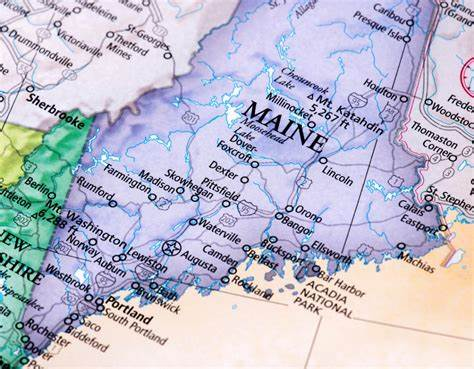
In Somerset County, Maine, is the community of Flagstaff. It was named after a flagstaff built by Benedict Arnold (1741-1801) in 1775. Today, Flagstaff is a ghost town. Her citizens left during the 1950’s when the Dead River was dammed, creating Flagstaff Lake. Historians tell us in the months prior to the flooding, all improvements, repairs and improvements in the whole town stopped. Why paint a house that was going to be flooded? Why repair something that was going to be wiped out? So, week by week, the whole town became more and more bedraggled, more gone to seed, more woebegone. Methodist preacher and teacher Halford Luccock (1885-1960) once said, “Where there is no faith in the future, there is no power in the present.” That quote describes Flagstaff, Maine. Many believe it describes the world in which we live.

Like the residents of Flagstaff, Maine, many believe our world has no future. Just think about it for a moment. Our world is facing some tremendous problems. Population growth, illiteracy, and food and water shortages are common in many places. The United States is facing some tremendous problems. The news media is filled with stories about illegal immigration, drugs and affordable healthcare. The American family is facing some tremendous problems. 50% of American marriages end in divorce and 25% of American children are being raised in a home without a father being present. The greatest shortage facing our world, country and homes is hope. That is why knowing Jesus is so important. With him there is always hope. That takes us to our scripture reading.

We are in the sixteenth chapter of Acts, verses nineteen through thirty-one. Do you remember the story? Paul healed the fortune-telling slave girl from an evil spirit. Everyone should have been happy, but that just didn’t happen. Everyone was upset. Those who wanted to see into the future were upset because their window into the future was gone. The owners of the slave girl were upset because they had lost an income stream. In the end, everyone turned against Paul and Silas. After being stripped and flogged, they are imprisoned. I can’t describe to you the misery of their surroundings. Whatever words I use to describe it falls short of their reality. They are completely dependent on God. However, with God all things are possible.

About midnight, Paul and Silas are singing and praying. God must have heard them, because a great earthquake rocked the entire prison. According to the text, the prison doors opened, and all the chains and fetters fell off the prisoners. The jailor was responsible for the incarcerated, and he assumed everyone ran away. He considered committing suicide. It was a good thing he reconsidered, because all the prisoners remained, including Paul and Silas. In the morning, he looked at them and asked, “Sirs, what must I do to be saved?” They answered, “Believe in Jesus.” It is a great story with two sides. There is an eternal spiritual side and a temporary practical side.

The spiritual eternal side cannot be ignored. There are fourteen earthquakes mentioned in the New Testament, including the earthquake mentioned at Jesus’s resurrection. Earthquakes in the Bible always illustrate God’s power. The jailor had just experienced God’s power and was humbled by the experience. All his earthly pride was wiped away and he felt insignificant. In this humbled state he asks the question, “What must I do to be saved?” I have never met a person who didn’t want to live for eternity. Despite all our shortcomings, we believe that heaven is waiting for us and our loved ones. It would be a horrible thing to lose a loved one and question their salvation.

Years ago, I officiated at a funeral of a nineteen-year-old. His life ended before it got started. The story was tragic. The only thing he had done in life was get into trouble. He made one poor decision after another. On the night he died, he made one last poor decision. It was 3:00 in the morning and he was drunk. He was walking down the middle of a busy road, when he was hit by a drunk driver. Everyone who came to his funeral was young. It was their first taste of death. One by one they passed by his closed casket. A young woman wanted to speak at his service. The family granted her request, and she ended her emotional words by saying, “I hope he found a way to get into heaven.” I have never forgotten her hopeless words.

Have you ever wondered about the salvation of one of your loved ones? There are no secret entrances to get into heaven. There is no side door. There is no back door. The only way to get into heaven is by believing in Jesus. He is our only hope of salvation. His blood washes us white as snow. That is the eternal, spiritual side to the story. Yet, there is another side to this story. 

This is a temporary practical side to the story. God is always present and with God there is always hope. In the story, the incarcerated had no hope, until God intervened on their behalf. That theme isn’t just found in this story. It is found throughout the New Testament. It is the theme of our faith. People of faith understand it clearly. God can turn victims into victors. However, people who lack faith remain victims, like the residents of Flagstaff, Maine. Do the people in your life consider you a hopeful, optimistic person? Do the people in your life consider you a person of faith? Never forget, with God there is always hope. This is the story of the most hopeless time in my life.

When I was in seminary, there was one series of classes that I feared more than the rest – New Testament Greek. I was required to take three classes in New Testament Greek to graduate: Greek I, Greek II and a class in Greek grammar. I found Greek I to be challenging. I found Greek II to be impossible. Part of my problem was my life at that time; it was complex.

As the final exam approached, I knew it wasn’t going to be pretty. It would be the first class I ever failed. The standards were high for that class. There was only one test and you had to get an 80%. That simply wasn’t going to happen and my future hinged on that test. If I didn’t get an 80%, I wouldn’t get my degree, which meant I wouldn’t be ordained. It was one of the most stressful moments in my life. With no other options, I asked the professor for more time to study. He agreed and said I could take it at 8:00 on a Friday morning, because his grades were due at noon. I took that extra time to go back to the beginning of the class and retaught myself Greek. At first it was easy, but then it grew hard. The situation seemed hopeless. I remember the night before I took the test sitting in the library completely alone. Everyone else had gone home because the semester was over. Depressed, I sat there. In my heart, I knew it, I had no hope of passing. I remember at 8:00 in the evening I started to panic. I felt like my future was over before it began. Trying to control my emotions, I knelt by my study carrel and began to pray. My prayer was simple. “Please, God help me. I can’t do this alone. I need you. If you have called me into the ministry, then help me.” For another ninety minutes nothing changed. There is no other way to say it. I was living in Flagstaff, Maine, hopeless. I waited for the announcement that the library was closing. It was at that moment that God acted on my behalf. Like God rolled back the great stone on Easter morning, God rolled back the great stone to my brain. Suddenly, everything clicked. Greek is one of those things you either get or you don’t. For the first time, I got it! Overcome with emotions, I prayed a word of thanksgiving.

The next morning, I was there early to take the test so I wouldn’t have time to forget what I had studied. Once completed, I waited for the professor to grade it. I needed an 80% to pass the class. I would like to report I got a 100%, but I won’t lie to you. I got an 81% and it was the most magnificent 81% in the history of the church! I knew the truth. I didn’t get the 81% because I worked hard, I got an 81% because God was with me. Without God, I would have failed. Without God, there is no hope. However, with God, there is always hope. Can I ask you a question? 

How much time do you spend in Flagstaff, Maine? How much time do you spend in a sea of hopelessness, wallowing in self-pity? I cannot tell you all your prayers will be answered with a yes, but I can tell you in the end God wins. With God, all things are possible. God knows what is best. Martin Luther King Jr. (1929-1968) once said, “We must accept finite disappointment, but never lose infinite hope.” 

Is Bigger Better?

Hudson Taylor (1832-1905) is remembered for his many years of mission work in China. One night, he was scheduled to speak at a church in Birmingham, England. After months of planning, the day finally came, but the weather was horrible. Some tried to discourage Taylor from speaking. Even the organizers of the event discouraged him. But Taylor, himself, insisted. Less than a dozen people showed up, but the meeting was marked with unusual spiritual power. Half of those present either became missionaries or their children entered the mission field, and the rest were faithful supporters of the China Inland Mission for years to come. Can I ask you a question? Was that meeting a success or was it a failure? Through the eyes of this world, it was a disaster; less than twelve people came. Yet, through the eyes of God it was a great success – lives were changed in the name of Jesus. Let me state the obvious, bigger isn’t always better.

We find ourselves today in the fourth chapter of Mark, verses twenty-six and thirty-four. Jesus is in Galilee. He was extremely popular there, so a great crowd was following him. They heard a series of parables about the Kingdom of God. The chapter begins with the parable of the sower. Next comes the parable of the light and the bushel basket, the growing seed, and our parable, the mustard seed. Jesus says the Kingdom of God is like a mustard seed. It is known by all, because it is so short and easy to understand.

Proverbially speaking the mustard seed was the smallest of all the seeds. (The truth be told, other seeds in that corner of the world are smaller. For example, the seed of a cypress tree is smaller.) However, don’t be fooled by the size of the seed. It is deceiving. It starts out being small and insignificant, but it ends up being quite impressive. A full-grown mustard plant is more of a bush than a tree. It stands twelve feet tall. It is large enough for birds to take shelter. The point Jesus is trying to make is not hard to discover. The Kingdom of God may begin very small, but it will grow. In time, the Kingdom of God will become quite impressive.

Jesus wasn’t setting up the crowd for disappointment. The Kingdom of God did grow. Today, Christianity is the largest religion in the world. Our world has a population of approximately eight billion people. Approximately one-third of our world’s population is Christian. On the global scene Christianity is still growing. Did you know the Christian faith grows by 80,000 people per day? That didn’t just happen in an instant. It took time. Consider this with me:

  • In 100 AD the world population was 181 million. For every 360 people, there was one Christian.
  • In 1000 AD, the world population was 270 million. For every 269 people, there was one Christian.
  • In 1500 AD, the world population was 425 million people. For every 84 people, there was one Christian.
  • In 1900 AD, the world population was 1.6 billion people. For every 40 people, there was one Christian.
  • In 1950 AD, the world population was 2.5 billion people. For every 30 people, there was one Christian.

Jesus didn’t lie to the crowd, he told them the truth. He told them the Kingdom of God would start out very small, but in time it would be very big. We like those big numbers, because in America we believe bigger is better. That line of thought has even filtered into the life of the church.

Lakewood Church in Houston, Texas is the largest church in America. They have 45,000 in worship every weekend. They have six services on an average weekend, four in English and two in Spanish. Joel Osteen (born 1963) is the lead pastor. I don’t know how you feel about Joel Osteen. I do not know how I feel about Joel Osteen. However, you must admit, in a bigger is better society, Joel Osteen is a great success.

Can I make a confession? I am a product of this society. I, too, believed bigger is better. For most of my working career, I chased the crowd. For decades, I studied church growth principles. I could have held my own church growth workshop. Weekly on Sunday afternoons, I added up my church’s attendance. If it was a good attendance day, then I was in a good mood the rest of the week. If it was a low attendance day, then I would be in a bad mood the rest of the week. When my colleagues ask me about my church, I give them a number. I researched other churches’ numbers. I believed bigger is better. There is nothing wrong with numbers, until they became a preoccupation. At some time, I had a revelation – the numbers were robbing me of any feeling of satisfaction. The numbers only promoted my failures. I began to evaluate my worth as a person based on the numbers. Joel Osteen averages 45,000. I averaged about 250. There really is no comparison. I am not criticizing Joel Osteen or any other mega church. Every community seems to have one. I am saying numbers aren’t everything. It all changed for me in an instant and I discovered it in one of my own sermons. I discovered it was more important to be faithful then it was successful. It was a humbling moment.

It was the Sunday before the resurrection of Jesus. You know the story. A great crowd had gathered in Jerusalem for the annual Passover observance. On the lips of everyone in the crowd was the name Jesus. His miracles had made him famous. Some believed he was the long-awaited Messiah. When Jesus arrived, everyone wanted to see him. Some were in the crowd cheering for Jesus because he was trending. Some were in the crowd cheering for Jesus because they wanted him to perform a miracle. Perhaps they needed a healing, or a loved one needed a healing. Some were in the crowd for political reasons. They were tired of foreign domination and hoped Jesus would use his power for political liberation. A minority in the crowd loved Jesus and just wanted to be near him. Through the eyes of the world, it couldn’t get any better. Jesus was a success because he had drawn a great crowd. But you know what happened. One by one the people walked away. On Thursday evening, the great crowd had been whittled down to twelve. By Friday, the crowd had been reduced to a select few. It didn’t seem to matter to Jesus, he wasn’t interested in the crowd anyway, he was more interested in the committed. Jesus was more interested in eternal faithfulness than he was in worldly success. Some things don’t change. To Jesus, bigger isn’t necessarily better. The only thing that really mattered to Jesus is faithfulness. This is the question you must answer: How faithful are you?

One of the great preachers of the twentieth century was Fred Craddock (1928-2015). He taught homiletics at the Candler School of Theology at Emery University. No one influenced my preaching more than Fred Craddock. Years ago, I read a story about a time Fred Craddock addressed a group of ministers at a conference. These are his own words:

To give my life for Christ appears glorious. To pour myself out for others. . . to pay the ultimate price of martyrdom — I’ll do it. I’m ready, Lord, to go out in a blaze of glory. We think giving our all to the Lord is like taking a $l,000 bill and laying it on the table—”Here’s my life, Lord, I’m giving it all.” But the reality for most of us is that he sends us to the bank and has us cash in the $l,000 for quarters. We go through life putting out 25 cents here and 50 cents there. We listen to the neighbor kid’s troubles instead of saying, ‘Get lost.’ Go to a committee meeting and cover the same issues again. We give a cup of water to a shaky old man in a smelly nursing home. Usually, giving our life to Christ isn’t glorious. It’s done in all those little acts of love, 25 cents at a time. It would be easy to go out in a flash of glory; it’s harder to live the Christian life little by little over the long haul.

It isn’t just true of preachers; it is true for everyone. We long to do something great for God, but what we normally do are the little things and hope God uses them. We aren’t just doing little things – we are planting mustard seeds. How many mustard seeds have you planted in your life? Charles Spurgeon (1834-1892) is one of the great names in the history of the western church. He was the minister of the New Park Street Chapel of London for 38 years, where he saved countless souls and influenced a generation. His accomplishments in life are impressive, but his own conversion was quite simple. He accepted Christ as a teenage boy at a little Methodist chapel in the middle of a snowstorm. Very few were there that night. Even the preacher was absent. A layman led the service for the tiny crowd. He spoke on just one verse Isaiah 45:22, “Look unto me and be saved, all ends of the earth.” Those words resonated in Spurgeon. He accepted Christ, and the world will never be the same again. When I read that story, I couldn’t help but to ask this question: I wonder if that sincere layman knew the impact he had on the world? I wonder what kind of impact we have had on the world. I wonder what kind of impact you have made on this world. How many mustard seeds have you planted?

Taking Sin Seriously

The topic is sin. We understand sin to be an immoral act and a transgression against divine law. According to the Bible, sin was introduced into the world by Adam and Eve. You know the story – it begins in the second chapter of Genesis. God created Adam out of the dust of the ground (Ge. 2:7). God also created a perfect place for the Adam to live, the Garden of Eden. The Bible tells us it was a garden both pleasing to the eye, and full of food (Ge. 2:9). God gave man dominion over it, with one restriction: the man could not eat from the tree of knowledge of good and evil. The punishment for breaking that law was severe – death (Ge. 2:17). Everything in Adam’s world was perfect, except for one flaw. Adam was alone, so God decided to give him a helper (Ge. 2:18). Taking one of man’s ribs, God created a helper for the man, a woman. Her name was Eve. According to Genesis 2:23, the man was pleased with her. Isn’t it too bad the story doesn’t end with the second chapter? Sadly, the story continues. 

We are told in the third chapter of Genesis the serpent was the craftiest of all the animals God created for man. He is the one who convinced Eve to eat from the forbidden tree. It was Eve who convinced Adam to eat the forbidden fruit. For generations, men have been blaming women for the fall. If the truth is told, they are both responsible and things would never be the same again. Genesis 3:8-15 tells us of the consequences of their sin. One thing is clear, God has taken sin seriously from the very beginning. Adam and Eve lit a fire that has been burning since that day. Generations later, we live in the aftershock of their sin. With this as a background, let me make three statements about sin. This is statement number one.

Our generation does not take sin seriously. On December 8, 1980, former Beattle John Lennon (1940-1980) was shot to death in New York City near his residence. Mark David Chapman (born 1955) pulled the trigger and was sent to Green Haven Correctional Facility in Stormville, New York, where he is serving a 20 year to life sentence for the crime. He is still there today. A reporter interviewed him later and asked him if he had any regrets. He responded by saying, “Only one. I regret people don’t understand me. I am basically a good person. I only killed one person.” He illustrates the fact our generation does not take sin seriously. In my opinion, we may live in the most immoral times in American history because we don’t take sin seriously. How many things are accepted today that were not accepted years ago? The question is, why? I believe it is because we are always comparing ourselves to other sinners. Next to them, we look good.

Do you know of anyone who has stopped watching the news because they are tired of all the bad news. They are tired of hearing about violent crimes, sex offenders, and murders. They are tired of watching young people being sent to prison for decades, wasting their lives. They are tired of political corruption and hopeless world problems. They are tired of another church scandal. They are just tired of all the bad news, so they just stop watching. However, this is equally true – we compare ourselves to those in the news. In comparison to that list of bad characters in orange jump suits, we look good. We know we are sinners, but we are not that bad. Did you know, according to Lifeway Research, 67% of all Americans believe in hell, but only 2% of Americans think they are going to hell? It is painfully true, our generation does not take sin seriously. This is statement number two. 

Historically, the church has taken sin seriously. In the eighth chapter of John, we find Jesus speaking at the Temple in front of a great crowd. We do not know the topic he is addressing, but we do know what happened. Suddenly, the teachers of the law and the Pharisees appear, dragging a woman. We know nothing about her, except for her adulterous behavior. (It is interesting they only brought just the woman. The last time I checked it takes both a man and a woman to commit an adulterous act.) They remind Jesus what the law required – she must be stoned. Things look bad for the poor woman, but Jesus saves the day. The Master says, “If any one of you is without sin, let him be the first to throw a stone at her.”  The good news is the woman was not stoned. The bad news is everyone had to admit they were sinners. It is not just true of that generation, it is still true today – we are all sinners. Romans 3:23 says, “All have sinned and have fallen short of the glory of God.” That is why the church has always taken sin seriously. What sin, or sins, are frustrating your spiritual development?

In the fourth century, a monk named Evagrius Ponticus (345-399) categorized all of mankind’s sins. According to him there were eight classifications of sin. Pope Gregory I (540-604) revised his list in the year AD 590. He said there were seven classifications of sin. We call that list “the seven deadly sins.” Through the years, preachers, both known and unknown, have examined that list. During Lent one year, I preached on the “Seven Deadly Sins.” Which one of these sins haunts you? This is the list:

1. Lust 

2. Gluttony 

3. Greed 

4. Sloth 

5. Wrath 

6. Envy 

7. Pride 

Christians must see sin for what it is, the way to bondage and death, so that we cling to Christ. While our generation does not take sin seriously, historically, the church has taken sin seriously. However, this is more important.

God takes sin seriously. Romans 6:23 says, “For the wages of sin is death, but the gift of God is eternal life in Christ Jesus our Lord.” God’s greatest desire is to spend eternity with you. That is why Jesus entered our world and that is why Jesus died on the cross. Without the cross there is no hope of eternal life. May we never forget, we are not saved by our good works, we are saved by grace and by grace alone. The cross solved our death problem. God takes sin seriously.

When I was in seminary, I took several required preaching classes. One by one, students stood in front of their peers to practice their new trade. I heard many sermons, but one illustration I heard still haunts me. I will be honest with you, it is not an easy story to tell and it is not an easy story to hear, but it does illustrate the point that God takes sins seriously. It is an old preaching story, so you may have heard it in the past. This is how it goes.

A father had a young son, who welcomed him every day when he returned home from work. The boy loved his father, and the father loved his son. Daily, the boy asked about his work. Each day the boy became more curious. The father’s job was not exciting, but it was important. He was a bridge operator. Normally, the bridge was up, so the ships could sail under it. However, when the passenger train came, he dropped the bridge, so it could reach its destination. The boy loved hearing about his father’s job and one day asked if he could go to work with his father. At first, the father said, “No,” but in time he said, “Yes.” The next morning the father took the son to work. At first the boy was fascinated. However, he was just a boy and in time he grew bored. In time, the boy wandered outside. His father watched him through the window. The father got involved in his work and couldn’t watch his son every second. For several minutes, he forgot his son was there. Soon, the signal was given. The train was coming, and it was time to drop the bridge. The father looked for his son, but the boy wasn’t in the office. He looked for his son, but the boy wasn’t in the yard. He looked for his son and saw him on the bridge. No, to be more exact, his son was under the bridge, on the large cogs that raised and lowered the bridge. The father stood to run to the bridge to save his son, but the train blew its whistle to say it was near. There was no time. The father was in the worst possible situation. If he pulled the lever to lower the bridge, he would kill his son, saving the passengers. If he didn’t pull the lever, he would save his son, killing the passengers on the train. What would you do?

On Good Friday, God pulled the lever, so we could live. The story doesn’t end there. As the train passed over the bridge the passengers waived at the bridge operator. They were having a wonderful time. That never knew the sacrifice he made for them. I hope you know the sacrifice God has made for you!

In the Name of Jesus

In the Name of Jesus

We are in the sixteenth chapter of Acts, verses sixteen through eighteen. That means Paul is on his second of three missionary journeys. The story is straight forward – Paul, Silas and Timothy are looking for a place to pray. That should have been easy, but it was hard. According to the text, their solitude is broken by an enslaved woman. We know next to nothing about her. We do not know her height. We do not know her weight. We do not know if she was physically beautiful or homely. We do not know if she was intellectually brilliant or dim. We know next to nothing about her, but we do know two things. First, she was a fortuneteller, making her owner a great deal of money. Our generation has disguised fortunetelling as entertainment; her generation saw it for what it was, and is, satanic. Second, we know she was a pest.

The meeting of Paul and the fortune teller is not a brief encounter. She stalks Paul and his small group for an unknown amount of time. I am not exactly sure what happened, but something happened, and it broke the camel’s back. With his patience completely gone, Paul looked at the woman and called on the name of Jesus. The demon was extracted, and the story ends with the woman being liberated. Time and time again, the Bible tells us calling on the name of Jesus reveals God’s authority.

Have you ever called on the name of Jesus in your time of greatest need? I have never met a person who hasn’t called on the name of Jesus occasionally. After all, life is hard. That is why it is important to understand what calling on the name of Jesus means. Many do not. Ted Turner (born 1938) does not.

Today, Ted Turner is 85 years old. He is worth $2.5 billion. When cable television exploded onto the American scene, Atlanta-based Ted Turner was one of the pioneers. One of his first stations was CNN, the Cable News Network. It was the first to carry news 24/7. I always remember watching Turner’s channel nine, WTBS. They carried all the Atlanta Braves baseball games in the days of Bob Horner (born 1957) and Dale Murphy (born 1956). Let me state the obvious – he has made many wonderful business decisions. However, his spiritual life is completely bankrupt. His story is sad. Born in Cincinnati, he was raised in a Christian home. As a youth, he dreamed of going into the mission field. That all changed during the illness and death of his sister, Mary Jean (1941-1960). That experience changed him. He became disenchanted with Christianity. He said, “I prayed for my sister, but she died anyway.” Discouraged, he walked away and never looked back. Can you imagine being 85 years old and not knowing Jesus? The problem is Ted Turner is ignorant about prayer.

Do you know of anyone who is ignorant about prayer? You must know someone who prayed with a sincere heart for their greatest desire, only to be disappointed. They prayed for a terminal brother, sister, or child only to have them die. They prayed for a baby, but the baby never came. They prayed for a perfect job, but perfection never happened. The problem was not the sincerity of their words. The problem was not their lack of faith. The problem was not their unholy lifestyle. The problem was that they were ignorant about prayer. Prayer is not about getting what you want. Prayer is not just saying the right words. Prayer is your spirit yearning to be with God. When you pray in the name of Jesus, three things happen. Consider them with me.

First, when you pray in the name of Jesus, you are admitting your limitations. Sixteenth President of the United States Abraham Lincoln (1809-1865) once said, “I have been driven many times upon my knees by the overwhelming conviction that I had nowhere else to go. My own wisdom and that of all about me seemed insufficient for that day.”  How many times has life driven you to your knees? God always has our attention when life is hard. I witness that daily. 

Did you know the countries with the fasting growing conversion rates to Christianity are all found in Africa and Asia? Not one of those countries on the list is found in western Europe or North America. There are several reasons for this, but one stands out. The areas of the world where Christianity is declining are the same areas that have the highest standard of living.  In other words, those areas have the most money. God has a hard time getting our attention because we can take care of ourselves. That is why more church mortgages in America were paid off during the Great Depression than any other decade in the twentieth century. How many people don’t pray because they don’t think they need God? They can take care of themselves. When we pray in the name of Jesus, we are admitting our limitations.

Second, when you pray in the name of Jesus. you are identifying Jesus as your Lord and Savior. You are not praying in the name of Mohammed or Buddha. You are not calling on the name of your country or your favorite sports franchise. You are calling on the name of Jesus. In the scripture lesson Paul commanded the spirit to come out in the name of Jesus. That is important because it shows Jesus’ authority over the spirit. This is not the only place. Jesus had authority over a variety of things in the Bible. When you pray in the name of Jesus, you are telling the world that you belong to him.

During the 1800s, Reverend E.P. Scott (1812-1864) was a missionary in India. Against the advice of his peers, he decided to travel to a remote tribe to share the Gospel. Several days into his journey, he was confronted by a group of warriors. They took their spears and pointed them toward his chest. He responded by pulling out his violin, closed his eyes and started singing. What did he sing? He sang All Hail the Power of Jesus Name. The warriors didn’t know what to do so they lowered their spears. In time, the warriors began to cry. Scott was saved and spent the rest of his life teaching that tribe about Jesus. There is something about that name, Jesus! When we pray in the name of Jesus, we are admitting our limitations. When you pray in the name of Jesus you are identifying Jesus as your Lord and Savior.

Third and finally, when you pray in the name of Jesus, you are submitting to his will. God hears and answers all prayers. Sometimes, God answers, “Yes.” That is what happened in the scripture lesson. The slave was healed. Sometimes, God answers, “No.” Paul was never healed from the thorn in his side. Sometimes, God answers, “Later.” There are many examples of that in our world. Sometimes, God answers, “Are you crazy?” when we pray to win the lottery or for our favorite sports team to win. We always want the answer to be yes, but it doesn’t always happen. What really matters is, are you submitting to God’s will? That is hard for people. When you pray in the name of Jesus you are submitting to God’s will.

One of the great stories in the Bible is the Garden of Gethsemane. You know the scene. The end is near. After three years of teaching and healing, Jesus is staring at the cross. It was Holy Week and so much had already happened. Jesus had already entered Jerusalem on that humble animal. Jesus had already cursed the fig tree and taught at the temple. Jesus had already been anointed and shared that last Seder with the disciples. Judas Iscariot had already agreed to betray him. There was nothing left for Jesus to do but wait. As he waits, he goes to the garden to pray. The master struggles as he prays. In Luke 22:42 Jesus prays, Father, if you are willing, take this cup from me; yet not my will but your will be done.”  Those are powerful words. Jesus does what we are unable to do – submit to God’s will. When we pray in the name of Jesus, we are admitting our limitations. When you pray in the name of Jesus you are identifying Jesus as your Lord and Savior. When you pray in the name of Jesus, you are submitting to his will.

Years ago, I served three United Methodist congregations near Saint Clairsville, Ohio: Morristown, Lloydsville and Bannock. The total attendance at all three was approximately eighty. I preached at all three weekly. I preached at Morristown at 9:00. I preached at Lloydsville at 10:00. I preached at Bannock at 11:00. The best thing about those churches was the people. They were good to me and taught me a great deal about pastoral care.  

I will never forget the day a woman called me and said, “Russ, I need your help.” She went on to tell me her neighbor’s son was killed in a traffic accident and asked me to visit her. He was out celebrating his twenty-first birthday and drank too much. When the highway patrol cut his lifeless body out of the car, they found a half-emptied case of beer and countless empty beer cans. The young man never had a chance. I found out later his father gave him the case of beer as a birthday present. Over the next few days, I spent hours with the grieving mother. With red rimmed eyes she asked me two questions “Was God punishing my son for some past sin?” And “Why didn’t God hear my prayer and save his life?” It was clear to me the poor woman was ignorant about prayer.

Do you know anyone who is ignorant about prayer? Prayer is not a magic wand to get what you want. Prayer is more. Prayer is an admission. We just don’t have all the resources we need to solve all your problems. Prayer is an identification. We are saying Jesus was the greatest life that ever lived. Prayer is about submitting. You must surrender to God’s will and accept the fact that God knows best. The great reformer, Martin Luther (1483-1546) once said “To be a Christian without prayer is no more possible than to be alive without breathing.”  How healthy is your prayer life?

Understanding Infant Baptism

In 2017, my wife Kathryn and I traveled to Ukraine. In the shadows of Russia, Ukraine has always had a strained relationship with what was once called the “Evil Empire.” Our host on that trip was an American missionary named Patrick. He was planning a baptismal service and was encouraging everyone who had never been baptized to participate. I don’t know how else to say it, spiritually, the Ukrainian people seemed confused. They had been part of the Soviet Union, so there has been a communist hangover. Some Ukrainians believe in nothing; during communist rule they were taught atheism. They are working hard to survive, so they have no energy left to think about eternity. Some Ukrainians profess to be Orthodox, but they have not practiced their faith in decades. Some Ukrainians have joined cults. When religious freedom came to that land, cults arrived like Mormonism which began teaching their false theology. The Protestants, like Methodism, are lumped together with the cults. Patrick’s baptism service was important because he was simply trying to lead the people back to their Christian core. He was not promoting his denomination, the United Methodist Church, he was simply promoting Jesus! In the life of the church, nothing matters but Jesus! Any form of baptism means nothing without Jesus. Baptism has been part of our world for a long time.

Baptism was not created by the early church, but it was redefined by the early church. Baptism began with God’s Chosen People. Never forget, the Jews are both a race and a faith. Some were born into the faith. Gentiles, non-Jews, were baptized into the Jewish faith. The symbolism was clear. The individual was held under water to symbolize a washing. It was like taking your Saturday night bath. They were washing away the sins of their old life and starting over again fresh and new. It has been called the sinner’s baptism, and this was the baptism that John the Baptist offered. Many left the city and went into the wilderness to be baptized by John. Everyone was encouraged to be baptized because everyone had sinned. Then, Jesus came, and everything changed. 

Jesus never sinned. I do not know why Jesus wanted to be baptized, but his baptism signaled the beginning of his earthly ministry. Like smashing a champagne bottle on a hull of a new ocean liner, Jesus went to work. The early church wanted to be like Jesus, so they baptized new converts. In the beginning, it took place on Easter morning. Men baptized men, and women baptized women. Everyone was in their birthday suits. The symbolism changed – when you were held under the water you were dying with Christ. When you were pulled out of the water you were being resurrected with Christ. We call this form of baptism “immersion” or believer’s baptism. Some churches, especially Baptist churches, continue to practice immersion.

Everyone would have been immersed if it wasn’t for the Dark Ages. For it was during that horrible period baptism changed. You can say it is based on poor theology. Mothers and fathers have always loved their children. Parents have always wanted to see their children go to heaven. The problem was, during the Dark Ages the infant mortality rate was sky high. Parents were afraid their children wouldn’t make it into heaven without baptism, so they ran their newborns to the church to be baptized, just in case the unthinkable happened. It is for this reason most of the western church practices infant baptism. The story of Lydia in Acts 16:11-16 illustrates how one believer can affect the lives of others.

In infant baptism two things happen. First, we wash away the original sin of Adam. Within each newborn is a flaw that leads them to sin. I have never met a perfect person. I have never met a single person who claims to be perfect.  Second, we recognize the importance of environment. Children are not born into isolation, they are born into communities. Part of that community is family, part of that community is the church. The goal of infant baptism is salvation. We are promising to influence the child toward Jesus, our only hope of salvation. We want the child to gently wade into the faith. Infant baptism is my norm, so I want to examine it in this blog. I will do that by looking at the ritual used in the United Methodist Book of Worship and by looking at three words.

The first word is faith. John the Baptist believed in Jesus from the very beginning. It is for this reason he was uncomfortable baptizing Jesus. When Jesus was baptized, something wonderful happened. God Himself suddenly appears. God says in Matthew 3:17, “This is my Son, whom I love; with him I am well pleased.”  In other words, God is endorsing Jesus as the Messiah. For the Jews, it meant the waiting was over. The Messiah had finally arrived. To us, it means more – it means that Jesus was the most unique life who ever lived. He was the very incarnation of God, the perfect sacrifice for the sins of the world. He is our only hope of salvation. Baptism reminds us that Christianity is the one true faith! Baptism is a witness. We are telling the world that Jesus is our only hope of salvation. Mohammed and Buddha were fine people, but they were not the son of God. They are both dead, but Jesus is alive. If you are reading this blog, then I am assuming you believe Christianity is the one true faith.

The second word is family. One of Paul’s traveling companions was Timothy. Who was Timothy? Timothy was several things. For one thing, Timothy was a product of a Christian home. Timothy’s grandmother was Lois, and his mother was Eunice (2 Timothy 1:5). Timothy was not a first-generation believer. He was at least a third-generation believer. I do not know how much Paul knew about family dynamics, but I do know this: Paul knew the greatest influence on your life is your family. The greatest influence on the child being baptized is his or her family.  

That is why in the ritual we ask the parents of the child these questions:  

Beloved, do you in presenting this child for holy Baptism confess your faith in our Lord and Savior Jesus Christ? 

Do you therefore accept your duty and privilege to live before this child a life that becomes the Gospel; to exercise all Godly care that he be brought up in the Christian faith, that he be taught the Holy Scriptures, and that he may learn to give the reverent attendance upon the private and public worship of God?  

Will you endeavor to keep the child under the ministry and guidance of the church? 

The parents always say, “We do” or “We will.” However, on the day the parents answer, “No!” the baptism is over. Infant baptism means nothing if the faith means nothing to the parents. Let me ask you this question: how important is the Christian faith to you? If you want your child to take the faith seriously, then you must take the faith seriously.

The third word is fellowship. There comes a point in the baptism ritual that the attention leaves the baby and the parents. It is now the church’s turn to make the promise. I have recited these words many times.

With God’s help we will so order our lives after the example of Christ, that this child, surrounded by steadfast love, may be established in the faith, and confirmed and strengthened in the way that leads to life eternal.  

Don’t just read the words, look at their meaning. The church is promising to create a Christian environment to influence the child toward growth in faith and personal salvation. That is why Vacation Bible School is important. That is why Sunday school is so important. That is why Junior Church is so important. That is why confirmation is important. That is why the annual youth mission trip is so important. God has entrusted these young souls to us, so we must be at our best. How could you enjoy the riches of heaven if one of these precious souls was missing?

In a few weeks, I am scheduled to baptize a baby named Natalie. It will be a great day. Baptisms are great for three reasons. First, baptisms are great because they bring people to the church. It is no fun preaching to a half empty room. The more the merrier. Second, baptisms are great because they remind us of the goodness in younger generations. Sometimes we fail to see the goodness in other generations. Church is the last place where all generations mix. Third and finally, baptisms are great because we get to see a baby. How often do you get to see a baby? During infant baptism the spotlight will rest on Natalie. It will be a nice moment, but baptisms don’t just last a moment. The real work begins once the water dries. Chinese Church leader Watchman Nee (1903-1972) once said, “Baptism is an outward expression of an inward faith.”

Why Timothy?

Our scripture reading is Acts 16:1-5. Much has already happened. It will have to suffice to say that Paul had taken center stage. His first missionary journey is complete, and he is about to embark on his second. However, before he leaves, he enlists some help. His list of potential helpers was short. As a matter of fact, only one name is mentioned, Timothy. According to our text, Timothy was the product of a mixed marriage. His mother was a Jewess believer, and his father was a Greek, or Gentile, non-believer. His references spoke of him in glowing terms. Having just stated these facts, one question remains: why Timothy? What was it about Timothy that made him stand out? What made him an excellent candidate? Those are the questions I want to try to answer. They are the same qualities that God is looking for today. Could it be you have some of those qualities? Let me begin with the obvious.

Timothy was not selected by Paul for any physical reasons. This was not like the NFL draft where the physically gifted are selected first. We do not know how much Timothy weighed. We do not know how fast Timothy could run. We do not know how high Timothy could jump. We do not know if Timothy was extremely quick or tall. We do not know if Timothy was short or overweight. Luke does not include any of this information for one reason — it simply doesn’t matter. Church history is filled with people of every physical description. Timothy was not selected by Paul for any physical reason. Your physical state does not eliminate you or include you for Christian service. That is a good thing. Did you know, according to the United States government, approximately 41.9% of Americans are considered obese?

Timothy was not selected by Paul because he was the right age. I know age is one of the factors in this story. We can assume Timothy was young, he must be young. Both of his parents and his grandmother are still alive. In First Timothy 4:12 Paul tells us that Timothy was young. However, age does not seem to be the driving force behind Paul’s choice. If he was a United Methodist, it would be a factor. Did you know the medium age in America today is 38.5 years old? Did you know the average age of a United Methodist is 57 years old? Did you know the United Methodist Church has intentionally decided to shrink that gap by promoting more youthful laity and clergy? I believe every generation has something to offer. After all, God loves and uses every generation. Timothy was not selected by Paul because he was the right age. Your age is no excuse for not serving God.

Timothy was not selected by Paul for any economic reasons. There is no mention of money in this story. However, I do know that money is important. If you don’t believe me, then try to live without it. Try to maintain your church ministries and building without money. It would have been easier if Timothy had some extra cash. He could have paid for everyone’s lunch. He could have paid for some traveling expenses. He could have paid for some advertising. If Timothy had some money, then they could have eliminated all the fundraising. The problem is, money isn’t mentioned in the story, so money wasn’t a major factor. Timothy was not selected for any economic reasons. So why was Timothy selected? Timothy was selected for one reason, FAITH!

Second Corinthians 5:6-9 says:

Therefore, we are always confident and know that as long as we are at home in the body we are away from the Lord. For we live by faith, not by sight. We are confident, I say, and would prefer to be away from the body and at home with the Lord. So we make it our goal to please him, whether we are at home in the body or away from it. 

In other words, Timothy was a man of faith. Faith isn’t a magic wand to get what you want. Faith is a deep trust in God, who knows what is best. Does your faith teeter on getting what you want? Is your faith rooted in trusting God? The two are a million miles apart. Martin Luther (1483-1546) once said, “God our Father has made all things depend on faith, so that whoever has faith will have everything, and whoever does not have faith will have nothing.”

When I was in high school, I had a friend by the name of Nancy. There was no romance, just friendship. We were in high school youth group together. The love of her life as a teenager was her horse. She was bright and attractive. As an only child, she was the apple of her parent’s eyes. To say the least, she was an extrovert. She made every experience fun. I spent hours with her acting silly and laughing. Years later, I attended her wedding and had too much fun at the reception. A year later, she told me she was going to have a baby. Her future seemed so bright. Then a horrible thing happened. Both she and her baby died during the birth. Her husband struggled for answers and her parents mourned. My parents told me her parents left the church because they didn’t believe in God anymore. Their faith was gone. I don’t want to be critical, but they didn’t get the memo. There is nothing easy about life or faith. Faith is not a magic wand to get what you want. Faith is trusting God to know what is best.

In 2016, my wife Kathryn and I visited Vicksburg, Mississippi. We love history, and in particular, Civil War history. Today, Vicksburg is a struggling community on the Mississippi, but in the 1860’s it was a booming metropolis. Do you remember your American history? As long as the Confederates controlled Vicksburg, they controlled the entire Mississippi River. It was vital that the Union take Vicksburg. Ohio born U.S. Grant (1822-1845) made that happen because of a forty-seven-day siege. Once Vicksburg fell, the Confederacy was cut in half and the Mississippi was opened to commerce again. That battle happened in 1863. However, the Union occupied Vicksburg for years to come.  

One of the great names attached to that battle was Ohio born William T. Sherman (1820-1891). In time, he would make it to Atlanta, and then complete his famous march to Savannah, the famous “March to the Sea”. You can say, in Vicksburg he practiced for his future success. Trying to isolate the state of Mississippi from the war, he traveled 180 miles from Vicksburg to Meridian, Mississippi. He destroyed railroad lines and private property along the way. Sherman was confident that he would succeed, but one thing did surprise him — he never expected freed slaves to follow him and his army along the way. That would happen time and time again, until the end of the war. They followed Sherman for one reason: they didn’t just believe in Sherman, they had faith in Sherman. They really didn’t know what the future held. There were no promises of free money, education, or a piece of land. The only thing those former slaves knew was life had to be better following him. Blindly, they followed Sherman because they believed he knew what was best for them. That is true faith. Timothy was selected because he had faith.

Are you a person of faith? I am not talking about magic wand faith. I am talking about the kind of faith that trusts God no matter how hard life gets. Christian author and clergyman Max Lucado (born 1955) once said, “Faith is not the belief that God will do what we want. It is the belief that God will do what is right.” Timothy was selected because he was a man of faith. What is the condition of your faith? Would you have been chosen? 

God Esteem

History tells us Abraham Lincoln (1809-1865) was shot at Washington D.C.’s Ford Theater on April 14, 1865. Much has been written about the shooting and the political climate of America on that day. Very little has been written about the contents found inside of the pockets of our sixteenth president. This is what was found:

          1. A handkerchief, embroidered “A. Lincoln”
          2. A country boy’s pen knife
          3. A spectacles case repaired with string
          4. A purse containing a $5 Confederate bill
          5. Some old and worn newspaper clippings

One of the clippings was an article written by John Bright (1811-1889). He called Lincoln, “one of the greatest minds of all times.” Today, that is common knowledge but that was not the case in Lincoln’s time. In 1865, millions shared quite a contrary opinion. The President’s critics were fierce. The country was in turmoil and was ripped to shreds by hatred and a cruel, costly war. Lincoln kept Bright’s words because he couldn’t believe anyone would say he had a great mind. All these years later, we can confess the truth. Lincoln suffered from depression. He was crippled with self-doubt and haunted by a poor self-image. Do you know of anyone who is depressed, crippled with self-doubt, and haunted with by a poor self-image? Could that be part of your story? That takes us to our scripture reading.

We find ourselves instructed from the twenty-seventh chapter of Matthew. We usually hear these words during the season of Lent, Holy Week in particular. However, that does not mean it doesn’t have something to say to us today – they are powerful words all the time. You may remember the scene. Jesus is on his way to the cross. He is standing with the Roman Governor Pontius Pilate before the crowd. Pilate permits the crowd to decide Jesus’s fate. The crowd chooses Barabbas over Jesus. A short time later, Jesus is executed. Think about the scene for one moment.

Jesus and Pilate made a strange pair. They are exact opposites. Pilate had everything this world had to offer, fame, power, and influence. Jesus had nothing this world has to offer. Yet, it is Pilate who is riddled with self-doubt, not Jesus. What did Jesus have that was absent in Pilate’s life? The answer is God esteem. What is God esteem? It is the understanding that we cannot live our lives on our own and can only live up to our full potential through glorifying God. Jesus is the ultimate example of God esteem. As a disciple of Jesus Christ, I hope you have God esteem. The purpose of your life is not self-promotion. The purpose of your life must be to glorify God. To improve your God esteem let me ask you three questions. This is the first question.

Do you know who you are? Jesusknew who he was. The Gospel narrative is a little thin when it comes to Jesus’ childhood. We are told that Jesus was born in Bethlehem and lived in Egypt for a short time as an infant. He called Nazareth home. We are told he went to the temple in Jerusalem when he was twelve years old and amazed the Elders. We know nothing about his teenage years, but we do know he lived near his mother, Mary, until he was thirty. We know very little about Jesus’ life, but I am comfortable saying Jesus knew who he was from the very beginning. Jesus knew he was the son of God. Jesus knew being the son of God brought unique opportunities, however it also brought unique challenges. Jesus was not arrogant; Jesus was secure. Jesus knew who he was. How many secure people do you know? Do the people in your life consider you a secure person? All secure people know who they are.

The most liberating words in my life are the words, “I don’t know!” When I was younger, I thought I had to know everything. There was a time when I wanted people to think I knew everything. The truth is I am ignorant about many things. I know nothing about plumbing, auto repair, foreign policy, sewing, crafts, and the finer details of physics. I can’t speak a word of Portuguese. It is extremely difficult to know everything. Then I learned to use those three little words, “I don’t know.” Saying, “I don’t know” doesn’t mean you don’t know anything. It means “I don’t know” about certain things. I don’t know anything about cardiology, but I know something about God, preaching, the Bible, church growth and group dynamics. In a few days I will turn sixty-seven years old. I like being my age because I have had years to learn about myself, my strengths, and my weaknesses. Do you consider yourself an expert on everything? When was the last time you uttered those three liberating words, “I don’t know?” Jesus knew who he was. That is the first step in having God esteem! This is the second question.

Do you know whose you are? Jesus knew whose he was. It has been over two thousand years since this Biblical scene. You know how the story ends. Pilate permits Jesus to be crucified and the Master is buried in a cave-like tomb. Jesus spent his earthly ministry surrounded by people, but when the end came, he was alone. The crowds of Palm Sunday disappeared. Jesus was alone except for God. Jesus had confidence because he knew he was loved by God. You can have self-confidence because you are loved by God.

One of the great preachers of yesteryear was Phillips Brooks (1835-1893). He was extremely confident and optimistic. A close friend asked him what the source of his attitude about life was. He replied, “It is really quite simple, I am a Christian.” Once you discover God’s love for you, everything changes. It is not just his story. It is your story too.  God claims you as a child. In the end, God will be victorious, and He wants to share the spoils of that victory with you! It really doesn’t matter what the world says about you. The only thing that really matters is that God loves you! That is the second step in having God esteem! This is the third question.

Do you know where you are going? Jesus knew where he was going. You know where Jesus went. The Apostles Creed tells us: He suffered under Pontius Pilate, was crucified, dead and buried; he ascended into heaven, and sitteth at the right hand of God the Father Almighty. Jesus knew he was going to heaven when it was all over. All he had to do was hang on. Jesus’ trials and challenges of this world were only temporary. All he had to do was hang on. He had to hang on through the tension of the crowd and the pain of the cross. Those experiences were temporary, but heaven was going to last for eternity.

Has there ever been a time in your life when you felt completely defeated? There doesn’t seem to be any escape and every day is a challenge. If you are a disciple of Jesus Christ, if you know him as your Lord and Savior, you can sink your roots into this part of the Good News. Someday the challenges of this world are going to be over, and you get to go to heaven! The only things that really matter are the things that will matter in one hundred years. The only thing that will matter in one hundred years is your relationship with Jesus. Someday we are going to heaven! That is the third step in having God esteem.Let me end with this story.

John Sargent (1856-1925) was an American painter. He once painted a panel of roses that was highly praised by critics. It was a small picture, but it approached perfection. Although offered a high price for it on many occasions, Sargent refused to sell it. He considered it his best work and was very proud of it. Whenever he was deeply discouraged and doubtful of his abilities, he would look at it and remind himself, “I painted that.” Then his confidence and ability would come back to him.

Never forget! You are a disciple of Jesus Christ. For that reason and for that reason alone you have God esteem. God can’t make a loser! Because you are a disciple of Jesus Christ, you know who you are. You know your own strengths and weaknesses. Because you are a disciple of Jesus Christ, you know whose you are. You belong to God, and He loves you!  Because you are a disciple of Jesus Christ, you know where you are going. The challenges of this world are only temporary. Someday you are going to heaven. You are so valuable Christ died for you!

Camp Gideon

Camp Gideon is in Aa, Estonia. The village is in northern Estonia, on the southern coast of the Gulf of Finland. One cannot help but be moved by the natural beau­ty. The camp itself was built prior to World War II by the Soviet Union. At that time, it was a Pioneer Camp, where communism and atheism were taught to the young. The fall of communism in 1991 changed everything. In time, Estonia became an independent country and Camp Gideon found a new purpose.

During the summers of 1993 and 1994, Camp Gideon was used by the Estonian United Methodist Church. On March 15, 1995, Camp Gideon was purchased by the Asbury United Methodist Church of Tulsa, Oklahoma and given to the United Methodist Churches of Estonia. On that day Artur Põld was named the Director of Camp Gideon. He still holds that position today.

From the very beginning, American friends have supported Camp Gideon – both spiri­tually and financially. Every summer, several groups of volunteers from the United States arrive at Camp Gideon to organize children’s pro­grams and help repair the time-worn buildings. Over the years, Camp Gideon has become internationally known in Latvia, Russia, Finland, Sweden, Belarus, Germany and beyond. Thanks to the ministries of Camp Gideon, hundreds of children hear about Jesus each camp season. Together with the guests of Camp Gideon, several mission events have been organized, including family camps, Walks to Emmaus, and the Sum­mer Conference of the UMC in Estonia.

In 2019, my wife Kathryn and I visited Camp Gideon for the first time. We were moved by the work of these people. Since that visit she has been raising money to help with the reconstruction of the buildings. Currently there are fifteen buildings on the 75-acre camp. Between July 24 and August 5, we are returning to Camp Gideon with a small Volunteer-in-Mission team. We will be helping with English Camp and are looking forward to traveling to Camp Gideon to see the progress that has been made. It is truly a resurrection story. A camp that once taught communism and atheism is now teaching the Good News of Jesus Christ.

You can help Camp Gideon in two ways. First, pray for Camp Gideon and for our team while we are there. Our prayers are more valuable than we will ever know. Second, prayerfully consider making a financial contribution to Camp Gideon. No amount is too small. It is amazing what God can do with a single dollar. Please make your check out to PROJECT ORPHAN OUTREACH and mail it to: 275 Bradford Drive, Canfield, Ohio, 44406. You will receive a thank-you note for your contribution and will receive a report on what was accomplished after our return.

In advance, I would like to thank you for your generosity.

Church Paralysis

When I first retired, I worshipped in a small membership church in eastern Ohio near the Pennsylvania line. I have nothing negative to say about them. They were nice people who took great pride in their church building. Weekly before worship, they would gather in a circle of chairs and visit. They talked about all kinds of things. They reminisced about the glory days of their church and how the community had changed. They talked about their illnesses and the latest news. They talked about the latest conquest of their high school athletic teams. They talked about everything, but they never talked about the future of their church. It was the big pink elephant in the middle of the room. Everyone knew it, but no one wanted to admit it – their days were numbered, their church was dying. Their pastor tried a variety of things to help them continue in ministry. She suggested they start a food pantry, but the idea was easily shot down. She held and paid for a Vacation Bible School for the community, but most members didn’t care. Some believed the denomination should write them a generous check to continue.

They got so desperate they asked me what they could do to save their church. They pulled me off to the side one Sunday and asked me what to do. I said, “do something! Anything is better than nothing.” I suggested updating their Facebook page, collecting school supplies for the local school, or talk to visitors. It would have been nice to change the paraments to reflect the correct liturgical season. They listened patiently, but in the end, they did nothing. They were suffering from what I call “church paralysis.” Churches are excellent at doing nothing. That small membership church in eastern Ohio is not alone. Many churches are excellent at doing nothing.

There is a blogger named Paul Alexander. He wrote a blog called Six Reasons Churches Refuse to Change. This blog has some merit. These are his reasons. Perhaps you can find your church in his list?

          Procrastination – Have you ever attended a church meeting where nothing happened? After ninety minutes of talking, nothing happened. The time was spent reviewing the members’ workday, family problems and medical conditions. In the end, a failed program from the past was brought back. The truth is no one expects it to be successful this time.

          Structure – Have you ever been part of a church where some committee acts as the ultimate authority. They vote down anything they don’t like or understand. They vote down anything that doesn’t benefit them or their friends. Committees should help people do, not frustrate, ministry.

          Focus – Have you ever attended a church that was more interested in the members’ needs than the needs of anyone outside of the church? They are more concerned about seeing their birthday printed in the bulletin, than they are helping strangers obtain basic human needs.

          Desire – Have you ever attended a church that was consumed by the members’ likes and dislikes. Selfish individuals like things their way. They expect everyone to worship in a style they like. They expect everyone to sing the songs they like. They want to worship at a time that is convenient to them. There is very little thought about what others like or what others find beneficial.

          Money – Have you ever attended a church meeting where a new idea for ministry was shot down because of a lack of money or questionable insurance coverage? Money is an excellent excuse for doing nothing. Jesus spoke more about money than any other topic because money is important. How we spend our money reveals our priorities. Have you ever noticed there is never enough money for things we don’t like, and we can find money for the things we like?

          Fear – Have you ever been part of a church who is afraid they will upset important church members? If they leave, there is no one to replace them. If they leave, they will take their money. The important members like the status quo, so churches do nothing to keep key people happy.

I will admit it, every church I served had these elements. Every church, to some degree, suffers from church paralysis. This is painfully true. On the day any church becomes more concerned about themselves than the world, it stops being the church God intended from the very beginning. After all, the church is the only organization that exists for its nonmembers. All this takes us to our scripture reading, Matthew 21:18-22.

It is Monday of Holy Week. The events of Palm Sunday are nothing more than a memory, and the crowd had dispersed. It is early in the morning and Jesus was alone with the disciples. They are headed back into Jerusalem. The author goes out of his way to tell us, Jesus is hungry. He spots an innocent fig tree to satisfy his hunger. It is full of leaves, which means it should have been full of its fruit. However, there is none. Out of character, Jesus curses the fig tree, and it instantly dies. It is the only thing Jesus ever cursed. The meaning of the story is lost to our generation, but Jesus’ generation understands the point clearly. It is a judgement story. Like the bald eagle which represents America, the fig tree represented Israel. Its leafy state was false advertising. Israel was being cursed because she was not fulfilling her divine purpose. There should have been fruit, but there was none. Like the fig tree, God expects the church to fulfill her divine purpose too. It is not enough to just exist and look good – we must be productive. The dead tree must have acted as a reminder to that generation that existence is not enough. Through the eyes of God, they had to be productive. Many unproductive churches are suffering the same fate as the fig tree.

April 16, 2023, was a sad day for my small membership church in extreme eastern Ohio. That was the day they held their last worship service. That church existed for over one hundred years, but no more. The large check from the denomination never came, but the denomination did close her. Except for the few remaining members no one seemed to care, and they didn’t care enough to do something. The church died of church paralysis. That church is not alone.

According to the Barna Research Group, approximately 3,700 churches close in America annually. Scattered across America are countless repurposed church buildings. My area is no exception. Former church buildings have been turned into art museums, childcare centers, adult daycare centers, beauty salons, private residences, restaurants, distilleries, and breweries. Recently, I discovered a former church that had been repurposed into a meadery. The worst is when an old, closed church building falls into disrepair. It is my guess, most of these churches did not close because the people weren’t nice. They did not close because of some sin committed by the members or the clergy. They did not close because the Gospel was not relevant. I believe many of these churches closed because they suffered from church paralysis. They simply refused to do something.

Like the dead tree, those repurposed church buildings stand as a warning to every functioning church. It does not matter how large your church is today. It does not matter how active your church is today. Church paralysis can happen at any church. It is not enough to just exist – every church must be productive. What new thing has your church done lately? Churches were never meant to be monuments of some past glory. They are meant to be a productive part of society. LifeWay’s Thom Rainer (born 1955) once said, “Some churches would rather die than get out of the comfort of the past.”

Rollen Stewart’s Sign

His name is Rollen Stewart (born 1944). Some called him “Rock’n Rollen.” Others have called him the “The Rainbow Man.” If you are my age or older, then you may remember him. He was a born-again Christian, who during the 1970s and 1980s, was a fixture at American sporting events wearing his rainbow-colored afro-style wig. In his hands he held a sign that read: John 3:16. He seemed to be everywhere. He was at the 1977 NBA Finals. He was at the 1979 MLB All-Star Game. He was at the 1980 Moscow Olympics Games, where he was arrested for a short time. In 1981, he was at the Masters in Augusta, Georgia, and in 1982, and he was at the Indianapolis 500. At the height of his popularity, he was featured in a Budweiser Beer commercial and was portrayed by Christopher Walken (born 1943) on Saturday Night Live.

Where is Rollen Stewart today? He has made a few mistakes. Sadly, he is an inmate at the Mule Creek State Prison in Lone, California, where he is serving three life sentences for kidnapping. If you would like to learn more about Rollen Stewart, then read the article, The Rainbow Man: Lessons on How Not to Evangelize. Today, I do not want to talk about Rollen Stewart. I want to talk about Rollen Stewart’s sign. That leads us to our Gospel reading.

We are in the third chapter of John. Our reading is only part of a longer discussion between two men, Jesus, and Nicodemus. You know about Jesus. Everyone knows about Jesus. He is the Son of God, the very incarnation of God, and our only hope of salvation. Nicodemus is not as famous, but he is still noteworthy. He was a respected member of his community. He was not just a Pharisee, an expert on the law, he was a member of the Sanhedrin, the Jewish Ruling Counsil. That body was established to judge in the details of the law.

Prior to our reading, we are told Nicodemus sought out Jesus at night. Much has been made about that fact. Some believe, he went to Jesus at night to protect his identity. After all, how would it look for a respected Pharisee, a member of the Jewish Ruling Council, to be looking for help from a lowly itinerant rabbi? I believe, Nicodemus came to Jesus at night, because the work of the day was over and the two would have time to talk without interruption. The discussion begins with some flattering words. Nicodemus was impressed by Jesus’s miracles. However, Jesus is not interested in being complimented. Jesus is more interested in salvation.

The Master says it clearly, “Very truly I tell you, no one can see the kingdom of God unless they are born again.” Nicodemus hears the words but fails to understand them. Jesus is baffled by his spiritual ignorance. Jesus explains to Nicodemus his part in God’s plan of salvation for the world. This is where John 3:16 comes into play. They are not Jesus’s words, they are the words of the editor. The verse summarizes what is happening. “For God so loved the world he gave his one and only Son, that whoever believes in him will not perish but have eternal life.” The whole verse pivots on that little complex word, love!

In 1960, C.S. Lewis (1898-1963) wrote a book called The Four Loves. He explored the four kinds of loves found in the Christian faith. Each one is found in the Bible. The first word for love in the Bible is the Greek word EROS, which gives us the word erotic. It is sensual or passionate love. It is the kind of love that involves a box of candy, a fist full of flowers and boxer shorts with hearts. The second word for love in the Bible is the Greek word PHILA, which gives us the word philanthropist. It is a social love. For example, Andrew Carnegie (1835-1919) was a philanthropist. He wanted to improve communities, so he gave a fortune to establish libraries in both the United States and Canada. The third word for love in the Bible is the Greek word STORGE. It is an empathic love. It is the kind of love you feel for family members. It is the kind of love you feel for your parents, siblings, children, and grandchildren. The fourth word for love in the Bible is the Greek word AGAPE. That is the word that is used in the New Testament for God’s sacrificial love, which we see in Jesus. It is that Greek word for love that John uses in the Gospel lesson for today, John 3:14-21, for God so loved the world. There is nothing simple about that word. Consider these three things with me.

These thoughts are not original. They came from United Methodist preacher James W. Moore (1938-2019).

In 2014, my wife Kathryn and I went to Germany on a Luther Reformation Tour. It was a great experience. Obviously, Martin Luther (1483-1546) was one of the greatest personalities in church history. Luther will always be remembered as a man of God. However, never forget, he was a man. He had human limitations.  He was not a man of great patience. He would often grow frustrated with the people around him. He once grew so frustrated that he said, “If I were God and these vile people were as disobedient as they are now, I would knock the world into pieces!” (That is harsh language for the 1500s.) The good news for his generation was Martin Luther was not God! Martin Luther was a human being, like you and me. He had limitations. God is different, God has no limitations; God’s love has no limitations. God’s love is wide! God cannot stop loving you because God cannot stop loving everyone!

John 3:16 begins: For God so loved the world. In other words, it talks about the width of God’s love. Just think about that phrase for a moment. God loves the world, and the world is very diverse! God’s love is not selective. God loves everyone. He loves all nations. He loves people regardless of their language. He loves all denominations. God loves the liberal and the conservative. He loves people, regardless of their salvation systems. He loves all people, regardless of their sexuality. He loves the attractive and the not so attractive. He loves the rich and poor. God loves the educated and the uneducated. God loves the group you cannot tolerate, and God loves the individual you hate. Consider this with me. The church is not called to judge the world. The church is called to love the world, because God’s love is wide, “For God so loved the world. “That means God loves the strangest creature of all, you! Never question the width of God’s love. However, God’s love is also deep!

In July of 2019, Johnny and Dawn Vann were busy raising their seven children. One afternoon on a North Carolina Beach, the unthinkable happened. A massive high tide wave hit the beach and four of the Vann’s children were swept into the ocean. Without thinking about his own safety, Johnny jumped into the water and saved his children, one by one. The problem is he could not save himself. Rescue crews tried to save him. Despite 45 minutes of CPR, Johnny died. Dawn said her husband will always be remembered as a good person. I think she is wrong. I think John Vann will be remembered as a great person and father, because his love for his children was deep. He died so his children could live. How can you question his love? It is not just the story of a father and his children. It is the story of God and mankind.

Second, God’s love is deep! John 3:16 continues, he gave his one and only son. In other words, it talks about the depth of God’s love. God loves us, but he didn’t just tell us. God demonstrated his love for us by entering this world to be the perfect sacrifice for our sins. That is what makes Good Friday so bad. Jesus, the incarnation of God, died on the cross to atone for your sins. Jesus’ death made eternal life possible for you and me! Do you remember the words of Isaiah 53:5? It says, “By his wounds we were healed.” God love is wide! God’s love is deep. However, God’s love is also powerful! Never question the depth of God’s love.

Do you remember the story of Clara Barton (1821-1912)? During the Spanish-American War, she was overseeing the work of the Red Cross in Cuba. One day Colonel Theodore Roosevelt (1858-1919) came to her, wanted to buy food for his sick and wounded Rough Riders. But she refused to sell him any. Roosevelt was perplexed. His men needed the help, and he was prepared to pay out of his own funds. When he asked someone why he could not buy the supplies, he was told, “Colonel, just ask for it!” A smile broke over Roosevelt’s face. Now he understood – the provisions were not for sale – all he had to do was simply ask, and they would be given freely. It is not just true of food in the Spanish-American War. It is also true of heaven!

Third, and finally, God’s love is powerful! John 3:16 ends: that whoever believes in him will not perish but have eternal life. Do you know of anyone who doesn’t want to go to heaven? If you do, then there is only one option. It is not by living a good life or doing good deeds. The only way to go to heaven is to know Jesus as your Lord and Savior. It is the greatest gift you will ever receive. It is too good to be true, but it is true. You can live the rest of your life not worrying about death. It is so liberating! However, it will change you. You will spend the rest of your life trying to find a way to thank God for saving your sin sick soul. The love of God is wide! God’s love is deep! God’s love is powerful!

The major theme of Christianity summarized is in one verse: For God so loved the world that he gave his one and only Son, that whoever believes in him shall not perish but have eternal life. It has been called the Gospel in a nutshell. This is the Good News for today. You are loved! You have always been loved. You will always be loved. God just cannot stop loving you. C.S. Lewis once said, “Though our feelings come and go, God’s love for us does not.”