
When Hardship Arrives
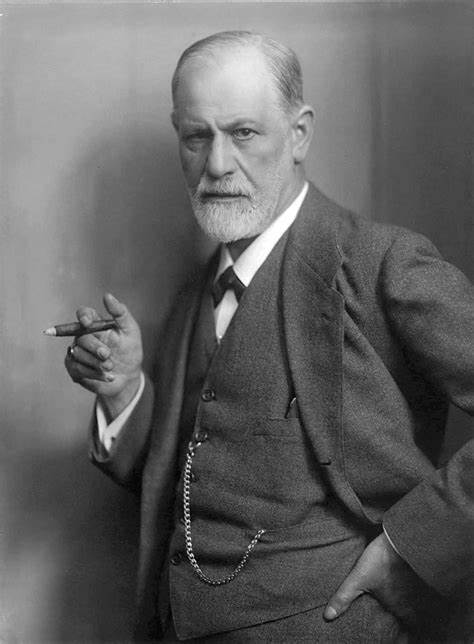
Austrian born Sigmund Freud (1856-1939) is remembered as the father of psychoanalysis. At many levels Freud was a success, but he never enjoyed his success because he was so negative. Let me give you one example. In 1918, he wrote, “I have found very little good in human beings as a whole. In my experience most of them are trash.” Some say he was negative because he was in constant pain from jaw cancer caused by his cigar smoking. Some say his negativity was caused by his atheism. Perhaps it was a combination of the two. However, one point is clear. Hardships have a way of exposing our spiritual maturity. It is not just true of Freud; it is true of everyone. That takes us to our scripture reading, 1 Kings 17:18-24.
The story is a conversion between the prophet Elijah and a grieving woman. Elijah is considered the greatest prophet in the Old Testament, known for his many miracles. The woman was another faceless victim. Hardship seemed to be her best friend. She struggled with her son’s death, because she believed in the unwritten rule that children should outlive their parents. In her story, that simply did not happen. His death is painful for two reasons. First, the boy reminded her of the past and those were happier days. Perhaps, her son had his father’s smile or laugh. Perhaps, her son gave her the strength she needed to survive her husband’s death or an excuse to keep living. He was a reminder of happier times. The joy she felt at her son’s birth was now balanced out by the pain of his death. Second, the boy was her future security. She lived in sexist times; women were not permitted to own property. Without her son she would just become another beggar. His death filled her future with countless questions. It is safe to say, his death hit her hard.
She did what many faithless people do when hardship arrives. She lashed out at God. Verse 18 quotes the grieving widow, “What do you have against me, man of God? Did you come to remind me of my sin and kill my son?” How many people do you know blame God when troubles come their way? However, this is a resurrection story. Elijah did what people of faith do during hardship – they turn to God. He takes the boy’s lifeless body and retreats to a quiet place. Elijah turned to God and in the end the boy is resurrected. According to the text, verse 20, he cried out to God and God heard him. The boy was resurrected and returned to his mother. The story of the grieving mother resonates with many because everyone faces problems.
During my time in the ministry, I made pastoral care a priority. Every afternoon I would visit someone who was facing hardship. Sometimes I would visit the hospitalized. Someone was always dealing with cancer, recovering from a stroke, or fighting an infection. Sometimes I would visit shut-ins. Television sets were their only link to the outside world. Sometimes I would visit the institutionalized. The nursing home staff would call them sweetie and honey, but they were just another resident. I feared no one really cared. Honestly, I fear I will spend my last days in this world in one of those places. In all my visits no one expected me to solve their problems. The only thing that mattered to them was that I cared, and that I would pray with them. I never disappointed them, because, like the grieving mother, they needed God. Every visit I made reminded me I had a good life. The problem is hardships are waiting for all of us. The only question is, how will we respond?
Years ago, Dr. Raymond Edman wrote a little book called In Quietness and Confidence. He says every time a Christian faces hardship we must do two things. First, we must face the problem head-on. Second, we must remember four clear statements. These are the statements:
- I am here by God’s appointment. In other words, God wants you in that situation for some reason. That statement is important because it reminds us that God has not forgotten us. In our story, the widow’s son died so the power of God could be demonstrated. I cannot promise you a resurrection, but I can guarantee you that God has not forgotten you.
- I am in God’s keeping. In other words, God will care for your needs. I didn’t say extravagant living; I said basic needs. In 1 Kings 17:4-6, Elijah drank from the brook and existed on sandwiches. During my time in the ministry, no church member ever died of starvation. God cares for our needs.
- I am under God’s training. In other words, God has a plan for your life. Your troubles are molding your heart for something special. What sensitivities have you gained because of your hardships? How have your problems changed you? The lesson of humility is hard to accept.
- God will show me the purpose in God’s time. I would like to say the purpose of your suffering will be revealed in this world, but I don’t want to lie to you. When I get to heaven, I have a great list of questions for God and so do you. In God’s time we will get our answers.
Don’t let your problems just be a problem. Accept the fact that your problems are an opportunity to witness your faith. Non-believers, like the widow, blame God and others. Believers turn to God. Let me end with this story.
In 1985, Bruce Goodrich (1967-1985) was training to be a cadet at Texas A&M University. One day, Bruce and the others were expected to run until they dropped. It seemed like an innocent hazing prank. The problem was, Bruce did, but he never got up. He died from heat stroke; he died before he went to his first class. Shortly after his funeral, Bruce’s father wrote a letter to the university. What kind of letter would you write if your child had just died in a senseless way? This is what Bruce’s father wrote:
I would like to thank the university for the kindness you showed my family during our time of need. I am pleased Bruce had a Christian witness on the campus. While we may not understand the events of the past few weeks, we know God does. God does not make mistakes. We know that Jesus is caring for Bruce now.
Can you question that father’s faith? Hardships have a way of stimulating our witness. They reveal our spiritual maturity. The faithless widow looked for someone to blame. The faithful prophet turned to God. What are you going to do next time hardship visits your house? Perhaps, Psalm 46:1 says it best, God is our refuge and strength, a very present help in trouble.”
 Russ Adams