When Hardship Arrives

When Hardship Arrives

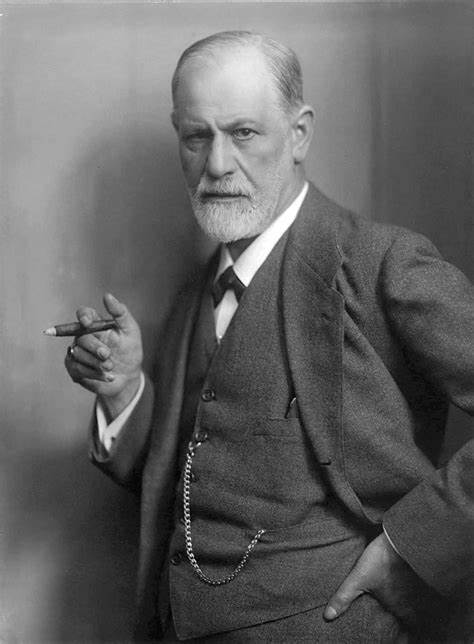
Austrian born Sigmund Freud (1856-1939) is remembered as the father of psychoanalysis. At many levels Freud was a success, but he never enjoyed his success because he was so negative. Let me give you one example. In 1918, he wrote, “I have found very little good in human beings as a whole. In my experience most of them are trash.”  Some say he was negative because he was in constant pain from jaw cancer caused by his cigar smoking. Some say his negativity was caused by his atheism.  Perhaps it was a combination of the two. However, one point is clear. Hardships have a way of exposing our spiritual maturity. It is not just true of Freud; it is true of everyone. That takes us to our scripture reading, 1 Kings 17:18-24.

The story is a conversion between the prophet Elijah and a grieving woman. Elijah is considered the greatest prophet in the Old Testament, known for his many miracles. The woman was another faceless victim. Hardship seemed to be her best friend. She struggled with her son’s death, because she believed in the unwritten rule that children should outlive their parents. In her story, that simply did not happen. His death is painful for two reasons. First, the boy reminded her of the past and those were happier days. Perhaps, her son had his father’s smile or laugh. Perhaps, her son gave her the strength she needed to survive her husband’s death or an excuse to keep living. He was a reminder of happier times. The joy she felt at her son’s birth was now balanced out by the pain of his death. Second, the boy was her future security. She lived in sexist times; women were not permitted to own property. Without her son she would just become another beggar. His death filled her future with countless questions. It is safe to say, his death hit her hard.

She did what many faithless people do when hardship arrives. She lashed out at God. Verse 18 quotes the grieving widow, “What do you have against me, man of God? Did you come to remind me of my sin and kill my son?”  How many people do you know blame God when troubles come their way? However, this is a resurrection story. Elijah did what people of faith do during hardship – they turn to God. He takes the boy’s lifeless body and retreats to a quiet place. Elijah turned to God and in the end the boy is resurrected. According to the text, verse 20, he cried out to God and God heard him. The boy was resurrected and returned to his mother. The story of the grieving mother resonates with many because everyone faces problems.

During my time in the ministry, I made pastoral care a priority. Every afternoon I would visit someone who was facing hardship. Sometimes I would visit the hospitalized. Someone was always dealing with cancer, recovering from a stroke, or fighting an infection. Sometimes I would visit shut-ins. Television sets were their only link to the outside world. Sometimes I would visit the institutionalized. The nursing home staff would call them sweetie and honey, but they were just another resident. I feared no one really cared. Honestly, I fear I will spend my last days in this world in one of those places. In all my visits no one expected me to solve their problems. The only thing that mattered to them was that I cared, and that I would pray with them. I never disappointed them, because, like the grieving mother, they needed God. Every visit I made reminded me I had a good life. The problem is hardships are waiting for all of us. The only question is, how will we respond?

Years ago, Dr. Raymond Edman wrote a little book called In Quietness and Confidence. He says every time a Christian faces hardship we must do two things. First, we must face the problem head-on. Second, we must remember four clear statements. These are the statements:

  1. I am here by God’s appointment. In other words, God wants you in that situation for some reason. That statement is important because it reminds us that God has not forgotten us. In our story, the widow’s son died so the power of God could be demonstrated. I cannot promise you a resurrection, but I can guarantee you that God has not forgotten you.
  • I am in God’s keeping. In other words, God will care for your needs. I didn’t say extravagant living; I said basic needs. In 1 Kings 17:4-6, Elijah drank from the brook and existed on sandwiches. During my time in the ministry, no church member ever died of starvation. God cares for our needs.
  • I am under God’s training. In other words, God has a plan for your life. Your troubles are molding your heart for something special. What sensitivities have you gained because of your hardships? How have your problems changed you? The lesson of humility is hard to accept.
  • God will show me the purpose in God’s time. I would like to say the purpose of your suffering will be revealed in this world, but I don’t want to lie to you. When I get to heaven, I have a great list of questions for God and so do you. In God’s time we will get our answers.

Don’t let your problems just be a problem. Accept the fact that your problems are an opportunity to witness your faith. Non-believers, like the widow, blame God and others. Believers turn to God. Let me end with this story.

In 1985, Bruce Goodrich (1967-1985) was training to be a cadet at Texas A&M University. One day, Bruce and the others were expected to run until they dropped. It seemed like an innocent hazing prank. The problem was, Bruce did, but he never got up. He died from heat stroke; he died before he went to his first class. Shortly after his funeral, Bruce’s father wrote a letter to the university. What kind of letter would you write if your child had just died in a senseless way? This is what Bruce’s father wrote:

I would like to thank the university for the kindness you showed my family during our time of need. I am pleased Bruce had a Christian witness on the campus. While we may not understand the events of the past few weeks, we know God does. God does not make mistakes. We know that Jesus is caring for Bruce now.

Can you question that father’s faith? Hardships have a way of stimulating our witness. They reveal our spiritual maturity. The faithless widow looked for someone to blame. The faithful prophet turned to God. What are you going to do next time hardship visits your house? Perhaps, Psalm 46:1 says it best, God is our refuge and strength, a very present help in trouble.”
3 Theories about Thomas

We find ourselves in the twentieth chapter of John, verses twenty-four through twenty-nine. Prior to our reading, the resurrected Jesus appeared to ten of the disciples. The two who were missing were Judas Iscariot, the one who had betrayed Jesus. By this time, he had committed suicide. The other absent disciple was Thomas. We do not know where Thomas was, but we know where he should have been. He should have been with the other disciples experiencing the resurrected Jesus. The other disciples told him about their experience, but their words were not enough. Thomas responds with these famous words, found in verse twenty-five, “Unless I see the nail marks in his hands and put my finger where the nails were, and put my hand into his side, I will not believe it.”  He must have regretted those words. For generations, people have judged Thomas for them.

Except for Judas Iscariot no other disciple has been judged more harshly by history than Thomas. It is unfair. His life was more than that a single sentence. Just think about it for a moment. Thomas was selected by Jesus, himself, to be one of the disciples. That means he traveled with Jesus for three years. He heard the lessons. He felt his authority. He saw his miracles. He was excited on Palm Sunday and devastated on Good Friday. Tradition tells us after Pentecost, he went to India to evangelize about Jesus. Even his death had meaning. Tradition tells us, he died in service to the Lord, martyred with a spear. He had an incredible life, but we remember him for one sentence, “Unless I see the nail marks in his hands and put my finger where the nails were, and put my hand into his side, I will not believe it.”  Why is it, we all remember those negative words? Could it be that we all point to that one moment of doubt because it was the one moment, we are the most like Thomas? You are not the first person to wrestle with doubt, and you will not be the last. However, this is the question of the day:

Why did Thomas doubt? Throughout the centuries, many have tried to answer that question. I have my theories. Maybe you have your theories? James W. Moore (1938-2019) was an author and the pastor of the St. Luke’s United Methodist Church in Houston, Texas for many years and he had his theories. In this blog, I want to look at his theories – I believe they have some merit. They speak to me; I hope they speak to you too.

This is theory number one: Thomas doubted because he had dropped out.  In other words, Thomas had some doubts because Thomas was not present, so he doubted. That is worth considering. We still see it today. How many people do you know question the resurrected Jesus, because they have dropped out of church? For that reason, many have a poor personal theology. They simple don’t understand God’s ways.

How many church dropouts do you know? I cannot blame them 100% of the time. The church is made up of imperfect people, so the church is not a perfect institution. Truth be told, there are times churches are downright ugly. We fight amongst ourselves. We gossip about one another. There are times when small groups like to run the whole show. There have been times when pastors do some horrible things. I know those things, but I also know this: there is no excuse for dropping out of church. Despite all our problems, church is still the best place to learn about God. If you do not go to church, then where do you learn about God? If you are not going to church, then you are self-taught.  For a short time, Thomas dropped out. Church dropouts are missing the whole Christian experience. No wonder they have doubts and questions. They simply do not know God’s ways.

This is theory number two: Thomas doubted because he gave in. In other words, Thomas had some doubts because he let science become the final answer. You cannot really blame him, the resurrection of Jesus is hard to believe because it is a miracle! It cannot be explained by science. If you do not believe in miracles, then you cannot believe in the resurrection. Do you know anyone who says people who believe in miracles are foolish, uninformed or uneducated? Do you know anyone who has given in?

Thomas Jefferson (1743-1826), the chief writer of the Declaration of Independence and Third President of the United States, gave into science. He was a deist. In other words, he believed in God, but God never broke natural law. For this reason, he had his Bible re-written. He wanted everything that could not be scientifically explained eliminated. Just think about it for a moment. Just think of the things Jefferson rejected. He dismissed the virgin birth, the healing stories, and the resurrection. In my opinion, that dismissed him from the Christian faith. Your belief in the resurrection of Jesus is not optional, it is mandatory. I have seen copies of Jefferson’s Bible. It is approximately one-third the size of our Bible.

I hope you do not misunderstand me, I am not saying that science is bad. I believe it is one of the paths to truth and knowledge. However, I do not believe it is the only path to truth and knowledge. Some of the most powerful forces in our world today cannot be explained by science. Can you give me the scientific formula for love, honesty, courage, faith, goodness, or humility. There is not a scientific explanation for patience, self-control, or kindness. You cannot put mercy or grace into a test tube. Those things cannot be scientifically explained, but we see examples of those things every day. Perhaps Thomas doubted because he gave in to science? Science is good, but it is not the final answer. The final answer is always God. Perhaps Thomas doubted because he dropped out or gave in.

This is theory number three: Thomas doubted because he gave up. In other words, Thomas had some doubts because he let death be the final answer. The scripture does not tell us where Thomas was when Jesus appeared to the others. However, I have a good guess. I believe he was doing what many do when they are upset. They walk to get some fresh air, clear their minds, and think. If you use your sanctified imagination, you can see him walking down every back street of Jerusalem. He is trying to answer the question, “How did it go so wrong, so fast?” As he walked, he couldn’t believe it was over. He was devastated. He thought it was over when Jesus died! However, he was wrong. It was not over. It was just the beginning. Why? Because Jesus was not dead. He had been resurrected; he was alive! Do you know anyone who lets death have the final word? Do you know anyone who has given up?

The other day, we observed the 30th anniversary of the Oklahoma City bombing. You remember the ugly story. On April 19, 1995, Timothy McVeigh (1968-2001) attacked the federal building in downtown Oklahoma City. I remember that day. The picture that caught my attention from that day was of a firefighter carrying a little girl away from the destruction. We found out later that the little girl was one year old. She celebrated her first and only birthday the day prior to the bombing. Reporters asked that little girl’s mother, “How can you go on?” She responded, “The only thing that keeps me going is the fact that my little girl is in heaven. Someday, I am going to see her again.” Can you relate to that mother? Your life would come to a grinding halt, if not for the belief that you will see your loved one again? Perhaps Thomas doubted because he was overcome with grief. Never forget! Death is not the final answer. The final answer is Jesus! I do not know why Thomas doubted, but he did. Do not be hard on him. We all have questions and doubts. Let me end with this story.

Years ago, I received a phone call from a young man by the name of Derrick. He was a student at Youngstown State University who was enrolled in a religion class. His assignment was to call a minister in the area and ask some questions. I was more than happy to answer his questions. However, before the first question was asked Derrick wanted to make a confession. He said, “Rev. Adams, I don’t want to scare you, but I have some questions and doubts about Christianity.” I said, “Derrick, the fact that you have questions and doubts doesn’t scare me. The only ones who frighten me are the people that say they have all the answers.” Voltaire (1694-1778) said, “Doubt is not a pleasant condition, but certainty is absurd.”  So, accept your doubts and ask your questions. They are a sign of a growing faith.

Christianity’s Cornerstone

Christianity’s Cornerstone

Billy Graham (1918-2018) was born in Charlotte, North Carolina. He became famous for his evangelistic crusades. I heard him preach in Cleveland, Ohio in the 1990’s. Southern Baptist to the core, his message resonated with many Americans. He said it countless times: we are saved by grace and by grace alone. You must accept Jesus as your Lord and Savior and live a life that is completely committed to him. When he died on February 22, 2018, those who were closest to him reported, he was prepared for his own death. He told his son, Franklin Graham (born 1952), “Someday you are going to hear I am dead. Don’t believe it. I will be more alive than ever before.”  Billy Graham understood the importance of the resurrection of Jesus, and he knew why it was important. I hope you do too. Your belief in the resurrection is not just important, it is indispensable! That leads us to the Bible.

For the last ten years in my ministry, I went to a local cemetery to observe Good Friday. It was not a well-attended service, but it was the right thing to do. I wanted to drive home the point that Jesus died. How can you have a resurrection without a death? You know the story. Matthew 27:45-50 tells us Jesus died on a Friday at 3:00 in the afternoon. He died Roman style, crucified between two common criminals. In a certain way Jesus was lucky. It was not uncommon for the crucified to die slowly with their corpses thrown into a pile with other victims. Those lifeless bodies would be eaten by buzzards or wild dogs. That was not Jesus’s story. He died relatively quickly, his body was placed into a new tomb, purchased by Joseph of Arimathea. A large stone was rolled in front of the entrance to protect it from thieves and to trap the odor of his decaying body. The Roman government was persuaded by Jesus’s enemies to place guards in front of the tomb to eliminate any future problems. This was all done by dark on Friday, because the law prohibited any burials on the Sabbath. Saturday must have been a long day for those who loved Jesus. Disappointed, they were full of questions. After all, Jesus was dead.

That takes us to our primary reading, Matthew 28:1-10. According to the text, it is early on Sunday morning. Two women both named Mary visit Jesus’s tomb. According to Mark 16:1, they went to anoint Jesus’s body. According to Matthew, four unusual things happen during their visit. First, there was an earthquake. Only Matthew mentions the earthquake, it tells us God had done something special. Second, the giant stone had been rolled away. Third, an angel dressed in white, symbolizing purity, told the women Jesus had been resurrected. Forth, the women experienced the resurrected Jesus themselves. There is a world of difference between hearing about the resurrection of Jesus and experiencing the resurrected Jesus.

They tell me in the Greek Orthodox tradition, many people tell jokes on Easter because God played the greatest practical joke on Satan. It looked like Satan had won. Jesus was dead, and Satan must have celebrated all day on that Silent Saturday, but Sunday was coming. On Sunday, God resurrects his one and only son, Jesus. The resurrection of Jesus is Christianity’s cornerstone. I Corinthians 15:14 says, “If Christ has not been raised, our preaching is useless and so is your faith.”  But Christ has been raised from the dead, so our preaching is useful and so is our faith. According to Campus Crusade for Christ, now Cru, the resurrection did four things.

 1. The resurrection proved that Jesus was divine. His death did not prove anything. In time, everyone dies. Jesus died. However, Jesus’s bodily resurrection proved he was divine. Roman 1:4 says, “and who through the Spirit of holiness was appointed the Son of God in power by his resurrection from the dead: Jesus Christ our Lord.”

 2. The resurrection proved Christ’s power to forgive sins. The resurrection broke the bond sin holds on us. Without the resurrection, we are bound to sin. With the resurrection, we are liberated from sin. 1 Corinthians 15:17 says, “And if Christ has not been raised, your faith is futile; you are still in your sins.”

 3. The resurrection reveals Christ’s power over death. Jesus did not just live, die, and live again, just to die again. Jesus is alive still today. Romans 6:9 says, For we know that since Christ was raised from the dead, he cannot die again; death no longer has mastery over him.”  Equally important, death has no hold on us. Through our faith in Jesus, we are going to live for eternity. Ephesians 2:6 says, “And God raised us up with Christ and seated us with him in the heavenly realms in Christ Jesus.”

 4. The resurrection defeated God’s enemy. Until the day Jesus walked out of the tomb, Satan fought against God. However, when Jesus came back to life, Satan knew he had lost. Because of the resurrection, Christians should never fear Satan again.

For several years, my wife Kathryn and I went to Washington DC annually. For eighteen years, she was the Director of Protestant Campus Ministry at Youngstown State University. Part of her responsibility was to chaperone international students to our nation’s capital. We took them Arlington National Cemetery, the Lincoln Memorial, the Washington Memorial, the Vietnam War Memorial, the Korean War Memorial, the World War II Memorial, The Holocaust Museum, the White House and the Capital Building. I have fond memories of those trips.

Each trip ended the same way. We visited the National Cathedral. I believe it is the city’s best kept secret. Built by private funds, it is an impressive structure. It took 83 years to complete. The construction began in 1907; the cornerstone was set with President Theodore Roosevelt (1858-1919) in attendance. The construction was completed in 1990, when President George H. W. Bush (1924-2018) was in office. It is a functioning Episcopal Church, full of Christian symbolism.

Our trips occurred during the month of March, so the cathedral was decorated for Lent. Many of the international students were not Christian, so they were curious about the symbolism. One year, I walked through the cathedral with a young woman from Taiwan. Did you know there are over twenty-three million people on that island nation? Approximately one-third are Buddhism. Less than 4% are Christian. Approximately 19% are irreligious, she was one of them. She asked me about the Christian symbolism. I did my best to explain Lent, and I told her about Holy Week, including Jesus’s death on Good Friday and his resurrection on Easter. I said everyone who knows Jesus as their Lord and Savior is going to heaven. She responded by saying, “He must love you very much. He must offer you great comfort.” She could not have been more right. Jesus does love us, and he offers us great comfort. We are resurrection people! American businessman Joseph Wirthlin (1917-2008) said, “The resurrection is at the core of our beliefs as Christians. Without it, our faith is meaningless.”  The resurrection is Christianity’s cornerstone.

Our Living Hope

Robert Louis Stevenson (1850-1894) was a Scottish novelist who penned several classics, including Treasure Island and The Strange Case of Dr. Jekyll and Mr. Hyde. History tells us he was not a healthy child because he inherited his mother’s weak lungs. To assist him the family hired a nurse by the name of Alison Cunningham (1822-1913). As the story goes, one night as a boy Stevenson was sitting in his room looking out the window watching the lamp lighter lighting the streetlights below. Cunningham came in and asked him what he was doing. Stevenson answered, “I am watching a man punch holes in the darkness.” That is not just the story of a small boy. It is the story of the Christian faith. The resurrected Jesus changed everything. He punched holes in the darkness of our world and offers us hope. That takes us to the Bible.

Our reading is 1 Peter 1:3-9. Tradition tells us it was written by the apostle Peter. Clearly, he understood the significance of the resurrection of Jesus, the cornerstone of the Christian faith. The recipients of this letter were believers who were residing on earth, but whose true residence is in heaven. Technology has changed over time, but the human condition has not. Life has always been hard. Peter is telling them, and us, to keep their eyes on our living hope, Jesus, and cling to the promise of heaven. If you do so, then you will live a balanced life. May we never forget, the things of this world are important, but they are temporary. The things of God are eternal. Sadly, many in our time live unbalanced lives. They are heavy on the things of this world but light on the things of God. That explains why some live hopeless lives. English clergyman Charles Spurgeon (1834-1892) once said, “Without Christ there is no hope.”  Believers have a living hope. Non-believers have no hope. In this blog I am going to look at three ways the resurrected Jesus offers us hope.

First, the resurrected Jesus offers us security! For many years I struggled sleeping. I would fall asleep fast, but after a few hours I would wake up. It was in those silent, dark, lonely hours that I did my best worrying. I worried about everything. I worried about my responsibilities at church. I worried about money. I worried about various home projects. I worried about my loved one’s health. As a United Methodist minister, I worried about being moved and starting over again. I worried about the state of the country and the state of the world. I worried about underachieving and disappointing God. Nightly I would pray and ask God to help me. After a few minutes, I would find myself falling asleep. Like a young child resting in his mother’s arms, I felt secure. What is the source of your greatest problems? Experience has taught me our worries change nothing.

Consider these facts with me. Research tells us:

          40% of your worries will never happen

          30% of your worries are in your past, and cannot be changed

          12% of worries are criticism by others, mostly untrue

          10% of worries are about health issues, which gets worse with stress

          8% of worries are real problems that will be faced

An Unknown author once said, “Worry is faith in the negative, trust in the unpleasant, assurance of disaster and belief in defeat…worry is wasting today’s time to clutter up tomorrow’s opportunities with yesterday’s troubles.” The resurrected Jesus liberates us from our worries and offers us security. God is bigger than our problems, and in the end, God will win. Jesus, our living hope, offers us security!

Second, the resurrected Jesus offers us purpose. In 2002, Rick Warren (born 1954) of the Saddleback Church in California released a book called the Purpose Driven Life. It was a massive hit. More than fifty million copies have been sold. Everyone seemed to read the book, because everyone wants their lives to have meaning. No one wants to just live and die. Everyone wants to know why they are in this world. Everyone knows there is more to life than just being busy. There is more to life than just being a consumer. There is more to life than just existing. There is more to life than just being happy and entertained. The Westminster Confession of Faith says the purpose of life is to glorify God. What are you doing with your life to glorify God? Your purpose may not be your vocation. Your purpose is at the intersection where your personal passion meets human need. Jesus, our living hope, offers us purpose!

The third and final word is heaven. The resurrected Jesus offers us eternity in paradise. Verses three and four say, “Praise be to the God and Father of our Lord Jesus Christ! In His great mercy he has given us new birth into a living hope through the

resurrection of Jesus Christ from the dead, and into an inheritance that can never perish, spoil or fade—kept in heaven for you.” Peter understood we are all

terminal from birth. Everyone is going to die someday, and it is God’s greatest desire to spend eternity with you! Pastor John Hannah (born 1964) said, “Two things will surprise us when we get to heaven, who is there and who isn’t.”

In 1996 my father was dying. He was at home, so my sister and I took turns caring for him during his final days. It was a sad and awkward time, because I was never close to my father. His physical care was hard, but relating to him was nearly impossible. There were long periods of silence. However, he said something in that broken state I will never forget. He looked at me and said, “I never thought it would end like this!”  I didn’t say anything that day. I regretted my silence later. That wasn’t the end, it was just the beginning. His heart stopped beating several hours later, but he continued to live in heaven. It is not just true of him. It is true of every person of faith – someday everyone of faith is going to go to heaven. Jesus, our living hope, makes heaven possible! Let me end with this story.

As Vice President, George Bush (1924-1918) represented the U.S. at the funeral of former Soviet leader Leonid Brezhnev (1906-1982). Bush was deeply moved by a silent protest carried out by Brezhnev’s widow, Viktoria (1928-1982). She stood motionless by the coffin until seconds before it was closed. Then, just as the soldiers touched the lid, Brezhnev’s wife performed an act of great courage and hope, a gesture that must surely rank as one of the most profound acts of civil disobedience ever committed – she reached down and made the sign of the cross on her husband’s chest. There, in the center of secular, atheistic power, the wife of the man who had run it all hoped that her husband was wrong. She knew what the communist world tried to ignore.

Jesus came to punch holes in the darkness. Jesus, our living hope, changed everything. Jesus came to offer us security. God is bigger than your worries. Jesus came to offer us purpose. You are in this world for a reason. Jesus came to offer us salvation. God wants to spend eternity with you. Billy Graham (1918-2018) once said, “Earth’s troubles fade in the light of heaven’s hope.” May we never forget Jesus is our living hope.

Because You Believe

We find ourselves in the twenty-eighth chapter of Matthew. Much has already happened. It is impossible to summarize everything in a few words. It will have to suffice to say, Jesus was dead, executed Roman style on the previous Friday. He was crucified between two common criminals. The picture was not pretty. It is difficult to hear the details all these years later. However, Jesus was lucky in two ways: first, Jesus died quickly. Some lingered much longer on the cross; second, it was not uncommon for the crucified to be taken down and thrown into a pile of lifeless corpses; their bodies would be eaten by buzzards or wild dogs. Not so with Jesus. Arrangements were made by Joseph of Arimathea and Nicodemus that Jesus’ body would be taken down and placed in a new tomb. A large stone was rolled in front of the entrance to contain the smell and to protect it from thieves. The Roman government was persuaded by Jesus’ enemies to place guards in front of the tomb to eliminate any future problems. This was all done by dark on Friday because the law prohibited any burials on the Sabbath. Once this was completed, Jesus’ loved ones grieved because Jesus was dead! That takes us to our reading.

According to our story, early Sunday morning, Jesus received his first visitors – two women with the same first name. There is Mary Magdalene and another Mary. They were the supporting characters in a scene that would change the world. Three miraculous things happened. First, there was an earthquake. Only Matthew mentions this earthquake, but this earthquake is worth mentioning because it reveals to us that God had done something truly special. Second, the giant stone had been rolled away from the entrance of the tomb. Third, it was announced Jesus had been resurrected. According to verse three, it is made by an angel, whose clothes were white as snow, symbolizing purity. The angel tells the women about the resurrection, but the women experience the resurrected Jesus for themselves in verse nine. In time, Jesus would appear to others, including the disciples. It is important that at some time in your life, you have experienced the resurrected Jesus too.

Jesus was not the only one to be resurrected in the Bible. There are stories in both the Old and the New Testaments about others being resurrected. There are no fewer than eight, Lazarus being the most noteworthy. However, Jesus’ resurrection is different. The others had human fathers. Jesus was the son of God. That means the baby in the manger at Christmas and the man on the cross on Good Friday are the same. Jesus was the incarnation of God, who not just became one of us, but died for us. He was the sacrificial lamb for our sins. God’s love is deep. How can you question God’s love for us? Never forget it! You cannot earn your salvation. You are saved by grace, through faith in Jesus.

Your belief in the resurrection of Jesus Christ is not optional, it is indispensable. Many believe Romans 10:9 was the first creed in the history of the church. It says, “If you confess with your mouth that Jesus is Lord, and believe in your heart God raised him from the dead, you will be saved.”  If that is true, then the opposite is also true. If you don’t believe in the resurrection of Jesus Christ, then the fires of hell are waiting for you. The early church understood the significance of Jesus’ resurrection. They worshipped on Sunday morning because every Sunday morning was seen as a little Easter, or resurrection day. That is why most Christian churches still worship on Sunday mornings. Your belief in the resurrection is not trivial. It changed everything about your life. Consider these three things.

Because of the resurrection of Jesus there is forgiveness! Ephesians 1:7 says it clearly, “In him we have redemption through his blood, the forgiveness of sins, in accordance with the richness of God’s grace.”  On the moment Jesus walked out of the tomb, mankind had the opportunity to experience forgiveness. One of the great hymns found in the church today is Amazing Grace. It was written by John Newton (1725-1807.) He was a former captain of a slave ship, who was saved by grace. The hymn reminds us we are all sinners, who are saved by grace. Because you believe in the resurrection of Jesus you are forgiven!

Because of the resurrection Jesus your life has purpose! Philippians 3:13-14 says, “But one thing I do: forgetting what is behind me and straining toward what is ahead, I press on toward the goal to win the prize for which God has called me heavenward in Christ Jesus.”  It has been reported only 10% of Americans feel like they know their life’s purpose. I do not find that figure surprising. In my time in the ministry, I talked to people regularly who were clueless about their life’s purpose. Many confuse their purpose with their vocation. Your purpose is to glorify God. The Westminster Confession of faith says the purpose of life is to glorify God. What are you doing today to glorify God? Because you believe in the resurrection of Jesus your life has purpose!

Because of the resurrection of Jesus your eternity is bright! John 3:16 says, “For God so loved the world that he gave his one and only son, that whoever believes in him may not perish but have eternal life.”  On the day I die, don’t cry for me. I am going to heaven, not because I am a good person. I am going to heaven because I worship and serve a perfect and resurrected Jesus. Because you believe in the resurrection of Jesus your eternity is bright too!

Located on an island in the Seine River in Paris, Notre Dame Cathedral is a piece of history. It is a “must see” in Paris. Construction began in 1163 and took two hundred years to complete. It has been the backdrop of French history for generations. They say on an average week 12,000 tourists visit Notre Dame daily. During Holy Week, that number swells to 30,000. I am fortunate. I have been there three times. The first time I was with my parents as a teenager. The second time I was with wife Kathryn fifteen years ago. It happened to be our wedding anniversary. The third time was recently. I insisted we visit Notre Dame.

We went to lunch in a nearby café. As we ate, we studied the ancient structure, and we remembered April 15, 2019. That was the day Notre Dame burned. Many grieved for Notre Dame that day. I remember being moved by the emotions of the crowd who gathered to watch the blaze, some praying, some singing, some crying. They feared the building would be lost forever. That did not happen. At first, they said it would be reopened by the Olympics in July, but that is not the case. Notre Dame is scheduled to reopen on December 8, 2024. It will be a wonderful day for the Parisiens. I will be honest with you, on the day Notre Dame burned, I mourned for the building and the history, but not the faith. The Christian faith cannot be captured in a building.

The Christian faith is found in the hearts of men and women who believe in the resurrection of Jesus. Your belief in the resurrection is not optional, it is indispensable. The resurrection of Jesus Christ changed everything. It changed the way you viewed your past – you can experience forgiveness. It changed the way you live today – your life has purpose. It changes your eternity – someday we are going to heaven. John Ortberg (born 1957) is a Christian author, speaker and pastor of Menlo Church in Menlo, California. He once said, “At the very heart of the Christian faith is the story of Jesus’ death and resurrection.” Never forget, we serve a risen savior!

Responding to the Resurrection

In January, Kathryn and I went to Washington DC. It was not our first trip to our nation’s capital. We had a short list of things we wanted to see. On that list was Arlington National Cemetery. My father-in-law, who I barely knew, John Trojan is there. He is in the columbarium, located in the southeast section approximately one mile from the Memorial Gate. The cemetery personnel drove us there, but they didn’t stay as we visited his plague. Instead of waiting for a ride to return, we decided to walk back. There is no other way to say it. It was moving walking by those countless graves. There are approximately 400,000 graves in Arlington. The words between us were few, but they were meaningful. That evening we had dinner at a restaurant near the National Archives building. It was full of people having a good time. Arlington was moving, but the restaurant was fun. Let me state the obvious. It is more fun to be with the living than the dead. May we never forget we serve a risen Savior. Jesus is alive and well!

We find ourselves today in the twentieth chapter of John. Each one of the Gospels, Matthew, Mark, Luke, and John, have their own account of the resurrection of Jesus. The details vary, but the main point remains the same. Jesus is resurrected! This is John’s version. Mary Magdalene went to Jesus’ tomb early on Sunday morning. It is so early; it is still dark. It was the first time the law permitted anyone to touch the dead. Corpses could not be touched on the Sabbath. When she arrives, she discovers that the stone in front of the entrance had been rolled away. She is shocked by this discovery and assumes the worst. Someone had taken Jesus body! The abuse Jesus had endured on Friday was not enough. Now they had taken his body to continue the cruelty. She wants to find Jesus, so she enlists some help. There is no other way to say it. They lost Jesus! (Don’t you hate when you lose a corpse?) She ran to tell two disciples that Jesus is missing. The first is Peter. The second is described the one that Jesus loved. That is John’s way of describing himself. Instantly, the two run to the tomb and it is at this point the scripture comes to life for us.

The story is familiar because we have looked at it countless times. It is hard to preach the resurrection of Jesus Christ annually and be original. John’s account of the resurrection is unique. It illustrates for us the three responses to the resurrection. They are not unique to John. They are not unique to John’s time. They are the same ways people respond to the resurrection today. The question you must answer is, how do you respond the resurrection? Are you skeptical about the resurrection of Jesus? Are you curious about the resurrection of Jesus? Or, do you believe, in your heart of hearts, Jesus was resurrected?

Peter plays the role of the skeptic. Look at the text with me. It says when Peter got to the Jesus’ tomb he went in and saw all the clothes of clothes scattered. Verse ten says he does something that he must have regretted the rest of his life. What does that verse say? It says after he saw clothes scattered on the tomb’s floor, he went home. He missed the whole thing because he went home. It made logical sense to go home. The problem is the resurrection is not logical. It is a miracle that cannot be explained by science.

Do you know any skeptics? Our world is filled with skeptics. Our world has always been filled with skeptics. The story of the resurrection has always been surrounded by skeptics. Do you know how many theories exist trying to disregard the resurrection of Jesus? One theory says someone got to the tomb ahead of Mary Magdalene and stole Jesus’ body. One theory says Mary Magdalene got confused and went to the wrong tomb. (You know how women are with directions.) One theory says the women confused Jesus with someone else. After all, if you have seen one Jew then you have seen them all. One theory says Jesus never died on the cross. Instead, he was drugged and once his head had cleared, he simply walked out unnoticed on Saturday. Do I have to go on? We live in a skeptical world because many believe science is the final word. Miracles are dismissed because they cannot be proven. The resurrection is a miracle, so it must not have happened. There is only one problem with this line of thought.

The final word is not science; the final word is God. God is not frustrated by scientific law. God does, what God desires. Part of God’s plan of salvation for the world was to resurrect Jesus.

Mary Magdalene plays the role of the seeker. What does the text say? She followed Jesus to his tomb. She was going to treat his body. She thought it would be her last loving act for Jesus, but she was wrong. What does the text say? It says that after Peter and John examined the scene they went home. What did Mary Magdalene do? We are told that she stayed at the tomb. She knew something had happened, but she didn’t know what. She had been part of the great story of the resurrection, but she didn’t exactly know what happened. She waited outside of the tomb crying trying to comprehend what had happened. In other words, she had a few questions.

Does anyone here have a question about the resurrection? In your mind you understand that Jesus came back to life! However, that fact has not yet penetrated your heart. You are just like Mary Magdalene? You know something happened, but you can’t comprehend the true meaning of the resurrection. Ask all the questions you want because it is the best way to learn. Do you have any questions? Do you know anyone who is a seeker? Could it be you are a seeker? It is fine to be a seeker. I have a few questions myself.

John plays the role of the saved. The text says when he got to the tomb, he didn’t go in. Peter went into the tomb first. John stayed outside. There may be several reasons. Maybe he was resting? After all, he had just been running. Or maybe he was afraid that Mary Magdalene was wrong. He didn’t want to see Jesus’ mangled body. Or maybe he did not go in because he was just afraid? Roman guards could be waiting inside to arrest any Jesus supporters. He didn’t go in until Peter went in first. When he went in, he discovered Mary Magdalene’s account was accurate. Verse eight gives us one more piece of vital information.  It says that after John examined the tomb he believed. He remembered everything Jesus had said about his own death and resurrection. John remembered those things and believed.  His belief in the resurrected Jesus saved his very soul. Do you remember what Romans 10:9 says? That if you confess with your mouth, “Jesus is Lord,” and believe in your heart that God raised him from the dead, you will be saved.” This is the question of the day.

What is your response to the resurrection of Jesus? I hope you are not a skeptic about the resurrection. No, science is not the final answer. The final answer is God! I hope you are not a seeker, just curious about the resurrection. It is the one thing you cannot question. I hope you believe that you are one of the saved. The resurrection changed everything. It changed the way you look at death, itself. It changed your final destination. May we never forget we serve a risen Savior. John Ortberg (born 1957) is the Senior Pastor of the Menlo Church in Menlo, California. He once said, “At the very heart of the Christian faith is the story of Jesus’ death and resurrection”If you believe in the resurrection, then, like John, you are saved!

Behind Locked Doors

We find ourselves today in the twentieth chapter of John. So much has already happened. This is all you need to know: Jesus had died, and Jesus had returned from the dead. We have had two thousand years to process the resurrection; the disciples did not have that luxury. They were forced to accept the resurrection in a few hours.  That was a hard thing to do. According to the text, it is Sunday evening, Easter evening. The disciples were together. They must have felt as if it was them against the world. They really had no one else. They feared the Jewish leaders, who had orchestrated the death of Jesus, may be looking for them. The door is locked for their own protection. The disciples are afraid. Do you know of anyone in your life who is afraid this morning?

In my life I know a young woman who carries a great amount of responsibility. Her name is Candance. She is high energy. She is married and has two teenagers in her home. She is highly involved in both her husbands and children’s lives. She has a responsible job, which forces her to be detail oriented. Her plate is always full, but the pandemic was one too many things on her plate. One day at work she started getting chest pains. She was taken to the emergency room. The good news is Candance did not have a heart attack. The bad news is she is a victim of stress. Her doctor made an appointment with a cardiologist. After all the tests we run, she sat with her cardiologist. She reviewed all her heart tests with her. There was nothing abnormal. Then he asked her about her life. She told him about his husband, children, and job. He enquired about recent changes in her life which were upsetting to her. She confessed the coronavirus did not just bother her, it terrified her. She said, “I am trying to get all the information possible about the pandemic, so I can keep myself and my family safe. My tv is always on 24/7 news.” According to Candance, the cardiologist told her to turn her tv off, because it was causing her stress. She is not the only one. There are many who are locked behind closed doors afraid of the coronavirus.

You really cannot blame them because the numbers are not pretty. Did you know, as of Friday, there have been over 3.2 million confirmed cases of coronavirus in the world. (234,765 have died.) There have been over one million confirmed cases of coronavirus in the United States. (55,439 have died.) There have been over 18,000 confirmed causes of coronavirus in Ohio. (975 have died.) There have been 828 confirmed cases of the coronavirus in Mahoning County. (80 have died.) How many people do you know have had the coronavirus? Do you know anyone who has died of the coronavirus? Do you know of anyone who is afraid of the coronavirus and is living behind locked doors? I will admit, I was afraid how this church would respond to the coronavirus. I am proud to report, you are much braver than I ever knew. With this in mind, let us look at the Gospel lesson again.

This is the good news for today: Someone unlocked the door and the disciples came out. They did not just come out. They came out different people and transformed their world. Three things happened to the disciples behind that locked door which led to their transformation. Let us briefly look at those three things.

First, the disciples experienced the resurrected Jesus. Look at the text with me. It is important that you look at the timeline. It is not Easter morning; it is Easter evening. The disciples have had all day to wrestle with the women’s account of experiencing the resurrected Jesus. Did you hear what I said? They had heard about the resurrected Jesus, but they had not experienced the resurrected Jesus. Once Jesus appears to them, he shows them his hands and his feet to prove he is genuine. When they are finally convinced it is Jesus, they are overjoyed. There is a world of difference between hearing about the resurrected Jesus and experiencing the resurrected Jesus. Everything changes once you experience the resurrected Jesus!

Second, the disciples experienced the Holy Spirit. Look at the text with me again. When the disciples finally experience the resurrected Jesus, they are overjoyed. Verse 22 says, Jesus breathed on them and they received the Holy Spirit. Why is that line important? Receiving the Holy Spirit means you do not have to do the work of the church alone. The Holy Spirit goes before us and helps us. It is like cutting a tree down in your yard. You have a choice. You can cut it down with a hand saw, or you can cut it down with a chain saw. Which one are you going to use? The Holy Spirit made their divine work easier.

Third, the disciples embraced the mission. Look at the text with me one last time. Once the disciples had experienced the resurrected Jesus and accepted the Holy Spirit, Jesus gave them a job. Verse 23 says, “If you forgive anyone his sins, they are forgiven; if you do not forgive them, they are not forgiven.”  What does that verse mean? It simply means we are to take the Good News into the world and win souls for Jesus. Only one of the disciples in the room at that moment, John, died an old man. The rest died a martyr’s death. You cannot tell me the disciples did not embrace the mission.

It is not just the story of the disciples over two thousand years ago. It is the story of disciples in every generation. Every generation must experience the resurrected Jesus for themselves. Every generation must experience the Holy Spirit for themselves. Every generation must embrace the mission for themselves because every generation of the church has been entrusted with the Good News of Jesus Christ. If one generation of the church fails to pass on the Good News to the next generation, then the faith itself will fail. With so many churches failing, I feared we would be that generation who let Jesus down. Then, the coronavirus entered our world and God reminded us the church exists not in buildings, programs, and budgets. The church exists in the hearts of men and women who believe.

I got the news of Friday, March 13. I will admit it. It was a shock. East Ohio Resident Bishop Tracy Malone had suspended worship for the foreseeable future due to the coronavirus. Everything was really to go for Sunday, March 15. The sermon was written, the music was selected, and the bulletins were run. On that Sunday morning, I came out late in the morning. I walked around our empty building and thought about what should have been. I was filled with questions because I did not know how the congregation would respond. However, there was one thing I did know. We had to adapt if we were going to survive. Over the past few weeks, we made some changes to adjust to our new normal. We did four things.

Devotions – Several years ago, we began to write a Lenten devotional. This year my wife, Kathryn wrote it. They are not just theologically accurate. They are well written. Every day, a devotion was emailed to the entire congregation. The mailings were scheduled to end on Easter, but due to the pandemic we decided to continue. Writing a daily devotion is a big job and we owe her a great deal. Those devotion are a reminder our church is functional.

Facebook – Every Saturday morning at 10:00, I come to the church and record my message for Facebook. I meet two friends. The first is Doug Price who acts as my camera man, liturgist, and editor. The second is Mark Halls who is an accomplished pianist. I knew Facebook is a power tool, but I never imagined. I email those YouTube links ever Sunday morning for the non-Facebook members. Many have shared those links. More people listen to me now, than ever have in person.

FM Transmitter – The idea of parking lot worship was not original. I first heard about it on the local news. One of our sister churches was doing it and I thought we could do it. We purchased a FM transmitter on Ebay and had to wait several weeks. It was worth the wait. We will remain in the parking lot until the pandemic passes.

Contact – There is nothing high tech about this idea. I knew it was important to stay in touch with everyone, so I started to contact them. I went through the directory, A to Z. Then I went from Z to A. Then I started in the middle and went forward, then backwards. Some I called. Some I texted. Some I emailed. I cannot tell you how much I learned listening to you.

This is the truth. I knew, I could change. I did not know if you would change. After all, the church is not known for changing rapidly. Some churches will never change. However, that is not the case here. This church did change and seemed to be energized by the challenge. I have always believed churches vote in two ways, by attendance and financial support. If people do not like what is happening, then they will not come. If people do not like what is happening, then they will not give. If people do like what is happening in their church, then they will come and give. I did not know if they would come and give with all the changes. I was afraid people would stay at home tight fisted behind locked doors. I am glad to say, “I was wrong!” I had nothing to fear.

People have been coming! On Palm Sunday, we tried something new. We called it, Palms and Prayers. Respecting our social distancing guidelines, everyone who came got a palm and a prayer. For two hours, I talked and prayed with people. In that 120 minutes, there were very few breaks. On Easter, approximately two hundred came to listen to our parking lot to hear about the resurrection of Jesus. Last Sunday, more than one hundred sat in their cars again on a cold wet day to hear the word proclaimed. For years, I have called this church the ultimate non-prophet. This church has next to no financial reserves. We exist on your generosity. In the economic storm we are living in, I was afraid you might forget us, but we have not been forgotten. I am humbled by your generosity and moved by your Christian love. You are hungry for God and concerned about one another. The number of people who have offered to help others is really something.

The coronavirus has brought out the best out in us. I will admit it. I was wrong! You were not like the frightened disciples behind locked doors. You were like the disciples who left that once locked room to face a changing world. Can I be honest with you? I am proud to stand with you not just as your friend or your pastor. I am proud to stand with you as a disciple of Jesus Christ. Do you remember the quote from T.S. Elliot (1888-1965) is considered one of the great poets of the 20th century. He once said, “The True Church will never fail. For it is based upon a rock.”

Why is Easter Important?

When we last left Jesus, things looked bad! Everyone knows what happened. Jesus, the son of God, the long-awaited Messiah died. It was a Friday afternoon, and he passed between two criminals. His lifeless body was taken down from that instrument of death and everyone cried. Broken hearted his loved ones placed him in an unused tomb. Those who had the unpleasant job, must have turned to take their last look. In my station in life, I have taken that last look many times. It is amazing, how quickly a body turns into a corpse. Then, they rolled the stone into position. It had to be tight so the smell of decay wouldn’t be released. Covering all the details, the chief priests and the Pharisees went to Pilate to have a guard placed in front of the entrance of the tomb so the body couldn’t be stolen. There was nothing more to do. After all, Jesus was dead! However, this is Easter morning, and we know it isn’t over, until God says it is over!

According to our reading for today, it is dawn on the first day of the week. That means, it is early on Sunday. Jesus was executed on a Friday. Two women both by the name of Mary appear at the tomb of Jesus. That were preparing to do what the law prohibited them to do on the Sabbath, treat the body of the dead. They went early for two reasons. First, they couldn’t sleep, Jesus’s death was hard to accept. Second, they went early because they wanted to complete the horrible task. The only question haunting them was how to roll away that massive stone. There was no need to fear. According to the text, there is a great earthquake. God, himself, had rolled away the stone, exposing to the world the truth, Jesus had returned from the dead. I do not know how that happened because I can’t explain a miracle. However, I do know that miracle changed everything.

To those of us of faith, Easter is more than the celebration of spring. It is the very heart of our faith. Historically, Easter is the oldest festival on the Christian calendar. In the Greek Orthodox tradition many tell jokes on Easter because, God, himself, played a joke on Satan. It looked like Satan had won, Jesus was dead! Satan must have celebrated on that Silent Saturday. Then, Easter Sunday came. Jesus returned from the dead. I Corinthians 15:14 says, “If Christ has not been raised, our preaching is useless and so is your faith.” Yet, the resurrection is not just some theological point reserved for some academic classroom. The resurrection is practical. Today, I want to look at the practical side of the resurrection. I am going to do that by answering the question, why is Easter important? That single question has three answers.

First, Easter is important because it defines our faith! Today, we celebrate with Christians around the world the resurrection of Jesus. The church stands alone. The scientific world has dismissed the resurrection as nonsense. The secular world has replaced the resurrection with community service. Other world religions have simply denied it. We are the only ones who know of the significance of the resurrection. It is the cornerstone of our faith and the only thing that really matters. One of my favorite Bible verses is Romans 10:9. It says, “That if you confess with your mouth, ‘Jesus is Lord,’ and believe in your heart that God raised him from the dead, you will be saved.” Many consider that verse to be the first creed in the church. It is a timeless truth. Your belief in the resurrection is not just important, it is indispensable. It is the one thing that separates us from everyone else. The resurrection is the only thing that really matters in the church.

Several years ago, I preached a sermon series called Christianity’s Family Tree. It was originally developed by Adam Hamilton of the Church of the Resurrection in Leawood, Kansas. We looked at all the branches of our family tree. We examined all the various traditions and customs found various churches. Human beings have a way of looking at differences, God only sees what we have in common. Just think about it for a moment. Within the body of the church we baptize differently. We experience the Eucharist differently. Some churches have a call system and some churches have an appointment system. Some churches emphasize the Holy Spirit and churches promote missions. Some observe the various liturgical seasons, and some don’t. Some traditions embrace icons, some statutes and some nothing. I will be completely honest with you. None of those differences bother me. The only thing that really matters to me is the resurrection. It is the one thing we must have in common. Your belief in the resurrection is not optional, it is indispensable. It is the one thing that separates us, Christians, from the rest of the world. We worship a risen savor! Other world religions just remember a dead founder. Easter is important because we are embracing the resurrection, the defining moment of our faith. We serve a risen Savior!

Second, Easter is important because it demonstrates God’s power! One of the pivotal lines in the Easter passage is verse two. That verse tells us there was a violent earthquake. It is only found in this account of the resurrection, but it means so much. The earthquake does two things. First, the earthquake rolled away the stone that covered the entrance of the tomb. Second, the earthquake underscores the power of God. There are many who ignore the power of God. We live in incredibly arrogant times. Consider two Bible verses with me. The first is Colossians 1:16. It says, “For by him all things were created: things in heaven and on earth, visible and invisible, whether thrones or powers, or rulers or authorities, all things were created by God and for God.” The second is Psalm 115:3. It says, “Our God is in heaven; he does what he pleases.” Think about those words.God created this world for himself, we act like God created this world for us!

We live in incredibly arrogant times. We forget the power of God and try to hold God accountable to our standards. Do you know of anyone who tries to make God accountable to them? They wonder why God doesn’t do something about world hunger. They ask why so many people in our world feel unloved. They wonder why there are so many diseases. They wonder why God didn’t give them a perfect body. They wonder why their families are so messed up. Do you know of anyone who is trying to get God to live up to their standards? The answer to those questions is very simple. The answer to those questions is because God is God. In comparison to God, we are nothing.

This is the real question, why don’t we do something? Why don’t we do something about world hunger? Why don’t we start loving the unlovable? Why don’t we spend more money on medical research and education and less on our hobbies? Why don’t we start living healthier lives? Why don’t we start taking some accountability for our broken relationships? Never forget the truth. We are accountable to God and God is not accountable to us. Easter is important because it demonstrates God’s people.We serve a risen Savior!

Third and finally, Easter is important because it determines our eternity! David Seamand’s (1922-2006) life was dominated by missions. He was raised in a missionary’s home and served sixteen years in the mission fields, himself. I got to know him at Asbury Seminary in Wilmore, Kentucky. He once told of a Muslim who became a Christian in Africa. “Some of his friends of the former Muslim asked him, ‘Why have you become a Christian?’ He answered, ‘Well, it’s like this. Suppose you were going down the road and suddenly it forked. Next to the road were two men, one dead and the other alive. Which one would you ask for directions?’” We serve a risen savior!

Several years ago, someone asked me, “Russ, what do you look forward to when you get to heaven?” The person was disappointed in my answer. They wanted me to say singing in the eternal choir or standing at the throne. The truth is no one wants me in the choir, and I am too hyperactive to stand anywhere too long. This was my answer. What I look forward to when I get to heaven is being reunited with people who have passed. The twelfth chapter of the epistle to the Hebrews tell us there is a great crowd of witnesses surrounding us at this moment. Some of those saints include some of the spiritual giants of the past. Some of the saints include some of the saints in our families. Some of the saints include some of the saints of this church. Some of the saints are personal friends. It is a great cloud of witnesses. Can I ask you a question on this Easter morning? Who are you going to look for when you get to heaven? Easter is important because it determines our eternity. We serve a risen Savior!

Why is Easter important? Easter is important because it is on that day, we remember the resurrection of our Lord and Savior. The resurrection is practical. It does three things. First, the resurrection defines our faith. Without the resurrection, we are like everyone else. Our belief in the resurrection means we stand alone. We serve a risen savor! Second, the resurrection demonstrates the power of God. Never forget, we are accountable to God and not God to us. Third, the resurrection determines our eternity. Someday, we are going to heaven. John Ortberg (born 1957) is the Senior Minister of Menlo Church in Menlo, California. He once said, “At the very heart of the Christian faith is the story of Jesus’ death and resurrection.” I agree.