Some Much to Remember

Our reading is Genesis 8:15-20. The main character is Noah. Everyone knows his story. In his days, the world had grown so wicked that God decided to start over. God sends a great flood to destroy everything. However, God decides to save mankind and selects one righteous man, Noah, to repopulate the world. God has Noah build a great ark. On the day the rain began to fall, Noah entered the ark, along with his family and the animals. According to Genesis 7:12, it rained forty days and forty nights. (Remember, in the Bible the number forty is reserved for a sacred period.) When the rain stopped, the water began to dry up and in time dry ground appeared. The first verse of our reading tells us God directs Noah to exit the ark. Verse twenty says the first thing Noah did was build an altar to the Lord.

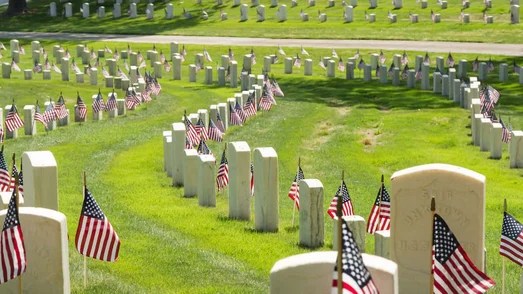
Why did Noah build an altar? In the Bible, man-made altars were created for several reasons. Sometimes man-made altars existed to offer a sacrifice to God. That is why Noah built his altar. However, that is not the only reason. Sometimes man-made altars were constructed to remember divine encounters or to remember divine acts. Some altars were built to seal a covenant or as a place of refuge. I do not want to simplify the topic, but altars were built to remember something significant. That is the same reason we place headstones at graves. On Memorial Day, it is the custom in the United States to decorate graves of fallen soldiers who have died in service to our country. On Memorial Day, it is the custom to decorate the graves of deceased loved ones. Did you know approximately 20% of Americans visit the grave of a loved one regularly? During those visits people do three things. Let me look at each one.

First, when we stand at a grave we remember the past. When Noah stood by his altar he remembered his past. Just think about it for a moment, Noah walked out of the ark with his family. There were eight of them. That was it. Everyone else was gone. Everything he knew in the past was gone. They were not going to be part of his future. Everything and everyone, except his family, was gone!

Have you ever stopped to consider how the world has changed? In 2014, Kathryn and I traveled to Quincy, Massachusetts. It is the home of Peacefield, the home of Founding Father and President John Adams (1735-1826) and his wife Abigail Adams (1744-1818) and home of President John Qunincy Adams (1767-1848) and his wife Louisa Catherine Adams (1775-1852). The oldest selection of the house was built in 1731. The entire property is now part of the Adams National Historic Park. Everything was well preserved, and we enjoyed our visit. It was easy to imagine what life was like during the early days of our country, except for one exception. Across the street from the Adams home was a Dunkin Donuts. I found the contrast between Peacefield and the Dunkin Donuts comical. It reminds us the world has changed a great deal in the past 250 years.

Have you ever stopped to consider how much the world has changed in your lifetime? I was born in 1957. In 1957, the world population was approximately 2.8 billion. Today, it is over 8 billion. Since 1957, there has been an information revolution. In 1957, a new home cost approximately $15,000. A new car cost approximately $2,000. Gas was 24 cents a gallon. A first-class stamp was 3 cents. College tuition for an Ivy League school was $1,000 annually. You get the point; the world has changed a great deal in my lifetime. How much has the world changed in your lifetime? Noah spent time remembering the past. How much time do you spend remembering the past? One of the things we do on Memorial Day is remember the past.

Second, when we stand at a grave, we remember what is important. Verse 20 says Noah built his altar to the Lord. It doesn’t say he built the altar to his wife, his sons or their wives. It says he built the altar to the Lord. He built the altar to the most important thing in his life, God! This is the question you must answer: what is important to you?

Sitting on a table next to my bed is an old, grainy family photograph. I look at it regularly. My Aunt Phyllis tells me it is a photograph of an Adams family reunion about the year 1900. Everyone is sitting in front of a farmhouse. All the men have long beards; all the women are wearing long dresses. The oldest are sitting on chairs in the middle. The youngest are sitting on the ground. There is a young boy sitting in front of the oldest man. That young boy is my grandfather, Roger Adams. He was the only one in that picture I ever met. Everyone in that picture is gone. Yet, that photograph is important to me because they are my ancestors.

I like to think the core values of my ancestors are the same as mine. Not a single person in that photograph is extremely handsome or rich. Not a single Adams ever invented anything or wrote a book. Those things really don’t matter to me. However, Adams means certain things. First, it means you are a good person. Second, it means you are honest. Third, it means you are loyal; loyal to your spouse, children, friends and country. Fourth, it means you are a Christian. Jesus is the most important thing to me. What is important to you? One of the things we do on Memorial Day is remember what is important.

Third, when we stand at a grave we ponder the future. What do you think Noah thought about his future? To answer that question, you must combine Noah’s past experiences and his priorities. His past included a sinful world. His greatest priority was God. When he looked to the future he must have been determined to do better. Through Noah everything started anew. God had given the world another chance and Noah knew they could do better. Have you ever thought about your future? What do you still want to do? What mistakes do you want to correct? What would you like to do better? One of the things we do on Memorial Day is ponder the future.

John Logan (1826-1886) was the National Commander of the Grand Army of the Republic during the 1860’s. It was Logan who declared May 30, 1868 a “Memorial Day.” That date was selected because the flowers would be in full bloom in both the north and the south. The observance was held at Arlington National Cemetery. Ulysses (1822-1885) and Julia Grant (1826-1902) presided over the day. Soldiers from the Grand Army of the Republic and orphans from the Soldiers and Sailors orphanage placed flowers on both Union and Confederate graves. The idea was not original. By 1868, communities who had lost men in the Civil War had been decorating the graves of their lost loved ones for several years. There is nothing new about Memorial Day. People have been remembering for a long time. Perhaps, it all began with Noah, who built an altar and remembered. This Memorial Day what will you remember?
In Remembrance

How is your memory? I heard of an older couple that was having some trouble remembering so they signed up to take a memory course together. A few months later the husband was out working in his garden when a neighbor stopped by and began to talk to him about the memory course, what was the name of the instructor? The husband paused, then asked “What is the name of that flower that smells so nice but has thorns? You mean a rose the neighbor answered. Yeah, that’s it, “Hey Rose, what’s the name of that guy who taught us the memory course?” How is your memory?

It is impossible to remember everything. How many things have you forgotten recently? When was the last time you forgot a loved one’s birthday? When was the last time you lost your keys? When was the last time you forgot to return a phone call? Is there some secondary person in your life you don’t call by name because you forgot their name? Have you ever forgotten to get milk at the store or to pick up a youngster from school? Have you ever forgotten where you parked at the stadium or the grocery store? You can admit it. We have all forgotten something. Sometimes, it doesn’t matter. For example, I can never remember Ronald Reagan’s first wife. Sometimes, it does matter. Don’t forget to file your taxes by April 18. This evening we remember an event that you must never forget.

It is imperative that you remember Jesus’ last Seder. Our primary scripture is First Corinthians 11:23-26. It would be his last meal before his appointment with the cross. For it is at that meal, Jesus gave us a memorial for the ages. You know the scene. We have reenacted it. It has been reenacted in movies and inspirited some of the greatest pieces of art. That makes it easy to imagine this evening’s lesson. The Gospels tell us, the disciples were wondering about the Passover meal. This is not shocking. It was the reason they came to Jerusalem. They had been observing the Passover meal annually since childhood. Jesus sends two of the disciples ahead to make the arrangements. When Jesus arrived, everything was ready in that upper room. The menu for the meal was traditional. Each course represented something from the story of the exile. Every word was scripted. No one dared change a single word, but Jesus did change the words. Instead, of just remembering the past, Jesus began to talk about the future. He began to speak of the future when he would be separated from his disciples. We know the words that he uttered because we are his contemporary disciples. The bread represents his body. The wine represents his blood. He gave us those elements for one reason. He did not want to be forgotten. Remembering Jesus is extremely important. On Maundy Thursday we need to remember three things.

First, we need to remember past events! Did you know in the state of Ohio there are 1,750 historical markers? Each one has been placed by the Ohio Historical Society. That program started in the 1950s. I think my father read every one. It used to drive me crazy when I was young. Now I read as many as I can. Time changes things. Did you know there are 16 historical markers within the zip code of this church? Maybe you have seen them? Has anyone read the marker at the old The Mahoning Dispatch Building or the one at the Pioneer Pavilion? Each one exists for the same reason. They don’t want you to forget the past.

The disciples observed that annual Seder to remember past events. It was a meal designed to remember the past. It was a meal designed to teach the youngest about their past. Each participant heard the story again. Their ancestors were held in bondage in Egypt. They had no hope of liberation, so God sent them a liberator. His name was Moses. He spoke on behalf of God to the Pharaoh and announced a series of plagues. Each one was miserable. There was the plagues of blood, frogs, gnats, flies, livestock, boils, hail, locust and darkness. However, the last plague was the worst, the plague on the first born. It was that plague that changed the heart of Pharaoh. He released the Hebrews. We remember because there are events that should not be forgotten. It is not just true of them. It is true of us. We should never forget the events of that upper room. We remember because of past events are important. We remember because past events hold lessons.

Second, we need to remember past lessons! Someone asked me recently, “What is the worst thing about traveling?” I think he wanted to hear about bad food and lumpy beds. Instead, I told him about airport security. If you have traveled in the past twenty-plus years you know it is true. It is part of the day. You take off your shoes. You take off your belt. You empty your pockets. You show your boarding pass and passport. You step into the machine to get x-rayed, and you are patted down by someone who needs a breath mint. It is annoying, but I never complain. Why? You know the answer. We have learned from the past. September 11 changed our world. Someone once said, “Growing up is learning from yesterday’s mistakes.”  How many times have you said, “I will never do that again!” We remember so we don’t make the same mistakes again. We remember because of past events are important. We remember because past events hold lessons. We remember because those events remind us of our core values.

Third, we need to remember our core values. The Seder is designed to help people remember the past. However, the Seder is designed to do more. It was designed to remember past values. The Seder is an annual reminder to the Jews that their relationship with God is unique. They call themselves “God’s Chosen People.” It is a statement that is hard to argue with when you remember the events in the wilderness. Pharaoh had changed his mind and sent his army to retrieve the slaves. Moses had led the people to the shore of the Red Sea. Things looked bad. The people could not go back because of the army. The people could not go forward because of the water. They were trapped and they had no hope. However, they are God Chosen people, so God divided the waters for them. The water was held back for the Hebrews but not the Egyptians. It is not just a story of a miracle; it is a reminder that they are special. When they remember it; they remember their core values.

When we partake of the body and the blood of Christ you are not just remember some past event. You are remembering our core values. You have a unique relationship with God. You are a disciple of Jesus Christ!

The Taj Mahal in Agra, India is considered one of the Seven Wonders of the World. The history is interesting. It was built in the 1600’s by the fifth Mughal emperor, Shah Jahah. He built it as a memorial for his wife, Mumtaz Hahal. The building, itself, is truly an amazing. It is an octagonal building with walls measuring 130 feet long by 70 ‘high and it is surmounted by a dome adding an addition 120’ in height. It is constructed entirely out of white marble, which is reflected by a huge pool. The interior design is magnificent, containing 12 types of inlaid stones, and mosaics of great beauty. Many consider the Maj Mahal the greatest memorial in the world today. They are wrong!

 The greatest memorial today is found at the communion table of every church. It is the body and the blood of Christ. When we come to the communion table we remember. In is important that we remember past events. It is important that we remember past lessons. It is important that we remember our core values. We have a special relationship with God. We are disciples of Jesus Christ! Saint John Bosco (1815-1888) once said, “We do not go to Holy Communion because we are good; we go to become good.”