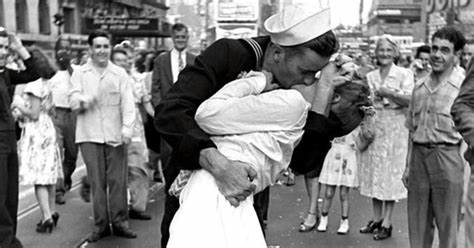
Peace…

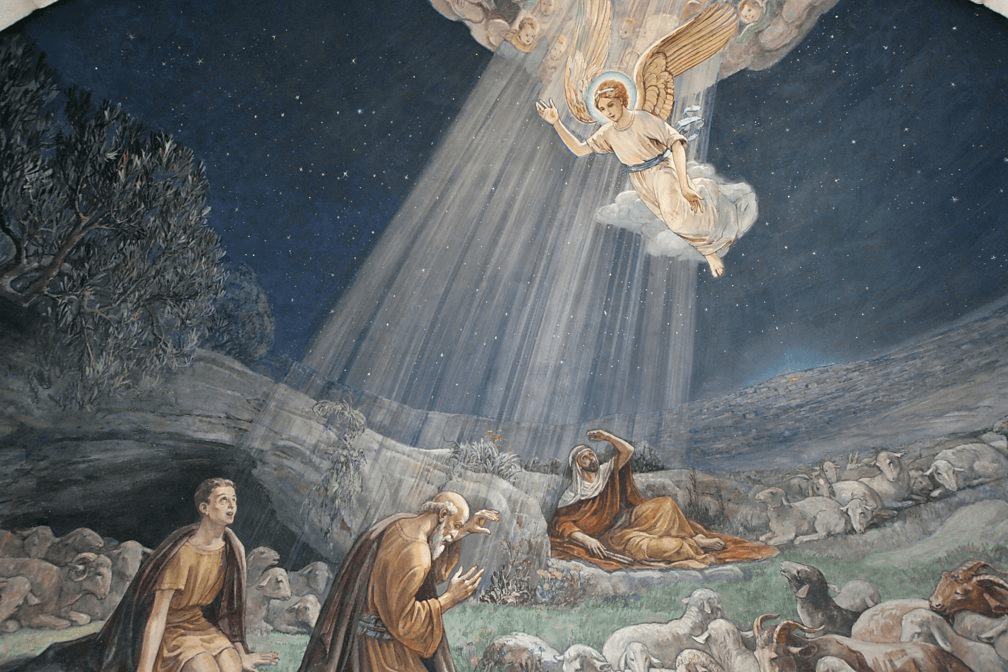
Our reading is from Luke 2:8-20. The role the shepherds played in the Christmas narrative is vital. They were common laborers who were responsible for the sheep who were to be sacrificed in the temple. The animals were valuable, and their job was dangerous. They guarded the sheep against thieves and predatory animals. To the religious leadership of the day, the lives of the sheep were more valuable than the lives of the shepherds.

There was nothing special about that night. It was like any other night, until an angel appeared to them to make the great announcement, the long-awaited Messiah had been born! That announcement is underscored by a great company of angels singing “Glory to God in the Highest, and on earth peace to men on whom his favor rests.”  Their words remind us of the greatness of God and His desire to reconcile with mankind. We find the same message of reconciliation in Second Corinthians 5:19, “God was reconciling the world to himself in Christ, not counting men’s sins against them. And he has committed to us the message of reconciliation.”  That is the Good News of Christmas. God came into the world to end the conflict with us. That divine truth changes everything. In this blog, I want to explore Jesus’ ministry of reconciliation. Consider three things with me.

First, because of Jesus we have peace with God. When you have peace with God, you have spiritual peace. Romans 5:1 says, “Therefore, since we have been justified through faith, we have peace with God through our Lord Jesus Christ.”  On the day that I accepted Christ as my Lord and Savior, I experienced just one emotion – it wasn’t joy, it was relief. The battle was over. I was at peace with God. Augustine of Hippo (354-430) once said, “Because God has made us for Himself, our hearts are restless, until they rest in Him.”

The founder of the great Methodist movement was John Wesley (1703-1791). His brother Charles Wesley (1707-1788) was a great hymn writer for the movement. He wrote more than 1600 hymns. The words of those hymns taught those early Methodists about God. Did you know he wrote the first hymn in every Methodist hymnal ever published, O For Thousand Tongues to Sing? This is what he wrote: 

I rest beneath the Almighty’s shade, 

My grieves expire, my troubles cease; 

Thou, Lord, on whom my soul is stayed, 

Wilt keep me still in perfect peace. 

Charles Wesley experienced the line he wrote, “keep me still in perfect peace.”  Have you unwrapped the greatest gift you will ever receive? Do you know Jesus as your Lord and Savior? If your answer is anything but “yes”, don’t wait. You have been at war with God long enough. The gift of Jesus offers us spiritual peace. Jesus came to offer us peace with God.

Second, because of Jesus we have the peace of God. The peace of God is more than the absence of conflict. It is a deep-seated tranquility that comes from trusting in God’s sovereignty and grace. You can entrust this world to God. Philippians 4:6-7 says, “Do not be anxious about anything, but in everything, by prayer and petition, with thanksgiving, present your requests to God. And the peace of God, which transcends all understanding, will guard your hearts and your minds in Christ Jesus.”  This is important because some things are out of our control. Never forget, God is omnipotent.

I have a five-month-old granddaughter, Violet. She has a two-and-a-half-year-old brother, Romeo. My wife, Kathryn and I watch them once a week. God was very wise when he entrusted babies to young people. Our day of babysitting is exhausting, but it is also rewarding. I want to know them, and I want to be part of their lives. At the end of the day, we limp out of their home, but we are always excited about returning the next week. I love my grandchildren with my entire heart, and I cannot help worrying about the world they are inheriting. Our world is facing some massive problems, and it does not appear to be improving. I am thankful for the peace of God, because I can entrust my grandchildren to God. I will love my grandchildren for the rest of my life, but God will love them for eternity. Canadian theologian J. I. Packer (1926-2020) said, “The peace of God is first and foremost peace with God.”  Jesus came to offer us peace with God, so we can experience the peace of God. Yet, there is one more.

Third, Jesus expects us to have peace with others. When the Civil War ended in 1865 there was a great amount of hatred in the country. Some feared it would never end. However, time has a way of healing old wounds. In 1885, former General-in-Chief of the Union Army and former President of the United States Ulysses Grant (1822-1885) died. Four years later, former President of the Confederacy Jefferson Davis (1808-1889) died. However, their widows, Varina Davis (1826-1906) and Julia Grant (1826-1902), lived on and settled near each other. As fate would have it, they became close friends. They did something their husbands with all their armies failed to do. They modeled peace for a new generation. Are you a model of peace for your world?

Do you have any broken relationships in your life? How would those relationships improve if you applied Christian principles to them? Christmas is a great opportunity to fix your broken relationships. It may not be an easy thing to do but it is an important thing to do. It takes two people to reconcile. God only expects you to do your part.

Matthew 5:9 says, “Blessed are the peacemakers for they shall inherit the Kingdom of God.”  Have you done everything in your power to fix all your relationships? Jesus offered the world reconciliation. There is peace with God. There is the peace of God. There is peace with others. 

It really is quite a story. The shepherds were just common laborers working the night shift. Without warning their entire world changed in an instant. An angel appeared and told them the big news – the long-awaited Messiah had been born! That is the Good News of Christmas. God came into the world to end the conflict with us. The angel choir sang it then, but it is still true today, “Glory to God in the Highest, and on earth peace to men on whom his favor rests.” 
The War is Over!

When the Civil War ended there was a great deal of hatred in America. Some feared the hatred would never end. However, time has a way of healing old wounds. In time, former General of the Union forces and former President of the United States Ulysses S. Grant (1822-1885) died. Four years later, former President of the Confederacy, Jefferson Davis (1808-1889) died. Their widows, Julia Grant (1826-1902) and Varina Davis (1826-1906) lived on and settled near each other. As fate would have it, they became close friends. They did something their husbands failed to do, they modeled peace for a new generation. This is the good news – Jesus came to offer us spiritual peace. That takes us to our reading.

Our reading is 2 Corinthians 5:18-20. The Apostle Paul wrote these words in the year 55 AD, which means he wrote them a year after he wrote First Corinthians. Much has been written about the vastness of the city of Corinth. It was both a political and commercial giant. It is impossible to overstate the diversity of Corinth. In our time, diversity often leads to conflict, yet that is not what Paul addresses. Instead, Paul talks about reconciliation. Webster defines reconciliation as the restoration of a friendly relation. 2 Corinthians 5:18 says, “All this is from God, who reconciled us to him through Christ.”  He understood that Jesus brings three kinds of reconciliation. In this blog I want to examine each one.

The first kind of peace Christ offers is peace with God. It is a personal peace. Romans 5:1 says, “Therefore, since we have been justified through faith, we have peace with God through our Lord Jesus Christ.”  On the day I accepted Christ as my Lord and Savior I experienced one emotion – it wasn’t joy, it was relief. The battle was over. I was at peace with God, and I knew I was going to heaven when I died. My personal desires were replaced by living for God.

In 1555, English bishop Nicholas Ridley (1500-1555) was burned at the stake because of his witness for Christ. On the night before Ridley’s execution, his brother offered to remain with him in the prison chamber to be of assistance and comfort. Nicholas declined the offer and replied that he meant to go to bed early. He knew he was going to meet Jesus the next day because he was at peace with God. How did you sleep last night? Are you at peace with God? The war is over!

The second kind of peace Christ offers is the peace of God; it is a trusting peace. According to the Bible, the peace of God is a harmony of calmness of body, mind, and spirit that comes from trusting in the power of God. The Hebrew word for peace, “shalom,” embodies wholeness, completeness, and love. In the Christian context, it is associated with Philippians 4:6-7 which says, “Do not be anxious about anything, but in everything, by prayer and petition, with thanksgiving, present your requests to God. And the peace of God, which transcends all understanding, will guard your hearts and your minds in Christ Jesus.”

In a few days, we will begin a new year. Our world is facing some massive challenges. The list is not small. There is climate change, global poverty, inequality, armed conflict, hunger, water security, lack of access to healthcare and education, and human rights issues. I find that list humbling. There is very little I can do to help any of these issues, but I have the peace of God. I believe God is all knowing and all powerful. I believe God will address these issues in his time. I live with the peace of God. Do you? The war is over!

The third kind of peace is peace with others. Not everyone was happy when poet Elizabeth Barrett (1806-1861) married Robert Browning (1812-1889) in 1846. Her father did not approve, so the marriage was performed in secret. After the wedding the Browning’s sailed for Italy, where they lived for the rest of their lives. But even though her parents had disowned her, Elizabeth never gave up on the relationship. Almost weekly she wrote them letters. Sadly, they never replied. After 10 years, she received a large box in the mail. Inside, Elizabeth found all her letters; not one had been opened! Today those letters are among the most beautiful in classical English literature. Had her parents only read a few of them, their relationship with Elizabeth might have been restored. How many people do you know who can relate to the Elizabeth Barrett Browning story? Can you relate to the Elizabeth Barrett Browning story?

For many people the Elizabeth Barrett Browning story is the story of Christmas. Is anyone in your life an expert at holding a grudge? They just can’t forget or move on? The event may have happened years ago, the details may have gotten fuzzy. At some

point the details stopped mattering. Only “the principle” mattered. Pride has set in and forged a wedge between the two parties. One party is always going to teach the other party a lesson. The truth is no one ever wins in those situations; no one ever learns a lesson. The only thing that really happens is opportunities are lost and loneliness wins. Both parties demonstrate their smallness. It takes a big person to initiate reconciliation.

Matthew 5:9 says, “Blessed are the peacemakers, for they are called the children of God.” If you applied Jesus’ lessons to your relationships, then how many of your relationships would improve? Are you at peace with others?

This is the good news of Christmas. Our great big God has made the first move to resolve the conflict between Him and the world, but also the conflict between Him and you. Listen to what the choir of angels said in Luke 2:14, “Glory to God in the Highest, and on earth peace to men on whom his favor rests.”  In other words, Jesus came to end the conflict between us and God. We hear it more clearly in Second Corinthians 5:19, “God was reconciling the world to himself in Christ, not counting men’s sins against them. And he has committed to us the message of reconciliation.”  That is part of the Good News of Christmas. The war is over. Jesus came into the world to end the conflict with the world. The God of the universe wants to have a relationship with you!

Wouldn’t it be nice if you modeled peace for your world? Wouldn’t it be nice to settle the war that is waging in your heart? Jesus makes it possible. Wouldn’t it be nice to live at peace with God? Wouldn’t it be nice to live in peace with others? Jesus came to offer reconciliation. 2 Corinthians 5:18 says, “All this is from God, who reconciled us to him through Christ.” The war is over!

At Peace

We find ourselves in the second chapter of Luke, verses eight through fourteen. The scene is a familiar one. Perhaps it is so familiar, the shock has worn off. After centuries of waiting, the Savior of the world has been born. For generations, everyone longed for his arrival, because he would solve all their problems. Everyone assumed he would be born in the palace; after all, he was a king. Everyone was wrong. (You know what they say about assuming.) He was born in a barn or cave. To the world, his parents, Joseph and Mary, were just another poor couple. Aren’t the poor always having children they can’t afford? According to the Gospel of Matthew, they named him Jesus. The name means “to save.”

It was the greatest moment in human history, but the world almost missed it. An announcement had to be made. It was delivered to an unimpressive group of hard-working shepherds, despised by the religious of their world, but obviously valued by God. Our scripture reading tells us, once the announcement was given, the messenger was surrounded by a great company of singing angels. Their sheet music is long gone, but their words remain: Glory to God in the highest, and on earth peace to men on whom his favor rests. We call those words Gloria in Excelsis Deo, the first words in the Latin Vulgate translation. We know those words because they are great words, but what do those words mean? How do you interpret that verse? That is not a simple task.

Some believe the angels are speaking about internal peace. One of my favorite Christmas movies is Home Alone. You may know the background. Home Alone was released in 1990. It was made for $18 million and has grossed approximately $354,000,000. It was filmed in Winnetka, Illinois, and stars Macaulay Culkin (born 1980) as Kevin McCallister. You remember the storyline. Eight-year-old Kevin finds himself home alone, because he got lost in the shuffle as his family leaves for their Christmas vacation. At first, he celebrates his independence, but in time he begins to value his family. Near the end of the movie, Kevin begins to regret how he had treated his family. He walks into a church and confesses his feelings to a stranger, who has his own family problems. The stranger, Kevin’s neighbor, a weird old man, has a great line. He says, “You’re in church now. This is the place to come when you are feeling bad about yourself.” It is a secular movie, but it holds a divine truth.

Have you ever gone to church to find some rest? The world is exhausting because the world promotes your failures. During my time in the ministry, I sat alone in my church’s sanctuary many times because I needed some peace. What I really needed was Jesus. Augustine (354–430) once said, “Our hearts are restless until we find our rest in God.”  Internal peace is important! How exhausted are you? Internal peace is important, but it is not the right interpretation.

Some believe the angels are speaking of political peace. Did you know, historians from England, Egypt, Germany, and India tell us, since the year 3600 BC, the world has only been free of war 292 years? During that same period, there have been 14,352 wars, killing 3.7 billion people. The amount of property destroyed during those wars would pay for a golden belt large enough to surround the world, 98 miles wide and 33 feet thick. Did you know that since 650 BC, there have been 1,656 arms races, and only 16 have not ended in war. Most countries involved in a war end up in economic collapse. Did you know there are thirty-two wars raging in our world today, taking more than 526,000 who die annually because of violence associated with armed conflict? Our time is not the only one. There has always been a shortage of peace in our world. Political peace is important, but it is not the right interpretation.

Some believe the angels are speaking of social peace. I love baseball. I remember the night Hank Aaron (born 1934) broke Babe Ruth’s home run record on April 8, 1974. Al Downing of the Los Angelos Dodgers allowed the home run. He held that record for thirty-three years. When his 23-year baseball career ended, he was inducted into Baseball’s Hall of Fame and went to work for the Atlanta Braves. In my eyes, Hank Aaron is a somebody.

One night, he was checking into a hotel, but the clerk didn’t recognize him and told him there were no rooms available. The owner of the hotel recognized Hank Aaron and pulled the clerk to the side. He said, “That is Hank Aaron. He is the one who broke Babe Ruth’s home run record. Tell him we will find him a room.” The clerk went back to the counter and said to Hank, “I am sorry, Mr. Aaron. I didn’t recognize you. Of course, we have a room for you. I didn’t know you were a somebody.” I love Hank Aaron’s response. He said, “Everybody is a somebody.” How would our world change if we treated everybody like somebody?

There is a certain amount of logic to this interpretation. After all, God sees everybody as a somebody, because God loves everyone. It is God’s desire to have everyone accept Jesus as their Lord and Savior, so God can spend eternity with everyone. If you treated everyone as a somebody, how would your relationships change? You know the truth, revenge is never sweet. Violence breeds more violence. Hatred poisons the soul. Resentment, jealousy, bigotry, and prejudices are spiritual viruses that will kill your soul. Hank Aaron was right! Everybody is a somebody. Those interpretations are not all bad. Internal peace is important. Political peace is important. Social peace is important, but those interpretations are not correct.

The angels are speaking about peace with God. It is the kind of peace that satisfies your entire being. The great hymn writer of the Methodist movement, Charles Wesley (1707-1788) was at peace with God. He wrote approximately 6,500 hymns. In one of his hymns, he talks about his peace with God. Read the words slowly:

          I rest beneath the Almighty’s shade

          My griefs expire, my troubles cease;

          Thou, Lord, on whom my soul is stayed,

          Keep me still in perfect peace.

Charles Wesley was at peace with God. This is the question you must answer today: Are you at peace with God? Consider these two stories with me.

Nicholas Ridley (1550-1555) was an English Bishop in London. However, he is remembered for being one of the greatest martyrs in the history of the church. His witness for Christ was unfailing. He died burned at a stake. On the night before his execution, his brother came to visit him in prison. He wanted to add some comfort. Ridley refused the offer. He told his brother to go home, because he wanted to get a good night’s rest, because he was going to meet Jesus the next day. Those who guarded over him said he slept soundly that night.

One of my favorite movies is The Outlaw Josey Wales. It was released in 1976 and stars Clint Eastwood (born 1930) in the title role. He plays the part of a Missouri farmer who joins a Confederate guerrilla unit at the close of the American Civil War. He ends up on the run from the Union soldiers who murdered his family. Along the way, he encounters a variety of characters. One of those characters was a young man by the name of Jamie, who got wounded. Wales cares for his wounds and bonds with him as they run. At a certain point Jamie admits, “Josey, I’m afraid to die.” Jamie is not alone. I meet people regularly who are afraid to die because they still question their eternity. This is the question you must answer.

Are you afraid to die? Are you more like Nicholas Ridley, who was at peace with God, or Jamie, who was facing an unknown future? I am not a perfect person, but I sleep well

at night because I am at peace with God. I accepted Jesus as my Lord and Savior years ago. The angels sang those words to the shepherds, but their words are still true today: Glory to God in the highest, and on earth peace to men on whom his favor rests. Are you at peace with God?

Peace Be With You

Did you know, historians from England, Egypt, Germany, and India tell us, since the year 3600 BC, the world has only been free of war 292 years? During that period, there have been 14,352 wars, killing 3.7 billion people. The amount of property destroyed during those wars would pay for a golden belt large enough to surround the world, 98 miles wide and 33 feet thick. Did you know, that since 650 BC, there have been 1,656 arms races, and only 16 have not ended in war. Most countries involved in a war end up in economic collapse. Did you know, according to the Daily Mail, there are forty wars raging in our world today. Some of those conflicts have lasted more than seventy years. Can I state the obvious? Our time is not the only one. There has always been a shortage of peace in our world. However, this message is not about political peace. It is about spiritual peace.

In March of 2018, Gregory Bush was at a Kroger Grocery story in Jeffersonville, Kentucky. He did not take his shopping list. He took his gun. In time, Bush shot two, one inside the store, one in the parking lot. The victims were doing nothing wrong. Bush shot them for a simple reason. He did not care for their race. The authorities said, the crime was racially motivated, a hate crime. Bush received two life sentences, plus ten years. Taxpayers will be paying for him for decades. Gregory Bush is not alone there are others.

Our society is filled with various prejudices. There is racism, sexism, and ageism. There is classism, homophobia, and nationalism. There is xenophobia, and religious prejudices. There are others I will not mention because I do not have the time. However, each one of our prejudices falls into one of three categories:

  1. Cognitive Prejudices – Those prejudices are rooted in what we believe is true.
  2. Affective Prejudices – Those prejudices are rooted in what we like or dislike.
  3. Conative Prejudices – These prejudices are rooted in assumed behavior.

Let me state the obvious. All prejudices are ugly and have no place within the life of the church. Sociologists tell us our prejudices expose our fears. We are prejudice against the group, or individual, that intimidates us. Our prejudices lie to us. No, we are not always in control. Our prejudices are learned. That means, you are passing your prejudices on to someone else. Sociologists also tell us, each one of us carries a certain amount of prejudicial behavior.  However, this message is not about our prejudices. This message is about spiritual peace. And all of God’s people said, “Amen!” This will make you think. Did you know, according to the Pew Research Group, 12% of all Americans do not even like themselves. According to the same study, 24% of all Americans under 35 do not like themselves. All of this will take us to our scripture reading for today, Ephesians 2:11-22.

We find ourselves today in the Epistle to the Ephesians. The author of this literary piece is the Apostle Paul. It is considered a circular letter. In other words, it was written to the various Christian communities in the area surrounding Ephesus, at the time, the most important city in western Asia Minor (now Turkey). Paul is not writing them to address any problem. Paul is writing them to challenge them to expand their faith. That is what we hear in the second chapter. Paul tells us our past traditions are useless. Paul tells us our differences are not important. The only thing that matters is Jesus, who died on the cross and welcomed all equally into God’s family. That fact is hard for many to accept. However, that is exactly what Paul says in verses 13 and 14a:

But now in Christ Jesus you who once were far away have been brought near by the blood of Christ. For he himself is our peace, who has made the two groups one.

This message is about spiritual peace.

The Apostle Paul (5-65) understood the importance of today’s scripture reading because he experienced it firsthand. Let us be honest. There is not much to like about him at first. He made a horrible first impression. The first martyr in the history of the church was Stephen. He was stoned to death. The leader of that stoning mob was Saul. He was a devout Jew, who longed to crush Christianity. He was zealous in his work, and, in time, all the believers feared him. It is one of the great stories in the Bible.

One day, Saul is traveling down the Damascus Road, when he is confronted by Jesus, himself. For a short-time Saul is blinded, and he is converted to Christianity. His name is changed to Paul, which means small or humbled. However, not just his name changed. His priorities changed.  From that moment on he is determined to win the Gentiles world to Jesus. At first the church is uncomfortable accepting him, but our generation accepts the fact that Paul is the great missionary who has ever lived. We are the spiritual ancestors of Paul. If Paul, the onetime murderer, could be saved, then anyone could be saved by accepting Jesus. Even a sinner like you. Yet, not just you, all sinners, who are different from you. God does not see our differences. God sees what we have in common. All humanity is linked together in sin. God’s goal is to have all sinner redeemed by the precious blood of Jesus, so he can spend eternity with everyone because God loves everyone.

I love this story: Hank Aaron (1934-2021) was one of the greatest baseball players who ever lived. I remember the night “Hammerin Hank” broke Babe Ruth’s home run record. He held that record for thirty-three years. When his 23-year baseball career ended, he was inducted into Baseball’s Hall of Fame and went to work for the Atlanta Braves. In my eyes, Hank Aaron was something special. Perhaps, that is why I love this story.

One night, he was checking into a hotel, but the desk clerk did not recognize him. She told him there were no rooms available. However, the owner of the hotel recognized Hank Aaron and pulled the clerk to the side. He said, “That is Hank Aaron. He is the one who broke Babe Ruth’s home run record. Tell him we will find him a room.” The clerk went back to the counter and said to Hank Aaron, “I am sorry, Mr. Aaron. I did not recognize you. Of course, we have a room for you. I did not know you were a somebody.” I love Hank Aaron’s response. He said, “Everybody is a somebody.” Hank Aaron was right! Everybody is a somebody. I am glad you think everyone is a somebody because many do not. Our world has a hard time accepting that divine truth. It is even true within our own ranks.

The dates you will want to circle on your calendar are August 29 – September 6, 2022. Those are the dates of the next General Conference of the United Methodist Church They are meeting in Minneapolis, Minnesota. Delegates from around the world will be attending. They will be deciding the fate of our denomination. Many believe, including myself, our church will divide. The issue is not preaching or evangelism. The issue is not world hunger or clean drinking water. The issue is sexuality. Traditionally, we have not ordained openly gay people or officiated at openly gay weddings. There are many who want to change that ruling. There is no compromise. It appears whatever is decided, a large block of our denomination will walk away. Many believe, those congregations who walk away will be given an opportunity to buy their building, which historically are held by the denomination. There will be a window of several years for this opportunity. There is no other way to say it. It is ugly. Those that are favor of the change are using the Bible to support their cause. Those that are against the change are using the Bible to support their cause. Both sides have an extra helping of arrogance and a shortage of humility. It is a tough call. Do you believe our church should ordain and marry openly gay people? Do you believe our church should not marry and ordain openly gay people? Do you believe our congregation should leave the United Methodist Church? Do you believe our congregation should stay within the United Methodist Church? Everyone, every church, must decide for themselves.

One day during my time away, I was visited by a colleague. No, I was visited by a friend. He stayed for approximately an hour. We covered a variety of topics. The topic of sexuality came up. In a moment of pure honesty, he dropped his head and shook it. He said, “Russ, we (The United Methodist Church) have forgotten our purpose.” I think he was right. People do not come to church to be entertained. People do not come to church because I am handsome. People do not come to church to hear my political views. People do not come to church to hear my take on the local news or hear my opinion on the state of professional sports. This is equally true. People do not come to church to hear about sexuality. People come to church one reason. People come to church to hear about Jesus. I have said this to colleagues many times. The ministry is not that hard. You just need to do two things. Talk about Jesus and care about your people. It is impossible to talk about Jesus too much. We are all sinners who are dependent on the sacrificial acts of Jesus. The only thing that matters in the life of the church is Jesus. And, when we have Jesus in our world, our society, and our church and denomination, we will have peace. The Apostle Paul said it best:

But now in Christ Jesus you who once were far away have been brought near by the blood of Christ. For he himself is our peace, who has made the two groups one.

Do you remember what Augustine said? He said, “Our hearts are restless until we find our rest in God.”

Peace On Earth

We find ourselves today in the second chapter of Luke. It is the same reading as last week so the opening words may sound familiar. The scene is familiar because we visit it annually. Joseph returns home to Bethlehem to be counted in the national census. A census in the Roman Empire was taken for two reasons. The first is to be counted for military service. However, Joseph was excused from military service because he was Jew. The second is everyone had to be counted was taxation. Joseph probably wished he could have been excused from taxes, but he wasn’t. Joseph didn’t travel alone. He travels with his betrothed, Mary. She is pregnant and gives birth shortly after they arrive in Bethlehem. She gave birth to a little boy. That baby would change history. There were many questions about the boy’s biological father. Some say it was Joseph. Some say the boy was the very son of God. The answer to that question is found in our reading for today. This scene is equally familiar.

Shepherds are out in the fields in the hillside surrounding Jerusalem. We love the shepherds but that was not the case of their own generation. Their generation looked down on the shepherds because their vocation didn’t permit them to carry out the various washings of their faith. They are basically ignored by their society, but they are not forgotten by God. They are favored by God. They are the first to be told that the long-awaited Messiah had been born. The message is delivered by angels. In the Bible, angels are messengers, not protectors. The great announcement carries two great truths. First, the Savior of the world had been born. We looked at the concept last time. Second, the Savior would bring peace. That is good news because our world seems to have a shortage of peace.

Did you know there are fifty-five military conflicts in the world at this moment? That fact came from a Wikipedia. This is how it breaks down. There are four active military conflicts which have taken more than 10,000 lives in the last year. There are eight military conflicts which have taken 1,000 and 10,000 lives in the last year. There are twenty-five military conflicts which have taken between 100 and 1,000 lives in the past year. There are eighteen military conflicts in our world that have taken less than 100 lives in the past year. I think, one life is too many.

Did you know, according to an organization called the Gun Violence Archive, there have been 397 mass gun shootings in 2019 in the United States. The first happened on January the first in Tallahassee, Florida. The last happened on December 15 in Columbus, Georgia. Our society is so violent, mass shooting no longer grab the headlines. That 397 figure may go up, because there are a few days left in this year. Unfortunately, this is the sad truth.

In the Gospel lesson for today has nothing to do with political or civil peace. However, it has everything to do with spiritual peace. Do you remember what the angels sang? (verse 14) “Glory to God in the highest heaven, and on earth peace to those on whom his favor rests.” In other words, peace does not come to all. Peace only comes to those with whom God is pleased. Do you think God is pleased with you? God’s peace can be looked at in three ways.

The first kind of peace is the peace of God. I have seen it countless times in the ministry. A church member is facing a crisis in their life. Surgery can no longer be avoided, so the date is set. A few days before the surgery I will be in the home of the soon to be patient. I go for one reason, prayer. After some small talk and a cool beverage the time comes. We stand up, hold hands and pray. A few minutes later, I say, “Amen.” With words hard to find, the one with the problem will look at me and say, “Russ, I don’t know how this is all going to work out, but everything is going to be ok.” With moist eyes and a slight smile we all agree.

The peace of God is an emotional peace. It really is quite in creditable. With everything the world throws at us, addictions, death, disappointments, financial hardship, and the rest, we know everything is going to be ok. The Apostle Paul understood the peace of God. We hear it in Philippians 4:6-7, “Do not be anxious about anything, but in everything, by prayer and petition, with thanksgiving, present your requests to God. And the peace of God, which transcends all understanding, will guard your hearts and your minds in Christ Jesus.” The peace of God is an emotional peace. Have you ever experienced peace in the middle of one of life’s storms?

The second kind of peace is peace with God. Nicholas Ridley (1500-1555) was the Bishop of London. His faith was unshakable. He made powerful enemies. In 1555, he was burned at the stake because of his witness for Christ. History tells us, on the night before Ridley’s execution, his brother offered to remain with him in the prison chamber to be of assistance and comfort. Nicholas seemed confused by the offer and declined it. He told his brother to leave early because he wanted to get a good night’s sleep. The next day was going to be a big day because he was going to meet the Lord. If you knew you were going to die tomorrow, how would you sleep tonight? Peace with God is a spiritual peace.

The founder of the great Methodist movement was John Wesley (1703-1791). His brother, Charles (1707-1788) was a minister too. Charles was the great hymn writer for the movement. He also wrote more than 1600 hymns. Did you know he wrote the first hymn ever in every Methodist hymnal ever published, O For Thousand Tongues to Sing. He knew something about words. He wrote these words about peace:

                   I rest beneath the Almighty’s shade,

                   My grieves expire, my troubles cease;

                   Thou, Lord, on whom my soul is stayed,

                   Wilt keep me still in perfect peace.

On the day that I accepted Christ as my Lord and Savior I experienced one emotion, peace. Romans 5:1 says, “Therefore, since we have been justified through faith, we have peace with God through our Lord Jesus Christ.” Are you at peace with God?

The third kind of peace is peace with others. Not everyone was happy when poet Elizabeth Barrett (1806-1861) married Robert Browning (1812-1889) in 1846. Her father did not approve so they married was secret. After the wedding the Browning’s sailed for Italy, where they lived for the rest of their lives. But even though her parents had disowned her, Elizabeth never gave up on the relationship. Almost weekly she wrote them letters. They never replied. After 10 years, she received a large box in the mail. Inside, Elizabeth found all her letters; not one had been opened! Today, those letters are among the most beautiful in classical English literature. Had her parents only read a few of them, their relationship with Elizabeth might have been restored. How many people do you know who can relate to the Elizabeth Barrett Browning story?

For many people the Elizabeth Barrett Browning story is the story of Christmas. Is anyone in your life an expert at holding a grudge? They just can’t forget or move on? The event may have happened years ago, the details may have gotten fuzzy. At some point the details stopped mattering. Only “the principle” mattered. Pride has set in and forged a wedge between the two parties. One party is always going to teach the other party a lesson. The truth is no one wins those situations, no one ever learns a lesson. The only thing that really happens is opportunities are lost and loneliness wins. Both parties demonstrate their smallness. It takes a big person to initiate reconciliation.

Peace with others is relational. What are you missing out on because you refuse to forgive? Making-up with other is the Christian thing to do. Second Corinthians 5:19 says, “God was reconciling the world to himself in Christ, not counting men’s sins against them. And he has committed to us the message of reconciliation.”  Christmas is a great time for reconciliation. Is there someone in your life you have battled long enough?

Ours is not the only generation of Americans who have lacked peace. Peace has been lacking in every generation. When the Civil War ended in 1865 hatred filled our country. Some feared it would never end. However, time has a way of healing old wounds. In time, former president of the Confederacy, Jefferson Davis (1808-1889) died. Sometime earlier, the former general of the Union forces and former President of the United States, Ulysses Grant (1822-1885) died. However, their widows, Varina Davis (1826-1906) and Julia Grant (1822-1902), outlived their husbands and in time became close friends. They did something their husbands failed to do. They modeled peace for a new generation.

Wouldn’t it be nice if you modeled peace for your world? Wouldn’t it be nice living with the peace of God? Our lives are filled with great hardship, but we have peace because we have God. Wouldn’t it be nice to live at peace with God? Your room in heaven is waiting for you. Wouldn’t it be nice to live at peace others? When the last service of Christmas Eve is over, I go home. I am tired, but I can’t sleep. I am wired. I sit alone looking at all the colors my Christmas tree. You may think I am crazy, but I can still hear the words of the angels, “Glory to God in the Highest, and on earth peace to men on whom his favor rests.”  Those words are well crafted, but Jesus said it better, “Blessed are the peace makers because they shall be called the children of God.”