Don’t Give Up Missions

There came a point in Jesus’s earthly ministry when he was no longer welcomed in the synagogues. With no other option, Jesus began to teach in the open air and began to tell parables. Parables are practical illustrations from daily living. Parables are not fables with a moral lesson. Parables are not analogies, where each character represents a contemporary character. Parables are different, because they illustrate a single divine truth.

Our reading, Matthew 25:31-46, the parable of the sheep and the goats, is a judgement parable. That generation saw the scene regularly. As a shepherd separates the sheep from the goats, so God will separate the righteous from the unrighteous. The righteous will enter heaven, because they responded to human need. They provided food, drinks, companionship, clothing, and medicine to those in need. The unrighteous were sent to hell because they failed to respond to human need. They were preoccupied with their owns needs and desires. The point of the story is clear – Jesus expects us to respond to human need. In the life of the church, we call responding to human need missions. Christian missions is an excellent way of expressing your appreciation to God for saving your soul. My goal in this blog is to help you appreciate the mission work of the church. I will do that by making three statements about mission work. I hope these statements make you think.

This is statement number one. Missions involve interpersonal relationships. Once you learn the name of the person you are helping, everything changes. Once you get involved in their story, missions come to life. Missions is not charity, missions is deeper. There is nothing wrong with collecting food, paper products or warm clothing. There are many people who need them. The problem is, you never get to know the person who will eat that food, use those paper products or wear that scarf. Charity is fine, but the needy always remain at a distance. Missions involve interpersonal relationships. In my life, I cherish the relationships I have made while helping someone in need. They changed my life while I was helping them. I think and pray for them regularly. If you want to thank Jesus, get involved in someone else’s story. Missions involve interpersonal relationships.

This is statement number two. Missions expose a person’s spiritual maturity. Spiritual babies only think about themselves. The spiritually mature grow to understand that life is about others. No activity in the life of the church exposes spiritual maturity more than missions. If it is true of people, and it is true of churches. If you show me a church that is not involved in missions, then I will show you a church that is on the way to extinction.

On the day missions take a backseat to everything else, your church will begin to die. If you want your church to close, then frustrate every mission opportunity. It is easy to do. You can justify your opposition based on sound business principles. Others will support you because there are other spiritually immature people. The church was never meant to be a business. The church was meant to be an extension of Christ in the world. When the winds of Pentecost blew, the only thing that mattered to those charter members was Jesus. The only thing that should matter to you is Jesus. The spiritually mature understand when we care for the needy of this world we are really caring for Jesus. When we ignore the needy of this world, we are ignoring Jesus. That is what the Master said in the parable. Missions expose a person’s spiritual maturity.

This is statement number three. Missions involve a certain amount of risk. Can I state the obvious? There are many frightened people within the life of the church. Whenever I have gotten involved in a mission project, well-meaning people try to stop me. When I went to the Philippines, people told me, don’t go! Their government is unstable. When I went to Mexico people told me, don’t go! You could get a disease. When I went to Haiti people told me, don’t go! You could be held hostage. Every time I traveled to the former Soviet Union, some well-meaning person warned me that I could be arrested and interrogated. When I tried to help the poor in my nearby city, people asked me, “Aren’t you afraid to be in the city? Someone seems to be killed every day.”

Yes, missions involve a certain amount of risk. Yes, the government may be unstable. Yes, the food may be bad. Yes, the residents may not like Americans. Yes, you may fall in love with someone in need and get your heart broken. However, this is what experience has taught me: The reward of helping those in need is greater than the risk. There is a world of needy people out there whom God loves. How can you turn your back on them? If you don’t believe God is calling you to go, then don’t go. Stay home. But, if God has called someone else to do something, then don’t discourage them. Encourage and pray for them. Never forget, God is with the person he has called into missions. Missions involve risk.

Ernest Henry Shackelton (1874-1922) was born in Ireland on February 15, 1874. His father wanted him to be a doctor, but he wanted to be a sailor. At the age of sixteen, he joined the merchant marines and saw the world. His greatest desire was to travel to the South Pole. In December of 1914, he got that opportunity. He was the captain of a ship called Endurance, which had a crew of twenty-seven men. For years, I read about an advertisement he ran to recruit his crew. This is the fictitious ad:

Men wanted for hazardous journey. Small wages. Bitter cold. Long months of complete darkness. Constant danger. Safe return doubtful. Honor and recognition in case of success.

The story ends by saying Shackleton could not take all the men that responded to that ad.  I was saddened to learn several years ago that story is not true. I wanted that story to be true, because I longed for an adventure. I didn’t just want to live and die. I wanted to make a difference. I am not alone. Many long for an adventure and to make a difference.

I believe you long for an adventure and want to make a difference in this world too. I believe you are desperate to find a way to thank God for saving your soul. The world is filled with people who are in need. How are you going to respond? Pastor of the Saddleback Church in California Rick Warren (born 1954) once said, “The only way to serve God is to serve other people.”  Never give up on missions!

Exploring Compassion

Our reading is Luke 10:25-37. Jesus is in Judea and has just sent out the seventy-two followers. The Good News is being spread and lives are being transformed. Jesus understands it clearly. It is not enough just to believe. Those beliefs must change one’s behavior, values and opinions. That is what Jesus is saying at the beginning of our Gospel reading. When questioned about salvation, Jesus asked them to quote the greatest law. That was a softball question. Everyone in Jesus’s world knew the answer. They quoted it daily. It is called the Shema: Love the Lord your God with all your heart, mind and soul. Then, Jesus asks them about the second greatest law. They are to love their neighbor as themselves. Do you see what Jesus did? He connected the love of God with the love of neighbors. It is not enough to just love God. It is not enough to just love your neighbor. Jesus expects us to love both God and our neighbors. To underscore that point, he tells this parable:

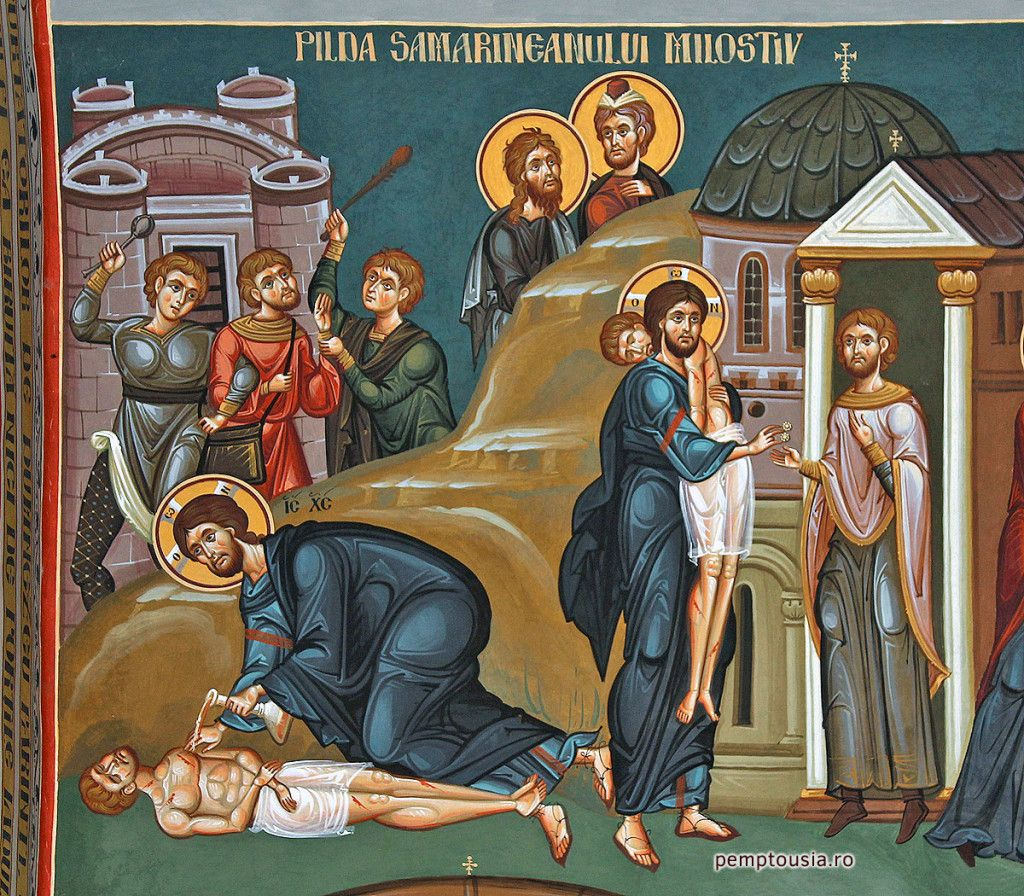
A man was traveling the road between Jericho and Jerusalem. It is a road that covers about seventeen miles. The direction you were traveling mattered because the road was steep. Jerusalem is 2,500 feet above sea level; Jericho is 800 feet below sea level. To make matters worse, it ran through rocky, desert country, which was perfect for robbers. Only a fool would travel this road alone, so we can say this man was a fool. As expected, he is attacked by robbers. The picture is not pretty. They stripped him of his clothes, beat him and left him for dead. Laying there in his half-dead state, various people walked by him. The first was a priest. A priest was from the line of Aaron and assisted in worship. The religious man should have known better, but he crosses to the other side of the road, ignoring the victim. The second was a Levite. He was a descendant of Levi, one of the brothers of Joseph. In addition to his religious duties, he had political and educational duties. He should have known better, but he crossed to the other side of the road, ignoring the victim. The third person is our unlikely hero, the Samaritan. You know the Samaritans. They were considered half breeds, half Jewish and half Gentile. The Jews believed they had compromised the faith. The Jews hated them, but the Samaritan was the one who had compassion on the victim in Jesus’s story. He treated the man’s wounds, and he put the man on his own donkey. Together, they traveled to an inn, where our victim heals. The Samaritan shows his true compassion. He takes out his money and gives it to the innkeeper. It equaled two days’ worth of wages. He instructs the innkeeper to care for him in his absence and tells him he will be compensated when he returns. Like all parables, Jesus’s simple parable of the good Samaritan is easy to imagine, yet it contains a profound message. It is easy to understand, yet it is hard to apply. It is not enough to say you love God; you must love others too. That is why compassion within the Christian faith is so important. It is one of the qualities you must nurture within yourself to experience the abundant life in Jesus Christ.

Webster defines compassion as sympathetic pity and concern for the suffering or the misfortunes of others. To me, that definition seems too shallow. True compassion is far more complex.

The great German Roman Catholic theologian, Henri Nouwen (1932-1996), seemed to understand the complexity of compassion. He once explained compassion this way:

Compassion is not pity. Pity lets us stay at a distance.

Compassion is not sympathy. Sympathy is for superiors over inferiors. Compassion is not charity. Charity is for the rich to continue in their status over the poor.

Compassion is born of God. It means entering the other person’s problems. It means taking on the burdens of the other. It means standing in the other person’s shoes. It is the opposite of professionalism. It is the humanizing way to deal with people.

The Good Samaritan illustrates true compassion. True compassion is based on need, not worth. True compassion is based on feelings, not fact. True compassion is based on doing, not understanding. Do the people in your life consider you compassionate? I hope so, because compassion is one of the great qualities of the Christian faith. I am not sure it is possible to be a true Christian without being truly compassionate. Compassion is a big deal, because our world is filled with so many problems.Did you know, according to UNICEF, 80% of our world’s population lives on ten dollars a day or less? How would your life change if you were forced to live on ten dollars a day? How much money do you live on in a single day?

When I think of compassion, Mother Teresa (1910-1997) pops into my mind. Born in Albania and raised in a devout Catholic family, she moved to Ireland at the age of eighteen to join the Sisters of Loreto. Later she moved to Calcutta, India and founded the Missionaries of Charity. They worked with the “poorest of the poor.” Over the decades that group grew to serve in 133 countries ministering to those dying of HIV/AIDS, leprosy, and tuberculosis, as well as running soup kitchens, dispensaries, mobile clinics, orphanages and schools. In 2016, she was canonized by the Catholic Church, because she refused to cross to the other side of the road. Mother Teresa was truly a woman of compassion.

When I research compassion, I find people like Pam Kidd. She writes devotions for Guideposts. One day she received a letter postmarked Harare, Zimbabwe. The letter read:

Dear Ms. Kidd, I have been reading your Daily Devotions for years. Recently, God spoke to me and asked me to tell you that you need to come to Zimbabwe to write about the orphans and the street children of Harare. Please contact me as soon as possible. Thank you.

It was signed by a woman working as a Presbyterian missionary in Harare.

That letter changed everything. A few weeks later, Pam and her husband were flying to Harare. When they arrived in Zimbabwe, they were shocked at what they saw. It was worse than they had imagined. Children living in mud huts, children jumping over sewage in gutters. She could not escape the smell of poverty. Children followed her everywhere. Pam decided to write a story about a woman who fed tea and bread to the orphans daily. They called her “Tea Lady.” As she researched this woman, Pam discovered this saintly woman had no help. She received no funding and needed help. Then, she had a revelation. God had brought her to Harare to help this woman. Over the next ten years, Pam Kidd returned to Africa ten times to help this woman help those orphans. Pam Kidd refused to walk to the other side of the road, because she was a woman of compassion. I hope I am a person of compassion. Are you a person of compassion? I hope so, because our world is crying out for help.

In 1964, Kitty Genovese (1965-1934) lived in Kew Gardens, in Queens, New York City. On March 13 of that year, Winston Moseley (1935-2016) raped and stabbed her to death. As shocking as that crime was the reaction of her neighbors was even worse. Many heard her cry out for help, but no one responded. Her neighbors were guilty of a sin of omission. They knew there was a problem, but they did nothing. In other words, they walked to the other side of the road. In the science of sociology, it has been called the “bystanders’ effect”, or diffusion of responsibility.

As Americans, we have been blessed in many ways. That is why so many long to live here. But, with those blessings comes great responsibility. To whom much is given, much is expected. Our world is calling out for help. What are you going to do? Are you going to walk to the other side of the road and ignore them, or are you going to be like the Good Samaritan, who responded to human need? It all distills down to a simple choice. Albert Schweitzer (1875-1965) once said, “The purpose of human life is to serve and to show compassion and the will to serve others.”

Is Bigger Better?

Hudson Taylor (1832-1905) is remembered for his many years of mission work in China. One night, he was scheduled to speak at a church in Birmingham, England. After months of planning, the day finally came, but the weather was horrible. Some tried to discourage Taylor from speaking. Even the organizers of the event discouraged him. But Taylor, himself, insisted. Less than a dozen people showed up, but the meeting was marked with unusual spiritual power. Half of those present either became missionaries or their children entered the mission field, and the rest were faithful supporters of the China Inland Mission for years to come. Can I ask you a question? Was that meeting a success or was it a failure? Through the eyes of this world, it was a disaster; less than twelve people came. Yet, through the eyes of God it was a great success – lives were changed in the name of Jesus. Let me state the obvious, bigger isn’t always better.

We find ourselves today in the fourth chapter of Mark, verses twenty-six and thirty-four. Jesus is in Galilee. He was extremely popular there, so a great crowd was following him. They heard a series of parables about the Kingdom of God. The chapter begins with the parable of the sower. Next comes the parable of the light and the bushel basket, the growing seed, and our parable, the mustard seed. Jesus says the Kingdom of God is like a mustard seed. It is known by all, because it is so short and easy to understand.

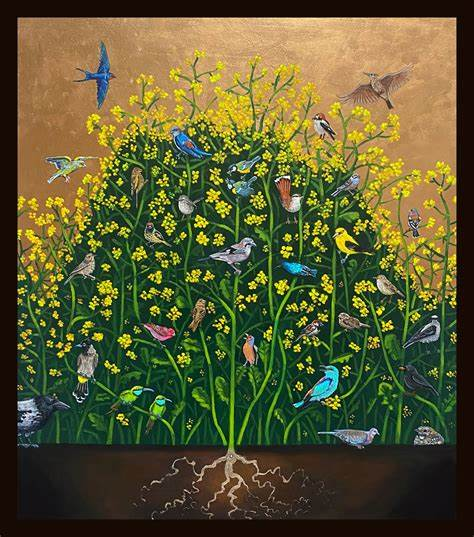
Proverbially speaking the mustard seed was the smallest of all the seeds. (The truth be told, other seeds in that corner of the world are smaller. For example, the seed of a cypress tree is smaller.) However, don’t be fooled by the size of the seed. It is deceiving. It starts out being small and insignificant, but it ends up being quite impressive. A full-grown mustard plant is more of a bush than a tree. It stands twelve feet tall. It is large enough for birds to take shelter. The point Jesus is trying to make is not hard to discover. The Kingdom of God may begin very small, but it will grow. In time, the Kingdom of God will become quite impressive.

Jesus wasn’t setting up the crowd for disappointment. The Kingdom of God did grow. Today, Christianity is the largest religion in the world. Our world has a population of approximately eight billion people. Approximately one-third of our world’s population is Christian. On the global scene Christianity is still growing. Did you know the Christian faith grows by 80,000 people per day? That didn’t just happen in an instant. It took time. Consider this with me:

  • In 100 AD the world population was 181 million. For every 360 people, there was one Christian.
  • In 1000 AD, the world population was 270 million. For every 269 people, there was one Christian.
  • In 1500 AD, the world population was 425 million people. For every 84 people, there was one Christian.
  • In 1900 AD, the world population was 1.6 billion people. For every 40 people, there was one Christian.
  • In 1950 AD, the world population was 2.5 billion people. For every 30 people, there was one Christian.

Jesus didn’t lie to the crowd, he told them the truth. He told them the Kingdom of God would start out very small, but in time it would be very big. We like those big numbers, because in America we believe bigger is better. That line of thought has even filtered into the life of the church.

Lakewood Church in Houston, Texas is the largest church in America. They have 45,000 in worship every weekend. They have six services on an average weekend, four in English and two in Spanish. Joel Osteen (born 1963) is the lead pastor. I don’t know how you feel about Joel Osteen. I do not know how I feel about Joel Osteen. However, you must admit, in a bigger is better society, Joel Osteen is a great success.

Can I make a confession? I am a product of this society. I, too, believed bigger is better. For most of my working career, I chased the crowd. For decades, I studied church growth principles. I could have held my own church growth workshop. Weekly on Sunday afternoons, I added up my church’s attendance. If it was a good attendance day, then I was in a good mood the rest of the week. If it was a low attendance day, then I would be in a bad mood the rest of the week. When my colleagues ask me about my church, I give them a number. I researched other churches’ numbers. I believed bigger is better. There is nothing wrong with numbers, until they became a preoccupation. At some time, I had a revelation – the numbers were robbing me of any feeling of satisfaction. The numbers only promoted my failures. I began to evaluate my worth as a person based on the numbers. Joel Osteen averages 45,000. I averaged about 250. There really is no comparison. I am not criticizing Joel Osteen or any other mega church. Every community seems to have one. I am saying numbers aren’t everything. It all changed for me in an instant and I discovered it in one of my own sermons. I discovered it was more important to be faithful then it was successful. It was a humbling moment.

It was the Sunday before the resurrection of Jesus. You know the story. A great crowd had gathered in Jerusalem for the annual Passover observance. On the lips of everyone in the crowd was the name Jesus. His miracles had made him famous. Some believed he was the long-awaited Messiah. When Jesus arrived, everyone wanted to see him. Some were in the crowd cheering for Jesus because he was trending. Some were in the crowd cheering for Jesus because they wanted him to perform a miracle. Perhaps they needed a healing, or a loved one needed a healing. Some were in the crowd for political reasons. They were tired of foreign domination and hoped Jesus would use his power for political liberation. A minority in the crowd loved Jesus and just wanted to be near him. Through the eyes of the world, it couldn’t get any better. Jesus was a success because he had drawn a great crowd. But you know what happened. One by one the people walked away. On Thursday evening, the great crowd had been whittled down to twelve. By Friday, the crowd had been reduced to a select few. It didn’t seem to matter to Jesus, he wasn’t interested in the crowd anyway, he was more interested in the committed. Jesus was more interested in eternal faithfulness than he was in worldly success. Some things don’t change. To Jesus, bigger isn’t necessarily better. The only thing that really mattered to Jesus is faithfulness. This is the question you must answer: How faithful are you?

One of the great preachers of the twentieth century was Fred Craddock (1928-2015). He taught homiletics at the Candler School of Theology at Emery University. No one influenced my preaching more than Fred Craddock. Years ago, I read a story about a time Fred Craddock addressed a group of ministers at a conference. These are his own words:

To give my life for Christ appears glorious. To pour myself out for others. . . to pay the ultimate price of martyrdom — I’ll do it. I’m ready, Lord, to go out in a blaze of glory. We think giving our all to the Lord is like taking a $l,000 bill and laying it on the table—”Here’s my life, Lord, I’m giving it all.” But the reality for most of us is that he sends us to the bank and has us cash in the $l,000 for quarters. We go through life putting out 25 cents here and 50 cents there. We listen to the neighbor kid’s troubles instead of saying, ‘Get lost.’ Go to a committee meeting and cover the same issues again. We give a cup of water to a shaky old man in a smelly nursing home. Usually, giving our life to Christ isn’t glorious. It’s done in all those little acts of love, 25 cents at a time. It would be easy to go out in a flash of glory; it’s harder to live the Christian life little by little over the long haul.

It isn’t just true of preachers; it is true for everyone. We long to do something great for God, but what we normally do are the little things and hope God uses them. We aren’t just doing little things – we are planting mustard seeds. How many mustard seeds have you planted in your life? Charles Spurgeon (1834-1892) is one of the great names in the history of the western church. He was the minister of the New Park Street Chapel of London for 38 years, where he saved countless souls and influenced a generation. His accomplishments in life are impressive, but his own conversion was quite simple. He accepted Christ as a teenage boy at a little Methodist chapel in the middle of a snowstorm. Very few were there that night. Even the preacher was absent. A layman led the service for the tiny crowd. He spoke on just one verse Isaiah 45:22, “Look unto me and be saved, all ends of the earth.” Those words resonated in Spurgeon. He accepted Christ, and the world will never be the same again. When I read that story, I couldn’t help but to ask this question: I wonder if that sincere layman knew the impact he had on the world? I wonder what kind of impact we have had on the world. I wonder what kind of impact you have made on this world. How many mustard seeds have you planted?