Trust and Obey

In my time in the ministry, most traditional worshippers loved the hymn, Trust and Obey. The hymn was inspired in 1886 when the composer of the music, Daniel B. Towner (1950-1919), was the music leader at one of Dwight L. Moody’s (1837-1899) revivals in Blockton, Massachusetts. On one evening, a young man stood up in a testimony meeting and said, “I am not quite sure – but I am going to trust, and I am going to obey.”  Towner jotted down that line and sent it to a Presbyterian minister, J. H. Sammis (1846-1919), who wrote the hymn and the tune was born. With that story in mind, let us look at our scripture reading, 2 Kings 5:1-14.

The main character in the story is Naaman. Prior to our reading, Naaman had a good life. As Commander of the Syrian army, he was professionally successful, well connected, and respected. His good life was threatened when he discovered he had leprosy, a highly contagious skin disease. In our time it is treatable, but in Naaman’s time there was no cure. His association with the king, professional success, fame, and wealth could not help him. The powerful Naaman was powerless against the disease.

His only hope was in God. Naaman’s story resonates with anyone who has ever had a major problem. In this blog, I want to examine three divine truths about problems.

Divine Truth Number One: problems force us to seek God. When life is good, we have no need for God. Now, God does not create our problems, but God uses our problems to remind us of what is important. That was Naaman’s story. Naaman had everything this world had to offer. Verse one says, “Now Naaman was commander of the army of the king of Aram. (Aram was the King of Syria.) He was a great man in the sight of his master and highly regarded, because through him the Lord had given victory to Aram. He was a valiant soldier, but he had leprosy.”  Those four words, “but he had leprosy”, changed everything. Suddenly, God became important to Naaman. It was his wife’s maid, an Israelite refugee, who spoke of the prophet Elisha. It is a universal truth – how many people do you know have no need for God until a problem invades their personal space?

Siddhartha Gautama (563-483 BC) was born 525 before Jesus. He had a good life. He lived in the palace away from the harshness of this world. It was not until he was in his early twenties that he left the palace for the first time. When he did, he saw the harshness of his world. He saw poverty, disease, and death for the first time and he was forever changed. He looked for a higher power to answer some tough questions and find relief. He developed meditation to disassociate himself from this world. It worked for him and he taught it to others. Today, Siddhartha Gautama is called Buddha, or the “enlightened one”. Today, there are approximately four hundred million Buddhists worldwide. It all started because one young man saw the big problems of this world. He reached for a higher power to ease his pain. Seeking God during a problem does not make you a Christian, but it does make you human. Problems force us to seek God. The next two divine truths go hand in hand.

Divine Truth Number Two: problems force us to trust God. Naaman took the words of the maid seriously. He received permission from his king to travel to Israel. Verse five says he took a hefty sum of money with him expecting to pay a king’s ransom for the healing. Upon his arrival he discovers two things. First, the prophet was not in the court of the King of Israel. Second, he discovered that his money is worthless. The healing cannot be bought. If he wanted to be healed, then he must trust God. Before Naaman could submit to God, he had to learn how to trust God. That was difficult for him. It has been said, “A person who trusts no one can’t be trusted.”  How much do you trust God? Problems force us to trust God.

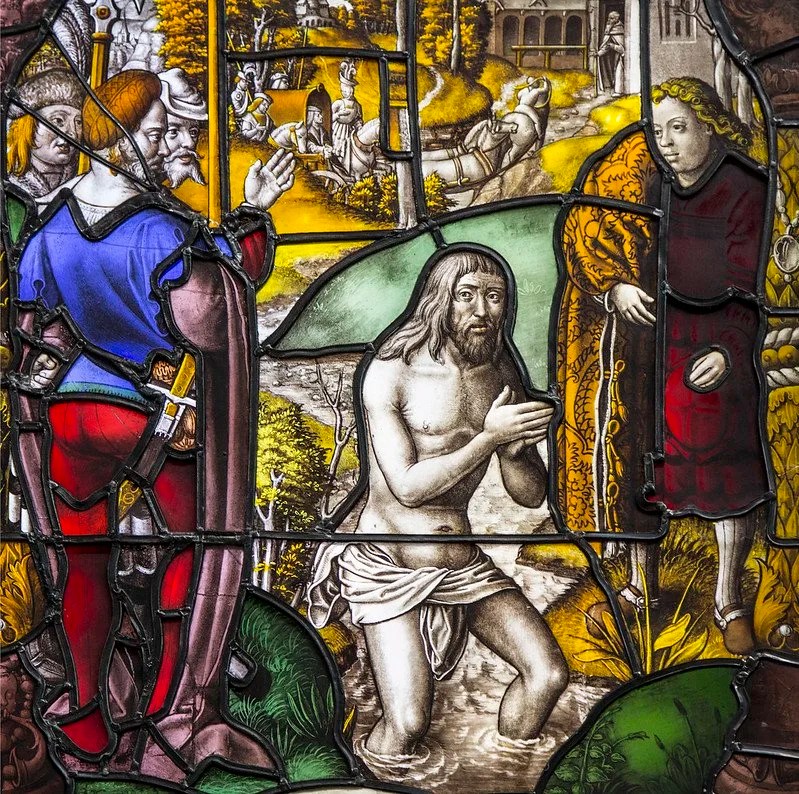
Divine Truth Number Three: problems force us to submit to God. The greatest barrier to Naaman’s healing was his own pride. Several things happen to break his pride. First, Naaman learned the King of Israel was powerless against the disease; Naaman’s political connections could not help him. Second, Naaman was instructed to go to Elisha’s house and was greeted by a messenger. Verse eleven tells us Naaman felt disrespected and was angry. Third, Naaman was instructed to dunk himself seven times in the muddy Jordan River. The number seven in the Bible stands for completeness. In other words, Naaman had to completely submit to God. That would require Naaman to humble himself. That was difficult for him. Without the encouraging words of his servants, Naaman would have returned home with leprosy. In the end, Naaman swallowed his pride and submitted. As promised, he was healed after dunking himself seven times in the Jordan. New Zealand explorer Edmund Hillary (1919-2008) once said, “It is not the mountain we conquer, but ourselves.”

Submitting to God’s will is one of the most challenging things you will ever do in your life as a disciple. We are more comfortable with Jesus being our Saviour, than we are Jesus being our Lord. The reason is, God does not always address a problem in the way that we expect. Naaman took his great wealth to Israel expecting to buy a miracle. He never dreamed he would be dunking himself in the Jordan River. How many times has God responded to your problems in a surprising way? Problems force us to submit to God.

Let me end where I began. In 1886, Dwight L. Moody held a revival in Blockton, Massachusetts. One of the attendees was a young man who attended a testimony meeting. He stood up and said that he would trust and obey God for the rest of his life. That is easy to say when life is good. It is not so easy to say when problems invade your life. Problems are a part of life. The greater the problem the more trust and obedience is required. If you do not believe me, ask Naaman.
Our Great God

In 1715, King Louis XIV (1638-1715) of France died. He reigned for 72 years. He called himself “the Great.” His court was the most magnificent in Europe, and his funeral was equally spectacular. As his body lay in state in a golden coffin, orders were given that the cathedral should be very dimly lit with only a special candle set above his coffin to dramatize his greatness. At the memorial, thousands waited in hushed silence. Then Bishop Jean Baptiste Massillon (1663-1742) began to speak. He slowly reached down, snuffed out the candle and said, “Only God is great!” Some things don’t change. God is still great! That takes us to the Old Testament.

Our reading is 2 Kings 5:1-14. The main character in the story is Naaman. He was respected by all because he was the Commander of the Syrian army. His future seemed bright, until he contracted leprosy. In our time, leprosy is treatable, but not in Naaman’s time. He had a big problem and there was no earthly help. His association with the king could not help him. His professional success could not help him. His fame could not help him. His personal wealth could not help him. His bright future suddenly turned dark. His future was filled with isolation and death. With no other option, he turned to God, the great one.

This blog is written for anyone who has ever had a big problem. That means this blog is written for everyone because life is not easy. Life is hard and is filled with many big problems. Those are times we need God because our resources are not big enough. What is the greatest problem in your life? Be thankful that we believe in a great God. If God could raise Jesus from the dead, then God can handle any problem that you have in your life. Naaman models for us what we must do the next time we are facing a big problem. Consider these three things with me.

First, when you are facing a big problem seek God. Naaman had everything in life. Verse one says, “Now Naaman was commander of the army of the king of Aram. (Aram was the King of Syria.) He was a great man in the sight of his master and highly regarded, because through him the Lord had given victory to Aram. He was a valiant soldier, but he had leprosy.”  In other words, he had it all. Naaman had no need for God until he contracted leprosy. How many people do you know have no need for God until a big problem invades their lives? I have witnessed this many times. When life is good, we have no time for God. When life is hard, we turn to God. God uses crises in our lives to get our attention and show us what is important.

Studies tell us people start coming to church because of a change or a pain in their lives. They move to a new area and need new friends. Their children are just starting college, and they are home alone. Their marriage is going through some hard times. The diagnosis wasn’t good. A mother or a father has just died. They come to church for the first time in a long time because they are seeking God! Naaman was seeking God because his life was about to change. When facing a big problem, seek God.

Second, when you have a big problem submit to God. He received permission from his king to travel to Israel. Verse five says he took a large sum of money with him expecting to pay a king’s ransom for the healing. Upon his arrival he discovers two things. First, the prophet he seeks is not in the court of the King of Israel. Second, his money is worthless. His healing cannot be bought. His healing must be earned through submission. He must go dunk himself in the Jordan River seven times. It would have been easier to pay the money because the Jordan River was muddy. Naaman would have to humble himself. To make things worse, he would have to dunk himself seven times in the Jordan River to be healed.

Australian explorer Edmund Hillary (1919-2008) once said, “It is not the mountain we conquer, but ourselves.”  Submitting to the will of God is one of the most challenging things you will ever do in your life as a disciple. The reason is, God does not always address a problem in the way you expect. Naaman took his checkbook to Israel expecting to buy a miracle. How many times has God responded to your big problem in a surprising way? It is not the mountain we conquer but ourselves. When you have a big problem, submit to God.

Third, when you have a big problem in your life, trust God. God can be seen in this story from beginning to end. God used many people in this single healing. There were the words of the servant girl, the King of Syria, the King of Israel, the prophet Elijah and, and finally, Naaman’s own servants. He would have traveled back to Syria without a healing without them. He didn’t really want to submit himself to God, but he did in the end because of the encouraging words of his servants. He dunked himself seven times in the Jordan and he was healed. Have you ever wondered how Naaman felt after the six dunks without a healing? Do you think he still trusted God? How far do you trust God?

History tells us the Russian cosmonaut Yuri Gagarin (1934-1968) was the first man to fly in space. After the end of the Cold War some of Russia’s cosmonauts revealed the pressures under which he operated. For example, Gagarin’s spacecraft was armed with an explosive charge which could be detonated by a radio signal. The Russians wanted to ensure Gagarin wouldn’t defect by re-entering earth’s atmosphere anywhere but over Soviet territory. So the explosives were rigged. British film producer Jerome Blattner (1909-2002) once said, A person who trusts no one can’t be trusted.The next time you have a big problem seek God, submit to God, and trust God.

Only a few humans have been fortunate enough to journey into space, and it seems that the experience can be life changing. James Irwin (1931-1991) was an astronaut on the Apollo 15 mission. He got to see the earth while standing on the moon and it reshaped his view of the world forever. Here’s how earth appeared to Irwin from space: “That beautiful, warm, living object looked so fragile, so delicate, that if you touched it with a finger, it would crumble and fall apart.” He saw our world from God’s perspective. Consider this – the same God that holds our world in one hand is the same God that wants a personal relationship with you. Seek God, submit to God, trust God. After all, God is Great!