Exploring Compassion

Our reading is Luke 10:25-37. Jesus is in Judea and has just sent out the seventy-two followers. The Good News is being spread and lives are being transformed. Jesus understands it clearly. It is not enough just to believe. Those beliefs must change one’s behavior, values and opinions. That is what Jesus is saying at the beginning of our Gospel reading. When questioned about salvation, Jesus asked them to quote the greatest law. That was a softball question. Everyone in Jesus’s world knew the answer. They quoted it daily. It is called the Shema: Love the Lord your God with all your heart, mind and soul. Then, Jesus asks them about the second greatest law. They are to love their neighbor as themselves. Do you see what Jesus did? He connected the love of God with the love of neighbors. It is not enough to just love God. It is not enough to just love your neighbor. Jesus expects us to love both God and our neighbors. To underscore that point, he tells this parable:

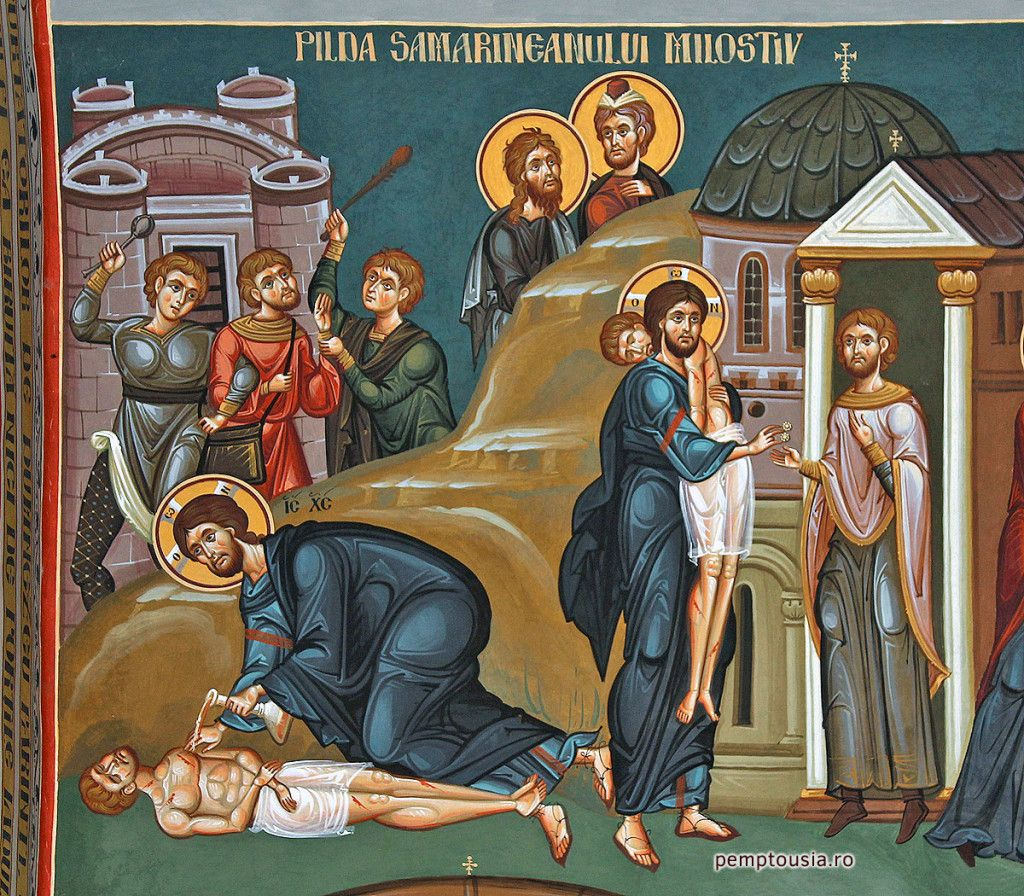
A man was traveling the road between Jericho and Jerusalem. It is a road that covers about seventeen miles. The direction you were traveling mattered because the road was steep. Jerusalem is 2,500 feet above sea level; Jericho is 800 feet below sea level. To make matters worse, it ran through rocky, desert country, which was perfect for robbers. Only a fool would travel this road alone, so we can say this man was a fool. As expected, he is attacked by robbers. The picture is not pretty. They stripped him of his clothes, beat him and left him for dead. Laying there in his half-dead state, various people walked by him. The first was a priest. A priest was from the line of Aaron and assisted in worship. The religious man should have known better, but he crosses to the other side of the road, ignoring the victim. The second was a Levite. He was a descendant of Levi, one of the brothers of Joseph. In addition to his religious duties, he had political and educational duties. He should have known better, but he crossed to the other side of the road, ignoring the victim. The third person is our unlikely hero, the Samaritan. You know the Samaritans. They were considered half breeds, half Jewish and half Gentile. The Jews believed they had compromised the faith. The Jews hated them, but the Samaritan was the one who had compassion on the victim in Jesus’s story. He treated the man’s wounds, and he put the man on his own donkey. Together, they traveled to an inn, where our victim heals. The Samaritan shows his true compassion. He takes out his money and gives it to the innkeeper. It equaled two days’ worth of wages. He instructs the innkeeper to care for him in his absence and tells him he will be compensated when he returns. Like all parables, Jesus’s simple parable of the good Samaritan is easy to imagine, yet it contains a profound message. It is easy to understand, yet it is hard to apply. It is not enough to say you love God; you must love others too. That is why compassion within the Christian faith is so important. It is one of the qualities you must nurture within yourself to experience the abundant life in Jesus Christ.

Webster defines compassion as sympathetic pity and concern for the suffering or the misfortunes of others. To me, that definition seems too shallow. True compassion is far more complex.

The great German Roman Catholic theologian, Henri Nouwen (1932-1996), seemed to understand the complexity of compassion. He once explained compassion this way:

Compassion is not pity. Pity lets us stay at a distance.

Compassion is not sympathy. Sympathy is for superiors over inferiors. Compassion is not charity. Charity is for the rich to continue in their status over the poor.

Compassion is born of God. It means entering the other person’s problems. It means taking on the burdens of the other. It means standing in the other person’s shoes. It is the opposite of professionalism. It is the humanizing way to deal with people.

The Good Samaritan illustrates true compassion. True compassion is based on need, not worth. True compassion is based on feelings, not fact. True compassion is based on doing, not understanding. Do the people in your life consider you compassionate? I hope so, because compassion is one of the great qualities of the Christian faith. I am not sure it is possible to be a true Christian without being truly compassionate. Compassion is a big deal, because our world is filled with so many problems.Did you know, according to UNICEF, 80% of our world’s population lives on ten dollars a day or less? How would your life change if you were forced to live on ten dollars a day? How much money do you live on in a single day?

When I think of compassion, Mother Teresa (1910-1997) pops into my mind. Born in Albania and raised in a devout Catholic family, she moved to Ireland at the age of eighteen to join the Sisters of Loreto. Later she moved to Calcutta, India and founded the Missionaries of Charity. They worked with the “poorest of the poor.” Over the decades that group grew to serve in 133 countries ministering to those dying of HIV/AIDS, leprosy, and tuberculosis, as well as running soup kitchens, dispensaries, mobile clinics, orphanages and schools. In 2016, she was canonized by the Catholic Church, because she refused to cross to the other side of the road. Mother Teresa was truly a woman of compassion.

When I research compassion, I find people like Pam Kidd. She writes devotions for Guideposts. One day she received a letter postmarked Harare, Zimbabwe. The letter read:

Dear Ms. Kidd, I have been reading your Daily Devotions for years. Recently, God spoke to me and asked me to tell you that you need to come to Zimbabwe to write about the orphans and the street children of Harare. Please contact me as soon as possible. Thank you.

It was signed by a woman working as a Presbyterian missionary in Harare.

That letter changed everything. A few weeks later, Pam and her husband were flying to Harare. When they arrived in Zimbabwe, they were shocked at what they saw. It was worse than they had imagined. Children living in mud huts, children jumping over sewage in gutters. She could not escape the smell of poverty. Children followed her everywhere. Pam decided to write a story about a woman who fed tea and bread to the orphans daily. They called her “Tea Lady.” As she researched this woman, Pam discovered this saintly woman had no help. She received no funding and needed help. Then, she had a revelation. God had brought her to Harare to help this woman. Over the next ten years, Pam Kidd returned to Africa ten times to help this woman help those orphans. Pam Kidd refused to walk to the other side of the road, because she was a woman of compassion. I hope I am a person of compassion. Are you a person of compassion? I hope so, because our world is crying out for help.

In 1964, Kitty Genovese (1965-1934) lived in Kew Gardens, in Queens, New York City. On March 13 of that year, Winston Moseley (1935-2016) raped and stabbed her to death. As shocking as that crime was the reaction of her neighbors was even worse. Many heard her cry out for help, but no one responded. Her neighbors were guilty of a sin of omission. They knew there was a problem, but they did nothing. In other words, they walked to the other side of the road. In the science of sociology, it has been called the “bystanders’ effect”, or diffusion of responsibility.

As Americans, we have been blessed in many ways. That is why so many long to live here. But, with those blessings comes great responsibility. To whom much is given, much is expected. Our world is calling out for help. What are you going to do? Are you going to walk to the other side of the road and ignore them, or are you going to be like the Good Samaritan, who responded to human need? It all distills down to a simple choice. Albert Schweitzer (1875-1965) once said, “The purpose of human life is to serve and to show compassion and the will to serve others.”
Rollen Stewart’s Sign

His name is Rollen Stewart (born 1944). Some called him “Rock’n Rollen.” Others have called him the “The Rainbow Man.” If you are my age or older, then you may remember him. He was a born-again Christian, who during the 1970s and 1980s, was a fixture at American sporting events wearing his rainbow-colored afro-style wig. In his hands he held a sign that read: John 3:16. He seemed to be everywhere. He was at the 1977 NBA Finals. He was at the 1979 MLB All-Star Game. He was at the 1980 Moscow Olympics Games, where he was arrested for a short time. In 1981, he was at the Masters in Augusta, Georgia, and in 1982, and he was at the Indianapolis 500. At the height of his popularity, he was featured in a Budweiser Beer commercial and was portrayed by Christopher Walken (born 1943) on Saturday Night Live.

Where is Rollen Stewart today? He has made a few mistakes. Sadly, he is an inmate at the Mule Creek State Prison in Lone, California, where he is serving three life sentences for kidnapping. If you would like to learn more about Rollen Stewart, then read the article, The Rainbow Man: Lessons on How Not to Evangelize. Today, I do not want to talk about Rollen Stewart. I want to talk about Rollen Stewart’s sign. That leads us to our Gospel reading.

We are in the third chapter of John. Our reading is only part of a longer discussion between two men, Jesus, and Nicodemus. You know about Jesus. Everyone knows about Jesus. He is the Son of God, the very incarnation of God, and our only hope of salvation. Nicodemus is not as famous, but he is still noteworthy. He was a respected member of his community. He was not just a Pharisee, an expert on the law, he was a member of the Sanhedrin, the Jewish Ruling Counsil. That body was established to judge in the details of the law.

Prior to our reading, we are told Nicodemus sought out Jesus at night. Much has been made about that fact. Some believe, he went to Jesus at night to protect his identity. After all, how would it look for a respected Pharisee, a member of the Jewish Ruling Council, to be looking for help from a lowly itinerant rabbi? I believe, Nicodemus came to Jesus at night, because the work of the day was over and the two would have time to talk without interruption. The discussion begins with some flattering words. Nicodemus was impressed by Jesus’s miracles. However, Jesus is not interested in being complimented. Jesus is more interested in salvation.

The Master says it clearly, “Very truly I tell you, no one can see the kingdom of God unless they are born again.” Nicodemus hears the words but fails to understand them. Jesus is baffled by his spiritual ignorance. Jesus explains to Nicodemus his part in God’s plan of salvation for the world. This is where John 3:16 comes into play. They are not Jesus’s words, they are the words of the editor. The verse summarizes what is happening. “For God so loved the world he gave his one and only Son, that whoever believes in him will not perish but have eternal life.” The whole verse pivots on that little complex word, love!

In 1960, C.S. Lewis (1898-1963) wrote a book called The Four Loves. He explored the four kinds of loves found in the Christian faith. Each one is found in the Bible. The first word for love in the Bible is the Greek word EROS, which gives us the word erotic. It is sensual or passionate love. It is the kind of love that involves a box of candy, a fist full of flowers and boxer shorts with hearts. The second word for love in the Bible is the Greek word PHILA, which gives us the word philanthropist. It is a social love. For example, Andrew Carnegie (1835-1919) was a philanthropist. He wanted to improve communities, so he gave a fortune to establish libraries in both the United States and Canada. The third word for love in the Bible is the Greek word STORGE. It is an empathic love. It is the kind of love you feel for family members. It is the kind of love you feel for your parents, siblings, children, and grandchildren. The fourth word for love in the Bible is the Greek word AGAPE. That is the word that is used in the New Testament for God’s sacrificial love, which we see in Jesus. It is that Greek word for love that John uses in the Gospel lesson for today, John 3:14-21, for God so loved the world. There is nothing simple about that word. Consider these three things with me.

These thoughts are not original. They came from United Methodist preacher James W. Moore (1938-2019).

In 2014, my wife Kathryn and I went to Germany on a Luther Reformation Tour. It was a great experience. Obviously, Martin Luther (1483-1546) was one of the greatest personalities in church history. Luther will always be remembered as a man of God. However, never forget, he was a man. He had human limitations.  He was not a man of great patience. He would often grow frustrated with the people around him. He once grew so frustrated that he said, “If I were God and these vile people were as disobedient as they are now, I would knock the world into pieces!” (That is harsh language for the 1500s.) The good news for his generation was Martin Luther was not God! Martin Luther was a human being, like you and me. He had limitations. God is different, God has no limitations; God’s love has no limitations. God’s love is wide! God cannot stop loving you because God cannot stop loving everyone!

John 3:16 begins: For God so loved the world. In other words, it talks about the width of God’s love. Just think about that phrase for a moment. God loves the world, and the world is very diverse! God’s love is not selective. God loves everyone. He loves all nations. He loves people regardless of their language. He loves all denominations. God loves the liberal and the conservative. He loves people, regardless of their salvation systems. He loves all people, regardless of their sexuality. He loves the attractive and the not so attractive. He loves the rich and poor. God loves the educated and the uneducated. God loves the group you cannot tolerate, and God loves the individual you hate. Consider this with me. The church is not called to judge the world. The church is called to love the world, because God’s love is wide, “For God so loved the world. “That means God loves the strangest creature of all, you! Never question the width of God’s love. However, God’s love is also deep!

In July of 2019, Johnny and Dawn Vann were busy raising their seven children. One afternoon on a North Carolina Beach, the unthinkable happened. A massive high tide wave hit the beach and four of the Vann’s children were swept into the ocean. Without thinking about his own safety, Johnny jumped into the water and saved his children, one by one. The problem is he could not save himself. Rescue crews tried to save him. Despite 45 minutes of CPR, Johnny died. Dawn said her husband will always be remembered as a good person. I think she is wrong. I think John Vann will be remembered as a great person and father, because his love for his children was deep. He died so his children could live. How can you question his love? It is not just the story of a father and his children. It is the story of God and mankind.

Second, God’s love is deep! John 3:16 continues, he gave his one and only son. In other words, it talks about the depth of God’s love. God loves us, but he didn’t just tell us. God demonstrated his love for us by entering this world to be the perfect sacrifice for our sins. That is what makes Good Friday so bad. Jesus, the incarnation of God, died on the cross to atone for your sins. Jesus’ death made eternal life possible for you and me! Do you remember the words of Isaiah 53:5? It says, “By his wounds we were healed.” God love is wide! God’s love is deep. However, God’s love is also powerful! Never question the depth of God’s love.

Do you remember the story of Clara Barton (1821-1912)? During the Spanish-American War, she was overseeing the work of the Red Cross in Cuba. One day Colonel Theodore Roosevelt (1858-1919) came to her, wanted to buy food for his sick and wounded Rough Riders. But she refused to sell him any. Roosevelt was perplexed. His men needed the help, and he was prepared to pay out of his own funds. When he asked someone why he could not buy the supplies, he was told, “Colonel, just ask for it!” A smile broke over Roosevelt’s face. Now he understood – the provisions were not for sale – all he had to do was simply ask, and they would be given freely. It is not just true of food in the Spanish-American War. It is also true of heaven!

Third, and finally, God’s love is powerful! John 3:16 ends: that whoever believes in him will not perish but have eternal life. Do you know of anyone who doesn’t want to go to heaven? If you do, then there is only one option. It is not by living a good life or doing good deeds. The only way to go to heaven is to know Jesus as your Lord and Savior. It is the greatest gift you will ever receive. It is too good to be true, but it is true. You can live the rest of your life not worrying about death. It is so liberating! However, it will change you. You will spend the rest of your life trying to find a way to thank God for saving your sin sick soul. The love of God is wide! God’s love is deep! God’s love is powerful!

The major theme of Christianity summarized is in one verse: For God so loved the world that he gave his one and only Son, that whoever believes in him shall not perish but have eternal life. It has been called the Gospel in a nutshell. This is the Good News for today. You are loved! You have always been loved. You will always be loved. God just cannot stop loving you. C.S. Lewis once said, “Though our feelings come and go, God’s love for us does not.”

Love is a Verb

We find ourselves in the second chapter of Luke. The story is familiar. The law required every man to return to his hometown to be counted in the national census. That was done for both military and taxation purposes. However, the Jews were excluded from military service. That is why Joseph took Mary, who was with a child, to Bethlehem. When they arrived, the town was crowded. The only place they found to rest was in a barn or cave. Timing is everything. The child came and Mary placed her newborn in a feeding trough, surrounded by animals. They named the little one Jesus, which means “God saves.” The world thought Joseph was Jesus’s biological father, but they were wrong. Jesus’s biological father was God, which made Jesus the son of God. The world would never be the same again. The word of his birth did not grab the headlines. Instead, the news was spread by word of mouth. That takes us to our scripture reading.

According to our text, verses eight through twenty-one, there were shepherds in nearby fields watching the sheep. They were not just working an eight-hour shift. The text says that they were living with the animals. The sheep are a big part of the story. There are two things you need to know about them. First, the sheep were valuable. They were reserved for temple sacrifice, so they had to be flawless. Second, the shepherds did not own the sheep; they were hired to protect the sheep against thieves and predatory animals. This is the only thing you need to know about the shepherds: They were second-class citizens. In their society, they were low on the social ladder. Through the eyes of the religious purists, the shepherds were despised, because they couldn’t follow the letter of the law, so they were dispensable. The sheep, on the other hand, were revered and indispensable. Yet, they were the first to hear about the birth of Jesus.

An angel suddenly appeared. Remember, in the Bible, angels are not protectors, they are messengers. The unnamed angelic messenger encourages them to fight back against their natural response of fear. This is going to be a red-letter day in their lives. The announcement they are about to hear will not just be remembered by them and their generation – the announcement will be remembered by the generations to come. You know the announcement: In the town of David, Bethlehem, the long-awaited Messiah has been born. He didn’t enter this world surrounded by the aristocrats of society. He entered this world surrounded by people like us, commoners. The fact that the shepherds received such an announcement was incredible, but what is truly miraculous is what happens next – they were invited to go and see the newborn with their own eyes. You will find a baby wrapped in cloths and lying in a manger. Leaving the valuable sheep unprotected or under-protected, they go to visit the baby. It was really quite a moment, they risked their very lives to see the newborn. No one could question their devotion or love. The shepherds illustrate for us that love is a verb. If you want to discover the person who loves you the most in this world, then find the person who has sacrificed the most for you.

In 2011, Kim Kardashian (born 1980) and Kris Humphries (born 1985) proclaimed their love. Kris was an NBA player. Kim is a reality star, who does things to stay in the headlines. They did not have a simple private ceremony. They proclaimed their love for all the world to see. It was a two-day E-Special called “Kim’s Fairytale Wedding”. Their wedding cost $10 million. Do you remember how long Kim Kardashian and Kris Humphries’ marriage lasted? It lasted 72 days. Many say they used the sacred institution of marriage as a massive publicity stunt. They may be right. Today, Kris Humphries has disappeared. Kim Kardashian married again three years later, but it ended in divorce too. She has had three marriages, each one ending in divorce. She is a young, beautiful, wealthy woman. I am sure she will marry again. I am confident the fourth time is the charm. Can I ask you a question? Do you consider Kim Kardashian a love expert? Or do you consider my friend John a love expert? This is his story:

John and his wife, Mary, have been married for over sixty years. There is nothing flashy about them. They are just good people who have worked hard. Together, they raised a family and dreamed of a carefree retirement. One day John noticed Mary was starting to forget things. At first, it was little things, like the car keys and where she parked at the grocery store. Then, she began to forget bigger things, like where she lives and her grandchildren’s names. One day, she didn’t recognize John. On a very sad day, the family moved her out of the long-time family home to a Memory Care Unit in a local facility. John visits Mary every day, but she doesn’t know him. Did you hear what I said? John visits a woman every day who doesn’t know who he is. Some have asked, why do you visit her daily? I know why. He visits her daily for one reason: John loves Mary. She is the love of his life. Let me ask you the question again. Do you consider Kim Kardashian a love Or do you consider my friend John a love expert? Remember, if you want to discover the person who loves you the most in this world, then find the person who has sacrificed the most for you. The Christian faith is built on this simple concept.

In my last church, there was a teenager by the name of Ricky. He was extremely bright, and he was not afraid to talk. He was not afraid to ask questions. He asked me many questions. Most of his questions were excellent. I did my best to answer them. One day Ricky asked me this question: what is more important, Christmas or Easter? I thought long and hard about that one. In many ways, Christmas and Easter stand side by side. You can’t celebrate one without the other.

Christmas is when we celebrate the incarnation of God. In other words, we are awed by the fact God became one of us. It has been said, it is beyond all human understanding. Everyone knows the scene, and what is more important, everyone loves the scene. For this reason, everyone has a nativity set in their home. There is the baby Jesus surrounded by his parents, Joseph and Mary, the shepherds, and the animals. Everyone loves Christmas because everyone loves the baby Jesus. Believers love Christmas because we understand the true meaning of the holiday. No one can tell me Christmas isn’t important! Yet, no one can tell me Easter isn’t important too.

Easter is equally important. You know the story. The baby Jesus did what all babies do. He grew up, but unlike us, he never committed a single sin. That made him the perfect sacrifice for the sins of the world. The drama played out during Passover. Jesus rode into Jerusalem on a Sunday in front of a big crowd. As the week went on, the crowd got smaller. By Friday, the crowd was gone; there was just a handful of people left. They witnessed a painful scene. With a sinner on his right and a sinner on his left, Jesus was crucified. It was a Roman form of torture and death. They say that Jesus drowned in his own body fluids. It was an ugly death. Yet, on that Sunday morning, the great discovery was made. Miraculously, Jesus came back to life. I have never been able to explain the resurrection because I can’t explain a miracle. Yet, that miracle is the foundation of our faith. Without the resurrection of Jesus there is no hope of eternal life. No one can tell me Easter isn’t important!

It has been several years since Ricky asked me that excellent question, which is more important, Christmas or Easter? They are separate events. Both are important and both are major events in God’s plan of salvation for the world. I still don’t know how to answer that question. However, I do know this: If you want to discover the person who loves you the most in this world, then look for the person who has sacrificed the most for you. The shepherds were willing to sacrifice it all just to see the newborn Jesus. How can you question their love? If you want to discover the depth of God’s love, go to the cross. It is not pretty, but it is revealing. American evangelist David Wilkerson (1931-2011) once said, “Love is not only something you feel, it is something you do.”

Following Jesus

We find ourselves in the first chapter of the Gospel of John, verses thirty-five through forty-two. It is obviously early in Jesus’s ministry. It is so early in Jesus’s ministry that Jesus doesn’t have a single disciple. That is about to change. According to the text, John the Baptist was with his disciples, when Jesus passes by. John the Baptist, who always was pointing toward Jesus and away from his own earthly success, identified Jesus as the Lamb of God. With his endorsement, two of John’s disciples leave him and follow Jesus. The Bible identifies one of the disciples as Andrew, tradition identifies the other disciple as John, the author of this Gospel. Seconds later, Jesus notices that they are following him and asked them, “Why?” It is an excellent question because no one likes being stocked. They answer Jesus’s question with another question, “Where are you staying?” Jesus answers that question with an invitation, “Come and you will see.” They accepted the invitation and stayed with him. They must have been impressed. They stayed with Jesus until about 4:00 in the afternoon. At that time, the two temporary leave Jesus and told others about him. Andrew told his brother Peter, who decided to follow Jesus too. In this story, three people decided to follow Jesus in a single day. In each case their lives wouldn’t be the same again.

In the scripture lesson for today, following Jesus looks simple. Andrew and John are with John the Baptist. John identifies Jesus as the long-awaited Messiah, so they began to follow Jesus. Hours later, Andrew tells his brother, Peter, and he begins to follow Jesus. Their decision to follow Jesus seems easy. I can’t speak for them, and I can’t speak for you. I can only speak for myself. In my opinion, the decision to follow Jesus isn’t easy. It is very complex. Your decision to follow Jesus will affect the rest of your life. I am not wrong. Following Jesus is very complex. That is what I have written about in this blog. I have grouped my thoughts around three questions. This is the first question.

Do you follow Jesus exclusively? On September 11, 2001, our world changed forever. It was a Tuesday and I had taken the day off. My daughters were in school. I was getting ready to stain our deck. My wife Kathryn stuck her head out of the side door of our home and said, “You need to watch this.” I came in and sat down. I saw our world change in front of my eyes. America was attached by terrorists in three places, western Pennsylvania, New York City and Washington DC. Our national innocence was gone, and we entered a new sinister world. The painful truth became common knowledge. America was under attack by extreme members of the Islamic faith. On September 11, those terrorists wanted the world to know that the Muslim faith was the only way. They frustrate us for many reasons. One of the reasons is their narrowness. If you are going to follow Jesus, then you must be narrow too. Are you willing to follow Jesus exclusively because you understand Jesus to be our hope of salvation. Be prepared, some may call us narrow. Look at the story with me.

In the story, Andrew and John begin as disciples of John the Baptist. Don’t forget, John the Baptist was their rabbi or teacher, Andrew and John were his disciples or students. In other words, he gave them spiritual insight and direction. When John the Baptist identifies Jesus as the long-awaited Messiah, they listen to him because they trusted him. This story is incredible because Andrew and John turned their backs on John the Baptist to follow Jesus. They were going to follow Jesus exclusively. Are you following Jesus exclusively? Are you willing to tell the other world religions they are wrong? This is the second question.

Do you follow Jesus unconditionally? One of the great stories in the Bible can be found in the Book of Job. Everyone knows the story because everyone has played the part of Job. In the beginning he has everything, wealth, health, and relationships. Satan believes, Job’s loves for God is conditional, so he begins to take things away the good things in Job’s life. His wealth is taken away. His health is taken away. His loved ones are taken away. Job is left with nothing. His friends witness his ordeal and encourage him to curse God and die. Job refuses. He loves God unconditionally.

How many people do you know follow Jesus unconditionally? In my time in the ministry, I witnessed it many times. It is easy to follow Jesus when life is good. It is easy to follow Jesus when you have an enjoyable well-paying job. It is easy to follow Jesus when your health is good and your loved one’s health is good. It is easy to follow Jesus when all your relationships are sound. It is not so easy to follow Jesus when you are unemployed, sick, and alone. It is not easy to follow Jesus when you are overwhelmed with worry. It is not so easy to follow Jesus when your friends tell you to stop following Jesus. After all, we believe in an all-powerful God who resurrected Jesus from the dead. Have you ever wondered why our all-powerful God doesn’t help you? Do you follow Jesus conditionally? Do you follow Jesus unconditionally? This is question number three.

Do you follow Jesus passionately? In the scripture lesson for today, three people decided to follow Jesus. There was Andrew, John, and Peter. They followed Jesus because they wanted to change their lives. You can’t blame them because their lives were hard. Any change seemed to be better. However, they didn’t have a clue how much their lives were going to change. They followed Jesus until the very end of their lives. Only John died of old age. Yet, he experienced the isolation of Patmos because he refused to stop following Jesus. It is there that he had a series of visions. Those visions became the Book of Revelation. Peter followed Jesus to Roman, according to tradition, and was crucified upside down because he wasn’t worthy to die like Jesus. Andrew, according to tradition, was crucified on an x-shaped cross. Each one wanted changed and they got it. No one came question their passion.

How passionate are you about Jesus?  I hope you are open to change. The reason is simple. Once you begin to follow Jesus your agenda your life doesn’t really matter. The only thing that really matters is Jesus’s agenda. In other words, are you willing to let Jesus change you? The faith is not meant to be a Sunday morning experience, the faith is meant to be a life-altering experience. It sounds so easy. Andrew, John, and Peter followed Jesus. The truth is following Jesus is quite complex. Following Jesus will change everything about you. How passionate are you about Jesus?

It is impossible not to know the name C. S. Lewis (1898-1963). As a novelist, poet, lecturer, and Christian apologist, he held academic posts at both Oxford and Cambridge for decades. Yet, he was a blessing to the nonacademic worlds too. His Christian faith can be seen in all his classic literary works. Perhaps, you have read or heard of one of these: The Screwtape Letters, The Chronical of Narnia, The Space Trilogy, Mere Christianity, Miracles, and The Problem with Pain. It is interesting to note that there was a long period in his life when Lewis believed in nothing at all. In his memoir, Surprised by Joy, Lewis told how he was baptized into the Church of Ireland, but the sacrament had no influence on him. He walked away from the faith and didn’t return until he was 32 years old. He thanked his friends, including J. R. Tolkien (1892-1973), for his spiritual wakening. Who do you credit for your spiritual awakening? In other words, who do you credit for saving your soul? Perhaps, this is a more profound question.

When did you first decide to follow Jesus? No two stories are the same. No one’s story is better, or worse, than another story. Your story is just that, your story. Your story may include loving parents who sacrificed for you. They took you to church every week so you could know Jesus as your own. For this reason, Sunday school was not an option, it was a requirement. When your heart was just right, God spoke to you in just the right way. You decided to follow Jesus. The people in your life never saw a great change in your life. For this reason, your story is not exciting. I like those unexciting stories because they sound so much like mine. Or maybe, your story is exciting.

There was a surplus sex, drugs, and rock-n-roll. Maybe your story included long periods away from loved ones. To the outside world you were living the dream. However, you knew the truth. You were miserable and your heart was restless. You were afraid to dye, and you didn’t like the person you had become. When you hit the lowest, God spoke to you. It was an incredible experience. You were born again! That was a good thing because you wanted to start your life over again. The people in your life couldn’t believe the change. They had grown tired of the old you, and they wanted to get to know the new you. Can I tell you the truth? It doesn’t really matter how you came to follow Jesus. The only thing that matters is that you decided to follow Jesus. You are not much different than the Bible characters, Andrew, James, and Peter. You know now what they discovered later. Following Jesus will change everything about you.  American Protestant author, teacher, and preacher Francis Chan (born 1967) once said, “You find that the things you let go of while following Jesus were the things that were going to destroy you in the end.”

Surrounded By Our Enemies!

We find ourselves in the sixth chapter of Luke, verses twenty-seven through thirty-one. Our reading comes from the Sermon on the Mount. Jesus is in Galilee, which means his popularity is high. The Master ascends to a high piece of land, not to escape the crowd, but to be heard by the crowd. From that lofty position, the Master teaches them about the Kingdom of God. He sets the bar high by giving them the Beatitudes. The word beatitude means “supreme blessedness. You remember them. Blessed are the poor. Blessed are the hungry. Blessed are those who weep, and the rest. To the secular world those seem ridiculous. To the believer those words are a great challenge. The standards are high in the Kingdom of God.

I find verse twenty-seven to be extremely challenging. Jesus says, “Love your enemies, do good to those who hate you.”  There is nothing difficult about these words. They are straightforward. You do not need an advanced degree to unlock some hidden meaning. They are as clear as clear can be. Jesus expects us to love our enemies. However, those words run contrary to our society. Many find it much easier to hate. We would like to dismiss these words, but we can’t do it. Why? Because they are Jesus’s words, and we are disciples of Jesus Christ. Our goal is to be like Jesus. If Jesus said, love your enemies, we must love our enemies. We have no excuse for not trying, because Jesus loved his enemies. Let me ask you this uncomfortable question: How many enemies do you have in your world?

Who are our political enemies?  It is a good question. It is the same question the people at Statista asked Americans. Their results were released in March of 2021. America has a complex relationship with many countries around the world, but here are our top five enemies:

          China

          Russia

          North Korea

          Iran

          Iraq

Do you agree those five countries are our enemies? Is there another country you would like to add to the list? I would like to add any country that promotes terrorist activities. Those countries are easy to hate, but this is the problem: You are a disciple of Jesus Christ and Jesus told us to love our enemies. Few Americans are praying for Vladimir Putin (born 1952) these days. Are you willing to love those countries, or do you as a disciple of Jesus Christ have some work to do? Our country has political enemies. Our community also has enemies.

Who are your community’s enemies? It is a good question. In 2017, Kristen O’Conner (born 1990) and June Schweinhart (born 1989) were friends. The two young women did not meet in school. They met in drug rehab. It may have been they had a common interest. It may have been that they were both pregnant. When rehab ended, they stayed in touch. At some point the two women got together with their newborns. Things did not go well. Before the day was done, the two were overdosing on heroine in the front seat of a car as the newborns sat in their car seats in the back. It is safe to say that rehab did not work for the women. Drugs have become such a big part of our society. Everyone seems to know someone on drugs. Everyone seems to know someone who died prematurely because of drugs. Many people believe the dark organizations who are providing the drugs are our community’s enemy. They may be right. It is easy to hate those organizations and those local drug dealers, but this is the problem: You are a disciple of Jesus Christ and Jesus told us to love our enemies. Are you willing to love those drug dealers, or do you have some work to do? Our country has political enemies. Our community has enemies. Be honest with yourself. You have personal enemies. The Bible is filled with personal enemies. Let me give you just two.

Do you remember the story of Cain and Abel? They were the sons of Adam and Eve. The boys could have had a great life, but their parents ate from the fruit of the tree. For this sin they were expelled from the Garden of Eden. Forced to work for a living, Abel became a shepherd and Cain a farmer. In time, the boys brought their offerings to the Lord. Cain, the farmer, brought some fruit. Abel, the shepherd, brought fresh meat. The Lord looked at both the fruit and meat and favored the meat. (So would I.) Cain grew jealous of his brother and killed him. It is not surprising that the first murder in the history of the world occurred within a family unit. We are expected to love our family members, but it doesn’t always happen. Do you have a family member who you hate? Do you have a family member who hates you?

Do you remember the story of Joseph, the well-built handsome young man? He knew what it was like to have enemies within his own family. He was one of twelve brothers. Can you imagine having eleven brothers? Can you imagine having eleven brothers when you are your father’s favorite? To demonstrate his favored status, Jacob, their father, gave Joseph the famous coat of many colors. That coat was more than his brothers could handle, so they came up with a plan. The brothers tell their father, Jacob, that Joseph had been killed by a wild animal. The truth is, Joseph, the dreamer, was sold into slavery. In the end, it all worked out for Joseph, but for a while Joseph had some difficult days. I have always marveled at the fact that Joseph was able to forgive his brothers and mend the family’s wounds. You can ask Joseph and he will tell you it is easy to have enemies within the family.

Who are your personal enemies? Your personal enemy can be a family member. Your personal enemy can be a neighbor. Your personal enemy can be a fellow worker or classmate. Your personal enemy can be a fellow church member. It is easy to hate those people, but this is the problem: You are a disciple of Jesus Christ and Jesus told us to love our enemies. Are you willing to love that person, or do you have some work to do? Our country has political enemies. Our community has enemies. You have personal enemies. This last question is the hardest one to tackle.

Have you ever felt like your own worst enemy? What is it about yourself you hate? Everyone has something. Do you wish you were thinner? Do you wish you were taller? Do you wish you were younger? Do you wish you were smarter? Do you wish you could stop spending? Do you wish you could stop smoking or drinking? Do you wish you could stop being so negative and critical? Do you wish you could stop gossiping? Do you wish they were braver? Do you wish you have made better decisions when you were younger? Do you wish you could love your most personal enemy, yourself?  Do you like the person you are? When was the last time you prayed for yourself?

In 2017, PBS aired a ten-part series on the Vietnam War. In total, it lasted eighteen hours. They interviewed more than eighty eyewitnesses from all sides of the conflict. I was interested in the topic because I was fifteen years old when it ended. There was much I wanted to learn. In my opinion, the first episode was the best. It covered approximately 100 years of Vietnamese history – how the French colonized Vietnam and how the United States got involved in Vietnam. I wanted to watch all ten episodes, but I couldn’t do it. The topic was too heavy and sad. This is what I learned that still haunts me. In 1962, President John Kennedy (1917-1963) told an aide, it was an unwinnable war. The Vietnam War lasted ten more years.

We stayed in Vietnam for two reasons, Cold War fears and national arrogance. The war was unwinnable for a variety of reasons. One of the greatest problems in the war was that our soldiers couldn’t identify the enemy. Anyone could have been their enemy, men, and women, young and old. This next line disturbs me. Innocent people died because they couldn’t identify the true enemy. The soldiers on the ground felt like they were constantly surrounded by the enemy. They learned to hate everyone. Maybe that is one of the reasons we struggle with Jesus’s words for today? We are surrounded by our enemies, and in the end, we hate everyone. It isn’t just the story of the Vietnam War. It is how many in our world operate, but you know better.

You are a disciple of Jesus Christ. That means you are trying to be more like Jesus all the time. That means you must listen to what Jesus said and apply it to your life. Jesus said, love your enemies! It runs contrary to our world, but we must try.Saint Francis of Assisi (1181-1226) once prayed, “Lord, make me an instrument of thy peace; where there is hatred, let me sow love.”

Sometimes God Says, “No!”

When I was a student at Asbury Seminary, I had a friend by the name of David. Prior to seminary, he had to battle for his life. He had a brain tumor. He enrolled in seminary the day his doctor said he was tumor-free. Halfway through seminary his brain tumor returned. This time, the malignancy moved quickly. David seemed to grow weaker daily. Soon the doctors said it was only a matter of time. On the Sunday night before his last hospitalization, David attended a healing service. The traveling evangelist promised a healing if David truly believed. It saddens me to say, David was not healed. I attended his funeral and mourned. I still have questions about his death. In the months to follow, I talked to his twenty-seven-year-old widow, Char. She said David died feeling like a spiritual failure. David believed the traveling evangelist; if he had faith then he would be healed. The problem was, he wasn’t healed. David forgot the divine truth. Sometimes, God says, “No!” That leads us to the scripture lesson for today.

We find ourselves in the seventh chapter of Matthew, verses seven through twelve. Our reading is part of the Sermon on the Mount. These words were not directed to just the twelve disciples. They are directed to the crowd that had gathered in Galilee. Jesus encourages his followers to be bold in prayer. Verses seven and eight grab our attention, “Ask and it will be given to you; seek and you will find; knock and the door will be opened to you.For everyone who asks receives; the one who seeks finds; and to the one who knocks, the door will be opened.” The primary point that Jesus is trying to make is about the very nature of God. Verses seven and eight were uttered by the Master to explain the depth of God’s love for us. Those are not magic words to get your heart’s desire.  That is how many interpret that verse. They are destined to be frustrated.

That is Ted Turner’s (born 1938) story. The cable television mogul is a true American celebrity. He is worth a fortune and seems to lack nothing. However, he lacks any spiritual foundation. He was raised in a strict Christian home, and at one time he even considered being a missionary. That all changed when his sister died, despite his prayers. Turner has been quoted as saying, “the more I strayed from my faith, the better I felt.” I have a hard time believing that quote. With all Ted Turner knows, he forgot the divine truth. Sometimes, God says, “No!” He is not alone.

How many people do you know who are mad at God because God said, “No!” They will be glad to tell you, their story. With a sincere heart, they prayed. It may have been for a person or a certain situation. They prayed, but their prayer requests seemed to fall on deaf ears. You know it is true because it has happened in your life. How many gravely ill people have you prayed for who have died? How many hopeless situations remained hopeless? How many unemployed people remain unemployed? Have you ever become disenchanted with the faith because your prayers were not answered to your satisfaction? This is the sad divine truth. Sometimes God says, “No!”

In verses nine through twelve, Jesus uses a loving parent to illustrate this divine point. You know it is true. I know many loving parents, so we understand Jesus’s point. We would like to say “Yes” to every request our children present to us but that is impossible. There are many reasons why. Sometimes we say “No” because it is asked out of ignorance. Sometimes we say “No” because our children are short-sighted, and we want to spare them from future harm. Sometimes we say “No” because it is uttered in an emotional moment and there is nothing logical about the request. Sometimes we say “No” because the request is grounded in selfishness. When was the last time you said “No” to your children because you love them? Sometime God says “No” because he loves us too. Let me say this clearly. Verses seven and eight were uttered by the Master to explain to the crowd the depth of God’s love. God wants us to come to Him with the desires of our hearts because he wants an open relationship. God loves us. We struggle with this passage because we assume the main topic is prayer, but the main topic is the nature of God. However, that does not mean that prayer isn’t important.

Prayer is important to the believer for three reasons. First, God expects us to pray. (Matthew 7:7-8, Luke 18:1, 1 Thess. 5:17.) That is the most important reason to pray. Second, it is in our very nature to pray. It is natural for us to reach to God when our problems are larger than our resources. Third, prayer is the link between us and God. It is upon prayer that God gives us His grace and spirit. The next question is key.

Why does God want us to pray? The answer is not to inform God about a certain situation. God knows all things. The answer is not to change God’s mind or alter a particularly sad or hopeless situation. The answer is more fundamental. God wants us to pray to change us. There is no way you can spend time with God and not be changed. Prayer reminds us of who God is and prayer reminds us of who we are! He is the God of the universe. He is the one who created this world out of nothing. He is the one who knows our great dreams and greatest fears. He is the author of history. He is the one who loves you so much he sent Jesus into this world to die so he could spend eternity with you! In prayer, we learn that God is big, and we are extremely small. In prayer, we learn Jesus was right! The very nature of God is love. God wants us to pray not to change particularly sad situations, God wants us to pray because prayer changes us.

History tells us Martin Luther (1483-1546), the great reformer, saw prayer as vital. We are told he got up every day and spent two hours in prayer before he attempted his first earthly task. The night before one particularly busy day, he looked at an associate and said, “I have so much scheduled for tomorrow that I must rise an hour earlier to have an extra hour alone with God.” Can I ask you an extremely personal question? How much time do you spend in prayer? If you are serious about growing as a disciple of Jesus Christ, then you must find time to pray.Did you know John Wesley (1703-1791), the father of the great Methodist movement, got up at 4:00 am every day to spend time with God? How much time do you spend with God? How much has prayer changed you?

I love this story. Mother Theresa (1910-1997) was summoned to the kitchen of the orphanage one day in Calcutta. There was a problem. The head cook was upset because the order of food hadn’t been delivered and she was expecting three hundred for lunch in less than an hour. Everyone expected Mother Theresa to contact one of her sponsors for help. She didn’t. Instead, she looked at the kitchen staff and said, “I suggest you go to the chapel and pray about this situation”. They did, and ten minutes later a stranger showed up at the front door holding a clipboard. He asked for Mother Theresa. When she appeared, the stranger looked at her and said, “The teachers have just gone on strike, so school has been canceled today. I have 7,000 extra lunches. Can you help us use them?” Isn’t it great when God answers our prayers with a yes! The problem is, God often answers our prayers requests with a “no”. It is frustrating when God answers our prayers requests with a “no”. Ours is not the first generation to experience a divine no.

Consider this: God also said, “No!” to the greatest personalities in the Bible. How do you say, “No!” to Paul? He took the Good News to the Gentile world. He was the greatest missionary of all time. Yet, when Paul prayed that God would heal him from the thorn in his side, the thorn remained. How do you say, “No!” to Jesus? He was the very son of God, who left the perfection of heaven to slum it in this world. You remember the story. Jesus prayed in the garden that this cup could be taken from him, but it remained. Jesus went to the cross and died a horrible death. If God could say, “No” to Paul and Jesus, then God can say, “No!” to you. Life teaches us that God often says, “No!” That is what makes our scripture lesson so difficult to understand. It is almost like Jesus is lying to us. The text is not really about prayer. It is about the very nature of our loving God. Let me end this blog with this story.

In the early days of Dallas Theological Seminary there was a critical need of $10,000 to keep the school open. During a prayer meeting, renowned Bible teacher Harry Ironside (1876-1951), a lecturer at the school, prayed, “Lord, you own the cattle on a thousand hills. Please sell some of those cattle to help us meet this need.” Shortly after the prayer meeting, a check for $10,000 arrived at the school, sent days earlier by a friend who had no idea of the urgent need or of Ironside’s prayer. The man simply said the money came from the sale of some of his cattle! What a great story!

Isn’t it great when our prayers are answered, “Yes”! The problem is, sometimes God says, “No.” However, God always loves us and longs to hear the desires of our hearts. Never forget it. Prayer is important. Prayer may not change every situation, but prayer will change you. How much time do you spend in prayer? The great reformer Martin Luther said it best. He said, “To be a Christian without prayer is no more possible than to be alive without breathing.”

Real Christians Love Equally

Charles Drew (1904-1950) was a brilliant medical doctor. His discovery of blood plasma resulted in saving thousands of lives in World War II, Korea, and the Vietnam War. At Pearl Harbor, for example, 96% of those who received plasma survived. Dr. Drew’s accomplishment did not go unnoticed. At the conclusion of World War II, he was named director of the National Blood Bank Program and devoted himself to teaching doctors at Howard University Medical School. That is what makes the rest of the story so cruel. On April 1, 1950, while driving some young doctors to a conference, Dr. Drew was involved in an automobile accident in Burlington, N.C. He was rushed to a hospital, where his life could have been saved by plasma. But Dr. Drew was denied admission to the hospital because his skin was black. He died at the age of 45 on the way to another hospital 26 miles away. I find that story to be very upsetting. I hope you find that story upsetting because God does too. That takes us to our scripture reading for today.

We find ourselves in the second chapter of the Epistle of James, the first thirteen verses. The topic James is addressing is favoritism. Webster defines favoritism as, the practice of giving unfair preferential treatment to one person or group at the expense of another. Its synonyms include inequality, unfairness, discrimination, positive discrimination, and reverse discrimination. In the text it is the rich who are given favorable treatment. The rich have always received favorable treatment. That is why any American citizen can get a Corina virus vaccine for free. That is why less than 1% of Haitians have been vaccinated. The rich have always received favorable treatment. James is telling his scattered congregation favoritism will not be tolerated because God does not tolerate favoritism. It is as true today as it was in James’s time. The problem is our churches practice favoritism on a regular basis. Can I be honest with you?

I am innocent in many ways, so maybe I have missed it. I have never had a new individual, or a group join the church who felt entitled. It is my experience it is the established church membership who feel entitled. You can call it reverse-favoritism. Some long-term members feel entitle because they have quatres’ rights. They have seen preachers come and go. They have seen other members come and go. They have endured it all, so they feel entitled. They are the true members because of longevity. Could I be talking to you? Some talented members feel entitle. They have a special gift to offer the church and they believe the church cannot exist without them. You find it in various corners of the church. At first, we say we could not have done it without you and at some point, they begin to believe it. Could I be talking to you? Some generous church members feel entitled. I am not talking about money. They are generous with their time, so they believe they deserve to get what they want. Could I be talking to you? Many spend more time in this church building than me. I work from home because I get nothing done here. It is my experience newcomers are not the problem. They problem of favoritism comes from the established congregation. However, that does not mean the scripture does not speak to us. Favoritism is a danger to any church. The most effective churches are united. The least effective churches are divided. Do you think we are a united church, or do you think we are a divided church? James 2:1 says, My brothers and sisters, believers in our glorious Lord Jesus Christ must not show favoritism.”

The Covenant Life Church in Tampa, Florida is co-pastored by two men, Justin Perry and Drew Tucker. They planted the church in 2015 and have been extremely successful. It is part of the Evangelical Presbyterian denomination. They write a regular blog. One of their blogs is called Reasons Why God Hates Favoritism. These are the reasons:

  1. Favoritism is inconsistent with God’s character. God loves everyone. God loves the rich and the poor. God loves the educated and the uneducated. God loves both men and women. God loves everyone regardless of race. God loves liberals and conservative. God loves Americans and Non-Americans. God loves everyone equally, so God hates favoritism. Favoritism is inconsistent with God’s character.
  • God hates favoritism because God alone is the judge. When we practice favoritism, we become the judge and most of our judgements are based on superficial appearance. Our judgements are based on ignorance, not wisdom. God hates favoritism because God alone is the judge.
  • Favoritism damages the church’s witness. The secular world loves to tell ugly church stories. They love to tell those stories because they want to tell the world we are not insincere. The secular world wants the church to fail. People are must more comfortable telling critical church stories than they are affirming church stories. Favoritism damages the church’s witness.

James 2:9 says it clearly, favoritism is a sin. But if you show favoritism, you sin and are convicted by the law as lawbreakers.” How much sinning have you done within the life of this church? When you look at someone else do you see how different they are from you, or do you see what you have in common? God sees what we have in common. Humans see how we are different and fair too often evaluate that person based on ignorance.

History tells that Adolf Eichmann (1906-1962) was one of the primary architects of the Holocaust. When he was tried for his war crimes at Nuremburg, Yehiel Dinur (1909-2001), who had survived Auschwitz, faced Eichmann for the first time since leaving the concentration camp. When he saw Eichmann, Dinur sobbed and fainted.

Years later, Mike Wallace (1918-2012) of 60 Minutes asked Dinur what happened: Was he overcome by hatred or fear or horrid memories? Dinur’s answer is stunning. He said he suddenly realized that Eichmann was not some God-like authority in a military uniform who sent thousands to their deaths. He was just an ordinary man. And then, said Dinur, “I was afraid about myself… I saw that I can do this. I am exactly like he.” Do you get the point? We are more like others than we care to admit.

Several weeks ago, Kathryn and I were in Washington DC. I love visiting Washington because it is full of energy. This trip was no different. We arrived just hours after a ten-inch snowstorm fell. The capitol was beautiful, but it was partially closed. The various museums were closed or opened late to compensate for the snow. When we arrived at the National Art Gallery, it was closed. We had to wait about an hour until it opened. It really was not an issue. We found a Starbucks for a cup of coffee. Everyone there was in a festive mood. They found the snow fun. The man in front of us in line was obviously homeless. There is no shortage of homeless in Washington DC. He wore an old coat with a Washington Redskins towel around his waist. His feet and legs were bare except for a pair of flip-flops. Did you hear what I said? His feet and legs were bare except for a pair of flip-flops. There was ten inches of snow on the ground. When he went to buy his coffee, he was $1.12 short. He debated with the barista for a few minutes, but then he surrendered and walked off to the side empty handed. When I walked up to buy my coffee, I offered to buy the bare footed man a cup. The barista responded, “It is nice of you, but he will be fine. He is a regular. His name is Jake and I bought him a cup earlier. He has money. He just doesn’t want to spend it.” I thought about Jake the rest of the day. I was frustrated with him because no one should be homeless in America. If you cannot make it in the United States of America, then you cannot make it anywhere. I thought about going back to Jake and tell him to get a job. Every business is looking for workers.

I thought about Jake the rest of that day and I thought about Jake when I went to bed that night. Jake and I were both customers at Starbucks, but we were living in two different worlds. Jake was homeless and barefooted on a cold snowy day. I was employed and warm. I will be the first to admit it. I have a good life. I was born into a stable Christian home. My parents made sure I got a good education. I found a job that did not just pay the bills but filled me with passion. My success in life was easy because all I needed to do was take advantage of the opportunity laid in front of me. I did not know Jake’s story. Perhaps, he made countless mistakes. Perhaps, he missed his opportunity. Perhaps, he had no opportunities. Then it hit me. What if I would have born into Jake’s life? I may have been standing at a Starbuck’s in Washington DC on a snowy day wearing flip-flops with a Pittsburgh Steeler towel around my waste. (No, it would not be that bad. I would wear a Cleveland Brown towel.) From my warm bed I discovered was not much different from Jake. I was not much different from a homeless man in Washington DC, and either are you. However, this is the point.

We are all the same. Your longevity does not matter. Your natural gifts do not matter. Your generosity does not matter. In the life of the church, the only thing that matters is your spiritual state. We are all sinners who have fallen short of the glory of God. God’s expectation. It has been said: Entitlement is a delusion built on self-centeredness and laziness. How self-centered are you? How lazy are you? How entitled are you?

Leading with Love

Several weeks ago, I was called by a local funeral home to officiate at a service for someone who was unchurch. I do those services not just for the money. I have met many people through the years in their time of need. Many consider me their pastor, but they have never entered this church building. It is not that the unchurched do not believe. It is that they do not believe in the institutional church. They believe there is a lack of love and a surplus of arrogance within the church. In other words, they do not want to be judged by church members. (That is a dangerous game because the faith was never meant to be lived out in isolation.) That was the story of this couple.

When I got the call, I was told the deceased was fifty-eight years old. That fact alone grabbed my attention. That is too young to die in our modern world. However, there was more to her story, then her age. When I got to the funeral home, I talked to the deceased’s sister. I had met her in the past at a similar occasion. She gave me a hug and told me the story. Her sister was fifty-eight years old. Her husband was eighty. There was a twenty-two-year age gap. I tried not to act surprised, but the sister said, “She had to marry an older more patient man because she was bipolar.” Her sister’s first husband walked out because he could not handle the instability. She said her eighty-year-old brother-in-law was good to her sister. He was patient and kind. He made sure she took all her medications. He made sure she made all her doctor’s appointments. He offered her a stable home and, most important, he made her happy. She was the happiest when it was just the two of them. I processed that information for several hours.

About fifteen minutes before the service, the deceased’s husband came up to me. He wanted a few minutes. We went off to a side room and he told me about his wife. She liked a good garage sale. She liked to play keno. She loved family activities and she made up excuses to get everyone together. Then, he reached deep into his heart and pulled out those painful words, “I am an alcoholic.” However, he had not had a drink in twenty years. She was the one who got him to stop drinking. She was the one who got him to go to meetings. She was the one who made him accountable and gave him respectability. He stopped drinking to help her. I processed that information for the next few minutes. Can I be honest with you? I am still processing the information.

I thought about how critical everyone must have been when they got together. There was a surplus of issues. There was the age issue. There was the mental health issue. There was the drinking issue. There was an abundance of issues, but they loved each other. Their marriage enhanced and improved both of their lives. They led with love. It is the story of Ruth. Two broken people trying to survive in this harsh world, desperate for love. Can I ask you a question? How broken are you? Occasionally our lives break, and we desperately need love. That takes us to this morning’s scripture lesson.

We find ourselves today in the Old Testament Book of Ruth. (Ruth 1:6-18) Tradition tells us Ruth was written by Samuel. However, that authorship has been questioned. It is named after the main character. Ruth and Esther are the only two books in the Bible named after women. The events of Ruth occurred during the time of the judges, between 1000-1400 BC. That period is not remembered in a positive light. It was a time of both moral and spiritual decline, as well has national disunity. However, it was a time of political peace between Israel and Moab. Ruth reminds us of the power of love. That is what we find in our scripture reading for today.

We find ourselves today in the first chapter of Ruth. In the opening verses of that chapter, we find the old familiar theme, life is hard. A famine had come to the land, and many were forced to relocate to survive. One of those individuals leaving was a man named Elimelek. His name means “My God is King.” He is married to a woman named Naomi. They had two sons. The family relocated from Bethlehem in Canaan to Moab to survive. In time, their two sons grew up and married two Moabite women. (You know what they say about Moabite women!) Their wives’ names are Opah and Ruth. The future looks bright until the unthinkable happens. Elimelek and his two sons die. Unable to own property in their society, the three widows are forced to find a way to survive. There is no other way to say it. Life is hard.

If you use your sanctified imagination, you can see the three widows standing there. Each one had to decide for themself. The famine had eased, so Naomi had decided to return home. Her decision made logical sense. I have never met a person who did not want to go home when life was hard. Her home was Bethlehem. The problem is her young daughters-in-laws. Their home was Moab. The hardship of each death had forged a bond between the three, but time always moves forward. The women are crying, because they are desperate, and their futures were uncertain. The women are crying because the women will never be together again. The mother-in-law looks at her daughters-in-laws and encourages them to stay in Moab. It is their home, and they are still young. There is still time to start over and find a new husband. That is not Naomi’s story. She sees herself as old, unattractive, and barren. I do not want to sound critical of Opah, but she decides to stay in Moab. It was the logical thing to do, and no one has ever criticized her. However, her departure only emphasizes Ruth’s loyalty. Verse sixteen is one for the ages. Ruth says to mother-in-law, Naomi, “Where you go, I will go, and where you stay, I will stay. Your people will be my people and your God my God.”  It is an incredible piece of scripture. She stayed not just because she was loyal or faithful. She decided to stay because she loved her mother-in-law. She was led by love. Never underestimate the power of love. It is safe to say Ruth made the right choice because she would become the great-grandmother of King David and an ancestor of Jesus. You do not need to be a Biblical scholar to know the truth.

Love is one of the great themes in the Bible. We should not be surprised because First John 4:8 says, “God is love.” Jesus, the incarnation of God, said love is the most important commandment. Jesus said, we are to love God with all your heart, soul, mind, and strength. (Mark 12:30) Jesus said, “Love your neighbor as you love yourself.” (Mark 12:31) Jesus said, love is the trademark of the Christian faith. (John 13:34b-35) Jesus said, love is full of mercy. (Luke 10:25-37) Jesus said, love is absolute perfection. (John 15:9-17) Jesus said, we must love our enemies. (Matthew 5:43-48) Jesus said, love unites us with God. (John 14:15-21) The Apostle Paul (5-67) in First Corinthians 13:8 says, “love never fails.” Love is not just found in the story of Ruth. It is one of the great themes in the Bible. However, it is not just found in the Bible.

Psychologists tells us love plays a major role in our society. Here are their reasons they say love is important:

  1. Love connects us to other people
  2. Love helps us understand ourselves
  3. Love motivates us
  4. Love reforms us
  5. Love is the greatest feeling
  6. Love offers us hope for the future

Love is important! Please do not misunderstand me. Love is not just accepting the person as they are. Love wants what is best for someone else in the long run. True love is honest and brave. Sometimes you must tell a loved one they are foolish or wrong. Have you ever been honest with a loved one?

During the 17th century Oliver Cromwell (1599-1658) was an English general and statesmen. He once sentenced a soldier to be shot for his crimes. The execution was to take place at the ringing of the evening curfew bell. However, the bell did not sound. The soldier’s fiancé had climbed into the belfry and clung to the great clapper of the bell to prevent it from striking. When she was summoned by Cromwell to account for her actions, she wept as she showed him her bruised and bleeding hands. Cromwell’s heart was touched, and he said, “Your lover shall live because of your sacrifice. Curfew shall not ring tonight!” It is not just true of ancient lovers. It is our story as well. Love has saved our lives. Take an inventory of your life to this point. Who helped you more? The person who loved and sacrificed for you or the person who criticized and reprimanded you? The answer is obvious.

Her name was Norma Marcum. Through the years, I have told you about her. She was a parishioner of mine in Kentucky, yet she was more. She led with love. I never question her love for me. She was important to me when I felt alone. I remember the day she saved my life. I was driving home from school overwhelmed by life. I was in debt. I was behind in my studies. There was only sickness at home. I was tired and hungry and felt completely defeated. I drove to Mrs. Marcum’s house to tell her I had decided to quit school. When I walked in her back door, she knew something was wrong. She listened to my tale of woo as she smoked another cigarette. (In Kentucky, at that time, you were required to consume tobacco in some form. They consider tobacco consumption a sign of a real American. It was their cash crop.) When I had finished talking, she simply shook her head and took another hit on her cigarette. She got up, made me a sandwich, and poured me a cup of coffee. She sat across the table from me and looked in my eyes. She stretched out her hands and held mine. She said, “I do not know how to help you, but listen to what I am about to say. Russ, someday you are going to be a great man. Go home and get some sleep. Tomorrow, get up and try again.” Then, she smiled and gave me a hug. I did as she requested. I do not tell you that story because I think I am a great man, you know better. I tell you that story to say Mrs. Marcus saved my life because she loved me. Love is powerful! Can I ask you two questions? How many times has loved saved you?

How many times have come to church broken? The Christian faith is all about love. We love because God loved us first. Jesus led with love, and we benefitted. We do not just come to church to see friends. We come to church to be reminded of God’s great love for us. Do you remember what David said in the thirty-sixth Psalm? “How priceless is your unfailing love, O God!” Never forget! God loves you!

So Close, Yet So Far

When I was in high school, football was a big deal. I never played on the team, but I was a fan. That was a good thing because I consider my high school years to be the zenith of high school football in my hometown. The players on those teams became local celebrities. It was common to see a Division One recruiter sitting in the stands on any given Friday night.

It was during my Sophomore year, the best player on the team was a boy by the name of Tyrone. He had all the skills needed for success. He was big, strong, fast, and quick. He drew a great deal of attention from college scouts. I will never forget the day he signed his National Letter of Intent. The local media was present for the announcement. He made that major announcement from the school’s library. (I believe, it was the first time he had journeyed into it.) Tyrone signed his National Letter of Intent and told the world he was going to Washington State University in Pullman, Washington. The whole community was so proud. One of our own was going to the great northwest to play major college football. Once he signed his name, the recruiter from Washington State gave him a Washington State team jersey, a Washington State baseball cap and a football with Washington State painted on it with the team colors, crimson and grey. Tyrone put on his jersey and baseball cap. He grabbed his football, and everyone cheered. The next day, he came to school showing off his new Washington State gear. As he walked down the hall, everyone congratulated him. When he passed by me, I was standing near a teacher by the name of Dick James. Mr. James yelled out to Tyrone, “So Tyrone, you are going to Washington State!” Tyrone grimed and broke into a Heisman Trophy pose. He yelled back, “Yes, sir, Mr. James. I going to be right there with the president.” The noisy hallway grew quiet. Tyrone was so close, yet so far away.

I will confess, I have told you that story in the past several times. I repeated that story today for three reasons. First, I like telling that story. It is fun. Second, people have asked me to retell the story. They like it. Third, the story makes a point. It is easy to be so close, yet so far away. That is what we find the in the scripture reading for today.

We find ourselves today in the second chapter of John. According to the text, it was almost time for the annual Passover. The law dictated everyone within a certain radius must attend the Passover in Jerusalem, but no legislation was needed. Everyone wanted to go to Jerusalem. It was a time to reconnect with family and friends. However, it was also time to pay their taxes at the temple. Jesus goes to the temple and cannot believe his eyes. There were people selling livestock and small birds. There were money changers. Do not miss the next line. They are not there to raise money for the local food bank. They are not there to raise money to pay off some temple debt. They are not there to raise money for the next youth mission trip. They are there for personal profit. So, to speak, they were selling salvation. The animals and birds were sold to be sacrificed. The foreign currency had to be changed into an acceptable currency. Everything was done at a tremendous profit. In the name of God, they were exploiting people. The money made the temple leaders blind to God and the needs of their own people. It is still true today. Money is the greatest obstacle to our spiritual development. It is more than Jesus can handle. In a moment of rage, Jesus scatters the animals and birds. Jesus upends the tables of the money changers. Jesus reminds the people the temple was a place of prayer, not profit. Each one of those temple leaders played the part of Tyrone. They were so close, yet so far away.

I hope that is not our story. We do not want to play the part of Tyrone, so close, yet so far away. It is one of the great challenges facing the church today. We can fill our calendars with important church work and forget why we exist. We exist to make disciples for Jesus Christ. Preparing for worship is time consuming and important, but it is more than just entertainment. Sending our young to church camps and mission trips is important, but those activities are more than wholesome activities. Fundraising is important because we can keep our church financially stable and helps the needy, but money will not save your soul. May we never forget, we are in the disciple making business. So, to keep you from being like Tyrone, so close, yet so far away, I challenge you to do three things today.

First, I challenge you to reaffirm your personal commitment to Jesus Christ! This is a fair question. How did you come to know Jesus Christ? Everyone’s story is different. Everyone’s story is important. There are no bad stories. It does not matter how you came to know Jesus. It only matters that you know Jesus personally. Your parents can not do it for you. Your grandparents can not do it for you. Your preacher can not do it for you. God wants to have a personal relationship with you. Do you want to have a personal relationship with Him?

When Michelangelo was a young boy, he went to a master sculptor, asking to be a student. As they talked about the commitment needed to be a great artist, the master sculptor said, “Michelangelo, it will take your entire life.” Michelangelo responded, “What else is life for?” It is not just true of art. It is true of discipleship. It will take your whole life, but what else matters. Anything less is to be like Tyrone, so close yet so far away.

Second, I challenge you to reaffirm your commitment to the Holy Habits! What are the Holy Habits? The list differs with every group. According to the Living Church, these are the five holy habits: worship, prayer, meditation, Bible study, and service. Others include communion and generosity. How much time do you spend practicing the holy habits? Your answer is very revealing.

There is an old preaching story about a man who bought a parrot at his local pet store. The man was excited about hearing the bird talk, but the bird never said a word. The man returned to the pet store and told the owner about his untalkative parrot. The owner of the store said the bird did not talk because the bird did not have a mirror in the cage. He said, some birds like to preen as they talk, so he bought a mirror for the cage. Still, the bird did not talk, so the man returned to the store. The owner said, you need to buy a ladder. Some birds like to exercise while they talk. Still, the bird did not talk. Next, the owner suggested the man buy a swing for the cage, so the man bought a swing. Some birds like to amuse themselves as they talk. The next day, the owner of the parrot returned to the pet store and announced the bird had died. Shocked, the owner of the pet store asked, “Did the bird ever talk?” The owner responded the bird only spoke once. Seconds before he died the parrot said, “Doesn’t that pet store sell any food?” If you do not practice the holy habits, then you are going to died spiritually. If you do not practice the holy habits, then you are going to be like Tyrone, close, yet far away.

Third, and Finally, I challenge you to reaffirm your commitment to love as a way of life! There is nothing easy about being a disciple of Jesus Christ. From the moment you accept Jesus as your Lord and Savior, you must find a new way, every day, to thank God for saving your soul. The only way to thank God is by helping other people in the spirit of love. You are not just helping others. You are helping yourself. That is the magic of the Christian faith. Several years ago, Duke University released a study. They reported the most fulfilled people are those who live for a bigger cause. There is no bigger cause than God.

In the tenth chapter of Mark is the story of the rich, young ruler. You remember his story. He had it all. He was rich so he could buy anything his heart desired. He was young so his health was intact. If you have your health, then you have it all. He was a ruler, so he had influence in his community. He had everything, but he did not. The only thing he lacked with spiritual peace. According to the story, the rich, young ruler sought out Jesus to find that peace. He asked the question, we have all asked, “What must I do to inherit eternal life?” Jesus asked him if he had murdered anyone, been sexually faithful, offered false testimony, and honored his father and mother.” His heart must have jumped when he answered correctly. His heart must have dropped when Jesus told him he lacked only one thing, sell his possessions, and give the money to the poor. He could not do it. The rich, young ruler walked away broken hearted because he was like Tyrone, so close, yet so far away.

Judas Iscariot is the most notorious traitor his history. For three years, he traveled with Jesus. He heard the lessons. He saw the miracles. He felt the presence of the Master. He was trusted and respected by his peers. He was their treasurer. He should have known better, but he betrayed Jesus for thirty pieces of silver. I do not know why. Perhaps, he tried to force Jesus’s hand, thinking he would fight back, but he did not fight back. Instead, Jesus goes to the cross and Judas hangs himself. It would have been better for him if he would have never had been born. Judas Iscariot was like Tyrone, so close, yet far away.

Pontius Pilot should have known better. He was the Roman Governor in that corner of the world. Jesus stood before him, as well as the common criminal Barabbas. Pilot has the power to saved Jesus’s life, but surrendered to public opinion. Instead of releasing the innocent Jesus. Pilot releases the guilty Barabbas. Pontius Pilot should have known better. He was like Tyrone, so close, yet so far away. This is the question you must answer?

Are you like Tyrone, so close, yet so far away? I hope not. I challenge you today to reaffirm your personal commitment to Jesus Christ! I challenge you today to reaffirm to the holy habits! I challenge you today to reaffirm your commitment to love as a way of life. Years ago, Jesus went to the temple and was shocked by their behavior. What would Jesus say to us? Do not be like Tyrone, so close, yet so far away.

Give Up Enemies!

We are in the first chapter of John. It is early in Jesus’ ministry; he is still collecting his disciples. In the story prior to our reading, Jesus welcomed Andrew and his brother, Peter. The next day, Jesus invited Philip to be one of the folds. In verse 44 we are told the original three disciples, Andrew, Peter and Philip, were from the town of Bethsaida, a town on the northeast shore of the Sea of Galilee. Philip told Nathanael about Jesus. At first, he is not impressed. As a matter of fact, he was quite cynical. The source of his doubts came from Jesus’ hometown, Nazareth. He assumed Jesus was like everyone else in Nazareth: a second-class citizen. Everyone at that time knew the truth about the citizens of Nazareth; they were a little less intelligent and less attractive than the average person. Rooted in this first-century prejudice, Nathanael says, “Nazareth! What good can come from there?”  It wasn’t until he met Jesus that his mind was changed. You know the truth. We have no problem understanding verse 46, because our society is filled with prejudiced behavior. Have you noticed our society is filled with racial tension? That tension is rooted in our prejudices. This is not an isolated case. Our prejudices have been damaging the church for a long time.

In his autobiography, Mahatma Gandhi (1869-148) wrote that during his student days, he read the Gospels seriously and considered converting to Christianity. He believed that in the teachings of Jesus, he could find the solution to the caste system that was dividing the people of India. So, one Sunday he decided to attend services at a nearby church so he could talk to the minister about becoming a Christian. When he entered the sanctuary, however, the usher refused to give him a seat and suggested that he go worship with “his own people”. Gandhi left the church and never returned. “If Christians have caste differences also,” he said, “I might as well remain a Hindu.” That usher’s prejudice not only betrayed Jesus, but also turned a person away from trusting Him as Savior. That is an ugly story, but this is the truth. Every church struggles with their own prejudices. We are no exception.

Several weeks ago, our country celebrated Martin Luther King Day; a day to remember the life and spirit of the Civil Rights activist. It is a national holiday, and it has become my custom to give a little history on each one. Several years ago, I asked the congregation, “How long have we been celebrating Martin Luther King Day?” Do you remember what happened? One of the saints here yelled out, “Too long!” Some of our white faces giggled at that comment, and I was uncomfortable. Those two words, and our response to those two words, did more damage than we will ever know. Several days later, I found an opened letter on my desk. It was written by a woman who was visiting us that day. She told me she was relocating from the south and was looking for a church home. She was upset that in church of all places, someone would yell out such a thing. She was shocked that some thought “too long” was funny. She was appalled I didn’t reprimand the congregation. She may be right. It is safe to say, she will not be back. I wonder, how many Christian people she will tell about her time with us? Every church struggles with prejudices.

When I was in college, I took several sociology classes. One of the things we looked at were our prejudices. I remember, clearly, three things about our prejudices. This is what I remember: 1.) Everyone is prejudiced. 2.) Our prejudices are learned. 3.) Our prejudices reveal our fears. I don’t pretend to be an expert on prejudiced behavior. However, I will admit it is one of my great challenges in my discipleship. I live in a white world and have very little interaction with non-white people. Everyone I know is just like me, socially, economically and politically. I struggle relating to how others live and how others think. It would be easy to ignore this topic, but I won’t do it. We are disciples of Jesus Christ and the Master expects more from us. We are supposed to be a little more like Jesus every day. Jesus loved unconditionally. Let’s look at those three statements.

Everyone is Prejudiced

This is sociological fact number one: everyone is prejudiced. There is not a single person in this world that escapes. Sociologists says the reason we are all prejudiced is the numbers. Did you know, the United States Census Bureau estimates the world’s population is more than 7.8 billion? It’s impossible to know everyone. How many people do you know? In 2013, the New York Times reported that the average American knows about 600 people. That figure seems high to me. Do you think you know 600 people? Why are those numbers important? They reveal to us why everyone is prejudiced.

Sociologists tell us everyone is prejudiced because there are so many people we do not know. With so many unknown people, we gather in groups together to gain some sense of control. It is impossible to know every individual; it’s much easier to know the stereotypes of various groups. Look at the text with me. Nathanael did not know Jesus personally, but he did have some preconceived opinions about Nazarenes. The stereotype broke down once he met Jesus. Just admit it, you are prejudiced! You will always hold a certain amount of prejudice, because it’s impossible to know everyone. Our prejudices fool us into believing that we have some control.

Our Prejudices are Learned

This is sociological fact number two: our prejudices are learned. Last Saturday morning, I had a private baptism. I enjoyed the baptism because I officiated at the baby’s parent’s wedding several years ago. It is nice when I can maintain a relationship with a couple beyond the wedding. Baptisms are important for two reasons. The first reason is spiritual. We deal with the original sin, inherited from Adam and Eve. The second reason is practical. The parents are promising that they will raise the child within the Christian faith. That promise is important because no one has a greater influence on the baby than their parents. If the parents make that promise with a sincere heart, then it will be life altering for the child. If the promise is made lightly, then it will have very little influence on the baby. The greatest role model in a child’s life is the child’s parents. Have you ever stopped to consider how much you learned from your parents?

Parents are not just biological parents; parents are role models. So, whatever you want your child to be or do, then you must be or do it. If you want your child to be hard working, then you must be hard working. If you want your child to be kind and compassionate, then you must be kind and compassionate. If you want your child to vote, then you must vote. If you want your child to drink milk, then you must drink milk. If you want your child to be a Christian, then you must be a Christian. Being a good role model in life is so important. Our children can learn so many good things from us. The problem is, sometimes they learn negative things from us, like our negative prejudices. If you want your child to not be a prejudiced person, then you must not be a prejudiced person. Nathanael did not enter this world instinctively knowing there was something wrong with the citizens of Nazareth. It was something he learned along the way. It may or may not have been his parents. Regardless, our prejudices are learned. Would you like our world to be a better place? Then answer this question: What prejudices are you passing on to the next generation?

Our Prejudices Reveal Our Fears

This is sociological fact number three: our prejudices reveal our fears. Sociologists say the group you dislike the most, frightens you the most. I know that is true because I have seen it countless times. I have lived it. Years ago, I was out at the mall with Vlad. It was Vlad’s first trip to America. You know Vlad, he was the first Russian orphan we brought to America to get prosthetic legs. He lost his legs in a Moscow rail yard jumping trains. Vlad was in his wheelchair; I sat on a bench watching people pass. Everyone looked at Vlad because they noticed his stumps. Everyone looked, but only one talked to us. The only one who talked to him was young black man, wearing a baseball cap that hung to the side. He had one gold tooth in his mouth and a gold bracelet around his neck. His oversized leather coat promoted his favorite NFL team, the Oakland Raiders. His old jeans were faded and riding low. When he started walking our way, I tried to ignore him, but it was impossible. When he started talking, his dictation was poor; I could hardly make out his words. I will admit it, I was intimidated. I thought he was going to ask me for money, so I grew defensive. I couldn’t believe what he was saying. He didn’t ask me for money. Instead, he wanted to know about Vlad. He wanted to know what doctor was helping him. I could not have been more surprised. He pulled out a business card and handed it to me. He said, “This is my doctor; he is the best.” Then, he pulled up the legs of his faded jeans and exposed his prosthetic legs. As he walked away, he said, “If you need any help, call me, my number is on the back of the card.” I have never been more ashamed of myself. I had to admit it, I am a prejudiced person. That is one of the things we have in common.

Years ago, I was sitting at Hospice House next to a man who was near the end. The disease was winning. When I arrived, I was surprised to find him alone. I was shocked that his mind was so clear. He was one of the finest men I had ever known. I knew his end was near, so I gave him ample time. We talked about many things, his family, his work, his childhood. As he laid in that bed and reviewed his life, he told me things that he had held secret for years. He told me about visiting his grandparents as a boy. Out of the blue he said, “Russ, did you know my grandparents were members of the Ku Klux Klan?” I said, “Seriously?” He said, “Yes! The group would meet at their house because they owned several acres. I remember everyone was nice to me, but I had to leave once the ceremony started.” He added, “They stored their hoods and robes in my grandparent’s basement. There was a safe in that basement which held the group’s treasury and a list of all the names of all the members.” He was being so honest, I had to ask him the next question, “Did you ever join?” He said, “No!” I said, “Why not?” He said, “I was too young; I was just a boy.” I said, “No, later. Why didn’t you join when you became an adult?” He ended by saying, “Russ, by then, we all knew better.” Can I ask you this question?

Do you know better, or are you holding tight to your prejudices? You may think you are making that other group look bad, but in truth, you are only damaging yourself. How foolish have you made yourself look lately?  Jesus once said, “Love one another. As I have loved you, so you must love one another. By doing this everyone will know that you are my disciples, if you love one another.”