

My cousin Alice recently died. She lived in Lynbrook, New York. She had been sick for several years, but her death still came as a shock. We lived hundreds of miles apart, but I have fond memories of her. I will always remember her wonderful sense of humor and her giving spirit. To be honest, her death generated anger, guilt and depression inside of me. The whole family traveled to Lynbrook with love. I was humbled to be asked to officiate at her funeral. When my mother died several years after my father, I was uncomfortable being part of the older generation. When members of your own generation begin to die, it is disturbing. Death is uncomfortable for us mortals. However, death is a part of life. Our reading is John 11:1-44.
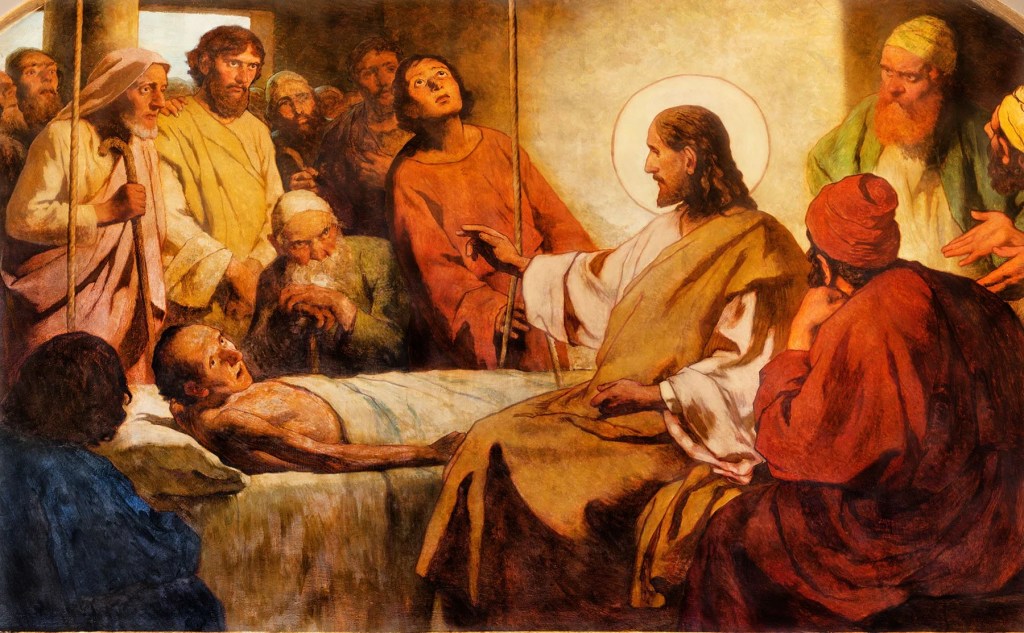
The story in our scripture verses revolves around a man named Lazarus. His name means “whom God helps.” He and his sisters, Mary and Martha, lived two miles from Jerusalem in the town of Bethany. They were personal friends of Jesus. In our story, Mary and Martha sent word to Jesus that Lazarus was gravely ill. Through worldly eyes, Jesus arrived too late. Lazarus had died and everyone was grieving. When Jesus saw their emotions, he was moved and began to cry. John 11:35 is the shortest verse in the Bible, but it exposes a great deal about Jesus. He wept because he was filled with empathy. Have you ever wept at a funeral? The story reveals to us three things we must do the next time death invades our personal space.
First, we must remember our departed loved one. In 2013, Lt. John Harold Pritchard (1892-1917) of the British military was laid to rest, 96 years after his death. He died on May 15, 1917, during World War I. His remains were found by a farmer in 2009 near Bullecourt, France. He was just one of the millions who were killed during the Great War. Today, his remains are resting in a cemetery that is filled with World War I veterans. His 86-year-old great nephew said it best, “We all feel better now because we know we can come and visit him. We now have a place to come and remember.” There is an old pagan belief that holds some truth. They believe if the departed are remembered, part of the person remains. It is important to remember our departed loved ones.
Second, we must review our lives up to this point. In 1846, former President John Quincy Adams (1767-1848) suffered a stroke. Although he returned to Congress the following year, his health was clearly failing. Daniel Webster (1782-1852) described his last meeting with Adams: “Someone, a friend of his, came in and made particular inquiry about his health. Adams answered, ‘I inhabit a weak, frail, decayed tenement; battered by the winds and broken in upon by the storms, and from all I can learn, the landlord does not intend to repair.'” It was too late for John Quincy Adams. It is not too late for you. I recommend you start living now! Mary and Martha must have reviewed their own lives at Lazarus’ death.
The story of Lazarus teaches us that life is unpredictable. No one expected him to die. It also teaches us that life is short. I once had a woman in her nineties tell me she was ready to sign up for ninety more years. That simply isn’t possible. The question at every funeral is, who is next? Death does not always happen in chronological order. What do you still want to do with your life? Where do you still want to travel in this world? What do you still want to learn? I would suggest you don’t wait; life is unpredictable. Are you living? Or are you just waiting to die? American author and humorist Mark Twain (1835-1910) once said, “Let us endeavor so to live that when we come to die, even the undertaker will be sorry.” It is important to review your life.
Third, we must refocus our eyes on eternity. One of the great scenes in the New Testament is Mark 8:27-31, Peter’s confession. You know the story. For some time, the disciples had been following Jesus. They had seen the miracles. They had heard the teachings. They had felt his presence and experienced the reaction of the people who constantly followed Jesus. Our generation knows Jesus was the Messiah. Jesus’ own generation was not so sure, so Jesus asked the twelve the question, who do you say that I am? Anyone of the disciples could have answered the question, but only one voice was heard. Peter answered, “You are the Christ.” That correct identification changed everything. That correct identification changed the way we look at death. You must answer the question for yourself, who is Jesus? This is the bottom line.
Death doesn’t just challenge us to live fuller lives now. Death challenges us to be prepared for eternity. Your good deeds cannot earn your salvation. Your church membership has no guarantee of salvation. Your patriotic spirit will not influence your salvation. Your only hope of salvation is Jesus. Look at the story with me. Mary and Martha were reunited with their once deceased brother because of Jesus. Is it possible you are so busy with your life you need to refocus on eternity?
Several years ago, someone asked me what I look forward to in my death. I gave her an honest answer. I am no different from you. When I get to heaven, I look forwarded to being reunited with loved ones who have died. Does that sound selfish? Maybe I should have said standing near the throne or singing in the choir. Those things really don’t appeal to me. I look forward to being reunited with departed loved ones. Read the next line slowly. There is no hope of a great reunion without Jesus. Jesus asked the disciples, but Jesus is also asking you: Who do you say I am? I hope you identify him correctly. He must be your Lord and Savior!
Death brings out three things in us. First, death challenges us to remember the past. Those memories are important. Second, death challenges us to review your life to this moment. What do you still want to do? Third, death challenges us to refocus on eternity. Who is Jesus to you? Leonardo da Vinci (1452-1519) once said, “As a well-spent day brings happy sleep, so a life well used brings happy death.”
 Russ Adams