C. S. Lewis’ Three Surprises

Our scripture reading is from Second Kings. There was a time when First Kings and Second Kings were united and simply called Kings. It was divided into two literary pieces in about the year 400. The division comes chronologically. King Ahab, the northern king, reigned at the same time as Jehoshaphat, the southern king. Ahab is remembered as one of the worst kings because he encouraged the people to abandon God, Yahweh, and worship the false god, Baal.

Jezebel, which means wicked or shameless, was a Phoenician princess, daughter of King Tyre. In time, she would marry King Ahab. Together, they had three children, Ahaziah, Jehoram, and Athaliah. Jezebel wanted more than the perks that came with the crown; she wanted influence. She influenced her husband to commit the most heinous of sins. She encouraged Ahab to reject the one true God and worship Baal. Together, they encouraged their subjects to worship Baal. There is no other way to say it – Jezebel was a sinner, and her death was not pleasant. Our reading, 2 Kings 9:30-37, contains her unpleasant ending.

According to the text, Jezebel is in the city of Jezreel, an ancient fortress. She was locked in a power struggle with the new king of Israel, Jehu. He is coming to seize his power, but Jezebel will not surrender easily. Jezebel climbs a high tower to survey the situation. She calls out to the new king, but their words are few. In the end, she loses everything. She is thrown out of the tower and dies on impact. Jehu saw the ugliness, but he was unmoved. He knew it was pleasing to God. Our world has always been an ugly place.  

The story of Jezebel’s death is a story about judgement. It was written to shock readers because the author wants to grab everyone’s attention. He wants to remind us of two things. First, he wanted to remind us that sin is serious business. Our world ignores the seriousness of sin and is consumed with love and grace. Second, he wants to remind us that someday we will be judged. We will be judged for the things we have done – sins of commission. We will also be judged for the things we should have done – sins of omission. How much human suffering have you ignored? Just like Jezebel, our day is coming. We will stand before God and be held accountable. The goal of the Christian faith is to get everyone into heaven. Sadly, not all will make it.  

In this blog, I want to ask you five spiritual questions to make sure you are ready for your judgement day. These questions are not original. They came from Christian author Neil Cole (born 1960). You must answer these questions honestly.

What is the condition of your soul? In other words, are you at peace with God? According to Chapman University, 35% of Americans are afraid of death. It is important that you understand God’s plan of salvation. Jesus died on the cross for the sins of mankind. He is our only hope of salvation. Salvation cannot be earned; we are saved by grace. Do you understand God’s plan of salvation? What is the condition of your soul?

What sin do you need to confess? What dark part of your life do you need to bring into the light? Everyone has something. There isn’t a perfect person in this world. They say confession is good for the soul, and it is pleasing to God. What do you need to confess?

What have you held back from God that you need to surrender? God expects you to make him the top priority in your life. Any other relationship or possession must be second. That is hard for anyone who has loved ones. Is God your top priority? What or who is you holding back from God?

Is there anything that is dampening your zeal for Christ? In other words, are you excited about Jesus, or are you just mildly interested? There is a world of difference between being a fan of Jesus and a true disciple. Are you passionately in love with Jesus, or are you just mildly interested in Jesus? What is dampening your zeal for Christ?

Who have you talked with about Jesus this week? Are you more comfortable talking about Jesus, or politics? You should be able to tell people what Jesus means to you. You should be able to tell people what Jesus has done for you. You should be able to tell people how Jesus has changed your life. Who have you talked with about Jesus this week? I challenge you to not just answer those questions. I challenge you to ask the people in your life those spiritual questions. The goal is to get everyone into heaven. Heaven would not be the same without you!

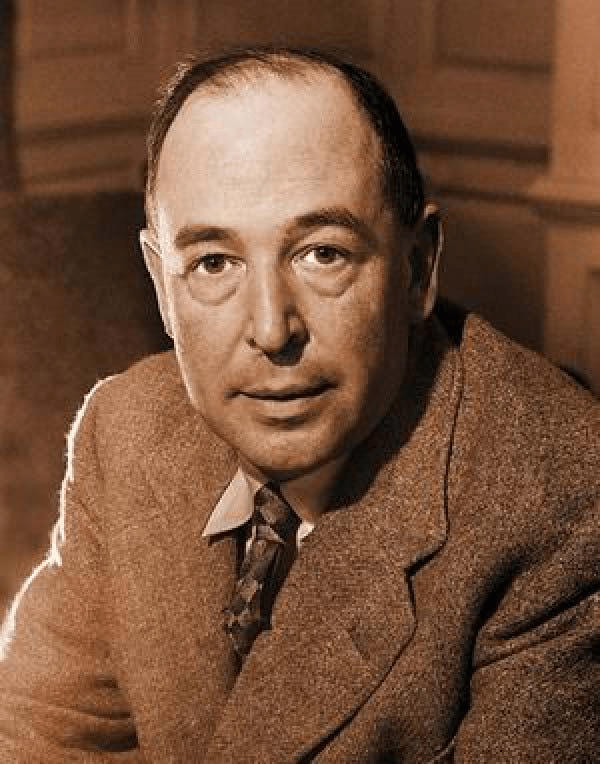
C. S. Lewis (1898-1963) was a British writer, literary scholar and Anglican lay theologian. He once declared there are three surprises waiting for us in heaven. The first is who is there. Our job is not to judge others; our job is to love others. The second is who isn’t there. We are not saved by our good deeds. The third is that we are there. We are saved by grace and grace alone. Who is the first person you are going to look for when you get to heaven? The goal of the Christian faith is to get everyone in heaven. Sadly, some will be missing.

Less Billy, More Jesus

American entertainer Kathie Lee Gifford (born 1953) was raised in a family where God was honored generally, but He was not known personally. Her father was Jewish, and her mother was a Christian. When she was twelve years-old, her mother and her sister were led to Christ by a televised Billy Graham evangelistic crusade. Several months later, they encouraged her to go see a movie produced by the Billy Graham organization, The Restless Ones. Kathy Lee decided to go.

In many ways, it was her story – a young girl trying to decide what path to take: the ways of this world, or the ways of God. She related to the girl in the movie, and she began to evaluate her own life. When the movie ended, an altar call was given, and young Kathie Lee went forward to accept Christ as her Lord and Savior. Her life would never be the same again. Ask Kathy Lee Gifford and she will tell you; we are saved by grace and by grace alone!

Charles Spurgeon (1834-1892) was an English Baptist preacher. He has been called the Prince of Preachers. He once said, “Saving faith is an immediate relation to Christ, accepting, receiving, resting upon Him alone, for justification, sanctification and eternal life by virtue of God’s grace.”  That is an old quote. Charles Spurgeon died in 1892. That quote may be old, but it still rings true today. Someday, we will stand before God justified because of the redemptive work of Jesus Christ. Never forget it – we are saved by grace and by grace alone! That takes us to our scripture reading.

We are in the eighteenth chapter of Luke, verses nine through fourteen. It is the parable of the publican and the Pharisee. The story is dominated by two men. They are not identified by name, only by vocation. The first was a Pharisee. We are critical of the Pharisees because they confronted Jesus. The Master’s own generation was not critical of Pharisees. They were viewed as the religious elite, who were the bridge between mankind and God. The second man was a Publican. That was the term used in ancient Roman times for a tax collector. In our time, we dislike tax collectors; they hated tax collectors. They were viewed as traitors, who sold out to the Romans. They profited at the expense of their own people, the Jews. This parable plays on our stereotypes or prejudices.

According to the story, both men went to the Temple to pray. There is nothing surprising about that. The people of Jesus’s day valued prayer. They prayed regularly. Daily, morning and evening prayer was scheduled at the temple in connection with the sacrifices. In addition to those times, the temple was always open for private prayer. Prayer was not isolated to the Sabbath. It was a big part of their daily lives.

In Jesus’s story, the Pharisee was the picture of complete pride. He stood upright and reported to God all his good deeds. He fasted twice a week and gave generously to the poor. The other man, the Publican, was the picture of complete brokenness. He stands at a distance beating his breast. He is not proud of the way he is living. He admits he is a sinner, and he asks God for mercy. The two gentlemen in Jesus’s story are from opposite ends of the universe. There is nothing surprising in the story until the last verse. Verse fourteen reads, “I tell you that this man (the tax collector) rather than the other (the Pharisee) went home justified before God. For all those who exalt themselves will be humbled, and those who humble themselves will be exalted.” It is impossible to read this story and ignore the importance of humility. After all, we are all sinners saved by grace. Yet, there are many in our society who can relate to the Pharisee. You must know someone.

According to the Pew Research Group, 80% of American Christians believe Jesus is not their only hope of salvation. In other words, four out of five American Christians believe their entrance into heaven is merit-based. That is why we hear so much about good works when a loved one dies. They volunteered to help children read. They mowed their aging neighbor’s lawn. They gave generously to the church of their time, talent, and money. They cared for stray cats and loved dogs. They would do anything for anyone. Do you know why people say such things? They are trying to convince us, or themselves, that their loved one is in heaven because they were a good person. This is the problem: A merit-based entrance into heaven is not what the Bible teaches.

The Bible teaches us we are saved by grace and by grace alone. Ephesians 2:8-9 says it clearly: “For it is by grace you have been saved, through faith – and this not from yourself, it is the gift of God – not by works, so that no one can boast.”  Grace is God’s unmerited favor, demonstrated most fully in the sacrifice of Christ. In short, the only way to heaven is through Jesus – the way, the truth and the life. The faithful understand what Jesus has done for them.

Hudson Taylor (1831-1905) was a missionary who spent fifty-one years in China. At some point in his life, he was scheduled to speak at a large Presbyterian church in Melbourne, Australia. The moderator of the service introduced the missionary in eloquent and glowing terms. He told the large congregation all that Taylor had accomplished in China, and then presented him as “our illustrious guest.” Taylor stood quietly for a moment, and then opened his message by saying, “Dear friends, I am the little servant of an illustrious Master.” Hudson Taylor never forgot the truth. He was a sinner, who was dependent on God’s grace. Never forget it – you are a sinner who is dependent on God’s grace. We are saved by grace and by grace alone!

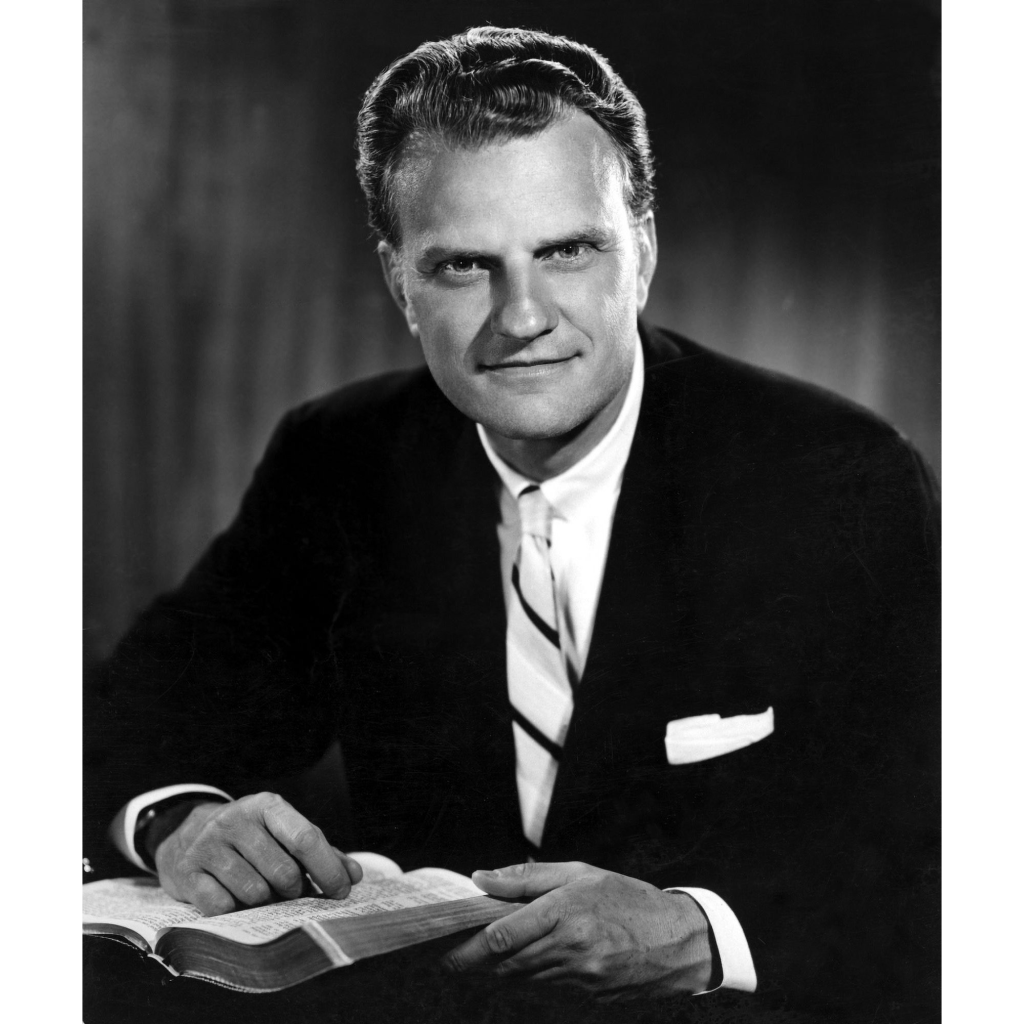
Billy Graham (1918-2018) was born on November 7, 1918 in a downstairs bedroom near Charlotte, North Carolina. His parents raised him and his three siblings in the Associate Reformed Presbyterian Church. He was converted at sixteen years old. He graduated from the Florida Bible Institute in 1940 and Wheaton College in 1943. In 1947 Billy Graham held his first crusade in 1947 in Grand Rapids, Michigan and held his last crusade in 2005 in New York City. I remember attending a Billy Graham crusade at Cleveland Municipal Stadium during college. Over those 58 years, he preached 417 crusades, including 226 in the United States and 195 abroad. It has been estimated he preached to more than 210 million people in his life. God only knows how many souls he won for Jesus Christ, including Kathie Lee Gifford. Graham is considered one of the most influential Christian leaders in the twentieth century.

Billy Graham died on February 21, 2018, in Montreat, North Carolina. He was a few months shy of his one hundredth birthday. If anyone deserved to go to heaven, it was Billy Graham. Yet, He never forgot the truth. He was a sinner, who was dependent on God’s grace. At his death, it was reported Billy Graham helped plan his own funeral. He had a simple request: less Billy, more Jesus. Billy Graham knew he was saved by grace and by grace alone! Do you? We are not saved by our good works. We are saved by grace. Do you remember the quote from Charles Spurgeon? He once said, “Saving faith is an immediate relation to Christ, accepting, receiving, resting upon Him alone, for justification, sanctification, and eternal life by virtue of God’s grace.”

Because You Believe

We find ourselves in the twenty-eighth chapter of Matthew. Much has already happened. It is impossible to summarize everything in a few words. It will have to suffice to say, Jesus was dead, executed Roman style on the previous Friday. He was crucified between two common criminals. The picture was not pretty. It is difficult to hear the details all these years later. However, Jesus was lucky in two ways: first, Jesus died quickly. Some lingered much longer on the cross; second, it was not uncommon for the crucified to be taken down and thrown into a pile of lifeless corpses; their bodies would be eaten by buzzards or wild dogs. Not so with Jesus. Arrangements were made by Joseph of Arimathea and Nicodemus that Jesus’ body would be taken down and placed in a new tomb. A large stone was rolled in front of the entrance to contain the smell and to protect it from thieves. The Roman government was persuaded by Jesus’ enemies to place guards in front of the tomb to eliminate any future problems. This was all done by dark on Friday because the law prohibited any burials on the Sabbath. Once this was completed, Jesus’ loved ones grieved because Jesus was dead! That takes us to our reading.

According to our story, early Sunday morning, Jesus received his first visitors – two women with the same first name. There is Mary Magdalene and another Mary. They were the supporting characters in a scene that would change the world. Three miraculous things happened. First, there was an earthquake. Only Matthew mentions this earthquake, but this earthquake is worth mentioning because it reveals to us that God had done something truly special. Second, the giant stone had been rolled away from the entrance of the tomb. Third, it was announced Jesus had been resurrected. According to verse three, it is made by an angel, whose clothes were white as snow, symbolizing purity. The angel tells the women about the resurrection, but the women experience the resurrected Jesus for themselves in verse nine. In time, Jesus would appear to others, including the disciples. It is important that at some time in your life, you have experienced the resurrected Jesus too.

Jesus was not the only one to be resurrected in the Bible. There are stories in both the Old and the New Testaments about others being resurrected. There are no fewer than eight, Lazarus being the most noteworthy. However, Jesus’ resurrection is different. The others had human fathers. Jesus was the son of God. That means the baby in the manger at Christmas and the man on the cross on Good Friday are the same. Jesus was the incarnation of God, who not just became one of us, but died for us. He was the sacrificial lamb for our sins. God’s love is deep. How can you question God’s love for us? Never forget it! You cannot earn your salvation. You are saved by grace, through faith in Jesus.

Your belief in the resurrection of Jesus Christ is not optional, it is indispensable. Many believe Romans 10:9 was the first creed in the history of the church. It says, “If you confess with your mouth that Jesus is Lord, and believe in your heart God raised him from the dead, you will be saved.”  If that is true, then the opposite is also true. If you don’t believe in the resurrection of Jesus Christ, then the fires of hell are waiting for you. The early church understood the significance of Jesus’ resurrection. They worshipped on Sunday morning because every Sunday morning was seen as a little Easter, or resurrection day. That is why most Christian churches still worship on Sunday mornings. Your belief in the resurrection is not trivial. It changed everything about your life. Consider these three things.

Because of the resurrection of Jesus there is forgiveness! Ephesians 1:7 says it clearly, “In him we have redemption through his blood, the forgiveness of sins, in accordance with the richness of God’s grace.”  On the moment Jesus walked out of the tomb, mankind had the opportunity to experience forgiveness. One of the great hymns found in the church today is Amazing Grace. It was written by John Newton (1725-1807.) He was a former captain of a slave ship, who was saved by grace. The hymn reminds us we are all sinners, who are saved by grace. Because you believe in the resurrection of Jesus you are forgiven!

Because of the resurrection Jesus your life has purpose! Philippians 3:13-14 says, “But one thing I do: forgetting what is behind me and straining toward what is ahead, I press on toward the goal to win the prize for which God has called me heavenward in Christ Jesus.”  It has been reported only 10% of Americans feel like they know their life’s purpose. I do not find that figure surprising. In my time in the ministry, I talked to people regularly who were clueless about their life’s purpose. Many confuse their purpose with their vocation. Your purpose is to glorify God. The Westminster Confession of faith says the purpose of life is to glorify God. What are you doing today to glorify God? Because you believe in the resurrection of Jesus your life has purpose!

Because of the resurrection of Jesus your eternity is bright! John 3:16 says, “For God so loved the world that he gave his one and only son, that whoever believes in him may not perish but have eternal life.”  On the day I die, don’t cry for me. I am going to heaven, not because I am a good person. I am going to heaven because I worship and serve a perfect and resurrected Jesus. Because you believe in the resurrection of Jesus your eternity is bright too!

Located on an island in the Seine River in Paris, Notre Dame Cathedral is a piece of history. It is a “must see” in Paris. Construction began in 1163 and took two hundred years to complete. It has been the backdrop of French history for generations. They say on an average week 12,000 tourists visit Notre Dame daily. During Holy Week, that number swells to 30,000. I am fortunate. I have been there three times. The first time I was with my parents as a teenager. The second time I was with wife Kathryn fifteen years ago. It happened to be our wedding anniversary. The third time was recently. I insisted we visit Notre Dame.

We went to lunch in a nearby café. As we ate, we studied the ancient structure, and we remembered April 15, 2019. That was the day Notre Dame burned. Many grieved for Notre Dame that day. I remember being moved by the emotions of the crowd who gathered to watch the blaze, some praying, some singing, some crying. They feared the building would be lost forever. That did not happen. At first, they said it would be reopened by the Olympics in July, but that is not the case. Notre Dame is scheduled to reopen on December 8, 2024. It will be a wonderful day for the Parisiens. I will be honest with you, on the day Notre Dame burned, I mourned for the building and the history, but not the faith. The Christian faith cannot be captured in a building.

The Christian faith is found in the hearts of men and women who believe in the resurrection of Jesus. Your belief in the resurrection is not optional, it is indispensable. The resurrection of Jesus Christ changed everything. It changed the way you viewed your past – you can experience forgiveness. It changed the way you live today – your life has purpose. It changes your eternity – someday we are going to heaven. John Ortberg (born 1957) is a Christian author, speaker and pastor of Menlo Church in Menlo, California. He once said, “At the very heart of the Christian faith is the story of Jesus’ death and resurrection.” Never forget, we serve a risen savior!

Not Enough Potatoes!

Amazing Grace is one of the great hymns of the church. You may know the story. It was written by John Newton (1725-1807). He was born in London in 1725. He grew up without any religious conviction. As a young man he was pressed into the Royal Navy. After his service, he got involved in the Atlantic slave trade. The practice was just as sinister as it sounds. West Africans were captured and sold into slavery in the Americas. As many as 1/3 of the slaves died in route. In 1748, when Newton was 23 years old, his ship encountered a terrible storm off the coast of Ireland. Newton cried out to God for mercy. That experience marked his Christian conversion. He stayed in the slave industry for another six or seven years, then he began to study Christian theology. The hymn, Amazing Grace, came from his own personal experience. He knew he was a sinner saved by God’s amazing grace. How many times have you sung Amazing Grace?  When was the first time you pondered God’s amazing grace? That takes us to our scripture reading.

We are in the first eleven verses in the fifteenth chapter of Acts. Paul and Barnabas have just completed their first missionary journey. It should have been a happy time because so many new converts were added to the fold. Everyone should have been happy, but that is not the case. I spent forty years in the ministry, so I am qualified to make the next statement. Everyone says they want church growth, but that isn’t true. Church growth always leads to change and most people don’t care for change. Historically, the church has never cared for change. You can find the tension in this passage. The first converts to the church were Jews. That means they came from a common background – Judaism. The new converts to the church are Gentiles, non-Jews. They come from a variety of backgrounds. Most of them had very little interest in the old Jewish ways. The only thing they care about is Jesus.

The original Jewish converts had a problem. Was it necessary for the new Gentile converts to follow the laws of the Old Testament? To be more exact, do the new male Gentile converts have to be circumcised? It is a sensitive topic at various levels. As with all church debates, everyone chose a side. Like drawing a line in the sand, the two sides parted. On the one side are the characters mentioned in verse one. They insist the new members must be circumcised. Many believe their numbers were made up of converted Pharisees who valued and upheld the law. Their voices carried some weight in the past, but the times had changed. The spokesmen for the other side were Paul and Barnabas. They said the law, circumcision in this case, had nothing to do with salvation. They said, we are saved by grace and by grace alone. They said Jesus’s sacrificial death was enough. It is a point that many still wrestle with today. Is Jesus enough? Or is Jesus needed for salvation?

Recently, I read a study that shocked me but did not surprise me. It came from the American World View Inventory and the Cultural Research Center at Arizona Christian University. They reported, only 35% of Americans continue to embrace the traditional biblical view salvation comes from the sacrifice of Jesus. He is our only hope of salvation. That means 65% of Americans adults do not believe Jesus is not necessary for salvation. In other words, most believe salvation can be earned. I find myself in the minority. Paul says in Ephesians 2:8-9, “For it is by grace that you have been saved – and this is not from yourself, it is a gift of God – not by works, so that we cannot boast.”

We are saved by grace and by grace alone! We are saved by grace, not political correctness. Christianity is the only world religion which has an answer to death. We are the only ones to serve a risen savior. We are saved by grace, not by our political views or patriotism. I believe America is the greatest country in the world. If you cannot succeed in America, then you cannot succeed anywhere. However, that does not mean God only loves Americans. God’s love is universal. You are saved by grace, not osmosis. God does not have any grandchildren, only children. He doesn’t care if your grandfather was a preacher, or your mother taught Sunday school. God wants to have a relationship with you! We are saved by grace, not church membership. You can be a church member and know nothing about Jesus or his ways. There are many reasons to join a church. You are saved by grave, not good deeds. Cooking dinner for a sick neighbor is nice, but it will not save your soul. We are saved by grace and by grace alone. May we never forget we are like John Newton, sinners in need of a savior. (Romans 3:23-24) Our only hope of salvation is Jesus!

I had a colleague by the name of George. I respect him because he has a pastor’s heart. He once told a story I have never forgotten. I have told it many times. I worried my church members were like the woman in his story.

According to George, he had a woman in one of his churches who loved her church. She was supportive in every way. She never missed worship and served on every church committee twice. She sang in the choir and was generous when the plate was passed. She never missed a workday. However, her true passion was the kitchen. She spent many hours in the church kitchen. If you have ever worked in a church kitchen, then you know it is true. The regular kitchen workers have a certain job. Her job was to peel the potatoes. Only the Lord knows how many potatoes she peeled through the years. She never had to be asked, she just got into position and peeled the potatoes. It became her identity within that congregation. She was known as the potato peeling lady.

One day George was told the potato peeling lady was feeling sick and went to the doctor. The doctor sent her for tests, and the tests revealed she was terminal. George was a wonderful pastor and supported her as the disease progressed. As the end drew near, George was with her. From her deathbed she looked at George and uttered words that broke his heart. She said, “George, have I peeled enough potatoes to get into heaven?” George was speechless. The good woman had spent her entire life in the church and never heard the most important thing. We are all sinners saved by grace. Our only hope of salvation is Jesus. There are simply not enough potatoes!

I hope that is not your story. I hope you understand you cannot earn your salvation. We are sinners saved by grace and by grace alone. Take this opportunity and recommit your life to Christ. Heaven wouldn’t be the same without you! Philip Yancy (born 1949) once said, “Grace does not depend on what we have done for God but rather what God has done for us.”

How Cheap Is Your Grace?

We find ourselves in the sixth chapter of John. According to the text, Jesus is trying to find a place to be alone with the disciples. That is why they are on a mountainside on the far side of the Sea of Galilee. The problem was they were not alone. The crowd had followed them. That crowd can be broken down into two categories. We have covered this information in the past. Some in the crowd wanted Jesus to heal a sick, or limited, loved one in their life. There was a surplus of the blind and the lame. Some wanted Jesus to lead a political revolution. They had grown tired of Roman rules. To them, the miracles were a sign that Jesus was the long-awaited Messiah. They were right, yet they were wrong. Jesus was the long-awaited Messiah, but he was, in their opinion, the wrong kind of Messiah. It is safe to say the crowd was near sighted. The crowd was more interested in the temporary. It is also safe to say, Jesus was more concerned with the eternal. The crowd wanted something from Jesus, but Jesus expected something from the crowd. For this reason, some in the crowd decide to leave.

Look at what the scripture does not say. The scripture does not say Jesus implored the crowd to stay. The scripture does not say Jesus blocked the exit. The scripture does not say Jesus preformed another miracle to get the crowd’s attention. The scripture does not say Jesus organized a fundraiser. The scripture does not say Jesus does say he formed a committee to study the problem. The scripture does say some left and Jesus really did not care. Jesus knew something we have forgotten in our time. If you expect nothing, then you get nothing. Jesus’ goal was not to establish a crowd; Jesus’ goal was to find the committed. Being committed is extremely important. The great evangelist Billy Graham once (1918-2018) said, “Make sure of your commitment to Jesus Christ, and seek to follow him every day. Do not be swayed by the false values and goals of this world of this world but put Christ and his will first in everything you do.” However, it is not just Billy Graham who understood the importance of commitment.

One of the great names from the twentieth century was Dietrich Bonhoeffer (1906-1945). I have spoken of him in the past, so you may remember his story. He was a German Lutheran pastor and theologian. He wrote a book called The Cost of Discipleship. In that book he defined Christianity’s role in the secular world. His thoughts were not just empty words. They defined his commitments. Those beliefs brought him in conflict with the Nazi Party from the very beginning. He went as far as to get involved in a plot to assassinate Adolph Hitler (1889-1945). When that plot failed in July of 1944, Bonhoeffer was arrested. He was executed on April 8, 1945, just two weeks before his camp was liberated. He died at the age of 39, but his theological legacy is alive and well. He believed there is a cost to discipleship. One just could not claim their salvation with no further thought. He believed what you did with your life revealed your appreciation. It is a matter of cheap grace versus costly grace. Cheap grace requires nothing. Costly grace requires everything. Listen to these words:

Cheap grace is the preaching of forgiveness without requiring repentance, baptism without church discipline. Communion without confession. Cheap grace is grace without discipleship, grace without the cross, grace without Jesus Christ.

I hate to say it. We live in a time of cheap grace. Bonheoffer believed the greatest threat facing the church was cheap grace. I have asked you the question many times, how is the Gospel influencing your life? It is a matter of commitment. If that makes you think say, “Amen!”

Today, I want to challenge your level of commitment. Are you part of the crowd who expects to get something for absolutely nothing? Or are you committed to Jesus, who expects everything? I am going to challenge you by asking three hard questions. Each one relates to a different area of your life. How you respond to these questions says a great deal about your commitment to Jesus. Remember, Jesus was not interested in assembling a great crowd. Jesus was interested in finding the committed. How cheap is your grace?

Would you walk away from Jesus if there were a time requirement? Would you walk away from Jesus if you were required to spend 10% of your time with him? You do the math, 10% of your time is 2.4 hours a day. That means you are going to have to spend 16.8 hours a week involved in the spiritual disciplines. (Reading the Bible, prayer, meditation and fasting) How much time do you spend with Jesus now? How much time are you willing to spend with Jesus? I have told you this story in the past.

In The Last Days Newsletter, Leonard Ravenhill (1907-1994) talks about a group of tourists visiting a picturesque village. They walked by an old man sitting beside a fence. In a rather patronizing way, one tourist asked, “Were any great men born in this village?” The old man replied, “Nope, only babies.” That frothy question brought a profound answer. Some things take time. One of those things is spiritual maturity. How much time are you giving God? If you were required to spend 16.8 hours a week with God, would you walk away from Jesus? How cheap is your grace?

Would you walk away from Jesus if there was a talent requirement? Would you walk away from Jesus if you were required to spend 10% of your talent serving other people? That means you would have to spend 2.4 hours a day serving someone else. That means you would have to spend 16.8 hours a week serving someone else. How much time do you spend serving other people? I am not talking about family members and loved ones. I mean serving strangers.

Did you know the great musician Niccolo Paganini (1782-1840), willed his marvelous violin to Genoa — the city of his birth — but only on the condition that the instrument never is played upon? It was an unfortunate condition, for it is made of a peculiar wood that as long as it is used and handled, it shows little wear. As soon as it is discarded, it begins to decay. The exquisite, mellow-toned violin has become worm-eaten in its beautiful case, valueless except as a relic. The moldering instrument is a reminder that a life withdrawn from all service to others loses its meaning. How much time do you spend serving others? If you were required to spend 16.8 hours a week serving others, would you walk away from Jesus? Unhappy people only seem to worry about themselves and their loved one. Content people worry about others. How cheap is your grace?

Would you walk away from Jesus if there was a money requirement? According to the Pew Research Group, the average church member gives 2.5% of their income to their congregation. What if you were required to tithe 10% of your money and give it to the church? The finance committee would not know what to do with all the cash. Just think of the people we could help. What percentage of your income do you give to the church?

At the very beginning of the twenty-first chapter of Luke, we find Jesus in front of the temple. The rich are placing their large sums of money into the treasury. The finance committee loves them. They hate the poor widow who only drops in two copper coins. She is the face of the annual stewardship drive. Her offering is worth nothing, but it tells us about true stewardship. She teaches us that true stewardship is not the amount you give away. It is how much you keep for yourself? How much of your income do you spend on yourself and your loved ones? How much money do you give to the church? If you were required to give 10% of your income to the church, would you walk away from Jesus? How cheap is your grace? Let’s go back to the scripture one last time.

Jesus was trying to find some solitude with the disciples. It is for this reason they travel to the other side of the Sea of Galilea. The solitude Jesus hungers never happens. The crowd follows him. Everyone in that crowd wanted something from Jesus. However, some in that crowd started to leave once they discovered Jesus wanted something from them. The Master knew what we often forget. If you expect nothing, then you get nothing. Jesus was looking for complete commitment because he was expecting a great deal. How committed are you? How cheap is your grace?

History tells us when Julius Caesar (100 BC – 44 BC) landed on the shores of Britain with his Roman legions, he took a bold and decisive step to ensure the success of his military venture. Ordering his men to march to the edge of the Cliffs of Dover, he commanded them to look down at the water below. To their amazement, they saw every ship in which they had crossed the channel engulfed in flames. Caesar had deliberately cut off any possibility of retreat. Now that his soldiers were unable to return to the continent, there was nothing left for them to do but to advance and conquer! They had no choice but to be completely committed to their task.

Your commitments say a great deal about you. Where do your commitments lye? How cheap is your grace? Do you remember what Billy Graham once said? He said, “Make sure of your commitment to Jesus Christ, and seek to follow him every day. Do not be swayed by the false values and goals of this world of this world but put Christ and his will first in everything you do.” How committed are you to Jesus? How cheap is your grace?

Lost in New York

Many years ago, before man walked on the moon, before a civil war threatened to divide America, or before Columbus discovered a New World, there was a man who spoke for God. His name meant “Comforter,” but we just call him Nahum. His exact location is unknown, but we do know he spoke to the people of Judah prior to the year 612 BC. The ones receiving these words were the people of Nineveh. Yes, it was the same Nineveh God sent Jonah to one hundred years earlier, the capital of the Assyrian Empire, known for her cruelty, idolatry, and wickedness. The Assyrian Empire covered parts of present-day Iran, Iraq, and Turkey. This time, they were guilty of backsliding. They had repented for Jonah, but they had returned to their old ways. God has had enough and now they must pay for their sinning. Those are not just empty words. History tells us the great city of Nineveh was destroyed by a devastating fire in the year 612 BC. Nahum’s brief book, only three chapters long, reminds us sin must be taken seriously. It is as true today as it was in Nahum’s time. This is the truth.

According to Webster, a sin is an immoral act against divine law. We should take sin seriously because our sins damage our relationship with God. While we are not known for our cruelty, idolatry, and wickedness, we are all guilty of sinning. It is no secret. We know we are sinners and God knows we are sinners The Apostle Paul knew were were sinners. One of the great scriptures in the New Testament is Roman 3:23, “All have sinned and have fallen short of the glory of God.” In seminary I took three classes in Greek. In one of those classes, I studied studied the Greek word for “all.” The word for “all” in Biblical Greek means everyone. That means everyone is guilty of sinning. That means we are all sinners. That means we are more like the Ninevites than we care to admit.

James W. Moore (1938-2019) was the pastor of the 7,500 member St. Luke United Methodist Church in Houston, Texas from 1984-2006.  He received his Master of Divinity degree from the Methodist Theological School in Delaware, Ohio. Through the years he wrote many books, which are nothing more than his printed sermons. I own several of those books. One of those books is entitled Yes, Lord, I Have Sinned, But I Have Several Excellent Excuses. In that book, he tells us our sins originate in four  sources. Three of those ways are found in two parables in the fifteen chapter of Luke.

Sometimes, we sin by being led astray. That is found in the parable of the lost coin. In that parable a coin is lost. That coin equaled a day’s wages. That means it is worth finding. The coin did not grow legs and walk away. The coin was lost because someone misplaced it. That is what happens with people. Some sin because of the influence another has on them. Parents know it is true. That is why we evaluate our children’s friends. That is why we want our children to participate in wholesome activities. Parents fear their young will be influenced by others and get into trouble. God fears we will be led astray by others too. Can I ask you a question? Who are the most influential people in your life? Sometimes we sin by being led astray.

Sometimes, we sin by running away. That was the story of the prodigal son. He could not wait for his father to die, so he went to his father for his share of the inheritance. He took his cash and ran. For a short time, he lived life in the fast lane. I will let your imagination fill in the blanks. Then, he discovered what everyone knows. Life is expensive. In a short time, he is struggling to survive. Then, as the Bible says, he came to his senses and returns to his father asking for a job. You can call it selfishness. Those are the sins we commit when we think the world revolves around us. Those are the sins we commit because we think we are God’s gift to the world. Can I ask you a question? Do the people in your life consider you selfish? Sometimes, we sin by running away because we are selfish.

Sometimes, we sin because of resentment. The parable of the prodigal son reveals two origins of sin. The first is selfishness. The second is resentment. It is found in the older son who stayed home. While his little brother was out there living the wildlife, he stayed at home. He got up early daily and went to work. You can call him responsible, but he felt foolish. He dreamed of the wild things he was missing. At first, he must have admired his brother, but in the end, he resented his little brother. It is no fun working when others are having fun. Many believe this is the greatest sin in the life of the church today. It is no fun doing church work, when so many have forgotten the church. Can I ask you a question? Who do you resent? Sometimes, we sin because of resentment.

Sometimes we sin by wandering off. That was the story of the Ninevites. One hundred years earlier, God’s reluctant prophet, Jonah, arrived and told them they must repent. The people heard his word and responded. They started acting like God wanted them to act. They became more loving. They became less judgmental. They became more accepting. They promised they would never return to their cruel, idolatrous, and wicked ways. However, as the emotion wore off, they began to backside. Before long they we known once again for their cruelty, idolatry, and wicked. The Ninevites are not much different from us. We know what God wants us to do but we refuse to do it. Can I ask you these questions? How far have you wandered away from God? Are you the person God intended at the very beginning?The excitement of that mountaintop experience began to fade away and found yourself falling into your old routine. Sometimes, we sin because we wander off. I hope that is not your story. Nahum reminds us there is a price to pay for sinning. However, this is the good news for today.

Nahum lived in Old Testament times and we live in New Testament times. The great city of Nineveh was destroyed by a fire in the year 612 BC. That was their punishment for sinning. They got what they deserved. That was the Old Testament way. We deserve to be punished for our sins, but it will never happen, because we are New Testament times. Every Sunday school child knows Jesus died on the cross for our sins. His death was not pretty because our sins our not pretty. Yet, his death handled the sin problem. How you respond to Jesus’s death is extremely important. Is it just a passing thought or is it a life changing experience? It has been said, “God’s grace is not an excuse to sin, but rather a reason to love and serve him more fully.”

The address was 202 Midwood Street. That was my grandparent’s address in Brooklyn, New York, and the address of the home that my mother was raised. We visited it annually. As a child, I remember it as a massive place. It included an outer sitting room with a player piano, an inner living room with with a modest television set, dining room and a tiny kitchen. Upstairs, there were three bedrooms and a full bath with a skylight. It seemed massive to me as a child. Recently, I researched that massive home. It was constructed in 1901 and is 1,800 square feet. The market value of that 1,800 square foot home in Brooklyn today is $1.8 million. It is hard to compare property value in Brooklyn, New York with Youngstown, Ohio. Externally, the house was not original. My mother called it a “Brown Stone.” The entire neighborhood was filled with them. Each one was identical. Each one was constructed from a tan stone, a flat roof, a bay window, and a flight of stairs leading up to the front door. The only thing that changed about each dwelling was the address. My grandparents lived at 202 Midwood Street. I will never forget that address because of an event that happened to me one day on one of my family’s visits to Brooklyn.

I was not very old. I must have been six or seven. My grandparents wanted to entertain me, so they borrowed a bicycle from a neighbor for me to ride during the visit.  The problem was there are very few places a child can ride a bicycle in the middle of Brooklyn. My only option was to ride up and down Midwood Street. I am confident my parents told me to be careful and I am confident they told me my grandparent’s address, 202 Midwood Street, because all the houses looked the same. The problem was I did not listen to them. I was more interested in trying out the bicycle. When I jumped on the bike and began to peddle. In a few seconds, I was lost in the adventure of the ride. I picked up speed fast and I imagined being in all kinds of exciting places. I was having a great time! When I snapped back to reality, I discovered the truth. I was lost in New York. All the homes were identical, and I did not know which one belonged to my grandparents. I could not remember my grandparent’s address, 202 Midwood Street. Emotionally, I went from the highest mountain to the lowest valley. Fear began flood through me. I thought I would never see my family again. How would I survive in the streets of New York alone? There was only one option, I began to cry. I know that is hard to believe because I am so manly today. I promised myself, I would never ride a bicycle again and I prayed that God we help me.

God heard my prayer. My savior came to recue me. In that emotional moment I heard comforting words. It was my mother, who had been watching me from the window the whole time. I do not remember her exact words, but I do remember the relief I felt. My mother took me by the hand, wiped my tears, and led me home. I took one last look at that horrible bicycle and walked inside. I was safe and sound. I am confident I was extra good the rest of that trip. Can I ask you another question? When was the last time you were lost?

It is not just a story about a small boy lost in a big city. It is the story of the Christian faith, itself. We are lost in sin. Everyone does it and it comes in many forms, each one damaging our relationship with God. We deserve what the people of Nineveh got, punishment. But our punishment never comes because our savior came 2,000 years ago. His name is Jesus. Grace is a wonderful thing. How do you respond to God’s grace? It has been said, “God’s grace is not an excuse to sin, but rather a reason to love and serve him more fully.”