Peace…

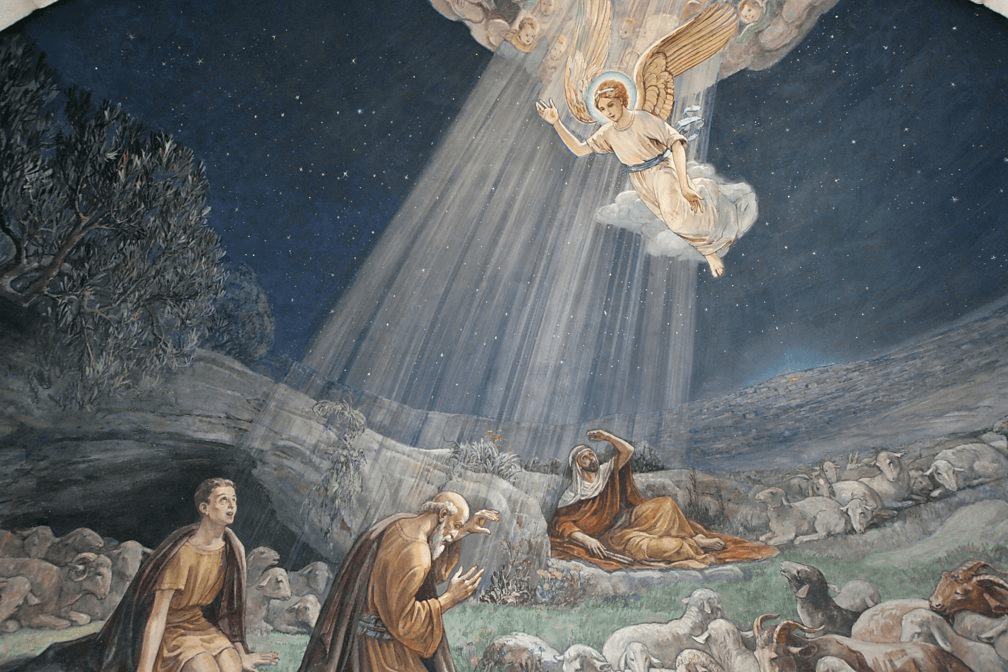
Our reading is from Luke 2:8-20. The role the shepherds played in the Christmas narrative is vital. They were common laborers who were responsible for the sheep who were to be sacrificed in the temple. The animals were valuable, and their job was dangerous. They guarded the sheep against thieves and predatory animals. To the religious leadership of the day, the lives of the sheep were more valuable than the lives of the shepherds.

There was nothing special about that night. It was like any other night, until an angel appeared to them to make the great announcement, the long-awaited Messiah had been born! That announcement is underscored by a great company of angels singing “Glory to God in the Highest, and on earth peace to men on whom his favor rests.”  Their words remind us of the greatness of God and His desire to reconcile with mankind. We find the same message of reconciliation in Second Corinthians 5:19, “God was reconciling the world to himself in Christ, not counting men’s sins against them. And he has committed to us the message of reconciliation.”  That is the Good News of Christmas. God came into the world to end the conflict with us. That divine truth changes everything. In this blog, I want to explore Jesus’ ministry of reconciliation. Consider three things with me.

First, because of Jesus we have peace with God. When you have peace with God, you have spiritual peace. Romans 5:1 says, “Therefore, since we have been justified through faith, we have peace with God through our Lord Jesus Christ.”  On the day that I accepted Christ as my Lord and Savior, I experienced just one emotion – it wasn’t joy, it was relief. The battle was over. I was at peace with God. Augustine of Hippo (354-430) once said, “Because God has made us for Himself, our hearts are restless, until they rest in Him.”

The founder of the great Methodist movement was John Wesley (1703-1791). His brother Charles Wesley (1707-1788) was a great hymn writer for the movement. He wrote more than 1600 hymns. The words of those hymns taught those early Methodists about God. Did you know he wrote the first hymn in every Methodist hymnal ever published, O For Thousand Tongues to Sing? This is what he wrote: 

I rest beneath the Almighty’s shade, 

My grieves expire, my troubles cease; 

Thou, Lord, on whom my soul is stayed, 

Wilt keep me still in perfect peace. 

Charles Wesley experienced the line he wrote, “keep me still in perfect peace.”  Have you unwrapped the greatest gift you will ever receive? Do you know Jesus as your Lord and Savior? If your answer is anything but “yes”, don’t wait. You have been at war with God long enough. The gift of Jesus offers us spiritual peace. Jesus came to offer us peace with God.

Second, because of Jesus we have the peace of God. The peace of God is more than the absence of conflict. It is a deep-seated tranquility that comes from trusting in God’s sovereignty and grace. You can entrust this world to God. Philippians 4:6-7 says, “Do not be anxious about anything, but in everything, by prayer and petition, with thanksgiving, present your requests to God. And the peace of God, which transcends all understanding, will guard your hearts and your minds in Christ Jesus.”  This is important because some things are out of our control. Never forget, God is omnipotent.

I have a five-month-old granddaughter, Violet. She has a two-and-a-half-year-old brother, Romeo. My wife, Kathryn and I watch them once a week. God was very wise when he entrusted babies to young people. Our day of babysitting is exhausting, but it is also rewarding. I want to know them, and I want to be part of their lives. At the end of the day, we limp out of their home, but we are always excited about returning the next week. I love my grandchildren with my entire heart, and I cannot help worrying about the world they are inheriting. Our world is facing some massive problems, and it does not appear to be improving. I am thankful for the peace of God, because I can entrust my grandchildren to God. I will love my grandchildren for the rest of my life, but God will love them for eternity. Canadian theologian J. I. Packer (1926-2020) said, “The peace of God is first and foremost peace with God.”  Jesus came to offer us peace with God, so we can experience the peace of God. Yet, there is one more.

Third, Jesus expects us to have peace with others. When the Civil War ended in 1865 there was a great amount of hatred in the country. Some feared it would never end. However, time has a way of healing old wounds. In 1885, former General-in-Chief of the Union Army and former President of the United States Ulysses Grant (1822-1885) died. Four years later, former President of the Confederacy Jefferson Davis (1808-1889) died. However, their widows, Varina Davis (1826-1906) and Julia Grant (1826-1902), lived on and settled near each other. As fate would have it, they became close friends. They did something their husbands with all their armies failed to do. They modeled peace for a new generation. Are you a model of peace for your world?

Do you have any broken relationships in your life? How would those relationships improve if you applied Christian principles to them? Christmas is a great opportunity to fix your broken relationships. It may not be an easy thing to do but it is an important thing to do. It takes two people to reconcile. God only expects you to do your part.

Matthew 5:9 says, “Blessed are the peacemakers for they shall inherit the Kingdom of God.”  Have you done everything in your power to fix all your relationships? Jesus offered the world reconciliation. There is peace with God. There is the peace of God. There is peace with others. 

It really is quite a story. The shepherds were just common laborers working the night shift. Without warning their entire world changed in an instant. An angel appeared and told them the big news – the long-awaited Messiah had been born! That is the Good News of Christmas. God came into the world to end the conflict with us. The angel choir sang it then, but it is still true today, “Glory to God in the Highest, and on earth peace to men on whom his favor rests.” 

Two Laws

According to our text, Luke 13:10-17, it is the Sabbath and Jesus is teaching in one of the synagogues. One of the congregants was a woman who had been crippled by a spirit for eighteen years. Her spine was crooked. Jesus had pity on her and called her forward. After laying his hands on her, she straightened up and begins to praise God. Everyone should have been happy, but no. There have always been negative people. In this case it was a man who should have known better, the synagogue leader. Consider him the head administrator. He was not a member of the clergy, he was an active lay person, who was responsible for the synagogue’s finances and building. He protests the healing by saying, “There are six days to work. So come and be healed on one of those days, not on the Sabbath.” He completely missed the point and Jesus was indignant. The synagogue leader forgets people are more important than rules. Do you know of anyone who thinks rules are more important than people? There are many.

Did you know the Old Testament contains 613 laws? Three hundred and sixty-five are negative in nature. Two hundred and forty-eight are positive. You can classify those laws into three groups. There are self-evident laws, such as not to murder or steal. There are religious duty or traditional laws, such as keeping the Sabbath holy. There are random laws, which don’t fall into any category. In addition to the 613 laws, the Pharisees, experts on the law, created other laws to protect the original laws. You would think 613 laws would be enough. The problem is that the world is always creating more laws.

In the mid nineteenth century, the world started working on something called “international law”. Countless hours have been spent in the League of Nations and the United Nations trying to refine international law. It sounds simple but it is complex. How do you distill all the laws in our world and find common ground? Every culture looks at the world differently. International law has become a big deal because our world is growing smaller due to advances in transportation and communication. International law is important if we are ever going to have world peace.

Someone once said the United States, or any nation, is nothing more than a series of laws. On the fourth of July the United States turned 249 years old. In that time, our government has produced many laws. They are necessary to regulate behavior. They are not all bad; some laws are good. I am all for the law that says you can’t drive your car down the sidewalk. I am for the law that says you must pass through airport security before you get on a plane. I am for the law that says convicted sex offenders must register in their neighborhoods. I am for the laws that ban any form of discrimination. I am not so sure about the Ohio law that says it is illegal to fish for whales on Sunday. However, I am for the law that does not permit dueling. You would think between international law and national law, we would have enough laws. But wait, there are more! 

Every organization has its own laws. The church is no exception. Every denomination has laws. In the church, we call laws “rules”. They do the same thing. I worked in the United Methodist Church for many years. The United Methodist Book of Discipline is filled with rules or laws. These are a few. Every financial account within the local congregation must be audited annually. Drinking alcohol and gambling are prohibited within a United Methodist Church building. At my ordination, I had to promise to be itinerant. In other words, I must go where the bishop sends me. I stayed at my last church twenty-eight years, so I guess I broke that law. The United Methodist Book of Discipline is filled with rules United Methodists are required to follow. You would think that there would be enough rules, but wait, there are more!  

Every local church has rules. How many rules can you name within your church? Most rules are based on common sense. If you are going to use the kitchen, then clean the kitchen. If you are going to use a cup, then wash your cup. The last one out of the building at the end of the day must turn off all the lights and lock all the doors. If you want to be refunded for any church expenses, then you must have a receipt. There are some churches who have more rules than people.

One of the reasons I love Jesus is that he only had two laws. I can remember them. First, you are to love God with all your heart, mind and soul. In other words, you are to love God completely. (Matthew 22:36-40) Second, you are to love your neighbor as yourself. (John 13:34-35) Church work is not hard; we make it hard. In the life of the church, all we must do is love God completely and love one another. Everything else we do is optional. Everything else is distracting. Everything else can be eliminated. In the scripture lesson for today, Jesus broke a law, but he helped a suffering woman. Jesus knew what was important.

When I went to my last church, I inherited a mid-week program by the name of Youth Club. The concept was simple. On Wednesday, the children would come and gather for a lesson and dinner. Those who ran it did a wonderful job. Everyone, regardless of age, had fun. One day the youngest class was out in the narthex, standing near the glass looking into the courtyard. They were all fixated on the courtyard, because the Christmas decorations had just been put up. The plastic Christmas figurines were on display. The group had their noses pressed against the window. It was like one of those Norman Rockwell scenes. The teacher tried to hold them back because there was a rule about touching the glass. The glass had to be spotless. I have never been a fan of rules. I said, “Let them go! That is why they make glass cleaner!” Then I got a better idea.

Why not let the class out into the courtyard and experience the figurines for themselves. The children were just the right size, because they were the same size as the images. I walked to the door to open it, when the teacher told me to stop. She said, “Russ, you are new. We have a rule. No one is allowed to go into the courtyard, especially at Christmas. Those figures are sacred.” I thought, those figures are plastic. To be completely honest, those figures were tacky. I said to the teacher, “Aren’t we supposed to be introducing our children to Jesus?” She said, “Yes!” I said, “So let’s do it.” I opened the door, and the children flooded into the cool fresh air. They didn’t go crazy. They were controlled, like they were walking on sacred ground. One of the students stood by the camel and grew still. One student hugged Joseph. One went eye to eye with a shepherd and smiled. One touched Mary’s face with his fingertips. One kid picked up Jesus and kissed him. He looked at his friend next to him and said, “This is Jesus!” Then, ever so gently, he passed Jesus to him. One by one they took turns holding Jesus. Those children knew at their young age there was something special about those plastic figurines, because there was something sacred about Jesus. There always has been and there always will be.

Jesus went to the synagogue and had pity on a bent over woman. He healed her and everyone should have been happy, but no. There was one unhappy fellow, the synagogue leader. He was unhappy because Jesus broke a law. He healed on the Sabbath. He forgot people are more important than laws. The only two rules that really matter in the life of the church: we are to love God completely and we are to love one another. Those laws are mandatory. All the other laws are optional. German Lutheran theologian Dietrick Bonhoeffer (1906-1945) said, “Church is only the church when it exists for others.”

Don’t Give Up Prayer

We find ourselves in the eleventh chapter of Luke. The story begins with Jesus praying. This is not surprising because Jesus prayed often. The scriptures tell us he prayed when he was alone and he prayed in public. He prayed before meals. He prayed before, and after healing. He prayed before making an important decision. He prayed to do God’s will, and he prayed before he taught about the importance of prayer. I feel comfortable saying, no one has ever prayed more than Jesus. This story begins with Jesus praying.

Once he had finished praying, the disciples asked him to teach them how to pray, like the followers of John. The disciples are not looking for instructions on how to hold their hands or close their eyes. The disciples are looking for exact words. Every rabbi, every teacher, taught their students, or disciples, scripted prayers. If you heard the prayer, then you could identify the individual’s rabbi. John had taught his disciples a certain prayer that was unique from all other rabbis. Jesus’s disciples wanted him to teach them a unique prayer so they can be like everyone else in their uniqueness. Luke’s version of the Lord’s Prayer has five different petitions. Matthew’s longer verse of the Lord’s Prayer, Matthew 6:9-13, has seven petitions. The disciples asked Jesus about prayer years ago, but the topic is still relevant.

Many people in our time do not understand prayer. As I have mentioned in recent blogs, prayer is not about getting what you desire. Prayer is about cultivating a friendship with God. During this season of Lent, I would encourage you to examine the attitudes you bring into your prayer life. Never forget, you are speaking to the God of the universe, not your next-door neighbor. Let me ask you three questions.

When you pray, do you pray with a grateful spirit? In Jesus’s prayer, he was thankful for his daily bread. Jesus doesn’t just want us to be thankful for life’s extras. He wants us to be thankful for life’s basics: your home, your food, your loved ones and your health. This is a fair question. Do you see what you have, or do you only see what you want? When you pray, do you pray with a grateful heart?

When you pray, do you pray with a forgiving spirit? In Jesus’s prayer, he tells us to forgive others, as God has forgiven us. Do you need to be liberated from your unforgiving heart? The event may have happened years ago, or it could have happened recently. In the end, your unforgiving heart is damaging you. Who do you need to forgive today? Is it possible you need to forgive yourself? How can you talk with God, who forgave you of so much, and not forgive someone else? When you pray, do you pray with a forgiving spirit?

When you pray, do you pray with a trusting spirit? In Jesus’s prayer, we are to trust God. “Lead us not into temptation.” The key word in that line is lead. There is a world of difference between being led and being an adviser. Many want to advise God. How far do you trust God? When you pray, do you pray with a trusting spirit? Let me end with this story.

Years ago, I was visiting someone at a local hospital. I parked in the parking deck, crossed the street and entered the hospital. After getting my person’s room number at the information desk, I headed for the elevators. I punched the up button and waited for the elevator to arrive. As I waited a young man joined me. He was wearing a knit cap and a red, green and black leather jacket. We stood side by side waiting for our elevator, but it was clear we came from different worlds.

I couldn’t help but notice he was holding a six-pack of Colt 45 under his arm. Don’t be so pious – you know what Colt 45 is. At one time, Billy Dee Williams (born 1937) was Colt 45’s spokesperson. It’s a malt liquor. I will be honest with you, I have never drunk a single Colt 45 because I am afraid. I am sure it tastes horrible, and someone told me when I was young, it could cause blindness. This is where the story gets interesting. I couldn’t resist. I looked at the young man and asked him if he bought the six-pack at the hospital gift shop. He laughed and smiled, revealing his gold tooth. He said, “No sir, I bought it at the gas station across the street.” I was afraid to enter that gas station too. He continued, “I’m taking them to my sick friend here in hospital and we are going to split them.” He asked me if I was visiting a sick friend. I said, “Yes,” and told him I was a minister. He put down his Colt 45 and stuck out his hand. As we shook hands, he said, “My name is Rodney. Why don’t you come with me to my friend’s room? You can say a short pray for him and the three of us can share some Colt 45.” I thanked him for the invitation but refused. My mom raised no fools. I just couldn’t see how it could end well. Can I ask you a question? Do you think Rodney had the right attitude about prayer? Maybe this is a better question.

Do you have the right attitude about prayer? Prayer is not just a way to get what you want. Prayer is cultivating a friendship with the God. The next time you pray ask yourself three questions: Do you pray with a grateful spirit? Do you pray with a forgiving spirit? Do you pray with a trusting spirit? Did you know 55% of all Americans pray daily? How many of those people pray with the right attitude? The great reformer Martin Luther (1483-1546) once said, To be a Christian without prayer is no more possible than to be alive without breathing.”  Never give up prayer!

Never Give Up!

Our reading is Luke 18:1, “Then Jesus told his disciples a parable to show them that they should always pray and never give up.”  The parable Jesus told was the parable of the persistent widow. At that time and place, widows were particularly vulnerable because pensions, government assistance and life insurance were not available to them. The only weapon this woman had in her arsenal was perseverance. In the end, the widow was rewarded for her perseverance and received justice. As with all parables there is only one point – the point of this parable is to persevere in the Christian journey. In the end, we will be rewarded for our perseverance too. Webster defines perseverance as: doing something despite difficulty or delay. We must never give up!

The word perseverance resonates in American society, because our society values persistence. It has been said many times that no one likes a quitter. We wonder about the couple who call off the marriage after a few months. We despise parents who abandon their children. We salute the retiree, who labored at the same job for decades. We marvel at the person who celebrates their one-hundredth birthday. We celebrate the couple on their gold wedding anniversary and admire the century home. We respect the farmer whose family has owned that land for generations. Many treasure a well-aged wine. Our society values things that take time. Why should the Christian life be any different?

Paul knew what Jesus knew during his earthly ministry, that there is power in perseverance because longevity has a way of changing us. Roman 5:3-5 says, “Not only that, but we rejoice in our sufferings, knowing that suffering produces endurance, and endurance produces character, and character produces hope, and hope does not put us to shame, because God’s love has been poured into our hearts through the Holy Spirit who has been given to us.”  That was Paul’s story. He endured many hardships, but he remained faithful to Jesus. I led worship for decades. I was a true pastor; I knew my people and their problems. Some faced great challenges, yet they were in worship weekly. They refused to walk away from the faith. They would agree persistence is important because it does three things. Let me look at each one.

First, persistence transforms you! Life is not easy and many times we go to God with our problems and concerns. Those times with God are valuable because it is at those times we change. God is influencing your life, and you are becoming a better person. You become a kinder person. You become a more compassionate person. You become a more loving person. Are you a better person today than you were ten years ago? How much time do you spend with God? Spending time with God will transform you.

Christian writer Max Lucado (born 1955) admits he was a closet slob. Prior to being married, a messy home never bothered him. There was always a pile of old newspapers. There was always a pile of dirty dishes in the sink. The bed was never made. Everything changed when he got married. His wife, Denalyn (1956), liked a clean house. She forced him to pick up and he didn’t like it. For several years, he was in training then one day his wife announced she would be going away for a few days. He was going to miss her, but he looked forward to living like a slob again. He wasn’t going to clean or pick up things until the day before she returned. When she first left the mess began to build. It was at that moment something happened he didn’t expect. The mess began to bother him. He began to clean on his own. He was a reformed slob! His wife had changed him. The same thing happens when you spend time with God. Persistence has a way of transforming you. Never give up on the Christian journey!

Second, persistence humbles you! Looking back, there was a time in my life I was living the life of a fraud. I wanted to convey to the world my life was perfect. I was an independent thinker, who could provide for my own needs. Time taught me this simply wasn’t going to happen. I do my best to control the controllables, but there are many things in life that are out of my control. I am comfortable confessing; I am more dependent on God today than ever. I hope he is controlling my thoughts, and I know he is providing for my needs. Persistence humbles you.

In 1857, a woman by the name of Cassie Chadwick (1957-1907) was born in western Canada. At the age of 24, she moved to Cleveland, Ohio and began her career as a fraud. She always appeared to be someone she wasn’t and was excellent at it. She became famous. She defrauded several U.S. banks out of millions of dollars claiming to be the illegitimate daughter and heir of Andrew Carnegie (1835-1919). When she died at the age of fifty, she went by eight different names. Sometimes things aren’t what they appear. I hope that is not your story. How has life humbled you? Are you tired of living the life of a fraud? Persistence has a way of humbling you. Never give up on the Christian journey!

Third, persistence helps you to focus on God! Philippians 3:12 says, “I press on to take hold of that for which Christ Jesus took hold of me.”  Keeping Jesus, the focal point of your life, is not easy. Life is filled with many distractions. Some of those distractions are challenging circumstances, illness and natural disasters. How many of our distractions are good things – our relationships, jobs, and hobbies. Those are good things, but they are not the best things in life. The best thing in life is God. Hardships and troubles remind us we have a spiritual side. Perseverance helps you focus on God.

It is my experience that people do not return to church after years of being absent because of the music program or they want to make new friends. It is my experience personal crisis leads people back to church. It may be the loss of a loved one, a health challenge, a relationship issue, or they are facing a stressful life experience, like relocating, starting a new job, or retirement. Each returning worshipper wants a stronger connection with God and inner peace. Persistence helps us focus on God. Never give up on the Christian journey!

In 1972, NASA launched the exploratory space probe Pioneer 10. The satellite’s primary mission was to reach Jupiter, photograph the planet and its moons, and beam data to earth about Jupiter’s magnetic field, radiation belts, and atmosphere. Scientists feared the asteroid belt would destroy the satellite before it could reach its target. They had nothing to fear. Pioneer 10 accomplished its mission and much, much more. Swinging past the giant planet in November 1973, Jupiter’s immense gravity hurled Pioneer 10 at a higher rate of speed toward the edge of the solar system. At one billion miles from the sun, Pioneer 10 passed Saturn. At some two billion miles, it passed Uranus; Neptune at nearly three billion miles; Pluto at almost four billion miles. By 1997, twenty-five years after its launch, Pioneer 10 was more than six billion miles from the sun. And despite that immense distance, Pioneer 10 continued to beam back radio signals to scientists on Earth. The last radio communication with Pioneer 10 was on January 23, 2003. Pioneer 10 was designed to last 21 months, yet it lasted more than 30 years.

We remember the name Pioneer 10 for one reason – it is a story of perseverance. It never gave up. How will you be remembered? Will you be remembered as one who quit the Christian journey because life was hard? Or will you be remembered as one who persevered? Jesus told the disciples years ago what he expects from us today. We must never give up!

Cultivating An Eternal Friendship

Our reading is Luke 11:1-4. It was the custom of every rabbi to teach their disciples to pray and each rabbi taught their disciples a unique prayer. For example, John the Baptist taught his disciples a specific prayer. If you knew the prayer, then you knew the rabbi; that specific prayer was their identity. Jesus’ disciples wanted a unique prayer because they wanted to be identified with Jesus. So, they asked Jesus the question in verse one, “’Lord, teach us to pray, just as John taught his disciples.’” The prayer Jesus taught the disciples has become a model of prayer for generations. Obviously, prayer is important! Martin Luther King Jr. (1929-1968) said, “To be a Christian without prayer is no more possible then to be alive without breathing.” What is prayer?

Don’t think of prayer as a way of getting something you desire from God. Think of prayer as a tool used to develop a friendship with God. That shift changes everything. You know how to have friends in this world so let me ask you these two questions. First, if you treated your friends like you treat God, would you have any friends? Second, if you treated God like you treated your friends, how would your relationship with God improve? In this blog, I want to talk about three things that must be present in all your friendships, especially in your friendship with God. These thoughts are not original. They came from United Methodist’s James W. Moore (1938-2019). Each one is illustrated for us in Luke’s version of the Lord’s Prayer. Let me begin.

First, if you want to cultivate a friendship with God, then a spirit of gratitude must be present. Is a spirit of gratitude present in your prayers? Verses two and three say, “He said to them, “When you pray, say: ‘Father, hallowed be your name, your kingdom come. Give us each day our daily bread.’” Those are words of gratitude. You are anticipating God’s blessings. There is no such thing as an ungrateful Christian. If you are a disciple of Jesus Christ, then you are striving to become like Jesus. The Master was thankful for everything. Are you thankful for everything? How many blessings in your life do you take for granted? If you want to be friends with God, then you must be thankful for everything!

I led worship in various churches for forty years. I never served a megachurch. I served small and medium size congregations. It was the custom in those churches to ask for prayer requests. Each week it was the same. Hands would fly up. People asked for all kinds of things. We prayed for replaced knees and hips. We prayed for hearts and lungs. We pray for strangers who are facing terminal illnesses and battling depression. We prayed for dogs whose noses were no longer wet and cold. The list was endless. Everyone seemed to have a prayer request, but our joys are another issue. Periodically, I would ask, “What are you thankful for today?” The reaction is completely different. Instead of hands flying in the air, I got the deer in the headlights look. There was an awkward moment of silence. After a few painful seconds the leader of the group would say something like, “I am thankful I am on the right side of the sod.” Everyone laughed and was relieved it was over. The whole scene was sad. It was not the fear of public speaking, it was the absence of a grateful heart. Jesus was thankful for the simplest things. Do your prayers reflect a spirit of gratitude? If you want to be friends with God, then you must be thankful for everything!

Second, if you want to cultivate a friendship with God, then a spirit of forgiveness must be present. Verse four says, “Forgive us our sins, for we also forgive everyone who sins against us.”  No one is perfect. From time to time our friends disappoint us. It is at that moment we must decide – do we forgive the person, or do we end the friendship? If you want to have a friendship with God, then you must have a spirit of forgiveness. Do the people in your life consider you a forgiving person? When was the last time you forgave someone else? When was the last time you asked God for forgiveness?  

One of the great masterpieces in the art world is Leonardo da Vinci’s (1452-1519) The Last Supper. It is said the great artist had a fight with a fellow painter during its creation. To get back at his foe Leonardo decided to paint his face on Judas Iscariot. He did so and then he turned to work on the face of Jesus. With hatred in his heart, the creative spirit of da Vinci ceased. For several days he couldn’t paint a single stroke. He knew the problem. He had to forgive the fellow painter, and he did. That night Leonardo da Vinci dreamed, and he saw the face of Jesus. That face is the face that appears as Jesus in the Last Supper. The point is clear – we can only encounter God when there is a spirit of forgiveness. Is there someone in your life you need to forgive?  Do your prayers reflect a spirit of forgiveness? If you want to be friends with God, then you must have a spirit of gratitude and forgiveness!

Third, if you want to cultivate a friendship with God, then you must have a trusting spirit. The prayer ends by saying, “lead us not into temptation.”  To be led by someone means you must trust them. Do you trust God? Each one of the spiritual heroes in our faith trusted God. One example is Abraham. Do you remember his story? It is found in the twenty-second chapter of Genesis. For a lifetime Abraham and Sarah waited for a child. Isaac was born in their old age. He must have been the joy of their lives. The story should have ended on a happy note, but we are told Abraham first had to be tested. Abraham must sacrifice the most important thing in his life, Isaac. It is not a story about child abuse or human sacrifice, it is a story about trust. Abraham trusted God. How far to you trust God? Do your prayers reflect a trusting spirit? If you want to be friends with God, then you must have a spirit of gratitude, forgiveness and trust! Let me end with this story.

Mother Teresa (1910-1997) is remembered for her work with the orphans in Calcutta, India. One day, the head cook was upset because a food order hadn’t been delivered and she was expecting three hundred for lunch in less than an hour. Everyone expected Mother Theresa to contact one of her sponsors. Instead, she looked at the kitchen staff and said, “I suggest you go to the chapel and pray about this situation. They did, and ten minutes later a stranger showed up at the front door holding a clipboard. He requested to see Mother Theresa. When she arrived, he said to her, “The teachers have just gone on strike, so school has been canceled today. I have 7,000 extra lunches. Can you help us use them?” Isn’t it great when prayer is answered with a yes?  I learned long ago; God hears all our prayer and answers them in four different ways. Sometimes, God says yes. Sometimes, God says no. Sometimes, God says later. Sometimes, God answers our selfish, narrow-minded prayers by saying, are you crazy? (Like when you pray for the Cleveland Browns to win the Super Bowl.) Never forget, the point of prayer is not getting what you desire. The point of prayer is cultivating a friendship with God. Danish theologian and philosopher Soren Kierkegaard (1813-1855) said, “Prayer does not change God, but it changes him who prays.”

A Highway for Our God

In 1780, Colonel Abraham Davenport (1715-1789) was the Speaker of the Connecticut House of Representatives. On May 19 of that year, the sky of Hartford darkened ominously, and some of the representatives, glancing out the windows, feared the end was at hand. Quelling a clamor for immediate adjournment, Davenport rose and said, “The Day of Judgment is either approaching or it is not. If it is not, there is no cause for adjournment. If it is, I choose to be found doing my duty. Therefore, I wish that candles be brought.” The point is clear. Rather than fearing what is to come, we are to be faithful until Christ returns. That story takes us to our reading.

Our reading is Luke 3:1-6. It is impossible to read the Bible and ignore the Second Coming of Jesus. Did you know there are 1,845 references to Christ’s second coming in the Old Testament, where 17 books give it prominence? Did you know there are 260 chapters in the New Testament where you will find 318 references to the second advent of Christ? Did you know twenty-three of the twenty-seven New Testament books refer to this great event? Did you know one out of every 30 verses in the New Testament deals with Christ ‘s return?  For every prophecy in the Bible concerning Christ’s first advent, there are eight which look forward to His second!  Advent is a season to remember Christ’s first coming, but Advent is also a season to remember someday Christ will return. Do you believe in the second coming of Jesus? According to the Pew Research group, 62% of all Americans expect Jesus to return. The date of Jesus’ second coming is a great mystery. Matthew 24:36 says, but about that day or hour no one knows, not even the angels in heaven, nor the Son, but only the Father.

The main character in our reading is John the Baptist. According to the text, the word of God came to him while he was living in the desert. Like a broken record, John only had one message: all must repent their sinful ways. It is Luke who aligns John the Baptist with the prophet Isaiah. Luke quotes Isaiah 40:35: 

A voice of one calling:  
                “In the desert prepare  
                the way for the LORD;  
                make straight in the wilderness  
                a highway for our God.  

Every valley shall be raised up,  
                every mountain and hill made low;  
                the rough ground shall become level,  
                the rugged places a plain.  

And the glory of the LORD will be revealed,  
                and all mankind together will see it.  
                For the mouth of the LORD has spoken.” 

Those words sound strange to our generation, but to John’s generation the message was clear. In those days when conquering armies attacked, the land was prepared ahead of time. The number of soldiers was massive. The sheer number of soldiers made it necessary to straighten the roads and level the ground. The work of the engineers was as important as the work of the soldiers; without the engineers there would be no battle.  

That is what John says we must do before Jesus arrives. However, our preparation has nothing to do with geography. – our preparation has more to do with our spiritual condition. We must be prepared for his Second Coming. Luke 12:40 says, “You must always be ready, because the Son of Man will come at an hour when you least expect him.” In this blog I want to help you to be prepared for Christ’s second coming. Consider these three things with me.

First, you must prioritize your life. At the Alte Nationalgalerie in Berlin, Germany, is a painting by German painter Adolph Menzel (1815-1905). It is only partially finished. It was intended to show King Fredrick the Great speaking with some of his generals before the Battle of Leuthen in 1757. Menzel painted generals in the background but left the king until the end. He drew an outline of Fredrick in charcoal but died prior to finishing the painting. Isn’t that the story of countless lives? How many people do you know focus on the minor issues and characters of their lives, forgetting what is important? Does God play a major role in your life or have the minor characters in your life taken over? We need to prioritize our lives and make God our top priority.

Second, you must purify your witness. According to the book Life of Francis d’Assisi, Francis once invited a young monk to join him on a trip to town to preach. Honored to be given the invitation, the monk readily accepted. All day long he and Francis walked through the streets. They rubbed shoulders with hundreds of people. At day’s end, the two headed back home. Not even once had Francis addressed a crowd, nor had he talked to anyone about the gospel. Greatly disappointed, his young companion said, “I thought we were going into town to preach.” Francis responded, “My son, we have preached. We were preaching while we were walking. We were seen by many, and our behavior was closely watched. It is of no use to walk anywhere to preach unless we preach everywhere as we walk!” You may be the only Bible someone in your life will ever read. How pure is your witness?

Third, you must perceive our Savior. One of the highlights of my ministry was being the pastor of a church that co-hosted a youth workcamp in Youngstown, Ohio. We did it twice and called those camps Mill Creek Workcamp. I remember seeing the excitement of those 400 campers from around the country. They reminded us of something we had nearly forgotten, God is moving. Every night at worship they would report on seeing God in numerous ways called “God sightings”. One night a work crew reported seeing God in the neighbor of their resident. God was well disguised. On Monday the crew arrived, and the neighbor opened his door and welcomed the workers with some ugly language. However, on Thursday the same neighbor opened the same door and told the workers that he had tools and they could use them, if they wished. It had to be God. God is alive and well in our world. When was the last time you saw God in your neighborhood? 

The second coming of Christ is a complex topic. If you do not believe me then ask William Miller (1782-1849). He studied the Bible for fourteen years and was convinced Christ would return on April 3, 1843. His followers believed him. Some of his disciples went to mountaintops, hoping for a head start to heaven. Others were in graveyards, planning to ascend in reunion with their departed loved ones. Philadelphia society ladies clustered together outside town to avoid entering God’s kingdom amid the common herd. However, April 3, 1843, came and went, but Jesus never returned. William Miller may have been discouraged, but he did not give up. He went back to the Bible and recalculated his figures. He admitted the April 3 date was wrong and announced that the real date for Christ’s return would be March 22, 1844. The problem was March 22, 1844, came and went without the appearance of Jesus. Once again William Miller was disillusioned. There was more Bible study and calculations. He announced a third date, October 22, 1844. That date came and went without Jesus. Too bad he didn’t read Matthew 24:36.

We do not know when Jesus will return, but we know he will return. So, we need to act like every day is our last day. We need to prioritize our lives. We need to purify our witness. We need to perceive our Savior. John the Baptist said it best, “Make straight in the wilderness a highway for our God.”

Unmasking Halloween

Our reading is Luke 8:26-39. There is no other way to describe the story, it is weird. It is weird from beginning to end. The story begins with Jesus and the disciples sailing on the Sea of Galilee. They land in an area largely comprised of Gentiles, who show very little interest in Jesus. As a matter of fact, only one person came out to meet him, the weirdest man in the entire community – the demoniac, Legion. We are told his name is derived from his spiritual condition. A legion of demons had invaded his soul. He lives in isolation because no one wants to live with him. That is fine with him, because he simply wants to be left alone. There is no hope. There is no earthly cure for him. The only thing he has to look forward to is death. The tombs that surround him were his earthly future. He had no clue at the beginning of the day a cure was so close. Yet, by the end of the day, he had reclaimed his life because Jesus came into his life. The story ends in an odd way. You would think the community would have wanted to thank Jesus for saving one of their own. Instead, they insist that Jesus leave. I told you – it is a weird story from beginning to end.

Can I make a confession? I like this story because it is so weird. Maybe a better word is creepy. I have read this story for nearly fifty years, and I understood the divine truth from the very first time. The story of Legion is a story about Jesus’ authority over demons. The authority of Jesus cannot be ignored. All the stories in the eighth and ninth chapters of Luke deal with Jesus’ authority over something. Trace them with me. Jesus had authority over leprosy. Jesus had authority over paralysis. Jesus had authority over sickness. Jesus had the authority to call the disciples to follow him. Jesus had authority over nature. Jesus had authority over fasting. Jesus had authority over life itself. In this story, Jesus had authority over demons. The question is not whether Jesus had authority. The question is, do you believe in demons? Everyone must answer that question for themselves. I had to answer that question for myself. I believe in demon possession. Do you believe in demon possession? This is why I believe in demon possession. Let me tell you my story. I tell this story annually to remind us of Halloween’s dark side.

Her name was Pat, and she changed the way I look at Halloween forever. When I was pastoring in the Cleveland area, I received a random phone call. The young woman’s voice on the end of the line said she needed help. I was prepared to give her a bag of food or a voucher to the local grocery store. However, she was quick to say she didn’t need financial help, she had a job to cover her expenses. She just needed to talk to someone about some experiences in her life. I said I would be glad to meet with her and we met at my church a few days later.

When the day arrived, she came early. She drove an old light blue Pontiac, complete with rust and some bald tires. From my office window, I watched her sit in her car until the magic hour. I met her on the sidewalk in front of the church and stuck out my hand to welcome her. She didn’t respond. She could not even make eye contact, but I examined her. In short, not yet seeing her thirtieth birthday, she was a victim of life. Her clothes were faded and baggy. Her hair was long and ungroomed. Her shoes were worn out. There is no other way to say it, she was as nervous as a cat. The church building was empty and we sat in the narthex. In those days, my office resembled a closet, so the only place we could talk comfortably was the narthex. The right words were hard to find. I tried my best by making small talk. I wanted her to calm down, but she never did. The only thing she did was look at her watch and tug on the sleeves of her sweatshirt. Realizing our conversation was going nowhere, I asked her this question: How can I help you?  Using broken thoughts and sentences, she told me about some past surgery. I don’t remember anything about it, however, what I do remember was her uneasy spirit. Fidgeting in her seat, she told me she suffered from some form of post-traumatic stress disorder. I said, “I am not sure I can help you. I am not really a counselor, I am a preacher, I am a theologian.” We sat there in uncomfortable silence for a few minutes, when she announced it was time to go. She asked me, “Can we meet again?” I said, “Yes!” and I gave her a card. She promised me she would call, and she did.

The next time we met, she arrived in the same old light blue Pontiac. She was wearing the same shapeless clothes. Just like our prior meeting, her eyes were down, and her spirit was broken. We sat in the same seats in the same empty church. However, this time she did something new. She looked at me and said, “I have to confess, I lied to you last time.” She continued, “I lied to you about the source of my problem. The problem is not my surgery. The problem is I can’t get over my childhood.”  Without a single emotion, she began to tell me about her childhood summers.

Annually, she would travel to Canada for the family vacation. They would visit her uncle, who lived on some remote lake. Her parents were both alcoholics. They drank daily, so they entrusted Pat and her siblings to their uncle. The uncle was a Satan worshipper, who exposed his nieces and nephews to some of life’s cruelest experiences. There was no form of abuse they didn’t endure. She told me she was buried alive with an air tube to allow her to keep breathing. She told me he forced her to attend satanic worship services, where animal sacrifices were common. She told me she hated Halloween, because on that highest day of the satanic calendar, human sacrifices were expected. Those experiences forced her personality to fracture and she manifested eight personalities in all. I asked her just one question, “How did you survive?” She answered with red, moist eyes, “I am not sure I have.” She pulled up the sleeves of her sweatshirt and revealed to me the signs of a cutter. She reached into her pocket and showed me her knife. She said, “My psychologist wanted me to come and talk with you. He wants you to teach me about the truth about God and Jesus’ love.” Through a period of several years, I went through the traditional confirmation curriculum with each personality, offering them communion once the course was complete. Each one heard about the good news of Jesus Christ. Sad but true, I taught her about Jesus. She taught me about a world that I wished didn’t exist, Satanism.

Because of my discussions with Pat, I began to research that dark world. I learned that the people who organized modern Satanism were Aleister Crowley (1875-1947) and Anton LeVey (1930-1997). Crowley believed he had harnessed the power of Black Magic. LeVey established the Church of Satan in 1966 in San Francisco. The combination of these two men was truly sinister. The church of Satan is the counter universe to the Christian world.

We worship in the open; they worship in hiding

We worship in churches; they worship in covens

We exist to help others; they exist to help themselves

We see Jesus as the Lamb of God; they value the goat

We sacrifice ourselves to serve; they sacrifice others to gain

We are taught to love; they are taught to hate

We believe in angels; they believe in demons

We are taught to welcome; they are taught to intimidate

Our cross is right side up; their cross is upside down

We give our praise and glory to God; they embrace Satan

The more I learned, the sicker I grew. The story of Legion is the story of a man who was completely overwhelmed by Satan and his forces. I sat there with Pat for years, and I saw a young woman whose life had been destroyed by Satan, and a young woman who needed God’s love. It did not hit me until later – the bravest thing I have ever witnessed was Pat walking into that church for the first time.

Pat came to me for help, but I learned so much from her. Do you know what I learned from her? I learned to stand close to Jesus. Without Jesus, Legion would not have been healed. Jesus isn’t just our friend; Jesus is our Savior and protector. When I was young, my friends and I played with a Ouija board to get answers. When I was young, I wondered about mediums and communicating with the dead. I know people who use tarot cards to see into the future. I know people who sit in the dark in every closed hospital and school hoping to experience paranormal activities. I don’t dismiss those things because I don’t believe in them. I dismiss those things because I do believe in them. They are so seductive. I know they can lead us into a dark world, where I don’t want to go. I just want to stand near Jesus where it is safe. No wonder Legion wanted to go with the Master. He just wanted to be safe.

It has been years since my time with Pat. Our time together ended when I moved to my next church. However, I still think about her during the Halloween season. The last time we met, we sat in the narthex of my church and talked. She thanked me for my time and wanted to give me a gift. I didn’t want a gift, but she insisted. She told me she wanted to give me something she didn’t need anymore. She reached into her pants pocket and handed me her knife. It was the same knife she had used to cut herself. It is my most prized possession from my time in the ministry. Then, she reached out her hand and asked me to pray with her one more time. I prayed that Jesus would protect her from the dark world.

On Halloween, I am planning on being home passing out candy. I like passing out candy, because I like seeing all the children arrive in their Halloween costumes. There will be some princesses. There will be some with masks of frightening characters. There will be a few trying to look like Beetlejuice.  There will be a handful of football players. (The ones dressed like Cleveland Browns will get extra candy because they have suffered enough!) When the last one comes, I will turn off my front porch light and pray. I will pray that Jesus keeps all those trick-or-treaters safe, but I will also pray for those souls who are lost in the dark world of Satanism. With Jesus, there is hope. 1 John 1:5 says, “God is light; in him there is no darkness at all.”

Exploring Compassion

Our reading is Luke 10:25-37. Jesus is in Judea and has just sent out the seventy-two followers. The Good News is being spread and lives are being transformed. Jesus understands it clearly. It is not enough just to believe. Those beliefs must change one’s behavior, values and opinions. That is what Jesus is saying at the beginning of our Gospel reading. When questioned about salvation, Jesus asked them to quote the greatest law. That was a softball question. Everyone in Jesus’s world knew the answer. They quoted it daily. It is called the Shema: Love the Lord your God with all your heart, mind and soul. Then, Jesus asks them about the second greatest law. They are to love their neighbor as themselves. Do you see what Jesus did? He connected the love of God with the love of neighbors. It is not enough to just love God. It is not enough to just love your neighbor. Jesus expects us to love both God and our neighbors. To underscore that point, he tells this parable:

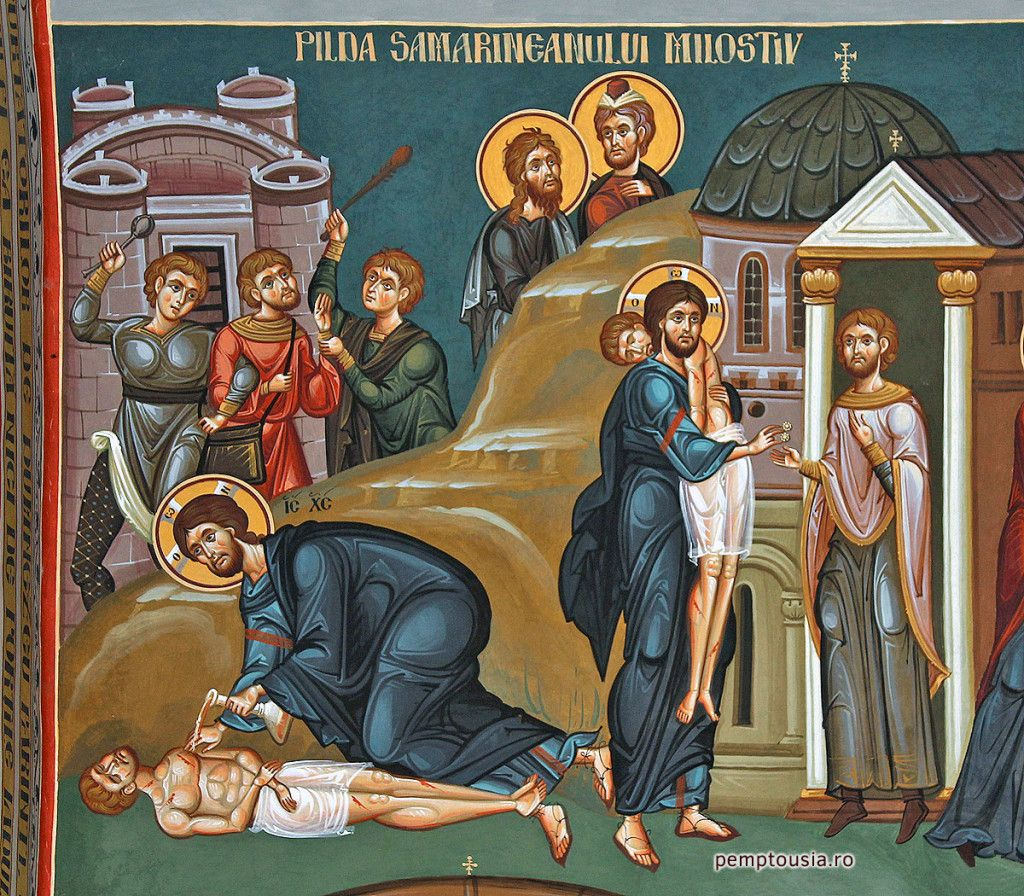
A man was traveling the road between Jericho and Jerusalem. It is a road that covers about seventeen miles. The direction you were traveling mattered because the road was steep. Jerusalem is 2,500 feet above sea level; Jericho is 800 feet below sea level. To make matters worse, it ran through rocky, desert country, which was perfect for robbers. Only a fool would travel this road alone, so we can say this man was a fool. As expected, he is attacked by robbers. The picture is not pretty. They stripped him of his clothes, beat him and left him for dead. Laying there in his half-dead state, various people walked by him. The first was a priest. A priest was from the line of Aaron and assisted in worship. The religious man should have known better, but he crosses to the other side of the road, ignoring the victim. The second was a Levite. He was a descendant of Levi, one of the brothers of Joseph. In addition to his religious duties, he had political and educational duties. He should have known better, but he crossed to the other side of the road, ignoring the victim. The third person is our unlikely hero, the Samaritan. You know the Samaritans. They were considered half breeds, half Jewish and half Gentile. The Jews believed they had compromised the faith. The Jews hated them, but the Samaritan was the one who had compassion on the victim in Jesus’s story. He treated the man’s wounds, and he put the man on his own donkey. Together, they traveled to an inn, where our victim heals. The Samaritan shows his true compassion. He takes out his money and gives it to the innkeeper. It equaled two days’ worth of wages. He instructs the innkeeper to care for him in his absence and tells him he will be compensated when he returns. Like all parables, Jesus’s simple parable of the good Samaritan is easy to imagine, yet it contains a profound message. It is easy to understand, yet it is hard to apply. It is not enough to say you love God; you must love others too. That is why compassion within the Christian faith is so important. It is one of the qualities you must nurture within yourself to experience the abundant life in Jesus Christ.

Webster defines compassion as sympathetic pity and concern for the suffering or the misfortunes of others. To me, that definition seems too shallow. True compassion is far more complex.

The great German Roman Catholic theologian, Henri Nouwen (1932-1996), seemed to understand the complexity of compassion. He once explained compassion this way:

Compassion is not pity. Pity lets us stay at a distance.

Compassion is not sympathy. Sympathy is for superiors over inferiors. Compassion is not charity. Charity is for the rich to continue in their status over the poor.

Compassion is born of God. It means entering the other person’s problems. It means taking on the burdens of the other. It means standing in the other person’s shoes. It is the opposite of professionalism. It is the humanizing way to deal with people.

The Good Samaritan illustrates true compassion. True compassion is based on need, not worth. True compassion is based on feelings, not fact. True compassion is based on doing, not understanding. Do the people in your life consider you compassionate? I hope so, because compassion is one of the great qualities of the Christian faith. I am not sure it is possible to be a true Christian without being truly compassionate. Compassion is a big deal, because our world is filled with so many problems.Did you know, according to UNICEF, 80% of our world’s population lives on ten dollars a day or less? How would your life change if you were forced to live on ten dollars a day? How much money do you live on in a single day?

When I think of compassion, Mother Teresa (1910-1997) pops into my mind. Born in Albania and raised in a devout Catholic family, she moved to Ireland at the age of eighteen to join the Sisters of Loreto. Later she moved to Calcutta, India and founded the Missionaries of Charity. They worked with the “poorest of the poor.” Over the decades that group grew to serve in 133 countries ministering to those dying of HIV/AIDS, leprosy, and tuberculosis, as well as running soup kitchens, dispensaries, mobile clinics, orphanages and schools. In 2016, she was canonized by the Catholic Church, because she refused to cross to the other side of the road. Mother Teresa was truly a woman of compassion.

When I research compassion, I find people like Pam Kidd. She writes devotions for Guideposts. One day she received a letter postmarked Harare, Zimbabwe. The letter read:

Dear Ms. Kidd, I have been reading your Daily Devotions for years. Recently, God spoke to me and asked me to tell you that you need to come to Zimbabwe to write about the orphans and the street children of Harare. Please contact me as soon as possible. Thank you.

It was signed by a woman working as a Presbyterian missionary in Harare.

That letter changed everything. A few weeks later, Pam and her husband were flying to Harare. When they arrived in Zimbabwe, they were shocked at what they saw. It was worse than they had imagined. Children living in mud huts, children jumping over sewage in gutters. She could not escape the smell of poverty. Children followed her everywhere. Pam decided to write a story about a woman who fed tea and bread to the orphans daily. They called her “Tea Lady.” As she researched this woman, Pam discovered this saintly woman had no help. She received no funding and needed help. Then, she had a revelation. God had brought her to Harare to help this woman. Over the next ten years, Pam Kidd returned to Africa ten times to help this woman help those orphans. Pam Kidd refused to walk to the other side of the road, because she was a woman of compassion. I hope I am a person of compassion. Are you a person of compassion? I hope so, because our world is crying out for help.

In 1964, Kitty Genovese (1965-1934) lived in Kew Gardens, in Queens, New York City. On March 13 of that year, Winston Moseley (1935-2016) raped and stabbed her to death. As shocking as that crime was the reaction of her neighbors was even worse. Many heard her cry out for help, but no one responded. Her neighbors were guilty of a sin of omission. They knew there was a problem, but they did nothing. In other words, they walked to the other side of the road. In the science of sociology, it has been called the “bystanders’ effect”, or diffusion of responsibility.

As Americans, we have been blessed in many ways. That is why so many long to live here. But, with those blessings comes great responsibility. To whom much is given, much is expected. Our world is calling out for help. What are you going to do? Are you going to walk to the other side of the road and ignore them, or are you going to be like the Good Samaritan, who responded to human need? It all distills down to a simple choice. Albert Schweitzer (1875-1965) once said, “The purpose of human life is to serve and to show compassion and the will to serve others.”

Examining Your Priorities

Our reading comes from the twelfth chapter of Luke, verses thirteen through twenty-one. Jesus is in Judea and is surrounded by a great crowd. He is offering them both a word of encouragement and a word of warning. Jesus tells them to keep their eyes fixed on God. Without warning, Jesus is interrupted.

The interrupter did not hear a single word from Jesus, because he is preoccupied with personal problems. His problem is complex because it combines two of life’s most complicated topics: family and money. Some things don’t change; family issues and money issues are still complex. That is why verse thirteen resonates with us. The author quotes the man with these words, “Teacher, tell my brother to divide the inheritance with me.” As a member of the modern clergy, I have never been asked to help settle family estates. In Jesus’s day, it was common to take such problems to teachers or rabbis. As a rule, the older brother always received a double portion of the inheritance. Jesus saw the problem instantly – the Master knew the man’s request was rooted in materialism. In other words, Jesus knew the man’s problem was greed. The man’s priorities were confused. Then, Jesus told the man this story.

The ground of a certain rich man produced a bumper crop. That was a good thing and a bad thing. It was a good thing because his crop was valuable. It was a bad thing because he had no place to store his crop. To the business world, the problem is solved easily, he tears down his original barn and builds a bigger one. Once this bumper crop is harvested and stored, life will be easier. It is a great plan except for one major flaw –  the man suddenly dies and is separated from his earthly possessions. Sadly, the man was financially successful, but spiritually bankrupt. That makes me ask an interesting question. How many successful, spiritually bankrupt people do you know? Could it be you are a successful, spiritually bankrupt person?

I have said it a million times, Money is amoral. Money is neither good nor bad. It is how we handle and view our money that makes it good or bad. That is the case in this story. This parable is filled with personal pronouns. Listen to the story again with that filter.

“The ground of a certain rich man yielded an abundant harvest. He thought to himself, ‘What shall I do? I have no place to store my crops.’ “Then he said, ‘This is what I’ll do. I will tear down my barns and build bigger ones, and there I will store my surplus grain. And I’ll say to myself, “You have plenty of grain laid up for many years. Take life easy; eat, drink and be merry.”’

Jesus’s simple story is dominated by personal pronouns. In verses sixteen through nineteen, the word, “I” is uttered six times by the rich fool. Like the man with the problem, the man in the story is consumed with selfishness and materialism. The man with the problem and the man within the story were victims of greed. Yet, the story is not really about money. It is a story about priorities. The man with the problem and the man in the parable’s greatest priority was money. What is your greatest priority? Sometimes our greatest priorities are bad things. How many examples do you need?

Matthew Perry (1969-2023) was rich. At the time of his death, he was worth $120 million. Most of the money came from the TVshow Friends, where he played Chandler Bing. If he had used his fame and fortune for good, then he would have improved many lives. He would have been welcomed by any non-profit. Sadly, that was not his story. His greatest priority was himself. It has been estimated he spent $9 million on various alcohol and drug addictions treatments. He went into rehab fifteen times. Sometimes our greatest priorities are bad things. However, this is also true: Sometimes our greatest priorities are good things. The problem is, our good things aren’t always the best thing.

There is a website called Quora. On it, people respond to all kinds of questions. I punched in the question: what is your greatest priority? People responded in a variety of ways. One guy said the highest priority in his life was survival skills. One woman answered the greatest priority in her life was her clothes, make-up and hair. Someone else said the greatest priority in their life was finding a life partner. One gentleman said, his greatest priority in his life was sex. How do you answer the question, what is your greatest priority? I would bet your answer is close to my answers.

One of my priorities is financial stability. There are four things you need to know about my personal finances. First, I am a fiscal conservative. I am uncomfortable carrying any kind of debt. I have been known to pay the bill before the bill comes. I do not expect to die rich, but I hope I die debt-free. Second, I am terrified of the Internal Revenue Service. I think everyone should be afraid of the IRS. Third, I recognize everything I have in this world is only on loan from God. The last thing I am going to do financially is cheat God. Fourth, I value work. I was raised in a steel town in Northeast Ohio, where work was not just valued, it was expected. One of my priorities in my life is financial stability.

One of my priorities is good health. In January of 1950, my grandmother came home from church and was preparing lunch for her family. She never ate that meal, because she dropped dead from a fatal heart attack. She didn’t get to be my age. My family tree is filled with high blood pressure. Every morning, I get up and take my medicine, so I won’t have a heart attack. My greatest fear in life is not dying, it is lying in a bed in a nursing home unable to care for myself. One of my priorities in life is my health.

One of my priorities are my children and my grandchildren. I am proud of my children, Sarah and Anna. They are good people who are doing well. I believe they are good people for two reasons. First, they were raised in a single community and knew stability. I never longed for them to be Methodist gypsies wandering around the Annual Conference. They are good people because they are a product of a good community. Second, they know Kathryn and I love them and support them. They don’t need us, but we need them. They know we want what is best for them. It goes without saying – we want what is best for our grandchildren, Pippa and Romeo, and are willing to sacrifice for them. One of my priorities is my children and grandchildren.

One of my priorities is my spouse. Kathryn and I have been married thirty-six years. The time has gone fast; I wish I could slow life down. There are so many things we would like to do together. There are so many places we would like to go together. I have never hidden my feelings for her. My life began on the day we met. One of my greatest priorities is my wife. Nothing seems to matter without her. Let me ask you the question again. What are your priorities?

None of those things are bad things. The problem is none of those things are eternal. Someday, I am going to be separated from my material possessions. Someday, there is an excellent chance I am going to get a terminal disease or get in a fatal accident. The problem is, there is only so much I can do for my children or my grandchildren. Kathryn and I would like to leave this world together, but there is no guarantee. It is a cruel fact; the world is constantly changing. The only thing that is completely stable is God. Only God is eternal.

Years ago, I was called by one of the local funeral homes to officiate at a service. I did not know the deceased. I was called for one reason – neither the deceased nor anyone in the family had a church home. They didn’t even know a member of the clergy. However, they wanted to celebrate their loved one’s life. As is my custom, I went to the calling hours to meet with the family. It was a painful couple of minutes for the family. They apologized to me for not going to church. In their minds, they had good reasons. I told them I wasn’t there to judge them, but I was there to help them celebrate their loved one’s life.

As they told me about him, I discovered he was a good person. He would do anything for anyone. He had worked hard and was well respected by his peers. His hobbies always included family members. His absence would leave a great void in their lives. His brother said, “He lived every day to the fullest. He lived as if he was never going to die.” This is the problem: He did die. Sadly, like the man in Jesus’s story, he was economically successful, but spiritually bankrupt.

The funeral service went off without a hitch. His life was remembered. Some of the memories made people laugh. Some of the memories made people cry. The service ended with me giving the benediction. As is the custom, the last ones to view the body were the family members. After I perform a funeral, most family members stay for a few unpleasant minutes. This family stayed for what seemed like an eternity. Numb, they just stood there looking at the corpse. The veteran funeral director, who was a great churchman, motioned for me to come to him. He whispered in my ear, “Russ, I have seen it a million times. People with no faith linger, because once the service is over, it is over. They will never see their loved one again. People with faith are different. They move on because they know there is more. They know they will see their loved one again in heaven. How great of a priority is God to you? American Baptist minister Rick Warren (born 1954) once said, “Living in the light of eternity changes your priorities.”

Ther Savior is Born

Everyone knows the name Napoleon Bonaparte (1769-1821). He was a French statesman and military leader, who rose to prominence during the French Revolution. He was the Emperor of France from 1804-1814, and for a short time in 1815. During those years he dominated Europe. In 1809, the name Napoleon grabbed the headlines of every international newspaper. Yet, under the headlines God was at work.

The year 1809 was quite a year in the history of the world. For in that year, some significant babies were born. For example, in 1809, William Gladstone (1809-1898) was born. He grew up to be one of England’s finest statesmen. The great writer Alford Lloyd Tennyson (1809-1892) was born in 1809 to a minister and his wife. In 1809, Oliver Wendall Holmes (1809-1894) was born in Cambridge, Massachusetts. In Boston, Edgar Allan Poe (1809-1849) was born. In 1809, a physician and his wife, the Darwin’s, welcomed their son into the world. They named him Charles Robert (1809-1882). In 1809, a baby was born in a log cabin in Hardin County, Kentucky to the Lincolns. They named him Abraham (1809-1865). Napoleon may have been dominating the headlines, but God was moving under the headlines. It has always been that way.

Our scripture reading is Luke 2:1-7. The headline on the day Jesus was born must have read: HIGHER TAXES! No one wanted to read that headline because no one wants higher taxes. Yet, taxes cannot be ignored. So, for that reason, a decree went out throughout the entire Roman world. Everyone had to return home to be counted for tax reasons. Joseph was not excluded. He was required to return to his hometown, Bethlehem. It is not as simple as it sounds. Joseph was traveling with his true love, Mary. The journey began in Nazareth, Mary’s hometown, so the journey was seventy miles long. To make the story even more complicated, Mary was pregnant, and Joseph was not the biological father. She conceived, not by the help of a man, but through the Holy Spirit. Timing is everything. The child comes after the long journey. Some say the baby came while Mary was in a barn, some say he was born in a cave. Regardless, the baby was born surrounded by animals, so they had to be careful where they stepped. Joseph and Mary did as God commanded. According to the Gospel of Matthew, they gave him the name Jesus. It is important that you know Jesus means “to save.” This is the question you must answer: What did Jesus save us from? In this blog, I am going to look at three answers to that one question. This is the first answer.

Jesus came to save us from disillusionment. One of the great stories of this season is A Christmas Carol. It was written by Charles Dickens (1812-1870) in 1843. You know the story. The theology is poor, but the theme is wonderful. The story revolves around a man named Ebenezer Scrooge. When we first meet him, he is a selfish, greedy businessman. His now famous response, “Bah Humbug!” has become a symbol of a disillusioned spirit. However, thanks to the visits of three ghosts, the ghosts of past, present and future, on Christmas Eve, Scrooge is transformed. By Christmas morning his transformation is complete. He became generous, loving, and a gracious servant of society. The reason our society can’t get enough of A Christmas Carol is, we all relate to Ebenezer Scrooge. Can I ask you a question? Have you ever grown disillusioned?

Jesus came to remind us that there is more to this world, than this world itself. The next time you feel disillusioned, remember this. The God of the universe, who created this entire world out of nothing, knows your name. When you are at your lowest, listen for God. He is calling your name to remind you that you are a person of significance. How important are you? You are so important, God sent his one and only son into this world to die for you, so God can spend eternity with you. Jesus came to save us from our disillusionment. This is the second answer.

Jesus came to save us from defeat. In 1939, a man by the name of Robert May (1905-1976) worked for Montgomery Ward department store. For marketing purposes, he was asked to create a new Christmas character. So, he combined two famous characters, Santa Claus and the Ugly Duckling. He called his new character Rudolph, the Red Nosed Reindeer. You know this story too. The misfit reindeer goes on to save the day. Except for a few “Bah Humbug” people, everybody loves the story of Rudolph the Red Nosed Reindeer because everybody can relate to Rudolph. We all dream of being the hero. Let me tell you another story.

In 1960, Wilma Rudolph (1940-1994) became the first American woman to win three gold medals in the Olympic Games. Millions of Americans were glued to their television sets that summer. They believed she was the greatest female athlete ever. What made Wilma Rudolph resonate with so many was her personal story. For the first three years of her life, she couldn’t walk and wore heavy braces. The reason was her left leg was paralyzed. Medical experts said she had no hope of ever walking, but Wilma didn’t listen to the experts. She listened to her heart. She worked those long legs in Clarksville, Tennessee, and beat the odds. She became the fastest woman in the world!

I am not going to lie to you. I have known many good people who feel lost. However, I will say this: The nativity stands as a reminder to the fact that God came into the world to stand with us. Jesus was not born in the palace surrounded by aristocrats. He was born in a barn surrounded by commoners, like us. Sometimes, we experience victory, and sometimes, we do not. As Christian people, we know the truth. God is always by our side, and in the end, we are going to be victorious. In the end, everyone who believes in Jesus is going to heaven. Jesus came to save us from our disillusionment. Jesus came to save us from defeat. However, there is more. This is the third answer.

Jesus came to save us from death. It has been said, “Death is not extinguishing the light from the Christian; it is putting out the lamp before the dawn.”  When I first read that quote, I thought of my grandfather, Roger Adams. He was the greatest man I have ever known. He had the ability to make any situation fun. He had the gift of making everyone in his life feel important and special. This is his story. He was born in Pierpont, Ohio, just south of Conneaut. As a teenager his leg was damaged in a train accident. His father, my great-grandfather, refused to let the doctor amputate his leg. My grandfather had his leg, but he always struggled with that bad leg. Maybe that is why he was the first Adams to leave the farm and head to the big city. He moved to the bright lights of Ashtabula, Ohio. He had many jobs in his life, but the only job I remember him holding was on the docks of Ashtabula harbor. It was a good job, but it was not the job he really wanted. He wanted to go into the ministry, but he never had the opportunity. When I went into the ministry, I wasn’t just fulfilling my dream. I was fulfilling his dream of ministry too. In the twelfth chapter of Hebrews, it says we are surrounded by a great cloud of witnesses, saints, who are cheering us on to do our best. One of those saints cheering me on is my grandfather, Roger Adams. When I see him again in heaven, I am going to tell him everything he missed in the ministry. I am going to tell him I was passionate about the ministry because I did it for the two of us. The Ecology Global Network tells us that two people in our world die every second. You must know someone in that great cloud. There must be someone you miss. There must be someone you will never forget.

I have many questions, but there is one thing I know for sure. Someday, I am going to heaven. I am not making this statement because I think I am a good person or a perfect person. I know I cannot save myself by my good works or by being a good person. I know I am saved by grace and by grace alone, and I lean heavily on grace. I am going to heaven because I worship a perfect Savior. I am going to heaven because of Jesus, who was the perfect sacrifice for the sins of the world. May we never forget it. Salvation is a gift! Salvation is yours by accepting Jesus as your Lord and Savior. When I get to heaven, I am going to look for Roger Adams, the greatest man I have ever known. Who are you going to look for when you get to heaven?

On December 17, 1903, in Kitty Hawk, North Carolina, after many attempts, Orville (1871-1948) and Wilber Wright (1867-1912) got their flying machine off the ground. Orville was the pilot. He flew for 12 seconds and went 120 feet. The world would never be the same again. Wanting to share their good news, the Wright brothers telegraphed their sister, Katherine (1874-1929), back in Dayton, Ohio this simple message: WE HAVE ACTUALLY FLOWN 120 FEET. WE WILL BE HOME FOR CHRISTMAS. Katherine was thrilled her brothers had flown and wanted to share their good news with the world. She went to the editor of the local newspaper and handed him the message. He read it and responded, “How nice! The boys will be home for Christmas.” He totally missed the big news!

I hope you don’t miss the big news. The Savior of the world is born! He came to save us from our own disillusionment. He came to save us from defeat. He came to save us from death. Do you remember the words of the unnamed angel in the first chapter of Matthew? The angel said, “She will give birth to a son, and you will give him the name Jesus, because he will save his people from their sins.