Facing the Challenge

The Sermon on the Mount is found in the fifth, sixth, and seventh chapters of Matthew. It is a collection of Jesus’ moral teachings. That means our reading, Matthew 5:38-48, stands within that body of teachings. There is nothing easy about what Jesus said to the crowd on that day; they were challenging words. They are challenging words to us today, and they must be taken seriously. They are challenging because they run contrary to normal human behavior. If you use your sanctified imagination, you can imagine Jesus using his well-warn sandal and drawing a line in the sand. He is challenging them, and us, to step over that line and stand with him. This is the truth – few have stepped over that line. Most of us are more concerned about being accepted by the world than standing with Jesus. The heart of those teachings is the topic of Christian discipleship. Are you taking your discipleship seriously? In this blog I want to look at Jesus’ challenge; we find that we are challenged in three ways.

First, are you willing to love unconditionally? Most of us love conditionally. Verses thirty-eight and thirty-nine says, “You have heard that it was said, ‘Eye for eye, and tooth for tooth.’ But I tell you, do not resist an evil person. If someone strikes you on the right cheek, turn to him the other also.”  It is easy to love likeable people, who are just like you. It is not as easy to love unlikeable people, who are nothing like you. However, Jesus expects his disciples to love unconditionally.

Every American knows the name George Washington (1732-1799), the first President of the United States. Not many know the name Peter Miller (1709-1796), who was a friend of Washington and the German Baptist pastor in Ephrata, Pennsylvania. Within Miller’s congregation was a man named Michael Wittman. He hated his pastor and did everything possible to discredit him. One day Wittman was arrested for treason and sentenced to die. History tells us, Pastor Miller traveled seventy miles on foot to Philadelphia to plead for the life of the evil-minded Wittman. The plea was heard by his friend George Washington. At first, Washington was deaf to Miller’s plea because he thought Miller and Wittman were friends. Then, Miller responded, “No, he is not my friend but my bitterest enemy.” Washington responded, “You have walked seventy miles to save the life of your greatest enemy? That puts the matter in a different light. I’ll grant your pardon.” Peter Miller took Michael Wittman back home to Ephrata – no longer an enemy, but a friend. Would you beg for the benefit of an enemy? Miller didn’t just beg for Wittman’s life; he accepted Jesus’ challenge and crossed the line in the sand. I hope you would do the same because that is what Jesus expects. If you are going to cross the line in the sand and stand with Jesus, then you must love unconditionally. Are you up to the challenge?

Second, you must forgive unreservedly. Most forgive reservedly. On April 25, 1958, a 26-year-old exchange student from Korea was killed going to the post office near the campus at the University of Pennsylvania. The news of the attack spread quickly. The entire city of Philadelphia was outraged. A teenage gang was accused. The District Attorney wanted them tried as adults, so they could be given the death penalty. Then suddenly, something shocking happened. A letter came from Korea that confused everyone. This is what the letter said: 

To Whom It May Concern:

Our family has met and has decided to petition your government so those guilty of this crime may be treated generously within your law. To give evidence of our sincere spirit, we have decided to save money for a fund to be used for the religious, educational, vocational and social guidance of the boys once they are released. We have learned about such forgiveness from our Savior, Jesus, who forgave us. 

A large part of Jesus’ mission was to offer forgiveness. Those Koreans were not just setting up a fund, they were accepting Jesus’ challenge and crossing Jesus’ line in the sand. Jesus Christ forgave unreservedly, and so did those Korean disciples. Would you be able to forgive those teenagers? If you are going to cross the line in the sand and stand with Jesus, then you must forgive unreservedly. Are you up to the challenge?

Third, you must serve unselfishly. Are you open to sacrificing for a stranger? Verses forty through forty-two say, “And if someone wants to sue you and take your tunic, let him have your cloak as well. If someone forces you to go one mile, go with him two miles. Give to the one who asks you, and do not turn away from the one who wants to borrow from you.”  It is not easy to serve unselfishly, but that is what Jesus expects from you and me. Jesus says we must serve unselfishly.

On a dreary winter day in 1943, nine hundred and three soldiers and four chaplains boarded the SS Dorchester. World War II was in full swing, and the ship was headed across the icy north Atlantic. At midnight on February third, the ship was hit by a German torpedo. The word went out that the ship was going down. One of the chaplains was a man named George Fox (1900-1943). A young GI crept up to Fox and said, “I’ve lost my life jacket. Fox said, “Take this,” and handed the GI his life jacket. Before the ship sank, each chaplain gave his life jacket to another man. The heroic chaplains then linked arms and lifted their voices in prayer as the Dorchester went down. Those chaplains were awarded posthumously the Distinguished Service Cross.

Those chaplains accepted the challenge and crossed the line in the sand. They were true disciples of Jesus Christ! Would you have given your life jacket away to save someone else? If you are going to cross the line in the sand and stand with Jesus, then you must serve unselfishly. Are you up to the challenge? Let me end with this story.

In 1992, the movie A League of their Own was releasedI have watched the movie several times. It is about a women’s baseball league during the Second World War. Geena Davis (born 1956) is the main character in the movie and plays the catcher of the Rockford Peaches, Dottie Hinson. She is not only the best player on the team, but also the best player in the league. As the season drags on, Davis’s character gets tired and decides to quit the team. She tells her manager, Jimmy Dugan, played by Tom Hanks (born 1956), that she is going to quit because baseball is “too hard”.  I love his response. Hank’s character responds, “Baseball is supposed to be hard. If it wasn’t hard, everyone would do it.”  Then he said, “Hard is what makes baseball great!” 

It is not just true of baseball; it is true of the Christian faith. If it was easy, then everyone would do it. The challenge is what makes the Christian faith so great! Are you going to accept Jesus’ challenge and cross Jesus’ line in the sand? If you are, then you’d better be prepared to do the most unnatural things. The choice is yours. I hope you are up to the challenge! American philosopher Dallas Willard (1935-2013) once said, “Discipleship is the process of becoming who Jesus would be if he were you.”

The Rest of the Story

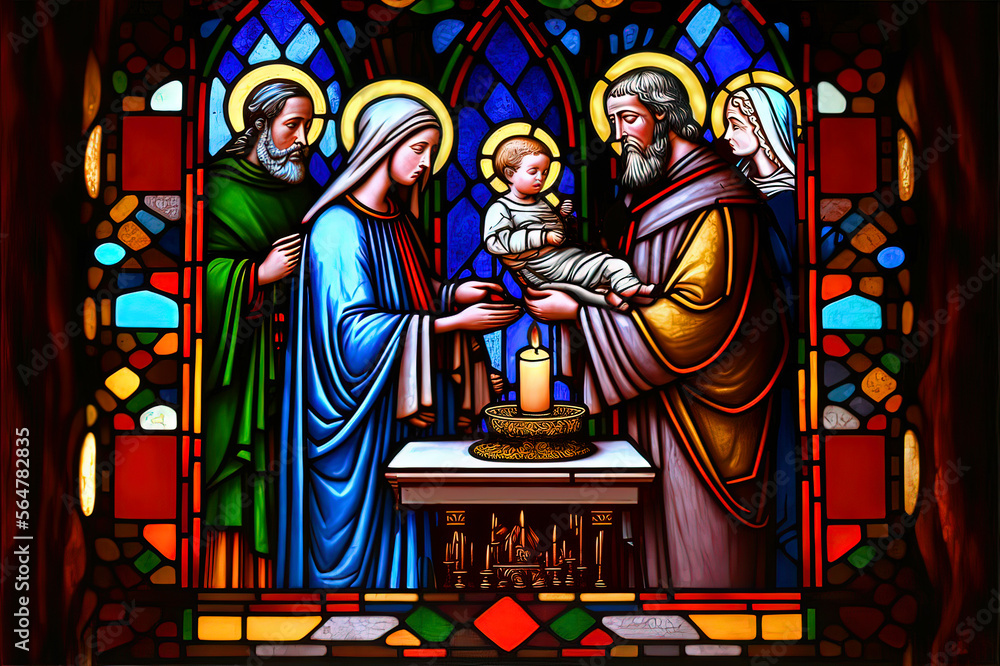
Our reading is Luke 2:21-40. It gives us the rest of the Christmas narrative. Never forget, Joseph and Mary were a Jewish couple who practiced the customs of their faith. Our reading records two such practices. The first came when Jesus was eight days old. For it was on that day that Jesus was formally named and circumcised. The second came when Jesus was forty days old. The Old Testament law, Leviticus 12:2-8, required all women who gave birth to a boy to go to the temple to offer a sacrifice of purification. Mary went and sacrificed something as small as two doves or pigeons. Both practices were scripted. The only thing that makes these stories noteworthy are the characters they meet at the temple. In the end, they both praised God for two different reasons. Let me look at each one.

The first person Mary and Joseph encountered was Simeon. He is described as righteous and devout. He had been waiting for years for the consolation of Israel. What does that mean? It means that he had been waiting for years for comfort. Annually, he sat at the Seder and remembered the great things that God had done for His people. It was God who sent the plagues. It was God who parted the sea. It was God who provided for his people in the wilderness. God did some mighty things for them, but that seemed like ancient history. God hadn’t done anything for his generation. Those great days with God had been replaced by foreign domination. There must have been days when the Jews felt forgotten. Have you ever felt forgotten by God? When Simeon looked at the infant Jesus he was comforted because he knew God was still with them. When we think of the infant Jesus, we feel comforted too. Jesus reminds us that God is still with us!

The second person Mary and Joseph encountered was Anna. She is described as an eighty-four-year-old old prophetess. It was never difficult to find her because she was always in the temple. She had been there since the death of her husband. She knew there was something special about Jesus and spoke about the redemption of Israel. What does that mean? A large part of redemption is forgiveness. When Anna looked at the face of the infant Jesus, she knew that forgiveness was possible. After all, thirty-three years later Jesus was the perfect sacrifice for the sins of our world, so we can experience forgiveness. Simeon and Anna remind us we are not forgotten and forgiveness is possible. The infant Jesus changed everything. Let me end with this old preaching story.

Years ago, there was a very wealthy man who shared a passion for art collecting along with his son. They owned priceless works by Vincent Van Gogh (1853-1890) and Pablo Picasso (1881-1973) which adorned the walls of their family estate. As winter approached, war engulfed their nation, and the man’s son left to serve his country. After only a few short weeks, the father received a telegram, his son had died. Distraught and lonely, the old man faced the upcoming Christmas with anguish and sadness. The joy of the season had vanished with the death of his son. On Christmas morning, a knock on the door awakened the depressed old man. As he walked to the door, the masterpieces of art on the walls only reminded him that his son was not coming home. As he opened the door, he was greeted by a soldier with a large package in his hands. The visitor said, “I was a friend of your son. He died rescuing me. May I come in for a few moments? I have something to show you.” The soldier mentioned that he was an artist and then gave the old man the package. The paper gave way to reveal a portrait of the man’s son. Though the world would never consider it the work of a genius, the painting featured the young man’s face in striking detail. Overcome with emotion, the man hung the portrait over the fireplace, pushing aside millions of dollars’ worth of art. His task completed, the old man sat in his chair and spent Christmas gazing at the gift he had been given. The painting of his son soon became his most prized possession, far eclipsing the masterpieces he owned.

The following spring, the old man died. The art world waited with anticipation for the upcoming auction. According to the will of the old man, all the art works would be auctioned on Christmas Day. The day soon arrived and art collectors from around the world gathered to bid on some of the world’s most spectacular paintings. The auction began with a painting that was not on anyone’s museum wish list. It was the painting of the man’s son. The auctioneer asked for an opening bid, but the room was silent. “Who will open the bidding with $100?” No one spoke. Finally, someone said, “Who cares about that painting? It’s just a picture of his son. Let’s move on to the good stuff.” The auctioneer responded, “No, we must sell this one first. Now, who will take the son?” Finally, a neighbor of the old man offered $10 dollars. “That’s all I have. I knew the boy, so I’d like to have it.” The auctioneer said, “Going once, going twice…gone.” Cheers filled the room and someone exclaimed, “Now we can bid on the real treasures!” The auctioneer looked at the room filled with people and announced that the auction was over. Everyone was stunned. Someone spoke up and said, “What do you mean, it’s over? We didn’t come here for a painting of someone’s son. There is priceless art here! What’s going on?” The auctioneer replied, “It’s very simple. According to the father’s will, whoever takes the son…gets it all.”

It is the story of Christmas. Whoever gets the son gets it all. Simeon reminds us – God has not forgotten us – He came into the world to be with us. Anna reminds us, Jesus came into the world to offer us forgiveness and salvation. Augustine of Hippo (354-430) once said, “God loves each of us as if there was one of us.”  Merry Christmas!

Living in the Light

Meteorologists tell us the darkest day of the year in the Northern Hemisphere is December 21, the winter solstice. In my hometown we experience 14 hours and 56 minutes of darkness on that day. However, I do not consider December 21 the darkest day of the year. I consider January 2 to be the darkest day of the year. We experience 14 more minutes of sunlight on January 2 than on December 21, but darkness reigns on that day. Christmas is over, and Christmas lights have grown dark. I have always found Ohio winters to be hard, not because of the cold, but because of the darkness. I much prefer living in the light. I am not alone. That takes us to our scripture reading, Genesis 1:1-5.

Tradition tells us Moses wrote the Book of Genesis, along with Exodus, Leviticus, Numbers and Deuteronomy. Together, they are called the Pentateuch. They were written approximately 1,400 years before the birth of Christ. Genesis means “birth,” “genealogy,” or “history of origin.” It is the perfect title for the book because it summarizes the theme of the entire book. Our reading tells us how it all began. They are the opening words to the creation story.

According to the Bible, God created the world in six days, resting on the seventh. God is the main character in the Bible. In the Bible, God’s existence is never questioned, he always existed. In our reading, the original language, Hebrew, exposes Jesus was part of the creation because Jesus is divine. The first verse says, “In the beginning God created the heavens and the earth.” In verse two we learn darkness reigned until God acted. In other words, only chaos, disorder, danger and the unknown existed. In verse three, God introduces light. It is the opposite of darkness. Light brings order, safety and knowledge. In verses four and five, we are told God was pleased with the light, so he separated the dark and the light. The darkness was called “night” and the light “day.” I find it interesting everything began when light was brought into the story. This is certainly not the last time light is mentioned in the Bible.

The word light is used 272 times in the Bible. Sometimes, light means something that glows, like a campfire, firefly or a flashlight. Sometimes, it means more. In the Bible, light symbolizes God’s presence, purity, truth and spiritual illumination. In 1 John 1:5, God is described as light. In John 8:12, Jesus described himself as the “light of the world.” That verse says, “Jesus spoke again to the people, he said, ‘I am the light of the world. Whoever follows me will never walk in darkness, but will have the light of life.”  I have been walking in that light for over fifty years. I feel sorry for people who are groping in the dark because life is hard for everyone.

When you live in the light of Christ, you are forgiven. Ephesians 1:7 says, “in him we have redemption through his blood, the forgiveness of trespasses, according to the riches of his grace.” Forgiveness in the Christian faith runs contrary to our world. According to the Bible, we are forgiven by God when we forgive others. That is the point of the parable of the unmerciful servant, Matthew 18:21-35. True peace with God is only possible when we forgive others. Who do you need to forgive?

When you live in the light, you have hope. Roman 15:13 says, “May the God of hope fill you with all joy as you trust in him, so that you may overflow with hope by the power of the Holy Spirit. According to a recent Harvard Youth Poll, 51% of young Americans feel hopeless. That is a sad figure because they live in a wonderful country. America is still the land of opportunity. However, with that opportunity comes responsibility. It was a wonderful day when I discovered it all didn’t depend on me. God has been taking care of me from the very beginning. Living in the light means I am not alone. God is with me, and God is with everyone who is living in the light. Those who chose to live in the darkness only see loneliness. Matthew 19:26 says, “With God all things are possible.”

When you live in the light of Christ, you have a purpose for living. Romans 8:28 says, “And we know that in all things God works for the good of those who love him, who have been called according to his purpose.”  Discovering your divine purpose is vital. I am fortunate that my vocation and my purpose were one. For many they are not. God created you for a purpose. You were not born to be a consumer. You were not born to amass wealth. You were born to glorify God and work in his kingdom. What are you doing to glorify God?

When you live in the light, you have salvation. John 14:6 says, “Jesus answered, I am the way, the truth and the life. No one comes to the father except through me.”  This is the unpleasant reality – no one gets out of the world alive. We are all terminal from birth. However, that is not the end. For those who live in the light there is more. One of the great promises in the Christian faith is salvation. When I leave this world, I will go home. In other words, I will be in heaven with fellow believers. Are you still questioning your salvation?

Years ago, I was visiting someone in the hospital. They were in the intensive care unit. On my way out of the ICU, I stuck my head into the family waiting room. You never know who you will find. On that day, I found a woman I knew. She was surrounded by her family. She gave me a hug and introduced me to her family. Everyone greeted me warmly, except one brother. He was having a hard time. They told me their other brother was a patient, and things weren’t going well. I asked them if I could pray with them. They all said, “Yes!” except for the struggling brother. He looked at me and said, “No! What the hell has your God done for me?” The family apologized for his harsh words, but I wasn’t upset. I felt sorry for the hurting man. He was struggling because he was living in the dark. He only saw chaos, disorder, danger and the unknown.

How many people do you know are living in spiritual darkness? I prefer living in the light because life is more tolerable. C. S. Lewis (1898-1963) once said, “I believe in Christ like I believe in the sun – not because I can see it, but because by it I can see everything else.”

How Strong Are You?

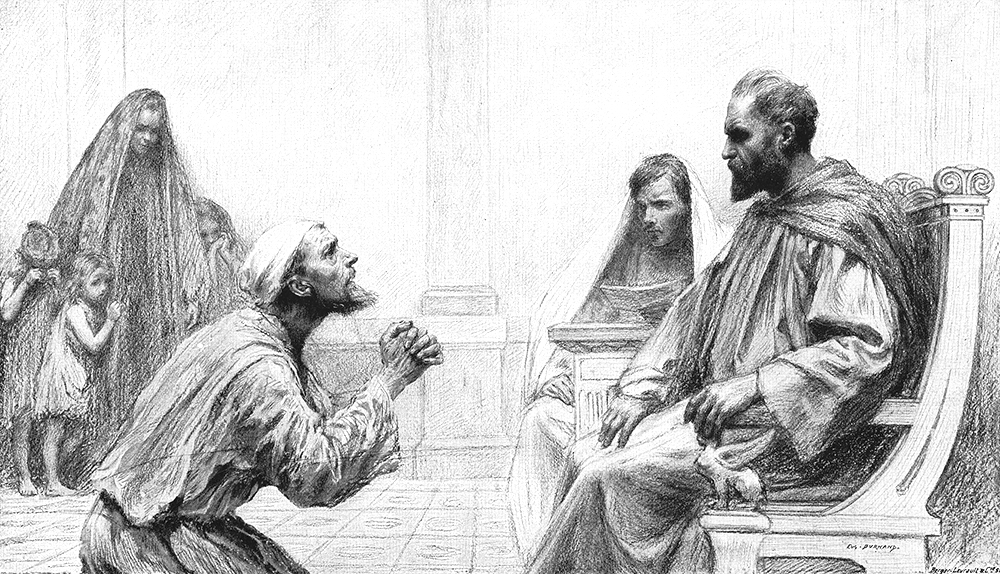
Our reading is from Matthew 18:21-35. This entire chapter is about life in the kingdom of God. One of the characteristics of kingdom life is forgiveness. Peter understood that point when he asked Jesus the question: how many times shall I forgive my brother when he sins against me? Jesus never had a chance to answer the question, because Peter answers it himself – up to seven times? Peter is obviously trying to impress Jesus, because Rabbinic teaching required a person to forgive up to three times. Peter had doubled that requirement and added one for good measure. He must have been waiting for Jesus’s approval, but it never comes. Jesus says seven times is not enough; we are supposed to forgive up to seventy-seven times. Jesus is not asking us to keep track of our forgiving acts, Jesus is asking us to make forgiving a constant characteristic in our lives. To underscore that point, Jesus tells them this parable.

The story is really a one-act play with three scenes. In the first scene, a king wanted to settle his accounts with his servants. One of the servants is brought before the king. It is not a good day for him because he owes the king 10,000 talents. That is a significant sum. At that time, you could buy a servant for one talent. The entire tax base to this area was only 800 talents. This man owes the king 10,000 talents. To make it easy on us, let’s just say the man owed the king ten million dollars. Unable to pay the king back, the king considers selling the man’s wife and children. The servant begs the king not to sell his family and begs the king for more time. The king has mercy on the servant and cancels his entire debt. In the second scene, the shoe is on the other foot. The debt-free servant exits and goes after another servant who owes him money. The amount is very small, only a hundred denarii. If he owed the king ten million dollars, then this man owed him only $20. The second servant begs for more time, but no extension is given. He is beaten and thrown into prison. In the third scene, our story goes full circle. The king is told what happened and he summons the first servant. Because he did not show mercy, then he will not be shown mercy. He is turned over to the jailors to be tortured, until his debt is repaid. Jesus wanted to make sure they didn’t miss the point. He clears up any confusion in verse thirty-five: “This is how my heavenly father will treat each of you unless you forgive your brother from your heart.”  Everyone knows the point that Jesus was trying to make. We know we are supposed to forgive. The problem is, we are not good at forgiving, especially within the life of the church. Historically, we are hard on ourselves. In my forty years in the ministry, every church I served struggled with forgiveness. How many examples do you need?

The first funeral I officiated at was for a man by the name of Randolph Scott. He lived in Lancaster, Kentucky. I was in his home several months before his sudden death. I sat in the living room with his wife, but he never came out to see me. He was watching a Cincinnati Reds baseball game. She apologized for her husband’s rudeness and explained he was mad at the whole church. To be more exact, he was mad at a single church member. He said, the man cheated him out of $50 in some business transaction. He said, if that man represented the kind of people in my church, then he didn’t want to have anything to do with my church. He said, he would never forgive the man or the church. Randolph was a man of his word. He never did forgive the man or the church. However, the church prepared a bereavement lunch after his funeral. Randolph Scott knew he was supposed to forgive. The problem was, he refused to forgive. That happened in my first church.

When I arrived at my last church, I found people who refused to forgive. One afternoon, I went to the hospital to visit a parishioner. She was a woman in her late eighties, who took great pride in her years of church service. As I sat next to her bed, she told me how she had saved the church several times with her church dinners. Others told me, she was a good cook, but she had no people skills. She offended many kitchen helpers during her reign. Foolishly, instead of talking to the woman about her behavior, the women’s organization decided to write her a letter to tell her she had been relieved of duty. She was no longer welcome in the kitchen. Obviously, her feelings got hurt, and she swore she would never forgive that group. She was a woman of her word. She never did forgive them. On the day I visited her, she quoted that twenty-year-old letter word for word, and she recited the names of all the people who had signed that letter. And in colorful, ugly language she told me, they could all go to hell. She had spent decades in the church but didn’t hear a single word. She knew she was supposed to forgive, she refused to forgive. Within the life of the church, we know we are supposed to forgive, but we refuse to forgive. No organization is better at self-inflicted wounds than the church. Satan loves our unforgiving spirits. Our unforgiving spirit damages the church we claim to love. This question haunts me:

Why do people refuse to forgive? Josh Emery is a counselor in Fort Collins, Colorado. He says his appointment calendar is filled with people who refuse to forgive. Every story is different, yet every story is the same. He says people don’t forgive for three basic reasons. This is his list:

  1. People don’t forgive because they don’t want to look like they condone the bad behavior.
  • People don’t forgive because the person doesn’t deserve it.
  • People don’t forgive because the person can’t be trusted.

I don’t have a problem with that list. I agree with each point. I am no different from you. I struggle with forgiveness too. I have good reasons not to forgive. The problem is, through the eyes of God, there is no good reason for not forgiving. God knows what we would like to ignore. When we refuse to forgive, we damage the relationship. The relationship between you and the unforgiven person stops evolving. That is true. For Randolph Scott, the relationship stopped evolving on the day he believed he was cheated out of $50. For the woman in the hospital bed, the relationship stopped evolving on the day she got the letter. What relationships in your life have stopped evolving? That is not a good thing. God expects us to forgive, because God expects our relationships to evolve. God expects our relationships to be strong. Within the life of the church, we know we are supposed to forgive, but we refuse to forgive. That is why stories of true forgiveness baffle us.

In the fall of 2006, Charles Carl Roberts IV (1974-2006) did the unthinkable when he held a one-room Amish school full of children hostage in Bart Township, Pennsylvania. After a few terrifying hours, Roberts bound, then shot 10 girls, killing 5 of them before turning the gun on himself. What do you think was the response of the parents of those children and the entire Amish community? Within hours, the Amish families immediately began extending their forgiveness to the gunman’s family. They visited his wife and parents to offer them comfort—they even attended the killer’s funeral. A grandfather of one of the murdered girls cautioned the family not to hate the killer and said, “we must not think evil of this man.” While another father said, “He had a mother and a wife and a soul. And now he’s standing before a just God. Christ calls us to forgive him.” If you were in that community and lost a loved one, could you forgive Charles Carl Roberts IV? In the kingdom of God we forgive, in the world we don’t. Obviously, true forgiveness is not easy.

Corrie ten Boom (1892-1983) was a Dutch watchmaker and Christian, who along with her father and other family members, helped many Jews escape the Nazi Holocaust during World War II. She, herself, suffered in a concentration camp. In her book, The Hiding Place, she recounts those dark days. After the war, she traveled extensively, speaking of God’s grace and forgiveness during those horrible years.

One night, in Munich after one of her speeches, a man came up to her. He looked familiar and it took a moment for her to recognize him. He had been a guard at her concentration camp, Ravensbruck. He had treated her and her sister cruelly. A mountain of emotional memories hit her. In her eyes, he was Satan incarnate. However, after the war, he became a Christian, but that didn’t change her feelings about him. It was hard for her to stand there, but then it got worse. He extended his hand to her and said, “I am grateful for your message. As you said yourself, ‘He washed my sins away.’” Corrie ten Boon would be the first one to admit it. It is one thing to speak about forgiveness, it is something quite different to forgive. She didn’t want to shake his hand because she didn’t want to forgive him, so she prayed God’s help. God did help her, and she did shake his hand. But what is more important, God helped her forgive him. Can I ask you a question?

If there anyone you need to forgive? I am assuming there is, because everyone has been hurt in some way. You know the truth – life is hard and sometimes life can be cruel. Who do you need to forgive? Within the Christian faith, forgiveness is not optional, it is a requirement. You are a disciple of Jesus Christ, and you are supposed to be practicing today what you will be doing for eternity. How can we expect to be forgiven, if we can’t forgive?

Indian activist, Mahatma Gandhi (1869-1948) was not a Christian, but he understood the power of forgiveness. He once said, “The weak can never forgive. Forgiveness is the attribute of the strong.” How strong are you?