Turn Your Eyes Upon Jesus is one of the most beloved hymns in the church. Did you know it was written by a blind woman? Her name was Helen Lemmet (1864-1961). From a young age her musical ability was noticed by everyone around her. She studied music in Germany where she met her husband. They moved to America in 1911, where she dedicated herself to writing, arranging, and teachings hymns of the faith. Sadly, several years into the marriage, she experienced a tragic illness which led to her loss of sight. Her husband, refusing to attend to a blind wife, left her. This time of hurt and loss weighed heavily upon her, however, that is not the end of her story.
In 1918, she was introduced to a pamphlet written Algerian missionary Lilias Trotter (1853-1928). Her words, turn full your soul’s vision to Jesus, and look at Him, and a strange dimness will come over all that is apart from Him, moved Lemmet. She wrote Turn Your Eyes Upon Jesus a short time later. She turned her eyes upon Jesus and continued to serve him faithfully. She led a women’s choral for many years at the Billy Sunday evangelistic events, taught music at the Moody Bible Institute, and penned over 400 hymns. It is amazing what happens when you turn your eyes upon Jesus. That takes us to our scripture reading.
Our reading is Matthew 14:22-33. It is Matthew’s version of Jesus walking on water. This story is not unique to Matthew, it is found in Mark 6:45-52 and John 6:16-21. The stories are basically the same, only the details change. Each one agrees the disciples got into a boat to sail to Capernaum. Mark tells us they got into the boat to escape the crowd. However, Jesus stayed behind to pray. John tells us a storm hits the boat between 3:00 am and 6:00 am. The little wooden ship is in distress and the disciples are afraid for their lives. Without warning, Jesus arrived by walking on the water and saved the day. Only Matthew tells us Peter got out of the boat to be with Jesus. That tells us a great deal about Peter’s bold and impulsive personality. He was the only one of the twelve who got out of the boat. The other eleven played it safe. At first, Peter had success. Then, he takes his eyes off Jesus and begins to sink. The story tells us how important it is to keep our eyes in the right direction. It is the key to surviving. Let me state the obvious.
Life is filled with storms. With your sanctified imagination you can imagine the disciples getting into the boat. This was not unusual for them. They had sailed across the Sea of Galilea many times, but this journey was different because they were caught in a storm. The Sea of Galilee was known for her violent storms. While they were afraid, they should not have been surprised, they were expected. Storms were a part of their life. Storms are part of our lives too! How many examples do you need?
I have been in the ministry for decades and have sat with people during the most challenging moments in their lives. I will sit with a young man who is going through a storm this weekend – I am officiating at his parent’s funeral. When I talked to him, he told me his painful story. His mother had suffered for years. She was cared for by her husband who protected her. They fought the brave fight in isolation. When her death finally came, the son looked forward to reconnecting with his father, he never really had the opportunity to know his grandchildren. That never happened because the husband died from a stroke eleven days after his wife’s death. As he told me the story, I could hear the stress in the son’s voice. I am struggling with finding the right words. What would you say? There is no other way to say it – life is hard and is filled with storms. I would like to say this is an isolated case, but I cannot. Every day, we hear stormy sad stories. How many storms have you experienced in your life? It is painfully true, life is hard and we should expect the storms to come. However, something else is equally true.
God forges a special relationship with us when we are in the middle of a storm. According to John, the disciples had rowed about three to three and a half miles across the lake when the storm hit. At about the same time Jesus comes to them walking on the water. They do not recognize him at first. They thought he was a ghost. (Jewish superstition said when a spirit visited at night that a disaster was near, which is why they were afraid.) It is Jesus who calls out to them, identifies himself, and immediately the situation gets better. The boat arrives on the other side safely. They were glad to see Jesus. We are always glad to see Jesus when the storms in our lives begin to blow. God forges a special relationship with us when we are in the middle of a storm. The only way you will know this is true is to go through a difficult storm.
James W. Moore (1938-2019) was the pastor of the St. Luke United Methodist Church in Houston from 1984-2006. He saw that special relationship in the lives of two of his parishioners, Dave and Sandy. The storm they experienced was the worst storm a parent can endure. Their sixteen-year-old daughter, Ellen, slipped into a coma without warning and died. When Dr. Moore met Dave and Sandy he was shocked at their faith. They said, “God has given us the strength we didn’t know we had. We had Ellen for only sixteen years, but she gave us enough love for a lifetime. We are crushed, but we are not defeated. God is with us. We feel God closer to us then ever!” Dave and Sandy are a special couple. Many have rejected God during their storms, but Dave and Sandy kept their eyes on Jesus. God forges a special relationship with us when we are in the middle of a storm. This is also true.
We will sink if we take our eyes off Jesus. That is exactly what Peter did in our reading. At first, Peter experienced success. He walked on water, then he took his eyes off Jesus because he becomes preoccupied with the storm that surrounds him. He began to panic and sink. He calls out to Jesus for help. Have you ever taken your eyes off Jesus when you are in the middle of a storm? Have you ever called out to Jesus when you need help?
In May 2021 journalist Giles Brandreth (born 1948) interviewed South African Anglican Archbishop Desmond Tutu (1931-2021). It was a powerful experience for Brandreth, for Desmond Tutu was suffering from prostate cancer and there was a real chance this might be the last interview he would ever give. He wondered, what might Tutu want to talk about? He expected Tutu to talk about the political changes in South Africa during his lifetime. He was wrong. Here’s what Tutu told Brandreth: “If this is going to be my last interview, I am glad we are not going to talk about politics. Let us talk about prayer and adoration, about faith, hope and forgiveness. I want to talk about Jesus.” For Tutu these are the things that are the stuff of life. It isn’t just true of Desmond Tutu, it is our story as well. When you are in the middle of a storm nothing else really matters. It all begins and ends with Jesus. Turn your eyes upon Jesus!
Our reading is Luke 8:26-39. There is no other way to describe the story, it is weird. It is weird from beginning to end. The story begins with Jesus and the disciples sailing on the Sea of Galilee. They land in an area largely comprised of Gentiles, who show very little interest in Jesus. As a matter of fact, only one person came out to meet him, the weirdest man in the entire community – the demoniac, Legion. We are told his name is derived from his spiritual condition. A legion of demons had invaded his soul. He lives in isolation because no one wants to live with him. That is fine with him, because he simply wants to be left alone. There is no hope. There is no earthly cure for him. The only thing he has to look forward to is death. The tombs that surround him were his earthly future. He had no clue at the beginning of the day a cure was so close. Yet, by the end of the day, he had reclaimed his life because Jesus came into his life. The story ends in an odd way. You would think the community would have wanted to thank Jesus for saving one of their own. Instead, they insist that Jesus leave. I told you – it is a weird story from beginning to end.
Can I make a confession? I like this story because it is so weird. Maybe a better word is creepy. I have read this story for nearly fifty years, and I understood the divine truth from the very first time. The story of Legion is a story about Jesus’ authority over demons. The authority of Jesus cannot be ignored. All the stories in the eighth and ninth chapters of Luke deal with Jesus’ authority over something. Trace them with me. Jesus had authority over leprosy. Jesus had authority over paralysis. Jesus had authority over sickness. Jesus had the authority to call the disciples to follow him. Jesus had authority over nature. Jesus had authority over fasting. Jesus had authority over life itself. In this story, Jesus had authority over demons. The question is not whether Jesus had authority. The question is, do you believe in demons? Everyone must answer that question for themselves. I had to answer that question for myself. I believe in demon possession. Do you believe in demon possession? This is why I believe in demon possession. Let me tell you my story. I tell this story annually to remind us of Halloween’s dark side.
Her name was Pat, and she changed the way I look at Halloween forever. When I was pastoring in the Cleveland area, I received a random phone call. The young woman’s voice on the end of the line said she needed help. I was prepared to give her a bag of food or a voucher to the local grocery store. However, she was quick to say she didn’t need financial help, she had a job to cover her expenses. She just needed to talk to someone about some experiences in her life. I said I would be glad to meet with her and we met at my church a few days later.
When the day arrived, she came early. She drove an old light blue Pontiac, complete with rust and some bald tires. From my office window, I watched her sit in her car until the magic hour. I met her on the sidewalk in front of the church and stuck out my hand to welcome her. She didn’t respond. She could not even make eye contact, but I examined her. In short, not yet seeing her thirtieth birthday, she was a victim of life. Her clothes were faded and baggy. Her hair was long and ungroomed. Her shoes were worn out. There is no other way to say it, she was as nervous as a cat. The church building was empty and we sat in the narthex. In those days, my office resembled a closet, so the only place we could talk comfortably was the narthex. The right words were hard to find. I tried my best by making small talk. I wanted her to calm down, but she never did. The only thing she did was look at her watch and tug on the sleeves of her sweatshirt. Realizing our conversation was going nowhere, I asked her this question: How can I help you? Using broken thoughts and sentences, she told me about some past surgery. I don’t remember anything about it, however, what I do remember was her uneasy spirit. Fidgeting in her seat, she told me she suffered from some form of post-traumatic stress disorder. I said, “I am not sure I can help you. I am not really a counselor, I am a preacher, I am a theologian.” We sat there in uncomfortable silence for a few minutes, when she announced it was time to go. She asked me, “Can we meet again?” I said, “Yes!” and I gave her a card. She promised me she would call, and she did.
The next time we met, she arrived in the same old light blue Pontiac. She was wearing the same shapeless clothes. Just like our prior meeting, her eyes were down, and her spirit was broken. We sat in the same seats in the same empty church. However, this time she did something new. She looked at me and said, “I have to confess, I lied to you last time.” She continued, “I lied to you about the source of my problem. The problem is not my surgery. The problem is I can’t get over my childhood.” Without a single emotion, she began to tell me about her childhood summers.
Annually, she would travel to Canada for the family vacation. They would visit her uncle, who lived on some remote lake. Her parents were both alcoholics. They drank daily, so they entrusted Pat and her siblings to their uncle. The uncle was a Satan worshipper, who exposed his nieces and nephews to some of life’s cruelest experiences. There was no form of abuse they didn’t endure. She told me she was buried alive with an air tube to allow her to keep breathing. She told me he forced her to attend satanic worship services, where animal sacrifices were common. She told me she hated Halloween, because on that highest day of the satanic calendar, human sacrifices were expected. Those experiences forced her personality to fracture and she manifested eight personalities in all. I asked her just one question, “How did you survive?” She answered with red, moist eyes, “I am not sure I have.” She pulled up the sleeves of her sweatshirt and revealed to me the signs of a cutter. She reached into her pocket and showed me her knife. She said, “My psychologist wanted me to come and talk with you. He wants you to teach me about the truth about God and Jesus’ love.” Through a period of several years, I went through the traditional confirmation curriculum with each personality, offering them communion once the course was complete. Each one heard about the good news of Jesus Christ. Sad but true, I taught her about Jesus. She taught me about a world that I wished didn’t exist, Satanism.
Because of my discussions with Pat, I began to research that dark world. I learned that the people who organized modern Satanism were Aleister Crowley (1875-1947) and Anton LeVey (1930-1997). Crowley believed he had harnessed the power of Black Magic. LeVey established the Church of Satan in 1966 in San Francisco. The combination of these two men was truly sinister. The church of Satan is the counter universe to the Christian world.
We worship in the open; they worship in hiding
We worship in churches; they worship in covens
We exist to help others; they exist to help themselves
We see Jesus as the Lamb of God; they value the goat
We sacrifice ourselves to serve; they sacrifice others to gain
We are taught to love; they are taught to hate
We believe in angels; they believe in demons
We are taught to welcome; they are taught to intimidate
Our cross is right side up; their cross is upside down
We give our praise and glory to God; they embrace Satan
The more I learned, the sicker I grew. The story of Legion is the story of a man who was completely overwhelmed by Satan and his forces. I sat there with Pat for years, and I saw a young woman whose life had been destroyed by Satan, and a young woman who needed God’s love. It did not hit me until later – the bravest thing I have ever witnessed was Pat walking into that church for the first time.
Pat came to me for help, but I learned so much from her. Do you know what I learned from her? I learned to stand close to Jesus. Without Jesus, Legion would not have been healed. Jesus isn’t just our friend; Jesus is our Savior and protector. When I was young, my friends and I played with a Ouija board to get answers. When I was young, I wondered about mediums and communicating with the dead. I know people who use tarot cards to see into the future. I know people who sit in the dark in every closed hospital and school hoping to experience paranormal activities. I don’t dismiss those things because I don’t believe in them. I dismiss those things because I do believe in them. They are so seductive. I know they can lead us into a dark world, where I don’t want to go. I just want to stand near Jesus where it is safe. No wonder Legion wanted to go with the Master. He just wanted to be safe.
It has been years since my time with Pat. Our time together ended when I moved to my next church. However, I still think about her during the Halloween season. The last time we met, we sat in the narthex of my church and talked. She thanked me for my time and wanted to give me a gift. I didn’t want a gift, but she insisted. She told me she wanted to give me something she didn’t need anymore. She reached into her pants pocket and handed me her knife. It was the same knife she had used to cut herself. It is my most prized possession from my time in the ministry. Then, she reached out her hand and asked me to pray with her one more time. I prayed that Jesus would protect her from the dark world.
On Halloween, I am planning on being home passing out candy. I like passing out candy, because I like seeing all the children arrive in their Halloween costumes. There will be some princesses. There will be some with masks of frightening characters. There will be a few trying to look like Beetlejuice. There will be a handful of football players. (The ones dressed like Cleveland Browns will get extra candy because they have suffered enough!) When the last one comes, I will turn off my front porch light and pray. I will pray that Jesus keeps all those trick-or-treaters safe, but I will also pray for those souls who are lost in the dark world of Satanism. With Jesus, there is hope. 1 John 1:5 says, “God is light; in him there is no darkness at all.”
The topic is marriage. As I prepared to write this blog I came across a mountain of random statistics and fun facts. I found them entertaining, and I hope you do too. Let me just give you a few.
Did you know January and February are tied for the least popular months to get married?
Did you know on average there are 6,200 weddings every day in America?
Did you know in New Hampshire with parental permission a female at age 13 and a male at age 14 can marry?
Did you know Kentucky state law prohibits a man from marrying his ex-wife’s grandmother?
Did you know over 80% of all married men, regardless of age, say their wife is good-looking.
Did you know the most married person in history was probably King Mongut of Siam, the monarch in “The King and I?” He had 9,000 wives and concubines.
Did you know 60% of American couples describe their marriage as very happy?
Did you know in colonial days, a Boston sea captain named Kemble was sentenced to spend two hours in the stocks for kissing his wife in public on Sunday, the day he returned from three years at sea?
Did you know every day, 175 Americans aged 65 or older get married?
Did you know over 90% of American couples remain sexually faithful to their spouse after marriage?
Did you know 75% of American couples say divorce is not likely at all?
Did you know 75% of married people say their spouse is their best friend?
Did you know 80% of American couples say they would marry the same person if they had to do it over again?
I found that list of statistics and facts on the internet, so I hope they are true.
The topic is marriage. On May 27 Kathryn and I celebrated our thirty-sixth wedding anniversary. Through the eyes of the young that is a long time. In my years of church work I know many couples who have been married longer. I learned years ago the secret is not finding someone you can live with, the secret is finding that person you cannot live without. Our thirty-six years together have gone quickly. We fear being in this world alone. Years ago, I came across the ingredients of a successful marriage. I do not know where they originated, but I think they hold true.
The first ingredient that is needed in a successful marriage is commitment. During his courtship with a young woman named Julia Dent (1826-1902), Ulysses S. Grant (1822-1885) once took her out for a buggy ride. Coming to a flooded creek spanned by a flimsy bridge, Grant assured Julia that it was safe to cross. “Don’t be frightened,” he said. “I’ll look after you.” “Well,” replied Julia, “I shall cling to you whatever happens.” True to her word, she clung tightly to Grant’s arm as they drove safely across. Grant drove on in thoughtful silence for a few minutes, then cleared his throat and said, “Julia, you said back there that you would cling to me whatever happened. Would you like to cling to me for the rest of our lives?” She would, and they were married on August 22, 1848. In their marriage they experienced the very best and the very worst. Grant was loved by his generation for ending the Civil War, but he also experienced bankruptcy. The Grants illustrate for us the importance of commitment in marriage. It isn’t just true for Ulysses and Julia Grant; it is true of any successful marriage.
Commitment isn’t important in marriage; it is indispensable. I have no clue how many weddings I have officiated at through the years. They were all different, but every wedding is exciting. It is my experience; weddings are well organized and expensive.
Did you know the average American wedding costs $27,000? Your wedding day is a great day, but marriage is not about a day, it is about the rest of your life. I never knew what the future held for the loving couple, but I did know this: Life is never just black and white, life is a million shades of gray. Together, they would experience the best life had to offer but they would also experience some challenging moments. There may be days that the only thing they have is one another. Commitment isn’t important in marriage; it is indispensable. The first ingredient that is needed in a successful marriage is commitment.
The second ingredient needed in a successful marriage is communication. I love the story of Broadway producer Jed Harris (1900-1972). At one point in his life, he became convinced he was losing his hearing. He visited a specialist, who pulled out a gold watch and asked, “Can you hear this ticking?” “Of course,” Harris replied. The specialist walked to the door and asked the question again. Harris concentrated and said, “Yes, I can hear it clearly.” Then the doctor walked into the next room and repeated the question a third time. A third time Harris said he could hear the ticking. “Mr. Harris,” the doctor concluded, “there is nothing wrong with your hearing. You just don’t listen.” Do you have anyone in your life who can hear perfectly, but they just don’t listen? There is a lot of that going on in our time.
People have busy schedules. We live life at a fast pace. Our ears are always busy. How many people or things demand your attention in a single day? Just think about it for a moment. The one thing you have not heard lately is silence. If you have a job, then you must listen to your boss. If you have children, you must listen to them. You must listen to your children’s teachers. If you work in a store you must listen to the customers. The air is always filled with a wide variety of music that offers background noise. Have you listened to the news lately? Have you heard your phone ringing lately? Have you heard any political advertisements lately? You are even forced to listen to the preacher. Do I have to go on? Our world is filled with all kinds of sounds. Could it be you have grown tired of listening? Do you hunger for silence? Do your ears work perfectly, but you don’t listen? It is important to listen to your spouse. The second ingredient needed in a successful marriage is communication.
The third ingredient needed in a successful marriage is common core values. History tells us the body of missionary David Livingstone (1813-1873) is buried in his native England, but his heart is buried in the land that he loved, Africa. This is my question for you. Where is your heart?
Sociologists tell us we build our lives on our core values. Those are the values we hold closest to our heart. Your core values affect the way that you spend your money. Your core values affect the way that you spend your time. Your core values affect the way that you handle your relationships. What do you hold closest to your heart? Do you hold your spouse close to your heart? Do you hold your children close to your heart? Do you hold your family close to your heart? Do you hold your home close to your heart? Do you hold Jesus close to your heart? Don’t answer that last question too quickly. I am not talking about your church. There are many fine churches in our world. I am not talking about your denomination. It really doesn’t matter what flavor of Christianity is your choice, Methodism, Baptist, Presbyterian, Lutheran, Pentecostal, Orthodox or Roman Catholic. I am talking about Jesus. Do you hold Jesus close to your heart? How close do you hold Jesus to your heart? He is the one who died on the cross for your sins, not your local congregation or favorite denomination. Does your spouse hold Jesus close to their heart? Sharing common core values is important. The third ingredient needed in a successful marriage is common core values.
The topic is marriage. Between 1 Peter 2:13 and 3:7, Peter touches on the very heart of Christian ethics. The words seem foreign to our world but not to Peter’s world. He addresses the various relationships found within the early church. There is the relationship between citizens and their government. There is the relationship between slaves and masters. There is the relationship between Christian husbands and Christian wives. The word that links those various relations is “submission.” Jesus was the ultimate example of submission. (1 Peter 2:21-25) It has been a reciprocal ethic. It is an ethic that draws on balance. The responsibility never falls on one individual or group. It is shared by every individual or group. In marriage the responsibility is shared equally by the couple. You see the balance in 1 Peter 3:1-7. Peter addresses the responsibilities of Christian wives in 1 Peter 3:1-5. Peter addresses the responsibilities of Christian husbands in 1 Peter 3:6-7. If you examine your marriage, what do you find? Do you find your marriage in balance or out of balance? C. S. Lewis (1898-1963) once said, “When I have learned to love God better than my earthly dearest, I shall love my earthly dearest better than I do now.”
The topic is marriage. As I prepared to write this blog I came across a mountain of random statistics and fun facts. I found them entertaining, and I hope you do too. Let me just give you a few.
Did you know January and February are tied for the least popular months to get married?
Did you know on average there are 6,200 weddings every day in America?
Did you know in New Hampshire with parental permission a female at age 13 and a male at age 14 can marry?
Did you know Kentucky state law prohibits a man from marrying his ex-wife’s grandmother?
Did you know over 80% of all married men, regardless of age, say their wife is good-looking.
Did you know the most married person in history was probably King Mongut of Siam, the monarch in “The King and I?” He had 9,000 wives and concubines.
Did you know 60% of American couples describe their marriage as very happy?
Did you know in colonial days, a Boston sea captain named Kemble was sentenced to spend two hours in the stocks for kissing his wife in public on Sunday, the day he returned from three years at sea?
Did you know every day, 175 Americans aged 65 or older get married?
Did you know over 90% of American couples remain sexually faithful to their spouse after marriage?
Did you know 75% of American couples say divorce is not likely at all?
Did you know 75% of married people say their spouse is their best friend?
Did you know 80% of American couples say they would marry the same person if they had to do it over again?
I found that list of statistics and facts on the internet, so I hope they are true.
The topic is marriage. On May 27 Kathryn and I celebrated our thirty-sixth wedding anniversary. Through the eyes of the young that is a long time. In my years of church work I know many couples who have been married longer. I learned years ago the secret is not finding someone you can live with, the secret is finding that person you cannot live without. Our thirty-six years together have gone quickly. We fear being in this world alone. Years ago, I came across the ingredients of a successful marriage. I do not know where they originated, but I think they hold true.
The first ingredient that is needed in a successful marriage is commitment. During his courtship with a young woman named Julia Dent (1826-1902), Ulysses S. Grant (1822-1885) once took her out for a buggy ride. Coming to a flooded creek spanned by a flimsy bridge, Grant assured Julia that it was safe to cross. “Don’t be frightened,” he said. “I’ll look after you.” “Well,” replied Julia, “I shall cling to you whatever happens.” True to her word, she clung tightly to Grant’s arm as they drove safely across. Grant drove on in thoughtful silence for a few minutes, then cleared his throat and said, “Julia, you said back there that you would cling to me whatever happened. Would you like to cling to me for the rest of our lives?” She would, and they were married on August 22, 1848. In their marriage they experienced the very best and the very worst. Grant was loved by his generation for ending the Civil War, but he also experienced bankruptcy. The Grants illustrate for us the importance of commitment in marriage. It isn’t just true for Ulysses and Julia Grant; it is true of any successful marriage.
Commitment isn’t important in marriage; it is indispensable. I have no clue how many weddings I have officiated at through the years. They were all different, but every wedding is exciting. It is my experience; weddings are well organized and expensive.
Did you know the average American wedding costs $27,000? Your wedding day is a great day, but marriage is not about a day, it is about the rest of your life. I never knew what the future held for the loving couple, but I did know this: Life is never just black and white, life is a million shades of gray. Together, they would experience the best life had to offer but they would also experience some challenging moments. There may be days that the only thing they have is one another. Commitment isn’t important in marriage; it is indispensable. The first ingredient that is needed in a successful marriage is commitment.
The second ingredient needed in a successful marriage is communication. I love the story of Broadway producer Jed Harris (1900-1972). At one point in his life, he became convinced he was losing his hearing. He visited a specialist, who pulled out a gold watch and asked, “Can you hear this ticking?” “Of course,” Harris replied. The specialist walked to the door and asked the question again. Harris concentrated and said, “Yes, I can hear it clearly.” Then the doctor walked into the next room and repeated the question a third time. A third time Harris said he could hear the ticking. “Mr. Harris,” the doctor concluded, “there is nothing wrong with your hearing. You just don’t listen.” Do you have anyone in your life who can hear perfectly, but they just don’t listen? There is a lot of that going on in our time.
People have busy schedules. We live life at a fast pace. Our ears are always busy. How many people or things demand your attention in a single day? Just think about it for a moment. The one thing you have not heard lately is silence. If you have a job, then you must listen to your boss. If you have children, you must listen to them. You must listen to your children’s teachers. If you work in a store you must listen to the customers. The air is always filled with a wide variety of music that offers background noise. Have you listened to the news lately? Have you heard your phone ringing lately? Have you heard any political advertisements lately? You are even forced to listen to the preacher. Do I have to go on? Our world is filled with all kinds of sounds. Could it be you have grown tired of listening? Do you hunger for silence? Do your ears work perfectly, but you don’t listen? It is important to listen to your spouse. The second ingredient needed in a successful marriage is communication.
The third ingredient needed in a successful marriage is common core values. History tells us the body of missionary David Livingstone (1813-1873) is buried in his native England, but his heart is buried in the land that he loved, Africa. This is my question for you. Where is your heart?
Sociologists tell us we build our lives on our core values. Those are the values we hold closest to our heart. Your core values affect the way that you spend your money. Your core values affect the way that you spend your time. Your core values affect the way that you handle your relationships. What do you hold closest to your heart? Do you hold your spouse close to your heart? Do you hold your children close to your heart? Do you hold your family close to your heart? Do you hold your home close to your heart? Do you hold Jesus close to your heart? Don’t answer that last question too quickly. I am not talking about your church. There are many fine churches in our world. I am not talking about your denomination. It really doesn’t matter what flavor of Christianity is your choice, Methodism, Baptist, Presbyterian, Lutheran, Pentecostal, Orthodox or Roman Catholic. I am talking about Jesus. Do you hold Jesus close to your heart? How close do you hold Jesus to your heart? He is the one who died on the cross for your sins, not your local congregation or favorite denomination. Does your spouse hold Jesus close to their heart? Sharing common core values is important. The third ingredient needed in a successful marriage is common core values.
The topic is marriage. Between 1 Peter 2:13 and 3:7, Peter touches on the very heart of Christian ethics. The words seem foreign to our world but not to Peter’s world. He addresses the various relationships found within the early church. There is the relationship between citizens and their government. There is the relationship between slaves and masters. There is the relationship between Christian husbands and Christian wives. The word that links those various relations is “submission.” Jesus was the ultimate example of submission. (1 Peter 2:21-25) It has been a reciprocal ethic. It is an ethic that draws on balance. The responsibility never falls on one individual or group. It is shared by every individual or group. In marriage the responsibility is shared equally by the couple. You see the balance in 1 Peter 3:1-7. Peter addresses the responsibilities of Christian wives in 1 Peter 3:1-5. Peter addresses the responsibilities of Christian husbands in 1 Peter 3:6-7. If you examine your marriage, what do you find? Do you find your marriage in balance or out of balance? C. S. Lewis (1898-1963) once said, “When I have learned to love God better than my earthly dearest, I shall love my earthly dearest better than I do now.”
Our reading is 1 Peter 2:4-12. Tradition tells us it was written by the apostle Peter. Clearly, he understood the significance of the resurrection of Jesus, the cornerstone of the Christian faith. 1 Peter was a circular letter. He is not writing to any particular congregation or individual, he wrote it to all believers. That is not an easy task. What do you say that is relevant to everyone? Drawing on his pastor’s heart, Peter encourages them to live out the faith. That sounds simple, but it is a hard thing to do.
In the first century they were worried about Christian persecution. The threat was obvious. In our generation it is more subtle. The threat is no longer external, it is internal. Our world has become masters at compromising everything, including the faith. The world is encouraging us to compromise the faith away. May we never forget, we should live as aliens in this world, always fixing our eyes on heaven. Never underestimate the power of a Christian life. It is a powerful witness. According to our reading for today, to maximize our witness, we must have three great loves.
First, we need to love ourselves. Norman Vincent Peale (1898-1993) was an American clergyman who served in the Reformed Church in America. In 1952, his book The Power of Positive Thinking was released. It was a massive success selling more than five million copies worldwide. Peale became a celebrity. He told this story.
Once while visiting Hong Kong, he came across a tattoo shop. Hanging in the window were the various tattoos one could purchase. There were many, but one tattoo stuck out. It was just three words: BORN TO LOSE. He entered the shop in astonishment and pointed to those words. He asked the Chinese tattoo artist, “Does anyone really have that terrible phrase, BORN TO LOSE, tattooed on their body?” The shop owner replied, “Yes, sometimes.” Peale said, “I just can’t believe that anyone in his right mind would do that.” The shop owner simply tapped his forehead and said in broken English, “Before tattoo on body, tattoo on mind.” How many people do you know who feel like a loser? Could it be you feel like a loser?
Peter reminds us we must love ourselves. I am not talking about narcissism. I am talking about having a humble healthy self-esteem. How do you feel about yourself? Look at the words Peter uses to describe his readers, they are the same words that God has preserved for us to today. They are not harsh words; they are affirming words. Verses nine and ten say, “But you are a chosen people, a royal priesthood, a holy nation, a people belonging to God, that you may declare the praises of him who called you out of darkness into his wonderful light. Once you were not a people, but now you are the people of God; once you had not received mercy, but now you have received mercy.” Those are God’s words to you. Do you believe them? God knows you are valuable. Do you see yourself as valuable? Holocaust survivor Viktor Frankl (1905-1997) once said, “Everything can be taken from a man but one thing, his attitude.” What do you think about yourself? Are you a winner or a loser? The world is great at making us feel like losers. To maximize your witness, you most love yourself!
Second, we must love others. Peter Arnett (born 1934) was a CNN television commentator and reporter. He tells of a time he was in Israel, in a small town on the West Bank, when a bomb exploded. Bloodied people were everywhere. A man came running up to Peter holding a little girl in his arms. He pleaded with Peter to take her to a hospital. As a member of the press, he would be able to get through the security cordon that had been thrown around the explosion scene. Peter, the man and the girl jumped into his car and rushed to the hospital. The whole time the man was pleading with him to hurry, to go faster, heartbroken at the thought that the little girl might die. Sadly, the little girl died on the operating table. When the doctor came out to give them the news the man collapsed in tears. Peter Arnett was lost for words. “I don’t know what to say. I can’t imagine what you must be going through. I’ve never lost a child.”
It was then that the man said, “Oh, mister, that girl was not my daughter. I’m an Israeli settler. She was a Palestinian. But there comes a time when each of us must realize that every child, regardless of that child’s background, is a daughter or a son. There must come a time when we realize that we are all family.”
Archbishop William Temple (1881-1944) once said, “The church is the only institution that exists primarily for the benefit of those who are not members.” It is the story of the Christian faith. Jesus came and died to help others. There is no room in the Christian faith for selfishness. The world is looking for help. What are you doing to help others? To maximize your witness is to love others.
Third, we must love Jesus. Gregory the Nazianzus (329-390) penned these words for the ages years ago.
He began His ministry by being hungry, yet He is the Bread of Life. Jesus ended His earthly ministry by being thirsty, yet He is the Living Water. Jesus was weary, yet He is our rest. Jesus paid tribute, yet He is the King. Jesus was accused of having a demon, yet He cast out demons. Jesus wept, yet He wipes away our tears. Jesus was sold for thirty pieces of silver, yet He redeemed the world. Jesus was brought as a lamb to the slaughter, yet He is the Good Shepherd. Jesus died, yet by His death He destroyed the power of death.
It is an incredible story. At just the right time the God of the universe came into the world and took a human form. He lived the perfect life and deserved happiness, but that is not what happened. He was executed on a Roman cross like a common criminal, between two criminals. His death was gruesome. Yet, in that horrible moment the world began to understand the depth of God’s love for us. He died so we could live. He died so we could have the opportunity to spend eternity in heaven. How can you not love Jesus? To maximize our witness we must love ourselves, love others, and love Jesus. Never underestimate the Christian life. It is a powerful witness. Peter, himself, challenges us in verse twelve to live such a life. He says, “Live such good lives among the pagans that, though they accuse you of doing wrong, they will see your good deeds and glorify God on the day he visits us.”
Robert Louis Stevenson (1850-1894) was a Scottish novelist who penned several classics, including Treasure Island and The Strange Case of Dr. Jekyll and Mr. Hyde. History tells us he was not a healthy child because he inherited his mother’s weak lungs. To assist him the family hired a nurse by the name of Alison Cunningham (1822-1913). As the story goes, one night as a boy Stevenson was sitting in his room looking out the window watching the lamp lighter lighting the streetlights below. Cunningham came in and asked him what he was doing. Stevenson answered, “I am watching a man punch holes in the darkness.” That is not just the story of a small boy. It is the story of the Christian faith. The resurrected Jesus changed everything. He punched holes in the darkness of our world and offers us hope. That takes us to the Bible.
Our reading is 1 Peter 1:3-9. Tradition tells us it was written by the apostle Peter. Clearly, he understood the significance of the resurrection of Jesus, the cornerstone of the Christian faith. The recipients of this letter were believers who were residing on earth, but whose true residence is in heaven. Technology has changed over time, but the human condition has not. Life has always been hard. Peter is telling them, and us, to keep their eyes on our living hope, Jesus, and cling to the promise of heaven. If you do so, then you will live a balanced life. May we never forget, the things of this world are important, but they are temporary. The things of God are eternal. Sadly, many in our time live unbalanced lives. They are heavy on the things of this world but light on the things of God. That explains why some live hopeless lives. English clergyman Charles Spurgeon (1834-1892) once said, “Without Christ there is no hope.” Believers have a living hope. Non-believers have no hope. In this blog I am going to look at three ways the resurrected Jesus offers us hope.
First, the resurrected Jesus offers us security! For many years I struggled sleeping. I would fall asleep fast, but after a few hours I would wake up. It was in those silent, dark, lonely hours that I did my best worrying. I worried about everything. I worried about my responsibilities at church. I worried about money. I worried about various home projects. I worried about my loved one’s health. As a United Methodist minister, I worried about being moved and starting over again. I worried about the state of the country and the state of the world. I worried about underachieving and disappointing God. Nightly I would pray and ask God to help me. After a few minutes, I would find myself falling asleep. Like a young child resting in his mother’s arms, I felt secure. What is the source of your greatest problems? Experience has taught me our worries change nothing.
Consider these facts with me. Research tells us:
40% of your worries will never happen
30% of your worries are in your past, and cannot be changed
12% of worries are criticism by others, mostly untrue
10% of worries are about health issues, which gets worse with stress
8% of worries are real problems that will be faced
An Unknown author once said, “Worry is faith in the negative, trust in the unpleasant, assurance of disaster and belief in defeat…worry is wasting today’s time to clutter up tomorrow’s opportunities with yesterday’s troubles.” The resurrected Jesus liberates us from our worries and offers us security. God is bigger than our problems, and in the end, God will win. Jesus, our living hope, offers us security!
Second, the resurrected Jesus offers us purpose. In 2002, Rick Warren (born 1954) of the Saddleback Church in California released a book called the Purpose Driven Life. It was a massive hit. More than fifty million copies have been sold. Everyone seemed to read the book, because everyone wants their lives to have meaning. No one wants to just live and die. Everyone wants to know why they are in this world. Everyone knows there is more to life than just being busy. There is more to life than just being a consumer. There is more to life than just existing. There is more to life than just being happy and entertained. The Westminster Confession of Faith says the purpose of life is to glorify God. What are you doing with your life to glorify God? Your purpose may not be your vocation. Your purpose is at the intersection where your personal passion meets human need. Jesus, our living hope, offers us purpose!
The third and final word is heaven. The resurrected Jesus offers us eternity in paradise. Verses three and four say, “Praise be to the God and Father of our Lord Jesus Christ! In His great mercy he has given us new birth into a living hope through the
resurrection of Jesus Christ from the dead, and into an inheritance that can never perish, spoil or fade—kept in heaven for you.” Peter understood we are all
terminal from birth. Everyone is going to die someday, and it is God’s greatest desire to spend eternity with you! Pastor John Hannah (born 1964) said, “Two things will surprise us when we get to heaven, who is there and who isn’t.”
In 1996 my father was dying. He was at home, so my sister and I took turns caring for him during his final days. It was a sad and awkward time, because I was never close to my father. His physical care was hard, but relating to him was nearly impossible. There were long periods of silence. However, he said something in that broken state I will never forget. He looked at me and said, “I never thought it would end like this!” I didn’t say anything that day. I regretted my silence later. That wasn’t the end, it was just the beginning. His heart stopped beating several hours later, but he continued to live in heaven. It is not just true of him. It is true of every person of faith – someday everyone of faith is going to go to heaven. Jesus, our living hope, makes heaven possible! Let me end with this story.
As Vice President, George Bush (1924-1918) represented the U.S. at the funeral of former Soviet leader Leonid Brezhnev (1906-1982). Bush was deeply moved by a silent protest carried out by Brezhnev’s widow, Viktoria (1928-1982). She stood motionless by the coffin until seconds before it was closed. Then, just as the soldiers touched the lid, Brezhnev’s wife performed an act of great courage and hope, a gesture that must surely rank as one of the most profound acts of civil disobedience ever committed – she reached down and made the sign of the cross on her husband’s chest. There, in the center of secular, atheistic power, the wife of the man who had run it all hoped that her husband was wrong. She knew what the communist world tried to ignore.
Jesus came to punch holes in the darkness. Jesus, our living hope, changed everything. Jesus came to offer us security. God is bigger than your worries. Jesus came to offer us purpose. You are in this world for a reason. Jesus came to offer us salvation. God wants to spend eternity with you. Billy Graham (1918-2018) once said, “Earth’s troubles fade in the light of heaven’s hope.” May we never forget Jesus is our living hope.
Our reading is from Matthew 18:21-35. This entire chapter is about life in the kingdom of God. One of the characteristics of kingdom life is forgiveness. Peter understood that point when he asked Jesus the question: how many times shall I forgive my brother when he sins against me? Jesus never had a chance to answer the question, because Peter answers it himself – up to seven times? Peter is obviously trying to impress Jesus, because Rabbinic teaching required a person to forgive up to three times. Peter had doubled that requirement and added one for good measure. He must have been waiting for Jesus’s approval, but it never comes. Jesus says seven times is not enough; we are supposed to forgive up to seventy-seven times. Jesus is not asking us to keep track of our forgiving acts, Jesus is asking us to make forgiving a constant characteristic in our lives. To underscore that point, Jesus tells them this parable.
The story is really a one-act play with three scenes. In the first scene, a king wanted to settle his accounts with his servants. One of the servants is brought before the king. It is not a good day for him because he owes the king 10,000 talents. That is a significant sum. At that time, you could buy a servant for one talent. The entire tax base to this area was only 800 talents. This man owes the king 10,000 talents. To make it easy on us, let’s just say the man owed the king ten million dollars. Unable to pay the king back, the king considers selling the man’s wife and children. The servant begs the king not to sell his family and begs the king for more time. The king has mercy on the servant and cancels his entire debt. In the second scene, the shoe is on the other foot. The debt-free servant exits and goes after another servant who owes him money. The amount is very small, only a hundred denarii. If he owed the king ten million dollars, then this man owed him only $20. The second servant begs for more time, but no extension is given. He is beaten and thrown into prison. In the third scene, our story goes full circle. The king is told what happened and he summons the first servant. Because he did not show mercy, then he will not be shown mercy. He is turned over to the jailors to be tortured, until his debt is repaid. Jesus wanted to make sure they didn’t miss the point. He clears up any confusion in verse thirty-five: “This is how my heavenly father will treat each of you unless you forgive your brother from your heart.” Everyone knows the point that Jesus was trying to make. We know we are supposed to forgive. The problem is, we are not good at forgiving, especially within the life of the church. Historically, we are hard on ourselves. In my forty years in the ministry, every church I served struggled with forgiveness. How many examples do you need?
The first funeral I officiated at was for a man by the name of Randolph Scott. He lived in Lancaster, Kentucky. I was in his home several months before his sudden death. I sat in the living room with his wife, but he never came out to see me. He was watching a Cincinnati Reds baseball game. She apologized for her husband’s rudeness and explained he was mad at the whole church. To be more exact, he was mad at a single church member. He said, the man cheated him out of $50 in some business transaction. He said, if that man represented the kind of people in my church, then he didn’t want to have anything to do with my church. He said, he would never forgive the man or the church. Randolph was a man of his word. He never did forgive the man or the church. However, the church prepared a bereavement lunch after his funeral. Randolph Scott knew he was supposed to forgive. The problem was, he refused to forgive. That happened in my first church.
When I arrived at my last church, I found people who refused to forgive. One afternoon, I went to the hospital to visit a parishioner. She was a woman in her late eighties, who took great pride in her years of church service. As I sat next to her bed, she told me how she had saved the church several times with her church dinners. Others told me, she was a good cook, but she had no people skills. She offended many kitchen helpers during her reign. Foolishly, instead of talking to the woman about her behavior, the women’s organization decided to write her a letter to tell her she had been relieved of duty. She was no longer welcome in the kitchen. Obviously, her feelings got hurt, and she swore she would never forgive that group. She was a woman of her word. She never did forgive them. On the day I visited her, she quoted that twenty-year-old letter word for word, and she recited the names of all the people who had signed that letter. And in colorful, ugly language she told me, they could all go to hell. She had spent decades in the church but didn’t hear a single word. She knew she was supposed to forgive, she refused to forgive. Within the life of the church, we know we are supposed to forgive, but we refuse to forgive. No organization is better at self-inflicted wounds than the church. Satan loves our unforgiving spirits. Our unforgiving spirit damages the church we claim to love. This question haunts me:
Why do people refuse to forgive? Josh Emery is a counselor in Fort Collins, Colorado. He says his appointment calendar is filled with people who refuse to forgive. Every story is different, yet every story is the same. He says people don’t forgive for three basic reasons. This is his list:
People don’t forgive because they don’t want to look like they condone the bad behavior.
People don’t forgive because the person doesn’t deserve it.
People don’t forgive because the person can’t be trusted.
I don’t have a problem with that list. I agree with each point. I am no different from you. I struggle with forgiveness too. I have good reasons not to forgive. The problem is, through the eyes of God, there is no good reason for not forgiving. God knows what we would like to ignore. When we refuse to forgive, we damage the relationship. The relationship between you and the unforgiven person stops evolving. That is true. For Randolph Scott, the relationship stopped evolving on the day he believed he was cheated out of $50. For the woman in the hospital bed, the relationship stopped evolving on the day she got the letter. What relationships in your life have stopped evolving? That is not a good thing. God expects us to forgive, because God expects our relationships to evolve. God expects our relationships to be strong. Within the life of the church, we know we are supposed to forgive, but we refuse to forgive. That is why stories of true forgiveness baffle us.
In the fall of 2006, Charles Carl Roberts IV (1974-2006) did the unthinkable when he held a one-room Amish school full of children hostage in Bart Township, Pennsylvania. After a few terrifying hours, Roberts bound, then shot 10 girls, killing 5 of them before turning the gun on himself. What do you think was the response of the parents of those children and the entire Amish community? Within hours, the Amish families immediately began extending their forgiveness to the gunman’s family. They visited his wife and parents to offer them comfort—they even attended the killer’s funeral. A grandfather of one of the murdered girls cautioned the family not to hate the killer and said, “we must not think evil of this man.” While another father said, “He had a mother and a wife and a soul. And now he’s standing before a just God. Christ calls us to forgive him.” If you were in that community and lost a loved one, could you forgive Charles Carl Roberts IV? In the kingdom of God we forgive, in the world we don’t. Obviously, true forgiveness is not easy.
Corrie ten Boom (1892-1983) was a Dutch watchmaker and Christian, who along with her father and other family members, helped many Jews escape the Nazi Holocaust during World War II. She, herself, suffered in a concentration camp. In her book, The Hiding Place, she recounts those dark days. After the war, she traveled extensively, speaking of God’s grace and forgiveness during those horrible years.
One night, in Munich after one of her speeches, a man came up to her. He looked familiar and it took a moment for her to recognize him. He had been a guard at her concentration camp, Ravensbruck. He had treated her and her sister cruelly. A mountain of emotional memories hit her. In her eyes, he was Satan incarnate. However, after the war, he became a Christian, but that didn’t change her feelings about him. It was hard for her to stand there, but then it got worse. He extended his hand to her and said, “I am grateful for your message. As you said yourself, ‘He washed my sins away.’” Corrie ten Boon would be the first one to admit it. It is one thing to speak about forgiveness, it is something quite different to forgive. She didn’t want to shake his hand because she didn’t want to forgive him, so she prayed God’s help. God did help her, and she did shake his hand. But what is more important, God helped her forgive him. Can I ask you a question?
If there anyone you need to forgive? I am assuming there is, because everyone has been hurt in some way. You know the truth – life is hard and sometimes life can be cruel. Who do you need to forgive? Within the Christian faith, forgiveness is not optional, it is a requirement. You are a disciple of Jesus Christ, and you are supposed to be practicing today what you will be doing for eternity. How can we expect to be forgiven, if we can’t forgive?
Indian activist, Mahatma Gandhi (1869-1948) was not a Christian, but he understood the power of forgiveness. He once said, “The weak can never forgive. Forgiveness isthe attribute of the strong.” How strong are you?
American entertainer Kathie Lee Gifford (born 1953) was raised in a family where God was honored generally, but He was not known personally. Her father was Jewish, and her mother was a Christian. When she was twelve years-old, her mother and her sister were led to Christ by a televised Billy Graham evangelistic crusade. Several months later, they encouraged her to go see a movie produced by the Billy Graham organization, The Restless Ones. Kathy Lee decided to go.
In many ways, it was her story – a young girl trying to decide what path to take: the ways of this world, or the ways of God. She related to the girl in the movie, and she began to evaluate her own life. When the movie ended, an altar call was given, and young Kathie Lee went forward to accept Christ as her Lord and Savior. Her life would never be the same again. Ask Kathy Lee Gifford and she will tell you; we are saved by grace and by grace alone!
Charles Spurgeon (1834-1892) was an English Baptist preacher. He has been called the Prince of Preachers. He once said, “Saving faith is an immediate relation to Christ, accepting, receiving, resting upon Him alone, for justification, sanctification and eternal life by virtue of God’s grace.” That is an old quote. Charles Spurgeon died in 1892. That quote may be old, but it still rings true today. Someday, we will stand before God justified because of the redemptive work of Jesus Christ. Never forget it – we are saved by grace and by grace alone! That takes us to our scripture reading.
We are in the eighteenth chapter of Luke, verses nine through fourteen. It is the parable of the publican and the Pharisee. The story is dominated by two men. They are not identified by name, only by vocation. The first was a Pharisee. We are critical of the Pharisees because they confronted Jesus. The Master’s own generation was not critical of Pharisees. They were viewed as the religious elite, who were the bridge between mankind and God. The second man was a Publican. That was the term used in ancient Roman times for a tax collector. In our time, we dislike tax collectors; they hated tax collectors. They were viewed as traitors, who sold out to the Romans. They profited at the expense of their own people, the Jews. This parable plays on our stereotypes or prejudices.
According to the story, both men went to the Temple to pray. There is nothing surprising about that. The people of Jesus’s day valued prayer. They prayed regularly. Daily, morning and evening prayer was scheduled at the temple in connection with the sacrifices. In addition to those times, the temple was always open for private prayer. Prayer was not isolated to the Sabbath. It was a big part of their daily lives.
In Jesus’s story, the Pharisee was the picture of complete pride. He stood upright and reported to God all his good deeds. He fasted twice a week and gave generously to the poor. The other man, the Publican, was the picture of complete brokenness. He stands at a distance beating his breast. He is not proud of the way he is living. He admits he is a sinner, and he asks God for mercy. The two gentlemen in Jesus’s story are from opposite ends of the universe. There is nothing surprising in the story until the last verse. Verse fourteen reads, “I tell you that this man (the tax collector) rather than the other (the Pharisee) went home justified before God. For all those who exalt themselves will be humbled, and those who humble themselves will be exalted.” It is impossible to read this story and ignore the importance of humility. After all, we are all sinners saved by grace. Yet, there are many in our society who can relate to the Pharisee. You must know someone.
According to the Pew Research Group, 80% of American Christians believe Jesus is not their only hope of salvation. In other words, four out of five American Christians believe their entrance into heaven is merit-based. That is why we hear so much about good works when a loved one dies. They volunteered to help children read. They mowed their aging neighbor’s lawn. They gave generously to the church of their time, talent, and money. They cared for stray cats and loved dogs. They would do anything for anyone. Do you know why people say such things? They are trying to convince us, or themselves, that their loved one is in heaven because they were a good person. This is the problem: A merit-based entrance into heaven is not what the Bible teaches.
The Bible teaches us we are saved by grace and by grace alone. Ephesians 2:8-9 says it clearly: “For it is by grace you have been saved, through faith – and this not from yourself, it is the gift of God – not by works, so that no one can boast.” Grace is God’s unmerited favor, demonstrated most fully in the sacrifice of Christ. In short, the only way to heaven is through Jesus – the way, the truth and the life. The faithful understand what Jesus has done for them.
Hudson Taylor (1831-1905) was a missionary who spent fifty-one years in China. At some point in his life, he was scheduled to speak at a large Presbyterian church in Melbourne, Australia. The moderator of the service introduced the missionary in eloquent and glowing terms. He told the large congregation all that Taylor had accomplished in China, and then presented him as “our illustrious guest.” Taylor stood quietly for a moment, and then opened his message by saying, “Dear friends, I am the little servant of an illustrious Master.” Hudson Taylor never forgot the truth. He was a sinner, who was dependent on God’s grace. Never forget it – you are a sinner who is dependent on God’s grace. We are saved by grace and by grace alone!
Billy Graham (1918-2018) was born on November 7, 1918 in a downstairs bedroom near Charlotte, North Carolina. His parents raised him and his three siblings in the Associate Reformed Presbyterian Church. He was converted at sixteen years old. He graduated from the Florida Bible Institute in 1940 and Wheaton College in 1943. In 1947 Billy Graham held his first crusade in 1947 in Grand Rapids, Michigan and held his last crusade in 2005 in New York City. I remember attending a Billy Graham crusade at Cleveland Municipal Stadium during college. Over those 58 years, he preached 417 crusades, including 226 in the United States and 195 abroad. It has been estimated he preached to more than 210 million people in his life. God only knows how many souls he won for Jesus Christ, including Kathie Lee Gifford. Graham is considered one of the most influential Christian leaders in the twentieth century.
Billy Graham died on February 21, 2018, in Montreat, North Carolina. He was a few months shy of his one hundredth birthday. If anyone deserved to go to heaven, it was Billy Graham. Yet, He never forgot the truth. He was a sinner, who was dependent on God’s grace. At his death, it was reported Billy Graham helped plan his own funeral. He had a simple request: less Billy, more Jesus. Billy Graham knew he was saved by grace and by grace alone! Do you? We are not saved by our good works. We are saved by grace. Do you remember the quote from Charles Spurgeon? He once said, “Saving faith is an immediate relation to Christ, accepting, receiving, resting upon Him alone, for justification, sanctification, and eternal life by virtue of God’s grace.”
In the early 1960’s there was a radio show called Conversation. The panel was made up of famous personalities of the day. Each one was an expert in a different field. They were to debate the question of the day and come up with one single answer.
The question on one episode was: what are you most afraid of? After much heated debate, the panel answered: nuclear annihilation. Everyone agreed, but one panelist remained silent. His name was Bennett Cerf (1898-1971). He was a Christian writer who was known for both his quick intellect and his humor. He sat quietly and never tried to persuade the others. Later, the master of ceremonies inquired about his silence. Cerf said, “My answer to the question, what are you most afraid of, seemed silly next to the rest.” He finished by saying, “What I am most afraid of is not being loved.” I think it was a good answer. Can you imagine not being loved? That is one of things that makes the Christian faith so attractive. God loves us and is with us! That takes us to our scripture reading.
We are in the seventeenth chapter of Acts, verses seventeen through thirty-one. Paul is alone in the city of Athens. He is waiting for Silas and Timothy to arrive. As he waits, he explores the city and finds a large number of idols. The idols troubled him, and he shared his concerns with the others. He goes to the synagogue and complains to the local Jews and God-fearing Greeks. In time, he would be invited to the Areopagus, now called Mars Hill, where he addresses two philosophical groups, the Epicureans and the Stoics. The Epicureans promoted happiness through a sensual system of thought. The Stoics believed that happiness came from self-sufficiency and independence. It was a make-or-break moment in Paul’s evangelistic efforts in Athens.
Paul would have to be in top form because the ancient Greek’s understanding of God was different from Paul’s. The ancient Greeks were not pantheists, who believe nature, itself, was God. They were polytheist, who believed there were multiple gods. Their gods were involved in all aspects of life – work, theater, justice, politics, marriage and battle. Those gods were in a hierarchy with Zeus, the king of the gods, having a level of control over the others, although he was not all mighty. Paul believed in the one triune God. One God with three personalities. There is God the father who is the creator. There is God the son who was the savior, offering redemption to all. There is God the Holy Spirit who is the life giver. What is your understanding of God? It is a good question. Your understanding of God is extremely important.
Despite the decline of the mainline Protestant church, America remains the most religious country in the world. In fact, 95% of Americans believe in God. The greatest divisions in America are not between atheists and believers, or even between people of various faiths. What divides America is how we perceive God and the role he plays in our lives.
In 2010, sociologists Paul Froese and Christopher Bager released a book called America’s Four Gods. They hold Americans, regardless of religious background, view God in four different ways. Let me give you a brief description of the four gods. I will admit I do not have a clear understanding of the first three.
The Distant God created the world and established natural law. Once completed, God removed himself from the world and only observes it from a distance. National law is never broken, so miracles never occur. History is filled with many who held this view. Many of America’s founding fathers held this view of God. George Washington (1732-1799), John Adams (1735-1826), and Thomas Jefferson (1743-1826) held this view of God. They considered themselves Christian Deists. A deist is one who believes in a single god who created the world but does not act to influence the events of the world. It is a rationalist form of theology. Do you know of anyone who believes in a distant God?
The Critical God acknowledges our sins but does not punish the sinner. This group is generally frustrated with God. Our news reports are filled with bad news and evil characters. Innocent people get hurt and suffer, yet God does nothing to eliminate or relieve their suffering. They are always asking the question, “Why doesn’t God do something?” Through the years I have met many who view God in this way. Do you know of anyone who believes in a critical God?
The Authoritative God is involved in the world as judge. This group believes the evil and the good get what they deserve in this world. This view reminds me of karma, which is an ancient Indian concept that refers to an action, work, or deed, and its effects or consequences. We rejoice when good things happen to good people, and we rejoice when bad things happen to bad people. However, we struggle when bad things happen to good people, and when good things happen to bad people. Do you know of anyone who believes in an authoritative God? There is one more view of God.
Recently, I visited a man in a local hospital. His name is Bill and his time in this world is short. He is in hospice care. He was not a stranger; I had seen him many times sitting in worship with his girlfriend. However, I must admit we never talked. I went to visit him at her request. When I got to his room I was taken back by his physical state, the disease was winning. He was pale and thin, but his mind was still quick. I would not have recognized him if he had not spoken. On that day his mind was clear, and his voice was strong. I pulled up a chair next to his bed and he told me his story.
Bill was raised in Youngstown, Ohio. He lived several miles away from his childhood home on the south side. He had a long-term relationship with his Roman Catholic congregation. He attended school at St. Pat’s as a child and was a regular Saturday night worshipper as an adult. It was clear, he was proud of his church, the beauty of the sanctuary, the warmth of the people, the compassion of the priest. He admitted, he only came to my church to be with his girlfriend, but he liked hearing about Jesus. He added, “You can’t hear too much about Jesus.” Once our talk was completed, I prayed with him and he ended our visit with these words: Russ, I have received much more from the faith than I have given. Jesus has always been with me, and he won’t abandoned me now.
Bill believes in a Beneficial God, and so do I. The Beneficial God loves and helps us despite our failings. That is the God of the Christian faith. That is the God that our world needs because life is hard. Psalm 116:5 says, The Lord is gracious and righteous; our God is full of compassion.” What is your understanding of God?
We find ourselves in the seventeenth chapter of Acts, verses ten through fifteen. The story is a continuation of last week’s reading, Acts 17:1-9. Paul and Silas are on their second missionary journey. The ugly mob from Thessalonica is looking for them. For this reason, they fled at night and headed to Berea. That means they traveled fifty miles to another province. They must have been hoping for a better experience. The problem was, they didn’t learn much from their past mistakes. As soon as they arrive, they do the same exact thing in Berea that they did in Thessalonica. They headed to the synagogue and told everyone about Jesus. However, this time the plan worked. The Bereans were eager to hear about Jesus. They examined the scriptures and found Paul’s words to be true. Verse twelve tells us that many were saved and in that group were both Jews and Greeks. Isn’t it too bad the story doesn’t end there? The problem is our reading continues.
When the Thessalonians heard about what was happening in Berea, they decided to go. In the end, they caused all kinds of problems. They agitated the crowd and caused Paul to flee again. This time, he fled to Athens. Silas caught up with him later. Can I be honest with you?
I have read this story countless times and each time I saw something more clearly. There are many similarities between this week’s story and last week’s story. Both the Thessalonians and the Bereans heard the same message in the same place, the synagogue. Both the Thessalonians and the Bereans heard Jesus was the long-awaited Messiah. Both the Thessalonians and the Bereans heard how Jesus was crucified at the hands of sinful men. Both the Thessalonians and the Bereans heard how Jesus was raised from the dead. Both the Thessalonians and the Bereans heard how Jesus ascended into heaven. Both the Thessalonians and the Bereans heard Jesus was their only hope of salvation. Both communities heard the same exact things, but both communities reacted to Paul’s message in completely different ways. The Thessalonians reacted to Paul’s message in a negative way; they formed an ugly mob. The Bereans accepted Paul’s message and helped the ministry. So why did the Thessalonians and the Bereans react so differently?
The only thing that separates the two communities is their level of spiritual maturity. Verse eleven says the Bereans were of more noble character. Luke never described the Thessalonians using those terms. The Bereans were spiritually mature. The Thessalonians were spiritually immature. Why is that important to us? The reason is simple. The spiritually mature Bereans helped the ministry. They protected Paul and helped him get to Athens. The spiritually immature Thessalonians frustrated the ministry by agitating the group. Are you more like the citizens of Berea? Or are you more like the citizens of Thessalonica? This is the real question: How spiritually mature are you?
In this blog, I want to help you discover your spiritual maturity by giving you a little test. It is not original, it came from the internet highway. I found it on Crosswalk.com. There are a variety of tests to measure your spiritual maturity, but I chose this one because it is practical. This test does not take long. There are only seven questions. It is important that you answer the questions for yourself, not thinking of anyone else in your life. It is important to remember, tests are not given to tear you down, tests are given to build you up. This is the first question.
Are you self-centered? Spiritual immature Christians are self-centered. Their happiness is the primary goal. They want to know what they are going to get out of church, and they evaluate their church experience based on their expectations. They seem to have forgotten that church is not about their comfort, needs or wants. Church is about God. Spiritually immature people are self-centered. Are you self-centered?
Are you noisy? Spiritual immature Christians are noisy. In other words, they cry a lot when things don’t go their way. They cry when the energy of the church doesn’t benefit them. They cry when money is being spent on other generations. They cry when money isn’t spent on their ministry or interests. They cry when other groups, not theirs, get praised. They cry at the mention of any mission project of which they won’t benefit. If you have ever heard someone, say, “Why do we help other people – we have problems right here?” Then, you are listening to a spiritually immature person. The church is the only organization that exists for the benefit of its non-members. Spiritually immature people are noisy. Are you noisy?
Are you messy? Spiritual immature Christians are messy. Infants never clean up after themselves. Your church should be a busy place, there should be all kinds of activities. There is nothing sadder than an empty church. The problem is activities within the church cause tension. In my time in the ministry, I am shocked at the mess people leave. Every church tells people to leave the room the way they found it. It doesn’t happen. Part of the problem is laziness. Part of the problem is selfishness. Part of the problem is spiritual immaturity. It would be nice if you left the room in a condition to help the next group. The spiritually immature never clean up after themselves. Are you messy?
Are you impatient? Spiritual immature Christians are impatient. Our society is built on speed. Do you need an example? Fast food is big business in America for one reason, it is fast. That is good enough. It may not even be good food, but it is fast. There came a point when fast food wasn’t fast enough, so someone created the first drive-through window to make it faster. There is nothing wrong with fast, but there is one problem — God does things in God’s time. Have you ever wished God would move faster? That is why so many struggle with the church. Everything seems to move at a snail’s pace. Group dynamics tells us we can only move as fast as the slowest member. The church has a surplus of slow people! That frustrates many. The spiritually immature are impatient. Are you impatient?
Are you defined by what you can’t do? Spiritually immature Christians are defined by what they can’t do. Spiritual infants can’t cooperate.Spiritual infants can’t get along. Spiritual infants can’t apologize and mean it. Spiritual infants can’t trust others. Spiritual infants can’t support other groups. Spiritual infants can’t even talk to others outside of their group. However, they can criticize just about everything and everyone. The spiritually immature are defined by what they can’t do. Are you defined by what you can’t do?
Are you explosive? Spiritual immature Christians are explosive. In other words, they are always mad. Do you have someone in your church who is always mad? Several years ago, I received a piece of hate mail. The woman wrote to me to explain why she was leaving my church. It was well outlined and written. Someone accused her of stealing a pie at a church dinner. I’m sure it was a misunderstanding, but to the best of my knowledge she is now unchurched. In other words, she is sitting home alone, teaching my former church a lesson. This is the truth, it was nice when she left because she was always mad about something. The spiritually immature are explosive. Do you know of anyone who is always mad at your church? Are you explosive? Here is the last question:
Are you irresponsible? Spiritual immature Christians are irresponsible. They are great at expecting a lot out of others but expect nothing from themselves. There is a rule called the 80/20 rule. It says that 80% of the church work is done by 20% of the people. It crosses over into finances, 80% of the money given is by 20% of the people. That leads us to an interesting question: if everyone did as much as you; if everyone gave as much as you, would the ministry of your church expand or contract? The spiritual immature are irresponsible. Are you irresponsible?
So how did you do on your test?
The spiritually immature look a great deal like human infants. They are self-centered, noisy, messy, impatient, unhappy, mad, and irresponsible. When I retired, I was glad the spiritually immature when not part of my life anymore because they are exhausting. Are you a spiritually mature person, like the Bereans, who helped the ministry? Are you a spiritually immature person, like the Thessalonians, who frustrated the ministry?
My grandparents lived in Brooklyn, New York. When I was young, they came to visit us twice a year, during the summer and during the holidays. When I was young, they traveled by bus. We would pick them up at the Greyhound bus station in my hometown. After my grandfather died, my grandmother flew into the area at the regional airport. It really didn’t matter how she arrived, the scene was always the same. The reunion was always genuine. I would run up to her and give her a hug. Grandma would say, “Russell, let me look at you!” She would pull me back, square my shoulders and pat me on my backside. Then, she would say, “You have gotten so big. You are maturing and becoming a man.” My dad, who despised my grandmother and hated her visits, would always respond sarcastically, “What is the big deal? If the boy wasn’t growing, then there would be a problem.” He was right, yet he was so wrong. Can I ask you a question?
Are you growing? I don’t mean, are you taller. I don’t mean, are you heavier. I mean, are you maturing? Are you growing in the faith? If your answer is “no” or “I’m not sure”, then there is a problem. Today is a good day to test your spiritual maturity and start working on the person God intended you to be from the very beginning. American philosopher Dallas Willard (1935-2013) once said, “The disciple of Christ desires above all else to be like him.”
In Somerset County, Maine, is the community of Flagstaff. It was named after a flagstaff built by Benedict Arnold (1741-1801) in 1775. Today, Flagstaff is a ghost town. Her citizens left during the 1950’s when the Dead River was dammed, creating Flagstaff Lake. Historians tell us in the months prior to the flooding, all improvements, repairs and improvements in the whole town stopped. Why paint a house that was going to be flooded? Why repair something that was going to be wiped out? So, week by week, the whole town became more and more bedraggled, more gone to seed, more woebegone. Methodist preacher and teacher Halford Luccock (1885-1960) once said, “Where there is no faith in the future, there is no power in the present.” That quote describes Flagstaff, Maine. Many believe it describes the world in which we live.
Like the residents of Flagstaff, Maine, many believe our world has no future. Just think about it for a moment. Our world is facing some tremendous problems. Population growth, illiteracy, and food and water shortages are common in many places. The United States is facing some tremendous problems. The news media is filled with stories about illegal immigration, drugs and affordable healthcare. The American family is facing some tremendous problems. 50% of American marriages end in divorce and 25% of American children are being raised in a home without a father being present. The greatest shortage facing our world, country and homes is hope. That is why knowing Jesus is so important. With him there is always hope. That takes us to our scripture reading.
We are in the sixteenth chapter of Acts, verses nineteen through thirty-one. Do you remember the story? Paul healed the fortune-telling slave girl from an evil spirit. Everyone should have been happy, but that just didn’t happen. Everyone was upset. Those who wanted to see into the future were upset because their window into the future was gone. The owners of the slave girl were upset because they had lost an income stream. In the end, everyone turned against Paul and Silas. After being stripped and flogged, they are imprisoned. I can’t describe to you the misery of their surroundings. Whatever words I use to describe it falls short of their reality. They are completely dependent on God. However, with God all things are possible.
About midnight, Paul and Silas are singing and praying. God must have heard them, because a great earthquake rocked the entire prison. According to the text, the prison doors opened, and all the chains and fetters fell off the prisoners. The jailor was responsible for the incarcerated, and he assumed everyone ran away. He considered committing suicide. It was a good thing he reconsidered, because all the prisoners remained, including Paul and Silas. In the morning, he looked at them and asked, “Sirs, what must I do to be saved?” They answered, “Believe in Jesus.” It is a great story with two sides. There is an eternal spiritual side and a temporary practical side.
The spiritual eternal side cannot be ignored. There are fourteen earthquakes mentioned in the New Testament, including the earthquake mentioned at Jesus’s resurrection. Earthquakes in the Bible always illustrate God’s power. The jailor had just experienced God’s power and was humbled by the experience. All his earthly pride was wiped away and he felt insignificant. In this humbled state he asks the question, “What must I do to be saved?” I have never met a person who didn’t want to live for eternity. Despite all our shortcomings, we believe that heaven is waiting for us and our loved ones. It would be a horrible thing to lose a loved one and question their salvation.
Years ago, I officiated at a funeral of a nineteen-year-old. His life ended before it got started. The story was tragic. The only thing he had done in life was get into trouble. He made one poor decision after another. On the night he died, he made one last poor decision. It was 3:00 in the morning and he was drunk. He was walking down the middle of a busy road, when he was hit by a drunk driver. Everyone who came to his funeral was young. It was their first taste of death. One by one they passed by his closed casket. A young woman wanted to speak at his service. The family granted her request, and she ended her emotional words by saying, “I hope he found a way to get into heaven.” I have never forgotten her hopeless words.
Have you ever wondered about the salvation of one of your loved ones? There are no secret entrances to get into heaven. There is no side door. There is no back door. The only way to get into heaven is by believing in Jesus. He is our only hope of salvation. His blood washes us white as snow. That is the eternal, spiritual side to the story. Yet, there is another side to this story.
This is a temporary practical side to the story. God is always present and with God there is always hope. In the story, the incarcerated had no hope, until God intervened on their behalf. That theme isn’t just found in this story. It is found throughout the New Testament. It is the theme of our faith. People of faith understand it clearly. God can turn victims into victors. However, people who lack faith remain victims, like the residents of Flagstaff, Maine. Do the people in your life consider you a hopeful, optimistic person? Do the people in your life consider you a person of faith? Never forget, with God there is always hope. This is the story of the most hopeless time in my life.
When I was in seminary, there was one series of classes that I feared more than the rest – New Testament Greek. I was required to take three classes in New Testament Greek to graduate: Greek I, Greek II and a class in Greek grammar. I found Greek I to be challenging. I found Greek II to be impossible. Part of my problem was my life at that time; it was complex.
As the final exam approached, I knew it wasn’t going to be pretty. It would be the first class I ever failed. The standards were high for that class. There was only one test and you had to get an 80%. That simply wasn’t going to happen and my future hinged on that test. If I didn’t get an 80%, I wouldn’t get my degree, which meant I wouldn’t be ordained. It was one of the most stressful moments in my life. With no other options, I asked the professor for more time to study. He agreed and said I could take it at 8:00 on a Friday morning, because his grades were due at noon. I took that extra time to go back to the beginning of the class and retaught myself Greek. At first it was easy, but then it grew hard. The situation seemed hopeless. I remember the night before I took the test sitting in the library completely alone. Everyone else had gone home because the semester was over. Depressed, I sat there. In my heart, I knew it, I had no hope of passing. I remember at 8:00 in the evening I started to panic. I felt like my future was over before it began. Trying to control my emotions, I knelt by my study carrel and began to pray. My prayer was simple. “Please, God help me. I can’t do this alone. I need you. If you have called me into the ministry, then help me.” For another ninety minutes nothing changed. There is no other way to say it. I was living in Flagstaff, Maine, hopeless. I waited for the announcement that the library was closing. It was at that moment that God acted on my behalf. Like God rolled back the great stone on Easter morning, God rolled back the great stone to my brain. Suddenly, everything clicked. Greek is one of those things you either get or you don’t. For the first time, I got it! Overcome with emotions, I prayed a word of thanksgiving.
The next morning, I was there early to take the test so I wouldn’t have time to forget what I had studied. Once completed, I waited for the professor to grade it. I needed an 80% to pass the class. I would like to report I got a 100%, but I won’t lie to you. I got an 81% and it was the most magnificent 81% in the history of the church! I knew the truth. I didn’t get the 81% because I worked hard, I got an 81% because God was with me. Without God, I would have failed. Without God, there is no hope. However, with God, there is always hope. Can I ask you a question?
How much time do you spend in Flagstaff, Maine? How much time do you spend in a sea of hopelessness, wallowing in self-pity? I cannot tell you all your prayers will be answered with a yes, but I can tell you in the end God wins. With God, all things are possible. God knows what is best. Martin Luther King Jr. (1929-1968) once said, “We must accept finite disappointment, but never lose infinite hope.”




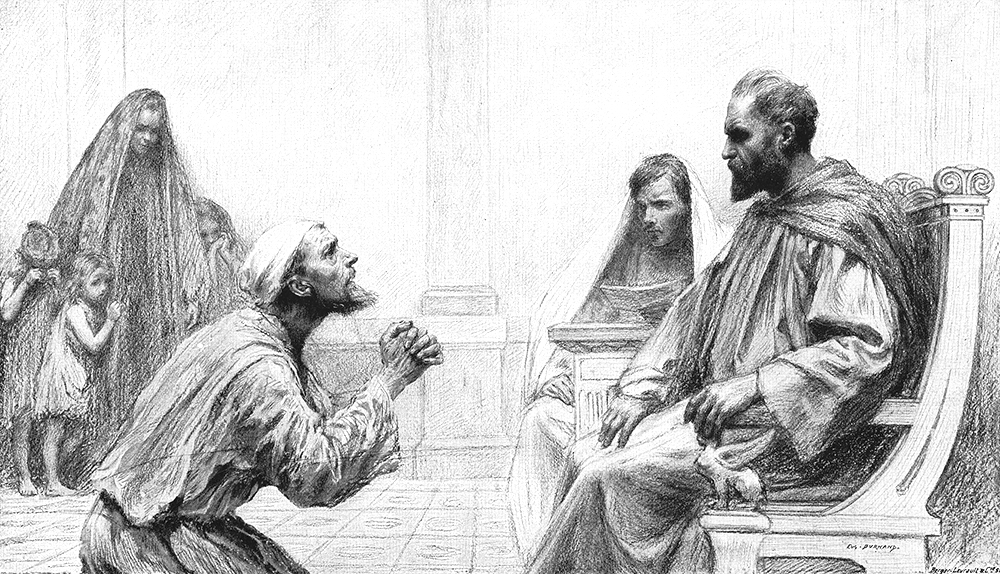

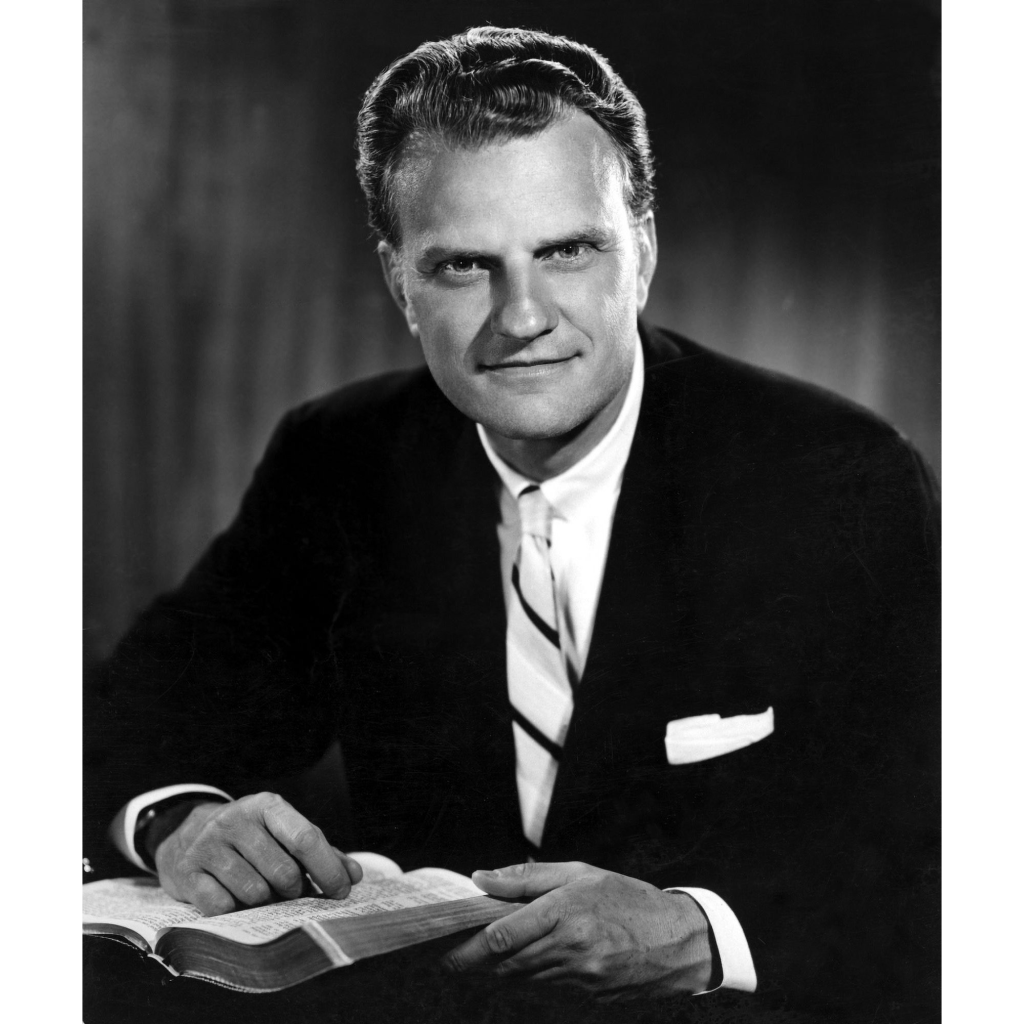





 Russ Adams