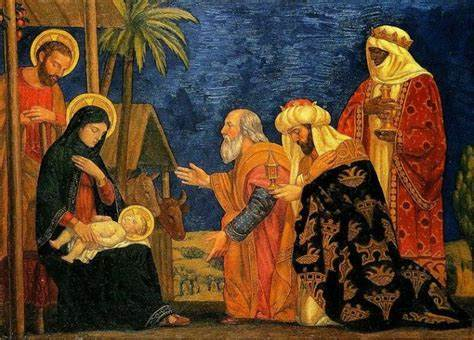
Lessons From the Magi

Our reading is Matthew 2:1-12. It is the traditional reading for Epiphany, a word that means manifestation. It is the liturgical season which celebrates how Christ was made manifest to the world, and especially how Christ came to save all people – both Jews and Gentiles. Epiphany is annually observed on January 6. This year, Epiphany Sunday is January 5.

The Bible says Jesus was born in Bethlehem, in Judea. So, Jesus was born five and a half miles south of Jerusalem. Matthew pinpoints the date. It was when King Herod sat on the throne. He sat on the throne for thirty-three years, from 37 – 4 B.C. He was appointed to his position by the Roman Senate. Over two thousand years later, he is still remembered for being ruthless and insecure. His insecurity led him to murder many in his family: his wife, three sons, mother-in-law, brother-in-law, and uncles. It has been said, it was better to be Herod’s dog than to be his family member. In our reading for today, we learn his murderous ways extended beyond the family. You know what the Bible says.

One day, Magi, Gentile astrologers from Persia or southern Arabia, (both east of Palestine), came to visit Herod. They had been studying the stars and had discovered that God was doing something new. A baby had been born, who was called King of the Jews. They assumed the King of the Jews would be born in the palace. They assumed wrong. The infamous insecure King Herod was thrown into a tirade. His insecurity fuels the loss of more human life. The story does not have a happy ending. It pains me to say it. Using the information received from the Magi about this divine birth, he orders the death of all baby boys under the age of two. However, in the end, the Magi find the toddler Jesus, no longer a baby. That means your nativity set is wrong. They did not visit the newborn Jesus on that holy evening. They visited Jesus two years later. Verse eleven says, they went to a house, not a stable. However, our misunderstanding about when the Magi actually arrived does not mean they do not have something to teach us.

They teach us seven important lessons. These thoughts are not original. I found them in an article called Seven Lessons from The Magi: Thriving in a Threatening World. It was on Tyndale.com. I believe these lessons have some merit; I hope you agree. This is their list:

  1. The Magi stayed open to new ideas. Isaiah 43:18-19 says,“Forget the former things; do not dwell on the past. See, I am doing a new thing. Now it springs up; do you not perceive it?” The Magi understood God was always doing something new. God has always shined light into our dark world guiding us and offering direction. Are you open to new ideas?
  • The Magi trusted God to guide them. They knew God as all-knowing. The greats of the faith trusted God. Jesus knew Peter would deny him three times and Job believed God was guiding his future. On the cross Jesus said, “Father into your hands I commit my spirit.” How far do you trust God?
  • The Magi cultivated an exceptional faith. Hebrews 11:6 says,“And without faith it is impossible to please God, because anyone who comes to him must believe that he exists and that he rewards those who earnestly seek him.” God must have been pleased with the Magi, they traveled a great distance into a foreign land. The greats of the faith have always cultivated exceptional faith. How great is your faith?
  • The Magi were spiritually discerning. Romans 12:2 says, Do not conform to the pattern of this world, but be transformed by the renewing of your mind. Then you will be able to test and approve what God’s will is–his good, pleasing and perfect will.” The star was seen by many, but only the Magi let it declare God’s Glory. It has been reported only 5% of Christians have the gift of discernment. Are you spiritually discerning?
  • The Magi were guided by God’s word. However, the Magi needed more than the star – they needed scripture. King Herod asked his religious scholars where the child would be born. They quoted Micah 5:2. He would be born in Bethlehem. They could have bypassed Herod if they knew scripture. How much time do you spend studying the Bible?
  • The Magi expected trouble. There is nothing easy about life, it is filled with troubles. We find it in our reading. Our story tells us Herod was troubled and all of Jerusalem with him. The Magi expected trouble because troubles are a part of life. Our troubles remind us to persevere and hold on to the faith. How firm is your hold on the Christian faith?
  • The Magi lived fearlessly. Our story ends with the Magi being warned in a dream to return home by another route. This reminds us that God was bigger than Herod. It still holds true today – God is all-powerful, God is bigger than any problem we will face, so live fearlessly. Are you living fearlessly or are you afraid?

As I stated earlier, Epiphany is January 6. Orthodox Christmas is January 7. There are more than 200 million Orthodox Christians in the world. They follow the Julian calendar, unlike most Christian branches which follow the Gregorian calendar. For several years, I had the good fortune of being in the Orthodox world during their Christmas. Annually, I would be part of a volunteer in mission team to Russia. Those trips were sponsored by To Russia with Love, later Project Orphan Outreach. We worked with Russian orphans who would never be adopted because of their physical disabilities. I cherish those memories.

One year, we were in Vladimir, Russia, which is 125 miles northeast of Moscow. On Orthodox Christmas Eve we wandered into the local Russia Orthodox Church. The scene was memorable. The congregation stood as the priest led worship in Russian. I didn’t understand a single word. The incense was thick. The locals studied us, because, as Americans, we stuck out like sore thumbs. The customs and traditions of Orthodoxy were unknown to me. We were strangers in a foreign land. Yet, the presence of the Holy Spirit was familiar to me. For some unknown reason God wanted me there. However, it is not just the story of a volunteer-in-missions team in the middle of Russia.

It is the story of the Magi. They too were visitors in a foreign land. They had traveled a long way, and everything must have been strange, but God wanted them there. There were many things they did not know, especially about Jesus. They did not know what the future held for Jesus. They did not know the impact Jesus would have on the world, but they knew there was something special about him. The Magi did not see it on that day, but we see it now.

When Jesus was born the future of the world changed. In the name of Jesus, many wonderful things have happened. In the name of Jesus, wonderful pieces of art would be created, and books would be written. In the name of Jesus, hospitals would be started to help the sick. In the name of Jesus, orphanages would be established to help the young without parents. In the name of Jesus, homes would be established to help the old. In the name of Jesus, the hungry would be fed and the homeless sheltered. In the name of Jesus, churches would be started to teach the Christian faith and offer salvation and hope. In the name of Jesus, injustice would be confronted. And there is a truth beyond that: for millions of people who have believed since, the birth of Jesus made possible not just a new way of understanding life, but a new way of living it. The Magi traveled a long way to see Jesus, and it was worth every mile! Perhaps Augustine of Hippo (354-430) said it best, Though many kings of the Jews had been born and died, none of them did the Magi seek to adore. And so they who came from a distant foreign land to a kingdom that was entirely strange to them…But they had learnt that such a King was born that by adoring Him they might be sure of obtaining from Him the salvation which is of God.” 

Gold, Frankincense, and Myrrh

We find ourselves today in the first twelve verses of the second chapter of Matthew. This story is only found in Matthew. The challenge for us is ignoring all the traditional information about this story. If you want to be Biblically accurate, then you must listen to the Bible. What does the Bible say? The Bible says sometime after the birth of Jesus, Magi came to worship him. The Bible does not say they are kings. The Bible calls them Magi. Who are the Magi? Kings have political interests, but the Magi had no political interests or aspirations. They were more interested in spiritual matters. They sought God in a variety of ways. One of those ways was the stars. It is through their study of the stars they discovered a king had been born. It is at this moment they make one massive mistake. They assumed a king would be born in the palace. They went to insecure King Herod’s palace. Sadly, this wrong assumption caused the death of baby boys two years and younger. The Bible is not always kind. Devastated by their mistake, they were overjoyed when the star reappeared. When they found this newborn king among the commoners in Bethlehem, they worshipped this special child and offered him treasures.

Verse 11 says, “Then they opened their treasures and presented him with gifts of gold, frankincense and myrrh.”  What kind of gifts are those to bring to a baby? You can be honest. They were not as bad as used toothbrush or second-hand clothes, but they were odd. They seem odd to us because we are not as wise as the Magi. While they were blind to the political events of their day, they fixed their eyes on eternal matters. From some unknown source they knew about Jesus’ earthly ministry. In other words, they must have known what would happen to Jesus in the next thirty-three years. Just think about it. Gold was the perfect gift for a king. Jesus was the King of Kings. Frankincense was the perfect gift for a priest. Jesus was the ultimate high priest, acting as a bridge between mankind and God. Myrrh was the perfect for someone who was going to die. It was used to embalm the dead. It is those three gifts I want to examine in this blog.

Gold was a perfect gift to a king. What is gold? Gold is a precious metal that is reserved for special people and occasions. Did you know an ounce of gold sells for approximately $1,900? How much gold do you own? It has been called the king of metals. Seneca (4 BC – 65 AD) tells us that in the ancient empire of Parthia, no one approached the king without a gift of gold. It is truly the perfect gift for a king. Never forget, Jesus is the king of kings. Jesus is our friend, but Jesus is not our equal. We must always meet him on terms of submission.

History tells us Admiral Nelson always treated his defeated enemy with kindness and courtesy. After one of his naval victories, the defeated Admiral was brought to Nelson. Knowing his reputation for kindness and courtesy, he walked up to Nelson and stuck out his hand to shake it. Nelson’s hand remained at his side and said, “Your sword before your hand.” Before we can be Jesus’s friend, he must have our complete submission. Do you submit to Jesus or is he just your friend? Gold was the perfect gift for a king. Gold was the perfect gift for Jesus.

Frankincense was the perfect gift for a priest. What is frankincense? It is the bark from a boswellia tree. That bark was used to make a sweet perfume that was used by priests during sacrifices. Those sacrifices were used to make connection between mankind and God. The Latin word for priest means “bridge builder.” Remember, Jesus was the ultimate high priest, the ultimate bridge between mankind and God. Jesus was the incarnation of God. He just didn’t study us from afar. He became one of us.

The scriptures tell us Mary and Joseph respected the Law of Moses. In Luke 2:22-40, we learn they went to Jerusalem in accordance with that law. After the birth of a son, the law demanded two things. First, women had to wait 40 days to go to the temple to offer a sacrifice. Mary had to be purified to re-enter society. Second, Jesus had to be consecrated to the Lord. At that time, Jesus was circumcised. They went to Jerusalem to attend to those matters. It was a big day in their lives, but they didn’t have a clue what was about to happen. Like every parent, they knew their son was special. They were about to find out how special.

They meet two characters during their time at the temple. The first was a priest by the name of Simeon. He was filled with the Holy Spirit and was told he would not die until he saw the Messiah. The Holy Spirit did not lie. On that day he was in the temple courts and a young couple walked up to him. They expect him to just circumcise their son. They must have been shocked by the way the priest reacted to their baby. Simeon was overjoyed. He knew Jesus is the Messiah! The second person they met was Anna. In terms of this world, she had nothing. She was an old widow who lived her life within the temple. However, spiritually, she was rich. She was a prophetess. She is the one who announced to the crowd that Jesus will bring redemption to Israel!

I love Simeon and Anna. They model for us the importance of patience and they remind us of the uniqueness of Jesus. They knew what we often forget. Jesus was not just another good man. Jesus was not just the leader of another world religion. Jesus was different. Jesus was the son of God. Jesus was the incarnation of God. Jesus would forge a relationship between us and God that still stands today. In other words, Jesus was the great high priest! Frankincense was the perfect gift for a priest. Frankincense was the perfect gift for Jesus.

Myrrh was the perfect gift for one who was going to die. What is myrrh? It is a spice that was used to embalm the dead. I hate to say it, but Jesus did die. You remember the story. Thirty-three after Jesus’ birth, he is executed like a common criminal. The Bible tells us he did nothing wrong. As a matter of fact, he did everything right! He never committed a single sin which made him the perfect sacrifice for the sins of the world. That fact is only important if you admit, you are a sinner. Sinless people do not need a savior. Sinless people do not need Jesus. However, you do need Jesus because you are a sinner. What does the Bible say? It says, “All have sinned and have fallen short of the glory of God.” (Romans 3:23) That means anyone who has ever lived is a sinner. It means you are a sinner. Let me say this clearly. If you think you are going to heaven by your good works, then you are wrong. Jesus is and always has been your only hope of salvation. Myrrh was the perfect gift for someone who was going to die. Jesus died so we could live. Myrrh was the perfect gift for someone who was going to die. Gold, frankincense, and myrrh were the perfect gifts for Jesus! Let me end with this question.

What did you get for Christmas? I hope you didn’t get one of these. Several years ago, gather magazine listed the worst Christmas gifts. This is their list:

          1. Nose hair clippers

          2. A pet rodent

          3. A vacuum cleaner

          4. Mascara

          5. Hand-me-down clothes

          6. A photograph of yourself

          7. A year’s supply of NutriSystem diet food

          8. A month gym membership

          9. Socks

According to Squidoo.com, these were the most desired gifts for Christmas.

          1. Cell phone

          2. Tablets

          3. Televisions

          4. Movies and sports streaming devises

          5. Gaming

          6. Remote control toys

          7. Cologne

          8. Docking systems

          9. Amazon gift card

          10. Unique cameras

What did you get for Christmas? Did you get any of those things for Christmas? They would have made the perfect gift. This is the bad news for today. Jesus didn’t get any of those things. The Magi showed their wisdom in their gifts. What did you get Jesus for Christmas? Never forget, Christmas is not your birthday.  

Accepted

In the second chapter of Matthew, verses 1 through 12, we find the story of the Magi. The Bible says it happened after Jesus was born in Bethlehem, in Judea. So, Jesus was born five and a half miles south of Jerusalem. Matthew goes on to pinpoint the date. It was when King Herod sat on the throne. He sat on the throne for thirty-three years, from 37 – 4 B.C. He was appointed to his position by the Roman Senate. Over two thousand years later, he is still remembered for being ruthless and insecure. His insecurity led him to murder many in his family: his wife, three sons, mother-in-law, brother-in-law, and uncles. In our reading for today, we learn his murderous ways extended beyond the family. You know what the Bible says.

One day, Magi, Gentile astrologers from Persia or southern Arabia, (both east of Palestine), came to visit Herod. They had been studying the stars and had discovered that God was doing something new. A baby had been born, who was called King of the Jews. They assumed the King of the Jews would be born in the palace. They assumed wrong. The infamous insecure King Herod is thrown into a tirade. His insecurity fuels the loss of more human life. The story does not have a happy ending. It pains me to say it. Using the information received from the Magi about this divine birth, he orders the death of all baby boys under the age of two. However, in the end, the Magi find the baby, now a toddler. (Jesus could have been two years old.)

I have preached this story for years, but it is only recently I discovered something new. It is something I have overlooked my entire life. It is not that Jesus was a toddler, not a newborn. It is not that they were Magi, not kings. It is not the meaning behind the gifts. My new insight was that the gifts were accepted. It is hard to see thousands of years later. Joseph and Mary received the gifts of gold, frankincense, and myrrh. Think about it for moment. When you accept a gift, you are accepting the gift giver. Joseph and Mary accepted the Magi’s gifts, so they were accepting the Magi themselves. It does not sound so earthshaking now, but it was then. This Jewish couple accepted this group of three Gentiles. That rarely, if ever, happened. At the time of this story, accepting the Magi was, and is, a big deal. Just think about it for a moment.

From the time of Abraham to the time of Jesus, God had an exclusive relationship with the Jews. That covers thousands of years. The Hebrew nation took pride in the fact that they were God’s Chosen People. The purity of their race was important to them. They took pride in their heritage, and they disdained for everyone else. Either you were a Jew, or you were not. That is why genealogies were important to them. In the previous chapter, Matthew proves to the readers, Jews, that Jesus was 100% Jewish. That is why the Jews hated the Samaritans. They were almost Jewish, not good enough. Who were the Samaritans? They were the descendants of former Jews who had intermarried with Gentiles during the exile. Through Jewish eyes, they were half-breeds and hated for polluting the race. The purity of the race is extremely important to the Jews. That is what makes this story so amazing. This Jewish couple, Joseph, and Mary, accept these Gentiles, the Magi. Not only do they accept them, but they accept their gifts. Can I ask you a question? When was the last time you didn’t feel accepted? In the Bible lesson for today, the issue is racism. We understand racism because sadly, it is still part of our world.

I have never experienced the magic of Pittsburgh. Some people see it as a magical place. Some believe, heaven looks a great deal like Pittsburgh. I am not one of them. Don’t get me wrong. There are a few nice streets crowded in between the rivers and the hills. Can I confess something to you? I can never drive into Pittsburgh and not get lost. I am always going the wrong way on a one-way street. It is my experience that modern GPS is useless in Pittsburgh.

Several years ago, I was going to visit someone in one of the hospitals in Pittsburgh. Kathryn came along for company. Not to my surprise, we got lost. I break the stereotype and ask for directions when I get lost. Kathryn was driving, so I jumped out of the car. The closest place to ask for directions was a corner bar. When I walked in the place, it went silent. I do not want to sound racist, but the place went silent because I was the only person of non-color in the bar. I asked the first person I saw for directions. He was helpful. He pulled out a napkin that sat under his frosted beer mug and wrote down some directions. When I walked out, everyone started laughing. Racism is at the heart of that story and racism is at the heart of our Bible story. However, racism is not the only source of the problem. There are many reasons why we don’t accept others. Let me ask you the question again: When was the last time you didn’t feel accepted?

Several years ago, I officiated at a wedding at the Butler Museum of American Art in downtown Youngstown. To be more exact the wedding took place in the new Butler North, who was the former First Christian Church. The congregation had left, and the Holy Spirit went with them. The ceremony was stiff with canned music. My plan was to leave after the benediction, but the father of the bride asked me to stay and say at the reception in the art gallery. I was more than glad to stay, but I had stay about two hours. I called Kathryn and she agreed to meet me at the reception. However, that meant for two hours, I was on my own. I spent most of the time looking at the pieces of art. I tried to talk to people, but no one wanted to talk to me. I was identified as the minister, and no one wants to talk to the minister. I was alone in a crowd. I was not accepted. Have you ever been excluded because of your job? Let me ask you the question again: When was the last time you didn’t feel accepted? You know it is true. Sometimes, we exclude ourselves because we do not feel like we belong.

Personally, I find New Year’s Eve to be depressing, after the great day of Christmas. We always go somewhere to escape the festivities of New Year’s. One year, we went to Annapolis. It was a great trip. We toured the Naval Academy and visited some historic sites. Annapolis was the Capitol of the United States for the first eight months after the Revolution. From Annapolis it moved to Trenton, New Jersey. The last day of our trip we went into Baltimore and toured the B & O Railroad Museum.

The last thing we did was go to a mansion called Evergreen. It was the home of one the B & O CEO’s. The building was impressive, filled with priceless art and collectibles. Our guide tried to impress us with all the pieces. Everyone was impressed, except for one person in the group, me! I just didn’t appreciate the various pieces. Don’t get me wrong. I have been exposed to some of the finest things in life. I have heard some of the finest music ever composed performed by some of the world’s finest orchestras. I have seen masterpieces in some of the finest art galleries in the world. The problem is not a lack of exposure, it is a lack of appreciation. Everyone on our tour appreciated what they were experiencing, except me. Once again, I was alone in a crowd. The guide and the group did nothing wrong. The problem wasn’t them. It was me. I didn’t feel like I belonged. By the end of the tour, people were sharing what they enjoyed the most in the house. Do you know what I enjoyed most? It was a photograph of Kaiser Wilhelm II (1859-1941). I really admired his large mustache. It was obvious. I just didn’t fit in with the rest of the group. It is entirely possible to exclude yourself. Let me ask you the question one more time: When was the last time you didn’t feel accepted?

That is what makes this morning’s story so incredible. It is a story of acceptance. A Jewish couple, Joseph, and Mary accepted a group of Gentiles. They aren’t just accepting them. They are emotionally embracing them by accepting their gifts. Here is the Good News for today: You are accepted too. Jesus didn’t just come to maintain God’s special relationship with the Jews. Jesus came so everyone can have a relationship with God. Jesus came so God can have a relationship with you. Never forget it. God loves you so much, he wants to spend eternity with you! Brian Tracy (born 1944) said it best, “The greatest gift that you can give someone is the gift of unconditional love and acceptance.”