The Rest of the Story

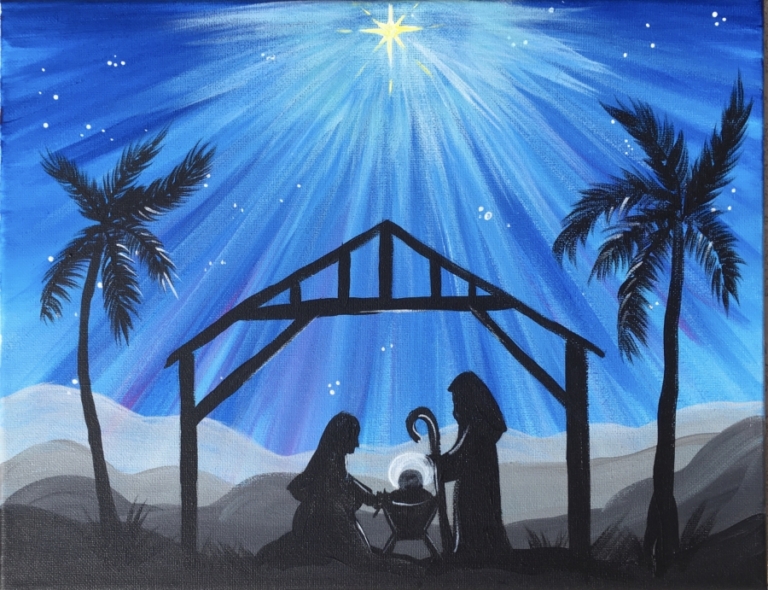
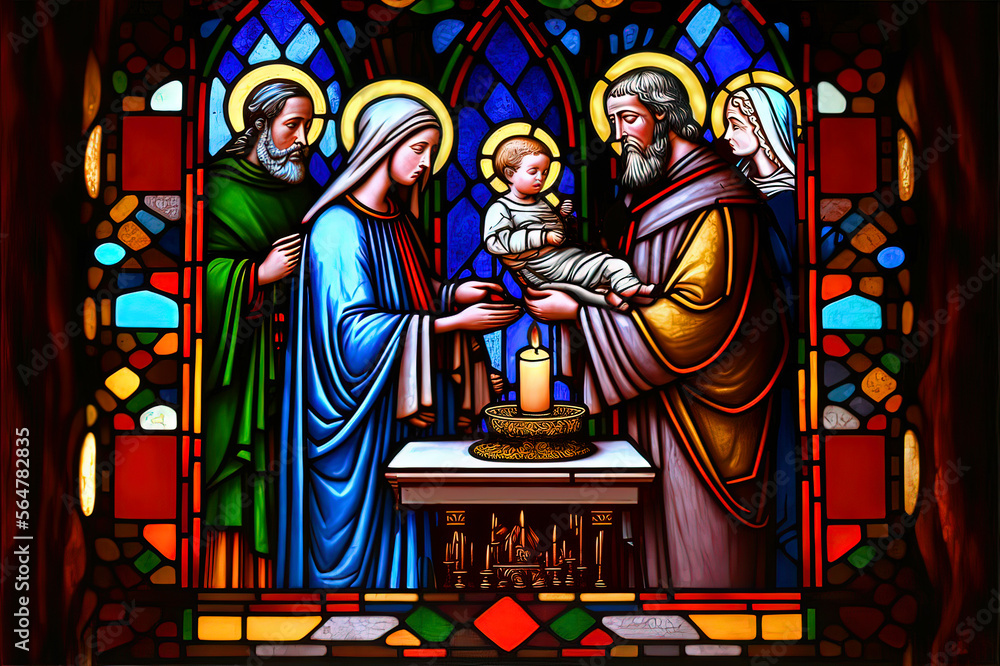
Our reading is Luke 2:21-40. It gives us the rest of the Christmas narrative. Never forget, Joseph and Mary were a Jewish couple who practiced the customs of their faith. Our reading records two such practices. The first came when Jesus was eight days old. For it was on that day that Jesus was formally named and circumcised. The second came when Jesus was forty days old. The Old Testament law, Leviticus 12:2-8, required all women who gave birth to a boy to go to the temple to offer a sacrifice of purification. Mary went and sacrificed something as small as two doves or pigeons. Both practices were scripted. The only thing that makes these stories noteworthy are the characters they meet at the temple. In the end, they both praised God for two different reasons. Let me look at each one.

The first person Mary and Joseph encountered was Simeon. He is described as righteous and devout. He had been waiting for years for the consolation of Israel. What does that mean? It means that he had been waiting for years for comfort. Annually, he sat at the Seder and remembered the great things that God had done for His people. It was God who sent the plagues. It was God who parted the sea. It was God who provided for his people in the wilderness. God did some mighty things for them, but that seemed like ancient history. God hadn’t done anything for his generation. Those great days with God had been replaced by foreign domination. There must have been days when the Jews felt forgotten. Have you ever felt forgotten by God? When Simeon looked at the infant Jesus he was comforted because he knew God was still with them. When we think of the infant Jesus, we feel comforted too. Jesus reminds us that God is still with us!

The second person Mary and Joseph encountered was Anna. She is described as an eighty-four-year-old old prophetess. It was never difficult to find her because she was always in the temple. She had been there since the death of her husband. She knew there was something special about Jesus and spoke about the redemption of Israel. What does that mean? A large part of redemption is forgiveness. When Anna looked at the face of the infant Jesus, she knew that forgiveness was possible. After all, thirty-three years later Jesus was the perfect sacrifice for the sins of our world, so we can experience forgiveness. Simeon and Anna remind us we are not forgotten and forgiveness is possible. The infant Jesus changed everything. Let me end with this old preaching story.

Years ago, there was a very wealthy man who shared a passion for art collecting along with his son. They owned priceless works by Vincent Van Gogh (1853-1890) and Pablo Picasso (1881-1973) which adorned the walls of their family estate. As winter approached, war engulfed their nation, and the man’s son left to serve his country. After only a few short weeks, the father received a telegram, his son had died. Distraught and lonely, the old man faced the upcoming Christmas with anguish and sadness. The joy of the season had vanished with the death of his son. On Christmas morning, a knock on the door awakened the depressed old man. As he walked to the door, the masterpieces of art on the walls only reminded him that his son was not coming home. As he opened the door, he was greeted by a soldier with a large package in his hands. The visitor said, “I was a friend of your son. He died rescuing me. May I come in for a few moments? I have something to show you.” The soldier mentioned that he was an artist and then gave the old man the package. The paper gave way to reveal a portrait of the man’s son. Though the world would never consider it the work of a genius, the painting featured the young man’s face in striking detail. Overcome with emotion, the man hung the portrait over the fireplace, pushing aside millions of dollars’ worth of art. His task completed, the old man sat in his chair and spent Christmas gazing at the gift he had been given. The painting of his son soon became his most prized possession, far eclipsing the masterpieces he owned.

The following spring, the old man died. The art world waited with anticipation for the upcoming auction. According to the will of the old man, all the art works would be auctioned on Christmas Day. The day soon arrived and art collectors from around the world gathered to bid on some of the world’s most spectacular paintings. The auction began with a painting that was not on anyone’s museum wish list. It was the painting of the man’s son. The auctioneer asked for an opening bid, but the room was silent. “Who will open the bidding with $100?” No one spoke. Finally, someone said, “Who cares about that painting? It’s just a picture of his son. Let’s move on to the good stuff.” The auctioneer responded, “No, we must sell this one first. Now, who will take the son?” Finally, a neighbor of the old man offered $10 dollars. “That’s all I have. I knew the boy, so I’d like to have it.” The auctioneer said, “Going once, going twice…gone.” Cheers filled the room and someone exclaimed, “Now we can bid on the real treasures!” The auctioneer looked at the room filled with people and announced that the auction was over. Everyone was stunned. Someone spoke up and said, “What do you mean, it’s over? We didn’t come here for a painting of someone’s son. There is priceless art here! What’s going on?” The auctioneer replied, “It’s very simple. According to the father’s will, whoever takes the son…gets it all.”

It is the story of Christmas. Whoever gets the son gets it all. Simeon reminds us – God has not forgotten us – He came into the world to be with us. Anna reminds us, Jesus came into the world to offer us forgiveness and salvation. Augustine of Hippo (354-430) once said, “God loves each of us as if there was one of us.”  Merry Christmas!
The Newborn Jesus

Our reading is Luke 2:1-20, the traditional Gospel reading for Christmas. You know the story. There was a young woman by the name of Mary. In her world life began young because life ended early. Biblical scholars tell us she could have been as young as fourteen or fifteen years old. Her world saw her as a nice and respectable young girl. However, God saw more. I have no clue how many women have ever lived in the history of the world, but God chose Mary to be the mother of His son. Sexually innocent, the Holy Spirit came upon her and she conceived. Her pregnancy changed and complicated her life. She would need some help raising her baby and that help came in the name of Joseph. When he married Mary, he didn’t just sign up to help raise another man’s son – he signed up to help raise the son of God. The baby was born in Joseph’s hometown of Bethlehem. As directed, they named the baby Jesus, which means “Savior.”

According to the Centers of Disease Control, approximately 9,800 babies are born each day in America, 3,577,000 annually. According to the United Nations, approximately 385,000 babies are born each day in the world, 140,525,000 annually. That is a lot of babies, but Mary’s baby was different. Jesus was the only baby of divine origin. Jesus was the incarnation of God. In other words, Jesus was God! Just ponder that fact for a moment. God left the perfection of heaven to enter this imperfect world. It is more than the human mind can grasp. Augustine of Hippo (354-430) said, “The incarnation of God is beyond all human understanding.”  The newborn Jesus changed everything. Consider three things with me.

First, the newborn Jesus demonstrated the depth of God’s love for us. In other words, Jesus exposed the heart of God. He wasn’t satisfied studying us from heaven. God chose to enter this world and become one of us. John 3:16-17 says, “For God so loved the world that he gave his one and only Son, that whoever believes in him shall not perish but have eternal life. For God did not send his Son into the world to condemn the world, but to save the world through him.”  God came into the world to tell us that He loves us! 

Danish theologian and philosopher Soren Kierkegaard (1813-1855) told the story of a prince who was running an errand for his father one day in the local village. As he did so, he passed through a very poor section of the village. Looking through the window of his carriage, he saw a beautiful young peasant girl walking along the street. It was love at first sight. He could not forget her. He returned to the village, day after day, just to see her. His heart yearned for her, but there was a problem – how could he develop a relationship with her? He was the prince and she was a peasant. He could order her to marry him. It was within his power to do so, but he wanted this girl to love him from her heart, willingly. He could put on his royal garments and impress her with his regal entourage, drive up to her front door with soldiers and a carriage drawn by six horses. But if he did this, he would never be certain that the girl loved him or was simply overwhelmed with his power, position and wealth. The prince came up with another solution – he moved into the village dressed only as a peasant. He lived among the people, shared their interests and concerns, and talked their language. In time, the young peasant grew to know him, and then to love him. In time, they married. That is the story of Christmas! The newborn Jesus demonstrated the depth of God’s love for us.

Second, the newborn Jesus revealed our greatest human need. Many believe our greatest human need is money. Some believe our greatest human need is to be loved and accepted. God knows our greatest human need is to be forgiven. Romans 5:8 says, “God demonstrates his own love for us in this: While we were still sinners, Christ died for us.”  

Someone once wrote these memorable words: 

If our greatest need had been information, God would have sent us an educator; If our greatest need had been technology, God would have sent us a scientist;  

If our greatest need had been money, God would have sent us an economist; 

If our greatest need had been pleasure, God would have sent us an entertainer; But our greatest need was forgiveness, so God sent us a Savior. 

You cannot earn your salvation by your good deeds. Our only hope of salvation is with Jesus. Do you know Jesus as your Lord and Savior? The newborn Jesus exposed our greatest human need.

The purpose of your life is a fundamental human question. Some of the greatest minds in human history have tried to answer it, Socrates (470-300 BC), Aristotle (384-322 BC), Soren Kierkegaard, Friedrich Nietzsche (1844-1900) and Albert Cumus (1913-1960). American essayist Ralph Waldo Emerson (1803-1882) said, “The purpose of life is not to be happy. It is to be useful, to be honorable, to be compassionate, to have it make some difference that you have lived and lived well.”  The Westminster Confession of faith says that the purpose of life is to glorify God.

Third, the newborn Jesus is the origin of our divine purpose. 1 Timothy 3:16 says, “Beyond all question, the mystery of godliness is great: He appeared in a body, was vindicated by the Spirit, was seen by angels, was preached among the nations, was believed on in the world, was taken up in glory.”  That verse tells us the difference Jesus has made in our world. The question is how much of a difference has Jesus made in your life?

As a disciple of Jesus Christ, the newborn Jesus is the origin of your purpose. If you know Jesus as your Lord and Savior, then you know two things. First, you know you are going to heaven. Thirty-three years after his birth, Jesus died on the cross for your sins. He was the perfect sacrifice. Jesus did all the work. Your salvation is the greatest gift you will ever receive. Second, as a person of integrity, you are going to find a new way every day to thank God for saving your soul. Your purpose is not your vocation. Your purpose is not your testimony. Your purpose is to glorify God. What have you done lately to thank God for saving your soul? We are to be practicing today what we are going to do in heaven for eternity. The newborn Jesus is the origin of your purpose.

The newborn Jesus changed everything! First, the baby Jesus exposed the heart of God. His love is so deep he became one of us. Second, the birth and mission of Jesus revealed our greatest human need, forgiveness; He is our only hope of salvation. Third and finally, the newborn Jesus is the origin of our divine purpose which is to glorify God! English writer Charles Dickens (1812-1870) once wrote, “It is good to be children sometimes, and never better than at Christmas, when its mighty founder was a child himself.”

Peace…

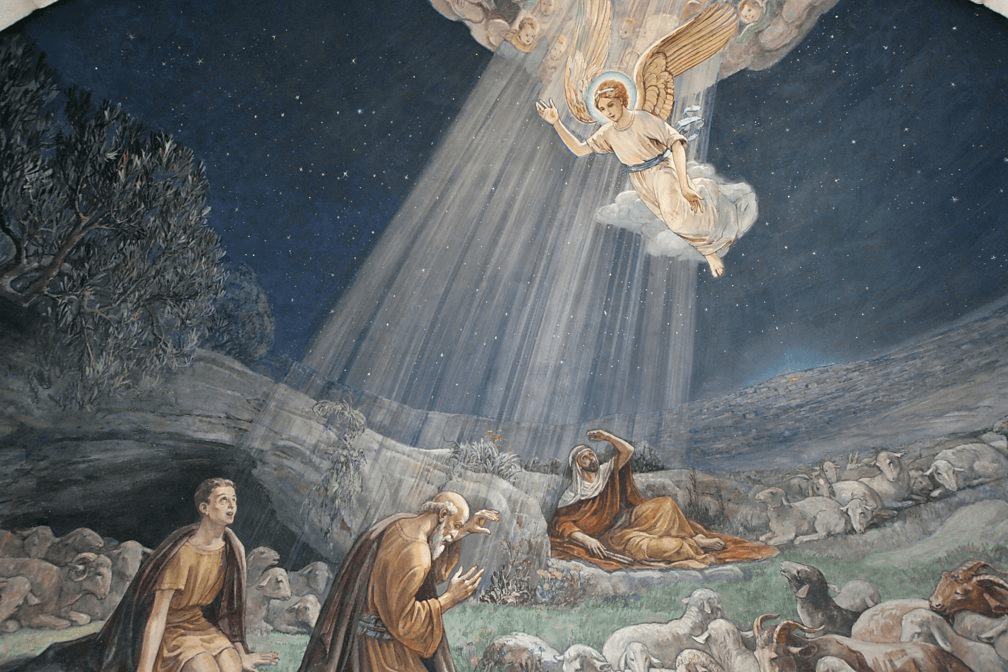
Our reading is from Luke 2:8-20. The role the shepherds played in the Christmas narrative is vital. They were common laborers who were responsible for the sheep who were to be sacrificed in the temple. The animals were valuable, and their job was dangerous. They guarded the sheep against thieves and predatory animals. To the religious leadership of the day, the lives of the sheep were more valuable than the lives of the shepherds.

There was nothing special about that night. It was like any other night, until an angel appeared to them to make the great announcement, the long-awaited Messiah had been born! That announcement is underscored by a great company of angels singing “Glory to God in the Highest, and on earth peace to men on whom his favor rests.”  Their words remind us of the greatness of God and His desire to reconcile with mankind. We find the same message of reconciliation in Second Corinthians 5:19, “God was reconciling the world to himself in Christ, not counting men’s sins against them. And he has committed to us the message of reconciliation.”  That is the Good News of Christmas. God came into the world to end the conflict with us. That divine truth changes everything. In this blog, I want to explore Jesus’ ministry of reconciliation. Consider three things with me.

First, because of Jesus we have peace with God. When you have peace with God, you have spiritual peace. Romans 5:1 says, “Therefore, since we have been justified through faith, we have peace with God through our Lord Jesus Christ.”  On the day that I accepted Christ as my Lord and Savior, I experienced just one emotion – it wasn’t joy, it was relief. The battle was over. I was at peace with God. Augustine of Hippo (354-430) once said, “Because God has made us for Himself, our hearts are restless, until they rest in Him.”

The founder of the great Methodist movement was John Wesley (1703-1791). His brother Charles Wesley (1707-1788) was a great hymn writer for the movement. He wrote more than 1600 hymns. The words of those hymns taught those early Methodists about God. Did you know he wrote the first hymn in every Methodist hymnal ever published, O For Thousand Tongues to Sing? This is what he wrote: 

I rest beneath the Almighty’s shade, 

My grieves expire, my troubles cease; 

Thou, Lord, on whom my soul is stayed, 

Wilt keep me still in perfect peace. 

Charles Wesley experienced the line he wrote, “keep me still in perfect peace.”  Have you unwrapped the greatest gift you will ever receive? Do you know Jesus as your Lord and Savior? If your answer is anything but “yes”, don’t wait. You have been at war with God long enough. The gift of Jesus offers us spiritual peace. Jesus came to offer us peace with God.

Second, because of Jesus we have the peace of God. The peace of God is more than the absence of conflict. It is a deep-seated tranquility that comes from trusting in God’s sovereignty and grace. You can entrust this world to God. Philippians 4:6-7 says, “Do not be anxious about anything, but in everything, by prayer and petition, with thanksgiving, present your requests to God. And the peace of God, which transcends all understanding, will guard your hearts and your minds in Christ Jesus.”  This is important because some things are out of our control. Never forget, God is omnipotent.

I have a five-month-old granddaughter, Violet. She has a two-and-a-half-year-old brother, Romeo. My wife, Kathryn and I watch them once a week. God was very wise when he entrusted babies to young people. Our day of babysitting is exhausting, but it is also rewarding. I want to know them, and I want to be part of their lives. At the end of the day, we limp out of their home, but we are always excited about returning the next week. I love my grandchildren with my entire heart, and I cannot help worrying about the world they are inheriting. Our world is facing some massive problems, and it does not appear to be improving. I am thankful for the peace of God, because I can entrust my grandchildren to God. I will love my grandchildren for the rest of my life, but God will love them for eternity. Canadian theologian J. I. Packer (1926-2020) said, “The peace of God is first and foremost peace with God.”  Jesus came to offer us peace with God, so we can experience the peace of God. Yet, there is one more.

Third, Jesus expects us to have peace with others. When the Civil War ended in 1865 there was a great amount of hatred in the country. Some feared it would never end. However, time has a way of healing old wounds. In 1885, former General-in-Chief of the Union Army and former President of the United States Ulysses Grant (1822-1885) died. Four years later, former President of the Confederacy Jefferson Davis (1808-1889) died. However, their widows, Varina Davis (1826-1906) and Julia Grant (1826-1902), lived on and settled near each other. As fate would have it, they became close friends. They did something their husbands with all their armies failed to do. They modeled peace for a new generation. Are you a model of peace for your world?

Do you have any broken relationships in your life? How would those relationships improve if you applied Christian principles to them? Christmas is a great opportunity to fix your broken relationships. It may not be an easy thing to do but it is an important thing to do. It takes two people to reconcile. God only expects you to do your part.

Matthew 5:9 says, “Blessed are the peacemakers for they shall inherit the Kingdom of God.”  Have you done everything in your power to fix all your relationships? Jesus offered the world reconciliation. There is peace with God. There is the peace of God. There is peace with others. 

It really is quite a story. The shepherds were just common laborers working the night shift. Without warning their entire world changed in an instant. An angel appeared and told them the big news – the long-awaited Messiah had been born! That is the Good News of Christmas. God came into the world to end the conflict with us. The angel choir sang it then, but it is still true today, “Glory to God in the Highest, and on earth peace to men on whom his favor rests.” 

What Does God Look Like?

In Crystal McVea’s book, Waking Up in Heaven, she describes an experience she had in December of 2009. She was hospitalized with pancreatitis and accidentally overdosed on pain killers. She died for nine minutes. She said, “At the exact moment I closed my eyes on Earth, was the exact moment that I opened my eyes in heaven.”  She described heaven as a tunnel filled with bright light and felt the problems of this world fall away. Communication with God was uninterrupted. McVea said, “Time began to slow down and suddenly I was in the presence of God. I fell on my knees to worship him, and I was saddened by the fact that I hadn’t done more in His name while I had been here.”  She chose to return to this world when she heard her mother’s voice. However, she knows heaven is still waiting for her in her future. 

Do you believe Crytal McVea’s story? Doubters would say her story is the result of excess pain killers. Believers would say she saw God. If she saw God, then she was one of a handful who have ever seen God. People have longed to see God from the very beginning. That leads us to our question: what does God look like? There is no simple answer.

Don’t look to the Bible for an answer because the Bible doesn’t give us a description of God. In the Old Testament only four people saw God. There was Abraham, Isaac, Jacob and Moses. You can find those accounts in Genesis 17, 35 and 48. However, in none of those accounts is there a description of God. In Exodus 33:18-23, we are told that Moses requested to see God, but his request was denied. God said no one can see Him. Do you remember the story? God places Moses on the side of a mountain and covers his eyes. God passes in front of Moses, but Moses only sees his back. The Old Testament is no help. The New Testament is no help. God is always hidden by a cloud, as at Jesus’ baptism and the transfiguration.   

The art world has tried to answer the question, what does God look like? The image of God has inspired some of the greatest pieces of art in history. No one tried to portray God in art until the 10th century because of fear. In the 10th century some part of a human body appeared in art to represent God, a hand or a small part of a face. By the 12th century private art was created and showed more of God. During the Renaissance both the Roman Catholic and Protestant churches protested the art world because they showed too much of God’s form. In 1511, Michelangelo (1475-1564) painted the Sistine Chapel. God’s fingers touch to create Adam. I find this information interesting, but it doesn’t answer our question, what does God look like?

Our reading, Isaiah 9:2-7, gives us hope at seeing God. Isaiah lived seven hundred years before the birth of Christ. They were politically stormy times for God’s Chosen People. Israel was in a state of decline, and the Assyria Empire was expanding. The people were hopeless, but Isaiah saw the big picture and offered them hope. He told them God had not forgotten them. With God, there is always hope. In verse six we are told their hope would come in the form of a child. We understand that child to be Jesus, the incarnation of God. You know the story.

It all began with an unwanted pregnancy. A young woman named Mary. She was a virgin, yet she finds herself pregnant. She is the hot topic in her little town of Nazareth. With very few options she travels to her aunt’s home, Elizabeth, to escape the judgment of her community. Elizabeth accepts her unconditionally and offers her hope.  Elizabeth tells Mary God has a plan for her life. A man named Joseph would take Mary as his wife, and they will travel to Bethlehem to be counted in the census. Mary gives birth to this unwanted child in a stable built for animals. But God cares, He sent angels to some shepherds, who risk everything to see this baby. When they arrived, they saw the baby. However, they were not just looking at a newborn. They were looking at God. At Christmas, we celebrate the incarnation of God, Jesus! However, the story does not end there.

Jesus grew into adulthood. His earthly ministry began at 30-years-old and ended tragically at 33-years-old. On what we call Good Friday, he was executed Roman style like a common criminal and buried by his loved ones. The good news is the grave couldn’t hold Jesus. On the following Sunday, a few women make the great discovery that Jesus had been resurrected. The resurrected Jesus witnessed to his believers for 40 days before ascending into heaven. Ten days after Jesus ascended into heaven the Holy Spirit was unleashed on all believers to help them minister in the name of Jesus. Our good deeds are a way of thanking God for saving our souls and a way of reminding people about Jesus. In a perfect church, when people look at us, they should see God. When was the last time someone saw God in you?

During the Thirty Year’s War in Europe (1618-1648), the King of Sweden, Gustavus Adolphus (1594-1632), was killed in the Battle of Lutzen, in present day Germany. Sweden was thrown into mourning, and government officials met to determine how to replace the king. Some suggested a republic; others thought the crown should go to Adolphus’ cousin, the king of Poland. The chancellor of Sweden arose and said, “Let there be no talk of a republic or of Polish kings, for we have in our midst the heir of the great Gustavus, his little daughter, who is 6 years of age.”  Some protested because they had never seen her. The chancellor said, “Wait a minute, and I will show you.”  He brought in Christina, daughter of the king, and placed her on the throne. One of the representatives, who was especially suspicious of the move, pressed forward and gazed intently into her face. Then turning to the assembly, he exclaimed, “Look at her nose, her eyes, her chin! I see in the countenance of this child the features of the great Gustavus. She is the child of our king!”  From all quarters of the room rang the proclamation, “Christina, Queen of Sweden!” Let me ask you this question. 

Has anyone ever seen God in you? I am not talking about the way you look. I am not talking about your chin or your smile. I am not talking about your eyes or your cheek bones. I am talking about the things you do. I am talking about your very presence. You are a disciple of Jesus Christ! What do people learn about God by looking at you? Do you remember Crystal McVea? She said the words I hope you never say. Of her nine minutes in heaven, she said, “I fell on my knees to worship him, and I was saddened with the fact that I hadn’t done more in His name while I had been here.”  How much have you done in His name? How much do you look like God?

Lessons From the Magi

Our reading is Matthew 2:1-12. It is the traditional reading for Epiphany, a word that means manifestation. It is the liturgical season which celebrates how Christ was made manifest to the world, and especially how Christ came to save all people – both Jews and Gentiles. Epiphany is annually observed on January 6. This year, Epiphany Sunday is January 5.

The Bible says Jesus was born in Bethlehem, in Judea. So, Jesus was born five and a half miles south of Jerusalem. Matthew pinpoints the date. It was when King Herod sat on the throne. He sat on the throne for thirty-three years, from 37 – 4 B.C. He was appointed to his position by the Roman Senate. Over two thousand years later, he is still remembered for being ruthless and insecure. His insecurity led him to murder many in his family: his wife, three sons, mother-in-law, brother-in-law, and uncles. It has been said, it was better to be Herod’s dog than to be his family member. In our reading for today, we learn his murderous ways extended beyond the family. You know what the Bible says.

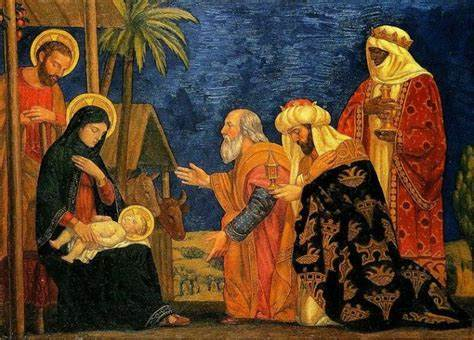
One day, Magi, Gentile astrologers from Persia or southern Arabia, (both east of Palestine), came to visit Herod. They had been studying the stars and had discovered that God was doing something new. A baby had been born, who was called King of the Jews. They assumed the King of the Jews would be born in the palace. They assumed wrong. The infamous insecure King Herod was thrown into a tirade. His insecurity fuels the loss of more human life. The story does not have a happy ending. It pains me to say it. Using the information received from the Magi about this divine birth, he orders the death of all baby boys under the age of two. However, in the end, the Magi find the toddler Jesus, no longer a baby. That means your nativity set is wrong. They did not visit the newborn Jesus on that holy evening. They visited Jesus two years later. Verse eleven says, they went to a house, not a stable. However, our misunderstanding about when the Magi actually arrived does not mean they do not have something to teach us.

They teach us seven important lessons. These thoughts are not original. I found them in an article called Seven Lessons from The Magi: Thriving in a Threatening World. It was on Tyndale.com. I believe these lessons have some merit; I hope you agree. This is their list:

  1. The Magi stayed open to new ideas. Isaiah 43:18-19 says,“Forget the former things; do not dwell on the past. See, I am doing a new thing. Now it springs up; do you not perceive it?” The Magi understood God was always doing something new. God has always shined light into our dark world guiding us and offering direction. Are you open to new ideas?
  • The Magi trusted God to guide them. They knew God as all-knowing. The greats of the faith trusted God. Jesus knew Peter would deny him three times and Job believed God was guiding his future. On the cross Jesus said, “Father into your hands I commit my spirit.” How far do you trust God?
  • The Magi cultivated an exceptional faith. Hebrews 11:6 says,“And without faith it is impossible to please God, because anyone who comes to him must believe that he exists and that he rewards those who earnestly seek him.” God must have been pleased with the Magi, they traveled a great distance into a foreign land. The greats of the faith have always cultivated exceptional faith. How great is your faith?
  • The Magi were spiritually discerning. Romans 12:2 says, Do not conform to the pattern of this world, but be transformed by the renewing of your mind. Then you will be able to test and approve what God’s will is–his good, pleasing and perfect will.” The star was seen by many, but only the Magi let it declare God’s Glory. It has been reported only 5% of Christians have the gift of discernment. Are you spiritually discerning?
  • The Magi were guided by God’s word. However, the Magi needed more than the star – they needed scripture. King Herod asked his religious scholars where the child would be born. They quoted Micah 5:2. He would be born in Bethlehem. They could have bypassed Herod if they knew scripture. How much time do you spend studying the Bible?
  • The Magi expected trouble. There is nothing easy about life, it is filled with troubles. We find it in our reading. Our story tells us Herod was troubled and all of Jerusalem with him. The Magi expected trouble because troubles are a part of life. Our troubles remind us to persevere and hold on to the faith. How firm is your hold on the Christian faith?
  • The Magi lived fearlessly. Our story ends with the Magi being warned in a dream to return home by another route. This reminds us that God was bigger than Herod. It still holds true today – God is all-powerful, God is bigger than any problem we will face, so live fearlessly. Are you living fearlessly or are you afraid?

As I stated earlier, Epiphany is January 6. Orthodox Christmas is January 7. There are more than 200 million Orthodox Christians in the world. They follow the Julian calendar, unlike most Christian branches which follow the Gregorian calendar. For several years, I had the good fortune of being in the Orthodox world during their Christmas. Annually, I would be part of a volunteer in mission team to Russia. Those trips were sponsored by To Russia with Love, later Project Orphan Outreach. We worked with Russian orphans who would never be adopted because of their physical disabilities. I cherish those memories.

One year, we were in Vladimir, Russia, which is 125 miles northeast of Moscow. On Orthodox Christmas Eve we wandered into the local Russia Orthodox Church. The scene was memorable. The congregation stood as the priest led worship in Russian. I didn’t understand a single word. The incense was thick. The locals studied us, because, as Americans, we stuck out like sore thumbs. The customs and traditions of Orthodoxy were unknown to me. We were strangers in a foreign land. Yet, the presence of the Holy Spirit was familiar to me. For some unknown reason God wanted me there. However, it is not just the story of a volunteer-in-missions team in the middle of Russia.

It is the story of the Magi. They too were visitors in a foreign land. They had traveled a long way, and everything must have been strange, but God wanted them there. There were many things they did not know, especially about Jesus. They did not know what the future held for Jesus. They did not know the impact Jesus would have on the world, but they knew there was something special about him. The Magi did not see it on that day, but we see it now.

When Jesus was born the future of the world changed. In the name of Jesus, many wonderful things have happened. In the name of Jesus, wonderful pieces of art would be created, and books would be written. In the name of Jesus, hospitals would be started to help the sick. In the name of Jesus, orphanages would be established to help the young without parents. In the name of Jesus, homes would be established to help the old. In the name of Jesus, the hungry would be fed and the homeless sheltered. In the name of Jesus, churches would be started to teach the Christian faith and offer salvation and hope. In the name of Jesus, injustice would be confronted. And there is a truth beyond that: for millions of people who have believed since, the birth of Jesus made possible not just a new way of understanding life, but a new way of living it. The Magi traveled a long way to see Jesus, and it was worth every mile! Perhaps Augustine of Hippo (354-430) said it best, Though many kings of the Jews had been born and died, none of them did the Magi seek to adore. And so they who came from a distant foreign land to a kingdom that was entirely strange to them…But they had learnt that such a King was born that by adoring Him they might be sure of obtaining from Him the salvation which is of God.” 

Christmas’ Spiritual Side

Our scripture reading is John 1:1-14. It is one of the traditional readings on Christmas Eve. However, John does not mention Mary and Joseph. John does not mention taxation or Bethlehem. John does not mention the shepherds or the angels. John is not interested in telling the story of how it happened. He is more interested in why it happened. John gives us Christmas’ spiritual side. Verse fourteen says it clearly, “The word became flesh and made his dwelling among us.” In other words, John wants us to understand the incarnation. God left the perfection of heaven to enter this imperfect world. Augustine of Hippo (354-430) said the incarnation of God is beyond all human understanding. Your understanding of the incarnation is important for three reasons.

First, the incarnation reveals the heart of God. John 3:16-17 says, “For God so loved the world that he gave his one and only Son, that whoever believes in him shall not perish but have eternal life. For God did not send his Son into the world to condemn the world, but to save the world through him.”  God came into the world to tell us that me loves us!

The great Danish theologian Soren Kierkegaard (1813-1855) told the story of a prince who was running an errand for his father one day in the local village. As he did so, he passed through a very poor section of town. Looking through the window of his carriage, he saw a beautiful young peasant girl walking along the street. He was infatuated with her. He was so infatuated with her he continued to go to town, day after day, just to see her and to feel as though he was near her. His heart yearned for her, but there was a problem. How could he develop a relationship with her? He had several options. He could order her to marry him. It was in his power to do so. But he wanted this girl to love him from the heart, willingly. He could put on his royal garments and impress her with his regal entourage and drive up to her front door with soldiers and a carriage drawn by six horses. But if he did this, he would never be certain that the girl loved him or was simply overwhelmed with his power, position and wealth. The prince came up with another solution. He moved into the village dressed as a peasant. He lived among the people, shared their interests and concerns, and talked their language. In time, the young peasant girl grew to know him, and then to love him. That is the story of Christmas. God came into our world to tell us he loves us!

Second, the incarnation reveals our greatest human need. Romans 5:8 says, “God demonstrates his own love for us in this: While we were still sinners, Christ died for us.” God understands what many in our time have forgotten. It has been written, “If our greatest need had been information, God would have sent us an educator; If our greatest need had been technology, God would have sent us a scientist; If our greatest need had been money, God would have sent us an economist; If our greatest need had been pleasure, God would have sent us an entertainer; But our greatest need was forgiveness, so God sent us a Savior.”

Sitting majestically atop the highest hill in Toledo, Spain, is the Alcazar, a 16th-century fortress. In the civil war of the 1930s, the Alcazar became a battleground when the Loyalists tried to oust the Nationalists, who held the fortress. During one dramatic episode of the war, the Nationalist leader received a phone call while in his office at the Alcazar. It was from his son, who had been captured by the Loyalists. The ultimatum: If the father didn’t surrender the Alcazar to them, they would kill his son. The father weighed his options. After a long pause and with a heavy heart, he said to his son, “Then die like a man.”

Jesus died like a man. The nativity is a majestic scene, but Jesus’ death was not easy to watch. However, it is impossible to separate the baby in the manger from the Savior on the cross thirty-three years later. Jesus was the perfect sacrifice for our sins. He died so we could live. The incarnation reveals our greatest human need – forgiveness!

Third, the incarnation reveals God’s mysterious ways. 1 Timothy 3:16 says, “Beyond all question, the mystery of godliness is great: He appeared in a body, was vindicated by the Spirit, was seen by angels, was preached among the nations, was believed on in the world, was taken up in glory.”  From the very beginning God’s plan to save the world had been a mystery; the incarnation reveals the mystery of God’s plan.

The Hebrew world waited for generations for the coming Messiah. They knew he was going to be something special! They dreamed of his greatness, but they almost missed him because he was so common. The nativity is filled with common people, who make the birth special. When the announcement was given by the angel it was given to common laborers in the fields, not to the religious elite. When the Messiah was born, he was entrusted to a common couple, not to royalty. From the world’s perspective there is nothing special about Mary and Joseph. Two years later, when the Magi appear after following the star, they seek him out in a palace. They assumed a king would be born in a palace, but they found him in a barn. God has always trusted common people.

What are you going to do to advance God’s plan in your life? I know that is an intimidating question. I know it raises your insecurities. You feel like you are nothing special, which makes you perfect for God’s service. The incarnation reveals God’s mystery of God’s ways! Let me end with this story.

Cecil B. DeMille (1881-1959) was making one of his great epic movies. He had six cameras at various points to pick up the overall action and five other cameras set up to film plot developments involving the major characters. The large cast had begun rehearsing their scene at 6 a.m. They went through it four times and now it was late afternoon. The sun was setting and there was just enough light to get the shot done. DeMille looked over the panorama, saw that all was right, and gave the command for action. One hundred extras charged up the hill; another hundred came storming down the same hill to do mock battle. In another location Roman centurions lashed and shouted at two hundred slaves who labored to move a huge stone monument toward its resting place. Meanwhile the principal characters acted out, in close-up, their reactions to the battle on the hill.  It took fifteen minutes to complete the scene. When it was over, DeMille yelled, “Cut!” and turned to his assistant, all smiles. “That was great!” he said. “It was C.B.,” the assistant yelled back. “It was fantastic! Everything went off perfectly!” Enormously pleased, DeMille turned to face the head of his camera crew to find out if all the cameras had picked up what they had been assigned to film. He waved to the camera crew supervisor. From the top of the hill, the camera supervisor waved back, raised his megaphone, and called out, “Ready when you are, C.B!” They didn’t film a single thing!

Don’t let that story be your Christmas. It is a wonderful scene – there have been colored lights and holiday decorations; there have been cards and gifts; there have been special music and parties. It has been a glorious season, but don’t miss what God is trying to tell you. Christmas is not just about the birth of a baby that came into the world two thousand years ago. It is about God, himself, taking human form to experience all that we experience. He came to reveal his heart. He came to reveal his plan. He came to reveal our great need. Christmas is about the incarnation of God. Founder of the great Methodist movement John Wesley (1703-1791) may have said it best, “Best of all is, God is with us!”

A Time to Celebrate

Motivational speaker and author Leo Buscaglia (1924-1998) never forgot the day his father came home from work and announced to the family that his partner had absconded with the firm’s money. There was no other option. He was going to have to declare bankruptcy. The family was devastated. However, his mother didn’t just react to the news, she responded.  The next day she went out and sold some of her jewelry and bought food for a sumptuous feast. Other members of the family scolded her for it. But she told them that “the time for joy is now, when we need it most, not next week.” I believe she was right. Now is a time to celebrate.

The year 2024 is almost over! How will you remember this year? For many it has been an extremely difficult year. How many people do you know have lost a loved one this year? Your life is not the same without them. How many people do you know have struggled medically? They are still recovering from surgery. They are still battling some kind of disease. How many people do you know struggled with depression? You know God has been good to you, but you have a hard time getting out of bed. How many people do you know struggle with anxiety? It is the price we pay for living a fast-paced life. How many people do you know struggled economically this year. Everything seems so expensive. How many people do you know ended a mistaken relationship this year? Could it be you are afraid of 2025, because you don’t know what the future holds. Leo Buscaglia’s mother was right! The time for joy is now. Now is the time to celebrate. There is not a second to waste!  

That is what makes Christmas so wonderful. Christmas is a time of joy. Christmas is a time to celebrate! Don’t shortchange yourself. Christmas is not just a time to visit with family and friends. Christmas is not just a time to buy presents and send cards. Christmas is not just a time to go to parties. Christmas is a time to celebrate God’s great love for the world. You really can’t celebrate Christmas until you embrace the Good News. God left the perfection of heaven and entered our imperfect world in human form to experience the human condition. Jesus was the incarnation of God, Himself. The birth of Jesus change everything. Do I have to say it? Christmas is worth celebrating! 

In this blog, I want to examine three points of basic Christian theology that are worth celebrating. These points are not original. They come from Rick Warren (born 1954) of the Saddleback Church in Lake Forest, California. Each one blossomed when Jesus was born. They are part of the spiritual side of Christmas. They are what makes Christmas worth celebrating! If you truly embrace each point, it will change the way that you experience Christmas.

First, at Christmas we celebrate God’s love for us! John 3:16 says, “For God so loved the world that he gave his one and only Son, that whoever believes in him may not perish but have eternal life.” 1 John 4:8 says, “Whoever does not love does not know God, because God is love.” As a matter of fact, love is the very nature of God. It is impossible for us to fully understand God’s love for us. It is like an ant trying to understand the internet. Love is the very nature of God. Never forget, God loves you! 

There is an old preaching story about a medieval monk, who announced he would be preaching the next Sunday evening on “The Love of God.” When that evening came the congregation gathered as shadows fell and the light ceased to come in through the cathedral windows. In the darkness of the altar, the monk lit a candle and carried it to the crucifix. First, he illuminated the crown of thorns, next, the two wounded hands, then the marks of the spear wound. In the hush that fell, he blew out the candle and left the chancel. There was nothing else to say. The baby in the manger and the man on the cross cannot be separated. When we stop and consider the pain of the cross. How can you question God’s love for us? Never forget! God loves you!

Second, at Christmas we celebrate the fact that God is with you! God is omnipresent. In other words, God is everywhere. Consider these two pieces of scripture with me. Psalm 139:7-10 says, “Where can I go from your Spirit? Where can I flee from your presence? If I go up to the heavens, you are there; if I make my bed in the depths, you are there.  If I rise on the wings of the dawn, if I settle on the far side of the sea, even there your hand will guide me, your right hand will hold me fast.” Hebrews 13:5 says, “Keep your lives free from the love of money and be content with what you have, because God has said, ‘Never will I leave you; never will I forsake you.’” Emmanuel is one of the names for Jesus in the Bible. Emmanuel means “God with us.” The Good News is you don’t have to face any situation alone because God is always with you. Many try to ignore God, but He is always present. Never forget, God is with you! 

Third, at Christmas we celebrate the fact that God is for us! In other words, he wants us to enjoy our time in this world. He wants you to live with meaning and purpose. The problem is our world is broken. Consider these two verses with me. John 3:17 says, “For God did not send his Son into the world to condemn the world, but to save the world through him.” Romans 8:31 says, “If God is for us, who can be against us?” In other words, God is for you! 

I love the story of the man who decided to join a monastery and one of the rules of the group was that you were only allowed to speak two words every ten years. At the end of ten years he said, “Bad food!” Ten more years passed, and he said, “Hard bed!” Finally, on his 30th anniversary with the brothers, he thundered, “I quit!” And the priest in charge responded, “You might as well. All you do is complain anyway.”  That is not the story of God. With all the grumbling and mumbling we do about the hardships in life, God doesn’t grow tired of us. God wants you to be happy and successful in your life. Never forget, God is for you!

Christmas is a time for joy and a time to celebrate. God took human form and became one of us! It has been written, “If our greatest need had been information, God would have sent us an educator; If our greatest need had been technology, God would have sent us a scientist; If our greatest need had been money, God would have sent us an economist; If our greatest need had been pleasure, God would have sent us an entertainer; But our greatest need was forgiveness, so God sent us a Savior.” Those words still hold true. Christmas is a time for joy is now. Christmas is a time to celebrate.

Ther Savior is Born

Everyone knows the name Napoleon Bonaparte (1769-1821). He was a French statesman and military leader, who rose to prominence during the French Revolution. He was the Emperor of France from 1804-1814, and for a short time in 1815. During those years he dominated Europe. In 1809, the name Napoleon grabbed the headlines of every international newspaper. Yet, under the headlines God was at work.

The year 1809 was quite a year in the history of the world. For in that year, some significant babies were born. For example, in 1809, William Gladstone (1809-1898) was born. He grew up to be one of England’s finest statesmen. The great writer Alford Lloyd Tennyson (1809-1892) was born in 1809 to a minister and his wife. In 1809, Oliver Wendall Holmes (1809-1894) was born in Cambridge, Massachusetts. In Boston, Edgar Allan Poe (1809-1849) was born. In 1809, a physician and his wife, the Darwin’s, welcomed their son into the world. They named him Charles Robert (1809-1882). In 1809, a baby was born in a log cabin in Hardin County, Kentucky to the Lincolns. They named him Abraham (1809-1865). Napoleon may have been dominating the headlines, but God was moving under the headlines. It has always been that way.

Our scripture reading is Luke 2:1-7. The headline on the day Jesus was born must have read: HIGHER TAXES! No one wanted to read that headline because no one wants higher taxes. Yet, taxes cannot be ignored. So, for that reason, a decree went out throughout the entire Roman world. Everyone had to return home to be counted for tax reasons. Joseph was not excluded. He was required to return to his hometown, Bethlehem. It is not as simple as it sounds. Joseph was traveling with his true love, Mary. The journey began in Nazareth, Mary’s hometown, so the journey was seventy miles long. To make the story even more complicated, Mary was pregnant, and Joseph was not the biological father. She conceived, not by the help of a man, but through the Holy Spirit. Timing is everything. The child comes after the long journey. Some say the baby came while Mary was in a barn, some say he was born in a cave. Regardless, the baby was born surrounded by animals, so they had to be careful where they stepped. Joseph and Mary did as God commanded. According to the Gospel of Matthew, they gave him the name Jesus. It is important that you know Jesus means “to save.” This is the question you must answer: What did Jesus save us from? In this blog, I am going to look at three answers to that one question. This is the first answer.

Jesus came to save us from disillusionment. One of the great stories of this season is A Christmas Carol. It was written by Charles Dickens (1812-1870) in 1843. You know the story. The theology is poor, but the theme is wonderful. The story revolves around a man named Ebenezer Scrooge. When we first meet him, he is a selfish, greedy businessman. His now famous response, “Bah Humbug!” has become a symbol of a disillusioned spirit. However, thanks to the visits of three ghosts, the ghosts of past, present and future, on Christmas Eve, Scrooge is transformed. By Christmas morning his transformation is complete. He became generous, loving, and a gracious servant of society. The reason our society can’t get enough of A Christmas Carol is, we all relate to Ebenezer Scrooge. Can I ask you a question? Have you ever grown disillusioned?

Jesus came to remind us that there is more to this world, than this world itself. The next time you feel disillusioned, remember this. The God of the universe, who created this entire world out of nothing, knows your name. When you are at your lowest, listen for God. He is calling your name to remind you that you are a person of significance. How important are you? You are so important, God sent his one and only son into this world to die for you, so God can spend eternity with you. Jesus came to save us from our disillusionment. This is the second answer.

Jesus came to save us from defeat. In 1939, a man by the name of Robert May (1905-1976) worked for Montgomery Ward department store. For marketing purposes, he was asked to create a new Christmas character. So, he combined two famous characters, Santa Claus and the Ugly Duckling. He called his new character Rudolph, the Red Nosed Reindeer. You know this story too. The misfit reindeer goes on to save the day. Except for a few “Bah Humbug” people, everybody loves the story of Rudolph the Red Nosed Reindeer because everybody can relate to Rudolph. We all dream of being the hero. Let me tell you another story.

In 1960, Wilma Rudolph (1940-1994) became the first American woman to win three gold medals in the Olympic Games. Millions of Americans were glued to their television sets that summer. They believed she was the greatest female athlete ever. What made Wilma Rudolph resonate with so many was her personal story. For the first three years of her life, she couldn’t walk and wore heavy braces. The reason was her left leg was paralyzed. Medical experts said she had no hope of ever walking, but Wilma didn’t listen to the experts. She listened to her heart. She worked those long legs in Clarksville, Tennessee, and beat the odds. She became the fastest woman in the world!

I am not going to lie to you. I have known many good people who feel lost. However, I will say this: The nativity stands as a reminder to the fact that God came into the world to stand with us. Jesus was not born in the palace surrounded by aristocrats. He was born in a barn surrounded by commoners, like us. Sometimes, we experience victory, and sometimes, we do not. As Christian people, we know the truth. God is always by our side, and in the end, we are going to be victorious. In the end, everyone who believes in Jesus is going to heaven. Jesus came to save us from our disillusionment. Jesus came to save us from defeat. However, there is more. This is the third answer.

Jesus came to save us from death. It has been said, “Death is not extinguishing the light from the Christian; it is putting out the lamp before the dawn.”  When I first read that quote, I thought of my grandfather, Roger Adams. He was the greatest man I have ever known. He had the ability to make any situation fun. He had the gift of making everyone in his life feel important and special. This is his story. He was born in Pierpont, Ohio, just south of Conneaut. As a teenager his leg was damaged in a train accident. His father, my great-grandfather, refused to let the doctor amputate his leg. My grandfather had his leg, but he always struggled with that bad leg. Maybe that is why he was the first Adams to leave the farm and head to the big city. He moved to the bright lights of Ashtabula, Ohio. He had many jobs in his life, but the only job I remember him holding was on the docks of Ashtabula harbor. It was a good job, but it was not the job he really wanted. He wanted to go into the ministry, but he never had the opportunity. When I went into the ministry, I wasn’t just fulfilling my dream. I was fulfilling his dream of ministry too. In the twelfth chapter of Hebrews, it says we are surrounded by a great cloud of witnesses, saints, who are cheering us on to do our best. One of those saints cheering me on is my grandfather, Roger Adams. When I see him again in heaven, I am going to tell him everything he missed in the ministry. I am going to tell him I was passionate about the ministry because I did it for the two of us. The Ecology Global Network tells us that two people in our world die every second. You must know someone in that great cloud. There must be someone you miss. There must be someone you will never forget.

I have many questions, but there is one thing I know for sure. Someday, I am going to heaven. I am not making this statement because I think I am a good person or a perfect person. I know I cannot save myself by my good works or by being a good person. I know I am saved by grace and by grace alone, and I lean heavily on grace. I am going to heaven because I worship a perfect Savior. I am going to heaven because of Jesus, who was the perfect sacrifice for the sins of the world. May we never forget it. Salvation is a gift! Salvation is yours by accepting Jesus as your Lord and Savior. When I get to heaven, I am going to look for Roger Adams, the greatest man I have ever known. Who are you going to look for when you get to heaven?

On December 17, 1903, in Kitty Hawk, North Carolina, after many attempts, Orville (1871-1948) and Wilber Wright (1867-1912) got their flying machine off the ground. Orville was the pilot. He flew for 12 seconds and went 120 feet. The world would never be the same again. Wanting to share their good news, the Wright brothers telegraphed their sister, Katherine (1874-1929), back in Dayton, Ohio this simple message: WE HAVE ACTUALLY FLOWN 120 FEET. WE WILL BE HOME FOR CHRISTMAS. Katherine was thrilled her brothers had flown and wanted to share their good news with the world. She went to the editor of the local newspaper and handed him the message. He read it and responded, “How nice! The boys will be home for Christmas.” He totally missed the big news!

I hope you don’t miss the big news. The Savior of the world is born! He came to save us from our own disillusionment. He came to save us from defeat. He came to save us from death. Do you remember the words of the unnamed angel in the first chapter of Matthew? The angel said, “She will give birth to a son, and you will give him the name Jesus, because he will save his people from their sins.

At Peace

We find ourselves in the second chapter of Luke, verses eight through fourteen. The scene is a familiar one. Perhaps it is so familiar, the shock has worn off. After centuries of waiting, the Savior of the world has been born. For generations, everyone longed for his arrival, because he would solve all their problems. Everyone assumed he would be born in the palace; after all, he was a king. Everyone was wrong. (You know what they say about assuming.) He was born in a barn or cave. To the world, his parents, Joseph and Mary, were just another poor couple. Aren’t the poor always having children they can’t afford? According to the Gospel of Matthew, they named him Jesus. The name means “to save.”

It was the greatest moment in human history, but the world almost missed it. An announcement had to be made. It was delivered to an unimpressive group of hard-working shepherds, despised by the religious of their world, but obviously valued by God. Our scripture reading tells us, once the announcement was given, the messenger was surrounded by a great company of singing angels. Their sheet music is long gone, but their words remain: Glory to God in the highest, and on earth peace to men on whom his favor rests. We call those words Gloria in Excelsis Deo, the first words in the Latin Vulgate translation. We know those words because they are great words, but what do those words mean? How do you interpret that verse? That is not a simple task.

Some believe the angels are speaking about internal peace. One of my favorite Christmas movies is Home Alone. You may know the background. Home Alone was released in 1990. It was made for $18 million and has grossed approximately $354,000,000. It was filmed in Winnetka, Illinois, and stars Macaulay Culkin (born 1980) as Kevin McCallister. You remember the storyline. Eight-year-old Kevin finds himself home alone, because he got lost in the shuffle as his family leaves for their Christmas vacation. At first, he celebrates his independence, but in time he begins to value his family. Near the end of the movie, Kevin begins to regret how he had treated his family. He walks into a church and confesses his feelings to a stranger, who has his own family problems. The stranger, Kevin’s neighbor, a weird old man, has a great line. He says, “You’re in church now. This is the place to come when you are feeling bad about yourself.” It is a secular movie, but it holds a divine truth.

Have you ever gone to church to find some rest? The world is exhausting because the world promotes your failures. During my time in the ministry, I sat alone in my church’s sanctuary many times because I needed some peace. What I really needed was Jesus. Augustine (354–430) once said, “Our hearts are restless until we find our rest in God.”  Internal peace is important! How exhausted are you? Internal peace is important, but it is not the right interpretation.

Some believe the angels are speaking of political peace. Did you know, historians from England, Egypt, Germany, and India tell us, since the year 3600 BC, the world has only been free of war 292 years? During that same period, there have been 14,352 wars, killing 3.7 billion people. The amount of property destroyed during those wars would pay for a golden belt large enough to surround the world, 98 miles wide and 33 feet thick. Did you know that since 650 BC, there have been 1,656 arms races, and only 16 have not ended in war. Most countries involved in a war end up in economic collapse. Did you know there are thirty-two wars raging in our world today, taking more than 526,000 who die annually because of violence associated with armed conflict? Our time is not the only one. There has always been a shortage of peace in our world. Political peace is important, but it is not the right interpretation.

Some believe the angels are speaking of social peace. I love baseball. I remember the night Hank Aaron (born 1934) broke Babe Ruth’s home run record on April 8, 1974. Al Downing of the Los Angelos Dodgers allowed the home run. He held that record for thirty-three years. When his 23-year baseball career ended, he was inducted into Baseball’s Hall of Fame and went to work for the Atlanta Braves. In my eyes, Hank Aaron is a somebody.

One night, he was checking into a hotel, but the clerk didn’t recognize him and told him there were no rooms available. The owner of the hotel recognized Hank Aaron and pulled the clerk to the side. He said, “That is Hank Aaron. He is the one who broke Babe Ruth’s home run record. Tell him we will find him a room.” The clerk went back to the counter and said to Hank, “I am sorry, Mr. Aaron. I didn’t recognize you. Of course, we have a room for you. I didn’t know you were a somebody.” I love Hank Aaron’s response. He said, “Everybody is a somebody.” How would our world change if we treated everybody like somebody?

There is a certain amount of logic to this interpretation. After all, God sees everybody as a somebody, because God loves everyone. It is God’s desire to have everyone accept Jesus as their Lord and Savior, so God can spend eternity with everyone. If you treated everyone as a somebody, how would your relationships change? You know the truth, revenge is never sweet. Violence breeds more violence. Hatred poisons the soul. Resentment, jealousy, bigotry, and prejudices are spiritual viruses that will kill your soul. Hank Aaron was right! Everybody is a somebody. Those interpretations are not all bad. Internal peace is important. Political peace is important. Social peace is important, but those interpretations are not correct.

The angels are speaking about peace with God. It is the kind of peace that satisfies your entire being. The great hymn writer of the Methodist movement, Charles Wesley (1707-1788) was at peace with God. He wrote approximately 6,500 hymns. In one of his hymns, he talks about his peace with God. Read the words slowly:

          I rest beneath the Almighty’s shade

          My griefs expire, my troubles cease;

          Thou, Lord, on whom my soul is stayed,

          Keep me still in perfect peace.

Charles Wesley was at peace with God. This is the question you must answer today: Are you at peace with God? Consider these two stories with me.

Nicholas Ridley (1550-1555) was an English Bishop in London. However, he is remembered for being one of the greatest martyrs in the history of the church. His witness for Christ was unfailing. He died burned at a stake. On the night before his execution, his brother came to visit him in prison. He wanted to add some comfort. Ridley refused the offer. He told his brother to go home, because he wanted to get a good night’s rest, because he was going to meet Jesus the next day. Those who guarded over him said he slept soundly that night.

One of my favorite movies is The Outlaw Josey Wales. It was released in 1976 and stars Clint Eastwood (born 1930) in the title role. He plays the part of a Missouri farmer who joins a Confederate guerrilla unit at the close of the American Civil War. He ends up on the run from the Union soldiers who murdered his family. Along the way, he encounters a variety of characters. One of those characters was a young man by the name of Jamie, who got wounded. Wales cares for his wounds and bonds with him as they run. At a certain point Jamie admits, “Josey, I’m afraid to die.” Jamie is not alone. I meet people regularly who are afraid to die because they still question their eternity. This is the question you must answer.

Are you afraid to die? Are you more like Nicholas Ridley, who was at peace with God, or Jamie, who was facing an unknown future? I am not a perfect person, but I sleep well

at night because I am at peace with God. I accepted Jesus as my Lord and Savior years ago. The angels sang those words to the shepherds, but their words are still true today: Glory to God in the highest, and on earth peace to men on whom his favor rests. Are you at peace with God?

You are Not Alone

They say in the third century a man was anticipating his own death. In the last few days of his life, he penned these words to a friend:

It’s a bad world, an incredibly bad world. But I have discovered a quiet and holy people who learned a great secret. They have found a joy which is a thousand times better than any of the pleasures of this sinful life. They are despised and persecuted, but they care not. They are masters of their own souls. They have overcome the world. These people are Christians – and I am one of them. I hope you are one of us!

That ancient Christian understood the true meaning of Christian joy. The question is, do you understand the true meaning of Christian joy?

We find ourselves in the very first chapter of Matthew, verses eighteen through twenty-five. The disciple and former tax collector is very clear; he is blunt in his proclamation. This is how the birth of Jesus Christ came about. He then goes on to give us the information we have covered in the past. It has become redundant. Jesus’s mother, Mary, was pledged, or engaged, to a man named Joseph. They never had sex, but she was pregnant. The father of this unwanted child is God, Himself. The child came through the Holy Spirit. Our scientific world has a hard time with the virgin birth. Joseph, Mary’s fiancé, had a hard time too. The scriptures tell us he planned to end their relationship quietly. However, it never happened, because of a dream. In that dream, an angel tells Joseph to take Mary as his wife and name the baby Jesus.

Names are important in the Bible. The name Jesus is related to the Hebrew name Joshua, which means “to save.” To underscore the significance of Jesus’s name, Matthew quotes the Old Testament prophet Isaiah. To be more exact, he quotes Isaiah 7:14, The virgin will be with child and will give birth to a son, and they will call him Immanuel. Matthew gives us the meaning of Immanuel. It means “God with us.” If you combine those two names, Jesus, and Immanuel, then you discover Jesus’s mission: The Savior is always with us. That is a great part of the Good News. Life may not always be easy, but the Savior is always with us. That piece of Good News should comfort you. There has never been a moment in your life when you were orphaned. The Savior, or God, has always been with you. Biblical joy does not mean happy laughter, biblical joy means comfort and contentment. The Apostle Paul understood the meaning of Christian joy. He wrote to the Philippians while incarcerated in Rome, rejoice in the Lord always: and again I say rejoice. …The Lord is at hand.

When I was in the Cleveland area, I had an inactive parishioner. I do not remember her name, but I do remember the day she called me. She wanted to talk to me about some problem in her life. I told her I wasn’t a counselor, but I would be glad to be her friend. On the day of her appointment, she came. With emotional words, she told me about her problem. When the emotions had passed, she thanked me for listening and told me how much that church meant to her. Those words surprised me because she was inactive. So, I asked her why. “If this church means so much to you, why don’t you attend worship?” Her response almost made me laugh out loud. She said, and I quote, “I don’t come to church because I don’t want to be the only one with problems.” I almost said, but I didn’t, “Are you serious?” One of the things I learned in the ministry is, everyone has problems, including me. There is no shortage of problems in this world and there is no shortage of problems within the life of the church. If you think you are the only one with problems, then you are simply a fool. No one escapes the storms of life. One of the reasons we come to church is to remind ourselves that God is always with us. That reminder helps us survive one more day. Let me ask you this question: have you ever had a problem? Let me answer it for you. The answer is YES!

Have you ever had a health problem? Sometimes, it is yourself. Sometimes, it is a family member or a loved one. Sometimes, it is a neighbor or co-worker. For years, I stood before my congregations and asked for prayer requests. The one problem we feel comfortable articulating is health issues. Weekly, I heard about health issues. I heard about hips and knees. I heard about bypass surgeries. I heard about every form of cancer, and I learned about conditions and diseases that were completely new to me. For years, my churches prayed for those people, and everyone was afraid they would be next. Have you ever wondered what is going to get you? After all, no one gets out of this world alive. Have you ever had a health problem? I cannot eliminate your health problems, but I can remind you, you are not alone. God is with you and God is bigger than your health problem. Let me ask you another question:

Have you ever had a problem with anxiety or depression? Did you know over 19.1% of Americans deal with anxiety? 9.5% of Americans suffer from depression. It is important to take your pills, because approximately 46,000 Americans commit suicide annually. Those figures came from John Hopkins Medicine. Do you know of anyone who is crippled by anxiety or depression? Are you crippled by anxiety or depression? I can’t eliminate your anxiety and depression problem, but I can remind you, you are not alone. God is with you, and God is bigger than your anxiety and depression. Let me ask you one more question:

Have you ever had an economic problem? Let me state the obvious – life is expensive! Did you know, according to the Federal Reserve, the average American household is $103,358 in debt and has a household income of only $67,521? How far in debt are you? Money makes a wonderful slave, but a horrible master. I can’t eliminate your economic problems, but I can remind you, you are not alone. God is with you, and God is bigger than your economic problem. Let me ask you another question:

Have you ever had an addiction problem? According to the Washington Post, alcoholism is on the rise. Did you know one in eight Americans is an alcoholic? They also tell us that 25 million Americans use drugs illegally. Has your family been affected by an addiction? Have you been affected by an addiction? I can’t help you with your addiction problem. There are some things you must do for yourself. However, I can remind you, you are not alone. God is with you, and God is bigger than your addiction issue.

Have you ever had a relationship problem? Albert Einstein (1874-1955) once said it best: Physics is easy, relationships are complex!  How many complex relationships do you have in your life? How many family members won’t you talk to this Christmas? How many children will have two Christmas dinners, one with dad and the other with mom? Did you know 50% of first marriages will end in divorce. According to Petrilla Previtera, 67% of second marriages will end in divorce. It is not supposed to be this way. I can’t eliminate your relationship problems, but I can remind you, you are not alone. God is with you, and God is bigger than your relationship problems.Let me ask you another question:

Have you ever had a problem with religion? There are five major world religions: Christianity, Islam, Judaism. Buddhism, and Hinduism. There are 1.1 billion people in our world who have no religion. They are agnostic or atheists. According to Statista, only 31.6% of the world’s population is Christian. That means we are in the minority. How many people do you know who are not Christian? If you believe Jesus is your only hope of salvation, then how do you view those individuals’ salvation? Aren’t you glad you aren’t the judge? I can’t eliminate your religion problems, but I can remind you, you are not alone. God is with you, and God is bigger than your religion problem.Let me ask you another question:

Have you ever had a problem with death? Did you know approximately 150,000 people die daily in the world? You must know someone who has died recently. Grieving is a part of life. Have you ever stayed up at night worrying about your own death? I can’t eliminate your death problem, but I can remind you, you are not alone. God is with you, and God is bigger than death.As disciples of Jesus Christ, we embrace the name Jesus, our Emmanuel. Every time we utter his name, we are reminded our Savior is always with us! The problems of our lives are temporary, but our Savior is eternal!

They tell me, in Columbus, Ohio, there was a teacher by the name of Phyllis Martin. She has many stories from her years of teaching, but one story stands out. It was the day a storm came to her school. The clouds were black, and the wind was violent. Everyone, both teachers and students, were glued to the windows, until the signal was given that a tornado was nearby. Frightened, the teachers and students filed into the school basement. They lined the walls and listened to the storm outside their building. The tension was thick and some of the children began to cry. The principal tried a sing-along to distract the children, but it failed. The storm kept raging. It was then Phyllis Martin did something you aren’t supposed to do in a public school. She grabbed the little girl’s hand next to her and said, “Cathy, God is bigger than this storm. Let’s pray that God protects us!” She prayed with Cathy and the sound of her voice resonated throughout the entire basement. Soon everyone was praying, and the crying stopped. A couple of minutes later, the storm passed, and everyone was at peace. They knew everything was going to be fine.

It is a great story, but it is not just a story about a teacher in Columbus, Ohio. It is our story. Our lives are full of storms, but God is bigger than the storm. In the face of the storms, we stay calm, because we are disciples of Jesus Christ. We know we are not alone. God is with us, and God is bigger than any storm. Jesus’s name was his mission statement. The Savior is with us! That is the heart of Christian joy. Pope Francis (born 1936) once said, “Christmas is joy, religious joy, an inner joy of light and peace.”