Why Are You Here?

Appearing in over 100 films in his four-decade career, George Sanders (1906-1972) was a true Hollywood star. In 1951, he won an Oscar for Best Supporting Actor in the movie All About Eve. He seemed to have it all, both fame and fortune. He should have been a happy man, but he wasn’t. On April 23, 1972, Sanders committed suicide in a hotel near Barcelona, Spain. Left behind a note. It read:

Dear world, I am leaving because I am bored. I have lived long enough. I am leaving you and your worries in this sweet cesspool. Good luck! 

How can a man with so much have so little? According to the world, Sanders had everything you needed to be happy. He did have everything he needed to be happy, but he was ignorant of his divine purpose. There is more to life than collecting and buying things. There is more to life than partying. Everyone must be able to answer the question: why are you here? God doesn’t call us to be consumers. God calls us to make a difference in this world. That leads us to our reading.

According to the Revised Common Lectionary, this Sunday is the Second Sunday in Lent. The Old Testament reading is Genesis 12:1-4, the calling of Abram. It is not our first introduction to Abram, later Abraham. He was mentioned in the previous chapter. According to chapter eleven, Abram’s father was named Terah. The entire family lived in Haran, until Terah’s death at the age of 205. The death of a loved one is always hard, and many make major changes during a time of loss. That is what happened to Abram.  

The twelfth chapter begins with Abram making a major change in his life. However, Abram does not initiate the changes. It is God, who initiated the change. At seventy-five years old, God instructs Abram to move to a new land. The name of the land is not identified, but it will be the home of Abram’s future descendants. Abram’s relocation is a large part of his divine purpose. Names are important in the Bible. Abram means “exalted father.” Abraham means “the father of the multitude.” Abram’s descendants include Jesus. That means, Abram is our spiritual ancestor too. I love this story because Abram started the greatest challenge of his life as a senior citizen.

In 2002, pastor of the Saddleback Church in California Rick Warren (born 1954) released a book called “The Purpose Driven Life.”  The book was extremely popular. More than 50 million copies were sold in 85 countries. It was popular for an obvious reason. Everyone wanted to know their divine purpose. In other words, everyone wants to know why God put them in the world. No one just wants to be a consumer. Everyone wants to make a difference. Abram’s divine purpose was to be the father of a new nation.

Today, many are unsure of their divine purpose. Research tells us only 38% of all Christians know their divine purpose. Abram did three things to clarify his purpose. We need to do these three things too to clarify our purpose as well.

First, Abram trusted God. Prior to our reading, the scripture says Abram had a good life. He was prosperous and stable in Haran. There is no sign Abram was interested in leaving and had every reason to stay. It was God who initiated the move. This is the key line – there is no sign Abram questioned God. He trusted God and was open to God’s leading. Moving to a new land made no logical sense, but Abram did it because he trusted God. God has a plan for your life too. How far do you trust God?

Second, Abram trusted the people in his life. Abram didn’t travel alone. The scripture tells us he took with him his wife Sarai and nephew Lot. He took his possessions and the people he had acquired in Haran. That includes both employees and slaves. This is the point. When Abram accepted God’s call, it didn’t just affect his life, it affected many lives, including the people who stayed behind. If Abram was going to maximize his purpose, then he had to trust the people in his life too. How far do you trust the people in your life?

Third, Abraham trusted himself. God calls Abram to move to a new land to start a new race. Abraham goes because he trusts God and Abram goes because he trusts the people in his life. Abram goes because Abraham believes in himself. There is no sign in the scripture Abraham doubted himself. Abram believed in Abram. According to NBC News, 85% of people have low esteem. Are you in that group? Do you believe in yourself?

If you want to discover your divine purpose, then you must trust God, the people in your life and yourself. Never dismiss the value of knowing your divine purpose. It is essential to your well-being, acting as a compass that drives motivation, resilience and mental health while contributing to longer happier lives. Your purpose is not necessarily your vocation. However, your vocation may pay for your purpose. Your divine purpose stands at the intersection where your personal interests meet human need. What is that one thing you enjoy doing that benefits someone else? That is your divine purpose. I am convinced there are as many purposes as there are individuals. People who don’t know their divine purpose live shallow lives.

What is your purpose? Abraham’s purpose was to be the father of new nation. What is your purpose? Helen Keller (1880-1968) was an American author, political activist, and lecturer. She was also the first blind-deaf person to earn a Bachelor of Arts degree. In 1904, she received that degree from Radcliffe College. Keller once said, “True happiness is not attained through self-gratification, but through fidelity to a worthy purpose.”  Never forget, you are a disciple of Jesus Christ, and he expects you to make a difference. What is he calling you to do?
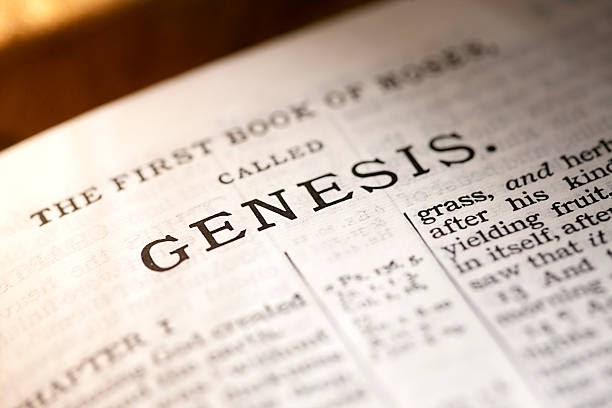
Close up of a page in a KJV Bible. Shallow depth of field with the focus on the word Genesis.

Great Expectations

According to the Bible, Abram was selected by God to be the father of a great nation. (Genesis 12:2) His descendants were to be as numerous as the stars of the sky. To emphasize the point, God changed Abram’s name to Abraham. Abram means “exalted father.” Abraham means “father of many nations.” Yet, Abraham only had one child with his wife Sarah – Isaac. They were advanced in age when he was born. Abraham was one hundred years old and Sarah was ninety.

According to our reading, Genesis 25:19-26, Isaac was sixty years old when he became a father. Isaac’s wife, Rebekah, gave birth to fraternal twin boys. The boys’ relationship was stormy from the very beginning. Genesis 25:22 says they even wrestled with one another in the womb. At birth, their differences were exposed to the world. The first baby was red and hairy. He must have been a handsome lad. They named him Esau, which means “hairy.” The second baby, named Jacob, had a fighting spirit. He came into the world grabbing his brother’s heel. Jacob means “seizing his brother’s heel.” The differences between the two did not vanish as they grew. They became more pronounced. Esau, the hairy one, became a great outdoorsman. Jacob, the heel grabber, stayed near the tents.

In many ways, before Esau and Jacob took their first breath, the die was cast for their lives. There were expectations placed on them. Those expectations came from different sources. There were societal expectations. There were family expectations. There were divine expectations. Those same expectations are influencing us. No, we are not masters of our own destiny; we are not the captain of our own lives. To a certain degree, we are products of our surroundings. They are one of the reasons this ancient story speaks to us. Like us, Esau and Jacob were products of their surroundings too. In this blog I want to look at those three expectations.

There are societal expectations. Sociologists call them societal norms. They are unwritten rules of behavior, thought, and conduct that are accepted as appropriate within a specific group or culture. Let me give you a few examples. They are in no particular order:

          1. Giving Christmas presents

          2. Leaving a tip for a server

          3. Saying please and thank you

          4. Avoid burping in public

          5. Chewing gum with no sound

          6. Chewing food with your mouth closed

          7. Cleanliness

          8. Brushing your teeth

          9. Opening the door for a lady

          10. Surrendering your seat to an elderly person

Do I have to go on? You get the point. There are certain things our society expects. Obviously, society expects different things from men and women. It is true of our generation, and it was true of Esau’s and Jacob’s generation as well. From the moment they entered this world their culture was telling them how to act. From the moment you enter this world our culture has been telling you the proper way to act. We are influenced by societal expectations. If you don’t believe me, then don’t give any Christmas presents this year.

There are family expectations. My youngest daughter, Anna, and I graduated from the same college, the University of Mount Union in Alliance, Ohio.  As a matter of fact, her major was the same as my major, Business Administration. In several classes we had the same professors thirty-four years apart. My father never told me two things. He never said to me, “I love you.” He never said to me, “I am proud of you.” Now, it is too late. I didn’t want to make that same mistake, so I have told Anna countless times those two things. I told her on the day she graduated from college. Anna responded by saying, “Dad, I don’t know why you are so impressed. I thought we were expected to go to college!“

What does your family expect from you? Studies tell us most follow the same political party as their parents. Most are the same religion as their parents. The food we eat is influenced by our parents. Our behavior and values are influenced by our parents. Our goals and skills are influenced by our parents. The way we communicate is influenced by our parents. Our priorities are influenced by our parents. When I ask couples getting married, “Whose relationship do you admire the most?” They don’t say David (born 1975) and Victoria Beckham (born 1974). They say their parents. Esau and Jacob were influenced by their family too. Have you ever considered how your parents influenced you? Have you ever considered how influential you are on your children?

There are divine expectations. The World Population Review studied various factors in 184 countries to discover the happiest country in the world.  According to them, Finland is the happiest country in the world. Then comes Denmark, Iceland, Sweden and Israel. The most unhappy country in the world is Afghanistan. I am not surprised. I was surprised the United States is the twentieth happiest country in the world. I find that interesting. Obviously, money can’t buy happiness. The United States holds 32% of the world’s wealth. The question is: why are we number twenty? Many have been trying to figure out our low ranking. You can point to the rising cost of healthcare, political division or inflation. Those factors don’t help, but there is a spiritual answer that cannot be ignored.

Someone asked Jesus the question, “What is the greatest commandment in the law?” (Matthew 22:36) Jesus answers the question, “You are to love the Lord your God with all your heart and with all your soul and with all your mind.” (Matthew 22:37) That means you are to love God completely. In other words, God is to be the top priority in your life. That is what God expects. I believe we are number twenty because God is no longer a priority in our society. We are no longer preoccupied with our divine purpose. Today, we are preoccupied with our incomes. Many entered their vocation because of the high earning potential, ignoring personal satisfaction. That would explain why the Harris Research Group reported recently 40% of Americans are unhappy at their jobs. Money isn’t everything and money can’t buy happiness. Have you ever considered what God wants you to do? America is spiritually out of balance. How great of a priority is God in your life? Let me end with this story.

A young psychology student serving in the Army decided to test a theory. Drawing kitchen duty, he was given the job of passing out apricots at the end of the chow line. He asked the first few soldiers that came by, “You don’t want any apricots, do you?” Ninety percent said “No.” Then he tried the positive approach: “You do want apricots, don’t you?” About half answered, “Uh, yeah. I’ll take some.” Then he tried a third test, based on the fundamental either/or selling technique. This time he asked, “One dish of apricots or two?” Although soldiers don’t like Army apricots, 40 percent took two dishes, and 50 percent took one!

Expectations are influential. It has always been true. The society in which you live influences our lives. The families in which you were born influence your life. God should be influencing your life. How much is God influencing your life? American inventor and engineer Charles F. Kettering (1876-1958) once said, “High achievements always take place in the framework of high expectations.”

Living in the Light

Meteorologists tell us the darkest day of the year in the Northern Hemisphere is December 21, the winter solstice. In my hometown we experience 14 hours and 56 minutes of darkness on that day. However, I do not consider December 21 the darkest day of the year. I consider January 2 to be the darkest day of the year. We experience 14 more minutes of sunlight on January 2 than on December 21, but darkness reigns on that day. Christmas is over, and Christmas lights have grown dark. I have always found Ohio winters to be hard, not because of the cold, but because of the darkness. I much prefer living in the light. I am not alone. That takes us to our scripture reading, Genesis 1:1-5.

Tradition tells us Moses wrote the Book of Genesis, along with Exodus, Leviticus, Numbers and Deuteronomy. Together, they are called the Pentateuch. They were written approximately 1,400 years before the birth of Christ. Genesis means “birth,” “genealogy,” or “history of origin.” It is the perfect title for the book because it summarizes the theme of the entire book. Our reading tells us how it all began. They are the opening words to the creation story.

According to the Bible, God created the world in six days, resting on the seventh. God is the main character in the Bible. In the Bible, God’s existence is never questioned, he always existed. In our reading, the original language, Hebrew, exposes Jesus was part of the creation because Jesus is divine. The first verse says, “In the beginning God created the heavens and the earth.” In verse two we learn darkness reigned until God acted. In other words, only chaos, disorder, danger and the unknown existed. In verse three, God introduces light. It is the opposite of darkness. Light brings order, safety and knowledge. In verses four and five, we are told God was pleased with the light, so he separated the dark and the light. The darkness was called “night” and the light “day.” I find it interesting everything began when light was brought into the story. This is certainly not the last time light is mentioned in the Bible.

The word light is used 272 times in the Bible. Sometimes, light means something that glows, like a campfire, firefly or a flashlight. Sometimes, it means more. In the Bible, light symbolizes God’s presence, purity, truth and spiritual illumination. In 1 John 1:5, God is described as light. In John 8:12, Jesus described himself as the “light of the world.” That verse says, “Jesus spoke again to the people, he said, ‘I am the light of the world. Whoever follows me will never walk in darkness, but will have the light of life.”  I have been walking in that light for over fifty years. I feel sorry for people who are groping in the dark because life is hard for everyone.

When you live in the light of Christ, you are forgiven. Ephesians 1:7 says, “in him we have redemption through his blood, the forgiveness of trespasses, according to the riches of his grace.” Forgiveness in the Christian faith runs contrary to our world. According to the Bible, we are forgiven by God when we forgive others. That is the point of the parable of the unmerciful servant, Matthew 18:21-35. True peace with God is only possible when we forgive others. Who do you need to forgive?

When you live in the light, you have hope. Roman 15:13 says, “May the God of hope fill you with all joy as you trust in him, so that you may overflow with hope by the power of the Holy Spirit. According to a recent Harvard Youth Poll, 51% of young Americans feel hopeless. That is a sad figure because they live in a wonderful country. America is still the land of opportunity. However, with that opportunity comes responsibility. It was a wonderful day when I discovered it all didn’t depend on me. God has been taking care of me from the very beginning. Living in the light means I am not alone. God is with me, and God is with everyone who is living in the light. Those who chose to live in the darkness only see loneliness. Matthew 19:26 says, “With God all things are possible.”

When you live in the light of Christ, you have a purpose for living. Romans 8:28 says, “And we know that in all things God works for the good of those who love him, who have been called according to his purpose.”  Discovering your divine purpose is vital. I am fortunate that my vocation and my purpose were one. For many they are not. God created you for a purpose. You were not born to be a consumer. You were not born to amass wealth. You were born to glorify God and work in his kingdom. What are you doing to glorify God?

When you live in the light, you have salvation. John 14:6 says, “Jesus answered, I am the way, the truth and the life. No one comes to the father except through me.”  This is the unpleasant reality – no one gets out of the world alive. We are all terminal from birth. However, that is not the end. For those who live in the light there is more. One of the great promises in the Christian faith is salvation. When I leave this world, I will go home. In other words, I will be in heaven with fellow believers. Are you still questioning your salvation?

Years ago, I was visiting someone in the hospital. They were in the intensive care unit. On my way out of the ICU, I stuck my head into the family waiting room. You never know who you will find. On that day, I found a woman I knew. She was surrounded by her family. She gave me a hug and introduced me to her family. Everyone greeted me warmly, except one brother. He was having a hard time. They told me their other brother was a patient, and things weren’t going well. I asked them if I could pray with them. They all said, “Yes!” except for the struggling brother. He looked at me and said, “No! What the hell has your God done for me?” The family apologized for his harsh words, but I wasn’t upset. I felt sorry for the hurting man. He was struggling because he was living in the dark. He only saw chaos, disorder, danger and the unknown.

How many people do you know are living in spiritual darkness? I prefer living in the light because life is more tolerable. C. S. Lewis (1898-1963) once said, “I believe in Christ like I believe in the sun – not because I can see it, but because by it I can see everything else.”