Why Are You Here?

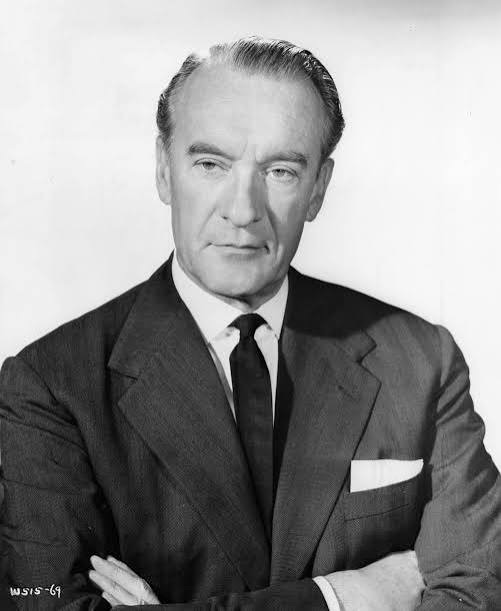
Appearing in over 100 films in his four-decade career, George Sanders (1906-1972) was a true Hollywood star. In 1951, he won an Oscar for Best Supporting Actor in the movie All About Eve. He seemed to have it all, both fame and fortune. He should have been a happy man, but he wasn’t. On April 23, 1972, Sanders committed suicide in a hotel near Barcelona, Spain. Left behind a note. It read:

Dear world, I am leaving because I am bored. I have lived long enough. I am leaving you and your worries in this sweet cesspool. Good luck! 

How can a man with so much have so little? According to the world, Sanders had everything you needed to be happy. He did have everything he needed to be happy, but he was ignorant of his divine purpose. There is more to life than collecting and buying things. There is more to life than partying. Everyone must be able to answer the question: why are you here? God doesn’t call us to be consumers. God calls us to make a difference in this world. That leads us to our reading.

According to the Revised Common Lectionary, this Sunday is the Second Sunday in Lent. The Old Testament reading is Genesis 12:1-4, the calling of Abram. It is not our first introduction to Abram, later Abraham. He was mentioned in the previous chapter. According to chapter eleven, Abram’s father was named Terah. The entire family lived in Haran, until Terah’s death at the age of 205. The death of a loved one is always hard, and many make major changes during a time of loss. That is what happened to Abram.  

The twelfth chapter begins with Abram making a major change in his life. However, Abram does not initiate the changes. It is God, who initiated the change. At seventy-five years old, God instructs Abram to move to a new land. The name of the land is not identified, but it will be the home of Abram’s future descendants. Abram’s relocation is a large part of his divine purpose. Names are important in the Bible. Abram means “exalted father.” Abraham means “the father of the multitude.” Abram’s descendants include Jesus. That means, Abram is our spiritual ancestor too. I love this story because Abram started the greatest challenge of his life as a senior citizen.

In 2002, pastor of the Saddleback Church in California Rick Warren (born 1954) released a book called “The Purpose Driven Life.”  The book was extremely popular. More than 50 million copies were sold in 85 countries. It was popular for an obvious reason. Everyone wanted to know their divine purpose. In other words, everyone wants to know why God put them in the world. No one just wants to be a consumer. Everyone wants to make a difference. Abram’s divine purpose was to be the father of a new nation.

Today, many are unsure of their divine purpose. Research tells us only 38% of all Christians know their divine purpose. Abram did three things to clarify his purpose. We need to do these three things too to clarify our purpose as well.

First, Abram trusted God. Prior to our reading, the scripture says Abram had a good life. He was prosperous and stable in Haran. There is no sign Abram was interested in leaving and had every reason to stay. It was God who initiated the move. This is the key line – there is no sign Abram questioned God. He trusted God and was open to God’s leading. Moving to a new land made no logical sense, but Abram did it because he trusted God. God has a plan for your life too. How far do you trust God?

Second, Abram trusted the people in his life. Abram didn’t travel alone. The scripture tells us he took with him his wife Sarai and nephew Lot. He took his possessions and the people he had acquired in Haran. That includes both employees and slaves. This is the point. When Abram accepted God’s call, it didn’t just affect his life, it affected many lives, including the people who stayed behind. If Abram was going to maximize his purpose, then he had to trust the people in his life too. How far do you trust the people in your life?

Third, Abraham trusted himself. God calls Abram to move to a new land to start a new race. Abraham goes because he trusts God and Abram goes because he trusts the people in his life. Abram goes because Abraham believes in himself. There is no sign in the scripture Abraham doubted himself. Abram believed in Abram. According to NBC News, 85% of people have low esteem. Are you in that group? Do you believe in yourself?

If you want to discover your divine purpose, then you must trust God, the people in your life and yourself. Never dismiss the value of knowing your divine purpose. It is essential to your well-being, acting as a compass that drives motivation, resilience and mental health while contributing to longer happier lives. Your purpose is not necessarily your vocation. However, your vocation may pay for your purpose. Your divine purpose stands at the intersection where your personal interests meet human need. What is that one thing you enjoy doing that benefits someone else? That is your divine purpose. I am convinced there are as many purposes as there are individuals. People who don’t know their divine purpose live shallow lives.

What is your purpose? Abraham’s purpose was to be the father of new nation. What is your purpose? Helen Keller (1880-1968) was an American author, political activist, and lecturer. She was also the first blind-deaf person to earn a Bachelor of Arts degree. In 1904, she received that degree from Radcliffe College. Keller once said, “True happiness is not attained through self-gratification, but through fidelity to a worthy purpose.”  Never forget, you are a disciple of Jesus Christ, and he expects you to make a difference. What is he calling you to do?
Why Abram?

We find ourselves in the twelfth chapter of Genesis. It is really the beginning of the story. The first eleven chapters of Genesis are prehistorical. They explain how certain things came to be. The twelfth chapter is the beginning of the history of God’s Chosen People, the Hebrews. According to the text it all began with a man named Abram. The name Abram means “exalted father.” It is impossible to completely understand the story of God’s Chosen People without a basic understanding of Abram. According to verse four, Abram was seventy-five years old when God spoke to him. I do not play the numbers game with the Bible. If the Bible says Abram was seventy-five years old, then Abram was seventy-five years old. The Lord tells the seventy-five-year-old Abram everything in his life is about to change. God commands him to relocate. God’s words to Abram should not be taken lightly. They are important words. If you examine those words closely, you discover it is a sevenfold promise. Count them with me:

  1. I will make you a great nation.
  2. I will bless you.
  3. I will make your name great.
  4. You will be a blessing.
  5. I will bless those who bless you.
  6. Whoever curses you I will curse.
  7. All peoples on earth will be blessed through you.

Never forget, Jesus was a descendant of Abram. That fact is not wasted on the Jews.

God’s request to relocate was clear, but no destination was given. He is to leave Mesopotamia and settle in an unknown location. I guess, Abram was lucky. Without instructions, he settled in the land where God wanted him to be, Canaan. Abram traveled safely, but he did not travel alone. Along with his possessions and the people he had acquired, he traveled with his wife Sarai and his nephew Lot. To celebrate their arrival in Canaan, Abram built an altar to God. I do not want to complain, but this is the church. Someone must complain. Why not me?

I find the selection of Abram to be odd. Do not think of Abram as a saint. Think of Abram as a man. In basic terms, God choose an established elderly married gentleman to be the father of a new nation. It is important to note seventy-five years old Abram and Sarai had no children. God does not need my advice, but I am going to give it. Abram was an odd choice. If you are going to start something new, then you need someone young. Young people have new ideas. Young people have more energy. Young people like change. Young people like to move. Young people procreate to create a new generation and, in this case, a new nation. None of those things apply to Abram. I do not want to sound critical but many of the aged have a hard time thinking out of the box. The aged look forward to that afternoon nap. The aged love remembering the good old days. The aged celebrate their stability. The aged love their grandchildren because they go home at the end of the visit. Do I have to go on? Abram was an odd choice, but we should not be surprised because God has always selected the odd and imperfect to serve. We find that to be the case on the New Testament too.

It is the custom in many churches to look at the disciples during the season of Lent. We like to think of them as saints, but they had their imperfections too. Through human eyes, none of them would have been selected to start a new organization. Through critical eyes, each one was flawed. Many years ago, I came across a fictious letter written to Jesus by a consulting group regarding the disciples. You may remember it. It reads like this:

To: Jesus, Son of Joseph
Woodcrafter’s Carpenter Shop
Nazareth 25922

From: Jordan Management Consultants

Dear Sir:

Thank you for submitting the resumes of the twelve men you have picked for managerial positions in your new organization. All of them have now taken our battery of tests; and we have not only run the results through our computer, but also arranged personal interviews for each of them with our psychologist and vocational aptitude consultant. The profiles of all tests are included, and you will want to study each of them carefully.

As part of our service, we make some general comments for your guidance, much as an auditor will include some general statements. This is given because of staff consultation and comes without any additional fee.

It is the staff opinion that most of your nominees are lacking in background, education, and vocational aptitude for the type of enterprise you are undertaking. They do not have the team concept. We would recommend that you continue your search for persons of experience in managerial ability and proven capability.

Simon Peter is emotionally unstable and given to fits of temper. Andrew has absolutely no qualities of leadership. The two brothers, James and John, the sons of Zebedee, place personal interest above company loyalty. Thomas demonstrates a questioning attitude that would tend to undermine morale. We feel that it is our duty to tell you that Matthew had been blacklisted by the Greater Jerusalem Better Business Bureau; James, the son of Alphaeus, and Thaddaeus have radical leanings, and they both registered a high score on the manic-depressive scale.

One of the candidates, however, shows great potential. He is a man of ability and resourcefulness, meets people well, has a keen business mind, and has contacts in high places. He is highly motivated, ambitious, and responsible. We recommend Judas Iscariot as your controller and right-hand man. All the other profiles are self-explanatory.

We wish you every success in your new venture.

Sincerely,

Jordan Management Consultants

We should not be surprised God chose Abram because God has always chosen the imperfect. How faithful are you? Perfection is not important to God. The only thing that matters to God is faithfulness. There is no way you can question Abram’s faithfulness. Do you remember the story?

It is found in the twenty-second chapter of Genesis. Abram’s name has been changed. Abram, exalted father, is now called Abraham, father of the multitude. The father of the multitude has one child, Isaac. Abraham was one-hundred years old when Isaac was born. Sarah was ninety. According to the story, Abraham is instructed by God to travel the region of Moriah. He traveled three days with two servants and his son Isaac. They have everything they needed for a burnt offering, wood, and fire. The only missing was the animal to be sacrificed. At some point, Isaac discovers he is the one to be sacrificed. Abraham pulls his knife and surrenders his son in his heart. At the last second, the boy is spared, and any question of Abraham’s faithfulness is erased. Only one question remains. How faithful are you?

As I wrote this message I thought about my own calling. As I look back on my life, I see my call clearly. I felt my call from a young age. However, from a young age, I tried to ignore it. When I was in high school, I was terrified of public speaking. I shook like a leaf in front of the smallest group. My dyslexic eyes made it hard to me to read the smallest part. I found myself memorizing longer parts. I graduated from college with a degree in Business Administration. It was a good degree for me, because I really did not know what to do with my life. I got a job at a local bank and worked there for over a year. Then, I sold ad space in a small independent newspaper on the shores of Lake Erie. I hated the bank job, but I liked the sales job, because I was not over supervised and built a weekly relationship with my customers. However, I knew that job was not going to be my career. I had two jobs in three years. I call those three years my wilderness experience. I was lost in many ways. Not really knowing what to do I decided to go to seminary and face my fears.

I started seminary in Indianapolis. I enrolled at Christian Theological Seminary, in the shadows of Butler University. I selected that school for some very local reasons. The logical has never worked for me. I knew, I had made a mistake from the first day. I stayed one long year and during that long year I was the Youth Director at the First Christian Church (Disciples of Christ) in Frankfort, Indiana. (Their mascot of the local high school was a hot dog because they were the frankfurters.) It was not a great situation. I was the world’s worst Youth Director, and the Senior Pastor of that church at that time was a fool. I preached my first sermon in that church at the early Easter service. It was horrible. Someone called the church office the next day to complain because I was so poor. That person was not wrong.

After my year-long incarceration in Indiana, I transferred to Asbury Seminary in Wilmore, Kentucky. I went there with nothing, but in my soul, I knew I was in the right place for the first time. Looking for a job, I found a bulletin board with index cards. One of those index cards changed my life. There was a small membership church near Lancaster who was looking for a student pastor. No experience was required. That evening I called the number on the card and set up an interview. The voice on the other end of the line was kind. The committee that interviewed me was kind. When I preached my first horrible sermon there, the congregation was kind. I pastored that church for three years and I have nothing negative to say about them. I learned a great deal during my time with them. I learned how to be a better person. I learned how to be a better pastor. I learned how to be a better preacher. However, most of all, it was in that church my call was confirmed. If I have done anything positive in the ministry, it is because of that kind small membership church near Lancaster, Kentucky. That congregation has a special place in my heart.

I am a living example that God is not looking for perfect people. I have a surplus of imperfections. You can ask anyone who has ever worked with me. I could have called this message Why Russ? However, this is equally true. I do not worry about being perfect. I only worry about being faithful. I hope God sees me as being faithful. This is the question you must answer. How faithful are you? It is not just the story of professional clergy. It is the story of anyone who wants to serve God in this world. Forget perfection and worry about faithfulness. Your faithfulness is the only thing that matters to God. Founder of the Christian Men’s Network, Edwin Louis Cole (1922-2002) once said, “Your faithfulness makes you trustworthy to God.” How far can God trust you?