In my time in the ministry, most traditional worshippers loved the hymn, Trust and Obey. The hymn was inspired in 1886 when the composer of the music, Daniel B. Towner (1950-1919), was the music leader at one of Dwight L. Moody’s (1837-1899) revivals in Blockton, Massachusetts. On one evening, a young man stood up in a testimony meeting and said, “I am not quite sure – but I am going to trust, and I am going to obey.” Towner jotted down that line and sent it to a Presbyterian minister, J. H. Sammis (1846-1919), who wrote the hymn and the tune was born. With that story in mind, let us look at our scripture reading, 2 Kings 5:1-14.
The main character in the story is Naaman. Prior to our reading, Naaman had a good life. As Commander of the Syrian army, he was professionally successful, well connected, and respected. His good life was threatened when he discovered he had leprosy, a highly contagious skin disease. In our time it is treatable, but in Naaman’s time there was no cure. His association with the king, professional success, fame, and wealth could not help him. The powerful Naaman was powerless against the disease.
His only hope was in God. Naaman’s story resonates with anyone who has ever had a major problem. In this blog, I want to examine three divine truths about problems.
Divine Truth Number One: problems force us to seek God. When life is good, we have no need for God. Now, God does not create our problems, but God uses our problems to remind us of what is important. That was Naaman’s story. Naaman had everything this world had to offer. Verse one says, “Now Naaman was commander of the army of the king of Aram. (Aram was the King of Syria.) He was a great man in the sight of his master and highly regarded, because through him the Lord had given victory to Aram. He was a valiant soldier, but he had leprosy.” Those four words, “but he had leprosy”, changed everything. Suddenly, God became important to Naaman. It was his wife’s maid, an Israelite refugee, who spoke of the prophet Elisha. It is a universal truth – how many people do you know have no need for God until a problem invades their personal space?
Siddhartha Gautama (563-483 BC) was born 525 before Jesus. He had a good life. He lived in the palace away from the harshness of this world. It was not until he was in his early twenties that he left the palace for the first time. When he did, he saw the harshness of his world. He saw poverty, disease, and death for the first time and he was forever changed. He looked for a higher power to answer some tough questions and find relief. He developed meditation to disassociate himself from this world. It worked for him and he taught it to others. Today, Siddhartha Gautama is called Buddha, or the “enlightened one”. Today, there are approximately four hundred million Buddhists worldwide. It all started because one young man saw the big problems of this world. He reached for a higher power to ease his pain. Seeking God during a problem does not make you a Christian, but it does make you human. Problems force us to seek God. The next two divine truths go hand in hand.
Divine Truth Number Two: problems force us to trust God. Naaman took the words of the maid seriously. He received permission from his king to travel to Israel. Verse five says he took a hefty sum of money with him expecting to pay a king’s ransom for the healing. Upon his arrival he discovers two things. First, the prophet was not in the court of the King of Israel. Second, he discovered that his money is worthless. The healing cannot be bought. If he wanted to be healed, then he must trust God. Before Naaman could submit to God, he had to learn how to trust God. That was difficult for him. It has been said, “A person who trusts no one can’t be trusted.” How much do you trust God? Problems force us to trust God.
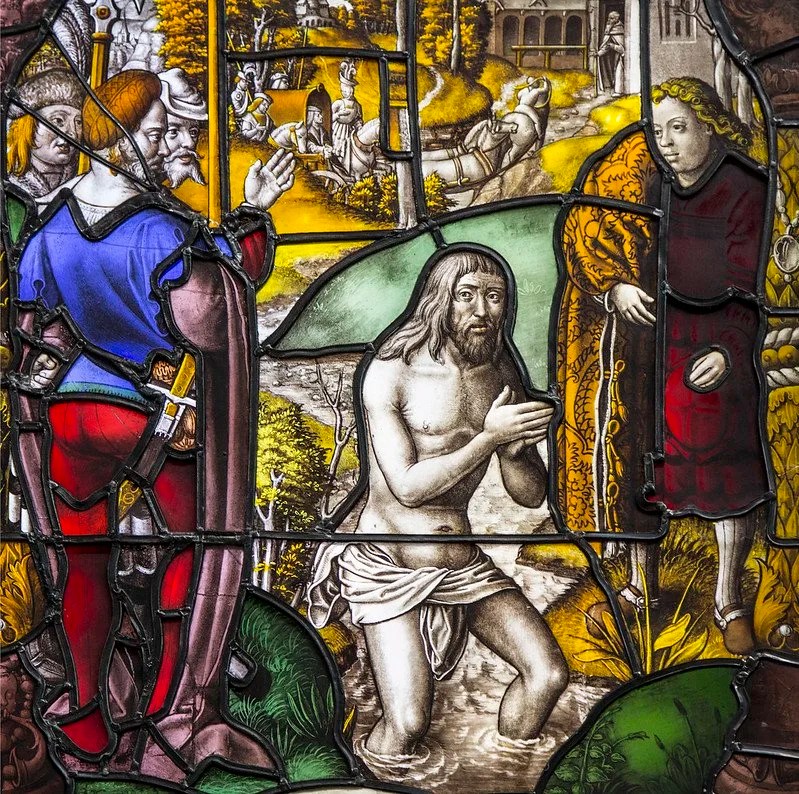
Divine Truth Number Three: problems force us to submit to God. The greatest barrier to Naaman’s healing was his own pride. Several things happen to break his pride. First, Naaman learned the King of Israel was powerless against the disease; Naaman’s political connections could not help him. Second, Naaman was instructed to go to Elisha’s house and was greeted by a messenger. Verse eleven tells us Naaman felt disrespected and was angry. Third, Naaman was instructed to dunk himself seven times in the muddy Jordan River. The number seven in the Bible stands for completeness. In other words, Naaman had to completely submit to God. That would require Naaman to humble himself. That was difficult for him. Without the encouraging words of his servants, Naaman would have returned home with leprosy. In the end, Naaman swallowed his pride and submitted. As promised, he was healed after dunking himself seven times in the Jordan. New Zealand explorer Edmund Hillary (1919-2008) once said, “It is not the mountain we conquer, but ourselves.”
Submitting to God’s will is one of the most challenging things you will ever do in your life as a disciple. We are more comfortable with Jesus being our Saviour, than we are Jesus being our Lord. The reason is, God does not always address a problem in the way that we expect. Naaman took his great wealth to Israel expecting to buy a miracle. He never dreamed he would be dunking himself in the Jordan River. How many times has God responded to your problems in a surprising way? Problems force us to submit to God.
Let me end where I began. In 1886, Dwight L. Moody held a revival in Blockton, Massachusetts. One of the attendees was a young man who attended a testimony meeting. He stood up and said that he would trust and obey God for the rest of his life. That is easy to say when life is good. It is not so easy to say when problems invade your life. Problems are a part of life. The greater the problem the more trust and obedience is required. If you do not believe me, ask Naaman.