Unmasking Halloween

Our reading is Luke 8:26-39. There is no other way to describe the story, it is weird. It is weird from beginning to end. The story begins with Jesus and the disciples sailing on the Sea of Galilee. They land in an area largely comprised of Gentiles, who show very little interest in Jesus. As a matter of fact, only one person came out to meet him, the weirdest man in the entire community – the demoniac, Legion. We are told his name is derived from his spiritual condition. A legion of demons had invaded his soul. He lives in isolation because no one wants to live with him. That is fine with him, because he simply wants to be left alone. There is no hope. There is no earthly cure for him. The only thing he has to look forward to is death. The tombs that surround him were his earthly future. He had no clue at the beginning of the day a cure was so close. Yet, by the end of the day, he had reclaimed his life because Jesus came into his life. The story ends in an odd way. You would think the community would have wanted to thank Jesus for saving one of their own. Instead, they insist that Jesus leave. I told you – it is a weird story from beginning to end.

Can I make a confession? I like this story because it is so weird. Maybe a better word is creepy. I have read this story for nearly fifty years, and I understood the divine truth from the very first time. The story of Legion is a story about Jesus’ authority over demons. The authority of Jesus cannot be ignored. All the stories in the eighth and ninth chapters of Luke deal with Jesus’ authority over something. Trace them with me. Jesus had authority over leprosy. Jesus had authority over paralysis. Jesus had authority over sickness. Jesus had the authority to call the disciples to follow him. Jesus had authority over nature. Jesus had authority over fasting. Jesus had authority over life itself. In this story, Jesus had authority over demons. The question is not whether Jesus had authority. The question is, do you believe in demons? Everyone must answer that question for themselves. I had to answer that question for myself. I believe in demon possession. Do you believe in demon possession? This is why I believe in demon possession. Let me tell you my story. I tell this story annually to remind us of Halloween’s dark side.

Her name was Pat, and she changed the way I look at Halloween forever. When I was pastoring in the Cleveland area, I received a random phone call. The young woman’s voice on the end of the line said she needed help. I was prepared to give her a bag of food or a voucher to the local grocery store. However, she was quick to say she didn’t need financial help, she had a job to cover her expenses. She just needed to talk to someone about some experiences in her life. I said I would be glad to meet with her and we met at my church a few days later.

When the day arrived, she came early. She drove an old light blue Pontiac, complete with rust and some bald tires. From my office window, I watched her sit in her car until the magic hour. I met her on the sidewalk in front of the church and stuck out my hand to welcome her. She didn’t respond. She could not even make eye contact, but I examined her. In short, not yet seeing her thirtieth birthday, she was a victim of life. Her clothes were faded and baggy. Her hair was long and ungroomed. Her shoes were worn out. There is no other way to say it, she was as nervous as a cat. The church building was empty and we sat in the narthex. In those days, my office resembled a closet, so the only place we could talk comfortably was the narthex. The right words were hard to find. I tried my best by making small talk. I wanted her to calm down, but she never did. The only thing she did was look at her watch and tug on the sleeves of her sweatshirt. Realizing our conversation was going nowhere, I asked her this question: How can I help you?  Using broken thoughts and sentences, she told me about some past surgery. I don’t remember anything about it, however, what I do remember was her uneasy spirit. Fidgeting in her seat, she told me she suffered from some form of post-traumatic stress disorder. I said, “I am not sure I can help you. I am not really a counselor, I am a preacher, I am a theologian.” We sat there in uncomfortable silence for a few minutes, when she announced it was time to go. She asked me, “Can we meet again?” I said, “Yes!” and I gave her a card. She promised me she would call, and she did.

The next time we met, she arrived in the same old light blue Pontiac. She was wearing the same shapeless clothes. Just like our prior meeting, her eyes were down, and her spirit was broken. We sat in the same seats in the same empty church. However, this time she did something new. She looked at me and said, “I have to confess, I lied to you last time.” She continued, “I lied to you about the source of my problem. The problem is not my surgery. The problem is I can’t get over my childhood.”  Without a single emotion, she began to tell me about her childhood summers.

Annually, she would travel to Canada for the family vacation. They would visit her uncle, who lived on some remote lake. Her parents were both alcoholics. They drank daily, so they entrusted Pat and her siblings to their uncle. The uncle was a Satan worshipper, who exposed his nieces and nephews to some of life’s cruelest experiences. There was no form of abuse they didn’t endure. She told me she was buried alive with an air tube to allow her to keep breathing. She told me he forced her to attend satanic worship services, where animal sacrifices were common. She told me she hated Halloween, because on that highest day of the satanic calendar, human sacrifices were expected. Those experiences forced her personality to fracture and she manifested eight personalities in all. I asked her just one question, “How did you survive?” She answered with red, moist eyes, “I am not sure I have.” She pulled up the sleeves of her sweatshirt and revealed to me the signs of a cutter. She reached into her pocket and showed me her knife. She said, “My psychologist wanted me to come and talk with you. He wants you to teach me about the truth about God and Jesus’ love.” Through a period of several years, I went through the traditional confirmation curriculum with each personality, offering them communion once the course was complete. Each one heard about the good news of Jesus Christ. Sad but true, I taught her about Jesus. She taught me about a world that I wished didn’t exist, Satanism.

Because of my discussions with Pat, I began to research that dark world. I learned that the people who organized modern Satanism were Aleister Crowley (1875-1947) and Anton LeVey (1930-1997). Crowley believed he had harnessed the power of Black Magic. LeVey established the Church of Satan in 1966 in San Francisco. The combination of these two men was truly sinister. The church of Satan is the counter universe to the Christian world.

We worship in the open; they worship in hiding

We worship in churches; they worship in covens

We exist to help others; they exist to help themselves

We see Jesus as the Lamb of God; they value the goat

We sacrifice ourselves to serve; they sacrifice others to gain

We are taught to love; they are taught to hate

We believe in angels; they believe in demons

We are taught to welcome; they are taught to intimidate

Our cross is right side up; their cross is upside down

We give our praise and glory to God; they embrace Satan

The more I learned, the sicker I grew. The story of Legion is the story of a man who was completely overwhelmed by Satan and his forces. I sat there with Pat for years, and I saw a young woman whose life had been destroyed by Satan, and a young woman who needed God’s love. It did not hit me until later – the bravest thing I have ever witnessed was Pat walking into that church for the first time.

Pat came to me for help, but I learned so much from her. Do you know what I learned from her? I learned to stand close to Jesus. Without Jesus, Legion would not have been healed. Jesus isn’t just our friend; Jesus is our Savior and protector. When I was young, my friends and I played with a Ouija board to get answers. When I was young, I wondered about mediums and communicating with the dead. I know people who use tarot cards to see into the future. I know people who sit in the dark in every closed hospital and school hoping to experience paranormal activities. I don’t dismiss those things because I don’t believe in them. I dismiss those things because I do believe in them. They are so seductive. I know they can lead us into a dark world, where I don’t want to go. I just want to stand near Jesus where it is safe. No wonder Legion wanted to go with the Master. He just wanted to be safe.

It has been years since my time with Pat. Our time together ended when I moved to my next church. However, I still think about her during the Halloween season. The last time we met, we sat in the narthex of my church and talked. She thanked me for my time and wanted to give me a gift. I didn’t want a gift, but she insisted. She told me she wanted to give me something she didn’t need anymore. She reached into her pants pocket and handed me her knife. It was the same knife she had used to cut herself. It is my most prized possession from my time in the ministry. Then, she reached out her hand and asked me to pray with her one more time. I prayed that Jesus would protect her from the dark world.

On Halloween, I am planning on being home passing out candy. I like passing out candy, because I like seeing all the children arrive in their Halloween costumes. There will be some princesses. There will be some with masks of frightening characters. There will be a few trying to look like Beetlejuice.  There will be a handful of football players. (The ones dressed like Cleveland Browns will get extra candy because they have suffered enough!) When the last one comes, I will turn off my front porch light and pray. I will pray that Jesus keeps all those trick-or-treaters safe, but I will also pray for those souls who are lost in the dark world of Satanism. With Jesus, there is hope. 1 John 1:5 says, “God is light; in him there is no darkness at all.”

Christian Wives, Christian Husbands

The topic is marriage. As I prepared to write this blog I came across a mountain of random statistics and fun facts. I found them entertaining, and I hope you do too. Let me just give you a few. 

Did you know January and February are tied for the least popular months to get married?

Did you know on average there are 6,200 weddings every day in America?

Did you know in New Hampshire with parental permission a female at age 13 and a male at age 14 can marry? 

Did you know Kentucky state law prohibits a man from marrying his ex-wife’s grandmother?

Did you know over 80% of all married men, regardless of age, say their wife is good-looking. 

Did you know the most married person in history was probably King Mongut of Siam, the monarch in “The King and I?” He had 9,000 wives and concubines. 

Did you know 60% of American couples describe their marriage as very happy? 

Did you know in colonial days, a Boston sea captain named Kemble was sentenced to spend two hours in the stocks for kissing his wife in public on Sunday, the day he returned from three years at sea? 

Did you know every day, 175 Americans aged 65 or older get married? 

Did you know over 90% of American couples remain sexually faithful to their spouse after marriage?

Did you know 75% of American couples say divorce is not likely at all? 

          Did you know 75% of married people say their spouse is their best friend? 

          Did you know 80% of American couples say they would marry the same person if they had to do it over again? 

I found that list of statistics and facts on the internet, so I hope they are true.

The topic is marriage. On May 27 Kathryn and I celebrated our thirty-sixth wedding anniversary. Through the eyes of the young that is a long time. In my years of church work I know many couples who have been married longer. I learned years ago the secret is not finding someone you can live with, the secret is finding that person you cannot live without. Our thirty-six years together have gone quickly. We fear being in this world alone. Years ago, I came across the ingredients of a successful marriage. I do not know where they originated, but I think they hold true.

The first ingredient that is needed in a successful marriage is commitment. During his courtship with a young woman named Julia Dent (1826-1902), Ulysses S. Grant (1822-1885) once took her out for a buggy ride. Coming to a flooded creek spanned by a flimsy bridge, Grant assured Julia that it was safe to cross. “Don’t be frightened,” he said. “I’ll look after you.” “Well,” replied Julia, “I shall cling to you whatever happens.” True to her word, she clung tightly to Grant’s arm as they drove safely across. Grant drove on in thoughtful silence for a few minutes, then cleared his throat and said, “Julia, you said back there that you would cling to me whatever happened. Would you like to cling to me for the rest of our lives?” She would, and they were married on August 22, 1848. In their marriage they experienced the very best and the very worst. Grant was loved by his generation for ending the Civil War, but he also experienced bankruptcy. The Grants illustrate for us the importance of commitment in marriage. It isn’t just true for Ulysses and Julia Grant; it is true of any successful marriage. 

Commitment isn’t important in marriage; it is indispensable. I have no clue how many weddings I have officiated at through the years. They were all different, but every wedding is exciting. It is my experience; weddings are well organized and expensive.

Did you know the average American wedding costs $27,000? Your wedding day is a great day, but marriage is not about a day, it is about the rest of your life. I never knew what the future held for the loving couple, but I did know this: Life is never just black and white, life is a million shades of gray. Together, they would experience the best life had to offer but they would also experience some challenging moments. There may be days that the only thing they have is one another. Commitment isn’t important in marriage; it is indispensable. The first ingredient that is needed in a successful marriage is commitment.

The second ingredient needed in a successful marriage is communication. I love the story of Broadway producer Jed Harris (1900-1972). At one point in his life, he became convinced he was losing his hearing. He visited a specialist, who pulled out a gold watch and asked, “Can you hear this ticking?” “Of course,” Harris replied. The specialist walked to the door and asked the question again. Harris concentrated and said, “Yes, I can hear it clearly.” Then the doctor walked into the next room and repeated the question a third time. A third time Harris said he could hear the ticking. “Mr. Harris,” the doctor concluded, “there is nothing wrong with your hearing. You just don’t listen.” Do you have anyone in your life who can hear perfectly, but they just don’t listen? There is a lot of that going on in our time. 

People have busy schedules. We live life at a fast pace. Our ears are always busy. How many people or things demand your attention in a single day? Just think about it for a moment. The one thing you have not heard lately is silence. If you have a job, then you must listen to your boss. If you have children, you must listen to them. You must listen to your children’s teachers. If you work in a store you must listen to the customers. The air is always filled with a wide variety of music that offers background noise. Have you listened to the news lately? Have you heard your phone ringing lately? Have you heard any political advertisements lately? You are even forced to listen to the preacher. Do I have to go on? Our world is filled with all kinds of sounds. Could it be you have grown tired of listening? Do you hunger for silence? Do your ears work perfectly, but you don’t listen? It is important to listen to your spouse. The second ingredient needed in a successful marriage is communication.

The third ingredient needed in a successful marriage is common core values. History tells us the body of missionary David Livingstone (1813-1873) is buried in his native England, but his heart is buried in the land that he loved, Africa. This is my question for you. Where is your heart?  

Sociologists tell us we build our lives on our core values. Those are the values we hold closest to our heart. Your core values affect the way that you spend your money. Your core values affect the way that you spend your time. Your core values affect the way that you handle your relationships. What do you hold closest to your heart? Do you hold your spouse close to your heart? Do you hold your children close to your heart? Do you hold your family close to your heart? Do you hold your home close to your heart? Do you hold Jesus close to your heart? Don’t answer that last question too quickly. I am not talking about your church. There are many fine churches in our world. I am not talking about your denomination. It really doesn’t matter what flavor of Christianity is your choice, Methodism, Baptist, Presbyterian, Lutheran, Pentecostal, Orthodox or Roman Catholic. I am talking about Jesus. Do you hold Jesus close to your heart? How close do you hold Jesus to your heart? He is the one who died on the cross for your sins, not your local congregation or favorite denomination. Does your spouse hold Jesus close to their heart? Sharing common core values is important. The third ingredient needed in a successful marriage is common core values.

The topic is marriage. Between 1 Peter 2:13 and 3:7, Peter touches on the very heart of Christian ethics. The words seem foreign to our world but not to Peter’s world. He addresses the various relationships found within the early church. There is the relationship between citizens and their government. There is the relationship between slaves and masters. There is the relationship between Christian husbands and Christian wives. The word that links those various relations is “submission.” Jesus was the ultimate example of submission. (1 Peter 2:21-25) It has been a reciprocal ethic. It is an ethic that draws on balance. The responsibility never falls on one individual or group. It is shared by every individual or group. In marriage the responsibility is shared equally by the couple. You see the balance in 1 Peter 3:1-7. Peter addresses the responsibilities of Christian wives in 1 Peter 3:1-5. Peter addresses the responsibilities of Christian husbands in 1 Peter 3:6-7. If you examine your marriage, what do you find? Do you find your marriage in balance or out of balance? C. S. Lewis (1898-1963) once said, “When I have learned to love God better than my earthly dearest, I shall love my earthly dearest better than I do now.”

The topic is marriage. As I prepared to write this blog I came across a mountain of random statistics and fun facts. I found them entertaining, and I hope you do too. Let me just give you a few. 

Did you know January and February are tied for the least popular months to get married?

Did you know on average there are 6,200 weddings every day in America?

Did you know in New Hampshire with parental permission a female at age 13 and a male at age 14 can marry? 

Did you know Kentucky state law prohibits a man from marrying his ex-wife’s grandmother?

Did you know over 80% of all married men, regardless of age, say their wife is good-looking. 

Did you know the most married person in history was probably King Mongut of Siam, the monarch in “The King and I?” He had 9,000 wives and concubines. 

Did you know 60% of American couples describe their marriage as very happy? 

Did you know in colonial days, a Boston sea captain named Kemble was sentenced to spend two hours in the stocks for kissing his wife in public on Sunday, the day he returned from three years at sea? 

Did you know every day, 175 Americans aged 65 or older get married? 

Did you know over 90% of American couples remain sexually faithful to their spouse after marriage?

Did you know 75% of American couples say divorce is not likely at all? 

          Did you know 75% of married people say their spouse is their best friend? 

          Did you know 80% of American couples say they would marry the same person if they had to do it over again? 

I found that list of statistics and facts on the internet, so I hope they are true.

The topic is marriage. On May 27 Kathryn and I celebrated our thirty-sixth wedding anniversary. Through the eyes of the young that is a long time. In my years of church work I know many couples who have been married longer. I learned years ago the secret is not finding someone you can live with, the secret is finding that person you cannot live without. Our thirty-six years together have gone quickly. We fear being in this world alone. Years ago, I came across the ingredients of a successful marriage. I do not know where they originated, but I think they hold true.

The first ingredient that is needed in a successful marriage is commitment. During his courtship with a young woman named Julia Dent (1826-1902), Ulysses S. Grant (1822-1885) once took her out for a buggy ride. Coming to a flooded creek spanned by a flimsy bridge, Grant assured Julia that it was safe to cross. “Don’t be frightened,” he said. “I’ll look after you.” “Well,” replied Julia, “I shall cling to you whatever happens.” True to her word, she clung tightly to Grant’s arm as they drove safely across. Grant drove on in thoughtful silence for a few minutes, then cleared his throat and said, “Julia, you said back there that you would cling to me whatever happened. Would you like to cling to me for the rest of our lives?” She would, and they were married on August 22, 1848. In their marriage they experienced the very best and the very worst. Grant was loved by his generation for ending the Civil War, but he also experienced bankruptcy. The Grants illustrate for us the importance of commitment in marriage. It isn’t just true for Ulysses and Julia Grant; it is true of any successful marriage. 

Commitment isn’t important in marriage; it is indispensable. I have no clue how many weddings I have officiated at through the years. They were all different, but every wedding is exciting. It is my experience; weddings are well organized and expensive.

Did you know the average American wedding costs $27,000? Your wedding day is a great day, but marriage is not about a day, it is about the rest of your life. I never knew what the future held for the loving couple, but I did know this: Life is never just black and white, life is a million shades of gray. Together, they would experience the best life had to offer but they would also experience some challenging moments. There may be days that the only thing they have is one another. Commitment isn’t important in marriage; it is indispensable. The first ingredient that is needed in a successful marriage is commitment.

The second ingredient needed in a successful marriage is communication. I love the story of Broadway producer Jed Harris (1900-1972). At one point in his life, he became convinced he was losing his hearing. He visited a specialist, who pulled out a gold watch and asked, “Can you hear this ticking?” “Of course,” Harris replied. The specialist walked to the door and asked the question again. Harris concentrated and said, “Yes, I can hear it clearly.” Then the doctor walked into the next room and repeated the question a third time. A third time Harris said he could hear the ticking. “Mr. Harris,” the doctor concluded, “there is nothing wrong with your hearing. You just don’t listen.” Do you have anyone in your life who can hear perfectly, but they just don’t listen? There is a lot of that going on in our time. 

People have busy schedules. We live life at a fast pace. Our ears are always busy. How many people or things demand your attention in a single day? Just think about it for a moment. The one thing you have not heard lately is silence. If you have a job, then you must listen to your boss. If you have children, you must listen to them. You must listen to your children’s teachers. If you work in a store you must listen to the customers. The air is always filled with a wide variety of music that offers background noise. Have you listened to the news lately? Have you heard your phone ringing lately? Have you heard any political advertisements lately? You are even forced to listen to the preacher. Do I have to go on? Our world is filled with all kinds of sounds. Could it be you have grown tired of listening? Do you hunger for silence? Do your ears work perfectly, but you don’t listen? It is important to listen to your spouse. The second ingredient needed in a successful marriage is communication.

The third ingredient needed in a successful marriage is common core values. History tells us the body of missionary David Livingstone (1813-1873) is buried in his native England, but his heart is buried in the land that he loved, Africa. This is my question for you. Where is your heart?  

Sociologists tell us we build our lives on our core values. Those are the values we hold closest to our heart. Your core values affect the way that you spend your money. Your core values affect the way that you spend your time. Your core values affect the way that you handle your relationships. What do you hold closest to your heart? Do you hold your spouse close to your heart? Do you hold your children close to your heart? Do you hold your family close to your heart? Do you hold your home close to your heart? Do you hold Jesus close to your heart? Don’t answer that last question too quickly. I am not talking about your church. There are many fine churches in our world. I am not talking about your denomination. It really doesn’t matter what flavor of Christianity is your choice, Methodism, Baptist, Presbyterian, Lutheran, Pentecostal, Orthodox or Roman Catholic. I am talking about Jesus. Do you hold Jesus close to your heart? How close do you hold Jesus to your heart? He is the one who died on the cross for your sins, not your local congregation or favorite denomination. Does your spouse hold Jesus close to their heart? Sharing common core values is important. The third ingredient needed in a successful marriage is common core values.

The topic is marriage. Between 1 Peter 2:13 and 3:7, Peter touches on the very heart of Christian ethics. The words seem foreign to our world but not to Peter’s world. He addresses the various relationships found within the early church. There is the relationship between citizens and their government. There is the relationship between slaves and masters. There is the relationship between Christian husbands and Christian wives. The word that links those various relations is “submission.” Jesus was the ultimate example of submission. (1 Peter 2:21-25) It has been a reciprocal ethic. It is an ethic that draws on balance. The responsibility never falls on one individual or group. It is shared by every individual or group. In marriage the responsibility is shared equally by the couple. You see the balance in 1 Peter 3:1-7. Peter addresses the responsibilities of Christian wives in 1 Peter 3:1-5. Peter addresses the responsibilities of Christian husbands in 1 Peter 3:6-7. If you examine your marriage, what do you find? Do you find your marriage in balance or out of balance? C. S. Lewis (1898-1963) once said, “When I have learned to love God better than my earthly dearest, I shall love my earthly dearest better than I do now.”

Our Three Loves

Our reading is 1 Peter 2:4-12. Tradition tells us it was written by the apostle Peter. Clearly, he understood the significance of the resurrection of Jesus, the cornerstone of the Christian faith. 1 Peter was a circular letter. He is not writing to any particular congregation or individual, he wrote it to all believers. That is not an easy task. What do you say that is relevant to everyone? Drawing on his pastor’s heart, Peter encourages them to live out the faith. That sounds simple, but it is a hard thing to do.

In the first century they were worried about Christian persecution. The threat was obvious. In our generation it is more subtle. The threat is no longer external, it is internal. Our world has become masters at compromising everything, including the faith. The world is encouraging us to compromise the faith away. May we never forget, we should live as aliens in this world, always fixing our eyes on heaven. Never underestimate the power of a Christian life. It is a powerful witness. According to our reading for today, to maximize our witness, we must have three great loves.

First, we need to love ourselves. Norman Vincent Peale (1898-1993) was an American clergyman who served in the Reformed Church in America. In 1952, his book The Power of Positive Thinking was released. It was a massive success selling more than five million copies worldwide. Peale became a celebrity. He told this story.

Once while visiting Hong Kong, he came across a tattoo shop. Hanging in the window were the various tattoos one could purchase. There were many, but one tattoo stuck out. It was just three words: BORN TO LOSE. He entered the shop in astonishment and pointed to those words. He asked the Chinese tattoo artist, “Does anyone really have that terrible phrase, BORN TO LOSE, tattooed on their body?” The shop owner replied, “Yes, sometimes.” Peale said, “I just can’t believe that anyone in his right mind would do that.” The shop owner simply tapped his forehead and said in broken English, “Before tattoo on body, tattoo on mind.” How many people do you know who feel like a loser? Could it be you feel like a loser?

Peter reminds us we must love ourselves. I am not talking about narcissism. I am talking about having a humble healthy self-esteem. How do you feel about yourself? Look at the words Peter uses to describe his readers, they are the same words that God has preserved for us to today. They are not harsh words; they are affirming words. Verses nine and ten say, “But you are a chosen people, a royal priesthood, a holy nation, a people belonging to God, that you may declare the praises of him who called you out of darkness into his wonderful light. Once you were not a people, but now you are the people of God; once you had not received mercy, but now you have received mercy.” Those are God’s words to you. Do you believe them? God knows you are valuable. Do you see yourself as valuable? Holocaust survivor Viktor Frankl (1905-1997) once said, “Everything can be taken from a man but one thing, his attitude.” What do you think about yourself? Are you a winner or a loser? The world is great at making us feel like losers. To maximize your witness, you most love yourself!

Second, we must love others. Peter Arnett (born 1934) was a CNN television commentator and reporter. He tells of a time he was in Israel, in a small town on the West Bank, when a bomb exploded. Bloodied people were everywhere. A man came running up to Peter holding a little girl in his arms. He pleaded with Peter to take her to a hospital. As a member of the press, he would be able to get through the security cordon that had been thrown around the explosion scene. Peter, the man and the girl jumped into his car and rushed to the hospital. The whole time the man was pleading with him to hurry, to go faster, heartbroken at the thought that the little girl might die. Sadly, the little girl died on the operating table. When the doctor came out to give them the news the man collapsed in tears. Peter Arnett was lost for words. “I don’t know what to say. I can’t imagine what you must be going through. I’ve never lost a child.” 

It was then that the man said, “Oh, mister, that girl was not my daughter. I’m an Israeli settler. She was a Palestinian. But there comes a time when each of us must realize that every child, regardless of that child’s background, is a daughter or a son. There must come a time when we realize that we are all family.”

Archbishop William Temple (1881-1944) once said, “The church is the only institution that exists primarily for the benefit of those who are not members.” It is the story of the Christian faith. Jesus came and died to help others. There is no room in the Christian faith for selfishness. The world is looking for help. What are you doing to help others? To maximize your witness is to love others.

Third, we must love Jesus. Gregory the Nazianzus (329-390) penned these words for the ages years ago.

He began His ministry by being hungry, yet He is the Bread of Life.
Jesus ended His earthly ministry by being thirsty, yet He is the Living Water.
Jesus was weary, yet He is our rest. Jesus paid tribute, yet He is the King.
Jesus was accused of having a demon, yet He cast out demons.
Jesus wept, yet He wipes away our tears.
Jesus was sold for thirty pieces of silver, yet He redeemed the world.
Jesus was brought as a lamb to the slaughter, yet He is the Good Shepherd.
Jesus died, yet by His death He destroyed the power of death.

It is an incredible story. At just the right time the God of the universe came into the world and took a human form. He lived the perfect life and deserved happiness, but that is not what happened. He was executed on a Roman cross like a common criminal, between two criminals. His death was gruesome. Yet, in that horrible moment the world began to understand the depth of God’s love for us. He died so we could live. He died so we could have the opportunity to spend eternity in heaven. How can you not love Jesus? To maximize our witness we must love ourselves, love others, and love Jesus. Never underestimate the Christian life. It is a powerful witness. Peter, himself, challenges us in verse twelve to live such a life. He says, “Live such good lives among the pagans that, though they accuse you of doing wrong, they will see your good deeds and glorify God on the day he visits us.”

Our Living Hope

Robert Louis Stevenson (1850-1894) was a Scottish novelist who penned several classics, including Treasure Island and The Strange Case of Dr. Jekyll and Mr. Hyde. History tells us he was not a healthy child because he inherited his mother’s weak lungs. To assist him the family hired a nurse by the name of Alison Cunningham (1822-1913). As the story goes, one night as a boy Stevenson was sitting in his room looking out the window watching the lamp lighter lighting the streetlights below. Cunningham came in and asked him what he was doing. Stevenson answered, “I am watching a man punch holes in the darkness.” That is not just the story of a small boy. It is the story of the Christian faith. The resurrected Jesus changed everything. He punched holes in the darkness of our world and offers us hope. That takes us to the Bible.

Our reading is 1 Peter 1:3-9. Tradition tells us it was written by the apostle Peter. Clearly, he understood the significance of the resurrection of Jesus, the cornerstone of the Christian faith. The recipients of this letter were believers who were residing on earth, but whose true residence is in heaven. Technology has changed over time, but the human condition has not. Life has always been hard. Peter is telling them, and us, to keep their eyes on our living hope, Jesus, and cling to the promise of heaven. If you do so, then you will live a balanced life. May we never forget, the things of this world are important, but they are temporary. The things of God are eternal. Sadly, many in our time live unbalanced lives. They are heavy on the things of this world but light on the things of God. That explains why some live hopeless lives. English clergyman Charles Spurgeon (1834-1892) once said, “Without Christ there is no hope.”  Believers have a living hope. Non-believers have no hope. In this blog I am going to look at three ways the resurrected Jesus offers us hope.

First, the resurrected Jesus offers us security! For many years I struggled sleeping. I would fall asleep fast, but after a few hours I would wake up. It was in those silent, dark, lonely hours that I did my best worrying. I worried about everything. I worried about my responsibilities at church. I worried about money. I worried about various home projects. I worried about my loved one’s health. As a United Methodist minister, I worried about being moved and starting over again. I worried about the state of the country and the state of the world. I worried about underachieving and disappointing God. Nightly I would pray and ask God to help me. After a few minutes, I would find myself falling asleep. Like a young child resting in his mother’s arms, I felt secure. What is the source of your greatest problems? Experience has taught me our worries change nothing.

Consider these facts with me. Research tells us:

          40% of your worries will never happen

          30% of your worries are in your past, and cannot be changed

          12% of worries are criticism by others, mostly untrue

          10% of worries are about health issues, which gets worse with stress

          8% of worries are real problems that will be faced

An Unknown author once said, “Worry is faith in the negative, trust in the unpleasant, assurance of disaster and belief in defeat…worry is wasting today’s time to clutter up tomorrow’s opportunities with yesterday’s troubles.” The resurrected Jesus liberates us from our worries and offers us security. God is bigger than our problems, and in the end, God will win. Jesus, our living hope, offers us security!

Second, the resurrected Jesus offers us purpose. In 2002, Rick Warren (born 1954) of the Saddleback Church in California released a book called the Purpose Driven Life. It was a massive hit. More than fifty million copies have been sold. Everyone seemed to read the book, because everyone wants their lives to have meaning. No one wants to just live and die. Everyone wants to know why they are in this world. Everyone knows there is more to life than just being busy. There is more to life than just being a consumer. There is more to life than just existing. There is more to life than just being happy and entertained. The Westminster Confession of Faith says the purpose of life is to glorify God. What are you doing with your life to glorify God? Your purpose may not be your vocation. Your purpose is at the intersection where your personal passion meets human need. Jesus, our living hope, offers us purpose!

The third and final word is heaven. The resurrected Jesus offers us eternity in paradise. Verses three and four say, “Praise be to the God and Father of our Lord Jesus Christ! In His great mercy he has given us new birth into a living hope through the

resurrection of Jesus Christ from the dead, and into an inheritance that can never perish, spoil or fade—kept in heaven for you.” Peter understood we are all

terminal from birth. Everyone is going to die someday, and it is God’s greatest desire to spend eternity with you! Pastor John Hannah (born 1964) said, “Two things will surprise us when we get to heaven, who is there and who isn’t.”

In 1996 my father was dying. He was at home, so my sister and I took turns caring for him during his final days. It was a sad and awkward time, because I was never close to my father. His physical care was hard, but relating to him was nearly impossible. There were long periods of silence. However, he said something in that broken state I will never forget. He looked at me and said, “I never thought it would end like this!”  I didn’t say anything that day. I regretted my silence later. That wasn’t the end, it was just the beginning. His heart stopped beating several hours later, but he continued to live in heaven. It is not just true of him. It is true of every person of faith – someday everyone of faith is going to go to heaven. Jesus, our living hope, makes heaven possible! Let me end with this story.

As Vice President, George Bush (1924-1918) represented the U.S. at the funeral of former Soviet leader Leonid Brezhnev (1906-1982). Bush was deeply moved by a silent protest carried out by Brezhnev’s widow, Viktoria (1928-1982). She stood motionless by the coffin until seconds before it was closed. Then, just as the soldiers touched the lid, Brezhnev’s wife performed an act of great courage and hope, a gesture that must surely rank as one of the most profound acts of civil disobedience ever committed – she reached down and made the sign of the cross on her husband’s chest. There, in the center of secular, atheistic power, the wife of the man who had run it all hoped that her husband was wrong. She knew what the communist world tried to ignore.

Jesus came to punch holes in the darkness. Jesus, our living hope, changed everything. Jesus came to offer us security. God is bigger than your worries. Jesus came to offer us purpose. You are in this world for a reason. Jesus came to offer us salvation. God wants to spend eternity with you. Billy Graham (1918-2018) once said, “Earth’s troubles fade in the light of heaven’s hope.” May we never forget Jesus is our living hope.

How Strong Are You?

Our reading is from Matthew 18:21-35. This entire chapter is about life in the kingdom of God. One of the characteristics of kingdom life is forgiveness. Peter understood that point when he asked Jesus the question: how many times shall I forgive my brother when he sins against me? Jesus never had a chance to answer the question, because Peter answers it himself – up to seven times? Peter is obviously trying to impress Jesus, because Rabbinic teaching required a person to forgive up to three times. Peter had doubled that requirement and added one for good measure. He must have been waiting for Jesus’s approval, but it never comes. Jesus says seven times is not enough; we are supposed to forgive up to seventy-seven times. Jesus is not asking us to keep track of our forgiving acts, Jesus is asking us to make forgiving a constant characteristic in our lives. To underscore that point, Jesus tells them this parable.

The story is really a one-act play with three scenes. In the first scene, a king wanted to settle his accounts with his servants. One of the servants is brought before the king. It is not a good day for him because he owes the king 10,000 talents. That is a significant sum. At that time, you could buy a servant for one talent. The entire tax base to this area was only 800 talents. This man owes the king 10,000 talents. To make it easy on us, let’s just say the man owed the king ten million dollars. Unable to pay the king back, the king considers selling the man’s wife and children. The servant begs the king not to sell his family and begs the king for more time. The king has mercy on the servant and cancels his entire debt. In the second scene, the shoe is on the other foot. The debt-free servant exits and goes after another servant who owes him money. The amount is very small, only a hundred denarii. If he owed the king ten million dollars, then this man owed him only $20. The second servant begs for more time, but no extension is given. He is beaten and thrown into prison. In the third scene, our story goes full circle. The king is told what happened and he summons the first servant. Because he did not show mercy, then he will not be shown mercy. He is turned over to the jailors to be tortured, until his debt is repaid. Jesus wanted to make sure they didn’t miss the point. He clears up any confusion in verse thirty-five: “This is how my heavenly father will treat each of you unless you forgive your brother from your heart.”  Everyone knows the point that Jesus was trying to make. We know we are supposed to forgive. The problem is, we are not good at forgiving, especially within the life of the church. Historically, we are hard on ourselves. In my forty years in the ministry, every church I served struggled with forgiveness. How many examples do you need?

The first funeral I officiated at was for a man by the name of Randolph Scott. He lived in Lancaster, Kentucky. I was in his home several months before his sudden death. I sat in the living room with his wife, but he never came out to see me. He was watching a Cincinnati Reds baseball game. She apologized for her husband’s rudeness and explained he was mad at the whole church. To be more exact, he was mad at a single church member. He said, the man cheated him out of $50 in some business transaction. He said, if that man represented the kind of people in my church, then he didn’t want to have anything to do with my church. He said, he would never forgive the man or the church. Randolph was a man of his word. He never did forgive the man or the church. However, the church prepared a bereavement lunch after his funeral. Randolph Scott knew he was supposed to forgive. The problem was, he refused to forgive. That happened in my first church.

When I arrived at my last church, I found people who refused to forgive. One afternoon, I went to the hospital to visit a parishioner. She was a woman in her late eighties, who took great pride in her years of church service. As I sat next to her bed, she told me how she had saved the church several times with her church dinners. Others told me, she was a good cook, but she had no people skills. She offended many kitchen helpers during her reign. Foolishly, instead of talking to the woman about her behavior, the women’s organization decided to write her a letter to tell her she had been relieved of duty. She was no longer welcome in the kitchen. Obviously, her feelings got hurt, and she swore she would never forgive that group. She was a woman of her word. She never did forgive them. On the day I visited her, she quoted that twenty-year-old letter word for word, and she recited the names of all the people who had signed that letter. And in colorful, ugly language she told me, they could all go to hell. She had spent decades in the church but didn’t hear a single word. She knew she was supposed to forgive, she refused to forgive. Within the life of the church, we know we are supposed to forgive, but we refuse to forgive. No organization is better at self-inflicted wounds than the church. Satan loves our unforgiving spirits. Our unforgiving spirit damages the church we claim to love. This question haunts me:

Why do people refuse to forgive? Josh Emery is a counselor in Fort Collins, Colorado. He says his appointment calendar is filled with people who refuse to forgive. Every story is different, yet every story is the same. He says people don’t forgive for three basic reasons. This is his list:

  1. People don’t forgive because they don’t want to look like they condone the bad behavior.
  • People don’t forgive because the person doesn’t deserve it.
  • People don’t forgive because the person can’t be trusted.

I don’t have a problem with that list. I agree with each point. I am no different from you. I struggle with forgiveness too. I have good reasons not to forgive. The problem is, through the eyes of God, there is no good reason for not forgiving. God knows what we would like to ignore. When we refuse to forgive, we damage the relationship. The relationship between you and the unforgiven person stops evolving. That is true. For Randolph Scott, the relationship stopped evolving on the day he believed he was cheated out of $50. For the woman in the hospital bed, the relationship stopped evolving on the day she got the letter. What relationships in your life have stopped evolving? That is not a good thing. God expects us to forgive, because God expects our relationships to evolve. God expects our relationships to be strong. Within the life of the church, we know we are supposed to forgive, but we refuse to forgive. That is why stories of true forgiveness baffle us.

In the fall of 2006, Charles Carl Roberts IV (1974-2006) did the unthinkable when he held a one-room Amish school full of children hostage in Bart Township, Pennsylvania. After a few terrifying hours, Roberts bound, then shot 10 girls, killing 5 of them before turning the gun on himself. What do you think was the response of the parents of those children and the entire Amish community? Within hours, the Amish families immediately began extending their forgiveness to the gunman’s family. They visited his wife and parents to offer them comfort—they even attended the killer’s funeral. A grandfather of one of the murdered girls cautioned the family not to hate the killer and said, “we must not think evil of this man.” While another father said, “He had a mother and a wife and a soul. And now he’s standing before a just God. Christ calls us to forgive him.” If you were in that community and lost a loved one, could you forgive Charles Carl Roberts IV? In the kingdom of God we forgive, in the world we don’t. Obviously, true forgiveness is not easy.

Corrie ten Boom (1892-1983) was a Dutch watchmaker and Christian, who along with her father and other family members, helped many Jews escape the Nazi Holocaust during World War II. She, herself, suffered in a concentration camp. In her book, The Hiding Place, she recounts those dark days. After the war, she traveled extensively, speaking of God’s grace and forgiveness during those horrible years.

One night, in Munich after one of her speeches, a man came up to her. He looked familiar and it took a moment for her to recognize him. He had been a guard at her concentration camp, Ravensbruck. He had treated her and her sister cruelly. A mountain of emotional memories hit her. In her eyes, he was Satan incarnate. However, after the war, he became a Christian, but that didn’t change her feelings about him. It was hard for her to stand there, but then it got worse. He extended his hand to her and said, “I am grateful for your message. As you said yourself, ‘He washed my sins away.’” Corrie ten Boon would be the first one to admit it. It is one thing to speak about forgiveness, it is something quite different to forgive. She didn’t want to shake his hand because she didn’t want to forgive him, so she prayed God’s help. God did help her, and she did shake his hand. But what is more important, God helped her forgive him. Can I ask you a question?

If there anyone you need to forgive? I am assuming there is, because everyone has been hurt in some way. You know the truth – life is hard and sometimes life can be cruel. Who do you need to forgive? Within the Christian faith, forgiveness is not optional, it is a requirement. You are a disciple of Jesus Christ, and you are supposed to be practicing today what you will be doing for eternity. How can we expect to be forgiven, if we can’t forgive?

Indian activist, Mahatma Gandhi (1869-1948) was not a Christian, but he understood the power of forgiveness. He once said, “The weak can never forgive. Forgiveness is the attribute of the strong.” How strong are you?

Exploring Compassion

Our reading is Luke 10:25-37. Jesus is in Judea and has just sent out the seventy-two followers. The Good News is being spread and lives are being transformed. Jesus understands it clearly. It is not enough just to believe. Those beliefs must change one’s behavior, values and opinions. That is what Jesus is saying at the beginning of our Gospel reading. When questioned about salvation, Jesus asked them to quote the greatest law. That was a softball question. Everyone in Jesus’s world knew the answer. They quoted it daily. It is called the Shema: Love the Lord your God with all your heart, mind and soul. Then, Jesus asks them about the second greatest law. They are to love their neighbor as themselves. Do you see what Jesus did? He connected the love of God with the love of neighbors. It is not enough to just love God. It is not enough to just love your neighbor. Jesus expects us to love both God and our neighbors. To underscore that point, he tells this parable:

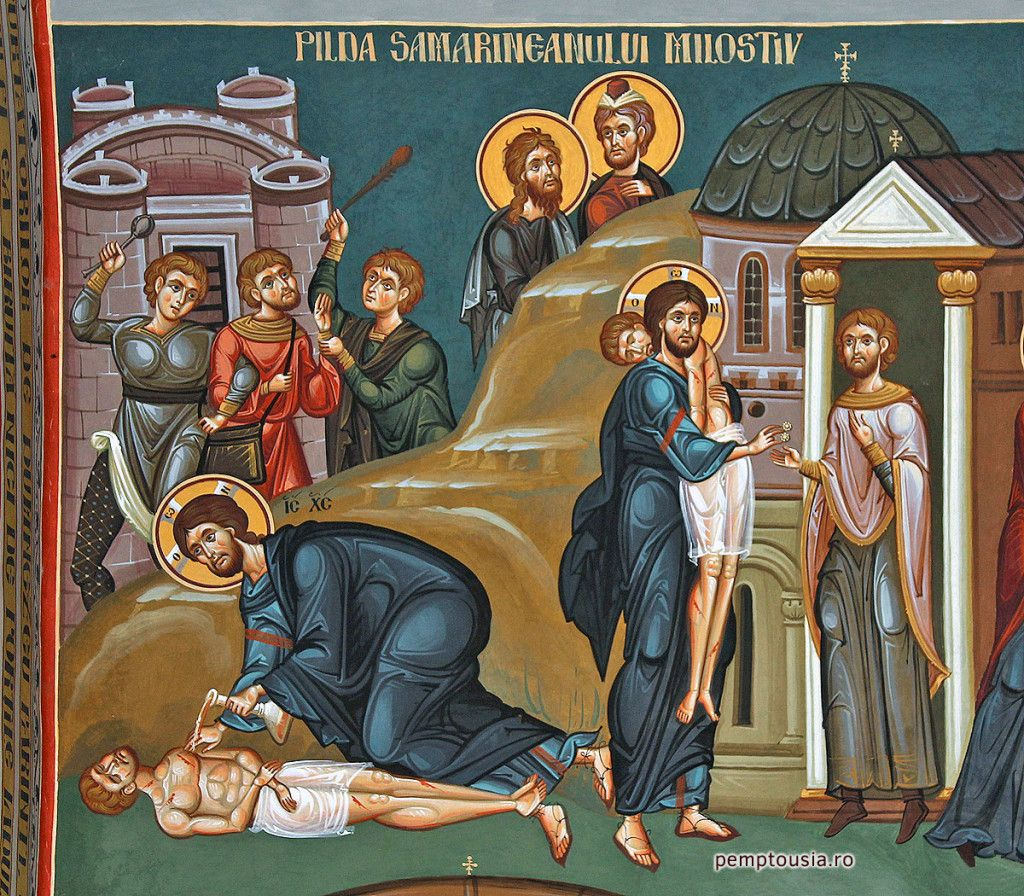
A man was traveling the road between Jericho and Jerusalem. It is a road that covers about seventeen miles. The direction you were traveling mattered because the road was steep. Jerusalem is 2,500 feet above sea level; Jericho is 800 feet below sea level. To make matters worse, it ran through rocky, desert country, which was perfect for robbers. Only a fool would travel this road alone, so we can say this man was a fool. As expected, he is attacked by robbers. The picture is not pretty. They stripped him of his clothes, beat him and left him for dead. Laying there in his half-dead state, various people walked by him. The first was a priest. A priest was from the line of Aaron and assisted in worship. The religious man should have known better, but he crosses to the other side of the road, ignoring the victim. The second was a Levite. He was a descendant of Levi, one of the brothers of Joseph. In addition to his religious duties, he had political and educational duties. He should have known better, but he crossed to the other side of the road, ignoring the victim. The third person is our unlikely hero, the Samaritan. You know the Samaritans. They were considered half breeds, half Jewish and half Gentile. The Jews believed they had compromised the faith. The Jews hated them, but the Samaritan was the one who had compassion on the victim in Jesus’s story. He treated the man’s wounds, and he put the man on his own donkey. Together, they traveled to an inn, where our victim heals. The Samaritan shows his true compassion. He takes out his money and gives it to the innkeeper. It equaled two days’ worth of wages. He instructs the innkeeper to care for him in his absence and tells him he will be compensated when he returns. Like all parables, Jesus’s simple parable of the good Samaritan is easy to imagine, yet it contains a profound message. It is easy to understand, yet it is hard to apply. It is not enough to say you love God; you must love others too. That is why compassion within the Christian faith is so important. It is one of the qualities you must nurture within yourself to experience the abundant life in Jesus Christ.

Webster defines compassion as sympathetic pity and concern for the suffering or the misfortunes of others. To me, that definition seems too shallow. True compassion is far more complex.

The great German Roman Catholic theologian, Henri Nouwen (1932-1996), seemed to understand the complexity of compassion. He once explained compassion this way:

Compassion is not pity. Pity lets us stay at a distance.

Compassion is not sympathy. Sympathy is for superiors over inferiors. Compassion is not charity. Charity is for the rich to continue in their status over the poor.

Compassion is born of God. It means entering the other person’s problems. It means taking on the burdens of the other. It means standing in the other person’s shoes. It is the opposite of professionalism. It is the humanizing way to deal with people.

The Good Samaritan illustrates true compassion. True compassion is based on need, not worth. True compassion is based on feelings, not fact. True compassion is based on doing, not understanding. Do the people in your life consider you compassionate? I hope so, because compassion is one of the great qualities of the Christian faith. I am not sure it is possible to be a true Christian without being truly compassionate. Compassion is a big deal, because our world is filled with so many problems.Did you know, according to UNICEF, 80% of our world’s population lives on ten dollars a day or less? How would your life change if you were forced to live on ten dollars a day? How much money do you live on in a single day?

When I think of compassion, Mother Teresa (1910-1997) pops into my mind. Born in Albania and raised in a devout Catholic family, she moved to Ireland at the age of eighteen to join the Sisters of Loreto. Later she moved to Calcutta, India and founded the Missionaries of Charity. They worked with the “poorest of the poor.” Over the decades that group grew to serve in 133 countries ministering to those dying of HIV/AIDS, leprosy, and tuberculosis, as well as running soup kitchens, dispensaries, mobile clinics, orphanages and schools. In 2016, she was canonized by the Catholic Church, because she refused to cross to the other side of the road. Mother Teresa was truly a woman of compassion.

When I research compassion, I find people like Pam Kidd. She writes devotions for Guideposts. One day she received a letter postmarked Harare, Zimbabwe. The letter read:

Dear Ms. Kidd, I have been reading your Daily Devotions for years. Recently, God spoke to me and asked me to tell you that you need to come to Zimbabwe to write about the orphans and the street children of Harare. Please contact me as soon as possible. Thank you.

It was signed by a woman working as a Presbyterian missionary in Harare.

That letter changed everything. A few weeks later, Pam and her husband were flying to Harare. When they arrived in Zimbabwe, they were shocked at what they saw. It was worse than they had imagined. Children living in mud huts, children jumping over sewage in gutters. She could not escape the smell of poverty. Children followed her everywhere. Pam decided to write a story about a woman who fed tea and bread to the orphans daily. They called her “Tea Lady.” As she researched this woman, Pam discovered this saintly woman had no help. She received no funding and needed help. Then, she had a revelation. God had brought her to Harare to help this woman. Over the next ten years, Pam Kidd returned to Africa ten times to help this woman help those orphans. Pam Kidd refused to walk to the other side of the road, because she was a woman of compassion. I hope I am a person of compassion. Are you a person of compassion? I hope so, because our world is crying out for help.

In 1964, Kitty Genovese (1965-1934) lived in Kew Gardens, in Queens, New York City. On March 13 of that year, Winston Moseley (1935-2016) raped and stabbed her to death. As shocking as that crime was the reaction of her neighbors was even worse. Many heard her cry out for help, but no one responded. Her neighbors were guilty of a sin of omission. They knew there was a problem, but they did nothing. In other words, they walked to the other side of the road. In the science of sociology, it has been called the “bystanders’ effect”, or diffusion of responsibility.

As Americans, we have been blessed in many ways. That is why so many long to live here. But, with those blessings comes great responsibility. To whom much is given, much is expected. Our world is calling out for help. What are you going to do? Are you going to walk to the other side of the road and ignore them, or are you going to be like the Good Samaritan, who responded to human need? It all distills down to a simple choice. Albert Schweitzer (1875-1965) once said, “The purpose of human life is to serve and to show compassion and the will to serve others.”

Less Billy, More Jesus

American entertainer Kathie Lee Gifford (born 1953) was raised in a family where God was honored generally, but He was not known personally. Her father was Jewish, and her mother was a Christian. When she was twelve years-old, her mother and her sister were led to Christ by a televised Billy Graham evangelistic crusade. Several months later, they encouraged her to go see a movie produced by the Billy Graham organization, The Restless Ones. Kathy Lee decided to go.

In many ways, it was her story – a young girl trying to decide what path to take: the ways of this world, or the ways of God. She related to the girl in the movie, and she began to evaluate her own life. When the movie ended, an altar call was given, and young Kathie Lee went forward to accept Christ as her Lord and Savior. Her life would never be the same again. Ask Kathy Lee Gifford and she will tell you; we are saved by grace and by grace alone!

Charles Spurgeon (1834-1892) was an English Baptist preacher. He has been called the Prince of Preachers. He once said, “Saving faith is an immediate relation to Christ, accepting, receiving, resting upon Him alone, for justification, sanctification and eternal life by virtue of God’s grace.”  That is an old quote. Charles Spurgeon died in 1892. That quote may be old, but it still rings true today. Someday, we will stand before God justified because of the redemptive work of Jesus Christ. Never forget it – we are saved by grace and by grace alone! That takes us to our scripture reading.

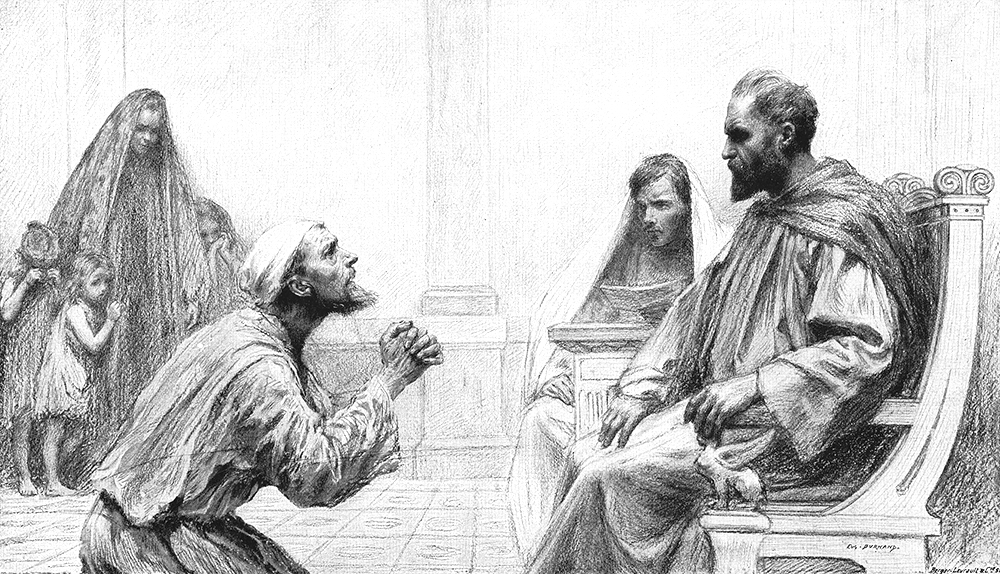
We are in the eighteenth chapter of Luke, verses nine through fourteen. It is the parable of the publican and the Pharisee. The story is dominated by two men. They are not identified by name, only by vocation. The first was a Pharisee. We are critical of the Pharisees because they confronted Jesus. The Master’s own generation was not critical of Pharisees. They were viewed as the religious elite, who were the bridge between mankind and God. The second man was a Publican. That was the term used in ancient Roman times for a tax collector. In our time, we dislike tax collectors; they hated tax collectors. They were viewed as traitors, who sold out to the Romans. They profited at the expense of their own people, the Jews. This parable plays on our stereotypes or prejudices.

According to the story, both men went to the Temple to pray. There is nothing surprising about that. The people of Jesus’s day valued prayer. They prayed regularly. Daily, morning and evening prayer was scheduled at the temple in connection with the sacrifices. In addition to those times, the temple was always open for private prayer. Prayer was not isolated to the Sabbath. It was a big part of their daily lives.

In Jesus’s story, the Pharisee was the picture of complete pride. He stood upright and reported to God all his good deeds. He fasted twice a week and gave generously to the poor. The other man, the Publican, was the picture of complete brokenness. He stands at a distance beating his breast. He is not proud of the way he is living. He admits he is a sinner, and he asks God for mercy. The two gentlemen in Jesus’s story are from opposite ends of the universe. There is nothing surprising in the story until the last verse. Verse fourteen reads, “I tell you that this man (the tax collector) rather than the other (the Pharisee) went home justified before God. For all those who exalt themselves will be humbled, and those who humble themselves will be exalted.” It is impossible to read this story and ignore the importance of humility. After all, we are all sinners saved by grace. Yet, there are many in our society who can relate to the Pharisee. You must know someone.

According to the Pew Research Group, 80% of American Christians believe Jesus is not their only hope of salvation. In other words, four out of five American Christians believe their entrance into heaven is merit-based. That is why we hear so much about good works when a loved one dies. They volunteered to help children read. They mowed their aging neighbor’s lawn. They gave generously to the church of their time, talent, and money. They cared for stray cats and loved dogs. They would do anything for anyone. Do you know why people say such things? They are trying to convince us, or themselves, that their loved one is in heaven because they were a good person. This is the problem: A merit-based entrance into heaven is not what the Bible teaches.

The Bible teaches us we are saved by grace and by grace alone. Ephesians 2:8-9 says it clearly: “For it is by grace you have been saved, through faith – and this not from yourself, it is the gift of God – not by works, so that no one can boast.”  Grace is God’s unmerited favor, demonstrated most fully in the sacrifice of Christ. In short, the only way to heaven is through Jesus – the way, the truth and the life. The faithful understand what Jesus has done for them.

Hudson Taylor (1831-1905) was a missionary who spent fifty-one years in China. At some point in his life, he was scheduled to speak at a large Presbyterian church in Melbourne, Australia. The moderator of the service introduced the missionary in eloquent and glowing terms. He told the large congregation all that Taylor had accomplished in China, and then presented him as “our illustrious guest.” Taylor stood quietly for a moment, and then opened his message by saying, “Dear friends, I am the little servant of an illustrious Master.” Hudson Taylor never forgot the truth. He was a sinner, who was dependent on God’s grace. Never forget it – you are a sinner who is dependent on God’s grace. We are saved by grace and by grace alone!

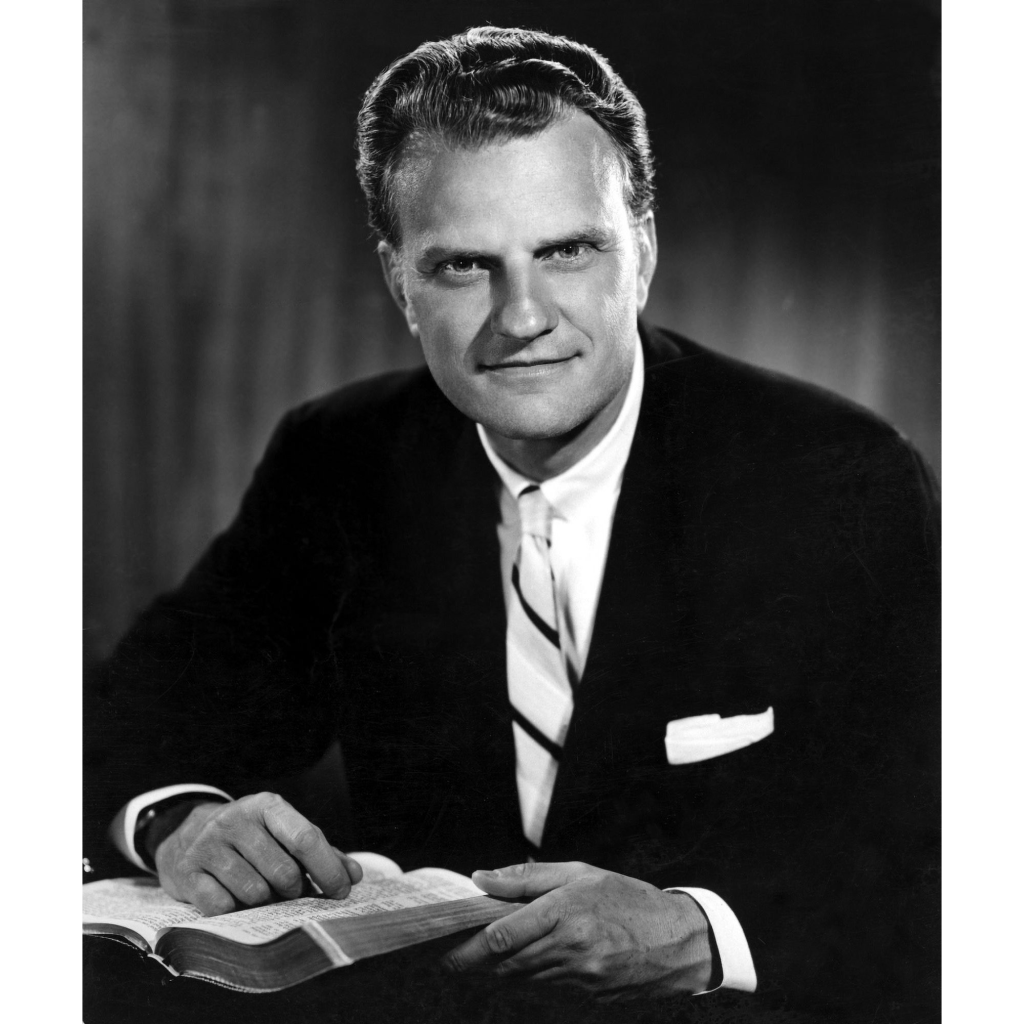
Billy Graham (1918-2018) was born on November 7, 1918 in a downstairs bedroom near Charlotte, North Carolina. His parents raised him and his three siblings in the Associate Reformed Presbyterian Church. He was converted at sixteen years old. He graduated from the Florida Bible Institute in 1940 and Wheaton College in 1943. In 1947 Billy Graham held his first crusade in 1947 in Grand Rapids, Michigan and held his last crusade in 2005 in New York City. I remember attending a Billy Graham crusade at Cleveland Municipal Stadium during college. Over those 58 years, he preached 417 crusades, including 226 in the United States and 195 abroad. It has been estimated he preached to more than 210 million people in his life. God only knows how many souls he won for Jesus Christ, including Kathie Lee Gifford. Graham is considered one of the most influential Christian leaders in the twentieth century.

Billy Graham died on February 21, 2018, in Montreat, North Carolina. He was a few months shy of his one hundredth birthday. If anyone deserved to go to heaven, it was Billy Graham. Yet, He never forgot the truth. He was a sinner, who was dependent on God’s grace. At his death, it was reported Billy Graham helped plan his own funeral. He had a simple request: less Billy, more Jesus. Billy Graham knew he was saved by grace and by grace alone! Do you? We are not saved by our good works. We are saved by grace. Do you remember the quote from Charles Spurgeon? He once said, “Saving faith is an immediate relation to Christ, accepting, receiving, resting upon Him alone, for justification, sanctification, and eternal life by virtue of God’s grace.”

Examining Your Priorities

Our reading comes from the twelfth chapter of Luke, verses thirteen through twenty-one. Jesus is in Judea and is surrounded by a great crowd. He is offering them both a word of encouragement and a word of warning. Jesus tells them to keep their eyes fixed on God. Without warning, Jesus is interrupted.

The interrupter did not hear a single word from Jesus, because he is preoccupied with personal problems. His problem is complex because it combines two of life’s most complicated topics: family and money. Some things don’t change; family issues and money issues are still complex. That is why verse thirteen resonates with us. The author quotes the man with these words, “Teacher, tell my brother to divide the inheritance with me.” As a member of the modern clergy, I have never been asked to help settle family estates. In Jesus’s day, it was common to take such problems to teachers or rabbis. As a rule, the older brother always received a double portion of the inheritance. Jesus saw the problem instantly – the Master knew the man’s request was rooted in materialism. In other words, Jesus knew the man’s problem was greed. The man’s priorities were confused. Then, Jesus told the man this story.

The ground of a certain rich man produced a bumper crop. That was a good thing and a bad thing. It was a good thing because his crop was valuable. It was a bad thing because he had no place to store his crop. To the business world, the problem is solved easily, he tears down his original barn and builds a bigger one. Once this bumper crop is harvested and stored, life will be easier. It is a great plan except for one major flaw –  the man suddenly dies and is separated from his earthly possessions. Sadly, the man was financially successful, but spiritually bankrupt. That makes me ask an interesting question. How many successful, spiritually bankrupt people do you know? Could it be you are a successful, spiritually bankrupt person?

I have said it a million times, Money is amoral. Money is neither good nor bad. It is how we handle and view our money that makes it good or bad. That is the case in this story. This parable is filled with personal pronouns. Listen to the story again with that filter.

“The ground of a certain rich man yielded an abundant harvest. He thought to himself, ‘What shall I do? I have no place to store my crops.’ “Then he said, ‘This is what I’ll do. I will tear down my barns and build bigger ones, and there I will store my surplus grain. And I’ll say to myself, “You have plenty of grain laid up for many years. Take life easy; eat, drink and be merry.”’

Jesus’s simple story is dominated by personal pronouns. In verses sixteen through nineteen, the word, “I” is uttered six times by the rich fool. Like the man with the problem, the man in the story is consumed with selfishness and materialism. The man with the problem and the man within the story were victims of greed. Yet, the story is not really about money. It is a story about priorities. The man with the problem and the man in the parable’s greatest priority was money. What is your greatest priority? Sometimes our greatest priorities are bad things. How many examples do you need?

Matthew Perry (1969-2023) was rich. At the time of his death, he was worth $120 million. Most of the money came from the TVshow Friends, where he played Chandler Bing. If he had used his fame and fortune for good, then he would have improved many lives. He would have been welcomed by any non-profit. Sadly, that was not his story. His greatest priority was himself. It has been estimated he spent $9 million on various alcohol and drug addictions treatments. He went into rehab fifteen times. Sometimes our greatest priorities are bad things. However, this is also true: Sometimes our greatest priorities are good things. The problem is, our good things aren’t always the best thing.

There is a website called Quora. On it, people respond to all kinds of questions. I punched in the question: what is your greatest priority? People responded in a variety of ways. One guy said the highest priority in his life was survival skills. One woman answered the greatest priority in her life was her clothes, make-up and hair. Someone else said the greatest priority in their life was finding a life partner. One gentleman said, his greatest priority in his life was sex. How do you answer the question, what is your greatest priority? I would bet your answer is close to my answers.

One of my priorities is financial stability. There are four things you need to know about my personal finances. First, I am a fiscal conservative. I am uncomfortable carrying any kind of debt. I have been known to pay the bill before the bill comes. I do not expect to die rich, but I hope I die debt-free. Second, I am terrified of the Internal Revenue Service. I think everyone should be afraid of the IRS. Third, I recognize everything I have in this world is only on loan from God. The last thing I am going to do financially is cheat God. Fourth, I value work. I was raised in a steel town in Northeast Ohio, where work was not just valued, it was expected. One of my priorities in my life is financial stability.

One of my priorities is good health. In January of 1950, my grandmother came home from church and was preparing lunch for her family. She never ate that meal, because she dropped dead from a fatal heart attack. She didn’t get to be my age. My family tree is filled with high blood pressure. Every morning, I get up and take my medicine, so I won’t have a heart attack. My greatest fear in life is not dying, it is lying in a bed in a nursing home unable to care for myself. One of my priorities in life is my health.

One of my priorities are my children and my grandchildren. I am proud of my children, Sarah and Anna. They are good people who are doing well. I believe they are good people for two reasons. First, they were raised in a single community and knew stability. I never longed for them to be Methodist gypsies wandering around the Annual Conference. They are good people because they are a product of a good community. Second, they know Kathryn and I love them and support them. They don’t need us, but we need them. They know we want what is best for them. It goes without saying – we want what is best for our grandchildren, Pippa and Romeo, and are willing to sacrifice for them. One of my priorities is my children and grandchildren.

One of my priorities is my spouse. Kathryn and I have been married thirty-six years. The time has gone fast; I wish I could slow life down. There are so many things we would like to do together. There are so many places we would like to go together. I have never hidden my feelings for her. My life began on the day we met. One of my greatest priorities is my wife. Nothing seems to matter without her. Let me ask you the question again. What are your priorities?

None of those things are bad things. The problem is none of those things are eternal. Someday, I am going to be separated from my material possessions. Someday, there is an excellent chance I am going to get a terminal disease or get in a fatal accident. The problem is, there is only so much I can do for my children or my grandchildren. Kathryn and I would like to leave this world together, but there is no guarantee. It is a cruel fact; the world is constantly changing. The only thing that is completely stable is God. Only God is eternal.

Years ago, I was called by one of the local funeral homes to officiate at a service. I did not know the deceased. I was called for one reason – neither the deceased nor anyone in the family had a church home. They didn’t even know a member of the clergy. However, they wanted to celebrate their loved one’s life. As is my custom, I went to the calling hours to meet with the family. It was a painful couple of minutes for the family. They apologized to me for not going to church. In their minds, they had good reasons. I told them I wasn’t there to judge them, but I was there to help them celebrate their loved one’s life.

As they told me about him, I discovered he was a good person. He would do anything for anyone. He had worked hard and was well respected by his peers. His hobbies always included family members. His absence would leave a great void in their lives. His brother said, “He lived every day to the fullest. He lived as if he was never going to die.” This is the problem: He did die. Sadly, like the man in Jesus’s story, he was economically successful, but spiritually bankrupt.

The funeral service went off without a hitch. His life was remembered. Some of the memories made people laugh. Some of the memories made people cry. The service ended with me giving the benediction. As is the custom, the last ones to view the body were the family members. After I perform a funeral, most family members stay for a few unpleasant minutes. This family stayed for what seemed like an eternity. Numb, they just stood there looking at the corpse. The veteran funeral director, who was a great churchman, motioned for me to come to him. He whispered in my ear, “Russ, I have seen it a million times. People with no faith linger, because once the service is over, it is over. They will never see their loved one again. People with faith are different. They move on because they know there is more. They know they will see their loved one again in heaven. How great of a priority is God to you? American Baptist minister Rick Warren (born 1954) once said, “Living in the light of eternity changes your priorities.”

God’s Promises

We find ourselves in the eighteenth chapter of Acts, verses eighteen through twenty-two. According to the Bible, when Paul left Corinth, he went to Syria. We are told he got a haircut for the occasion. It was not a fashion statement; however, it did symbolize the end of a sacred period. Paul did not travel alone. He was accompanied by Priscilla and Aquila. Like Paul, they were both tentmakers and believers. They parted when they got to Ephesus. As usual, Paul goes into the synagogue and tells everyone about Jesus. What is unusual about this story is that Paul’s words fall on welcoming ears. When Paul tells them he must leave, they ask him to stay. He leaves, but promises to come back, God willing. At the end of our reading, Paul finds himself in Caesarea. 

Paul’s promise cannot be overlooked. He promised to return to Ephesus, God willing. I fell in love with that line because it is just so human. In the very next chapter, chapter nineteen, we learn that Paul did return to Ephesus. He kept his promise and was as good as his word. Do you keep all your promises? It is not as easy as it sounds. Sociologists tell us we make promises regularly. In a lifetime we make countless promises. All promises can be grouped into one of three categories.

The first kind of promise is a healthy promise. Those are the promises you make that you fully intend to keep. On the night my daughter was born, I held her in the delivery room. She was perfect and I made a promise that changed my life. I promised her I would always be there for her and would help her in any way I could. I intend to keep that promise until I die. I did not need to write that promise down because it was tattooed on my heart. How many healthy promises have you made?

The second kind of promise is a shallow promise. These promises look like a strong, healthy promise, but conditions exist. People make shallow promises to me all the time. I will officiate at a wedding or funeral for an unchurched family. At some level I connect with them. I am sorry to see the occasion end because I know I will never see them again. As we are parting, they express their appreciation and say to me, “What time is your mass? I may show up someday.” Do you know how many of those good people have shown up through the years? The answer is zero. They said it and they meant it, but something always came up to prevent them from coming. The weather was too nice, their favorite great aunt was getting married again, or they had a hard week, so they required another hour of sleep. Shallow promises look like a strong, healthy promise, but conditions exist. How many shallow promises have you made? 

The third kind of promise is a criminal promise. From the moment these promises are made, you have no intention of keeping them. When I was a student pastor in Kentucky, I had a parishioner who was a chain smoker with a horrible cough. I talked to her after her annual physical. She told me it went well but the doctor made her promise to stop smoking. As she told me, she lit up another cigarette and said, “The doctor needs to mind his own business.” She died of lung cancer in 2013. How many criminal promises have you made? Paul’s promise to return to Ephesus was a healthy promise. He was committed to returning to the Ephesians.

Years ago, I was given a book called God’s Promises. That book listed thousands of God’s promises. God never made a shallow promise. God never made a criminal promise. God only makes healthy promises. He hasn’t broken a single promise. I don’t have time to examine all of God’s promises, but I do have time to examine seven. I found this list on the website thewitnesstoday.com. It has merit.

God promises to be our strength. Isaiah 40:29 says, “He gives strength to the weary and increases the power of the weak.” That happens when God is the foundation of our lives. In a world that is constantly changing, God remains consistent. As Christian people, we must wait, and trust God and know He will be victorious in the end. That hope revives our souls and gives us strength.

God promises to never leave us. Hebrews 13:5 says, “For He has said, ‘I will never leave or abandon you.’” That means there has never been a moment in your life when you have ever been alone. God is with us during life’s most rewarding experiences and God is with us during life most challenging experiences. That fact is important because one of the great fears in life is being alone. Those of us of faith know we have never been alone. God is with us!

God promises he has a plan for us to prosper. Jeremiah 29:11 says. “For I know the plans I have for you, plans to prosper you and not to harm you.”  Each one of us is born with a divine purpose. You were not just born to be a consumer. You were born to fulfill a particular purpose. The goal is not financial success, the goal is spiritual success.

God promises to hear our prayers. Psalm 139:4 says, Before a word is on my tongue, you, Lord, know it completely.”  Prayer is a central part of the Christian faith. It is one of the spiritual practices we must practice to grow spiritually. Historians tell us John Calvin (1509-1564), John Knox (1514-1572) and John Wesley (1703-1791) each prayed two hours a day. Their prayers did not fall on deaf ears. Our prayers do not fall on deaf ears. God hears every word.

God promises to fight for us. Exodus 14:14 says, “Ther Lord will fight for you; you need only to be still.” That quote came from the story of the exodus. The Egyptians were far more powerful than the Hebrews, yet in the end the Hebrews were victorious. It is not just true in the Bible; it is true in life. In the end, God will prevail.

God promises to give us peace. 2 Thessalonians 3:16 says, “Now may the Lord of peace himself give you peace at all times and in every way.” That verse is not talking about political peace. There are over one hundred wars in our world today. That verse is talking about spiritual peace. It is the kind of peace that offers harmony and calmness of body, mind and spirit trusting in the power and grace of God.

God promises to always love us. 1 John 4:16 says, God is love. Whoever lives in love lives with God, and God in them.” God’s love is unconditional. That means God loves everyone. That means God loves the people you love and the people you cannot tolerate. That means God loves the strangest person of all, YOU! Never forget God keeps his promises. All of God’s promises are healthy promises.

In this election year, let me tell you this election story. In the 1916 Presidential election, President Woodrow Wilson (1856-1924) was running against Supreme Court Justice Charles Evans Hughes (1862-1948). During Wilson’s first four years, war had broken out in Europe. Our country was fixated on that war, and emotionally sided with the allies. However, many did not want our country to take military action. Wilson knew how many felt and promised during the campaign to keep America out of the war. His campaign slogan was “He kept us out of war.” Do you remember your American history?

Months after winning the election, Wilson changed his tune. He went to Congress to approve a declaration of war, and he got what he wanted. The United States entered World War I and 53,513 Americans died in battle. Many historians consider Woodrow Wilson one of the greatest liars in American history. The important question is: how are you doing with your promises? Paul kept his promise and returned to Ephesus. Can the same thing be said about you? American businessman Anthony Hitt once said, “Keep every promise you make and only make promises you can keep.” 

Years ago, I was given a book called God’s Promises. That book listed thousands of God’s promises. He hasn’t broken one. How are you doing with your promises?

Don’t Judge Me!

Chuck Swindoll (born 1934) is an Evangelical Christian pastor, author and educator. You may know him from his radio program, Insight for Living, which airs on 2,000 different radio stations around the world. He tells of being at a pastor’s conference in Spokane, Washington. On the first day, a man approached him and told him how excited he was to hear him preach. That evening as the service began, Swindoll noticed the man sitting near the front. But only a few minutes into the message, the man was sound asleep. Swindoll thought to himself that perhaps he was tired after a long day’s journey and couldn’t help himself. But the same thing happened the next few nights, and Dr. Swindoll found his exasperation with the man growing. On the last night, the man’s wife came up and apologized for her husband’s inattention to the messages. She then explained. He had recently been diagnosed as having terminal cancer and the medication he was taking to ease the pain made him extremely sleepy. But it had been one of his life-long ambitions to hear Dr. Swindoll speak before he died, and now he had fulfilled that goal. Swindoll was humbled by her words and ashamed by his own thoughts. When was the last time you wrongly judged someone? That question takes us to our scripture lesson.

Our scripture reading is Acts 18:12-17. The Apostle Paul is in the city of Corinth. According to our first verse, it was when Gallio was proconsul of Achaia. That means it is about the year 51 AD. At that time Gallio was respected in that corner of the world for two reasons. First, Gallio was respected because he was well connected. His brother, Seneca, was the tutor of Nero, the Roman Emperor. Second, Gallio was respected because had shown himself to be a fair and calm man. It is that quality that saved Paul.  

Once again, Paul had worn out his welcome. The Jews had grown tired of his lecturing in the synagogue and dragged him into court. Gallio was the judge. They felt like they had a solid case against Paul. He was worshipping God in a new way. They may have been the first to recognize that Christianity stood alone. It was not an offshoot of Judaism, making it an illegal religion in the eyes of Rome. As Paul was about to defend himself, Gallio threw the whole case out. He ruled that it is not a matter of the state, rather it was an internal matter among the Jews. Everyone is expelled from the courtroom. Then the ugly scene grows uglier. The Jews are more than embarrassed. They turn on the ruler of the synagogue, Sosthenes, and beat him. It sounds shocking to us, but it must have been just another day for Gallio. He didn’t seem to care. In the end, the group that wanted to make Paul look bad, made themselves look bad. That is what always happens when you judge others. In the end they make themselves look bad. When was the last time you judged someone harshly? When was the last time you made yourself look bad?

Webster defines judgement as: the act or process of forming an opinion after careful thought. We don’t need the word defined, because we have been judged and we have all judged others. There is no other way to say it – judging hurts everyone. Judging hurts the person who is judged. Judging hurts the one who judges. Judging creates a negative environment. Judging damages relationships and organizations. It is painfully true. When judging occurs within the life of the church the church itself gets damaged. We should know better. Jesus told us not to judge. Do you remember the story? 

It is found in the eighth chapter of John. The story is the adulterous woman. Jesus is at the Mount of Olives teaching about the Kingdom of God. Without warning, the teachers of the law and the Pharisees appear dragging an adulterous woman with them. It takes two people to commit adultery, a man and a woman. However, in this story the woman stands alone. The Old Testament law was clear. The woman must be stoned to death. Jesus looked at the woman and had pity on her. He doesn’t respond at first, he writes something in the sand. After a period of silence, Jesus looks at the judging crowd and says, “Ye that is without sin cast the first stone.” Everyone in the crowd dropped their stone because everyone in the crowd had sinned. The crowd disperses, and Jesus tells the woman to sin no more. There is only one point to this story – judging is wrong, yet everyone judges. Judging is a sin, yet everyone judges. The problem is not Jesus. The Master spoke clearly, “DON’T JUDGE!” The problem is us, we simply refuse to apply this teaching to our lives. When was the last time you judged someone harshly?

Years ago, my family was vacationing at Fort Myers Beach, Florida. Most of our time was spent around the pool or at the beach. We didn’t have a car. It really didn’t matter, because we could walk to the beach or a store for supplies. When we walked to the store we took the shortest route. It was through an empty parking lot next to a closed plaza. There was only one store in the plaza left, a liquor store. We walked by that liquor store several times. It was always busy. One of the times we walked by the liquor store my daughter, Sarah, said to me, “I love people in liquor stores!” She was an adult, and I was limited in what I could say. I asked, “Why?” She answered, “Most people in liquor stores have so many problems, they don’t have time to judge you. In church, everyone feels like they have their lives in order, so they have lots of time to judge you. Church people judge you; liquor store people leave you alone.” I didn’t respond because I thought she might be right. She worked on a church staff for nearly six years and did a great job. She left that job for several reasons. One of the reasons was she grew tired of being judged by church people. Do you find some truth in her statement: “In church, everyone feels like they have their lives in order, so they have lots of time to judge you?” When you judge others, you damage the church, the bride of Christ.  

When you judge others, you reveal your greatest flaws. Psychologists tell us we judge other people to fill in various voids in our lives. A website called PositivelyPresent.com wrote about these voids in a May 2009 article called Stop Judging. How many of these voids do you have in your life? 

We judge because we are afraid! Our prejudices fall into this category. That means, you judge the person or group that intimidates you. The more you judge a person or a group, the more that person or group intimidates you. Jesus does not want us to be intimidated by anyone. Never forget it – you are a child of God! When you judge, you are telling the world you are afraid! 

We judge because we are lonely! One of our greatest human fears is loneliness. We rarely judge in isolation. We find others who hold the same opinions and form a bond with them. This is odd to say, but judging fills a social void. When you judge, you are telling the world you are lonely! 

We judge because we are hungry for change! I have never met a person who had a perfect life. Everybody wants to change something. We judge the person who has what we want. For example, someone predicts a failed marriage because they want to be married, or they are bored in their own marriage. When we judge, we tell the world we are seeking a change!  

We judge because we are insecure! This is the bottom line on judging. We really don’t care for ourselves, so we put others down. The goal is to make others less attractive than ourselves. The goal is to get the attention off yourself, so others won’t see your imperfections. The more you judge others, the less you like yourself. When you judge, you are telling the world you are insecure! 

Can I ask you our question one more time? When was the last time you judged someone harshly? When you did, you were telling the world you were afraid, lonely, hungry for a change and insecure.  

In 1884, Charles Elliot (1801-1875) was president of Harvard University. One day on his agenda was a couple who wanted to establish a memorial in the name of their son. When the grieving couple came, they were very unimpressive. Elliot wished they would just leave. They were wasting his valuable time. Trying to speed through the appointment, he asked the couple what he could do. They spoke of some kind of memorial, but their words fell on deaf ears. In a patronizing tone, Eliot brushed aside the idea as being too expensive for this modest couple and they departed. The next year, Elliot learned that this plain pair had gone elsewhere and established a $26 million memorial named Leland Stanford Junior University. Today, we call their memorial Stanford University. Charles Elliot judged this couple wrongly and he missed out on a great opportunity. Can I ask you a question? What great opportunities have you lost because you judged wrongly? 

When was the last time you judged someone harshly? You know better! In the true church, judging others will not be tolerated. It is a sin. In the true church everyone should be accepted the way they are. Albanian born Catholic nun Mother Teresa (1910-1997) said, “If you judge people, you have no time to love them.”