Lessons From the Magi

Our reading is Matthew 2:1-12. It is the traditional reading for Epiphany, a word that means manifestation. It is the liturgical season which celebrates how Christ was made manifest to the world, and especially how Christ came to save all people – both Jews and Gentiles. Epiphany is annually observed on January 6. This year, Epiphany Sunday is January 5.

The Bible says Jesus was born in Bethlehem, in Judea. So, Jesus was born five and a half miles south of Jerusalem. Matthew pinpoints the date. It was when King Herod sat on the throne. He sat on the throne for thirty-three years, from 37 – 4 B.C. He was appointed to his position by the Roman Senate. Over two thousand years later, he is still remembered for being ruthless and insecure. His insecurity led him to murder many in his family: his wife, three sons, mother-in-law, brother-in-law, and uncles. It has been said, it was better to be Herod’s dog than to be his family member. In our reading for today, we learn his murderous ways extended beyond the family. You know what the Bible says.

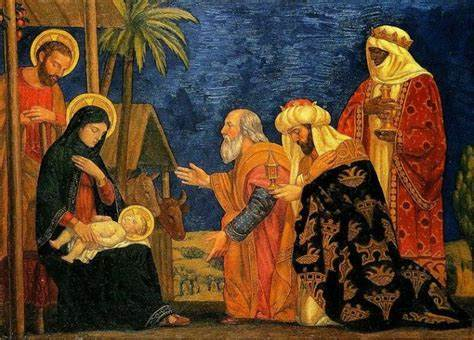
One day, Magi, Gentile astrologers from Persia or southern Arabia, (both east of Palestine), came to visit Herod. They had been studying the stars and had discovered that God was doing something new. A baby had been born, who was called King of the Jews. They assumed the King of the Jews would be born in the palace. They assumed wrong. The infamous insecure King Herod was thrown into a tirade. His insecurity fuels the loss of more human life. The story does not have a happy ending. It pains me to say it. Using the information received from the Magi about this divine birth, he orders the death of all baby boys under the age of two. However, in the end, the Magi find the toddler Jesus, no longer a baby. That means your nativity set is wrong. They did not visit the newborn Jesus on that holy evening. They visited Jesus two years later. Verse eleven says, they went to a house, not a stable. However, our misunderstanding about when the Magi actually arrived does not mean they do not have something to teach us.

They teach us seven important lessons. These thoughts are not original. I found them in an article called Seven Lessons from The Magi: Thriving in a Threatening World. It was on Tyndale.com. I believe these lessons have some merit; I hope you agree. This is their list:

  1. The Magi stayed open to new ideas. Isaiah 43:18-19 says,“Forget the former things; do not dwell on the past. See, I am doing a new thing. Now it springs up; do you not perceive it?” The Magi understood God was always doing something new. God has always shined light into our dark world guiding us and offering direction. Are you open to new ideas?
  • The Magi trusted God to guide them. They knew God as all-knowing. The greats of the faith trusted God. Jesus knew Peter would deny him three times and Job believed God was guiding his future. On the cross Jesus said, “Father into your hands I commit my spirit.” How far do you trust God?
  • The Magi cultivated an exceptional faith. Hebrews 11:6 says,“And without faith it is impossible to please God, because anyone who comes to him must believe that he exists and that he rewards those who earnestly seek him.” God must have been pleased with the Magi, they traveled a great distance into a foreign land. The greats of the faith have always cultivated exceptional faith. How great is your faith?
  • The Magi were spiritually discerning. Romans 12:2 says, Do not conform to the pattern of this world, but be transformed by the renewing of your mind. Then you will be able to test and approve what God’s will is–his good, pleasing and perfect will.” The star was seen by many, but only the Magi let it declare God’s Glory. It has been reported only 5% of Christians have the gift of discernment. Are you spiritually discerning?
  • The Magi were guided by God’s word. However, the Magi needed more than the star – they needed scripture. King Herod asked his religious scholars where the child would be born. They quoted Micah 5:2. He would be born in Bethlehem. They could have bypassed Herod if they knew scripture. How much time do you spend studying the Bible?
  • The Magi expected trouble. There is nothing easy about life, it is filled with troubles. We find it in our reading. Our story tells us Herod was troubled and all of Jerusalem with him. The Magi expected trouble because troubles are a part of life. Our troubles remind us to persevere and hold on to the faith. How firm is your hold on the Christian faith?
  • The Magi lived fearlessly. Our story ends with the Magi being warned in a dream to return home by another route. This reminds us that God was bigger than Herod. It still holds true today – God is all-powerful, God is bigger than any problem we will face, so live fearlessly. Are you living fearlessly or are you afraid?

As I stated earlier, Epiphany is January 6. Orthodox Christmas is January 7. There are more than 200 million Orthodox Christians in the world. They follow the Julian calendar, unlike most Christian branches which follow the Gregorian calendar. For several years, I had the good fortune of being in the Orthodox world during their Christmas. Annually, I would be part of a volunteer in mission team to Russia. Those trips were sponsored by To Russia with Love, later Project Orphan Outreach. We worked with Russian orphans who would never be adopted because of their physical disabilities. I cherish those memories.

One year, we were in Vladimir, Russia, which is 125 miles northeast of Moscow. On Orthodox Christmas Eve we wandered into the local Russia Orthodox Church. The scene was memorable. The congregation stood as the priest led worship in Russian. I didn’t understand a single word. The incense was thick. The locals studied us, because, as Americans, we stuck out like sore thumbs. The customs and traditions of Orthodoxy were unknown to me. We were strangers in a foreign land. Yet, the presence of the Holy Spirit was familiar to me. For some unknown reason God wanted me there. However, it is not just the story of a volunteer-in-missions team in the middle of Russia.

It is the story of the Magi. They too were visitors in a foreign land. They had traveled a long way, and everything must have been strange, but God wanted them there. There were many things they did not know, especially about Jesus. They did not know what the future held for Jesus. They did not know the impact Jesus would have on the world, but they knew there was something special about him. The Magi did not see it on that day, but we see it now.

When Jesus was born the future of the world changed. In the name of Jesus, many wonderful things have happened. In the name of Jesus, wonderful pieces of art would be created, and books would be written. In the name of Jesus, hospitals would be started to help the sick. In the name of Jesus, orphanages would be established to help the young without parents. In the name of Jesus, homes would be established to help the old. In the name of Jesus, the hungry would be fed and the homeless sheltered. In the name of Jesus, churches would be started to teach the Christian faith and offer salvation and hope. In the name of Jesus, injustice would be confronted. And there is a truth beyond that: for millions of people who have believed since, the birth of Jesus made possible not just a new way of understanding life, but a new way of living it. The Magi traveled a long way to see Jesus, and it was worth every mile! Perhaps Augustine of Hippo (354-430) said it best, Though many kings of the Jews had been born and died, none of them did the Magi seek to adore. And so they who came from a distant foreign land to a kingdom that was entirely strange to them…But they had learnt that such a King was born that by adoring Him they might be sure of obtaining from Him the salvation which is of God.” 

The War is Over!

When the Civil War ended there was a great deal of hatred in America. Some feared the hatred would never end. However, time has a way of healing old wounds. In time, former General of the Union forces and former President of the United States Ulysses S. Grant (1822-1885) died. Four years later, former President of the Confederacy, Jefferson Davis (1808-1889) died. Their widows, Julia Grant (1826-1902) and Varina Davis (1826-1906) lived on and settled near each other. As fate would have it, they became close friends. They did something their husbands failed to do, they modeled peace for a new generation. This is the good news – Jesus came to offer us spiritual peace. That takes us to our reading.

Our reading is 2 Corinthians 5:18-20. The Apostle Paul wrote these words in the year 55 AD, which means he wrote them a year after he wrote First Corinthians. Much has been written about the vastness of the city of Corinth. It was both a political and commercial giant. It is impossible to overstate the diversity of Corinth. In our time, diversity often leads to conflict, yet that is not what Paul addresses. Instead, Paul talks about reconciliation. Webster defines reconciliation as the restoration of a friendly relation. 2 Corinthians 5:18 says, “All this is from God, who reconciled us to him through Christ.”  He understood that Jesus brings three kinds of reconciliation. In this blog I want to examine each one.

The first kind of peace Christ offers is peace with God. It is a personal peace. Romans 5:1 says, “Therefore, since we have been justified through faith, we have peace with God through our Lord Jesus Christ.”  On the day I accepted Christ as my Lord and Savior I experienced one emotion – it wasn’t joy, it was relief. The battle was over. I was at peace with God, and I knew I was going to heaven when I died. My personal desires were replaced by living for God.

In 1555, English bishop Nicholas Ridley (1500-1555) was burned at the stake because of his witness for Christ. On the night before Ridley’s execution, his brother offered to remain with him in the prison chamber to be of assistance and comfort. Nicholas declined the offer and replied that he meant to go to bed early. He knew he was going to meet Jesus the next day because he was at peace with God. How did you sleep last night? Are you at peace with God? The war is over!

The second kind of peace Christ offers is the peace of God; it is a trusting peace. According to the Bible, the peace of God is a harmony of calmness of body, mind, and spirit that comes from trusting in the power of God. The Hebrew word for peace, “shalom,” embodies wholeness, completeness, and love. In the Christian context, it is associated with Philippians 4:6-7 which says, “Do not be anxious about anything, but in everything, by prayer and petition, with thanksgiving, present your requests to God. And the peace of God, which transcends all understanding, will guard your hearts and your minds in Christ Jesus.”

In a few days, we will begin a new year. Our world is facing some massive challenges. The list is not small. There is climate change, global poverty, inequality, armed conflict, hunger, water security, lack of access to healthcare and education, and human rights issues. I find that list humbling. There is very little I can do to help any of these issues, but I have the peace of God. I believe God is all knowing and all powerful. I believe God will address these issues in his time. I live with the peace of God. Do you? The war is over!

The third kind of peace is peace with others. Not everyone was happy when poet Elizabeth Barrett (1806-1861) married Robert Browning (1812-1889) in 1846. Her father did not approve, so the marriage was performed in secret. After the wedding the Browning’s sailed for Italy, where they lived for the rest of their lives. But even though her parents had disowned her, Elizabeth never gave up on the relationship. Almost weekly she wrote them letters. Sadly, they never replied. After 10 years, she received a large box in the mail. Inside, Elizabeth found all her letters; not one had been opened! Today those letters are among the most beautiful in classical English literature. Had her parents only read a few of them, their relationship with Elizabeth might have been restored. How many people do you know who can relate to the Elizabeth Barrett Browning story? Can you relate to the Elizabeth Barrett Browning story?

For many people the Elizabeth Barrett Browning story is the story of Christmas. Is anyone in your life an expert at holding a grudge? They just can’t forget or move on? The event may have happened years ago, the details may have gotten fuzzy. At some

point the details stopped mattering. Only “the principle” mattered. Pride has set in and forged a wedge between the two parties. One party is always going to teach the other party a lesson. The truth is no one ever wins in those situations; no one ever learns a lesson. The only thing that really happens is opportunities are lost and loneliness wins. Both parties demonstrate their smallness. It takes a big person to initiate reconciliation.

Matthew 5:9 says, “Blessed are the peacemakers, for they are called the children of God.” If you applied Jesus’ lessons to your relationships, then how many of your relationships would improve? Are you at peace with others?

This is the good news of Christmas. Our great big God has made the first move to resolve the conflict between Him and the world, but also the conflict between Him and you. Listen to what the choir of angels said in Luke 2:14, “Glory to God in the Highest, and on earth peace to men on whom his favor rests.”  In other words, Jesus came to end the conflict between us and God. We hear it more clearly in Second Corinthians 5:19, “God was reconciling the world to himself in Christ, not counting men’s sins against them. And he has committed to us the message of reconciliation.”  That is part of the Good News of Christmas. The war is over. Jesus came into the world to end the conflict with the world. The God of the universe wants to have a relationship with you!

Wouldn’t it be nice if you modeled peace for your world? Wouldn’t it be nice to settle the war that is waging in your heart? Jesus makes it possible. Wouldn’t it be nice to live at peace with God? Wouldn’t it be nice to live in peace with others? Jesus came to offer reconciliation. 2 Corinthians 5:18 says, “All this is from God, who reconciled us to him through Christ.” The war is over!

Christmas’ Spiritual Side

Our scripture reading is John 1:1-14. It is one of the traditional readings on Christmas Eve. However, John does not mention Mary and Joseph. John does not mention taxation or Bethlehem. John does not mention the shepherds or the angels. John is not interested in telling the story of how it happened. He is more interested in why it happened. John gives us Christmas’ spiritual side. Verse fourteen says it clearly, “The word became flesh and made his dwelling among us.” In other words, John wants us to understand the incarnation. God left the perfection of heaven to enter this imperfect world. Augustine of Hippo (354-430) said the incarnation of God is beyond all human understanding. Your understanding of the incarnation is important for three reasons.

First, the incarnation reveals the heart of God. John 3:16-17 says, “For God so loved the world that he gave his one and only Son, that whoever believes in him shall not perish but have eternal life. For God did not send his Son into the world to condemn the world, but to save the world through him.”  God came into the world to tell us that me loves us!

The great Danish theologian Soren Kierkegaard (1813-1855) told the story of a prince who was running an errand for his father one day in the local village. As he did so, he passed through a very poor section of town. Looking through the window of his carriage, he saw a beautiful young peasant girl walking along the street. He was infatuated with her. He was so infatuated with her he continued to go to town, day after day, just to see her and to feel as though he was near her. His heart yearned for her, but there was a problem. How could he develop a relationship with her? He had several options. He could order her to marry him. It was in his power to do so. But he wanted this girl to love him from the heart, willingly. He could put on his royal garments and impress her with his regal entourage and drive up to her front door with soldiers and a carriage drawn by six horses. But if he did this, he would never be certain that the girl loved him or was simply overwhelmed with his power, position and wealth. The prince came up with another solution. He moved into the village dressed as a peasant. He lived among the people, shared their interests and concerns, and talked their language. In time, the young peasant girl grew to know him, and then to love him. That is the story of Christmas. God came into our world to tell us he loves us!

Second, the incarnation reveals our greatest human need. Romans 5:8 says, “God demonstrates his own love for us in this: While we were still sinners, Christ died for us.” God understands what many in our time have forgotten. It has been written, “If our greatest need had been information, God would have sent us an educator; If our greatest need had been technology, God would have sent us a scientist; If our greatest need had been money, God would have sent us an economist; If our greatest need had been pleasure, God would have sent us an entertainer; But our greatest need was forgiveness, so God sent us a Savior.”

Sitting majestically atop the highest hill in Toledo, Spain, is the Alcazar, a 16th-century fortress. In the civil war of the 1930s, the Alcazar became a battleground when the Loyalists tried to oust the Nationalists, who held the fortress. During one dramatic episode of the war, the Nationalist leader received a phone call while in his office at the Alcazar. It was from his son, who had been captured by the Loyalists. The ultimatum: If the father didn’t surrender the Alcazar to them, they would kill his son. The father weighed his options. After a long pause and with a heavy heart, he said to his son, “Then die like a man.”

Jesus died like a man. The nativity is a majestic scene, but Jesus’ death was not easy to watch. However, it is impossible to separate the baby in the manger from the Savior on the cross thirty-three years later. Jesus was the perfect sacrifice for our sins. He died so we could live. The incarnation reveals our greatest human need – forgiveness!

Third, the incarnation reveals God’s mysterious ways. 1 Timothy 3:16 says, “Beyond all question, the mystery of godliness is great: He appeared in a body, was vindicated by the Spirit, was seen by angels, was preached among the nations, was believed on in the world, was taken up in glory.”  From the very beginning God’s plan to save the world had been a mystery; the incarnation reveals the mystery of God’s plan.

The Hebrew world waited for generations for the coming Messiah. They knew he was going to be something special! They dreamed of his greatness, but they almost missed him because he was so common. The nativity is filled with common people, who make the birth special. When the announcement was given by the angel it was given to common laborers in the fields, not to the religious elite. When the Messiah was born, he was entrusted to a common couple, not to royalty. From the world’s perspective there is nothing special about Mary and Joseph. Two years later, when the Magi appear after following the star, they seek him out in a palace. They assumed a king would be born in a palace, but they found him in a barn. God has always trusted common people.

What are you going to do to advance God’s plan in your life? I know that is an intimidating question. I know it raises your insecurities. You feel like you are nothing special, which makes you perfect for God’s service. The incarnation reveals God’s mystery of God’s ways! Let me end with this story.

Cecil B. DeMille (1881-1959) was making one of his great epic movies. He had six cameras at various points to pick up the overall action and five other cameras set up to film plot developments involving the major characters. The large cast had begun rehearsing their scene at 6 a.m. They went through it four times and now it was late afternoon. The sun was setting and there was just enough light to get the shot done. DeMille looked over the panorama, saw that all was right, and gave the command for action. One hundred extras charged up the hill; another hundred came storming down the same hill to do mock battle. In another location Roman centurions lashed and shouted at two hundred slaves who labored to move a huge stone monument toward its resting place. Meanwhile the principal characters acted out, in close-up, their reactions to the battle on the hill.  It took fifteen minutes to complete the scene. When it was over, DeMille yelled, “Cut!” and turned to his assistant, all smiles. “That was great!” he said. “It was C.B.,” the assistant yelled back. “It was fantastic! Everything went off perfectly!” Enormously pleased, DeMille turned to face the head of his camera crew to find out if all the cameras had picked up what they had been assigned to film. He waved to the camera crew supervisor. From the top of the hill, the camera supervisor waved back, raised his megaphone, and called out, “Ready when you are, C.B!” They didn’t film a single thing!

Don’t let that story be your Christmas. It is a wonderful scene – there have been colored lights and holiday decorations; there have been cards and gifts; there have been special music and parties. It has been a glorious season, but don’t miss what God is trying to tell you. Christmas is not just about the birth of a baby that came into the world two thousand years ago. It is about God, himself, taking human form to experience all that we experience. He came to reveal his heart. He came to reveal his plan. He came to reveal our great need. Christmas is about the incarnation of God. Founder of the great Methodist movement John Wesley (1703-1791) may have said it best, “Best of all is, God is with us!”

December 19, 1974

One of the great names in French history is Napoleon Bonaparte (1756-1821). History tells us his soldiers were extremely devoted to him. During one of his battles, one of his marshals was mortally wounded in battle. As death drew near, he sent for Napoleon, believing he could do anything. He earnestly pleaded with his leader to save his life. The emperor sadly shook his head and turned away. But as the dying man felt the cold, merciless hand of death drawing him irresistibly behind the curtain of the unseen world, he was still heard to shriek out, “Save me, Napoleon! Save me!” In the hour of death, that soldier discovered that even the powerful Napoleon could not give him physical life. There is only one name that will save you. His name is Jesus. That takes us to our scripture reading.

In the second chapter of Luke, we find one of the great scenes in the Bible. Every church visits it annually. The shepherds are out in the fields in the hillside surrounding Jerusalem. For the shepherds the day was nothing special, until an angel appeared to announce the birth of the long-awaited Messiah. Luke 2:11 quotes the angel, “Today in the city of David a Savior has been born to you, he is Christ the Lord.” Did you hear what the angel said? A Savior had been born. Later we are told the baby would be named Jesus. The name Jesus means, “The Lord is salvation.” There is no way to talk about Jesus and not bring up the complex topic of salvation. In this blog, I want to talk about Jesus as our Savior. Consider these three things with me. They are not original. They came from Rick Warren (born 1954) of the Saddleback Church in Lake Forest, California.

First, Jesus came to save us from sin. Romans 8:23 says, “All have sinned and have fallen short of the glory of God.”  In other words, you are a sinner. Everyone you know, regardless of their nice personality and good deeds, is a sinner. We cannot help sinning; it is all part of the human experience. It is a flaw each person carries from Adam. You will never discover your sinfulness comparing yourself to others. You will discover your sinfulness when you compare yourself to Jesus. However, Jesus came to save us from our sins.

Second, Jesus came to save us by his grace. Ephesians 2:8-9 says, “For it is by grace you have been saved, through faith—and this not from yourselves, it is the gift of God — not by works, so that no one can boast.”  In other words, your good deeds are not enough. There is nothing you can do to earn your salvation. It is a gift. It isn’t just true for you; it is true for everyone. We are saved by grace and by grace, alone.

Third, Jesus came to save us for a purpose. Ephesians 1:11-12 says, “In him we were also chosen, having been predestined according to the plan of him who works out everything in conformity with the purpose of his will, in order that we, who were the first to hope in Christ, might be for the praise of his glory.”  In other words, we are not to just live our lives waiting to die to go to heaven. Once saved, you are to live in a way that is pleasing to God, responding to human need and thanking God for his grace. Jesus came to save us for a purpose. Is the way you are living pleasing God?

On July 2, 1505, Martin Luther (1483-1546) was traveling back to school after visiting his home and family. On that day, he was a law student at Erfurt University in Germany. History tells us a great thunderstorm struck as he traveled. A lightning bolt nearly hit him. Terrified, Luther knelt and cried out, “Help! Saint Anna. If I survive I will become a monk.” Those words not only changed Martin Luther’s life, but the history of Western Civilization. He was good to his word and went into the ministry. Luther considered that experience his conversion experience, the day he was saved. Do you have a date you can point to and say that was the day that you were saved?

My date is December 19, 1974. It was on that date I accepted Jesus as my Lord and Savior. That means I will celebrate my fiftieth birthday as a Christian in a few days. I have told my story many times to many churches. I was led to Christ by a friend during my senior year of high school. She told me how Christ died on the cross for my sins. All I needed to do was accept Christ as my Lord and Savior. I did. There is no drama in my story, but it was a pivotal moment in my life. Everything good in my life can be traced back to that experience. I have always been humbled God called someone like me into the ministry. However, in the past fifty years, I have learned having a date is not as important as being saved.

While my friend uttered the words on that day, many played a role in my conversion. I was fortune to have been born into a Christian home. Central Christian Church in Warren, Ohio was not just a holiday experience, it played a major role in my life. The church supported Christian education programs to teach me about the faith. I have fond memories of patient Sunday School teachers, youth group advisers and sincere ministers. One of my cherished possessions is the Bible I received from that church in the fifth grade. Each one of those people set the tone for my conversion. However, there is more.

Looking back, I can see my conversion was not just a one-day experience, but a lifelong journey. I am thankful for the people who prayed for me when I enrolled at Mount Union College in Alliance, Ohio and Asbury Theological Seminary in Wilmore, Kentucky. I am thankful for the people of the Pleasant Grove Christian Church in Lancaster, Kentucky who encouraged me in every possible way during my seminary years. Without them, I would have never entered the ministry. I am thankful for the people of the old Morristown charge in the East Ohio Annual Conference of the United Methodist Church, who helped me during the darkest days of my life. Daily, I am thankful for my wife Kathryn who loved me at a time when I had nothing, and who saw something in me the rest of the world ignored. I am thankful for my children who I refuse to disappoint. My family has made me a better Christian. I am thankful for the people of the Western Reserve United Methodist Church in Canfield, Ohio who gave me the freedom to do ministry my way for decades. I am thankful for the countless people who prayed for me and helped me when I was sick and recovering from surgery several years ago. I am thankful for my grandchildren who give me a purpose today. It has been a wild ride, and it all began on December 19, 1974.

For on that day Jesus took centerstage in my life. I see it clearly now. My conversion experience had a ripple effect on my whole life. On that day, I knew I was going to heaven, but I didn’t know how Jesus would influence my time in this world. Salvation is more than a date. It is a lifelong experience. This is the question you must answer. Do you know Jesus as your Lord and Savior? Martin Luther once said, “The life of Christianity consists of possessive pronouns. It is one thing to say, “Christ is a Savior”; it is quite another thing to say, “He is my Savior and my Lord.” 

A Time to Celebrate

Motivational speaker and author Leo Buscaglia (1924-1998) never forgot the day his father came home from work and announced to the family that his partner had absconded with the firm’s money. There was no other option. He was going to have to declare bankruptcy. The family was devastated. However, his mother didn’t just react to the news, she responded.  The next day she went out and sold some of her jewelry and bought food for a sumptuous feast. Other members of the family scolded her for it. But she told them that “the time for joy is now, when we need it most, not next week.” I believe she was right. Now is a time to celebrate.

The year 2024 is almost over! How will you remember this year? For many it has been an extremely difficult year. How many people do you know have lost a loved one this year? Your life is not the same without them. How many people do you know have struggled medically? They are still recovering from surgery. They are still battling some kind of disease. How many people do you know struggled with depression? You know God has been good to you, but you have a hard time getting out of bed. How many people do you know struggle with anxiety? It is the price we pay for living a fast-paced life. How many people do you know struggled economically this year. Everything seems so expensive. How many people do you know ended a mistaken relationship this year? Could it be you are afraid of 2025, because you don’t know what the future holds. Leo Buscaglia’s mother was right! The time for joy is now. Now is the time to celebrate. There is not a second to waste!  

That is what makes Christmas so wonderful. Christmas is a time of joy. Christmas is a time to celebrate! Don’t shortchange yourself. Christmas is not just a time to visit with family and friends. Christmas is not just a time to buy presents and send cards. Christmas is not just a time to go to parties. Christmas is a time to celebrate God’s great love for the world. You really can’t celebrate Christmas until you embrace the Good News. God left the perfection of heaven and entered our imperfect world in human form to experience the human condition. Jesus was the incarnation of God, Himself. The birth of Jesus change everything. Do I have to say it? Christmas is worth celebrating! 

In this blog, I want to examine three points of basic Christian theology that are worth celebrating. These points are not original. They come from Rick Warren (born 1954) of the Saddleback Church in Lake Forest, California. Each one blossomed when Jesus was born. They are part of the spiritual side of Christmas. They are what makes Christmas worth celebrating! If you truly embrace each point, it will change the way that you experience Christmas.

First, at Christmas we celebrate God’s love for us! John 3:16 says, “For God so loved the world that he gave his one and only Son, that whoever believes in him may not perish but have eternal life.” 1 John 4:8 says, “Whoever does not love does not know God, because God is love.” As a matter of fact, love is the very nature of God. It is impossible for us to fully understand God’s love for us. It is like an ant trying to understand the internet. Love is the very nature of God. Never forget, God loves you! 

There is an old preaching story about a medieval monk, who announced he would be preaching the next Sunday evening on “The Love of God.” When that evening came the congregation gathered as shadows fell and the light ceased to come in through the cathedral windows. In the darkness of the altar, the monk lit a candle and carried it to the crucifix. First, he illuminated the crown of thorns, next, the two wounded hands, then the marks of the spear wound. In the hush that fell, he blew out the candle and left the chancel. There was nothing else to say. The baby in the manger and the man on the cross cannot be separated. When we stop and consider the pain of the cross. How can you question God’s love for us? Never forget! God loves you!

Second, at Christmas we celebrate the fact that God is with you! God is omnipresent. In other words, God is everywhere. Consider these two pieces of scripture with me. Psalm 139:7-10 says, “Where can I go from your Spirit? Where can I flee from your presence? If I go up to the heavens, you are there; if I make my bed in the depths, you are there.  If I rise on the wings of the dawn, if I settle on the far side of the sea, even there your hand will guide me, your right hand will hold me fast.” Hebrews 13:5 says, “Keep your lives free from the love of money and be content with what you have, because God has said, ‘Never will I leave you; never will I forsake you.’” Emmanuel is one of the names for Jesus in the Bible. Emmanuel means “God with us.” The Good News is you don’t have to face any situation alone because God is always with you. Many try to ignore God, but He is always present. Never forget, God is with you! 

Third, at Christmas we celebrate the fact that God is for us! In other words, he wants us to enjoy our time in this world. He wants you to live with meaning and purpose. The problem is our world is broken. Consider these two verses with me. John 3:17 says, “For God did not send his Son into the world to condemn the world, but to save the world through him.” Romans 8:31 says, “If God is for us, who can be against us?” In other words, God is for you! 

I love the story of the man who decided to join a monastery and one of the rules of the group was that you were only allowed to speak two words every ten years. At the end of ten years he said, “Bad food!” Ten more years passed, and he said, “Hard bed!” Finally, on his 30th anniversary with the brothers, he thundered, “I quit!” And the priest in charge responded, “You might as well. All you do is complain anyway.”  That is not the story of God. With all the grumbling and mumbling we do about the hardships in life, God doesn’t grow tired of us. God wants you to be happy and successful in your life. Never forget, God is for you!

Christmas is a time for joy and a time to celebrate. God took human form and became one of us! It has been written, “If our greatest need had been information, God would have sent us an educator; If our greatest need had been technology, God would have sent us a scientist; If our greatest need had been money, God would have sent us an economist; If our greatest need had been pleasure, God would have sent us an entertainer; But our greatest need was forgiveness, so God sent us a Savior.” Those words still hold true. Christmas is a time for joy is now. Christmas is a time to celebrate.

A Highway for Our God

In 1780, Colonel Abraham Davenport (1715-1789) was the Speaker of the Connecticut House of Representatives. On May 19 of that year, the sky of Hartford darkened ominously, and some of the representatives, glancing out the windows, feared the end was at hand. Quelling a clamor for immediate adjournment, Davenport rose and said, “The Day of Judgment is either approaching or it is not. If it is not, there is no cause for adjournment. If it is, I choose to be found doing my duty. Therefore, I wish that candles be brought.” The point is clear. Rather than fearing what is to come, we are to be faithful until Christ returns. That story takes us to our reading.

Our reading is Luke 3:1-6. It is impossible to read the Bible and ignore the Second Coming of Jesus. Did you know there are 1,845 references to Christ’s second coming in the Old Testament, where 17 books give it prominence? Did you know there are 260 chapters in the New Testament where you will find 318 references to the second advent of Christ? Did you know twenty-three of the twenty-seven New Testament books refer to this great event? Did you know one out of every 30 verses in the New Testament deals with Christ ‘s return?  For every prophecy in the Bible concerning Christ’s first advent, there are eight which look forward to His second!  Advent is a season to remember Christ’s first coming, but Advent is also a season to remember someday Christ will return. Do you believe in the second coming of Jesus? According to the Pew Research group, 62% of all Americans expect Jesus to return. The date of Jesus’ second coming is a great mystery. Matthew 24:36 says, but about that day or hour no one knows, not even the angels in heaven, nor the Son, but only the Father.

The main character in our reading is John the Baptist. According to the text, the word of God came to him while he was living in the desert. Like a broken record, John only had one message: all must repent their sinful ways. It is Luke who aligns John the Baptist with the prophet Isaiah. Luke quotes Isaiah 40:35: 

A voice of one calling:  
                “In the desert prepare  
                the way for the LORD;  
                make straight in the wilderness  
                a highway for our God.  

Every valley shall be raised up,  
                every mountain and hill made low;  
                the rough ground shall become level,  
                the rugged places a plain.  

And the glory of the LORD will be revealed,  
                and all mankind together will see it.  
                For the mouth of the LORD has spoken.” 

Those words sound strange to our generation, but to John’s generation the message was clear. In those days when conquering armies attacked, the land was prepared ahead of time. The number of soldiers was massive. The sheer number of soldiers made it necessary to straighten the roads and level the ground. The work of the engineers was as important as the work of the soldiers; without the engineers there would be no battle.  

That is what John says we must do before Jesus arrives. However, our preparation has nothing to do with geography. – our preparation has more to do with our spiritual condition. We must be prepared for his Second Coming. Luke 12:40 says, “You must always be ready, because the Son of Man will come at an hour when you least expect him.” In this blog I want to help you to be prepared for Christ’s second coming. Consider these three things with me.

First, you must prioritize your life. At the Alte Nationalgalerie in Berlin, Germany, is a painting by German painter Adolph Menzel (1815-1905). It is only partially finished. It was intended to show King Fredrick the Great speaking with some of his generals before the Battle of Leuthen in 1757. Menzel painted generals in the background but left the king until the end. He drew an outline of Fredrick in charcoal but died prior to finishing the painting. Isn’t that the story of countless lives? How many people do you know focus on the minor issues and characters of their lives, forgetting what is important? Does God play a major role in your life or have the minor characters in your life taken over? We need to prioritize our lives and make God our top priority.

Second, you must purify your witness. According to the book Life of Francis d’Assisi, Francis once invited a young monk to join him on a trip to town to preach. Honored to be given the invitation, the monk readily accepted. All day long he and Francis walked through the streets. They rubbed shoulders with hundreds of people. At day’s end, the two headed back home. Not even once had Francis addressed a crowd, nor had he talked to anyone about the gospel. Greatly disappointed, his young companion said, “I thought we were going into town to preach.” Francis responded, “My son, we have preached. We were preaching while we were walking. We were seen by many, and our behavior was closely watched. It is of no use to walk anywhere to preach unless we preach everywhere as we walk!” You may be the only Bible someone in your life will ever read. How pure is your witness?

Third, you must perceive our Savior. One of the highlights of my ministry was being the pastor of a church that co-hosted a youth workcamp in Youngstown, Ohio. We did it twice and called those camps Mill Creek Workcamp. I remember seeing the excitement of those 400 campers from around the country. They reminded us of something we had nearly forgotten, God is moving. Every night at worship they would report on seeing God in numerous ways called “God sightings”. One night a work crew reported seeing God in the neighbor of their resident. God was well disguised. On Monday the crew arrived, and the neighbor opened his door and welcomed the workers with some ugly language. However, on Thursday the same neighbor opened the same door and told the workers that he had tools and they could use them, if they wished. It had to be God. God is alive and well in our world. When was the last time you saw God in your neighborhood? 

The second coming of Christ is a complex topic. If you do not believe me then ask William Miller (1782-1849). He studied the Bible for fourteen years and was convinced Christ would return on April 3, 1843. His followers believed him. Some of his disciples went to mountaintops, hoping for a head start to heaven. Others were in graveyards, planning to ascend in reunion with their departed loved ones. Philadelphia society ladies clustered together outside town to avoid entering God’s kingdom amid the common herd. However, April 3, 1843, came and went, but Jesus never returned. William Miller may have been discouraged, but he did not give up. He went back to the Bible and recalculated his figures. He admitted the April 3 date was wrong and announced that the real date for Christ’s return would be March 22, 1844. The problem was March 22, 1844, came and went without the appearance of Jesus. Once again William Miller was disillusioned. There was more Bible study and calculations. He announced a third date, October 22, 1844. That date came and went without Jesus. Too bad he didn’t read Matthew 24:36.

We do not know when Jesus will return, but we know he will return. So, we need to act like every day is our last day. We need to prioritize our lives. We need to purify our witness. We need to perceive our Savior. John the Baptist said it best, “Make straight in the wilderness a highway for our God.”

Our Great God

In 1715, King Louis XIV (1638-1715) of France died. He reigned for 72 years. He called himself “the Great.” His court was the most magnificent in Europe, and his funeral was equally spectacular. As his body lay in state in a golden coffin, orders were given that the cathedral should be very dimly lit with only a special candle set above his coffin to dramatize his greatness. At the memorial, thousands waited in hushed silence. Then Bishop Jean Baptiste Massillon (1663-1742) began to speak. He slowly reached down, snuffed out the candle and said, “Only God is great!” Some things don’t change. God is still great! That takes us to the Old Testament.

Our reading is 2 Kings 5:1-14. The main character in the story is Naaman. He was respected by all because he was the Commander of the Syrian army. His future seemed bright, until he contracted leprosy. In our time, leprosy is treatable, but not in Naaman’s time. He had a big problem and there was no earthly help. His association with the king could not help him. His professional success could not help him. His fame could not help him. His personal wealth could not help him. His bright future suddenly turned dark. His future was filled with isolation and death. With no other option, he turned to God, the great one.

This blog is written for anyone who has ever had a big problem. That means this blog is written for everyone because life is not easy. Life is hard and is filled with many big problems. Those are times we need God because our resources are not big enough. What is the greatest problem in your life? Be thankful that we believe in a great God. If God could raise Jesus from the dead, then God can handle any problem that you have in your life. Naaman models for us what we must do the next time we are facing a big problem. Consider these three things with me.

First, when you are facing a big problem seek God. Naaman had everything in life. Verse one says, “Now Naaman was commander of the army of the king of Aram. (Aram was the King of Syria.) He was a great man in the sight of his master and highly regarded, because through him the Lord had given victory to Aram. He was a valiant soldier, but he had leprosy.”  In other words, he had it all. Naaman had no need for God until he contracted leprosy. How many people do you know have no need for God until a big problem invades their lives? I have witnessed this many times. When life is good, we have no time for God. When life is hard, we turn to God. God uses crises in our lives to get our attention and show us what is important.

Studies tell us people start coming to church because of a change or a pain in their lives. They move to a new area and need new friends. Their children are just starting college, and they are home alone. Their marriage is going through some hard times. The diagnosis wasn’t good. A mother or a father has just died. They come to church for the first time in a long time because they are seeking God! Naaman was seeking God because his life was about to change. When facing a big problem, seek God.

Second, when you have a big problem submit to God. He received permission from his king to travel to Israel. Verse five says he took a large sum of money with him expecting to pay a king’s ransom for the healing. Upon his arrival he discovers two things. First, the prophet he seeks is not in the court of the King of Israel. Second, his money is worthless. His healing cannot be bought. His healing must be earned through submission. He must go dunk himself in the Jordan River seven times. It would have been easier to pay the money because the Jordan River was muddy. Naaman would have to humble himself. To make things worse, he would have to dunk himself seven times in the Jordan River to be healed.

Australian explorer Edmund Hillary (1919-2008) once said, “It is not the mountain we conquer, but ourselves.”  Submitting to the will of God is one of the most challenging things you will ever do in your life as a disciple. The reason is, God does not always address a problem in the way you expect. Naaman took his checkbook to Israel expecting to buy a miracle. How many times has God responded to your big problem in a surprising way? It is not the mountain we conquer but ourselves. When you have a big problem, submit to God.

Third, when you have a big problem in your life, trust God. God can be seen in this story from beginning to end. God used many people in this single healing. There were the words of the servant girl, the King of Syria, the King of Israel, the prophet Elijah and, and finally, Naaman’s own servants. He would have traveled back to Syria without a healing without them. He didn’t really want to submit himself to God, but he did in the end because of the encouraging words of his servants. He dunked himself seven times in the Jordan and he was healed. Have you ever wondered how Naaman felt after the six dunks without a healing? Do you think he still trusted God? How far do you trust God?

History tells us the Russian cosmonaut Yuri Gagarin (1934-1968) was the first man to fly in space. After the end of the Cold War some of Russia’s cosmonauts revealed the pressures under which he operated. For example, Gagarin’s spacecraft was armed with an explosive charge which could be detonated by a radio signal. The Russians wanted to ensure Gagarin wouldn’t defect by re-entering earth’s atmosphere anywhere but over Soviet territory. So the explosives were rigged. British film producer Jerome Blattner (1909-2002) once said, A person who trusts no one can’t be trusted.The next time you have a big problem seek God, submit to God, and trust God.

Only a few humans have been fortunate enough to journey into space, and it seems that the experience can be life changing. James Irwin (1931-1991) was an astronaut on the Apollo 15 mission. He got to see the earth while standing on the moon and it reshaped his view of the world forever. Here’s how earth appeared to Irwin from space: “That beautiful, warm, living object looked so fragile, so delicate, that if you touched it with a finger, it would crumble and fall apart.” He saw our world from God’s perspective. Consider this – the same God that holds our world in one hand is the same God that wants a personal relationship with you. Seek God, submit to God, trust God. After all, God is Great!

Your Servant Is Listening

Our reading is from I Samuel 3:1-10. The people of Israel have settled back into a lax lifestyle. Their attitude toward God and His vision for them as a nation had become indifferent. Their leader, the high priest, Eli, was old. Unless something happened the reigns of leadership will be passed to his two wicked sons, Hophni and Phinehas. The only bright spot in the whole story is a boy named Samuel. His name means “asked of God.” He had been entrusted to Eli a decade earlier by his mother, Hannah. In time the tables turned, it is Samuel who now cares for the old man’s needs. Surprisingly, God speaks to Samuel and breaks the silence. Here is an interesting question.

Why did God speak to Samuel? Why didn’t God speak to the old priest, Eli? Why didn’t God speak to Eli’s sons who were in the prime of their lives? Perhaps a better question is, why doesn’t God speak to us? For years, I would utter the same prayer before I would preach. “Dear Father, we have grown weary of human voices and human opinions. Father, what we really want is a word from you.” Why is a word from the Lord so rare? In this blog, I want to look at three qualities Samuel had in his life that made him attractive to God. They take the form of three words. Perhaps God isn’t speaking to our society because we lack these qualities.

The first word is the word others. God speaks to those people who are concerned about other people. God is frustrated with people who live for themselves. It is hard to see God when your eyes are fixed on yourself. Samuel illustrates that fact for us. Why did Samuel assume the voice of God he heard was Eli? There are two reasons. First, this was the first time God had spoken to him and he did not know God’s voice. Second, a large part of Samuel’s life was caring for the aging Eli. He didn’t just live for himself, he lived for someone else, Eli, and he heard a word from the Lord.

I am proud of many things I did in the ministry. One of those things is sending youth on an annual mission trip. The camps were sponsored by a youth organization called Group. The goal was to help people in need and to help young people experience Jesus. We did it for over twenty years at Western Reserve. Twice we co-hosted a camp within a few miles from our church building in Youngstown, Ohio. Those trips were life-changing for everyone involved.

Every year I would be at the church when the youth returned from a trip. The scene was always the same. They would get out of the vans and act like they were returning from war – they were limping and tired. However, something special always happened, they would tell me about the week. They told me about the funny things that happened. They would tell me how hard they worked. They would tell me about the people they met in their small work group from around the country. They would tell me about the people they helped – the poor widow, the young mother with cancer, the crippled veteran. All the residences they worked on were considered substandard housing. They would tell those stories with a smile, and end by saying, “you should have been there!” Those stories were not unique to just the youth, it is true of everyone who gets involved in missions. It is the same for all the mission trips – local, regional, national and international.  There is something about walking in some else’s shoes that changes you. When you get your ears off the details of your life, it changes you. How much time do you spend worrying about yourself and your loved ones? How much time do you spend worrying about a stranger? Maybe that is why a word from the Lord is so rare? God speaks to us when we are concerned with someone else’s needs. Samuel was concerned about Eli. The first word is others.

The second word is the word opportunity. God speaks to people who put themselves in position to hear Him. Samuel positioned himself to hear God. Do you remember the story? God spoke to Samuel three times before Eli discerned God’s voice. The old priest instructed the boy to go back to bed and wait on the Lord. If the Lord speaks again then say, “Speak, Lord, for your servant is listening.”  In other words, Samuel positioned himself to receive God’s word. When was the last time you positioned yourself for a word from the Lord?

We live busy, fast-paced lives. According to the U. S. Bureau of Labor Statistics, the average American spends 9.8 hours a day sleeping, 5.15 hours a day in leisure, 3.56 hours a day working, and 1.92 hours a day on household activities. That comes to a total of 20.43 hours each day. What are you going to do with the rest of your day? How many of the remaining 3.57 hours each day are you planning on spending with God? It is not an easy question to answer. I am convinced we make time for the things that are important to us. How important is God to you? How much time are you planning on spending with God? Samuel positioned himself to listen to God. Are you positioning yourself to hear God? Are you giving God an opportunity to speak to you? The second word is opportunity.

The third word is the word obedient. Maybe the word should be disobedient? Let me say this clearly – God does speak to us! One of the ways is through the Bible. That is why the Bible is so wonderful. The Bible is filled with God’s word and contains wonderful models for holy living. The problem is the way we view the Bible. Most people read the Bible like they are at a garage sale. They select only the parts that are pleasing to them and reject the rest. Samuel said in verse ten, “Speak your servant is listening.” In other words, Samuel was open to God’s word and God’s leading. God’s vision for him became a priority in his life. Can the same thing be said about you?

There is an old preaching story about a church that received a pastor. On his first Sunday, the congregation gathered excitedly and expectantly. Everyone was suitably impressed afterward. “My, how well he spoke” remarked one. “A superb sermon to be sure. If he keeps this up, we’re in for a treat” remarked another. Keep it up the new pastor did. For the following week he preached the same sermon. The people were puzzled, but generously surmised that it had probably been too busy a week to prepare a new sermon, with moving into a new house and meeting all the people. Yet he preached the original sermon the following week as well, and the week after that. The people were very concerned, and the church leadership decided it was time to confront their new pastor. They met him after the service and asked whether he had any other sermons or whether he planned to preach the same one for his entire ministry.” I certainly hope not,” said the pastor. “I plan on preaching a new sermon, once you put the first one into practice.”

All the spiritual disciplines mean nothing if we are not open to God’s word for us. Preaching and Bible study mean nothing as long as our opinions are more important than God’s word. Preaching and Bible study are not entertainment, they are God’s word to you. Do you really care what God has to say to you? Scottish theologian and preacher Peter T. Forsythe (1848-1921) was right when he said, “The first duty of every soul is to find not its freedom but its Master”. Why is a word from the Lord so rare? Perhaps, one of the reasons is we really don’t care what God has to say? The first word was others. The second word is opportunity. The third world is obedience. I end with this story.

Our 32nd President, Franklin Roosevelt (1882-1945), often endured long receiving lines at the White House. He complained that no one really paid any attention to what was said. One day, during a reception, he decided to try an experiment. To each person who passed down the line and shook his hand, he murmured, “I murdered my grandmother this morning.” The guests responded with phrases like, “Marvelous! Keep up the good work! We are proud of you! God bless you, sir!” It was not until the end of the line, while greeting the ambassador from Bolivia, that his words were truly heard. Nonplussed, the ambassador leaned over and whispered, “I’m sure she had it coming.” 30th President Calvin Coolidge (1872-1933) once said, No man ever listened himself out of a job.

Listening to other people is a complex topic. Sometimes we don’t listen because we don’t hear. The Food and Drug Agency, tells us approximately 28.8 million Americans would benefit from wearing hearing aids. Sometimes we don’t hear what is being said because we are preoccupied. I am in this category. You can talk to me, and I don’t hear a word, because I am thinking about something else. Sometimes we don’t hear because we are guilty of selective hearing. That is when we hear what is being said, but we refuse to accept it. Like when your doctor tells you at your annual physical to diet and exercise. You hear the words but dismiss them. Listening to other people is a complex topic.

Listening to God is even more complex. Samuel knew how to listen. He heard God because, he was more concerned with others than himself. He heard God because he gave God an opportunity to speak to him. He heard God and was open to God’s leading. God is speaking to you. Are you listening?

Wake Up, Show Up, Speak Up

Rita was a parishioner of mine in the Cleveland area. When I knew her, she was a good United Methodist. However, she was raised Roman Catholic. As a child the Methodist Church in her neighborhood stood between her home and her school. Her mother made it clear: never go into that Methodist Church! We are Catholic! If you go into that Methodist Church, you will commit a sin, and you may go to hell. Little Rita believed those words. One day on her way home from first grade a thunderstorm struck, and she had to make a difficult decision. She could walk into that Methodist Church and sin, or she could face the wrath of that storm and not sin. Little Rita remembered the words of her mother and faced the storm with tears in her eyes.

Many in Rita’s generation had similar stories. They were raised in a world that told them not to trust different branches of the church. People see the differences in others, God sees what we have in common. Every branch of the Christian church believes in the resurrection of Jesus and nothing else really matters. Our world has become much more complex. My great-grandfather was the last Adams to live on a farm. There is an excellent chance he never met a non-Christian. There is an excellent chance my grandson will know many non-Christians in his lifetime. That reality leads us to an interesting question: what is your response to our polytheistic society? That question leads us to the Bible.

Our reading is Acts 17:22-28. Paul finds himself in the city of Athens. It was a city of great history. Five centuries before Paul, Athens had been at its height of glory. It was the home of great art, philosophy, and literature. On the day Paul arrived, it was still a great city. It was the home of the leading university of the day and boasted the great philosophical tradition inherited from Socrates (47 BC-399 BC), Plato (427 BC-348 BC) and Aristotle (384 BC-322 BC). Paul should have been happy, but Paul was disturbed. With his own eyes he saw the idols dedicated to all the false gods. Like contemporary America, Athens believed in freedom of religion. It is for that reason our scripture speaks to us. The great evangelist is confronted with the same question that I asked you today — as a disciple of Jesus Christ, what is your response to our polytheistic society?

According to the Pew Research Group, the largest religion in the world is Christianity, 31.1% of the world’s population identifies themselves as Christian. The second largest religion in the world is Islam. 24.9% of the world’s population identifies themselves as Muslim. 15.2% of the world’s population identifies themselves as Hindu. 6.6% of the world’s population identifies themselves as Buddhist. 15.6% of the world’s population is irreligious. With the advancement of transportation and communication, we have seen our world grow smaller. The chances of you never meeting a non-Christian today is very small. For this reason, I would encourage you to do three things. These thoughts are not original. They came from United Methodist clergyman James W. Moore (1938-2019).

First, we need to wake up! The First Amendment of the United States constitution says: Congress shall make no law respecting an establishment of religion, or prohibiting the free exercise thereof; or abridging the freedom of speech, or of the press; or the right of the people peaceably to assemble, and to petition the Government for a redress of grievances. The first amendment protects five basic freedoms. It is the freedom of religion that grabs our attention.

The constitution of the United States is a good thing. It protects our basic freedoms, including the freedom of religion. That freedom is much wider than protecting your right of being a Christian. It says that anyone can worship in the way that they wish. The first amendment protects the right of the Jews and those of the Muslim faith. It protects the New Age folks and the Scientologists, like Tom Cruise (born 1962). I don’t have to tell you the times are changing! Our country is changing! There are non-Christian groups being formed every day in our land. Jesus is no longer the only show in town. Americans worship many gods. We need to wake up to that fact. As a disciple of Jesus Christ, you need to wake up!

Second, we need to show up! The Archbishop of Canterbury William Temple (1881-1944) once said, “Go into the world and preach the gospel and use words only when absolutely necessary.” In other words, we need to show the world that Jesus has made a difference in our lives. We need to show up to help the hurricane victims. We need to show up at hospitals and orphanages. We need to show up at nursing homes and the food banks. We need to show up and respond to international needs.  We need to show up to tell the world that we are sincere people. Our priorities show the world Jesus has made a difference in our lives.

I worship at Church of the Lakes in North Canton, Ohio. It is about an hour drive from my home. My soul is worth the drive. I am never disappointed. It is a healthy church. The people are nice, and the message is always solid. Each week in worship there is a mission spotlight. It is aways different. The church offers a smorgasbord of missions. They are involved in local missions. They are involved in regional missions. They are involved in national and international missions. My wife Kathryn has been asked to do a mission spotlight on our mission work in Estonia. I am proud to be part of a church who isn’t afraid to get involved in missions, because our world has many needs. As Christians, we need to show up and respond to our needy world. As a disciple of Jesus Christ, you need to show up!

Third, we need to speak up! We must be able to articulate our faith and tell the world what we believe. Do you know what you believe about Jesus? I do not expect you to have a well-developed theology like the apostle Paul, but you need to know that the cornerstone of our faith is the resurrection of Jesus Christ. It is the one thing that separates Christianity from the other religions of the world.

For several years, I would spend my Monday mornings listening to the worship service at the Fifth Avenue Presbyterian Church in New York City. At the time, Tom Tewell was the Lead Pastor. I remember listening to the worship service the Sunday after September 11th. Tewell participated in several ecumenical services after the attack. At one such service, he was the only Christian and was assigned to offer the benediction. The rabbi was to read scripture. An imam said a prayer. A politician said a few words. Tewell was interested in why he was assigned the benediction, so he asked. The organizer said, “Of all the faiths and philosophies represented, Christianity is the only one that offers the most hope. You believe in the resurrection of Jesus Christ. You have a living Savior. The rest of the founders are dead!” That is what makes Christianity different from other world religions. We need to be able to tell people what Jesus means to us. We need to be able to tell people what Jesus has done for us. As a disciple of Jesus Christ, you need to speak up! Let me end with this story.

South African Anglican bishop and theologian Desmond Tutu (1931-2021) was at a meeting with the minister of law and order in South Africa. He took that opportunity to talk about the Gospel and how Apartheid went again the Gospel. The minister of law and order didn’t want Tutu to wake up, show up or speak up. He wanted Tutu to shut up. However, Tutu refused to stop talking. He said, “Mr. Minister, with all respect, you are a man and not God. You are nothing more than a scribble in the pages of world history, but Jesus Christ will live forever!” Desmund Tutu was right. Someday every knee shall bow, and every tongue confess that Jesus is Lord. But until that day comes, we need to wake up, show up and speak up.

Turn Your Eyes Upon Jesus

Turn Your Eyes Upon Jesus is one of the most beloved hymns in the church. Did you know it was written by a blind woman? Her name was Helen Lemmet (1864-1961). From a young age her musical ability was noticed by everyone around her. She studied music in Germany where she met her husband. They moved to America in 1911, where she dedicated herself to writing, arranging, and teachings hymns of the faith. Sadly, several years into the marriage, she experienced a tragic illness which led to her loss of sight. Her husband, refusing to attend to a blind wife, left her. This time of hurt and loss weighed heavily upon her, however, that is not the end of her story.

In 1918, she was introduced to a pamphlet written Algerian missionary Lilias Trotter (1853-1928). Her words, turn full your soul’s vision to Jesus, and look at Him, and a strange dimness will come over all that is apart from Him, moved Lemmet. She wrote Turn Your Eyes Upon Jesus a short time later. She turned her eyes upon Jesus and continued to serve him faithfully. She led a women’s choral for many years at the Billy Sunday evangelistic events, taught music at the Moody Bible Institute, and penned over 400 hymns. It is amazing what happens when you turn your eyes upon Jesus. That takes us to our scripture reading.

Our reading is Matthew 14:22-33. It is Matthew’s version of Jesus walking on water. This story is not unique to Matthew, it is found in Mark 6:45-52 and John 6:16-21. The stories are basically the same, only the details change. Each one agrees the disciples got into a boat to sail to Capernaum. Mark tells us they got into the boat to escape the crowd. However, Jesus stayed behind to pray. John tells us a storm hits the boat between 3:00 am and 6:00 am. The little wooden ship is in distress and the disciples are afraid for their lives. Without warning, Jesus arrived by walking on the water and saved the day. Only Matthew tells us Peter got out of the boat to be with Jesus. That tells us a great deal about Peter’s bold and impulsive personality. He was the only one of the twelve who got out of the boat. The other eleven played it safe. At first, Peter had success. Then, he takes his eyes off Jesus and begins to sink. The story tells us how important it is to keep our eyes in the right direction. It is the key to surviving. Let me state the obvious.

Life is filled with storms. With your sanctified imagination you can imagine the disciples getting into the boat. This was not unusual for them. They had sailed across the Sea of Galilea many times, but this journey was different because they were caught in a storm. The Sea of Galilee was known for her violent storms. While they were afraid, they should not have been surprised, they were expected. Storms were a part of their life. Storms are part of our lives too! How many examples do you need?

I have been in the ministry for decades and have sat with people during the most challenging moments in their lives. I will sit with a young man who is going through a storm this weekend – I am officiating at his parent’s funeral. When I talked to him, he told me his painful story. His mother had suffered for years. She was cared for by her husband who protected her. They fought the brave fight in isolation. When her death finally came, the son looked forward to reconnecting with his father, he never really had the opportunity to know his grandchildren. That never happened because the husband died from a stroke eleven days after his wife’s death. As he told me the story, I could hear the stress in the son’s voice. I am struggling with finding the right words. What would you say? There is no other way to say it – life is hard and is filled with storms. I would like to say this is an isolated case, but I cannot. Every day, we hear stormy sad stories. How many storms have you experienced in your life? It is painfully true, life is hard and we should expect the storms to come. However, something else is equally true.

God forges a special relationship with us when we are in the middle of a storm. According to John, the disciples had rowed about three to three and a half miles across the lake when the storm hit. At about the same time Jesus comes to them walking on the water. They do not recognize him at first. They thought he was a ghost. (Jewish superstition said when a spirit visited at night that a disaster was near, which is why they were afraid.) It is Jesus who calls out to them, identifies himself, and immediately the situation gets better. The boat arrives on the other side safely. They were glad to see Jesus. We are always glad to see Jesus when the storms in our lives begin to blow. God forges a special relationship with us when we are in the middle of a storm. The only way you will know this is true is to go through a difficult storm.

James W. Moore (1938-2019) was the pastor of the St. Luke United Methodist Church in Houston from 1984-2006. He saw that special relationship in the lives of two of his parishioners, Dave and Sandy. The storm they experienced was the worst storm a parent can endure. Their sixteen-year-old daughter, Ellen, slipped into a coma without warning and died. When Dr. Moore met Dave and Sandy he was shocked at their faith. They said, “God has given us the strength we didn’t know we had. We had Ellen for only sixteen years, but she gave us enough love for a lifetime. We are crushed, but we are not defeated. God is with us. We feel God closer to us then ever!” Dave and Sandy are a special couple. Many have rejected God during their storms, but Dave and Sandy kept their eyes on Jesus. God forges a special relationship with us when we are in the middle of a storm. This is also true.

We will sink if we take our eyes off Jesus. That is exactly what Peter did in our reading. At first, Peter experienced success. He walked on water, then he took his eyes off Jesus because he becomes preoccupied with the storm that surrounds him. He began to panic and sink. He calls out to Jesus for help. Have you ever taken your eyes off Jesus when you are in the middle of a storm? Have you ever called out to Jesus when you need help?

In May 2021 journalist Giles Brandreth (born 1948) interviewed South African Anglican Archbishop Desmond Tutu (1931-2021). It was a powerful experience for Brandreth, for Desmond Tutu was suffering from prostate cancer and there was a real chance this might be the last interview he would ever give. He wondered, what might Tutu want to talk about? He expected Tutu to talk about the political changes in South Africa during his lifetime. He was wrong. Here’s what Tutu told Brandreth: “If this is going to be my last interview, I am glad we are not going to talk about politics. Let us talk about prayer and adoration, about faith, hope and forgiveness. I want to talk about Jesus.” For Tutu these are the things that are the stuff of life. It isn’t just true of Desmond Tutu, it is our story as well. When you are in the middle of a storm nothing else really matters. It all begins and ends with Jesus. Turn your eyes upon Jesus!