Holes in the Darkness

At one time, Flagstaff, Maine was a delightful little town. The residents took pride in their community. That all changed in a single day. It was announced a dam would be constructed creating a massive reservoir. The entire area would benefit, but Flagstaff itself would be flooded. In the months prior to the flooding, all improvements and repairs in Flagstaff stopped. Week by week, the whole town became more bedraggled, more gone to seed, more woebegone. The entire community became an eyesore. The last mayor of Flagstaff explained the situation best, he said, “Where there is no hope in the future, there is no power in the present.”  Hopeless people believe that is the story of our world. Why try to improve our world, if there is no hope? That takes us to our scripture reading, First Peter 1:3-9.

The exact date of First Peter is unknown, but it is later in Peter’s life. That means Peter has matured. He is no longer the wild impulsive disciple of Holy Week. He is now the foundation on which the church would be built. Our reading is the introductory words for the entire epistle. He is not writing to a specific congregation or individual; he is writing to the church in general. He writes that believers have one thing in common – suffering. The word “suffering” is found fifteen times in First Peter. Their temporary suffering demonstrates to the world that their faith is genuine. This epistle encourages those saints by reminding them of our living hope, the resurrected Jesus!

That is why First Peter is so important. Peter is telling us to live balanced lives, a balance between the temporary things of this world and the eternal things of God. Yes, the things of this world are important, but they can’t be everything. Many live as if this world is all that matters, blind to the things of God. The eternal things of God are important. Are you practicing today what you will be doing in heaven for eternity? That is why we, disciples of Jesus Christ, can still have hope in a world that is filled with hopelessness. The resurrected Jesus offers us hope in three ways.

The resurrected Jesus offers us peace, the world offers us worry. Peter tells us to set our eyes on heaven. If you are only studying the details of your life, you will be consumed with anxiety. Did you know the American Psychiatric Association reported in 2013 approximately 70% of Americans worry about keeping themselves safe? Approximately, half of Americans are worried about the future of their country.

How much time do you spend worrying? How many hours each night are you up worrying about some event in your life? Consider these facts with me. Research tells us:

          40% of your worries will never happen

          30% of your worries are in your past and cannot be changed

          12% of your worries are criticism by others, mostly untrue

          10% of your worries are about health issues, which get worse with stress

          8% of your worries are real problems that will be faced

You need to develop an eternal prospective. American Walter Kelly (1873-1939) once said, “Worry is faith in the negative, trust in the unpleasant, assurance of disaster and belief in defeat…worry is wasting today’s time to clutter up tomorrow’s opportunities with yesterday’s troubles.”  The resurrected Jesus liberates us from our worries and offers us security and peace!

The resurrected Jesus gives us a purpose, the world only offers us empty days. There is more to life than just existing, being a consumer, paying bills, or being happy. You were uniquely designed to make a difference for God in this world. You are in this world for a reason. When we take our eyes off the resurrected Jesus, we forget why we exist.

Years ago, I officiated at a service at a local funeral home. I did not know the deceased personally, so I met with his family the night before the funeral. He never married and his parents had died years earlier, so I met with his brother and sister. With great pride, they told me about his working career. He had been retired for over twenty-five years, so I asked what he did in retirement. That question made them uncomfortable. They grew silent for a few seconds. Finally, his brother answered saying, “on the day he retired, he went home, turned on his tv, and drank a beer. That summarizes his entire retirement.” There was nothing else to say. The man did nothing for over twenty-five years, because he forgot the reason he was in this world – to glorify God. What is God calling you to do? The resurrected Jesus gives us purpose!

The resurrected Jesus offers us paradise, the world offers us only the temporary. Pastor John Hannah (born 1964) said, “Two things will surprise us when we get to heaven, who is there and who isn’t.”  Verses three and four say, “Praise be to the God and Father of our Lord Jesus Christ! In his great mercy he has given us new birth into a living hope through the resurrection of Jesus Christ from the dead, and into an inheritance that can never perish, spoil or fade—kept in heaven for you.” Peter understood we are terminal from birth.

In 1996 my father was dying. He was at home, so my sister and I took turns caring for him during his final days. It was a sad and awkward time. I was never close to my father. His physical care was hard, but relating to him was nearly impossible. There were long periods of silence. However, he said something in that broken state I will never forget. He looked at me and said, “I never thought it would end like this!”  I didn’t say anything that day, but he was wrong. That wasn’t the end. It was just the beginning. His heart stopped beating several hours later, but he continued to live. It is not just true of him. It is true of every person of faith. Peter told us in the lesson for today, someday everyone of faith is going to go to heaven. And when we get to heaven all the worries and frustrations of this world will be nothing but a memory. God’s greatest desire is to be in heaven with you! The resurrected Jesus offers us paradise!Let me end with this story.

When writer Robert Louis Stevenson (1850-1894) was a little boy, he was sitting in his room looking out his window. He was watching a lamplighter lighting the streetlights below. His nurse came in and asked him what he was doing. He answered, “I am watching a man punch holes in the darkness.” 

That is what the resurrected Jesus has done for us. Jesus has punched holes in our dark world. He offers us hope. Someday we are going to heaven, but we can start reaping the benefits now. He liberates us from our temporary worries and offers us a divine purpose. American public figure Clare Boothe Luce (1903-1987) once wrote, “There are no hopeless situations; there are only people who have grown hopeless about them.”  Jesus punched holes of light into our dark world!

Help!

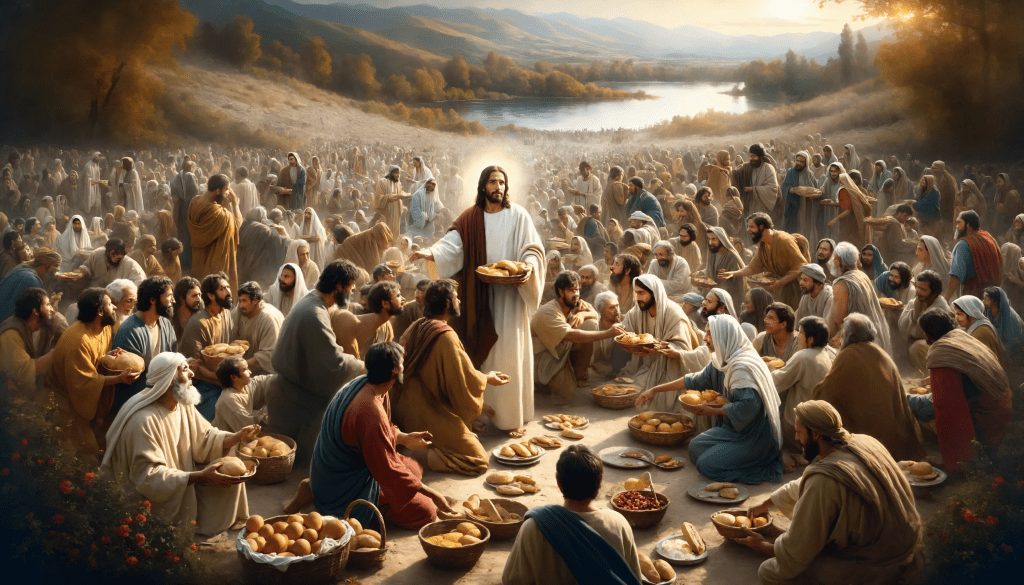
Our reading is John 6:1-13. It is one of the rare stories in the Bible because it is found in all four Gospels. This is John’s version. Different from the other accounts, John emphasizes Jesus’s divine identity and the spiritual significance of the event. According to our text a great crowd had gathered around Jesus. He had become as famous as a miracle worker. Jesus had brought wholeness and health to the limited and the sick. The crowd came to see a miracle, but Jesus wanted them to experience more. To be seen and heard by all, Jesus and his disciples sat on a mountainside. From that perched position Jesus saw the vastness of the crowd. Wanting to challenge the disciples, he looked at Phillip and said, “Where shall we buy bread for all these people to eat?” Phillip does the math and admits the funds are not available. It would take eight months to buy enough bread. He was right, yet he was wrong. Money was only one option. By the end of the day, everyone was satisfied, and the power of God was obvious. 

This story reminds us of two things. First, with God all things are possible. How else can you explain how Jesus took five barley loaves and two small fish and fed 5,000 people? It must be from God. Second, it reminds us that Jesus cared not just about the spiritual needs of people; Jesus cared for their physical needs as well. He could have sent them away hungry, and no one would have cared. However, that was not Jesus’s way. He cared about the basic physical needs of others. The question is: how concerned are you about the physical needs of others? Our world is crying out in pain; are you going to respond? To answer that question, I am going to ask you three uncomfortable questions. This is question number one.

Do you see others like Jesus? When Jesus looked out and saw the 5,000, he just didn’t see people, he saw their need. He saw they were hungry. Jesus knew they had to be fed because they didn’t have resources to feed themselves. Jesus cared about their temporary physical needs. Do you see the needs of others, or do you look the other way? Many would have said, “They are fools! They should have known better, they should have packed their own lunch!” Do you see things like Jesus? Do you see the needs of others? This is question number two.

Do you feel other people’s pain like Jesus? It is my experience we are more comfortable with the divine side of Jesus and less comfortable with his humanity. We struggle with the humanity of Jesus. Matthew 9:36 describes Jesus’s compassion. It says, Jesus had compassion on the crowds who were “harassed and helpless, like sheep without a shepherd.” Jesus had compassion on the 5,000 because they were hungry. Never underestimate the compassion of Jesus. Wikipedia, the online dictionary and encyclopedia, defines compassion as the response to the suffering of others that motivates some to help. Do you feel other people’s pain like Jesus? Perhaps this is a better question, how compassionate are you? Do you look at people, or do you look through people? This is question number three.

Do you do things like Jesus? The Master had the power to feed 5,000 people with five loaves of bread and two fish. Jesus used his power to respond to their need. We do not have the power to feed 5,000 people with five loaves and two fish. However, we do have the power to do something. What are you doing to help others? What is the Holy Spirit calling you to do? Do you do things like Jesus?

When I was in college, I remember studying the case of Kitty Genovese (1935-1964). She lived in Kew Gardens, Queens, New York City. She was a bar manager. On March 13, 1964, she was murdered by a man named Winston Moseley (1936-2016). He stabbed her with a knife, piercing her lung. She was buried at the Lakeview Cemetery in New Canaan, Connecticut. She was a victim of femicide. As shocking as that crime was, the reaction, or the lack of reaction, of her neighbors was even worse. Investigators discovered many heard her cry out, but no one responded. They simply didn’t respond to her cries for help, they didn’t want to be bothered. They were guilty of a sin of omission. In the science of sociology, it has been called the by-standers effect or diffusion of responsibility.  I would like to say it is an isolated case, but it happens all the time. Can I state the obvious?

Our world is crying out for help but very few are responding. It is not a matter of physical deafness. It is a matter of lack of caring. Do you care about the needy in our world, or are you too preoccupied with yourself? Are you more concerned about the happiness of your family pet, or are you more concerned about human beings who are in need? Jesus cared about people and responded. You must care and respond as well because you are a disciple of Jesus Christ. American essayist, lecturer, philosopher, minister and poet Ralph Waldo Emerson (1803-1882) once said, “The purpose of life is not to be happy. It is to be useful, to be honorable, to be compassionate, to have it make some difference that you have lived and lived well.”

Remembering William Borden

Sincerity is defined as the quality of being free from pretense, deceit, or hypocrisy. Sincere people are trusted. Along with patience and compassion, sincerity is one of those qualities we wish we had more of – and wish other people had more of, too. People who show sincerity are seen as being serious, kind and truthful. Sincerity is vital as you live out the Christian faith, and is vital in understanding our scripture lesson, John 10:22-30.

According to the text, Jesus is in Jerusalem during the Festival of Dedication, a time to remember the dedication of the temple by Judas Maccabeus in 165 BC. For those unfamiliar with the Hebrew calendar, John tells us it was during the winter months. Jesus was walking in Solomon’s Colonnade, a roof structure like a Greek stoa, when he was surrounded by a group of Jews. They asked him the question everyone has been asking: are you the Messiah? Jesus goes on to tell them the answer to their question is not found in his words, the answer to their question is found in his deeds. Those words resonate in our society today, because our world still believes actions speak louder than words. After all, we believe talk is cheap. That leads us to an interesting question: if you didn’t speak a single word about Jesus, would the people in your life know you are a disciple?

Everyone knew, and no one questioned the sincerity of William Borden (1887-1913), when he graduated from The Hill School in Pottstown, Pennsylvania in 1904. His father made a fortune in the Colorado silver mines, so William was a sixteen-year-old millionaire. However, his mother had the greatest influence on his life. She took him to the Chicago Avenue Church, later Moody Church, where he accepted Jesus. His graduation gift from his parents was a chaperoned trip around the world. Traveling through Asia, the Middle East, and Europe, gave Borden a burden for the world’s hurting people. Writing home, he said, “I’m going to give my life to prepare for the mission field.” When he made this decision, he wrote in the back of his Bible two words: NO RESERVES. In other words, he was totally committed to serving God. There would be no reserves for him. How committed are you to serving God?

David Livingstone (1813-1873) was totally committed. He was a Scottish physician, pioneer missionary with the London Missionary Society, and an African explorer. His passion for Africa made him famous. Once he received a letter while in Africa that contained this question: “Have you found a good road to where you are? If so, we want to send other men to join you.” Livingstone wrote back, “If you have men who will come only if they know there is a good road, I don’t want them. I want men who will come if there is no road at all.” David Livingstone and William Borden were totally committed. How committed are you? The first two words William Borden wrote in his Bible were NO RESERVES!

In 1905, Borden enrolled at Yale University. During his first semester, he began to pray and study the Bible with a friend. A short time later, a third student joined them. By the end of his first year, 150 freshmen had become interested in meeting for weekly prayer and Bible study. By the time he was a senior, 1,000 out of the 1,300 students at Yale were meeting in groups like these. It was his goal to win every soul at Yale University for Jesus. That wasn’t enough for Borden. Off Yale’s campus, he went to the darkest parts of New Haven, Connecticut helping those individuals’ society had forgotten.  Turning down high paying job offers, Borden entered two more words in his Bible: NO RETREATS. In other words, he was always finding new ways to serve God.

In my retirement, I supply preach. In other words, I go to churches when the pastor is away or unable to preach. I enjoy meeting new people and experiencing new churches. Most of the churches I preach at have the same story. They had a glorious past but are facing a questionable future. At some point, they stopped advancing; they are frozen in time. The crowd of the past has been replaced by a select few, who are committed to traditional worship. They haven’t gotten involved in missions in years because they are consumed by their own needs. The only energy present is the energy needed to maintain the basic church functions. The world is changing, yet they refuse to change. They all know the truth: the end is near and when the door is locked for the last time, no one will miss them. William was never satisfied doing the same old thing. He was always finding a new way to serve God. When was the last time your church tried a new ministry? When was the last time you tried something new to serve God? The second two-words William Borden wrote in his Bible were NO RETREATS!

After graduating from Yale in 1909, Borden prepared for the mission field at Princeton Seminary. At the age of twenty-two, Borden became the director of the National Bible Institute in New York City as well as the Moody Bible Institute in Chicago. His goal was to evangelize the Muslims in China. On his way to China, he stopped in Egypt to study Arabic. It was there that his bright future grew dark. He was diagnosed with spinal meningitis and died at the age of 24. To the world it really didn’t seem fair. However, William Borden trusted God. The only one he was trying to please was God. Who are you trying to please? I have said it a million times – the only things that really matters are those things that will matter in one hundred years. What is going to matter to you in one hundred years? The only thing that is going to matter to you in one hundred years is Jesus! Are you living for Jesus, or are you living for someone or something else? During his illness he wrote two more words in the back of his Bible, NO REGRETS.

How can you question the sincerity of William Borden? If he hadn’t spoken a word, his life spoke volumes. He was completed committed to serving God. He was always finding a new way to serve God. He completed trust God. No one could question his sincerity. Can the same thing be said about you? Jesus wasn’t wrong – actions do speak louder than words. Saint Francis of Assisi (1181-1226) once said, “Preach the Gospel, but only use words when absolutely necessary.”

Grow Up!

Our reading is John 4:4-24.  According to verse four, Jesus is in Samaria, near the town of Sychar at Jacob’s well (Ge. 48:21-22). It is noon and Jesus was looking for a cool drink of water. He was surprised to find a Samaritan woman there too. Normally, women drew water from the well early in the morning or at the end of the day, once the heat of the day had passed. She was no ordinary woman. She was a woman with a story. She was filled with regrets, because she had made so many mistakes.

She just couldn’t find a decent man; she was a repeat offender. She had been married five times and was currently living with another man. In our society, only fifty percent of first-time marriages last. Every time you marry, your chances of a successful marriage are cut in half. That means, on her fifth wedding day her chances of a happy marriage were down to 3.1%. If she would have married number six, it was down to 1.6%. She was at the well in the middle of the day to hide from the harsh tongues of the other women in that community. She was the punchline of every joke, and she knew it. Most of our reading is a dialogue between Jesus and the woman.

Jesus broke the social norms of that time and place. Men and women did not speak to each other in public; Jews and Samaritans did not speak at all. Jesus breaks both rules and talks to a Samaritan woman. Jesus and the woman at the well were a study in contrast. Jesus was a sinless, spiritually mature Jewish man; she was a sinful, spiritually immature Samaritan woman, yet Jesus speaks to her about spiritual maturity. In this blog, I want to address your spiritual maturity. How spiritually mature are you?

There is a website called Cripplegate.com.  It is a Christian website with the tag line, “for a new generation of non-conformists.” That line plays off Roman 12:1-2, “do not conform to this world but be transformed by the renewing of your mind.”  On November 7, 2011, they posted an article called: 5 Signs of Spiritual Maturity. In that article, they ask five questions. If you answer each honestly, then you will discover your level of Christian maturity. Each question has Biblical roots. If you answer each question honestly, you may find out that you are more mature than you thought, or you may discover you are less spiritually mature than you assumed. You can consider these five questions a little quiz. This is question number one:

Do you have an appetite for meat? Infants drink milk regularly, but in time they move on to solid food. When a twenty-one-year-old asks his mother to spoon feed him mashed potatoes, it is creepy and dysfunctional. When a nursing home resident can’t take a single bite, it is sad because the end is near. Spiritually mature people can’t get enough meat. They can’t get enough of the Bible. How much time do you spend with your Bible? Or do you ignore your Bible because it is just too hard to understand? Maybe that is the reason you are spiritually immature. Spiritually mature people have an appetite for meat. Hebrews 5:14 says, “Solid food is for the mature.”  This is question number two:

Are you easily offended? Experience has taught us that mature Christians seldom get offended, because they see the big picture. When Jesus turned the tables at the temple over because people were using the law for personal gain, people were upset. Jesus didn’t care, because he saw the big picture. The temple was a house of prayer, not a place of profit. Do you see the big picture, or do you only see yourself or your interests? The only thing that matters is Jesus! When was the last time you got offended at church? Philippians 1:18 says, “In every way Christ is proclaimed, and in that I rejoice. Yes. I will rejoice.”  This is question number three:

Is your conscience formed by scripture or opinion? One of the great attributes of a mature Christian is grace. We are saved by grace and by grace alone. It is a simple truth to understand, but it is a hard truth to live out. I have grown tired of negative, critical, and judgmental people who fell you need their permission, or must live up to your standards. Spiritually immature people are always critical of others. Spiritually mature people understand that we are saved by grace. Romans 14:1 says, “As for one who is weak in the faith, welcome him, but not to quarrel over opinions.”  This is question number four:

Do you serve humbly? God uses sinners in this world to do good things because there is no one else to choose. Have you ever known anyone who boasted about what they do for their church? Have you ever known someone who boasted of something they do for God in their community or the world? If so, then you have the perfect example of a spiritually immature person. Spiritually mature people get it. They know it is not about them; it is all about God. Do the people in your life consider you humble? 2 Corinthians 4:7 says, “We have this treasure in jars of clay, to show the surpassing power belongs to God and not to us.”  Do people in your life consider you arrogant? This is question number five:

Do you credit God for success? Contemporary American culture idolizes people. Personally, it may be a well-loved pastor or politician. It may be a popular entertainer, like Tom Cruise (born 1962) or Taylor Swift (born 1989). It may be a historical figure, like George Washington (1732-1799) or Abraham Lincoln (1809-1865). According to the people at Cripplegate, is idolizing others is a sign of spiritual immaturity. Spiritually mature understand all people, both contemporary and historical, are nothing more than tools in the hands of God. It is God who deserves all the credit. I Corinthians 3:7 says, “So neither he who plants nor he who waters is anything, but only God who gives the growth.”  

So how did you do with your little quiz? Did you find you are a spiritually mature person? Or did you find you have some work to do?

When I was young my grandmother came to visit us twice a year. She lived in Brooklyn, New York and we lived in Warren, Ohio. I can remember going to the Greyhound bus station to pick her up. Later, she flew into the Youngstown-Warren Regional Airport. Still later, she flew into the Cleveland Hopkins International Airport. It really didn’t matter where she arrived, every reunion was the same. I would run up to her and give her a big hug. She would always square my shoulders and say, “Let me look at you. You have gotten so big.” My dad, who hated those visits because he didn’t like her, always responded, “I would hope so. If he wasn’t growing there would be something wrong.” I think he missed the point, but he wasn’t wrong. We expect healthy children to grow.

God expects you to grow spiritually! When God looks at you does he say, “Look how big you have gotten!” Or does God say, “What is wrong?” Never forget, we are to be a little more like Jesus every day. The choice is yours. Are you growing spiritually, or are you going to remain a spiritual babe? Scottish evangelist Oswald Chambers (1874-1917) said, “Spiritual maturity is not reached by the passing of the years, but by the obedience to the will of God.”

Born Again

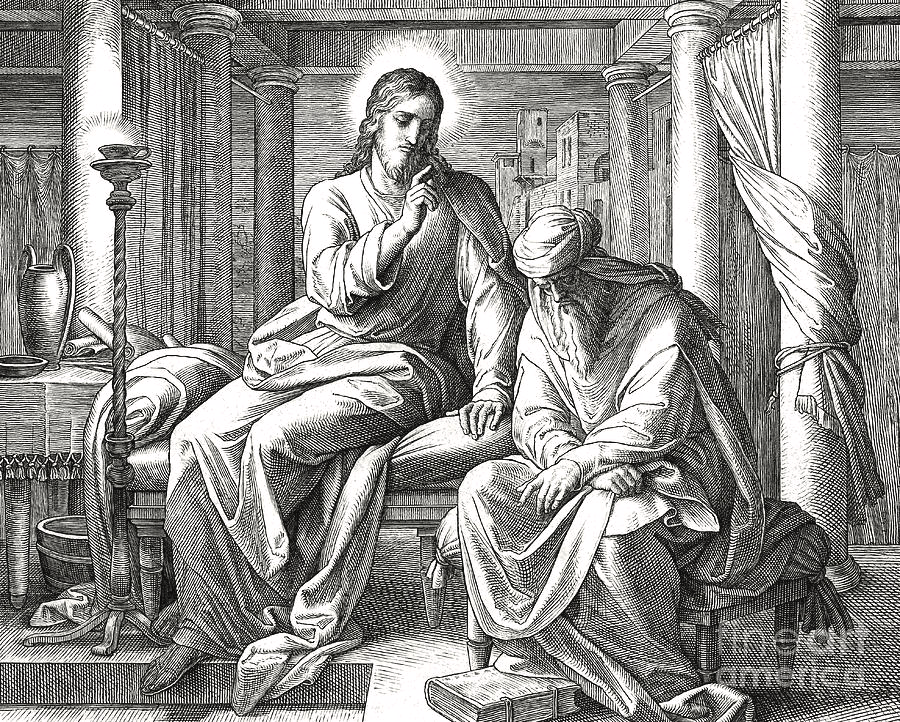
Our reading is John 3:1-15. The story is nothing more than a private discussion between Jesus and Nicodemus. Everyone knows Jesus, no additional information is needed. Some know Nicodemus. According to the second half of verse one, he was a member of the Jewish ruling council. That means he had climbed to the top of his profession. It is safe to say Nicodemus spent his days answering the questions of others. This story is unique because he is the one with the questions.

According to verse two, Nicodemus went to Jesus at night. Much has been made about that fact. Some say he went at night to hide his identity. How would it look for a trusted member of the clergy to go to Jesus, a man with no credentials? Others say Nicodemus went at night so the two would have time to talk. The business of the day was done. Regardless, Nicodemus went to Jesus because he was impressed by the Master. No ordinary man could have performed such miracles; he must come from God. Jesus hears through these kind words and knows the real topic – salvation! Jesus says in verse three, no one can enter the kingdom of God unless they are born again. Two thousand years later, the world is still wrestling with those words, so we should not be surprised that Nicodemus wrestled with them that night. He thinks Jesus is speaking of physical birth, reentering your mother’s womb. Jesus is speaking of spiritual birth. The two are as different as night and day. From the moment you were physically born, you struggled to survive. The goal of life is survival, so the most important person in your universe is you. Spiritual rebirth is different. From the moment you are reborn, the most important person is God. Spiritually immature people live for themselves; spiritually mature people live for God. Which is more important to you? Are you the center of your universe, or is God the center of your universe? To help you discover the center of your universe, let me ask you three questions. This is question number one.

First, how do you spend your time? One of the great stories in the Bible is the story of Mary and Martha, Luke 10:38-42. Mary and Martha were sisters of Lazarus, the one who Jesus had resurrected. Jesus stopped at their home in Bethany on his way to Jerusalem. Bethany was only two miles from Jerusalem. When Jesus arrived, Mary sat at Jesus’s feet, absorbing every word. Martha, on the other hand, was consumed by the traditional female duties. It is a story about priorities. In time, Martha resents doing all the work and goes to Jesus to enlist some help. Martha filled her time doing good things; Mary filled her time with the best thing in life, Jesus. How do you fill your time?

Are you spending your time in a way that is pleasing to God? Are you going to fill your life with good things: work, family, friends and entertainment? Are you going to fill your life with the best thing: Jesus? This is a more pointed question – how much time do you spend with God? Are you the center of your universe? Is God in the center of your universe? This is question number two.

Second, how do you spend your money? Studies tell us that one of the reasons people don’t attend church is money. To be more exact, people do not want to go to church and to be asked to give money. The problem is Jesus spoke more about money than any other topic. That is quite a statement. That means Jesus spoke more about money than he did love, forgiveness, grace, or salvation. In my time in the ministry, I was never afraid to talk about money, it is just so practical. If Jesus spoke about money, then I had the license to do the same. Monthly, in my sermons, money came up in one form or another. Annually, I covered the same points during the stewardship drive. First, money is important. If you don’t believe me, then try to live without it. Second, money is limited. It was reported recently that Amazon’s Jeff Bezos (born 1964) is worth approximately $250 billion. Even his fortune has limits. You have limits too. Third, because money is important and limited, how we spend our money is revealing. We only spend our money on things that are important to us. How great of a priority of God to you?

Are you spending your money in a way that is pleasing to God? The church was never meant to be destitute. It was meant to be fiscally responsible to meet the challenges our world is facing. This is a question to ponder: if everyone gave as much money as you do to your church, would the ministry of your church contract or expand? Are you living with yourself in the center of your universe? Are you living with God in the center of your universe? This is question number three.

Third, how do you use your talent? Some consider Leonardo da Vinci (1452-1519) the most talented person in the history of the world. His list of accomplishments is impressive. He excelled as an artist, scientist, and inventor. Some consider Isaac Newton (1647-1727) the most talented person in the history of the world. He made groundbreaking contributions to physics, calculus, and optics. He changed the way we look at the universe. Some consider Elon Musk (born 1971) the most talented person in the history of the world. He has made significant contributions to several industries, including electric vehicles, space exploration, and artificial intelligence. There have been many talented people in history.

Is God pleased with the way you are using your natural talents? You are not the most talented person in the history of the world, but that does not mean you lack talent. Everyone has some kind of talent. I have never met a talentless person. The question is, how are you going to use your talent? Are you just going to use your talents for personal gain? Are you using your talents to bring glory to God? Are you living making yourself the center of your universe? Are you living with God in the center of your universe?

When I was in high school, it seemed like the entire evangelical Christian world was asking the question, are you born again? I saw it as a death question. The real question was, are you prepared to die? Are you going to spend eternity in heaven or hell? Today, I consider that question, are you born again, a life question. Are you going to live in a way making your yourself the center of your universe, or are you going to live in a way to make God the center of your universe? Are you spending your time in a way that is pleasing to God? Are you spending your money in a way that is pleasing to God? Are you sharing your natural talents in a way that is pleasing to God? It has been said, “Being born again means embracing a life of purpose, love, and service.” Are you born again?

Following Jesus

According to Psychology Today, the average person makes more the 35,000 decisions in a single day. This includes conscious and subconscious choices, with many decisions based on prior knowledge and experience. Most decisions are rather simple – where to sit, what to eat for the next meal, what lane you should drive in. These decisions are easily made and have very little consequences. Other decisions are more serious with long-lasting effects. Your decision to follow Jesus is one of them. For once you decide to follow Jesus, everything in your life should change. If you don’t believe me, then look at the life of C. S. Lewis (1898-1963).

He was a novelist, poet, lecturer and Christian apologist. Absolutely brilliant, he held academic posts at both Oxford University and Cambridge University. His Christian faith can be seen in all his classic literary works: The Screwtape Letters, The Chronicles of Narnia, The Space Trilogy, Mere Christianity, Miracles, and The Problem with Pain. However, there was a period in his life when he believed nothing at all. In his memoir, Surprised by Joy, Lewis told how he was baptized into the Church of Ireland, but the sacrament had no influence on him. He walked away from the faith and didn’t return until he was 32. He thanked his friends, including J. R. Tolkien (1892-1973), for his spiritual wakening. His life would never be the same again. Your decision to follow Jesus changed you too. That takes us to our reading, John 1:35-42.

The story is a little complex. It is early in Jesus’s earthly ministry. It is so early Jesus doesn’t have a single disciple. However, John the Baptist does have disciples. When Jesus passes John the Baptist and his disciples, John identifies Jesus as the Lamb of God, referring to Jesus’s future sacrificial death. With that endorsement, two of John’s disciples began to follow Jesus. The Bible identifies one of the disciples as Andrew, tradition identifies the other disciple as John, the author of the fourth Gospel. Seconds later, Jesus noticed they were following him and asks them, “Why?” It is an excellent question because no one likes being stalked. They answered Jesus’s question with another question, “Where are you staying?” Jesus answers that question with an invitation, “Come and you will see.” They accept the invitation and stay with Jesus until about 4:00 in the afternoon. At that time, the two leave Jesus and tell others about him. Andrew told his brother Peter, who decide to follow Jesus too. In this story, three people decide to follow Jesus; their decision to follow Jesus changed them. The question is, are you following Jesus? To explore your answer, let me ask you three more questions.

First, do you follow Jesus exclusively? In the story, Andrew and John begin as disciples of John the Baptist. Don’t forget, John the Baptist was their rabbi or teacher, Andrew and John were his disciples or students. In other words, he gave them spiritual insight and direction. When John the Baptist identifies Jesus as the long-awaited Messiah, they listen to him because they trust him. This story is incredible because Andrew and John left John the Baptist to follow Jesus. They were going to follow Jesus exclusively. Are you following Jesus exclusively? In a politically correct world, this will make some people uncomfortable.

I was raised in a steel town in northeast Ohio. I have no childhood memories of knowing non-Christians. Everyone I knew followed some form of Christianity. I knew people who represented the various branches of the mainline Protestant church. I knew people who practiced the various forms of Orthodoxy. I knew people who were Roman Catholic or Byzantine Catholic. Everyone was a Christian. There was no spiritual tension because everyone believed in Jesus. Then, I became an adult and moved to more urban areas. Saying you follow Jesus exclusively suddenly took on a new meaning. It meant something. However, we are not called to judge others, we are called to love others. That divine truth disarmed many situations. Honestly, I am thankful I am not the judge. You can follow Jesus exclusively and love anyone. The question is, do you follow Jesus exclusively?

Second, do you follow Jesus unconditionally? One of the great stories in the Bible can be found in the Book of Job. Everyone knows the story because everyone has played the part of Job. In the beginning he has everything – wealth, health and family. Satan believes Job’s loves for God is conditional, so he begins to take things away from Job. His wealth is taken away. His health is taken away. His loved ones are taken away. His friends witness his ordeal and encourage him to curse God and die. Job refuses, because his love for God is unconditional. 

Many follow Jesus conditionally. It is easy to follow Jesus when life is good. It is easy to follow Jesus when you have a well-paying, enjoyable job. It is easy to follow Jesus when your health is good and your loved one’s health is good. It is easy to follow Jesus when all your relationships are sound. It is not so easy to follow Jesus when you are unemployed, sick and alone. It is not so easy to follow Jesus when a loved one is struggling. It is not so easy to follow Jesus when your friends tell you to stop following Jesus. After all, we believe in an all-powerful God who resurrected Jesus from the dead. Have you ever wondered why our all-powerful God doesn’t help you? Do you follow Jesus unconditionally?

Third, do you follow Jesus passionately? In other words, do you have a desire to be like Jesus? Are you more like Jesus now than the day you decided to follow him? Following Jesus should transform you in three ways. First, following Jesus will change your perspective. Are you looking at life through different lens, one that emphasizes God’s love, grace, and an eternal perspective. Second, following Jesus will change your priorities. You will be more concerned with others. Our world is filled with hurting people. Third, following Jesus will change your purpose. Personal gain or worldly success will be replaced by God’s plan for the world. If you are going to follow Jesus passionately, then you better be prepared to change. Too many use Jesus and the Bible to promote their personal causes and beliefs. Do you follow Jesus passionately?

In the scripture lesson for today, three people, Andrew, Peter, and John, decide to follow Jesus. They follow Jesus for the rest of their lives. In the end, only John dies of old age. Yet, he experienced the isolation of Patmos Island, where he had a series of visions. Those visions became the book of Revelation. Tradition tells us that Peter died in Rome, where he was crucified upside down for evangelizing. He was crucified upside down at his own request, because he didn’t feel worthy to die like Jesus. Tradition also tells us that Andrew was crucified on an x-shaped instead of a t-shaped cross in Achaea, Greece because he too didn’t feel worthy to die like Jesus. It is safe to say they followed Jesus exclusively, unconditionally, and passionately. The question is – do you follow Jesus, or is it how you follow Jesus? Billy Graham (1818-2018) once said, “When we come to Christ, we’re no longer the most important person in the world to us; Christ is. Instead of living only for ourselves, we have a higher goal: to live for Jesus.”

Who Is Jesus?

The Apostles’ Creed, which summarizes the core beliefs of the Christian faith, first appeared in the year 390. It was originally attributed to the twelve apostles, but it evolved from various creedal statements and baptismal interrogations from the early church. It tells us:

Jesus was the only Son of God, our Lord, who was conceived by the Holy Spirit and born of the virgin Mary. He suffered under Pontius Pilate, was crucified, died, and was buried; he descended to hell. The third day he rose again from the dead. He ascended to heaven and is seated at the right hand of God the Father almighty. From there he will come to judge the living and the dead.

It answers our question, who is Jesus? During my time in the ministry, my congregations recited the Apostles’ Creed weekly. I always feared they were saying the words without considering their meaning. That is easy to do. The real question is, who is Jesus to you? That takes us to our scripture reading, Mark 4:35-41.

According to the text, Jesus and the disciples are on the Sea of Galilee. They were sailing from Galilee to the region of the Gerasenes. That Sea of Galilee was infamous for sudden storms and that is exactly what happened. Without warning a storm hits, and the boat begins to fill with water. The disciples begin to panic, fearing they are going to die. However, Jesus was fast asleep. The disciples wake Jesus, and he is surprised by their emotional state. He reprimands them for their lack of faith and calms the storm. The story tells us Jesus had authority over nature. As a matter of fact, Jesus had authority over all creation. That was more than the disciples expected. They had been traveling with Jesus, and they thought they knew him, but their understanding of him was incomplete. You can know someone and not completely understand them. Shocked, the disciples asked a question the world has been trying to answer for generations, “who is this?” In other words, they asked the question, “who is Jesus?” The answer you receive will depend on the person or group you ask. Let me give you a few examples.

If you would have asked Jesus’ cynical narrow-minded generation, who is Jesus, they would have given you some basic information about him. Jesus was a carpenter, the son of Mary and Joseph. However, some questioned if Joseph was his father. Some would have not even answered the question, who is Jesus, at all, because he came from Nazareth. Many looked down on that community. Even one of his own disciples, Nathaniel, before following Jesus, looked down on Nazareth. (John 1:46) If you asked Jesus’ cynical narrow-minded generation, who is Jesus, their answers would have been incomplete.

If you ask other major world religions the question, who is Jesus, they will admit Jesus was one of the most influential people in the history of the world. Hindus generally view Jesus with respect and see him as a spiritual teacher or a manifestation of God. Some Buddhist scholars are emphasizing the similarities between the lives and teachings of Buddha and Jesus. Did you know in the Quran, the sacred text of Islam, Jesus is mentioned twenty-five times? His generous ways caught the eye of Allah, who selected him to be a divine messenger. The Jewish world sees Jesus as an example on how to live. Other major world religions value Jesus, but their answers are incomplete.

If you ask more contemporary world religions, who is Jesus, they will admit Jesus is significant. For example, you can find the teachings of Jesus in earliest writings of Scientology. The Bahai Faith, which tries to find the balance of all world religions, values Jesus. They admit “Jesus is who he says he is.” In the world today there are approximately 100,000 people following a religion called Rael. It is a UFO religion, which believes the world was created by a species of humanoid extraterrestrials. They believe that Jesus was a hybrid mixing extraterrestrials and humans. Many contemporary religions value Jesus but their answers are incomplete. Even atheists, who do not believe in the existence of God, recognize the historical Jesus, who is a moral example and teacher. So, let me ask you the question one more time, who is Jesus? Who is Jesus to you?

When I was in seminary, I had a friend named Mike. He was a wild guy with long red hair and a big heart. He was from the Illinois side of the Mississippi River in the St. Louis area. We lived in the same apartment complex, so we would ride to school together. As we traveled those few miles, we talked and shared our stories. Of all the stories Mike told me, this is the one I remember.

He freely admitted, he was a non-believer during college. The last thing he worried about was Jesus. That all changed one Friday night. He was out drinking with his friends. Completely drunk, he decided to drive home. The expected happened, and Mike got into an accident. He was told later he was cut out of his car by the jaws of life and taken to the local hospital. In the emergency room, he was in an unconscious state, yet he could hear his mother talking to the doctor. She began sobbing when the doctor told her, it didn’t look good. Mike didn’t want to die, so he made a deal with God. If God would save him, then he would serve God the rest of his life. Every time Mike told me that story, he pulled his shirt open to show me the large ugly scars on his chest from the accident. Mike survived and he kept his word. He accepted Jesus as his Lord and Savior. In time, he heard God calling him into the ministry and enrolled in seminary. The last time I heard from Mike, he was serving a church in Illinois. Ask Mike the question, who is Jesus, and he will give you the best answer. Jesus is his Lord and Savior. That is Mike’s story.

What is your story? Everyone’s story is different. It really doesn’t matter if your story includes sex, drugs and rock and roll, or if your story includes a loving family and a faithful, patient Sunday school teacher. It does not matter how you came to know Jesus. The only thing that matters is you came to know Jesus as your Lord and Savior. For once you do, you will know the benefits of the Christian faith. You will have a closer relationship with God, know your sins are forgiven, have a purpose for living, and have the promise of eternal life. I have known those things for many years. It all goes back to our question, who is Jesus? Who is Jesus to you? It is a question everyone must answer. Sometime later, Jesus, himself, gave the disciples the answer, “I am the way, the truth and the life. No one comes to the father except through me.” (John 14:6) How do you answer the question, who is Jesus? Who is Jesus to you?

The Spirit of Truth

Many years ago, before a civil war threatened to divide America, before Columbus discovered a new world, before Christ hung on the cross to sacrifice for mankind’s sins, there was a man who spoke for God. His name meant “God is the Lord,” but we simply call him Joel. We call him a minor prophet, not because his words are not important, but because he was brief. His book only lasts three chapters. Yet, in his words is one of the great prophesies in the Bible. In the second chapter of his book, he prophesized about the day the Holy Spirit would be unleashed on the world. If you are going to wait for God to act, then you better be patient. His words came to fruition 600 years later during the Jewish festival of Pentecost, a time to celebrate the harvest.

That story is found in the second chapter of Acts. The disciples, including Mathias, Judas Iscariot’s replacement, were in Jerusalem as Jesus instructed in Acts 1:4. To the Jewish world it had been fifty days since Passover. To the disciples, it had been fifty days since Jesus’s resurrection and ten days since Jesus ascended. It was on that day the Holy Spirit was unleashed, and the church was created. Acts 2:4 explains what had happened. It says, “All of them were filled with the Holy Spirit…”  The word ALL is significant because it was the first time the Holy Spirit was given to everyone. In the Old Testament it was limited to a select few. 

According to the Revised Common Lectionary, the Sunday after Pentecost is called Trinity Sunday. It is a time to celebrate the Christian doctrine of the Trinity, the three persons of God: the Father, the Son and the Holy Spirit. There is God the Father, the creator. There is God the Son, the redeemer. There is God the Holy Spirit, the life giver. They are united, yet each one stands alone. Each one has integrity, is faithful and true.

In our reading, John 16:12-15, Jesus is trying to explain the Holy Spirit to the disciples. Chronologically speaking, our reading is between Joel’s prophecy and the day of Pentecost. Jesus knows it will be a difficult lesson for the disciples. He admits that in verse 12, “I have much more to say to you, more than you can now bear.”  He summarizes the work of the Holy Spirit in verse 13. He calls the Holy Spirit the Spirit of Truth. When the Spirit of Truth comes, when the Holy Spirit comes, he will guide you into all truth. So, how does the Holy Spirit lead us into truth? There is a website called: Revive Your Heart. It says the Holy Spirit leads us to truth in five different ways. I think this list has some value. I will be brief with each item on that list.

  1. The Spirit of Truth sanctifies us! – In John 17:17, Jesus says, “Sanctify them by the truth; your word is truth.”  Jesus is praying for the disciples’ spiritual growth, and the same thing is true for us. The Holy Spirit helps us grow spiritually so we can become more like Jesus. The Holy Spirit sanctifies us!
  1. The Spirit of Truth teaches us! In John 14:26, Jesus says, “But the Advocate, the Holy Spirit, whom the Father will send in my name, will teach you all things and will remind you of everything I have said to you.”  The Holy Spirit inspired both the Old and New Testaments, and the Holy Spirit will help you comprehend those words. Some are slow learners, but the Holy Spirit is a patient teacher. The Holy Spirit teaches us!
  1. The Spirit of Truth interprets scripture for us! Luke 24:27 says, “And beginning with Moses and all the Prophets, he explained to them what was said in all the Scriptures concerning himself.”  In that verse, Jesus was speaking to two men on the road to Emmaus and instructs them that all scripture points to him. The same is true today. The Holy Spirit interprets scripture for us!
  1. The Spirit of Truth convicts us! Romans 8:1 says, “Therefore, there is now no condemnation for those who are in Christ Jesus.”  For Christians there is no condemnation, but that does not mean we are not convicted. The Holy Spirit glorifies God and reminds us of our sins. He encourages us not to sin. The Holy Spirit convicts us!
  1. The Spirit of Truth empowers us! Ephesians 6:17 says, “Take the helmet of salvation and the sword of the Spirit, which is the word of God.”  The Holy Spirit helps us trust and obey God. He exposes the true motivations of our hearts and makes the willing more willing. The Holy Spirit empowers us!

I would like to add one more item to that list – The Spirit of Truth connects us to God! Dutch Catholic priest, professor, writer and theologian Henri Nouwen (1932-1996) said, “Without Pentecost, (without the Holy Spirit), the Christ event – the life, death, and resurrection of Jesus – remains imprisoned in history as something to remember, think about and reflect on. The Spirit of Jesus comes to dwell within us, so we are Christs here and now.”  In other words, the Holy Spirit connects us to God!

Years ago, members of my family participated in an event called Youth Jam. It was an evangelistic event sponsored by the East Ohio Conference of the United Methodist Church. It was a Christian conference held annually, rotating between Akron and Cleveland. Their target audience was teenagers. Their goal was to win souls and mature disciples for Jesus Christ. Their agenda included a series of Christian singers and speakers. For several years, my church sent youth to Youth Jam. I am glad we did.

One afternoon at Youth Jam, the Christian speaker was a former beauty pageant winner. No one in my family can remember her name, but everyone one agrees she was a powerful speaker. She told some stories about the pageant, and she gave her testimony. As she spoke the spirit in the auditorium began to change. By the time she was done speaking, the Holy Spirit was thick in the room, and everyone knew God was going to do something special. At that moment the former beauty pageant winner did it. She encouraged everyone to stand up and look toward the back wall of the auditorium. Then she asked everyone to get on their knees, placing their hands on their seats. From that position, she led them in prayer and the Holy Spirit rolled over the crowd. Words cannot capture that experience. She closed that prayer with an invitation. All those young people would have to do, was raise their hands if they wanted to accept Jesus Christ. I do not know how many hands were raised on that day, but I do know one hand was raised. That hand belonged to my daughter. It was not an emotional response to the moment. It was a commitment that changed her life. Today, her faith is genuine and sincere. I am thankful the Holy Spirit attended Youth Jam that day. Heaven would not be the same for me without her. The Holy Spirit connects us to God! The Holy Spirit leads us into the truth and changes everything!

Holy Spirit 101

The date was May 24, 1738. If you are from the Wesleyan tradition, then you may know the story. John Wesley (1703-1791) was born in Epworth, England. His father, Samuel (1766-1738), was an Anglican priest. His mother, Susannah (1762-1735), was a stay-at-home mother, who homeschooled her children, both boys and girls. She set the standard high for all parents. She taught her children how to survive in this world and be prepared for eternity. John Wesley had everything he needed to be successful, but something was missing until he was thirty-five years old. His time as a pastor was unremarkable, and he failed as a missionary in North America. After a near death experience, he went on a great spiritual quest. That quest ended on May 24, 1738, on Aldersgate Street in London, England. There is no other way to say it, John Wesley was touched by the Holy Spirit. We call it his “Aldersgate Experience,” where he experienced sanctification. In other words, he was touched by God for a divine purpose. The only thing he ever wrote about that day was a simple phrase in his personal journal, I felt my heart strangely warmed. Those words are not impressive, but his life after that experience was. From that point on, he only knew success. He took the whole world on as his parish and changed history. When he died in 1791, he left behind 135,000 followers, plus another 541 itinerant preachers. Today, according to the World Methodist Council, there are 80 million Methodists around the world in various denominations. If we could resurrect John Wesley, then he would tell you that the Holy Spirit changed everything! He would be right. Let me state the obvious.

I was not in the ministry on May 24, 1738. However, I was in the ministry two hundred and fifty years later, on May 24, 1988. I remember that year, because it was the first year I was under a United Methodist appointment. I was serving the Morristown Charge in the former St. Clairsville District in the old East Ohio Annual Conference. As May approached, I looked forward to the 250th anniversary of Wesley’s Aldersgate experience. I thought it was going to be something special, but I was disappointed. Except for a few old men riding on horses, dressed like circuit riders, there was no celebration. That year at Annual Conference, I expressed my disappointment to my District Superintendent. He was a spiritually mature man. He felt as I did. I asked him why the famous date was overlooked. He simply said, “Russ, there was no celebration, because no one in our time understands Wesley’s sanctification, because no one in our time understands the Holy Spirit.” There was no debate, because I knew he was right. Many are ignorant of the work and power of the Holy Spirit. Can I ask you a question?

Do you understand the Holy Spirit? It is a fair question, but it is a hard question to answer. Just think about it for a moment. Our understanding of the Holy Spirit is a little thin. We are much more comfortable with the other members of the trinity. We believe in a triune God: God the Father, God the Son, and God the Holy Spirit. God the Father is the creator. God created the entire world out of nothing. That is impressive. We seem to have a handle on God the Son. Jesus was the redeemer. Jesus died on the cross for the sins of the world. We are saved by grace and by grace alone. The Holy Spirit is different, God the Holy Spirit is much more elusive. It is hard to summarize everything the Holy Spirit is and does with a few words. So, let me ask you the question again: do you understand the Holy Spirit?

I want to help you understand the Holy Spirit. I want to teach you some theology. I guess you could call this blog an academic lecture. It is not an advanced level course; It is an entry level course. I called this blog Holy Spirit 101. I have grouped my thoughts about the Holy Spirit around three questions. They are questions you must be able to answer.

This is question number one: Who is the Holy Spirit? The answer is simple. You can answer it with one word: God. The Holy Spirit is God. To completely understand the answer, consider this divine truth. The Holy Spirit was not created or revealed at Pentecost. The Holy Spirit has been present in the world from the very beginning. Genesis 1:26 says, “Then God said, ‘Let us make man in our image, in our likeness, and let them rule over the fish of the sea and the birds of the air, over the livestock, over all the earth, and over all the creatures that move along the ground.’”  The key word in that verse is the word us. The us in that verse is the Trinity; Father, Son and Holy Spirit. That means, the Holy Spirit is timeless because the Holy Spirit is God. Let me go one step farther.

The same great attributes of God the Father can be applied to God the Holy Spirit. That means, God the Holy Spirit is all powerful and all knowing. God the Holy Spirit is ever present and always perfect. God the Holy Spirit is good and loving, unchanging. God the Holy Spirit is pure and eternal.“Who is the Holy Spirit?” This is the answer: The Holy Spirit is God! And all of God’s people said, “Amen!”

This is question number two: What does the Holy Spirit do? You can answer that question with one word: change. The Holy Spirit brings godly change. It is as true today as it was on the day of Pentecost. The Holy Spirit historically has made order out of disorder, clarity out of confusion. How many examples do you need?

Just look at the disciples. Prior to Pentecost, the twelve didn’t have a clue. They followed Jesus around for three years, but they were clueless. They were present for every miracle. They were there for every parable. They heard about the Kingdom of God from the Master himself. Peter, Andrew, James and John were even on the mountaintop when Moses and Elijah appeared, the great law giver and the greatest of the prophets. They heard their endorsement of Jesus, but they didn’t have a clue. Then, the Holy Spirit came into their lives and everything changed. The pre-Pentecost Peter, who denied Christ three times, was touched by the Holy Spirit and preached to the crowd. According to the text, 3,000 were saved that day. It isn’t just true of Peter; it is true of all the disciples. Each was changed or transformed by the Holy Spirit and went on to do great things for God. The disciples would tell you, the Holy Spirit changed everything! Historically, the Holy Spirit makes order out of disorder and clarity out of confusion. What does the Holy Spirit do? It changes everything. Answer the question:“What does the Holy Spirit do?” This is the answer: The Holy Spirit brings godly change.

This is question number three: Why is the Holy Spirit important? You can answer that question with one word: revival. Sometime back the Associated Press carried this dispatch: “Glasgow, Ky.– Leslie Puckett, after struggling to start his car, lifted the hood and discovered that someone had stolen the motor.” That is the story of so many churches today! They own everything that is needed to be a church, but they lack one thing, the Holy Spirit. In other words, they don’t have a motor. Every church needs a good dose of the Holy Spirit. Answer this question: why is the Holy Spirit important? This is the answer: The Holy Spirit brings revival.

Let me say this clearly: Pentecost is a big deal. It is one of the major Christian holidays. Through the eyes of God, Pentecost is a big deal. Sadly, through the eyes of mankind, Pentecost is not a big deal. Through the eyes of mankind, Christmas is a big deal. Everybody likes receiving presents, eating cookies and holding candles. Through the eyes of mankind, Easter is a big deal. Everyone likes spring and eating candy. I have never met a person who didn’t like bunnies. Let’s be honest, through the eyes of mankind, Mother’s Day is a bigger deal than Pentecost because everyone has a mother. Through the eyes of mankind, Pentecost is not a big deal. However, through the eyes of God, Pentecost is a big deal. Maybe we don’t embrace Pentecost for the same reason we didn’t celebrate Wesley’s 250 anniversary of his Aldersgate experience, we don’t understand the Holy Spirit.

I am not going to end this blog with a poem, quote or story. I am going to end this message with a challenge. I challenge you to embrace the Holy Spirit. Don’t just pray to have a better understanding of the Holy Spirit with your mind, but pray you experience the Holy Spirit with your heart. For once you do, everything will change. Dutch Catholic priest, professor, writer and theologian Henri Nouwen (1932-1996) said, “Without Pentecost, the Christ event – the life, death, and resurrection of Jesus – remains imprisoned in history as something to remember, think about and reflect on. The Spirit of Jesus comes to dwell within us, so we are Christs here and now.”

In the Name of Jesus

Our scripture reading is Acts 16:16-18. Paul is on his second missionary journey, accompanied by Silas and Timothy. They are looking for a place to pray. That is not as simple as it sounds. A female fortune teller, who has made her master a great deal of money, had been stocking them for several days, causing an uproar at every opportunity. At that time, fortune-telling was seen as Satanic. Still today, there is a dark side of fortune-telling that can’t be ignored. Paul’s patience with her grew thin. Without warning, Paul looked at the woman and called on the name of Jesus. Immediately, the demon was exorcised from her, and her “gift” was gone. Calling on the name of Jesus reveals God’s authority. Have you ever called on the name of Jesus in your time of greatest need? Calling on the name of Jesus does three things.

First, when you pray in the name of Jesus you are admitting your limitations. Sixteenth President of the United States Abraham Lincoln (1809-1865) once said, “I have been driven many times upon my knees by the overwhelming conviction that I had nowhere else to go. My own wisdom and that of all about me seemed insufficient for that day.”  How many times has life driven you to your knees? God always has our attention when life is hard. I witness that daily. 

Did you know the countries with the highest conversion rates to Christianity are all found in Africa and Asia? No countries in Western Europe or North America are on the list. There are several reasons for this, but one stands out. The countries with the highest conversion rates also have the highest poverty rates. The areas of the world where Christianity is declining have the highest standard of living.  In other words, the countries with the lowest conversion rates have the most money. God has a hard time getting our attention when people believe we are self-sufficient. That is why more American church mortgages were paid off during the Great Depression than any other decade in the twentieth century. How many people don’t pray because they don’t think they need God? They can take care of themselves. When we pray in the name of Jesus, we are admitting our limitations.

Second, when you pray in the name of Jesus you are identifying Jesus as your Lord and Savior. You are not praying in the name of Mohammed or Buddha. You are not calling on the name of your country or your favorite sports franchise. You are calling on the name of Jesus. In the scripture lesson, Paul commanded the spirit to come out in the name of Jesus. That is important because it shows Jesus’ authority over the spirit. This is not the only place. Jesus had authority over a variety of things in the Bible. When you pray in the name of Jesus, you are telling the world that you belong to him.

There is an old preaching story about Reverend E.P. Scott. He was a missionary to India in the 1800s. Against the advice of his peers, he decided to travel to a remote tribe to share the Gospel. Several days into his journey, he was confronted by a group of warriors. They took their spears and pointed them into his chest. He responded by pulling out his violin, closed his eyes and started singing, All Hail the Power of Jesus Name. The warriors didn’t know what to do so they lowered their spears. In time, the warriors began to cry. Scott’s life was saved and spent the rest of his life teaching that tribe about Jesus. There is something about that name, Jesus! When we pray in the name of Jesus, we are aligning ourselves with him.

Third, when you pray in the name of Jesus, you are surrendering to his will. One of the great stories in the Bible is the Garden of Gethsemane. You know the scene. It was Holy Week and so much had already happened. Jesus had entered Jerusalem on that humble animal. Jesus had already cursed the fig tree and taught at the temple. Jesus had already been anointed and shared that last Seder with the disciples. Judas Iscariot had already agreed to betray him for thirty pieces of silver. There was nothing left for Jesus to do but wait to be arrested. As he waits, he goes to the garden to pray. He knows of the coming ugliness. He struggles as he prays. In Luke 22:42 Jesus prays, Father, if you are willing, take this cup from me; yet not my will but your will be done.”  Those are powerful words. Jesus does what many are unable to do – submit to God’s will.

Years ago, I received a phone call from a parishioner. She said, “Russ, I need your help.” She went on to tell me her neighbor’s son had been killed in a traffic accident. He was celebrating his twenty-first birthday and drank too much. When the highway patrol cut his lifeless body out of the car, they found a half-emptied case of beer and countless empty cans. I found out later his father had bought him the case of beer as a birthday present. Over the next few days, I spent several hours with the grieving mother. With red-rimmed eyes she asked me two questions. I will never forget them. First, “was God punishing my son for some past sin?”  No, God did not make your son drink and drive. Second, “why didn’t God hear my prayer and save his life?” It was clear she was ignorant about prayer. Do you know of anyone who is ignorant about prayer? You must know someone.

In past blogs, I told you that God answers our prayers in four ways. Sometimes, God answers, “Yes.” That is what happened in the scripture lesson. The slave was healed. Sometimes, God answers, “No.” Paul was never healed from the thorn in his flesh. (2 Corinthians 12:7) Sometimes, God answers, “Later.” There are many examples of that in our world. Sometimes, God answers, “Are you crazy?” Like praying to win the lottery or watching the Cleveland Browns win the Super Bowl. We always want the answer to be yes, but it doesn’t always happen. The real question is, are you submitting to God? When you pray in the name of Jesus, you are admitting your limitations. When you pray in the name of Jesus, you are identifying Jesus as our Lord and Savior. When you pray in the name of Jesus, you are surrendering to his will. The great reformer, Martin Luther (1843-1546) understood the significance of prayer. He said, “To be a Christian without prayer is no more possible than to be alive without breathing.”